CHAPTER ONE — THE SOUND OF A RING ON MARBLE
The first slap landed before the champagne stopped bubbling.
It cracked across my face so sharply that the string quartet missed a note.
One violin.
One broken sound.
Then silence.
Two hundred guests stood beneath the crystal chandeliers of the Laurent House ballroom, their diamonds, cufflinks, pearl earrings, and champagne flutes catching the light while my future mother-in-law lowered her hand with the calm of a woman who believed cruelty was a family privilege.
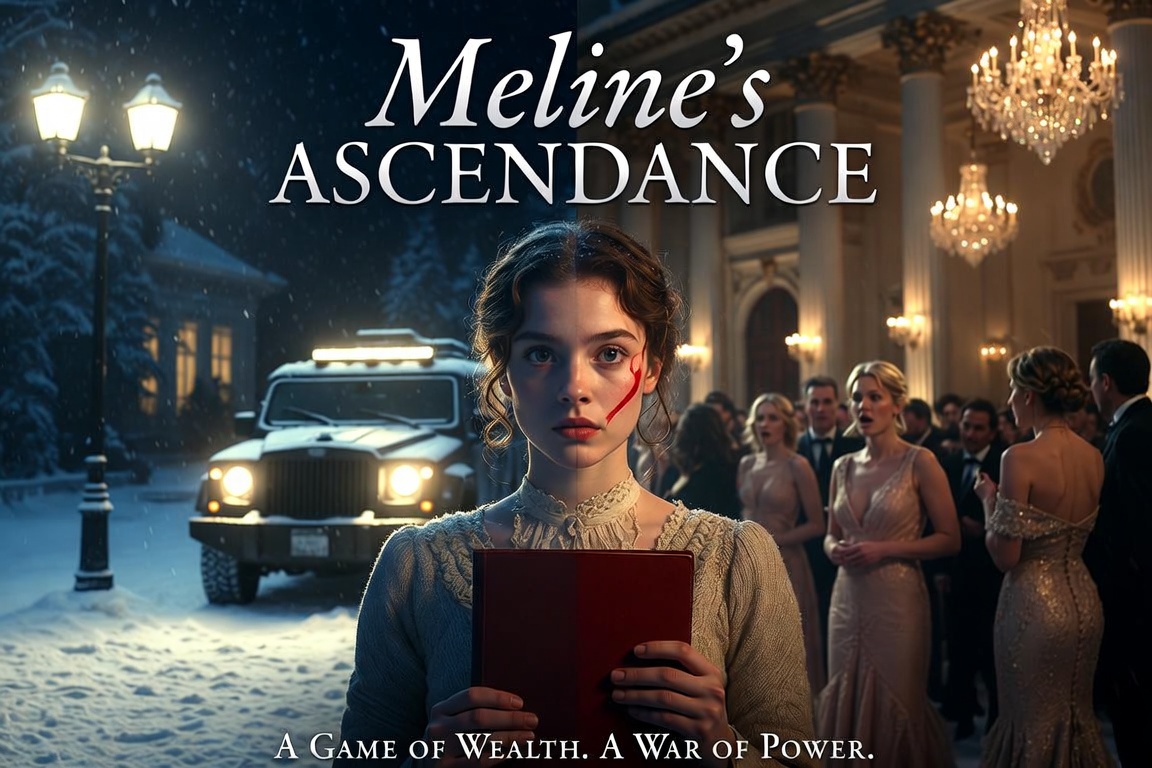
My cheek burned.
Not in a dramatic way.
In a specific way.
Five fingers.
One pearl bracelet cold against my skin before impact.
The faint scent of gardenia perfume on her wrist.
I turned my face back slowly.
Victoria Hale stood in front of me wearing a silver gown, white hair swept into a perfect knot, and the expression of a queen who had found dirt on her floor.
Behind her, my fiancé, Preston, froze beside the engagement cake.
He did not move toward me.
That was the first thing I noticed.
Not the pain.
Not the guests.
Not the whispering.
Him.
Still.
His hand still wrapped around a champagne flute.
His mouth slightly open.
His mother breathing hard in front of me.
And him, waiting to see which woman would win permission to define the room.
“Victoria,” someone whispered.
She ignored them.
Her eyes stayed on mine.
“You thought we wouldn’t find out?”
My voice came out level.
“Find out what?”
That made her angrier.
The second slap came faster.
Harder.
This time, the room gasped.
My head turned with it.
My diamond earring loosened and fell, striking the marble floor with a tiny silver click.
Somewhere near the back, a woman murmured, “Oh my God.”
My father was not there yet.
That was the only reason Victoria Hale was still standing close enough to touch me.
I tasted blood where my teeth had caught the inside of my cheek.
Preston finally stepped forward.
“Mother—”
She lifted one hand without looking at him.
He stopped.
That hurt more than the slap.
Victoria reached for my left hand.
I pulled back.
She grabbed my fingers anyway, hard enough that my knuckles pressed together.
Then she twisted the engagement ring off my finger.
The ring Preston had given me under falling snow in Central Park.
The ring I later discovered his family jeweler had chosen because Preston was “hopeless with old stones.”
The ring that had made his mother smile too widely when she first saw it on my hand.
Victoria held it up between two fingers.
“This,” she said, voice trembling now with performance, “does not belong on a beggar.”
A sound moved through the ballroom.
Not outrage.
Hunger.
New York society does not reject scandal.
It leans closer.
My mother, if she had been alive, would have told me to breathe through my nose and keep my chin level.
My father taught me something better.
Let them finish showing themselves before you show your hand.
Victoria threw the ring.
It hit the marble floor, bounced once, and slid beneath the dessert table.
A waiter flinched.
Nobody bent to pick it up.
Not Preston.
Not his father.
Not the women who had hugged me an hour earlier and called me “darling.”
Victoria stepped closer.
“You came into my family with your thrift-store manners and your little accountant salary, thinking you could marry into our name.”
My face throbbed.
The left side of the ballroom blurred slightly, then sharpened.
I looked at Preston.
He was pale.
Ashamed, maybe.
Afraid, certainly.
But still silent.
Victoria turned toward the guests.
“Do you know who she is? A nobody from Queens who rented a dress and lied her way into this room.”
A few people looked away.
Most did not.
I almost smiled.
Not because anything was funny.
Because my dress had not been rented.
It had been made in Paris by a designer whose debt my firm quietly bought and forgave after his husband’s medical treatment bankrupted them.
But Victoria did not know that.
To her, cost only mattered when she controlled who paid.
She faced me again.
“Leave before I have security remove you.”
The ballroom doors stood behind her.
Tall.
Gold-trimmed.
Closed against the snowstorm outside.
I lifted one hand to my cheek.
My fingertips came away with a faint trace of blood.
Preston whispered my name.
“Madeline.”
Finally.
My name sounded strange in his mouth now.
I looked at him.
“You were supposed to say something before she hit me the second time.”
His face crumpled.
“I didn’t know—”
“Yes,” I said quietly. “You did.”
The room heard that.
Good.
I bent down, picked up my fallen earring, and placed it in my clutch.
Then I walked to the dessert table, crouched beside the white linen, reached beneath it, and retrieved the ring.
A smear of frosting marked the diamond.
I wiped it once with a napkin.
Then I placed it on the cake stand beside the untouched engagement cake.
Victoria’s jaw tightened.
“Do not make a scene.”
I turned to her.
“You already did.”
I walked out.
No raised voice.
No tears.
No speech.
Just the sound of my heels crossing marble while two hundred people realized the woman they had just watched being humiliated had not asked anyone for permission to leave.
Outside, snow fell hard over Madison Avenue.
The cold struck my face and made the slap burn brighter.
My driver was not at the curb because I had told him to park two blocks away.
I wanted to arrive like Preston’s world expected me to arrive.
Quietly.
Modestly.
No entourage.
No signal.
That had been my mistake.
Or maybe my gift.
I stepped beneath the stone awning, opened my phone, and called my father.
He answered on the first ring.
“Madeline?”
The traffic hissed through slush.
Behind me, music resumed in the ballroom.
Soft.
Embarrassed.
Temporary.
“Dad,” I said.
My voice did not shake until the word left me.
There was a pause.
“What happened?”
I looked through the glass doors.
Victoria stood inside, surrounded by guests.
Preston stared at the ring on the cake stand.
His father, Grant Hale, was on his phone.
Damage control had begun.
I touched my cheek.
“She slapped me twice.”
Silence.
Not empty silence.
The kind my father carried before boardrooms lost money.
“Who?”
“Victoria Hale.”
Another pause.
Then my father asked, very calmly, “Where are you?”
“Laurent House.”
“Stay outside. Don’t speak to anyone.”
“Dad.”
“Yes?”
I looked back one more time.
Victoria’s eyes met mine through the glass.
She smiled.
A tiny victorious smile.
She thought I had been removed.
She thought silence meant defeat.
She thought power lived inside the ballroom.
“Come pick me up,” I said, “and show them no mercy.”
My father’s voice lowered.
“Understood.”
Thirty minutes later, Victoria Hale was begging me not to answer his call.
CHAPTER TWO — THE WOMAN THEY THOUGHT I WAS
My name is Madeline Vale.
Twenty-nine years old.
To Preston Hale’s family, I was an accountant with good posture, decent manners, and no meaningful pedigree.
They believed this because Preston told them a version of the truth small enough for them to swallow.
“She works in finance.”
“She’s private.”
“She doesn’t like attention.”
“She grew up modestly.”
All technically true.
All dangerously incomplete.
I did grow up modestly, at least for the first eight years of my life, in a narrow brick house in Queens where my mother grew basil on the fire escape and my father wore the same winter coat until the lining split. Then my mother died, and grief changed my father into a man who discovered he could either collapse or build something so large no one could ever again threaten the people he loved with money.
He built Vale Meridian Capital.
A private equity firm so discreet that newspapers usually described it as “shadowy,” “ruthless,” or “famously opaque,” depending on which journalist had recently been denied a quote.
I was not the heiress people expected.
No glossy profiles.
No charity gala covers.
No Instagram yacht photographs.
My father made sure I learned the company from the bottom.
Accounts payable.
Compliance.
Debt structuring.
Distressed asset evaluation.
Union negotiations.
Hostile boardrooms.
Bankruptcy courts.
Factories where workers looked at people in suits like we were weather systems that might destroy their town.
At twenty-three, I discovered a fraudulent supplier network siphoning millions from one of our portfolio companies.
At twenty-five, I led restructuring for a regional hospital chain and kept five rural emergency rooms open when three senior partners wanted to sell the land.
At twenty-seven, I created Ivy Division, the internal strategy group no one outside the firm was supposed to know existed.
By twenty-nine, people in certain boardrooms knew my name.
They did not say it loudly.
That was part of the value.
My father, Charles Vale, liked to say I had my mother’s conscience and his patience for revenge.
He was wrong.
I had less patience.
What I did have was restraint.
Restraint is not softness.
It is power waiting until the room signs its own confession.
Preston knew some of this.
Not all.
That was my choice.
When we met, he did not know my last name mattered.
We met at a volunteer tax clinic in Brooklyn, of all places. He had come with a corporate group from his family’s foundation. I was there because I liked numbers better when they helped people keep their apartments.
He wore a navy sweater, looked uncomfortable in a folding chair, and spent fifteen minutes trying to help an elderly woman understand a property tax credit before finally admitting he had no idea what he was doing.
I corrected the form.
He looked at me and laughed at himself.
Not performatively.
Not charmingly.
Honestly.
“I’m useless,” he said.
“Currently.”
He smiled.
That was where it started.
Preston Hale was not his mother.
That was what I told myself for two years.
He was gentler.
Less arrogant.
He tipped delivery workers, remembered birthdays, asked questions, and looked embarrassed when his family name opened doors too quickly.
But embarrassment is not resistance.
And kindness that disappears under pressure is not character.
It is mood.
I learned that under chandeliers, with my cheek burning and my ring on the floor.
CHAPTER THREE — THE HALE FAMILY NAME
The Hales were old New York money with new-money anxiety.
That combination is dangerous.
Old money teaches people to expect access.
New-money anxiety makes them panic when access is threatened.
Grant Hale, Preston’s father, ran Hale Harbor Group, a real estate and luxury hospitality empire built on waterfront hotels, private clubs, and commercial towers that photographed well from helicopters. He was tall, silver-haired, polite in the way powerful men become when they no longer need to raise their voices.
Victoria Hale was the social architect.
She controlled invitations, marriages, seating charts, charity boards, family narratives, and every public smile attached to the Hale name.
She believed marriage was not love.
It was alignment.
Families aligned wealth.
Names aligned reputation.
Children aligned strategy.
When Preston brought me home, she inspected me with the polite interest of a customs agent.
“Madeline Vale,” she said, holding my hand too long. “Any relation to the Boston Vales?”
“No.”
“The Charleston Vales?”
“No.”
“Then which Vales?”
“My father grew up in Queens.”
Her smile held.
How brave, it said.
At dinner, she asked what I did.
“I work in financial analysis.”
“How sensible.”
Preston added, “Maddie is brilliant.”
Victoria touched his sleeve.
“Of course she is, darling. You’ve always liked earnest girls.”
Earnest.
That was the first label.
Then came practical.
Then grounded.
Then private.
Then, when she realized I would not gush over her friends or beg for approval:
Difficult to read.
The family tolerated me because Preston insisted.
And because, for reasons I did not yet understand, Grant Hale watched me with caution.
Not dislike.
Recognition.
He did not know exactly who I was.
But he knew I was not as small as Victoria wanted me to be.
That made him careful.
Victoria hated careful.
She preferred quick judgments.
They were easier to enforce.
CHAPTER FOUR — BEFORE THE SLAP
The engagement party was her idea.
Not ours.
Preston and I wanted a dinner.
Twenty people.
Warm room.
Good food.
No speeches longer than three minutes.
Victoria turned it into a society event.
Laurent House.
Two hundred guests.
Press photographers outside “by accident.”
A custom ice sculpture.
A six-tier cake.
White orchids flown in from somewhere nobody ethical should ship orchids from during a snowstorm.
I objected.
Preston squeezed my hand.
“Let her have this.”
I looked at him.
“Have what?”
“She’s excited.”
“No. She’s staging us.”
He sighed.
“Maddie.”
That sigh.
The exhausted sound men make when they want a woman to stop noticing the obvious because it makes them responsible.
“It’s one night,” he said.
I should have understood then.
People who ask you to tolerate disrespect “for one night” are often introducing a long-term policy.
But I loved him.
Love can make intelligent women conduct foolish experiments.
So I agreed.
My father did not.
“You want me there?” he asked.
We were sitting in his office at Vale Meridian, forty-six floors above lower Manhattan. Snow moved outside the windows like shredded paper. The city below looked gray and expensive.
“Of course.”
“Does Preston’s family know who you are?”
“Preston knows enough.”
My father leaned back.
Charles Vale was sixty-two, Black, broad-shouldered, with close-cropped gray hair and eyes that made junior partners confess errors before they were accused. He had raised me with lullabies, balance sheets, and one rule above all others:
Never hide from people you intend to marry.
I had hidden selectively.
There was a difference.
He did not think so.
“Maddie.”
“Dad.”
His mouth tightened.
“I don’t like it.”
“I know.”
“Do they think you’re after their money?”
“Victoria does.”
“Then why attend a party in her house of mirrors?”
“Because I’m marrying Preston. Not his mother.”
He looked at me for a long time.
“Is he marrying you? Or the version of you that makes him feel brave without requiring him to be?”
The question irritated me because it was excellent.
“I’m not one of your acquisitions.”
“No,” he said softly. “You are my daughter. That is why I don’t wait for quarterly reports to act.”
I stood.
“Dad.”
He raised both hands.
“I’ll come late.”
“Why?”
“Because if I come early, they behave.”
I stared at him.
A faint smile moved across his face.
“I want to see who they are when they think no one important is watching.”
That was Charles Vale.
Patient for exactly the wrong reasons.
He arrived thirty minutes late.
Thirty minutes after the slap.
Exactly in time to become the consequence.
CHAPTER FIVE — THE CALL
When my father’s car pulled up outside Laurent House, the snow was falling thick enough to turn the streetlights into halos.
A black Maybach eased to the curb without hurry.
Behind it came two more cars.
Not flashy.
Not a motorcade.
Just enough to make the doorman straighten.
The driver stepped out first.
Then my father.
He wore a black overcoat over a dark suit. No hat. Snow gathered on his shoulders and melted there. His face revealed nothing.
That was his gift.
Mine too, when pain did not get there first.
He crossed the sidewalk toward me.
I had not realized I was shaking until he removed his gloves and touched my cheek.
His thumb stopped just below the mark.
The left side of his face tightened.
Only once.
“Who saw?”
“Everyone.”
“Did Preston stop her?”
“No.”
His eyes moved to the glass doors.
Inside, people had noticed him.
Of course they had.
Even people who did not know Charles Vale by face recognized the body language of those who did.
A ripple moved through the foyer.
A man stepped forward quickly.
Grant Hale.
He recognized my father.
That was the first visible fracture.
Grant’s face went pale beneath the warm lobby lights.
“Charles.”
My father looked at him through the glass.
Then back at me.
“Do you want to leave?”
I swallowed.
“Yes.”
“Do you want the ring?”
I looked behind him.
Inside, the ring still sat on the cake stand.
Preston stood near it, staring at us through the glass like a man watching a bridge burn from the wrong side.
“No.”
My father nodded.
“Good.”
He turned to his chief counsel, Elaine Brooks, who had stepped from the second car with a leather folder tucked beneath one arm.
“Begin.”
Elaine nodded once.
Then walked into Laurent House.
Not to shout.
Not to threaten.
To serve documents.
That was my father’s preferred form of thunder.
We were halfway to the car when the ballroom doors opened behind us.
“Madeline!”
Preston came out without a coat, snow striking his black tuxedo jacket. His hair, usually perfect, had fallen across his forehead.
My father stopped.
So did I.
Preston looked at my cheek.
His face folded.
“Maddie, I’m sorry.”
The words hurt.
Because I believed him.
Not enough.
But believed him.
My father did not speak.
Preston glanced at him, then back at me.
“I didn’t know she would do that.”
I turned.
“Did you know she thought I was beneath you?”
His mouth opened.
Closed.
Snow collected on his shoulders.
“Did you know?” I asked again.
He looked down.
“Yes.”
“Did you correct her?”
He whispered, “I tried.”
“No,” I said. “You softened her language when I was present. That’s not correction. That’s upholstery.”
My father’s mouth twitched.
Preston flinched.
“Maddie, please. Come back inside. We can fix this.”
I looked through the glass.
Victoria was visible in the foyer now, speaking urgently to Elaine.
Elaine handed her a document.
Victoria stopped talking.
Her face changed.
Thirty minutes earlier, she had called me a beggar.
Now she was reading the first page of a notice concerning Hale Harbor Group’s credit exposure to Vale Meridian-controlled debt instruments.
That was the thing about high society.
Everyone looks independent until someone finds the loan.
Victoria looked up slowly.
Her eyes met mine.
The snow between us seemed to stop.
She knew.
Not everything.
Enough.
Preston followed my gaze.
“What is that?”
My father finally spoke.
“Consequences.”
Preston turned toward him.
“Mr. Vale—”
“Charles,” my father said. “You lost the privilege of family names.”
The words cut cleanly.
Preston’s face reddened.
“I love your daughter.”
My father looked at him.
“Love is not proven by what you feel when the harm is finished.”
Preston had no answer.
Neither did I.
My father opened the car door.
I stepped inside.
As the driver pulled away, I looked back through the snow.
Victoria stood on the steps now, document in hand.
For the first time since I had met her, she looked unsure of where to place her face.
CHAPTER SIX — THIRTY MINUTES LATER
Victoria called at 11:42 p.m.
I was in my father’s penthouse study with an ice pack against my cheek, wearing one of his old cashmere sweaters and sitting beneath a painting my mother had chosen the year before she died.
The study smelled of cedar, coffee, and snow drying on wool.
Manhattan glittered beyond the windows.
My father sat across from me, silent, reading the preliminary exposure memo Elaine had assembled in the car. He did not hover. He did not rage. He did not ask if I wanted revenge.
He knew better.
Revenge feels satisfying only in stories told by people who do not understand aftermath.
What I wanted was clarity.
My phone vibrated on the desk.
Victoria Hale.
I stared at the name.
Dad looked up.
“Your choice.”
I answered on speaker.
For three seconds, all we heard was breath.
Then Victoria’s voice came through, stripped of ballroom polish.
“Madeline.”
I said nothing.
She swallowed.
“I believe there has been a misunderstanding.”
My father’s eyebrows lifted.
I leaned back.
“What part?”
Another pause.
“The documents your counsel delivered—”
“My father’s counsel.”
“Yes. The documents your father’s counsel delivered are extreme.”
“More extreme than assault at my engagement party?”
The line went silent.
When Victoria spoke again, her voice shook.
“I was upset.”
“You were informed.”
“I was misinformed.”
“By whom?”
She did not answer.
That answer was useful.
I looked at my father.
He made a note.
“Madeline,” Victoria said, softer now, “I owe you an apology.”
“Then owe it.”
A sharp inhale.
“I am sorry.”
“For?”
“For striking you.”
“And?”
“For speaking cruelly.”
“And?”
“For… misjudging you.”
I touched the ice pack to my cheek.
The skin still throbbed.
“No.”
She went quiet.
“That is the apology you want to give because you learned I have power. Try again.”
My father stopped writing.
On the phone, Victoria breathed unsteadily.
“I called you a beggar.”
“Yes.”
“I threw your ring.”
“Yes.”
“I humiliated you because I believed you had no protection.”
There it was.
The room settled.
My father’s eyes stayed on mine.
“Yes,” I said.
Victoria’s voice cracked.
“I am sorry.”
For the first time, the words had weight.
Not enough to lift what she had done.
But enough to count.
Then came the ask.
Of course.
“Please do not let your father destroy Grant’s company.”
My father looked out at the city.
I almost smiled.
There it was.
Not Preston.
Not the engagement.
Not concern for the woman she slapped.
The company.
The name.
The assets.
The empire.
“I am not letting my father do anything,” I said.
“What?”
“You still think power belongs to men around me.”
“No, that’s not what I—”
“My father is not acting because his daughter cried. He is acting because your family exposed a risk profile.”
Victoria’s breathing changed.
Risk profile was a language she understood less comfortably than apology.
I continued.
“Hale Harbor Group is overleveraged. Your mezzanine debt sits inside a vehicle my division controls. Your refinancing depends on reputation, investor confidence, and covenant compliance. Tonight, you created reputational exposure in a room full of witnesses.”
She said nothing.
“Your problem is not my father’s anger, Victoria. Your problem is that you behaved exactly like someone lenders should distrust.”
A sound came through the phone.
Small.
Almost a sob.
“Please.”
Thirty minutes earlier, she had not believed I deserved to stand beside her son.
Now she was begging me to stand between her and ruin.
I looked at the ice melting in the towel.
My cheek hurt.
My heart hurt more.
Because Preston had not called again.
His mother did.
The hierarchy remained.
“I’ll speak with counsel in the morning,” I said.
“Madeline—”
“Do not call me again tonight.”
I ended the call.
The study returned to silence.
My father watched me.
“You handled that well.”
“I wanted to be crueler.”
“I know.”
“Would that have been wrong?”
He considered.
“No.”
I looked at him.
“But?”
“But cruelty spends quickly,” he said. “Control compounds.”
That was my father.
Finance as philosophy.
He stood and crossed the room, then placed a small velvet box on the desk.
I frowned.
“What is that?”
“Your mother’s ring.”
My throat tightened.
“Dad.”
“She wanted you to have it when you married someone who understood what it meant to stand beside you.”
I looked at the box.
Did not touch it.
“Not tonight.”
“No,” he said. “Not tonight.”
He left it there anyway.
Not as pressure.
As witness.
CHAPTER SEVEN — THE MORNING BOARD CALL
By 8:00 a.m., Hale Harbor Group’s board had received three documents.
A covenant review notice.
A reputational risk inquiry.
A request for emergency disclosure concerning controlling-family conduct and potential litigation.
At 8:17, Grant Hale called my father.
At 8:19, my father declined.
At 8:23, Grant called Elaine.
At 8:31, Elaine invited him to a 10:00 a.m. board-level call with Vale Meridian’s debt committee.
At 9:45, I walked into Vale Meridian Capital wearing a charcoal suit, my mother’s diamond studs, and foundation thick enough to cover the handprint on my face but not enough to make me forget it.
The office occupied three floors of a black glass tower downtown. No logo in the lobby. No names on the elevator directory. Just a private access panel, silent hallways, and the kind of carpet that swallowed footsteps before they became announcements.
People turned as I entered.
Not dramatically.
Professionally.
News travels through capital faster than gossip because money has better infrastructure.
Elaine met me near the conference room.
“Your father is already inside.”
“Is Grant on?”
“Waiting.”
“Victoria?”
“Not invited.”
Good.
At 10:00 exactly, the call began.
Present:
Charles Vale.
Elaine Brooks.
Three senior partners.
Me.
Grant Hale.
Hale Harbor’s CFO.
Two outside counsel.
Preston joined at 10:04.
Late.
My father noticed.
I noticed too.
Grant appeared on screen in a home office lined with law books he probably never read. He looked like he had not slept. Preston sat beside him, eyes shadowed, hair damp, tie loose.
“Maddie,” Preston said.
I did not respond.
Elaine opened the meeting.
“This call concerns material concerns regarding Hale Harbor Group’s debt exposure and potential non-financial covenant implications following last night’s incident at Laurent House.”
Grant leaned forward.
“Elaine, with respect, this is a family matter.”
My father’s voice entered the room.
“No, Grant. It became a business matter when witnesses saw your controlling family member assault a senior principal of our firm.”
Preston’s eyes widened.
Senior principal.
He knew I worked with Vale Meridian.
He did not know my title.
Grant did.
Or had feared it.
Now confirmed, the room shifted around him.
His CFO looked sideways.
“Senior principal?” Preston whispered.
I looked at him for the first time.
“Yes.”
His face went pale.
My father did not spare him.
“Madeline founded Ivy Division.”
Preston stared as if I had become a stranger in real time.
Maybe I had.
Or maybe he was finally meeting me.
Grant closed his eyes briefly.
Elaine continued.
“We require disclosure of any additional conduct that could impact investor confidence, pending refinancing, or management stability.”
Grant’s attorney began the usual language.
Misunderstanding.
Private event.
No charges filed.
No material risk.
I listened for seven minutes.
Then I spoke.
The room stopped.
Men like Grant Hale are used to daughters being present in family calls as emotional currency.
Not as authority.
“Mr. Hale,” I said, “did you know Victoria intended to confront me publicly last night?”
Grant’s jaw tightened.
“No.”
“Did you know she had hired a private investigator?”
Preston turned sharply toward his father.
“What?”
Grant said nothing.
Elaine slid a document onto the screen.
Invoice.
Investigation services.
Subject: Madeline Vale background review.
Paid by Hale Family Office.
Preston stood so fast his chair rolled backward.
“You investigated her?”
Grant rubbed his face.
“Your mother was concerned.”
Preston turned to me.
“Maddie, I didn’t know.”
I looked at him.
There it was again.
I didn’t know.
A true sentence, maybe.
A useless one, often.
Elaine displayed the second document.
The investigator’s report.
Incomplete.
Sloppy.
It listed me as:
Madeline Vale, accountant.
Estimated annual income: $92,000.
Family wealth: unclear, likely modest.
Social risk: moderate.
Marriage motivation: potential financial elevation.
Potential financial elevation.
I almost laughed.
My father did not.
The temperature in the room seemed to drop.
Grant’s CFO looked like he wanted to exit his own body.
I asked, “Did anyone attempt to verify this report?”
Grant’s attorney said, “Madeline, emotions are understandable—”
“Ms. Vale,” my father said.
The attorney stopped.
I continued.
“Did anyone attempt to verify this report?”
Grant answered.
“No.”
“Did Victoria act on it?”
Grant swallowed.
“Yes.”
“Did your family office pay for it?”
“Yes.”
“Did Preston know?”
Grant looked at his son.
“No.”
Preston looked at me, desperate.
I believed that too.
Again, not enough.
I leaned back.
“Here is what happens next. Hale Harbor will submit full disclosure concerning family office investigative practices, related reputational risk controls, and all third-party inquiries made into me, my father, or Vale Meridian affiliates. You will issue a written apology drafted with counsel and approved by our office. Victoria Hale will not contact me directly.”
Grant nodded stiffly.
“Understood.”
I continued.
“Regarding the debt position, Ivy Division recommends no acceleration today.”
Grant exhaled.
Preston closed his eyes.
I raised one finger.
“However, we will require enhanced reporting, independent governance oversight, and removal of family office influence from refinancing communications.”
Grant’s face tightened.
“That is excessive.”
My father spoke.
“No. That is mercy with documentation.”
I looked at Grant.
“You should take it.”
He did.
Men like Grant know when a hand is being extended with a blade underneath.
The call ended at 10:43.
Preston remained on screen.
“Madeline, please don’t hang up.”
I looked at him.
The conference room behind me was silent.
My father closed his folder but did not leave.
Neither did Elaine.
“What do you want, Preston?”
His face twisted.
“To apologize.”
“Then apologize.”
“I’m sorry I froze.”
Good start.
“I’m sorry I let my mother treat you like you had to earn a place with us.”
Better.
“I’m sorry I let you hide parts of yourself because it was easier for me not to confront the parts of my family that would punish you for them.”
That landed.
My father’s eyes flicked toward me.
Preston swallowed.
“I love you.”
I breathed once.
Slowly.
“I believe you.”
Hope entered his face.
Then I continued.
“But you did not protect me.”
It left.
He nodded, tears in his eyes.
“No.”
“The engagement is over.”
His mouth opened.
Then closed.
He lowered his head.
“I understand.”
For the first time since I had known him, he did not ask me to soften the consequence.
That mattered.
It did not change it.
I ended the call.
My father stood.
Elaine gathered her papers.
No one spoke for a moment.
Then my father said, “Breakfast?”
I stared at him.
“It’s almost eleven.”
“Then brunch. Your mother believed every crisis required eggs.”
I laughed.
It came out broken.
But it came.
CHAPTER EIGHT — IVY DOES NOT SHOUT
The story reached Page Six by noon.
Of course it did.
Heiress? Private Equity Power Player Slapped at Society Engagement Party.
No names at first.
Then names.
Then corrections.
Then speculation.
Then photographs from outside Laurent House.
The media got details wrong.
They always do.
Some called me a billionaire heiress.
I was not.
My father was wealthy.
I was powerful.
People confuse the two.
Some called Victoria “protective.”
Others called her “unhinged.”
Preston was photographed outside his apartment looking devastated, which generated sympathy from women who liked wounded men more than accountable ones.
I ignored most of it.
At my father’s recommendation, I went to my apartment, changed into soft clothes, took an anti-inflammatory, and slept for four hours.
When I woke, my cheek had darkened beneath the makeup.
The bruise was not large.
But it was honest.
I stood in the bathroom mirror and looked at it.
I had been insulted before.
Underestimated.
Dismissed.
Patted on the head by men whose companies I later restructured.
But being slapped by the mother of the man I intended to marry had a different shape.
It was intimate.
Not because she knew me.
Because she had touched my future with violence.
The doorbell rang at 6:12 p.m.
I checked the camera.
Preston.
Alone.
Holding a paper bag.
No flowers.
Good.
Flowers would have been offensive.
I opened the door but left the chain on.
He looked at the chain.
Then at my face.
His eyes filled when he saw the bruise.
“I brought soup,” he said.
The absurdity almost made me cry.
“What kind?”
“Tomato.”
“You hate tomato soup.”
“I know.”
“Then why?”
“You like it.”
A small answer.
A human one.
Not enough.
But human.
I opened the door.
He did not step in until I moved aside.
Progress, I thought bitterly.
We sat at my kitchen island.
The apartment overlooked the East River, all steel light and winter-gray water. Snow clung to the window ledges. The room smelled of tomato soup, basil, and the candle my housekeeper kept lighting despite my insistence that I was not a candle person.
Preston looked around.
“I’ve been here twenty times,” he said.
“Yes.”
“I never realized.”
“What?”
“That this place was expensive in a way people don’t photograph.”
I smiled faintly.
“That’s the idea.”
He looked down.
“My mother thought you were after us.”
“I know.”
“I didn’t.”
“No,” I said. “You just didn’t object strongly enough when she did.”
He took that.
No defense.
No “but.”
“I thought if I kept the two worlds separate long enough, everyone would adjust.”
“Two worlds?”
“My family and you.”
I looked at him.
“Preston, I was supposed to become your family.”
He closed his eyes.
“I know.”
Silence.
Outside, a ferry moved across the dark river, its lights trembling on the water.
He pushed the paper bag toward me.
“I found the ring.”
My chest tightened.
He removed the small velvet box.
Placed it between us.
“I had it cleaned.”
I did not touch it.
“I’m not asking you to put it back on,” he said quickly. “I just didn’t want it sitting in that ballroom.”
“Thank you.”
He nodded.
His fingers trembled.
“I told my mother I won’t see her for a while.”
That surprised me.
“For a while?”
“I don’t know how long. I’m trying not to make promises I haven’t learned how to keep.”
That was new language.
Possibly his therapist.
Possibly pain.
Both useful.
“I moved out of the family office.”
“What does that mean?”
“I resigned from the foundation board. I’m staying at my own apartment. I told Dad I won’t work on anything tied to family governance until an independent advisor reviews it.”
I studied him.
“That sounds like your lawyers.”
“Some of it. Some of it is me.”
“Which part?”
He swallowed.
“The part where I realized I was thirty-three years old and still waiting for my mother’s face before deciding what kind of man I was allowed to be.”
The room went quiet.
That was honest enough to hurt both of us.
I looked at the soup.
“You should eat before it gets cold.”
He laughed once.
A sad little sound.
We ate tomato soup in silence.
Not reconciliation.
Not forgiveness.
A meal.
Sometimes a meal is all the bridge can hold.
When he left, he did not ask to kiss me.
He stood at the door and said, “I’m sorry, Madeline.”
No nickname.
No reaching.
No demand.
I nodded.
After the door closed, I carried the ring box to my desk.
I placed it beside my mother’s unopened ring box.
Two futures.
Neither ready.
CHAPTER NINE — VICTORIA’S LETTER
Victoria’s written apology arrived three days later.
It was terrible.
Not legally.
Legally, it was excellent.
Personally, it was embalmed.
Dear Ms. Vale,
I regret the incident that occurred during the engagement celebration at Laurent House…
Incident.
Occurred.
Regret.
No.
I sent it back through counsel with one note:
This apologizes for optics, not conduct.
The second version arrived the next day.
Better.
Still dead.
I rejected it too.
On the third attempt, Victoria asked to write without lawyers.
Elaine advised against direct emotional communications.
My father said, “Let her try. You are not obligated to accept sincerity just because it finally arrives.”
The third letter came handwritten.
Cream paper.
Blue ink.
No monogram.
Madeline,
I have written two apologies that sounded like they were addressed to shareholders. That is because I am better at protecting a name than facing a person.
I struck you.
Twice.
There is no elegant sentence that makes that smaller.
I called you a beggar because I believed you lacked the power to punish me for saying what I thought. That is an ugly truth. It is also the truth.
When I learned who you were, I was frightened first for Hale Harbor, then for Preston, then for myself. I wish I could say I immediately understood what I had done to you. I did not. That shame came later, and it came more quietly than fear.
I have spent my life teaching my son to be gentle in public and obedient in private. Last night showed me what that cost him and what it cost you.
I am sorry.
Not because you are Charles Vale’s daughter.
Because you were standing in front of me as a woman about to join my family, and I chose humiliation.
I do not ask forgiveness.
Victoria Hale
I read it twice.
Then a third time.
It was not enough.
But it was alive.
I placed it in a folder labeled:
Hale Matter — Personal.
My father saw the label later and raised an eyebrow.
“Personal?”
“Not everything belongs in litigation.”
“No,” he said. “But most things benefit from indexing.”
He was impossible.
I loved him.
CHAPTER TEN — THE WOMAN AT THE WINDOW
One month passed.
Then two.
The public scandal cooled, as scandals do when no one keeps feeding them.
Hale Harbor accepted enhanced oversight.
Grant Hale retired “earlier than expected,” which meant his board had been waiting for a polite phrase to cover pressure.
Victoria disappeared from the charity circuit.
Preston began therapy twice a week and sent no dramatic gifts, no midnight texts, no emotional ambushes.
Once a week, he mailed a letter.
Short.
Specific.
Never asking me to respond.
One said:
Today I remembered you telling me that silence can become agreement when someone is being harmed. I thought I understood that. I didn’t.
Another:
I told my mother no today and did not explain it twelve times. It felt like jumping off a roof and landing on my feet.
Another:
I miss you. That is not a request. Just a fact I am learning to carry.
I kept them in a drawer.
Not because I was waiting.
Because evidence of effort deserved a place.
In March, I saw Victoria again.
Not at a gala.
Not in a boardroom.
At a women’s shelter benefit my mother had helped found years earlier. I attended every year quietly. Donated through a trust. Sat in the back. Left before dessert.
Victoria stood near a window overlooking the city, wearing a black dress and no jewelry except small pearl earrings. She looked thinner. Older. Less arranged.
She saw me.
For a second, panic crossed her face.
Then she did something no society matriarch had ever done to me.
She waited for permission.
I walked over.
“Victoria.”
“Madeline.”
A tray of champagne passed.
Neither of us took one.
The ballroom was smaller than Laurent House, warmer, with exposed brick, soft lights, and photographs on the walls of women whose names were not famous enough for the donors to remember but whose lives had been changed by money turning into shelter.
Victoria looked at the photographs.
“I joined the advisory board.”
“I heard.”
“Not for optics.”
I looked at her.
She gave a small, humorless smile.
“All right. At first, partly for optics. Then I read the case files.”
I said nothing.
She continued.
“There was a woman who stayed because her husband never hit her hard enough to make outsiders uncomfortable.”
My chest tightened.
Victoria’s fingers touched her wrist where the pearl bracelet had been that night.
“I have been thinking about acceptable violence.”
The phrase entered the space between us.
“I slapped you in a room where I knew people would call it drama instead of assault.”
“Yes.”
Her eyes filled.
“I knew exactly what I was doing.”
That mattered.
More than the letter.
“I’m working on that,” she said.
“Good.”
A silence.
Then she said, “Preston loves you.”
I looked at her.
She raised one hand.
“I am not asking. I forfeited that. But he does.”
“I know.”
“I taught him poorly.”
“He is responsible for learning differently.”
“Yes.”
Another useful word.
She looked out the window.
“I used to think family was something one guarded from outsiders. Now I think perhaps I guarded the wrong door.”
I almost smiled.
“That sounds expensive to learn.”
Her mouth curved faintly.
“It has been.”
For the first time, we shared something close to humor.
Not warmth.
Not forgiveness.
A human moment.
I left before dessert.
This time, Victoria did not follow.
CHAPTER ELEVEN — IVY GROWS
Six months after the engagement party, Ivy Division bought a controlling stake in a struggling chain of assisted-living communities.
The financial press called it opportunistic.
They were not wrong.
Opportunity is not immoral.
Extraction is.
The company had been mismanaged by men who saw aging women as occupancy rates and underpaid caregivers as margin expansion. My team restructured debt, replaced leadership, raised wages, sold nonessential land, and created a resident-family council with actual enforcement authority.
My father read the final plan and said, “Your mother would have liked this.”
That was the first time he mentioned her in relation to my work without sadness taking the whole room.
I framed the acquisition thesis.
Not for vanity.
For memory.
At the bottom, I wrote one sentence:
Dignity is not a luxury asset.
The work changed me.
Or maybe it gave me somewhere to put the part of me that had walked out into snow with a burning cheek.
I understood more clearly than ever what power was for.
Not punishment.
Not applause.
Not proving Victoria wrong.
Power was a locked door opened for someone who had been told to wait outside.
Power was making sure money could not keep calling cruelty tradition.
Power was choosing not to destroy everything you could destroy because you knew exactly what destruction cost.
That was Ivy Revenge.
Not poison.
Roots.
Slow.
Quiet.
Cracking marble from underneath.
CHAPTER TWELVE — THE SECOND PROPOSAL
Preston proposed again one year later.
Not with a ring.
With a question.
We were walking through Fort Tryon Park in late winter, the Hudson dark and silver below us. Snow lingered in dirty patches beneath the trees. The air smelled of cold soil and distant river water.
We had been seeing each other carefully for three months.
Coffee.
Walks.
Therapy-adjacent conversations that made us both exhausted.
No family events.
No public appearances.
No assumptions.
He had earned the beginning of access.
Not the return of the past.
He stopped near a stone wall.
“I want to ask you something,” he said.
My body tensed.
He noticed.
Good.
“It’s not what you think.”
“What is it?”
He took a breath.
“If we continue, what would make you feel safe?”
I looked at him.
The old Preston would have asked, Do you still love me?
The old Preston would have asked, Can we move forward?
The old Preston would have made longing the center.
This man asked about safety.
I looked out over the river.
“Time.”
He nodded.
“Your mother not having access to our relationship.”
“Yes.”
“Your own relationship with your family being your work, not mine.”
“Yes.”
“No shared finances without full disclosure.”
“Yes.”
“No public engagement until private trust exists.”
His mouth trembled slightly.
“Yes.”
I turned toward him.
“And if your mother ever humiliates me again, you do not freeze.”
His eyes filled.
“No.”
“No, meaning you won’t freeze? Or no, you don’t want to discuss it?”
“No, I won’t freeze.” He swallowed. “And if I do, I will name it before you have to.”
That answer mattered.
Wind moved between us.
I reached into my coat pocket and removed the old engagement ring box.
His breath caught.
I opened it.
The ring sat inside, cleaned, brilliant, no longer mine in the way it had been before.
“I don’t want this ring,” I said.
He closed his eyes briefly.
“I understand.”
“I want it sold.”
He looked at me.
“The money should go to the shelter.”
A slow smile moved across his face.
“My mother will hate that.”
“Probably.”
“Good.”
I laughed.
He did too.
Then he said, “My grandmother had a ring. Not big. Not important to anyone but her. She left it to me. I never offered it because I thought you deserved something impressive.”
I looked at him.
“And now?”
“Now I think impressive failed us.”
That was a good answer.
Not perfect.
Good.
“Bring it someday,” I said.
“Someday?”
“Yes.”
He nodded.
Hope, restrained.
We walked back through the park with our hands gloved and close but not touching.
At the exit, he asked.
“Can I hold your hand?”
I said yes.
That was the second proposal.
Not the ring.
The asking.
CHAPTER THIRTEEN — THE DINNER
Victoria invited me to dinner two years after the slap.
I did not accept immediately.
I asked who would attend.
She replied:
You, Preston, Charles if he is willing, Grant, and me. No guests. No photographers. No agenda except apology and a meal.
My father read the invitation at his kitchen table while eating toast.
“Grant will sweat through his collar,” he said.
“Dad.”
“What? I enjoy simple pleasures.”
“Will you come?”
He looked at me.
“Do you want me there?”
“Yes.”
“Then yes.”
The dinner took place in Victoria’s home, not a club.
That mattered.
Homes reveal what public rooms conceal.
The Hale townhouse was beautiful in the way old money hires restraint. Dark wood. Cream walls. Art chosen by advisors pretending not to be advisors. Fresh flowers, but not too many. The dining room table seated twelve, but was set for five.
Victoria met us at the door.
No servants lined behind her.
No performance.
She wore a navy dress and her pearl earrings.
When she saw my father, she inclined her head.
“Charles.”
“Victoria.”
An entire war could have lived inside those two names.
Grant looked diminished after retirement. Not weak. Less inflated. He shook my hand carefully.
“I owe you an apology as well,” he said.
“Yes,” I replied.
He blinked.
Then nodded.
Dinner was roasted chicken, vegetables, bread, and a pear tart Victoria said she made herself.
My father looked skeptical.
She saw.
“I did.”
He smiled.
“I said nothing.”
“Your face has subtitles, Charles.”
I nearly choked on my water.
Preston looked startled.
Then laughed.
The meal did not heal history.
But it did something harder.
It made five powerful people sit at one table without pretending power had not harmed anyone.
After dessert, Victoria stood.
“I need to say this here.”
The table went quiet.
She looked at me.
“I slapped you in a room full of people because I thought I had the right to decide who belonged near my family. I was wrong. I apologize again, without condition.”
Then she looked at Preston.
“I trained you to avoid my displeasure more than you trusted your own conscience. That does not excuse your choices. It does mean I helped create the silence that hurt Madeline.”
Preston’s throat moved.
“Thank you for saying that.”
Grant cleared his throat.
“I used money to avoid conflict in this family. That also harmed people.”
My father looked at him.
“Interesting how often money becomes cowardice in formalwear.”
Grant sighed.
“Charles.”
“What? Growth should include accuracy.”
Victoria laughed.
A real laugh.
Small.
Surprised.
Mine followed.
Preston reached for my hand under the table.
He did not take it until I turned my palm upward.
I did.
After dinner, Victoria walked me to the door.
Snow had begun outside.
Of course.
She touched the doorframe, not me.
“Madeline.”
“Yes?”
“I know you may never see me as family.”
“I don’t know what I’ll see you as.”
She nodded.
“That is more than I deserve.”
“Yes.”
Her mouth curved.
“You are very much your father’s daughter.”
“And my mother’s.”
Her expression softened.
“Yes. I think so.”
That was the first thing she ever said about my mother that did not feel like an assessment.
I stepped into the snow.
My father waited by the car, pretending not to watch like a hawk in a cashmere coat.
Preston walked beside me.
This time, when the cold hit my face, there was no slap burning underneath it.
Only air.
Sharp.
Clean.
Mine.
CHAPTER FOURTEEN — THE RING THAT MEANT LESS AND MORE
Preston gave me his grandmother’s ring in spring.
Not at a restaurant.
Not in a park.
In my kitchen, while we were making tomato soup badly.
The ring was small.
Oval sapphire.
Thin gold band.
A tiny chip on one side.
He placed the box on the counter between chopped basil and a spilled line of salt.
“No speech,” he said.
“Thank God.”
He laughed nervously.
“I’m serious.”
“So am I.”
He opened the box.
“My grandmother was the only person in my family who said no to my mother and survived it gracefully.”
“I would have liked her.”
“She would have liked you. She liked women who looked polite while moving furniture nobody else wanted moved.”
I smiled.
He took a breath.
“I love you. I want to build a life with you. Not merge empires. Not fix history. Not prove anything to the Hales or the Vales or Page Six. Just a life.”
The soup began to bubble too aggressively.
Neither of us moved.
He continued.
“I will fail sometimes. I will not use that as an excuse to stop learning. I will not ask you to become smaller so I can feel brave. I will stand beside you in public and in private. And if I forget what that means, I will listen the first time you tell me.”
That was the speech, whether he admitted it or not.
I looked at the ring.
Then at him.
“Yes.”
His face crumpled.
I laughed.
“Are you crying before putting it on?”
“Maybe.”
“Embarrassing.”
“Extremely.”
He slid the ring onto my finger.
It fit.
The soup burned.
We ordered pizza.
That night, I called my father.
“I said yes.”
Silence.
Then he exhaled.
“Good.”
“That’s it?”
“I’m processing.”
“You approved months ago.”
“I approved his effort. I reserve the right to emotionally harass him forever.”
“Dad.”
“Mildly.”
“Dad.”
“Fine. Respectfully.”
Then, softer:
“Your mother would be happy.”
I looked at the small sapphire on my hand.
“I know.”
CHAPTER FIFTEEN — IVY REVENGE
We married in October.
Small ceremony.
Thirty people.
No Laurent House.
No society pages.
No ice sculpture.
Victoria wore pale gray and cried quietly.
My father walked me down the aisle.
Halfway there, he stopped.
I looked at him.
“What?”
He took my hand from his arm and placed it over my own heart.
“You walk yourself the last half,” he whispered. “I’m just honored to be nearby.”
I almost ruined my makeup.
So did half the room.
Preston waited at the end of the aisle with wet eyes and steady feet.
That mattered.
After the ceremony, Victoria approached me.
She held out a small envelope.
“I wrote something,” she said. “You can read it later.”
I did.
That night.
Inside was a card.
Madeline,
Thank you for teaching me that family is not guarded by keeping people out. It is honored by becoming safe enough to enter.
Victoria
I placed it in the same folder as her first real apology.
Not because everything was erased.
Because growth, like harm, deserves documentation.
Years later, people still loved the old story.
She slapped me twice.
I made one call.
Thirty minutes later, she begged.
It sounded clean.
Satisfying.
Sharp.
But the truth was better.
She slapped me twice, and I learned that hidden power is not the same as self-respect.
My father came, and I remembered protection can arrive without taking away my voice.
Preston froze, then spent years learning how not to.
Victoria begged, then began the harder work of becoming someone who did not need fear to apologize.
And I discovered revenge did not have to look like destruction.
Sometimes revenge looks like a woman walking out into snow with a burning cheek and refusing to walk back into any room where love requires humiliation.
Sometimes it looks like contracts revised.
Debts restructured.
Apologies rewritten until they become human.
A ring sold to fund shelter beds.
A smaller ring worn with fuller trust.
A father waiting at the curb.
A daughter saying, “Show them no mercy,” then learning mercy can exist without surrender.
That is Ivy Revenge.
Not loud.
Not quick.
Not poison.
Roots.
Pressure.
Patience.
The slow cracking of marble beneath something alive.
And when people ask what happened to the woman who called me a beggar, I tell them the truth.
She learned the cost of mistaking quiet for weakness.
So did I.
Because quiet was never weakness.
It was preparation.