 A night guard was blamed for letting a crying woman into a luxury hotel.
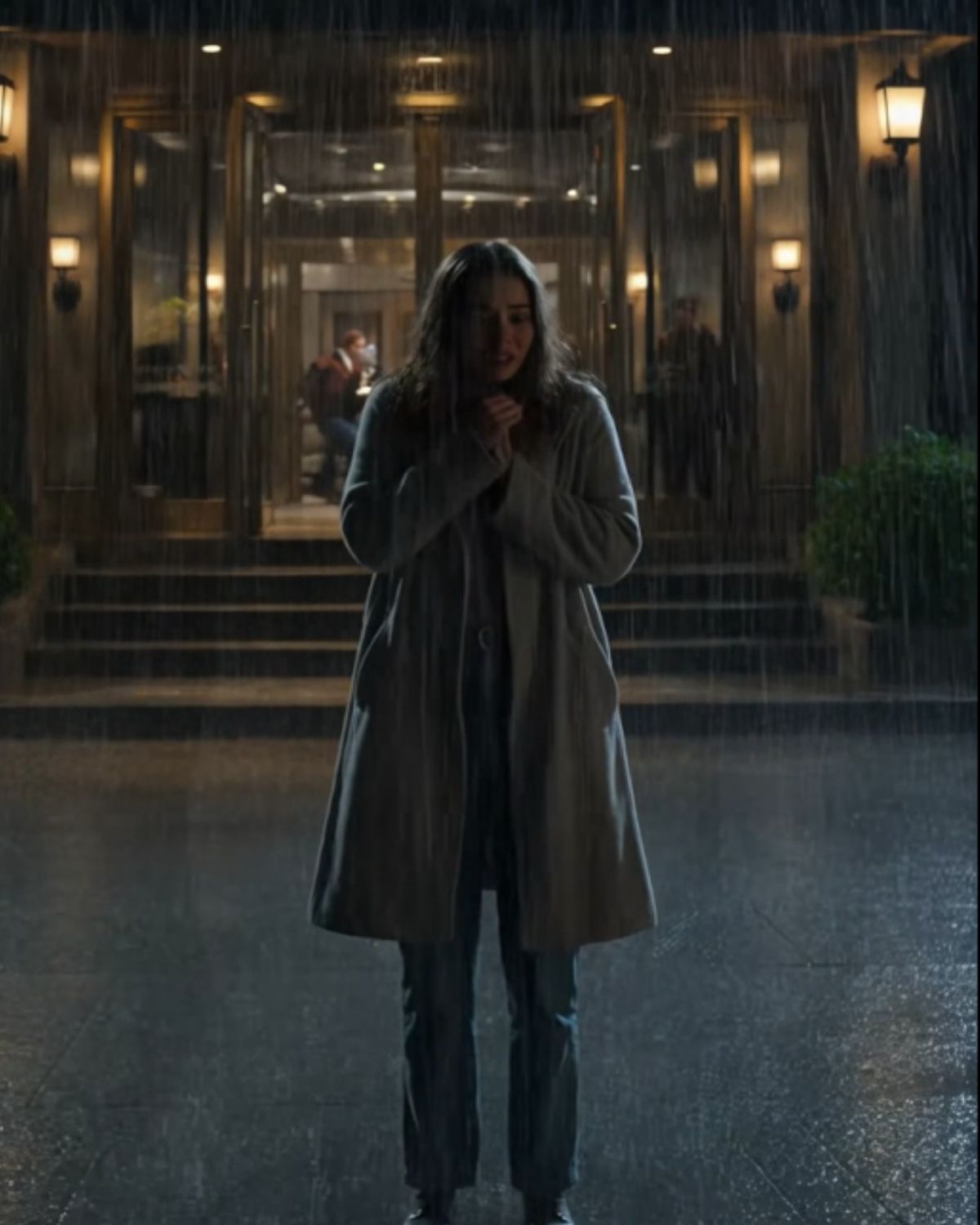
It was almost midnight at the Aurelia Hotel, and rain was hitting the glass entrance so hard the street outside looked blurred.
Inside, the lobby was warm and quiet. Marble floors. Soft lights. Empty sofas. A security desk near the front door.
Marcus Reed, the night guard, was checking the entrance camera when he noticed her.
A young woman stood outside under the awning, soaked from the rain. She wore a simple coat and held her phone with both hands. Every few seconds, she looked over her shoulder.
Then she wiped her face.
She was crying.
Marcus stepped outside, keeping a respectful distance.
“Miss, are you okay?”
She shook her head slightly.
“I don’t feel safe waiting outside.”
Marcus looked down the street. It was almost empty.
He did not ask too many questions. He did not try to be a hero. He simply followed what his training told him: move a distressed person to a visible, safe area.
“Come inside,” he said gently. “You can sit near the front desk. I’ll call you a taxi.”
She hesitated, then walked in.
In the lobby, Marcus gave her a bottle of water and asked the front desk to call a licensed taxi. He kept her seated under the lobby camera, away from the elevators and guest floors.
Ten minutes later, the night manager, Alan Pierce, arrived from the back office.
His eyes went straight to the woman.
“Who is she?”
Marcus answered calmly. “She was outside crying. She said she didn’t feel safe.”
Alan’s face tightened.
“Why did you let a stranger inside?”
“She needed help.”
“This is not your job,” Alan snapped. “Your job is to keep people out, not invite them in.”
The woman looked down at the bottle in her hands.
Marcus stayed quiet.
Then another guard entered quickly from the CCTV room.
“You need to see this.”
They all moved to the monitoring room.
On the screen, the outside camera showed the woman walking through the rain toward the hotel.
A man was behind her.
Not close enough to look obvious.
Close enough to follow.
When she stopped at the entrance, the man stopped too, standing across the street under a dark awning. He watched her. When Marcus came outside, the man stepped back into the shadows and left.
No one spoke.
Alan’s mouth opened, then closed.
The hotel director, who had been called in after the incident, looked at the footage again.
Then he turned to Marcus.
“He made the right decision.”
Back in the lobby, the taxi arrived.
Before leaving, the woman turned to Marcus.
“You helped me when nobody else did.”
Marcus only nodded.
“I’m glad you’re safe.”
The next week, the same CCTV clip was played during a staff meeting.
Not to embarrass anyone.
To teach everyone.
Marcus received a formal commendation and was later moved into a security supervisor training role. Alan was required to retrain under the hotel’s safety response policy.
The final frame on the screen showed Marcus opening the door in the rain.
One small decision.
One quiet act of kindness.
Sometimes protecting people does not look dramatic at all — it looks like noticing someone the world was about to ignore.