CHAPTER ONE — THE SUNDAY I SAID NO
The sentence that changed my relationship with my daughter was only six words long.
“I can’t watch the kids Sunday.”
That was it.
No shouting.
No anger.
No accusation.
Just a sentence.
But when I said it, standing in my own kitchen with a mug of coffee cooling between my hands, I felt like I was committing some kind of betrayal.
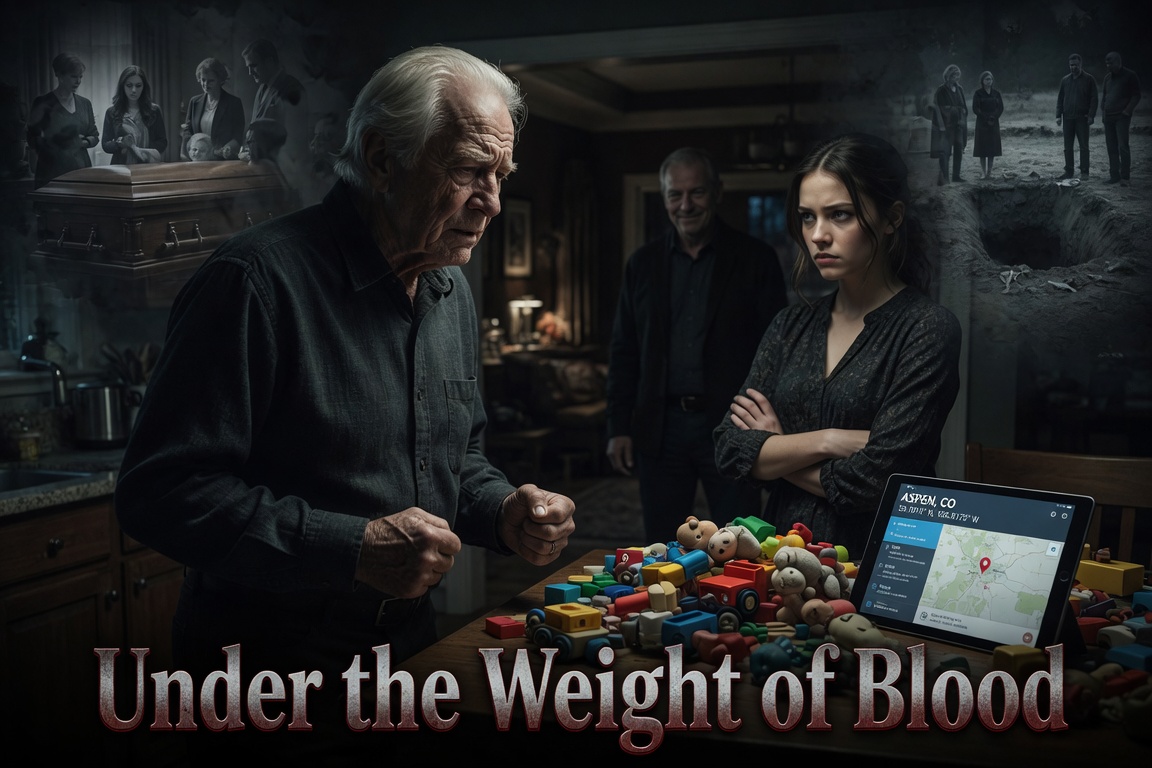
My daughter Natalie stared at me from across the counter.
For a moment, I thought she had not heard me.
The refrigerator hummed behind her.
The old wooden clock above the doorway ticked steadily.
Outside, autumn rain tapped against the windows of the house I had lived in for thirty-two years.
The same kitchen where I taught Natalie how to make pancakes.
The same kitchen where she cried after her first breakup.
The same kitchen where she once wrapped her arms around my waist at age six and said:
“Daddy, you’re my favorite person.”
That little girl felt very far away.
“Dad,” she said slowly.
I looked up.
“I just told you.”
“No, I heard you.”
Her voice was different.
Not confused.
Annoyed.
“I’m saying I don’t understand why.”
I swallowed.
I had rehearsed this conversation all morning.
I had stood in front of the bathroom mirror, practicing how to say it without sounding guilty.
Because somehow, even at sixty-one years old, I still felt guilty asking for one day.
“I have to go to my brother’s funeral.”
The words sat between us.
My brother.
Thomas.
The man who pulled me out of a freezing river when I was twenty-two.
The man who gave me a place to sleep when my first marriage collapsed.
The man who sat beside my hospital bed when our parents died.
The man who called every Sunday morning for thirty-eight years.
He was gone.
And Sunday was the only day we could say goodbye.
Natalie’s expression changed.
But not the way I expected.
I expected sadness.
Concern.
Maybe a hand on my shoulder.
Instead, she crossed her arms.
“Dad.”
Just one word.
But somehow it carried disappointment.
“You’re seriously doing this?”
I blinked.
“Doing what?”
“Leaving us stuck.”
The coffee cup felt heavier.
“Stuck?”
“Who is going to watch Lily and Noah?”
I stared at her.
“Your husband?”
“He’s working.”
“A babysitter?”
“Too expensive.”
“Your mother?”
“She’s visiting her sister.”
I nodded slowly.
“So I’m the only option?”
Natalie looked away.
Not guilty.
Frustrated.
“Yes.”
The answer surprised me.
Not because it was true.
Because of how easily she said it.
Like my time belonged to everyone except me.
“Natalie…”
She sighed.
“Dad, I know you’re upset about Uncle Thomas.”
Upset.
Another small word.
Like grief was an inconvenience.
“He was my brother.”
“I know.”
“Then you understand why I need to be there.”
Her face softened for half a second.
Then disappeared again.
“Can’t you go another day?”
I stared at her.
Another day.
For a funeral.
For a goodbye.
For a man who had spent half his life showing up for me.
“No.”
The word came out quietly.
And that was when something broke.
Not loudly.
Not dramatically.
Just enough.
Natalie placed both hands on the counter.
“Dad, you always make things harder than they need to be.”
I felt my chest tighten.
“Harder?”
“Yes.”
She looked around the kitchen.
At the photographs.
At the old wooden table.
At the life I had built.
“You’re retired. You have nothing going on.”
There are moments when people hurt you accidentally.
And there are moments when they reveal exactly how they see you.
This was the second kind.
I looked at my daughter.
The child I had carried when she had a fever.
The teenager I waited for outside dances.
The woman I helped buy her first home.
Nothing going on.
That was what my life had become in her eyes.
A spare room.
A backup plan.
A free service.
“I have a life,” I said.
She looked surprised.
“Dad.”
“No.”
My voice was still calm.
That seemed to bother her more.
“I do.”
I placed my coffee down.
“I have friends. I have responsibilities. I have people I love.”
Her eyebrows pulled together.
“You mean the funeral?”
“Yes.”
She shook her head.
“I can’t believe you’re choosing that over your grandchildren.”
The room went silent.
Even the rain seemed quieter.
Because that was not a question.
That was a weapon.
I looked at the woman standing in my kitchen.
My daughter.
And for the first time, I wondered when she stopped seeing me as her father and started seeing me as a resource.
“Natalie.”
“What?”
“My brother is dead.”
Her eyes moved away.
“And my grandchildren are alive.”
That sentence hurt.
Not because it was cruel.
Because it was impossible to argue with.
I loved my grandchildren.
More than anything.
But love does not mean you disappear whenever someone needs something.
I had spent years teaching Natalie that family means showing up.
I never taught her that family means one person never gets to leave.
She grabbed her purse.
“Fine.”
I watched her walk toward the door.
“Natalie.”
She stopped.
“I’m sorry you’re upset.”
She looked back.
But not apologetic.
“You should think about whether you’re being fair.”
Then she left.
The front door closed.
Softly.
Almost politely.
I stood alone in the kitchen.
The same kitchen where she once asked me to read bedtime stories.
The same kitchen where she learned to tie her shoes.
The same kitchen where I had just discovered that my daughter could make me feel like a stranger.
CHARACTER FILES
David Miller — 61
Retired firefighter and widower.
Appearance: Gray hair, strong build, weathered hands, calm eyes, usually wearing practical clothing.
Personality: Patient, loyal, humble, protective.
Deep wound: After losing his wife and later his closest brother, he fears losing the people he loves one relationship at a time.
Greatest fear: Becoming unnecessary to his family.
Secret desire: To be valued as a person, not just as someone who helps.
Moral belief: Love requires sacrifice, but sacrifice should never erase dignity.
Greatest weakness: He gives too much before admitting he is tired.
Greatest strength: He remains compassionate even when hurt.
Natalie Miller Brooks — 36
David’s daughter, mother of two children.
Appearance: Professional, polished, always organized, constantly moving.
Personality: Intelligent, hardworking, anxious, controlling under pressure.
Deep wound: She grew up watching her father sacrifice everything and learned the wrong lesson—that his sacrifice was endless.
Greatest fear: Losing control of her busy life.
Secret desire: To feel supported the way she felt supported as a child.
Moral belief: Family should always help family.
Greatest weakness: She confuses love with availability.
Greatest strength: She genuinely loves her children and wants to provide for them.
Thomas Miller — 66, deceased
David’s older brother.
Appearance: In memory, warm smile, work jacket, rough hands.
Personality: Generous, humorous, dependable.
Deep wound: Lost many years caring for others and rarely asked for anything.
Greatest strength: Loyalty.
Legacy: He taught David that showing up matters.
Mark Brooks — 39
Natalie’s husband.
Appearance: Tired eyes, hardworking, reserved.
Personality: Practical, quiet, conflict-avoidant.
Deep wound: Feels pressure to provide but hides financial stress.
Greatest fear: Failing his family.
Weakness: Avoids difficult conversations.
Strength: Honest when finally confronted.
CHAPTER TWO — THE EMPTY CHAIR
Thomas’s funeral was held in a small church outside town.
Not because he was unknown.
Because he hated attention.
That was Thomas.
He could save someone’s life and then complain that everyone was making too much noise afterward.
The church smelled like old wood, coffee, and rain-soaked coats.
The kind of smell that belongs to memories.
I sat near the front.
The chair beside me remained empty.
Not because anyone reserved it.
Because for thirty-eight years, Thomas had always sat beside me.
When we were teenagers.
When we attended our parents’ funerals.
When I got married.
When I lost my wife.
When Natalie was born.
He was always there.
Now the chair was empty.
And somehow, that felt louder than anything else.
After the service, people gathered outside beneath umbrellas.
Neighbors.
Old friends.
Former coworkers.
Everyone had a story about Thomas.
“He fixed my fence for free.”
“He drove my wife to chemotherapy.”
“He called my son every Christmas after he joined the military.”
That was Thomas.
He collected people.
Not money.
Not status.
People.
My phone buzzed.
Natalie.
I looked at the screen.
For a second, I hoped.
Maybe she was calling to apologize.
Maybe she realized.
I answered.
“Hello?”
Her voice came immediately.
“Dad, are you done?”
I closed my eyes.
“Done?”
“With the funeral.”
The rain seemed colder.
“No.”
“Oh.”
Silence.
Then:
“I need you to pick up the kids at four.”
I stared at the church steps.
“Natalie.”
“What?”
“I’m at your uncle’s funeral.”
“I know.”
The answer was casual.
Like knowing should make it easier.
“I told you I couldn’t.”
“You’re still upset about that?”
I almost laughed.
But nothing about it was funny.
“Natalie, my brother died.”
“And I’m dealing with two kids and a husband who works weekends.”
There it was again.
The assumption.
My grief was flexible.
Her schedule was not.
“I can’t.”
Her voice changed.
“Dad.”
“No.”
A pause.
Longer this time.
“You’re really saying no?”
“Yes.”
The line went quiet.
Then she whispered:
“I didn’t think you would become this selfish.”
The call ended.
I stood beneath the rain.
Holding my phone.
Feeling something I had not felt in years.
Not anger.
Disappointment.
CHAPTER THREE — THE MESSAGE
I expected Natalie to apologize.
She didn’t.
Instead, she sent a message the next morning.
Dad, I hope you understand how much pressure I’m under.
I stared at the screen.
Not:
I’m sorry.
Not:
I know Thomas mattered.
Just pressure.
I placed the phone down.
Then another message came.
The kids miss you.
That one hurt.
Because it was true.
I missed them too.
Lily was seven.
Noah was five.
They were innocent.
They had nothing to do with their mother’s choices.
That afternoon, I drove to their house.
Not because Natalie demanded it.
Because I was their grandfather.
Because love is not a weapon you take away from children.
When I arrived, Lily opened the door.
“Grandpa!”
She ran into my arms.
For a moment, everything felt normal.
Then I saw Natalie standing behind her.
She looked surprised.
“You came?”
I nodded.
“For them.”
Her smile disappeared slightly.
I noticed.
She expected me to apologize.
I did not.
Later, while the kids watched a movie, Natalie sat across from me.
“Are you still angry?”
I looked at her.
“No.”
That surprised her.
“Then what?”
“Tired.”
The word hung there.
She looked away.
“I didn’t mean to hurt you.”
“I know.”
“Then why are you acting like I did?”
I looked around her living room.
Family photos.
Children’s drawings.
A beautiful home.
A full life.
“I think you forgot something.”
“What?”
“I’m your father.”
She frowned.
“I know.”
“No.”
I shook my head.
“You know my name. You know my role. But I don’t think you remember I’m a person.”
Her eyes filled slightly.
“I don’t think that.”
“Then why was my brother’s funeral less important than your childcare problem?”
She had no answer.
And sometimes silence is the beginning of honesty.
CHAPTER FOUR — WHAT THOMAS LEFT BEHIND
A week after the funeral, I received a letter.
The handwriting was familiar.
Thomas.
My hands shook before I opened it.
Inside was a single page.
David,
If you’re reading this, I’m gone.
I know you’ll be trying to be strong.
Stop.
You’ve been strong enough.
For everyone.
For years.
But I need you to remember something.
Being needed is not the same as being loved.
The sentence stopped me.
I read it again.
Being needed is not the same as being loved.
Thomas continued:
Your daughter loves you. I know she does. But sometimes people we love forget that the person carrying the weight also gets tired.
Do not let anyone turn your kindness into a contract.
You deserve a chair at your own table.
I folded the letter.
Then I cried.
Not because Thomas was gone.
Because he had understood something I had refused to admit.
I had spent my whole life proving I would always show up.
I forgot to ask whether anyone would show up for me.
CHAPTER FIVE — THE DAY I STOPPED RUNNING
Natalie came to my house three weeks later.
No children.
No excuses.
Just her.
She stood at my door holding a small box.
“What is that?”
She looked down.
“Things from Mom.”
I froze.
My wife’s things.
Natalie stepped inside.
The house was quiet.
She placed the box on the table.
“I found this while cleaning.”
Inside was a photo album.
Clara.
Me.
Natalie as a child.
The three of us.
My daughter touched one picture.
“You looked happy.”
“We were.”
She swallowed.
“I’m sorry.”
I said nothing.
Not because I wanted punishment.
Because I wanted truth.
“I was wrong.”
Her voice cracked.
“I thought because you were always there, you would always be there.”
I looked at her.
“That was the problem.”
She nodded.
“I know.”
A tear rolled down her cheek.
“I was treating you like a solution.”
“Yes.”
She wiped her face.
“I don’t want to do that anymore.”
The room stayed quiet.
Healing does not arrive with music.
Usually, it arrives awkwardly.
In kitchens.
Between people who hurt each other and still choose to stay.
“I miss Uncle Thomas,” she whispered.
“So do I.”
She looked at me.
“I should have understood.”
“Yes.”
Another honest answer.
She nodded.
“I’m going to try.”
I believed her.
Not completely.
Not instantly.
But enough.
Because forgiveness is not pretending nothing happened.
It is allowing someone the chance to become someone better.
CHAPTER SIX — THE CHAIR AT THE TABLE
Months later, Natalie invited me to Sunday dinner.
The first thing I noticed was the chair.
She had placed one at the table before anyone arrived.
Not special.
Not decorated.
Just there.
A chair.
When I walked in, Lily ran toward me.
“Grandpa!”
Noah followed.
Natalie smiled.
“Dinner’s almost ready.”
I looked at the table.
At the empty chair.
Then at her.
She shrugged.
“I thought you deserved a seat.”
My throat tightened.
Because she understood.
Finally.
Not the chair.
The meaning.
That night, we ate together.
We talked.
We laughed.
The children spilled juice.
The food was slightly overcooked.
It was perfect.
After dinner, Natalie walked me outside.
The evening air was cool.
Stars appeared above the neighborhood.
“Dad?”
“Yes?”
“Do you think Uncle Thomas would forgive me?”
I looked up.
At the sky.
At the quiet street.
At the life that kept moving even after loss.
“He already did.”
She smiled sadly.
“How do you know?”
“Because he was Thomas.”
She laughed softly.
And for the first time in a long time, my daughter and I stood together without a debt between us.
Only love.
EPILOGUE — THE THINGS WE CARRY
I still miss Thomas.
I always will.
Some people leave empty chairs behind.
Some people leave lessons.
Thomas left both.
I learned that family is not measured by how often someone needs you.
It is measured by whether they remember you exist when they do not.
I still watch my grandchildren.
But now it is because I choose to.
Not because I am expected to.
There is a difference.
A big one.
And every Sunday, when Natalie sets the table, she puts out one extra chair.
Not because someone is coming.
Because someone mattered.
And sometimes the people we lose teach us how to finally see the people we still have.