Chapter 1 — The Night Hitler Survived and a Family Was Marked for Destruction
Berlin, July 20, 1944
At 12:42 p.m., the world inside Adolf Hitler’s headquarters changed forever.
A briefcase sat beneath a heavy wooden conference table.
No one paid much attention to it.
The room was filled with maps, cigarette smoke, military uniforms, and the confident voices of men who believed they were still controlling the fate of Europe.
Outside, the summer heat pressed against the forests of East Prussia.
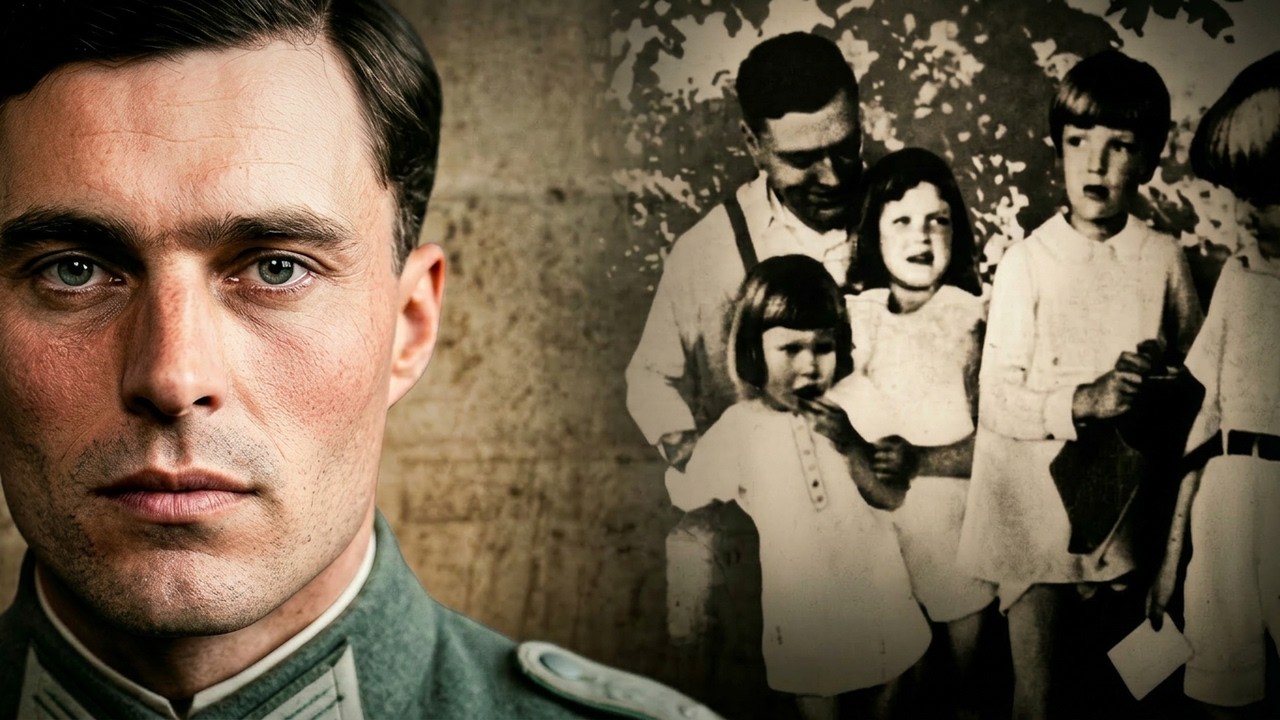
Inside the Wolf’s Lair, Hitler leaned over military reports, surrounded by his generals and officers.
The war was collapsing.
Germany was losing.
Millions were dead.
But inside that room, Hitler still spoke as if victory was inevitable.
Then the explosion came.
A violent flash.
A deafening roar.
The walls shook.
Glass shattered.
Smoke filled the room.
For several seconds, nobody knew what had happened.
Men who had spent years commanding armies suddenly found themselves crawling through debris, unable to understand whether they had survived an attack from outside or betrayal from within.
And somewhere beyond the security perimeter, a man with one eye and only one functioning hand was already leaving.
His name was Claus Schenk Graf von Stauffenberg.
A decorated German officer.
A member of an ancient aristocratic family.
A husband.
A father of five children.
And the man who believed Germany could still be saved.
Stauffenberg did not look like a revolutionary.
He looked like the kind of man the Nazi regime wanted to display as proof of German tradition.
Born into a noble family in 1907, Claus grew up surrounded by history, military culture, and duty.
The Stauffenbergs were not ordinary citizens.
Their family roots stretched back centuries.
They belonged to a world where honor was not just a word.
It was a responsibility passed from one generation to another.
But war changed him.
The battlefield changed him.
The more he saw, the harder it became for him to accept what Germany had become under Hitler.
The turning point came not in a single dramatic moment, but through thousands of small ones.
Villages destroyed.
Civilians executed.
Soldiers sacrificed for impossible orders.
A country slowly being consumed by fanaticism.
By 1944, Stauffenberg no longer believed Hitler was simply making mistakes.
He believed Hitler was destroying Germany itself.
And that belief came with a terrifying conclusion:
Someone had to stop him.
The Man Behind the Plot
The plan was never simply about killing Hitler.
The conspirators knew that removing one man would not automatically repair a broken nation.
They wanted to create a new government.
A government that could negotiate an end to the war.
A government that could restore Germany’s reputation.
A government that could distance itself from the crimes committed in Hitler’s name.
But every person involved understood the risk.
Failure meant death.
Not only for them.
For everyone connected to them.
Their families.
Their friends.
Even people who had no knowledge of the plot.
That was the nightmare hanging over every conversation.
The Nazis did not simply punish enemies.
They punished connections.
And Stauffenberg knew exactly what that meant.
Before leaving for the Wolf’s Lair on July 20, he had already accepted that he might not return.
But there was one thing he could not accept.
What would happen to Nina.
And what would happen to their children.
Nina von Stauffenberg
That evening, Nina was waiting.
She was thirty-one years old.
Pregnant.
The mother of four young children.
And the wife of a man whose name was about to become one of the most dangerous names in Nazi Germany.
Nina had always understood that Claus carried burdens he did not share.
Their marriage had been built on affection, but also on silence.
There were things military officers could not say.
Things husbands could not explain.
Things that remained hidden behind locked doors.
But Nina knew him well enough to recognize changes.
The longer he stayed away, the more distant his eyes became.
He was physically present.
But part of him seemed to already be somewhere else.
Somewhere dangerous.
Somewhere from which he might never return.
That morning, before leaving, Claus had done something unusual.
He had spent extra time with the children.
He had watched them play.
He had listened to their voices.
He had memorized ordinary moments.
Nina noticed.
A mother always notices.
“Why are you looking at them like that?” she asked.
Claus looked toward their children.
For a moment, the military officer disappeared.
Only the father remained.
“Because they are everything that matters.”
Nina frowned.
“Claus.”
He turned back to her.
His expression softened.
“Whatever happens, remember this.”
She waited.
“Teach them to know what is right.”
Those words stayed with her.
Because later, she would realize they were not advice.
They were a goodbye.
The Phone Call That Changed Everything
When news of the explosion reached Berlin, confusion spread quickly.
At first, rumors moved faster than facts.
Hitler was dead.
Hitler was injured.
The government had collapsed.
The coup had succeeded.
For several hours, Germany existed in uncertainty.
Then came the message nobody wanted to hear.
Hitler was alive.
The bomb had failed.
The assassination attempt was over.
And now the hunt began.
Inside the Nazi leadership, anger turned into panic.
Hitler was furious.
Not because someone had tried to kill him.
He had survived assassination attempts before.
What truly enraged him was the identity of the attackers.
They were not foreign spies.
They were not enemy soldiers.
They were Germans.
Officers from his own military.
Men who had sworn loyalty to him.
To Hitler, this was personal betrayal.
He demanded immediate arrests.
No mercy.
No exceptions.
The conspiracy had to be destroyed completely.
The Final Hours of Claus von Stauffenberg
Late that night, Stauffenberg and several other conspirators were arrested in Berlin.
The military building that had once represented German authority became the place where those same authorities were executed.
There was no trial.
No defense.
No opportunity to explain.
At approximately midnight, the order was given.
The first shots rang through the courtyard.
Stauffenberg stood under the light.
A wounded officer.
A husband.
A father.
A man who knew his life was ending.
According to witnesses, his final words were:
“Long live holy Germany.”
Moments later, Claus von Stauffenberg was dead.
But the Nazi response was only beginning.
Because Hitler did not believe death was enough.
The people who carried the Stauffenberg name had to pay too.
The Door Knock
Hours later, before sunrise, Nina heard the sound.
Three knocks.
Not rushed.
Not angry.
Precise.
The kind of knock made by people who already knew they had power.
She was still awake.
She had barely slept.
Her pregnancy made rest difficult, but fear made it impossible.
She walked toward the door.
Behind her were her children.
Still sleeping.
Still innocent.
Still unaware that their lives had already changed.
When she opened the door, she saw men in dark uniforms.
Gestapo.
The secret police of Nazi Germany.
The officer in front held a document.
“Nina von Stauffenberg?”
She did not answer immediately.
She looked at his face.
Then at the papers.
Then back at him.
“Yes.”
“You are under arrest.”
“For what?”
The officer did not hesitate.
“For your connection to Claus von Stauffenberg.”
Nina remained silent.
Not because she had nothing to say.
Because she understood something immediately.
They were not there to investigate.
They were there to punish.
“My children?”
The officer looked past her into the house.
“They will be taken care of.”
Those words frightened her more than any threat.
Because in Nazi Germany, “taken care of” could mean almost anything.
Nina was given only a few minutes to say goodbye.
She entered the children’s room.
The soft breathing of her children filled the darkness.
She touched their faces.
Memorized them.
Because a mother knows when a moment may be the last.
Her oldest son woke.
“Mother?”
She forced a smile.
“Go back to sleep.”
“Where are you going?”
The question stayed in the room.
Nina looked at him.
A child asking about a world too cruel for him to understand.
“I have to leave for a little while.”
“When will you come back?”
Nina swallowed.
She wanted to promise tomorrow.
She wanted to promise soon.
But she had learned something that night.
Promises were fragile.
So instead, she leaned closer.
“I love you.”
The boy looked confused.
Children do not understand that sometimes adults say goodbye without using the word goodbye.
When Nina was taken away, the door closed behind her.
Inside the house, four children remained.
Outside, a dictatorship had decided that their family name was a crime.
The Nazis believed they could erase Claus von Stauffenberg by killing him.
They believed they could erase his legacy by breaking his family.
They were wrong.
Because the next battle would not be fought with bombs or weapons.
It would be fought through memory.
And the first person standing in that battle was a pregnant woman sitting alone in a prison cell…
waiting for the child who would be born into the shadow of the man Hitler wanted the world to forget.
To be continued — Chapter 2: The Nazis’ Revenge Beyond the Grave