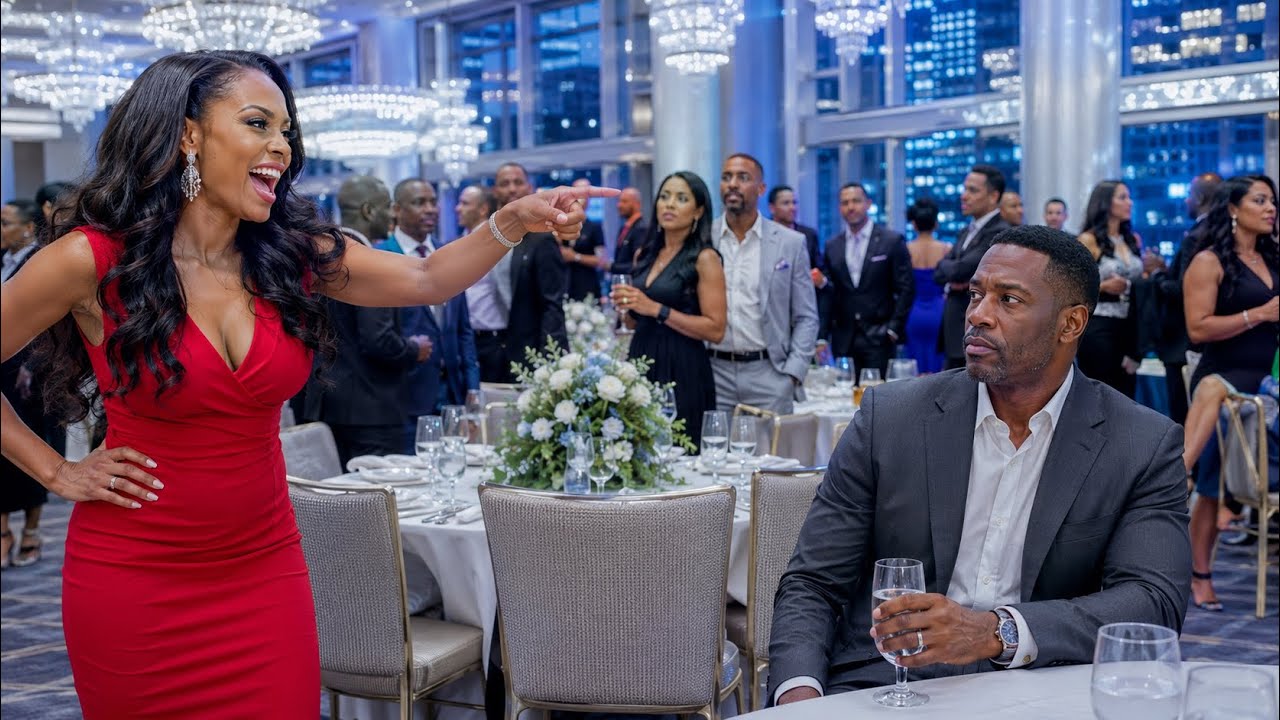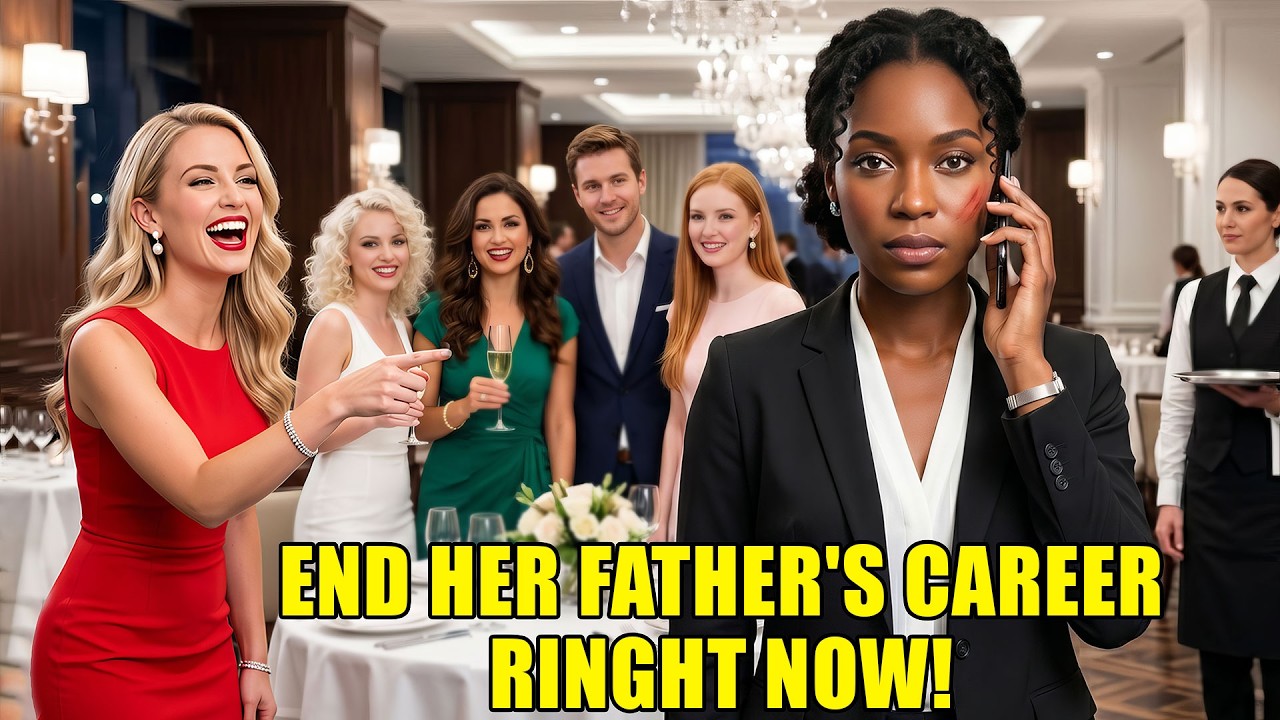
The slap echoed through Meridian like a gunshot.
One second, the restaurant was alive with the soft scrape of silverware, low conversations, and the muted notes of a jazz piano. The next, every sound vanished.
Maya Brooks stood beside a corner table with her face turned slightly to the left, a red mark already forming across her cheek.
Across from her, Ashley Whitmore still had one hand raised.
Dozens of people stared.
A waiter froze with a tray balanced against his shoulder. A couple near the window stopped mid-conversation. At the bar, a man slowly lowered his glass.
Ashley seemed to enjoy the silence.
“You should learn,” she said, loud enough for everyone to hear, “that not every room belongs to you.”
Maya touched the corner of her mouth. When she looked at her fingers, there was a faint trace of blood.
She did not cry.
She did not step back.
She did not raise her voice.
Instead, she looked at Ashley with the controlled stillness of someone who had already calculated what would happen next.
That expression unsettled Ashley more than anger would have.
“What?” Ashley asked. “Are you going to call the police?”
Maya pulled out her phone.
“No,” she said. “Not the police.”
Three months earlier, Maya had returned to Caldwell City with one suitcase, two encrypted hard drives, and no intention of announcing her arrival.
At twenty-eight, she looked younger than most people expected an investigator to look. She wore plain jackets, carried inexpensive bags, and rarely corrected people when they mistook her for an assistant.
That mistake had served her well.
Maya had grown up on Caldwell’s east side, in a narrow brick house where buses rattled the windows every twenty minutes. She had left for law school, then worked in Philadelphia, New York, and Washington, learning how public agencies hid misconduct behind procedure.
She learned that corruption rarely began with envelopes of cash.
It began with revised invoices.
Unusual consulting fees.
Contracts awarded after private dinners.
Names that appeared repeatedly in different companies.
And people who were paid not to notice.
Caldwell City looked transformed when Maya returned.
Glass towers rose where old warehouses had once stood. New parks carried polished bronze plaques. Billboards across the city displayed Mayor Richard Whitmore standing in shirtsleeves beside construction workers.
BUILDING CALDWELL’S FUTURE, they read.
Richard Whitmore, fifty-four, had been mayor for six years. He spoke slowly, smiled at the right moments, and had mastered the political art of saying many words without revealing much truth.
Local newspapers called him pragmatic.
Business leaders called him visionary.
His reelection campaign called him indispensable.
Polling showed him leading by twenty-three points.
His daughter Ashley had grown up inside that certainty.
She was Richard’s only child, and Caldwell treated her accordingly. Restaurant tables appeared when reservations did not. Traffic citations disappeared. Complaints were settled quietly.
When Ashley humiliated a hotel employee at twenty-two, the employee received a severance payment.
When she struck another woman at a charity event two years later, witnesses suddenly remembered the incident differently.
Problems did not follow Ashley.
They were removed before they reached her.
Maya had not returned because of Ashley.
She had returned because Gerald Holt had called her.
For twenty-two years, Gerald had worked in municipal procurement. He knew which contracts had been rewritten, which signatures had been added after approval, and which companies existed only on paper.
Then, after questioning a water infrastructure deal, he was transferred to a basement office with no staff and almost no authority.
“They didn’t fire me,” Gerald told Maya during their first meeting. “That would have created a record. They just made sure no one had to listen to me.”
He had saved emails, handwritten notes, vendor histories, internal calendars, and copies of contract amendments.
He had also kept something more valuable: institutional memory.
For three months, Maya verified every piece.
She traced ownership records through shell corporations. She compared municipal payments with construction estimates. She interviewed former accountants, vendors, and administrative staff.
By the time she arranged to meet Gerald at Meridian, she had enough evidence to prove that something was wrong.
She did not yet have enough to prove who had directed it.
Meridian was chosen carefully.
It was quiet enough for a private conversation but public enough to discourage intimidation. Its dining room had multiple cameras. Several judges, attorneys, executives, and city officials ate there regularly.
Maya had arrived early and taken a corner table with a clear view of both entrances.
Gerald was nine minutes late.
Ashley arrived first.
She entered with two friends and expected the table near the window that she always used. But a private event had reduced the restaurant’s seating, and the hostess explained that the table was unavailable.
Ashley glanced around and saw Maya sitting alone at a four-person table.
“Move her,” she said.
The hostess hesitated. “Ms. Whitmore, that table is reserved.”
Ashley walked over herself.
Maya was reviewing a folder when Ashley stopped beside her.
“My friends and I need this table.”
Maya looked up. “I’m meeting someone.”
Ashley waited for her to stand.
Maya did not.
“You clearly don’t understand who you’re speaking to,” Ashley said.
“I understand perfectly.”
One of Ashley’s friends gave a nervous laugh.
Ashley leaned closer. “People like you come back to this city and suddenly think you belong in places like this.”
Several nearby diners heard her.
Maya closed the folder.
“People like me?”
Ashley’s mouth tightened. She had expected embarrassment, not a question.
“You know exactly what I mean.”
“Yes,” Maya said. “I think everyone here does.”
The slap came seconds later.
Now, with the room silent and Ashley still standing over her, Maya made a call.
The person answered immediately.
“It happened,” Maya said.
She listened for two seconds.
“Yes. Meridian.”
Then she ended the call and sat down.
Ashley laughed.
“That was dramatic.”
Maya placed the phone beside her folder.
“You should probably call your father.”
The confidence in Ashley’s face flickered, then returned.
“My father doesn’t take instructions from strangers.”
“Tonight,” Maya said, “he may want a head start.”
Seven minutes later, the first black SUV stopped outside Meridian.
Then another.
Four federal investigators entered the restaurant, followed by a tall woman in a charcoal suit carrying a leather document case.
Ashley’s smile disappeared.
The woman was Eleanor Grant, deputy chief of a federal public corruption task force. She had spent sixteen years building cases against officials who believed their titles made them untouchable.
She walked directly to Maya.
“Are you hurt?”
“I’m fine.”
Eleanor glanced at the red mark on Maya’s face, then at Ashley.
“Was that recorded?”
“The restaurant has cameras,” Maya said. “And at least thirty witnesses.”
Ashley folded her arms. “This is a private misunderstanding.”
“No,” Eleanor replied. “It’s an assault witnessed during an active federal operation.”
For the first time that evening, Ashley took a step backward.
Eleanor opened her document case.
Inside were search warrants, preservation orders, and sealed authorizations covering six municipal offices, four private companies, and three residences.
One of the names printed across the top page was Richard Whitmore.
Ashley saw it.
Her eyes stopped moving.
Maya opened her folder and spread several pages across the table.
The first concerned Caldwell’s $140 million water modernization contract.
Independent estimates placed the actual labor and material cost at approximately $89 million.
The remaining $51 million had been distributed through a network of consulting firms, subcontractors, and advisory companies.
Some had no employees.
Some had no offices.
One had been incorporated twelve days before receiving a $6.4 million payment.
Eleven individuals had benefited.
One was a senior member of Richard’s campaign.
Three had been appointed by him.
Two were relatives.
The rest were donors, intermediaries, or business partners connected through overlapping accounts.
Ashley stared at the documents.
“You can make paper say anything,” she said.
“That is true,” Maya replied. “Which is why we verified it against bank transfers, tax filings, internal emails, and vendor records.”
The front door opened again.
Gerald Holt entered carrying a brown envelope and a small metal case.
He looked pale but steady.
When he reached the table, he placed an encrypted drive beside Eleanor’s papers.
“This contains the original procurement archive,” he said. “Including the versions they ordered us to delete.”
Then he removed a signed statement from the envelope.
“I’m ready to testify.”
Ashley looked from Gerald to Maya, then toward the federal agents positioned near the door.
Outside, more vehicles were arriving.
Her father’s name was being spoken in the room not as a title, but as evidence.
That was the first crack in the world she had always known.
Richard Whitmore received the call shortly before midnight.
Within twenty minutes, he had contacted three attorneys, two political donors, a state senator, and the head of his communications team.
By morning, his campaign released a statement calling the investigation “a coordinated attempt to overturn the will of Caldwell’s voters.”
Richard appeared before cameras at noon.
He stood behind a podium framed by city flags and spoke for eleven minutes.
He denied wrongdoing.
He praised transparency.
He warned against “outside operatives.”
He never explained the missing $51 million.
Behind the scenes, the response was less polished.
Sandra Kelleher, a municipal accountant who had confirmed several transfers, began receiving calls from blocked numbers.
One voicemail mentioned her son’s school.
Another reminded her that pension approvals could become “complicated.”
Gerald found a black sedan parked across from his apartment for three consecutive nights.
Maya received anonymous emails describing how easily professional licenses could be challenged.
Within a week, complaints had been filed against her with two oversight boards.
She documented each one and forwarded them to Eleanor.
“Do they think this will make you stop?” Eleanor asked.
“No,” Maya said. “They think it will make me feel alone.”
Years earlier, Maya’s father had discovered a similar contract scheme in another city.
Marcus Brooks had been a compliance officer who believed rules mattered because people mattered.
When he found that public money had been redirected through falsified construction invoices, he reported it through the proper channels.
The city opened an internal review.
Then it investigated him.
His colleagues stopped returning calls. His access was restricted. His name was leaked to the press beside words like unstable and disgruntled.
He lost his job.
Two years later, after the scheme was finally confirmed, the city issued a brief statement acknowledging “procedural failures.”
Marcus never saw it.
He died of a heart attack four months before the truth became public.
Maya kept a copy of the statement in her files.
Not because it brought comfort.
Because it reminded her what happened when institutions were allowed to outlast the people telling the truth.
The public hearing began six weeks after the incident at Meridian.
By sunrise, a line had formed outside City Hall. Reporters filled the corridors. Every seat in the chamber was occupied.
Richard entered through a side door with four attorneys.
He wore a navy suit and the calm expression that had carried him through elections, scandals, and budget fights.
Ashley sat two rows behind him.
She had not spoken publicly since the restaurant video began circulating online. The footage had been viewed millions of times. The image of her raised hand became a symbol of everything people believed about inherited power.
Richard opened the hearing with a prepared statement.
He called the investigation politically motivated.
He described himself as the victim of selective prosecution.
He said the contracts had created jobs, repaired roads, and strengthened neighborhoods.
When he finished, several longtime supporters applauded.
Then Maya was called.
She carried no dramatic display and made no accusation she could not prove.
For ninety minutes, she walked the council through invoices, ownership records, bank transfers, and internal correspondence.
She showed how one shell company had billed the city for engineering work despite having no licensed engineers.
She showed how another had transferred money to a campaign consultant within forty-eight hours of receiving public funds.
She identified all eleven beneficiaries and explained their relationships to Richard.
The room changed slowly.
At first, council members interrupted with skeptical questions.
Then the questions became shorter.
Then they stopped.
Gerald testified next.
He explained how bid scores were altered after review meetings. He identified contract language inserted at the mayor’s office’s request. He described the order to remove earlier document versions from the procurement archive.
Ashley listened as the name of her uncle’s company appeared on the screen.
She watched dates align with family vacations, campaign events, and private dinners she remembered attending.
The story she had been telling herself—that her father had been targeted by jealous enemies—began collapsing under details too specific to dismiss.
Richard did not turn around.
The final witness was David Park, a former records coordinator no one in the Whitmore circle had considered important.
David had spent four years scheduling meetings, preparing summaries, and organizing digital archives.
He spoke softly.
Richard’s lead attorney looked almost relieved.
Then David placed a small recorder on the table.
“I was instructed to delete meeting files from March 14,” he said. “I retained one copy.”
The attorney stood immediately.
The hearing chair overruled his objection.
The recording lasted forty-two seconds.
Richard’s voice filled the chamber.
Clear.
Calm.
Unmistakable.
He instructed two officials to route additional water-contract payments through consulting agreements. He named the percentages. He told them which companies to use.
Then he said, “Keep my office off the paperwork. Move the final share through the Riverside account.”
The room went completely still.
Riverside was the one account Maya had not publicly connected to Richard.
Until that moment, most people assumed it was simply another shell account.
Maya looked toward Ashley.
Ashley’s face had gone pale.
But the real recognition came when Richard turned toward David.
His practiced expression vanished.
His jaw tightened. His eyes moved once toward his attorney, then toward the exits.
For the first time in years, Richard Whitmore looked like a man searching for a door that power could no longer open.
Ashley saw it too.
She saw that her father was not shocked by the recording.
He was shocked that it still existed.
A low murmur moved through the chamber.
One of Richard’s closest council allies leaned away from him.
Another closed the folder bearing the mayor’s campaign logo and pushed it aside.
Richard’s attorney whispered something, but Richard did not respond.
He simply stared at the table while cameras recorded the moment his authority left the room.
By evening, two major donors had suspended support.
The next morning, the state party chairman issued a statement demanding Richard’s full cooperation.
City officials who had praised him days earlier began describing their relationship as “strictly professional.”
Power did not collapse all at once.
It evaporated through unanswered calls, canceled meetings, and people suddenly remembering that they had always had concerns.
Richard resigned four days later.
He did not appear before the press.
His spokesperson read a statement referring to “distractions,” “family considerations,” and “the best interests of Caldwell.”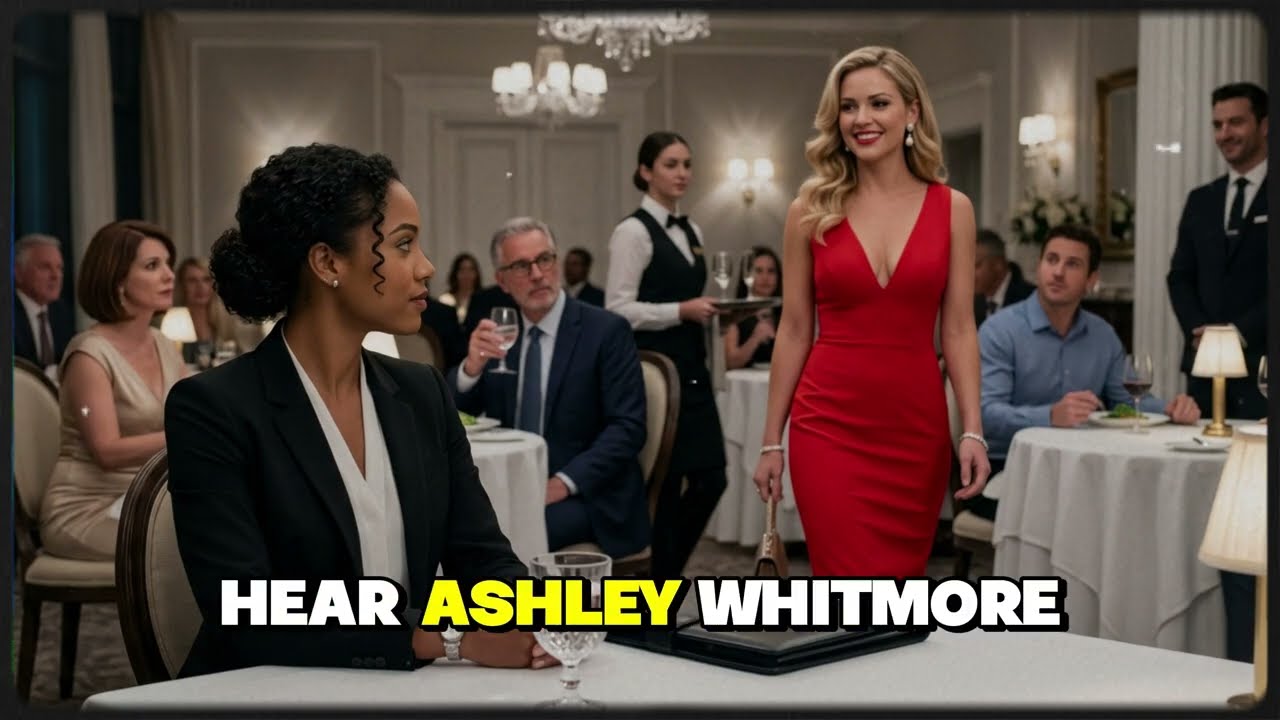
There was no apology.
Outside City Hall, several supporters who had gathered to defend him listened in silence.
When the statement ended, they folded their signs and left.
Ashley’s collapse was quieter.
Invitations disappeared.
Friends stopped replying.
Organizations removed her from boards.
The private clubs that had welcomed her family for years informed her that membership matters were under review.
Inside her apartment, the silence became unbearable.
The rooms were filled with expensive furniture chosen by designers, photographs from galas, and gifts from people who no longer answered the phone.
It felt like a home built for a version of herself that no longer existed.
Two months later, Ashley asked a mutual acquaintance to contact Maya.
They met at a small café on the east side.
There were no cameras.
No assistants.
No reserved table.
Ashley arrived early.
When Maya sat down, Ashley did not offer an excuse.
“What I did to you was wrong,” she said. “Not embarrassing. Not unfortunate. Wrong.”
Maya said nothing.
Ashley looked at her hands.
“I thought I could decide who belonged in a room. I thought my last name made my judgment more accurate than everyone else’s.”
She swallowed.
“My apology doesn’t repair what I did. I’m not here to ask you to make me feel better.”
Maya studied her for a moment.
“Coming here matters,” she said. “But it is not the same as changing.”
“I know.”
“Do you?”
Ashley lifted her eyes.
Maya continued.
“The slap was personal. But the thinking behind it was structural. You looked at me, made assumptions, and trusted those assumptions because no one had ever forced you to examine them.”
Ashley nodded slowly.
“My father used to say power reveals character.”
“Power amplifies choices,” Maya said. “It doesn’t make people larger. It just makes their choices louder.”
Ashley’s eyes filled, but she did not look away.
“What am I supposed to do now?”
“Find work that is useful.”
“I don’t know how.”
“Then be bad at it first. Learn.”
Maya did not offer instant forgiveness.
Ashley did not ask again.
Months later, she took an administrative position at a nonprofit that helped residents challenge housing and benefits decisions. The work was repetitive, unglamorous, and mostly invisible.
For the first time in her life, no one cared who her father was.
She made mistakes.
She stayed.
Federal prosecutors charged Richard Whitmore with contract fraud, conspiracy, bribery, and obstruction of justice.
Seven other officials and contractors were charged in the same case.
Three pleaded guilty.
Sandra Kelleher received formal whistleblower recognition and protection. Gerald Holt was publicly reinstated in the city record, along with a letter acknowledging that his warnings had been ignored.
The recognition came late.
It did not return lost years.
But it corrected the lie.
Caldwell appointed an interim mayor and reopened six years of public contracts for review. The ethics commission was restructured and given independent subpoena authority.
The water project was rebid through an open process.
The new contract cost millions less.
None of this transformed the city overnight.
Reform created paperwork, resistance, and new arguments. Some officials complained that oversight slowed development.
But for the first time in years, those complaints had to be made in public.
Maya did not remain in Caldwell for the trial.
She left on a gray morning with two bags in the trunk and another case waiting three states away.
Before reaching the highway, she drove through the east side and stopped outside the house where she had grown up.
The paint had changed. The front steps had been replaced. A child’s bicycle rested against the fence.
She thought of her father sitting at the kitchen table, insisting that systems could work if honest people refused to abandon them.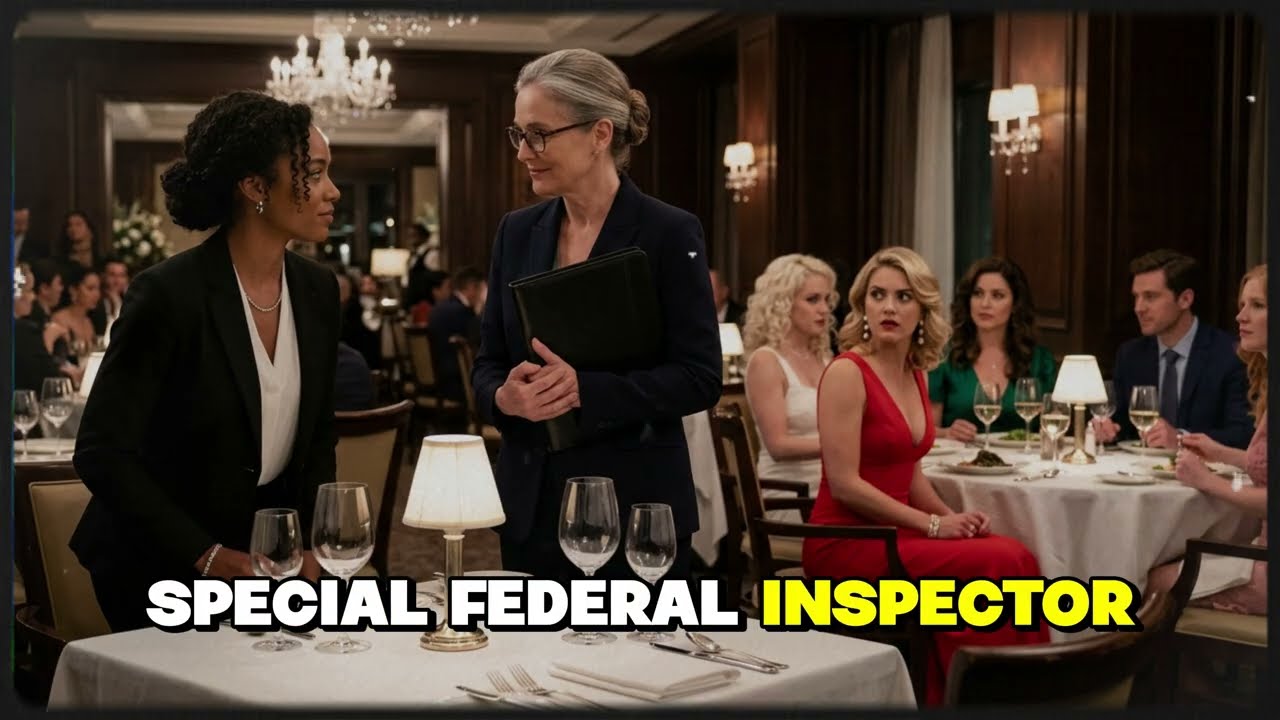
He had been right about the principle.
He had simply lived in a time when the system failed him at the exact moment he needed it most.
Maya did not believe justice erased damage.
It did not restore health, recover years, or return the dead.
But sometimes it arrived in time to prevent the next person from being destroyed while waiting for the truth to matter.
She pulled back onto the road.
At the city limits, Caldwell’s skyline appeared in her rearview mirror—new towers, old neighborhoods, and construction cranes rising above both.
Her phone connected to the car.
A message from Eleanor appeared on the screen.
New file. Call when ready.
Maya turned on the radio, merged onto the highway, and kept driving.
Because the most important work is rarely the work that makes someone famous.
It is the work that still has to be done after everyone else stops watching.