The slap landed so hard that a spoon fell from someone’s hand three tables away.
For one suspended second, the entire café stopped breathing.
Outside, the financial district moved as it always did. Buses groaned at the intersection. Office workers crossed beneath glass towers with phones pressed to their ears. Delivery trucks blocked half the street while impatient drivers leaned on their horns.
Inside, however, silence spread from table to table.
Maya Johnson stood beside the counter with one hand resting against her cheek.
She was thirty-four, dressed in a plain gray coat, dark trousers, and shoes that had seen several winters. Nothing about her suggested money, influence, or importance.
That was exactly why Ethan Carter had decided she was safe to humiliate.
He stood in front of her in a tailored navy suit, his jaw tight with anger. Behind him, his executive assistant clutched a tablet against her chest. Near the entrance, Marcus Webb, Ethan’s head of security, watched without moving.
A paper cup lay on its side between Maya and Ethan.
Coffee spread across the floor in a dark, steaming pool.
“You should watch where you’re going,” Ethan said.
Maya lowered her hand.
“I wasn’t the one who dropped it.”
The young barista who had caused the spill opened her mouth, then closed it again.
She could not have been older than twenty.
Her face had gone pale.
Ethan looked at Maya as though she had made the situation worse by answering.
“Are you calling me a liar?”
“No,” Maya said quietly. “I’m telling you what happened.”
Several customers glanced at one another.
Everyone in the district knew Ethan Carter.
He was the chief executive of Carter Industrial Holdings, a company with factories, construction contracts, logistics centers, and political connections across three states.
Business magazines called him decisive.
Investors called him disciplined.
Employees called him other things when the doors were closed.
The moment Ethan had entered the café, the atmosphere had shifted. The manager had rushed from the back office. A reserved table had appeared near the window. The cashier had stopped serving another customer to prepare Ethan’s usual order.
People moved differently around him.
They stood straighter.
They spoke more softly.
They made space.
Maya had not.
That seemed to offend him more than the spilled coffee.
“You were standing here,” Ethan said.
“So were three other people.”
“Do you have any idea who you’re speaking to?”
Maya looked at him for a long moment.
“Yes.”
The answer was not loud.
It was not disrespectful.
But it did not contain fear.
That was enough.
Ethan struck her.
The sound cut through the café like a gunshot.
No one intervened.
The manager stared at the floor. The barista covered her mouth. A man in a charcoal suit looked toward the door, as though considering whether witnessing the truth might create a problem for him later.
Maya remained where she was.
Her cheek reddened.
Her eyes did not.
She did not cry, shout, threaten, or demand that someone call the police.
Instead, she picked up the folder she had placed on the counter.
“You just made the biggest mistake of your life,” she said.
Ethan gave a short laugh.
“People say dramatic things when they’re embarrassed.”
Maya turned toward the door.
She had taken three steps when Marcus noticed the mark on her wrist.
Her sleeve had shifted while she lifted the folder, revealing a pale, uneven scar running from the base of her thumb toward her forearm.
Marcus stopped breathing.
The café vanished around him.
For a moment, he was no longer a forty-three-year-old security professional standing beneath warm pendant lights.
He was twenty-eight again, lying on a concrete floor beneath a ceiling filled with smoke.
Maya reached the door.
Marcus moved.
“Wait.”
His voice was so sharp that even Ethan turned.
Maya paused but did not face him.
Marcus crossed the café quickly.
When he reached her, he lowered his voice.
“North stairwell,” he said. “Red valve. Three knocks.”
Maya became completely still.
Marcus watched her shoulders rise with one slow breath.
Then she turned around.
For the first time since the slap, emotion passed across her face.
Not fear.
Recognition.
“You were in section four,” she said.
Marcus stared at her.
“You remember?”
“There were twenty-three of you.”
His eyes filled before he could stop them.
Fifteen years earlier, a fire had broken out at a manufacturing plant on the south edge of the city.
The plant belonged to Carter Manufacturing, the company Ethan’s father had built before it became Carter Industrial Holdings.
The official story said an electrical failure ignited chemical storage near the assembly floor.
The unofficial story was worse.
Safety inspections had been delayed. Emergency doors had been locked to prevent unauthorized breaks. Updated floor plans had never been distributed to the night shift.
When the fire alarms sounded, smoke filled the western corridor within minutes.
Workers ran toward marked exits and found two blocked.
Marcus had been a junior maintenance supervisor then.
He remembered the heat first.
Then the screams.
Then a woman’s voice cutting through both.
“Not that way.”
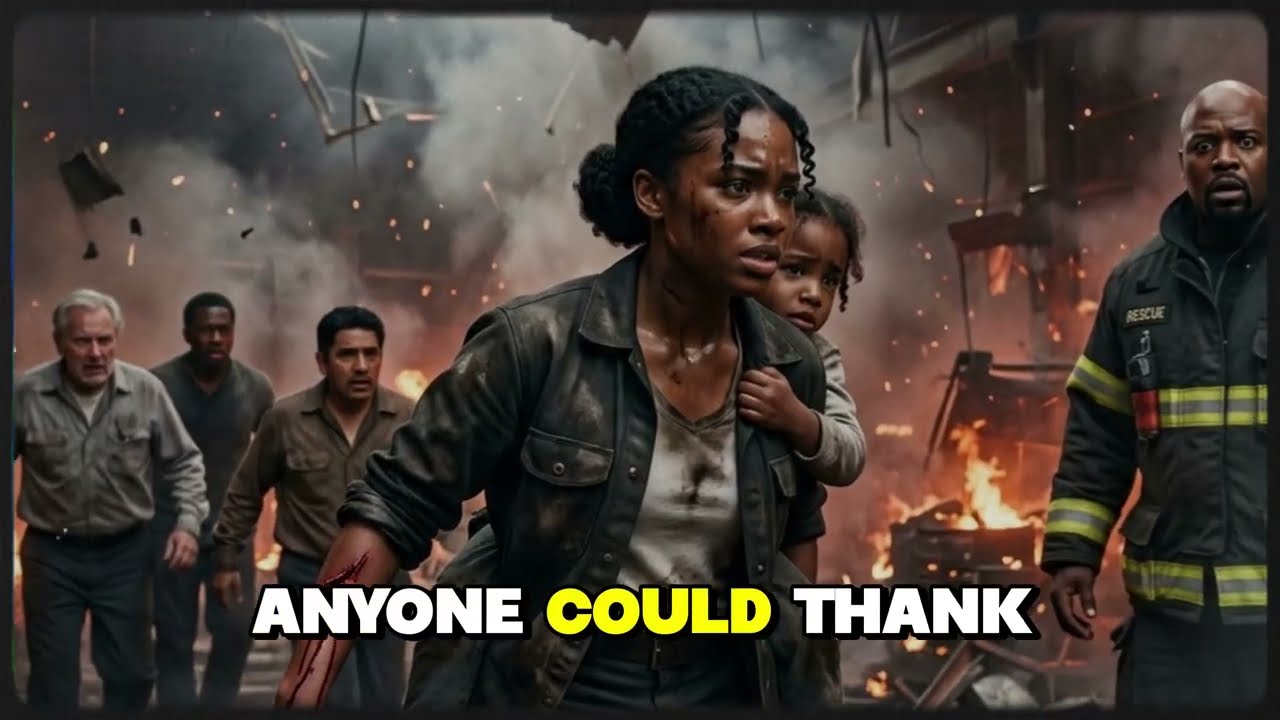
She had appeared through the smoke wearing a torn white blouse with one sleeve wrapped around her mouth.
She was young, perhaps nineteen.
No uniform.
No protective equipment.
No reason to be there.
But she knew the building.
She led the first group through a service passage behind the coolant room, a corridor omitted from the emergency evacuation maps.
When a steel frame collapsed, she crawled beneath it to pull out an injured worker.
A shard of heated metal cut deeply into her wrist.
She wrapped the wound in fabric and kept moving.
Three times, she went back inside.
The final time, the firefighters shouted at her to stop.
She ignored them.
Marcus had collapsed near the north stairwell after inhaling smoke. He remembered someone slapping his face, forcing him to focus.
“Listen to me,” she had said. “The door is behind the red valve. Knock three times so they know you’re there.”
He remembered her dragging him by the shoulders.
He remembered waking outside under flashing emergency lights.
He remembered asking for the woman.
No one knew her name.
By the next morning, she was gone.
The official reports credited emergency coordinator Richard Holloway with organizing the evacuation.
Holloway received a commendation, a financial reward, and a promotion.
Marcus never believed it.
He had searched hospital lists, employee records, volunteer logs, and local newspapers. He had spoken to former workers and firefighters.
The only detail he had was the scar.
Now the woman stood in front of him.
And Ethan Carter had just slapped her.
Marcus returned to the café alone several minutes later.
Ethan was irritated.
“What was that about?”
Marcus did not answer immediately.
He looked at the customers, the frightened barista, the coffee still spreading across the floor.
Then he faced Ethan.
“The woman you just hit saved my life.”
Ethan’s expression hardened.
“What?”
“Fifteen years ago. The Carter plant fire.”
Ethan glanced toward his assistant.
“That’s impossible.”
“No,” Marcus said. “What happened in this café is impossible.”
Ethan stepped closer.
“You’re sure?”
Marcus’s voice dropped.
“I spent fifteen years looking for her.”
For the first time that morning, Ethan looked toward the door without confidence.
By noon, he had ordered his legal department to retrieve every archived document connected to the fire.
By evening, three boxes had been delivered to his office.
The records were incomplete.
Some files had been scanned badly. Others had handwritten notes attached. Several witness statements were missing from the official digital archive but still existed in paper copies.
Ethan stayed past midnight.
He read survivor accounts describing a young woman leading workers through an unmarked service corridor.
One witness mentioned a serious injury to her right wrist.
Another described her tearing fabric from her clothing to wrap the wound.
A firefighter wrote that the unknown woman had reentered the building despite being ordered to remain outside.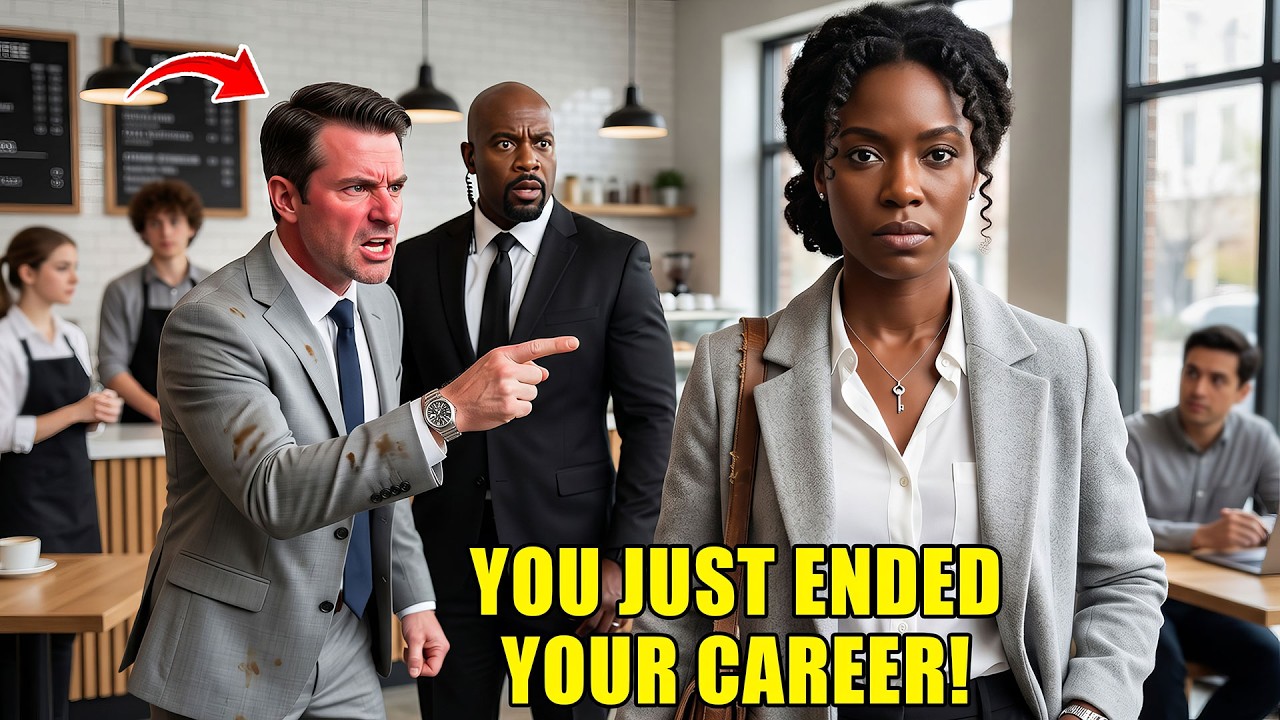
The details matched.
Then Ethan found something else.
An internal memo written two weeks after the fire stated that Carter Manufacturing intended to identify and compensate the unidentified rescuer.
A second note recommended creating a medical fund in her name.
A third document, dated six months later, contained only one sentence:
Matter closed. Public recognition completed through designated emergency leadership.
The designated leader was Richard Holloway.
There was no payment to Maya.
No medical support.
No public acknowledgment.
Nothing.
Ethan leaned back in his chair.
The plant had been his father’s most important facility. If the death toll had been higher, the company might not have survived the lawsuits.
The insurance investigation had noted the relatively low number of fatalities as a major factor in allowing the business to recover.
That recovery became expansion.
Expansion became acquisitions.
Acquisitions became the company Ethan now controlled.
His office, his influence, his reputation, even the building bearing his family’s name—all of it rested partly on the actions of a woman he had judged by her coat.
A woman his company had promised to find and then forgotten.
Marcus arranged the meeting.
Maya agreed only after making it clear that she would not meet at Ethan’s office.
They chose a conference room inside a small nonprofit organization in an older part of the city.
The walls were plain. The chairs did not match. A printer in the corner made a grinding noise every few minutes.
Ethan arrived without his assistant.
Maya was already seated.
The bruise on her cheek had darkened.
He looked at it, then away.
“I’m sorry,” he said.
Maya opened a file.
“You asked for a meeting.”
“I asked because I needed to say that.”
“You’ve said it.”
Ethan sat across from her.
“I know who you are now.”
Maya’s eyes remained on the papers.
“No. You know something I did.”
The distinction stopped him.
He looked around the room.
“What is this place?”
“The Industrial Workers Relief Network.”
“You work here?”
“I run part of it.”
Maya explained that the nonprofit helped workers injured in factories, warehouses, and construction sites.
They connected families with lawyers.
They helped people file disability claims.
They negotiated medical bills.
They found temporary housing for families after workplace deaths.
They translated forms.
They sat beside people in hospital corridors when employers stopped returning calls.
“How many people have you helped?” Ethan asked.
“I don’t count them that way.”
Marcus, sitting near the door, answered.
“Thousands.”
Maya gave him a brief look.
Ethan folded his hands.
“Why didn’t you tell anyone about the fire?”
“Because the people who needed help afterward were the injured workers, not me.”
“You could have been recognized.”
“Recognition would not have repaired Daniel Ortiz’s lungs. It would not have paid Marisol Vega’s rent after her husband died. It would not have reopened the medical claims your father’s company disputed.”
Ethan looked down.
“I didn’t know about those cases.”
“That has protected many powerful people from many truths.”
He took a breath.
“I want to compensate you.”
Maya closed the file.
“For what?”
“For the injury. For what you did. For what the company failed to do.”
“I don’t need your money.”
“Then tell me what you need.”
She looked directly at him.
“I needed you not to hit me before you knew who I was.”
The room went silent.
Ethan’s face changed.
Maya continued.
“If I had never entered that factory, would the slap have been acceptable?”
“No.”
“If I had never saved Marcus, would I deserve less respect?”
“No.”
“Then my past is not the reason you were wrong.”
He had no answer.
Three days later, video from the café appeared online.
A customer had recorded the confrontation from behind a laptop.
The footage showed Ethan blaming Maya, ignoring the barista, asking whether Maya knew who he was, and striking her.
By the end of the day, the video had been viewed eight million times.
Carter Industrial’s stock fell eleven percent.
Two board members called emergency meetings.
Major clients requested explanations.
Commentators discussed arrogance, class, race, and the way powerful people relied on the silence of everyone around them.
Then a local journalist named Lena Cho received an anonymous email.
It contained a photograph from the Carter plant fire.
In the background, partially obscured by smoke, stood a young woman with fabric wrapped around her wrist.
Lena began investigating.
Within a week, she had located six survivors.
All remembered the same woman.
All described the same scar.
All insisted that Richard Holloway had not led them out.
Holloway had built an entire public life around the rescue.
He had become a corporate safety consultant. He gave speeches about leadership under pressure. His biography mentioned the fire in its opening paragraph.
He had accepted awards, bonuses, and promotions.
When Lena contacted him, he called the allegations absurd.
“Trauma distorts memory,” he said. “I was the appointed emergency coordinator.”
Marcus responded publicly the next morning.
“I was there,” he said in a recorded statement. “Richard Holloway did not save me. Maya Johnson did.”
His statement changed the story.
Other survivors came forward.
A retired firefighter confirmed that Holloway had arrived outside after the most dangerous evacuations had already occurred.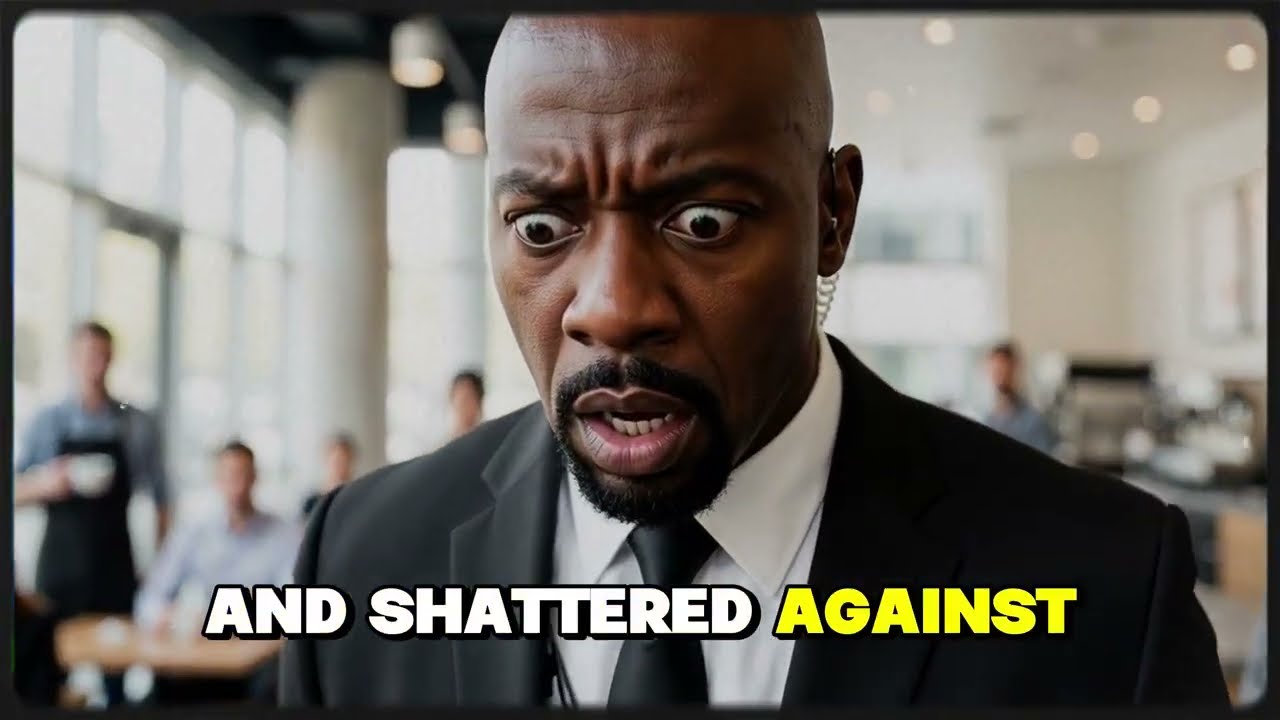
An archived medical form documented Maya’s wrist injury on the night of the fire.
The form had been filed without her name because she had left before formal admission.
Public anger intensified.
Donations began pouring into Maya’s nonprofit.
She refused interview requests.
Ethan surprised nearly everyone by announcing that Carter Industrial would fund an independent investigation with full access to company records.
His lawyers advised against it.
His public relations team warned that the findings could expose the company to lawsuits.
“Then we face them,” Ethan said.
The investigation uncovered what no one expected.
Company executives had known within weeks of the fire that Holloway’s account was questionable.
Several witness statements contradicted him.
One internal investigator had recommended delaying public recognition until the unidentified woman could be found.
But the company needed a hero.
Holloway was an employee.
He was available.
He was polished.
He could be photographed.
The woman was unknown, injured, and inconvenient.
So the official story hardened around the easiest person to reward.
Holloway then spent years protecting it.
When former employees began receiving calls warning them not to “misremember the past,” the independent investigators referred the matter to authorities.
A formal hearing was scheduled.
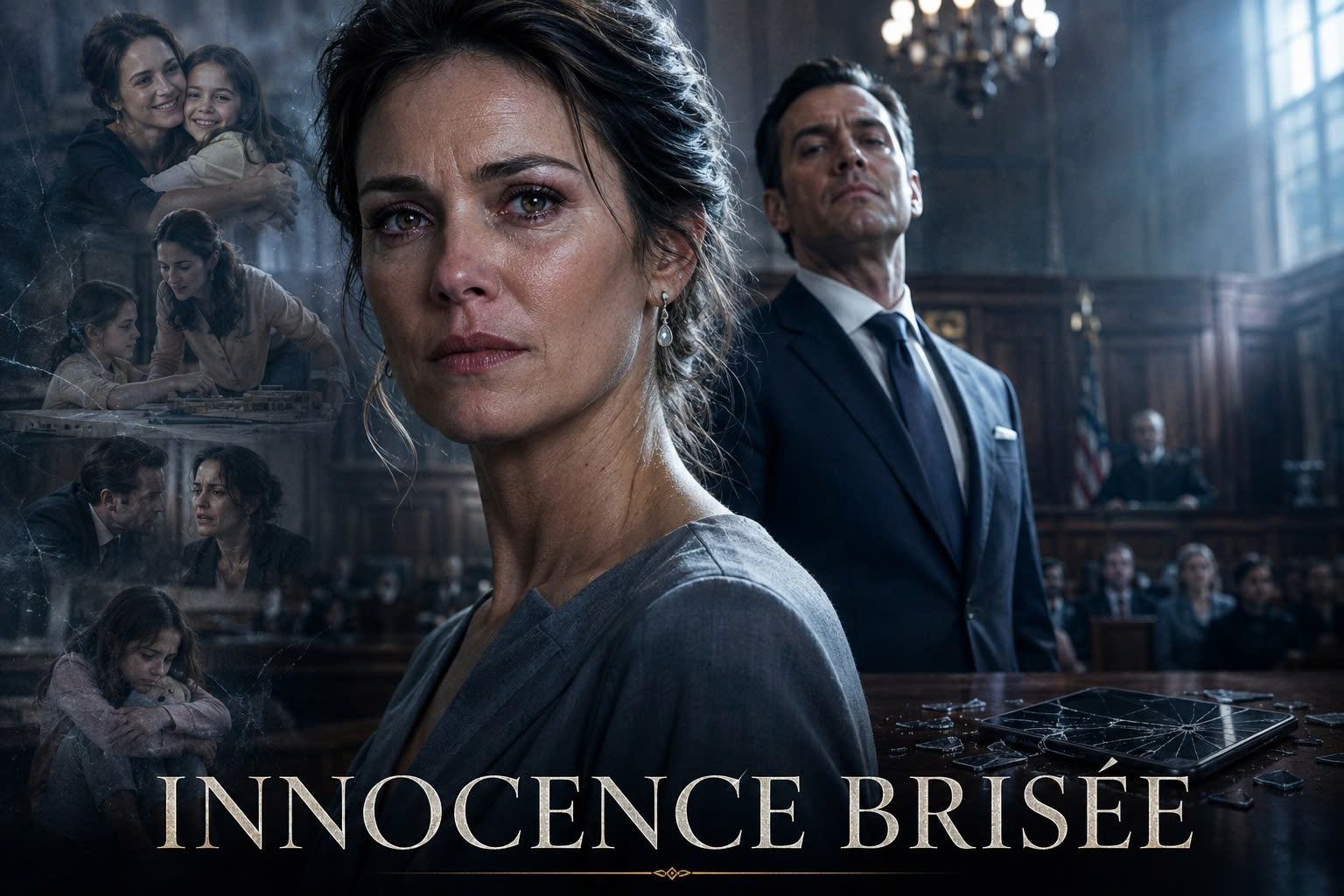
The courtroom was full before the doors opened.
Reporters occupied two rows. Former Carter employees filled the benches. Survivors sat together near the front.
Maya entered quietly and took a seat beside an attorney from her nonprofit.
Holloway arrived with two lawyers.
He looked older than his photographs.
Marcus testified first.
He described the smoke, the blocked exits, and Maya dragging him toward the hidden stairwell.
He repeated the words she had used.
North stairwell. Red valve. Three knocks.
Then a woman named Carla Ruiz testified.
She remembered Maya carrying a child-sized apprentice over broken glass.
A former welder described the cloth around Maya’s wrist turning red while she held open a service door.
A retired supervisor remembered begging her not to return for the final group.
Seven survivors gave nearly identical accounts.
Holloway’s attorney argued that traumatic memories could become contaminated over time.
Then investigators presented the documents.
The missing witness statements.
The internal memos.
The medical form.
The company correspondence questioning Holloway’s version.
And finally, an email Holloway had sent to an executive six months after the fire.
The unidentified woman has not surfaced. There is no reason to complicate the official account now.
The courtroom shifted.
Holloway leaned toward his attorney.
His attorney did not look at him.
After a brief recess, prosecutors announced that Holloway was being taken into custody pending charges related to fraud, perjury, and witness intimidation.
As officers approached, Holloway looked toward the gallery.
For years, he had stood on stages telling crowds that courage meant acting when everyone else froze.
Now, with handcuffs closing around his wrists, he could not lift his eyes.
The official history of the fire collapsed in less than an hour.
But the hearing was not over.
Ethan asked to speak.
He stood at the center of the room without a prepared speech.
“I struck a woman because I believed my position made my version of events more important than hers,” he said.
No one moved.
“I judged her clothing, her voice, and the fact that she did not appear afraid of me. I assumed that because she looked ordinary, she was powerless.”
He turned toward Maya.
“I later learned that she saved lives in a building owned by my family. I learned that my company benefited from her courage and then participated in erasing her from the story.”
His voice tightened.
“But none of that is why I was wrong to hit her. I was wrong before I knew anything about her.”
Then Ethan lowered himself to one knee.
Cameras lifted throughout the courtroom.
Maya’s expression did not change.
“I am sorry,” he said. “For the violence. For the arrogance. For the system I inherited and continued without questioning.”
Maya waited until he stood.
“I accept the apology,” she said. “That does not mean I forget what happened.”
Ethan nodded.
“It shouldn’t.”
He announced that Carter Industrial would establish a permanent compensation fund for workers and families affected by industrial accidents connected to the company’s history.
He committed a substantial portion of his personal shares to support the fund and Maya’s nonprofit.
He also ordered the review of every disputed workplace injury claim filed against the company during the previous twenty years.
When Maya was invited to speak, she stepped forward without notes.
“People will say this story is about a hidden hero,” she began.
“It isn’t.”
She looked across the courtroom.
“It is about how quickly we decide who matters.”
She spoke about workers whose injuries became statistics.
Women whose warnings were ignored until repeated by someone with a title.
People judged by their clothing, their neighborhood, their accent, their skin, or the car they drove.
“The world often waits to discover something extraordinary about a person before admitting they deserved ordinary dignity.”
The room remained completely silent.
“I did not deserve respect because I entered a burning building fifteen years ago. I deserved it when I was standing in a café doing nothing more heroic than telling the truth.”
After the hearing, Carter Industrial changed its workplace injury policies.
An independent safety division was created with authority outside executive management.
Old cases were reopened.
Several families received compensation they had been denied for years.
Maya’s nonprofit expanded into three new cities.
Marcus resigned from private security and joined her organization, where he began visiting injured workers in hospitals and training families to document unsafe conditions.
Ethan remained chief executive, but the man who returned to the company was different from the one who had entered the café.
He spoke less.
He listened longer.
He stopped treating apologies as public relations tools and began accepting that some people would never trust him again.
Maya did not become a celebrity.
She declined awards and rejected offers to turn her life into a campaign.
On the afternoon Holloway’s conviction was announced, she left the courthouse through a side exit.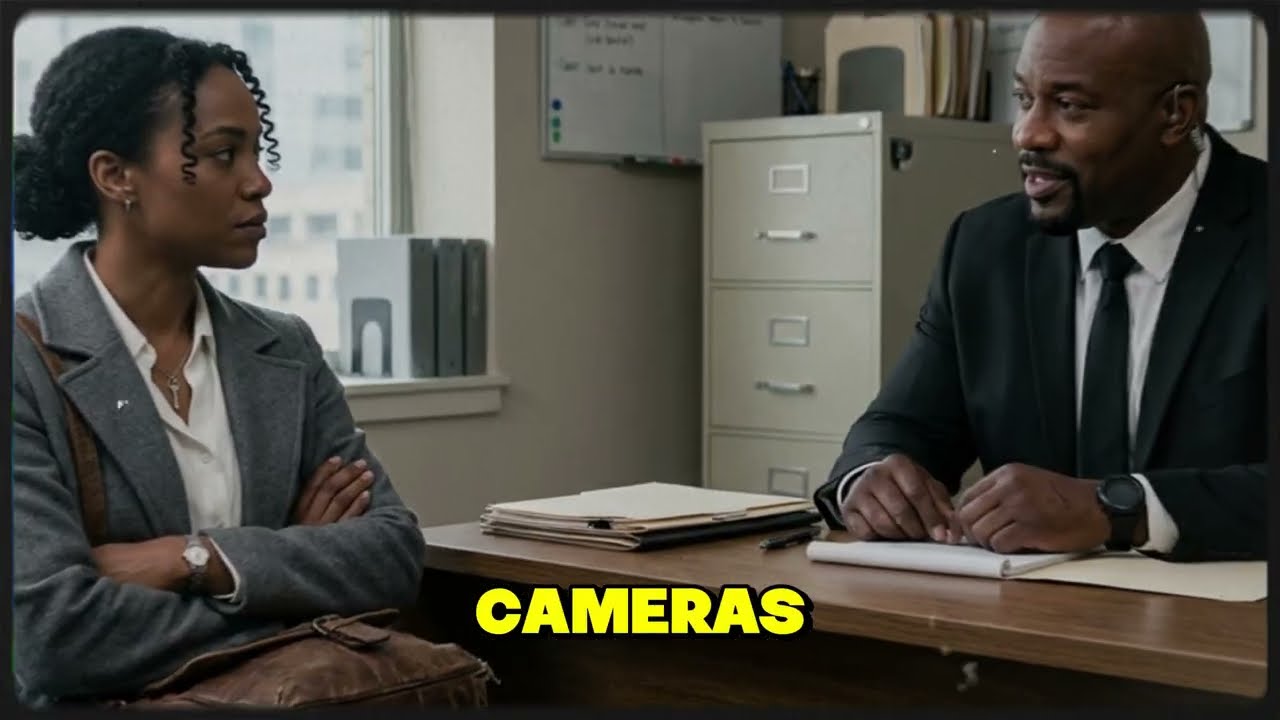
There were reporters on the front steps, but she did not join them.
She walked toward the street carrying the same worn folder she had carried into the café months earlier.
As she reached for the door of an ordinary sedan, her sleeve moved slightly.
The scar on her wrist caught the afternoon light.
It was not beautiful.
It was not a trophy.
It was simply proof that pain can remain long after applause disappears—and that the people who change the world are often the ones doing necessary work while no one important is watching.