Chapter 1 — The Name Nobody Was Supposed to Know
The admiral laughed when he asked for my call sign.
That was the first mistake.
Not because he was arrogant.
He wasn’t.
Admiral Thomas Weller had spent thirty-five years in the Navy. He had commanded carrier groups, sat across from foreign ministers, and made decisions where a single sentence could change the direction of thousands of lives.
He understood power.
He simply did not understand mine.
Not yet.
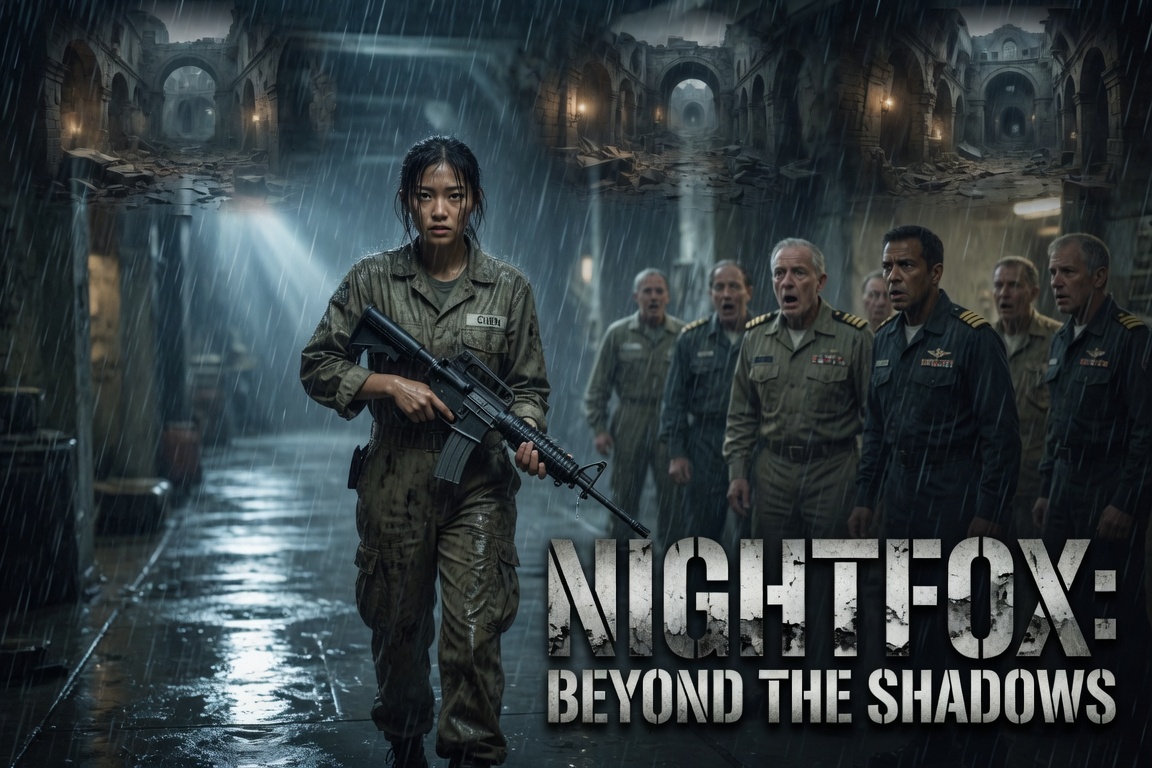
The command briefing room aboard the USS Resolute was colder than necessary. Military buildings always seemed to prefer temperatures that reminded people they were not there for comfort.
The walls were covered with screens.
Satellite images.
Operational maps.
Threat assessments.
The smell of burnt coffee drifted from a machine near the entrance.
Thirty-seven officers sat around the table.
SEAL commanders.
Intelligence analysts.
Cyber specialists.
People whose names rarely appeared publicly but whose decisions appeared everywhere.
I sat near the end.
Quiet.
Taking notes.
Listening.
Exactly where I preferred to be.
Admiral Weller stood at the head of the table, reviewing the personnel files for the upcoming joint operation.
He stopped at mine.
Then smiled.
“Commander Elena Voss.”
I looked up.
“Yes, Admiral?”
He glanced at the file.
“Twenty years intelligence operations. Counterterror analysis. Cyber warfare. Three classified commendations.”
A few officers looked over.
Not many.
My file was intentionally boring.
That was the point.
Weller tapped the folder.
“But every person in this room has a call sign.”
A few people smiled.
The tension in the room relaxed slightly.
This was normal.
Military culture had always been built on strange traditions.
Nicknames.
Stories.
Legends.
The things people remembered after the official reports were filed away.
The admiral looked at me.
“So what’s yours?”
I held his gaze.
“Not important.”
The room laughed softly.
Weller smiled wider.
“That usually means it is important.”
“No, sir.”
“Everyone has one.”
“Not everyone uses it.”
The SEAL commander sitting across from me leaned back.
Captain Mason Reed.
Forty-one.
Six-foot-two.
Former special warfare operator.
The kind of person Hollywood would cast as a soldier before understanding that real operators are usually quieter.
He looked amused.
“You’re telling us you spent two decades in intelligence and nobody gave you a name?”
“I didn’t say that.”
The room became slightly quieter.
Weller noticed.
“So you do have one.”
I closed the folder.
“Admiral.”
He laughed.
“All right. Now I’m interested.”
I said nothing.
That made him more interested.
People often think silence is empty.
It isn’t.
Silence is information.
Weller leaned against the table.
“Come on, Commander. What’s the worst that could happen?”
I looked around the room.
At the officers.
At the screens.
At the operation map showing a network that had been moving weapons through civilian shipping routes for eight months.
Then back at him.
“Someone recognizes it.”
The humor faded slightly.
A small shift.
Enough.
“Recognizes it?” Weller asked.
“Yes.”
“Who?”
I looked at the screen.
At the enemy network.
At the names hidden behind aliases.
“Someone who shouldn’t still be alive.”
Nobody laughed this time.
My call sign was not given to me because I was famous.
It was given because I was invisible.
Night Fox.
I hated it at first.
Call signs usually came from personality.
Something funny.
Something memorable.
Something that made people laugh.
Mine came from an operation where nobody laughed afterward.
Eleven years earlier, I was assigned to a joint intelligence cell tracking a weapons network moving through Eastern Europe.
The operation lasted nineteen days.
The first eighteen were failures.
Every location was empty.
Every informant disappeared.
Every lead collapsed.
Someone was leaking information.
We changed teams.
Changed routes.
Changed encryption.
Still nothing.
Then I noticed something.
The enemy was not responding to our actions.
They were responding before them.
They weren’t intercepting our plans.
They were receiving them before we executed them.
The leak was not outside the system.
It was inside.
I spent three nights alone in a dark operations room comparing thousands of messages.
Most analysts looked for what was there.
I looked for what was missing.
A pause.
A deleted phrase.
A translation changed by one word.
That was where the truth lived.
At 3:17 a.m., I found it.
A translator inside our own network had been altering intelligence reports.
Not enough to be obvious.
Enough to move people.
Enough to get them killed.
The translator was caught.
The operation was saved.
But the person who hired him disappeared.
A man named Viktor Orlov.
Former intelligence officer.
Brilliant.
Patient.
Dangerous.
Officially dead.
Unofficially, nobody believed that.
The night we found his network, I was sitting alone in the command center when Captain Reed walked in.
He looked exhausted.
“You haven’t slept.”
“No.”
“You should.”
“Later.”
He looked at the screens.
Then at my notes.
“You found him.”
“Yes.”
“How?”
I pointed at the translation files.
“He thought everyone was looking for the message.”
Reed studied me.
“What were you looking for?”
“The silence.”
He smiled slightly.
“That’s disturbing.”
“Thank you.”
“That wasn’t a compliment.”
“I know.”
A few hours later, during the final briefing, the commanding officer asked who discovered the breach.
Reed answered.
“Night Fox.”
I looked at him.
He shrugged.
“You found the fox trail.”
“I hate that.”
“You hate everything.”
“Not everything.”
“Name one thing.”
I thought about it.
“Quiet rooms.”
He laughed.
“That explains a lot.”
The name stayed.
Night Fox.
A reminder that sometimes the most dangerous person in the room was the one nobody noticed.
Chapter 2 — The Admiral’s Mistake
Back aboard the USS Resolute, Admiral Weller reopened my file.
“I’ve heard stories about Night Fox.”
The room became still.
I did not move.
Stories were dangerous.
Facts could be controlled.
Stories could not.
Captain Reed looked at me.
He knew.
Everyone else did not.
Weller continued.
“Some say Night Fox stopped a major intelligence breach without firing a weapon.”
“Stories exaggerate.”
“Some say Night Fox predicted enemy movements three weeks before they happened.”
“Analysis.”
“Some say Night Fox made an entire terrorist network disappear.”
“Collaboration.”
The admiral smiled.
“You always answer like that?”
“Yes.”
“Annoying.”
“I’ve been told.”
A few officers smiled.
Then Weller looked at the operation screen.
The smile disappeared.
“Which is why I need that person.”
I looked at the map.
“Why?”
He pointed.
A shipping route.
A civilian cargo company.
Three missing containers.
“Because whoever is behind this knows our procedures.”
Captain Reed leaned forward.
“They have internal knowledge.”
“Yes.”
“Insider?”
“Possibly.”
My eyes moved across the data.
Dates.
Times.
Movement patterns.
Something bothered me.
Not what was there.
What was missing.
I stood.
The room noticed.
“Commander?”
I walked to the screen.
“Show me the original reports.”
An analyst pulled them up.
I studied them.
Five minutes.
Ten.
Nobody spoke.
Finally, I pointed.
“Here.”
Weller approached.
“What?”
“This timestamp.”
“It’s a system update.”
“No.”
I zoomed in.
“The system update happened after the report was created.”
The analyst frowned.
“That’s impossible.”
“No.”
I looked at him.
“It’s intentional.”
The room changed.
People stopped seeing a file.
They started seeing a crime scene.
Captain Reed stepped closer.
“You think someone altered the metadata?”
“Yes.”
“Why?”
“Because they wanted us to believe the report was created later.”
Weller’s eyes narrowed.
“To hide something.”
“To hide who had access first.”
The admiral looked around the room.
“Find the access logs.”
The analysts moved immediately.
Ten minutes later, one name appeared.
A civilian contractor.
A translator.
The same type of position that had caused the breach eleven years earlier.
My stomach tightened.
Weller noticed.
“You know him?”
“No.”
A pause.
“Not yet.”
Captain Reed looked at me.
That answer bothered him.
Because he knew what it meant.
I was not remembering a person.
I was remembering a pattern.
Chapter 3 — The Family Who Never Asked
The operation continued for three days.
During those three days, my mother called twice.
I ignored both calls.
Not because I didn’t love her.
Because I knew what she would ask.
“Are you eating?”
“Are you sleeping?”
“Are you still doing that dangerous work?”
Never:
“What exactly do you do?”
People think being misunderstood hurts because others underestimate you.
Sometimes it hurts because they love the version of you they created.
My family had always done that.
My father died when I was twelve.
After that, my mother married Richard Voss.
He was a good man.
A decorated Army colonel.
Honest.
Loyal.
Kind.
He helped raise me.
But he never knew me.
At least not completely.
For twenty-two years, he introduced me as:
“My stepdaughter. She works in Navy intelligence.”
A harmless sentence.
A proud sentence.
A wrong sentence.
When neighbors asked what I did, he smiled.
“She’s behind a desk.”
When relatives asked why I traveled so much:
“Government work.”
When someone said intelligence sounded exciting:
“Mostly paperwork.”
I never corrected him.
Maybe that was my mistake.
Maybe I thought people who loved me would eventually ask.
They didn’t.
So I became easier to explain.
Smaller.
Safer.
Less complicated.
The world knew Night Fox.
My family knew Rebecca.
And Rebecca was easier to love.
On the fourth night, the enemy made a mistake.
They contacted me.
Not directly.
Through an old intelligence channel.
A message appeared.
Three words.
You were found.
Captain Reed stood behind me.
“You recognize it?”
“Yes.”
“Who?”
I stared at the screen.
Then typed one response.
You first.
The answer came immediately.
Still hiding behind others?
My hands stopped.
Not because of the words.
Because of the style.
The punctuation.
The rhythm.
A person’s language is a fingerprint.
Even after years.
Even after death.
“Viktor Orlov,” Reed whispered.
I nodded.
The room went silent.
The dead man was alive.
And he knew exactly who I was.
Chapter 4 — The Woman Behind the Name
Admiral Weller requested a private meeting.
He closed the door.
No staff.
No recordings.
Just two officers and a problem.
“You knew he was alive.”
“I suspected.”
“You didn’t tell me.”
“I didn’t know.”
“That’s not an answer.”
“It’s the truth.”
He studied me.
“Why didn’t you report your suspicion?”
Because I was afraid.
Not of Orlov.
Of being right.
I didn’t say that.
Instead:
“Because every time we assumed he was dead, someone benefited.”
Weller looked at the file.
“You’ve been chasing this for years.”
“Yes.”
“Why?”
I looked out the window.
The ocean stretched endlessly beyond the ship.
Because some ghosts are not finished.
Because some people spend their lives cleaning up damage they never caused.
Because I was tired of watching invisible people disappear.
“I don’t like unfinished work.”
The admiral nodded.
Then smiled slightly.
“That explains the call sign.”
I looked at him.
“What?”
“Night Fox.”
I sighed.
“Please don’t.”
He laughed.
“You hate it.”
“Yes.”
“Why?”
“Because everyone thinks foxes are clever.”
“And?”
“They forget foxes are also hunted.”
The smile faded.
For a moment, he understood.
Not the mission.
The person.
Chapter 5 — The Man Who Returned From the Dead
Orlov contacted us again.
This time, he wanted a meeting.
Alone.
Impossible.
Which meant possible.
Dangerous people rarely ask for impossible things unless they believe they have already won.
The meeting location was an abandoned naval facility outside the city.
Cold wind.
Empty buildings.
Rusting metal.
The kind of place where history went to disappear.
I arrived with Captain Reed monitoring from a distance.
Orlov appeared exactly as I remembered.
Older.
Thinner.
But the eyes were the same.
“You changed.”
“So did you.”
He smiled.
“No. I became honest.”
“You became a criminal.”
“Depends who writes history.”
I hated that sentence.
Because dangerous people often hide behind philosophy.
“You compromised intelligence networks.”
“I exposed corruption.”
“You killed people.”
“I revealed the cost of obedience.”
I watched him carefully.
This was his weakness.
He believed he was the hero.
They always did.
“What do you want?”
He looked at me.
“Recognition.”
I almost laughed.
“After everything?”
“Especially after everything.”
He stepped closer.
“You were always different, Rebecca.”
Nobody called me Rebecca in operations.
Nobody except family.
And enemies who studied my past.
“You researched me.”
“I studied you.”
“Why?”
“Because you were the only one who noticed.”
Not a compliment.
A warning.
“The world rewards people who speak loudly,” he continued. “You were dangerous because you listened.”
Before I could answer, gunfire erupted.
Not from him.
From somewhere else.
Someone else wanted Orlov dead.
And suddenly the enemy became the person standing beside me.
Chapter 6 — The Silence of Command
The final operation lasted eleven hours.
No cameras.
No public announcement.
No medals.
Just decisions.
Orlov’s network collapsed.
The contractor inside the Navy was exposed.
The missing containers were recovered.
The truth was filed away in reports most people would never read.
That was the nature of intelligence.
The world celebrates victories.
It rarely knows who prevented disasters.
Three weeks later, the Distinguished Service ceremony took place.
Admiral Weller stood on stage.
Captain Reed beside him.
My family sat in the audience.
My mother.
Richard.
They had been invited.
I almost canceled their tickets.
Almost.
Then I remembered something.
The problem was never that they didn’t know everything.
The problem was that they never asked.
Maybe it was time I stopped waiting.
The admiral approached the podium.
“Today we honor someone whose career has remained intentionally quiet.”
The screen behind him changed.
A black background.
A single phrase.
NIGHT FOX
My mother looked at Richard.
Richard looked at me.
The admiral continued.
“Many people believe leadership is measured by visibility.”
A pause.
“It is not.”
The room was silent.
“Leadership is measured by responsibility.”
He turned toward me.
“Commander Rebecca Voss.”
I walked to the stage.
The applause came slowly.
Then stronger.
Not because of the title.
Because of understanding.
After the ceremony, Richard approached.
He looked uncomfortable.
Which was unusual.
He was a colonel.
He was used to rooms.
Not conversations.
“I owe you an apology.”
I waited.
“I spent years telling people you worked a desk job.”
“Yes.”
“I thought I was protecting your privacy.”
“I know.”
He looked down.
“But I realize now I was protecting myself from admitting I didn’t understand.”
That was honest.
I respected honesty.
“Thank you.”
He looked surprised.
“That’s all?”
“No.”
I smiled faintly.
“But it’s a start.”
My mother hugged me.
Hard.
The kind of hug that comes after years of almost saying something.
“I’m sorry we didn’t ask.”
I closed my eyes.
Because that was the sentence I had wanted for years.
Not praise.
Not admiration.
Just curiosity.
Just:
Tell me who you are.
Captain Reed approached after they left.
“Night Fox.”
I looked at him.
“Don’t.”
He smiled.
“Admiral says you’re getting used to it.”
“Admirals are wrong sometimes.”
“Rarely.”
“Still.”
He laughed.
Then his radio crackled.
A new message.
A new threat.
He looked at me.
“Ready?”
I looked toward the ocean.
The same ocean that had carried ships, secrets, and stories nobody would ever know.
“Yes.”
Because some people chase recognition.
Some chase power.
Some chase revenge.
I chased unfinished work.
And somewhere out there, someone was making the same mistake everyone else had made.
They were looking at the obvious people.
The loud ones.
The visible ones.
They were forgetting the quiet person in the room.
The one who listened.
The one who noticed.
The one who waited.
Night Fox.