CHAPTER ONE — THE TOAST THAT WAS MEANT TO BREAK ME
My father waited until the entire room was holding champagne before he decided to humiliate my husband.
That was how I knew it had been planned.
Not impulsive.
Not accidental.
Planned.
The ballroom at the Harrington Club glowed beneath twelve crystal chandeliers, each one scattering warm light over white tablecloths, gold-rimmed plates, polished silverware, and the faces of people who had spent their lives learning how to smile without meaning it. Outside the tall arched windows, December rain slid down the glass in thin silver lines. Inside, everything smelled of expensive roses, roasted beef, old money, and the faint smoke of men who still believed cigars were a personality.
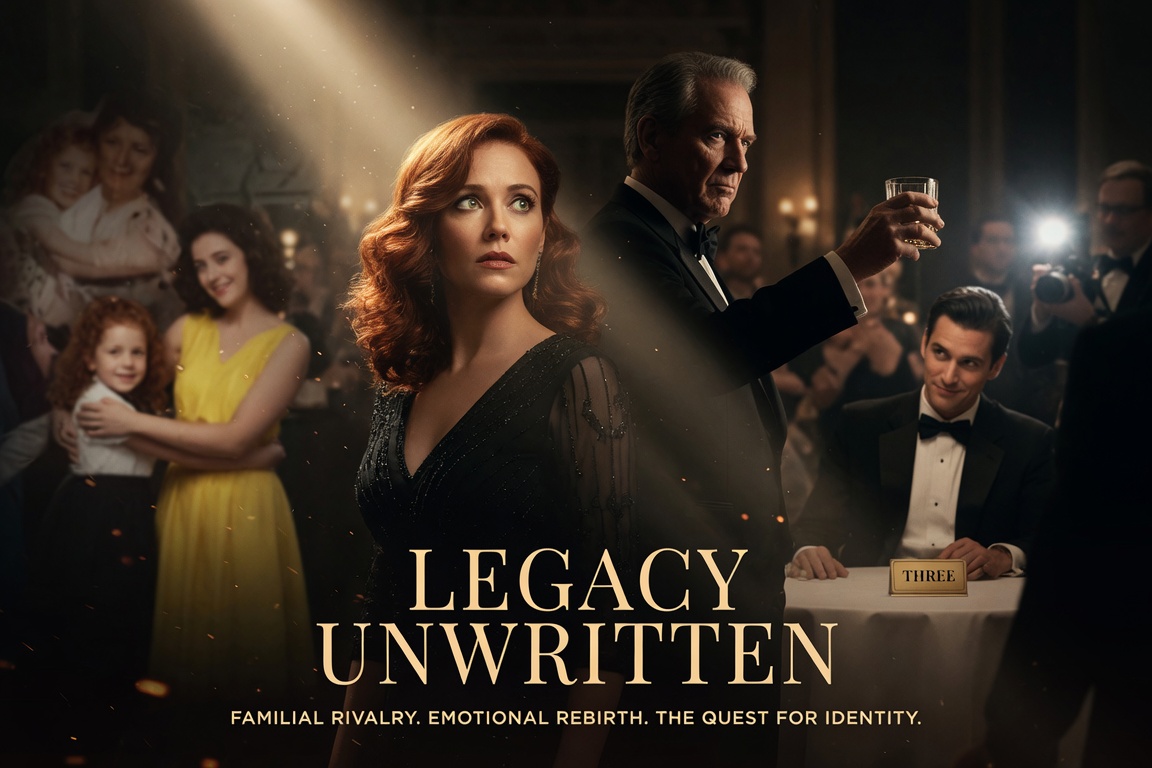
My father stood at the center of the room with a microphone in one hand and a champagne flute in the other.
Arthur Vale.
Sixty-eight years old.
Founder and retiring CEO of Vale & Hartwell Development.
A man whose name appeared on hospitals, office towers, city contracts, university donor walls, and at least three lawsuits that never made it to trial.
To the room, he was a legend.
To investors, he was a builder.
To politicians, he was a donor.
To employees, he was a man you never interrupted twice.
To me, he was Dad.
And that was the most complicated title of all.
“Before we continue,” he said, his voice rich and practiced, “I want to thank my family.”
Applause moved politely through the ballroom.
My older brother, Preston, lifted his glass. His wife, Caroline, smiled like a woman posing for a portrait she had already approved. My mother, Evelyn, sat beside my father’s empty chair with her pearls resting against her black dress, her expression serene enough to fool strangers and strained enough to warn me.
I sat at Table One because blood required it.
My husband, Daniel, sat beside me because I required it.
He wore a charcoal suit that fit well but did not announce itself. His dark hair had been combed back, though one strand kept falling near his temple because Daniel had never mastered the vanity of stillness. His hands rested calmly on the table, one thumb touching the inside of his wedding ring, the way he did when he was thinking.
I reached under the table and touched his knee.
He looked at me.
Not worried.
Not confused.
Just present.
That was Daniel’s gift. He could sit in a room designed to make people compete and somehow remain entirely himself.
My father turned toward us.
There it was.
The small shift in his smile.
My stomach tightened.
“And of course,” he said, “my youngest daughter, Lydia.”
A few faces turned.
I felt their attention land like dust.
I was thirty-six years old, a grant director for a nonprofit housing coalition, and the only one of Arthur Vale’s children who had not gone into real estate, finance, politics, or marriage as strategy. My father had always treated my work like a hobby that had gotten out of hand.
“Lydia has always had a soft heart,” he continued.
Soft.
Not intelligent.
Not principled.
Soft.
The room chuckled gently, taking its cue from him.
“She used to bring home injured birds, stray cats, broken toys, and once, if I remember correctly, a raccoon she insisted was misunderstood.”
More laughter.
I smiled because everyone was watching.
Inside, something old folded in on itself.
Daniel’s hand moved under the table and found mine.
My father looked directly at him.
“And eventually, she brought home Daniel.”
The laughter sharpened.
Not loud.
Worse.
Controlled.
Civilized.
The kind of laughter people use when cruelty arrives dressed as charm.
Daniel did not move.
My father lifted his glass.
“Now, Daniel here is a good man.”
That sentence held the blade.
My father never began an insult without polishing the handle first.
“He teaches night classes, does a bit of consulting, helps Lydia with her little charity projects, and I must say, in a family where ambition runs rather aggressively, it is refreshing to have someone around who reminds us money is not everything.”
Another ripple of laughter.
My brother Preston lowered his head to hide a smile.
Caroline looked at her plate.
My mother closed her eyes.
I felt heat rise beneath my skin.
Daniel’s fingers remained steady around mine.
My father continued, “Of course, when Lydia first told me she was marrying a man who arrived in a seven-year-old Honda and owned exactly two suits, I worried.”
People laughed again.
He smiled wider.
“I said to Evelyn, ‘Well, at least our daughter has never been materialistic.’”
My chair felt suddenly too small.
My husband’s face remained calm, but I knew him well enough to notice the slight tightening at the corner of his mouth.
My father turned to the audience, feeding from their attention.
“But retirement teaches a man perspective. Legacy is not only about what your children build. Sometimes it is about accepting what they choose not to become.”
He looked back at me.
The room went very still.
“To Lydia,” he said, lifting his glass. “May she remain happy in the simple life she chose, even if she never quite understood the empire she walked away from.”
Applause started.
Weak at first.
Then stronger because people are frightened by silence at expensive dinners.
I stood.
Not dramatically.
Not quickly.
Just enough.
My chair made a small sound against the floor.
My father’s eyes narrowed.
“Lydia?”
I took my napkin from my lap and placed it on the table.
The room watched.
Daniel looked up at me.
“Lyd.”
His voice was quiet.
A question.
I could have sat back down.
I had done it before.
At birthdays.
At board dinners.
At holiday meals where my father corrected my clothes, my job, my opinions, my husband, my life, all with a smile that made other people think I was too sensitive.
But something about that night felt different.
Maybe because my father was retiring and still needed to prove he had won.
Maybe because Daniel had been mocked not for what he had done, but for what my father assumed he lacked.
Or maybe because I finally understood that silence had never protected peace.
It had only protected him.
I looked at my father.
“That was not a toast.”
The ballroom went quiet.
Even the servers stopped moving.
My father’s smile stayed in place, but the warmth left his eyes.
“What was it, then?”
I felt Daniel’s hand brush mine beneath the table, not stopping me, not pushing me, only reminding me I was not alone.
I looked around the room.
At the investors.
The executives.
The city council members.
The attorneys.
The family friends who had watched me grow up and called me sweet because calling me capable would have required changing their story.
Then I looked back at my father.
“It was a warning to anyone here who mistakes kindness for failure.”
Nobody laughed.
My father lowered the microphone slightly.
“Sit down, Lydia.”
There he was.
Not the legend.
Not the builder.
Not the donor.
The father.
The man behind the chandelier light.
The man who could make a room full of adults feel like children waiting for permission.
But before I could answer, Daniel stood beside me.
Not fast.
Not angry.
He buttoned his jacket with one hand.
A small, calm movement.
The kind of movement that changes a room before anyone understands why.
My father looked at him.
His smile returned, thinner now.
“Daniel, this is a family moment.”
Daniel stepped around his chair.
His voice was soft enough that people leaned in.
“No, Arthur.”
A visible shock moved through the tables.
Nobody called my father Arthur at his own retirement dinner.
Daniel looked at the microphone in my father’s hand.
“This became a business matter the moment you turned humiliation into a performance.”
My father stared at him.
Then laughed once.
A small, disbelieving sound.
“You think you’re in a position to discuss business with me?”
Daniel reached into the inside pocket of his jacket and removed a folded document.
My brother Preston stopped smiling.
Across the room, an attorney from my father’s company sat up straighter.
Daniel placed the document on the table between us.
“I think I’ve been in that position for months.”
The ballroom held its breath.
My father looked down.
Then his face changed.
Not completely.
Arthur Vale had spent a lifetime training his face not to confess.
But color drained from his mouth.
His fingers tightened around the stem of the champagne flute.
The document bore a logo I recognized only from headlines.
Mercer Cross Holdings.
A private investment group known for acquiring distressed companies quietly, restructuring them surgically, and removing leadership without sentiment.
My father looked at Daniel.
“What is this?”
Daniel’s eyes did not move.
“The final transfer notice.”
Preston stood so abruptly his chair nearly tipped.
“What transfer?”
Daniel looked at him then.
For the first time that evening, his voice carried.
“The controlling debt position of Vale & Hartwell Development was purchased six weeks ago. The associated voting rights were triggered this morning after covenant violations were confirmed.”
My father’s face hardened.
“By whom?”
Daniel held his gaze.
“By me.”
The room did not gasp.
Not immediately.
People needed a second to understand what had just happened.
The quiet man.
The teacher.
The husband with two suits.
The man my father had mocked publicly for not belonging in the world of money and power.
Had just announced he controlled the company my father was retiring from.
My father’s hand shook once.
Champagne spilled over his fingers.
Daniel looked at him, not cruelly, not triumphantly, but with a kind of calm that made the silence worse.
“My name is not Daniel Reed,” he said.
He turned slightly toward the room.
“My legal name is Daniel Mercer Cross. Founder and chairman of Mercer Cross Holdings.”
The first gasp came from Caroline.
Then whispers rose from every table.
My father stared at my husband as if watching the floor disappear beneath him.
Daniel reached for another document.
“And Arthur,” he said quietly, “the company was not distressed because of market pressure.”
He placed the second folder beside the first.
“It was distressed because someone inside Vale & Hartwell has been hiding losses, moving public development funds through false vendors, and using retirement transition documents to bury the evidence.”
My father’s eyes flicked to Preston.
Just once.
Barely visible.
But I saw it.
So did Daniel.
So did half the room.
And suddenly I understood something terrible.
Daniel had not stood up only because my father humiliated me.
He had stood up because the crime was already in the room.
CHARACTER FILES
Lydia Vale Reed / Lydia Vale Cross — 36
Nonprofit housing grant director, youngest daughter of Arthur Vale.
Appearance: Warm brown eyes, shoulder-length dark hair, simple elegant dress, careful posture shaped by years of being watched.
Personality: Compassionate, observant, quietly stubborn, emotionally intelligent.
Deep wound: Grew up being praised for obedience and dismissed whenever she showed strength.
Greatest fear: Becoming invisible inside her own family.
Secret desire: To be valued without having to become ruthless.
Moral belief: Power means nothing if it does not protect people with less of it.
Greatest weakness: She has accepted humiliation too long in the name of keeping peace.
Greatest strength: She notices who gets hurt when powerful people call harm “business.”
Daniel Mercer Cross — 41
Lydia’s husband, secretly founder and chairman of Mercer Cross Holdings.
Appearance: Dark hair, calm eyes, understated clothing, controlled movements, presence that becomes obvious only when he stops hiding it.
Personality: Patient, strategic, deeply private, protective without being possessive.
Deep wound: His father lost a small construction company after a powerful developer used false invoices and legal pressure to destroy him.
Greatest fear: Becoming the kind of man who uses power carelessly.
Secret desire: To be loved before being known as powerful.
Moral belief: Wealth should correct damage, not decorate ego.
Greatest weakness: He hides important truths to avoid being loved for the wrong reasons.
Greatest strength: He prepares so thoroughly that arrogant people reveal themselves before realizing the trap is legal.
Arthur Vale — 68
Founder and retiring CEO of Vale & Hartwell Development.
Appearance: Silver hair, commanding posture, tailored tuxedo, smile perfected by decades of public life.
Personality: Proud, charming, strategic, emotionally controlling.
Deep wound: Built his empire from poverty and believes softness invites humiliation.
Greatest fear: Losing the legacy that proves he was never small.
Secret desire: To be admired by his children without having to admit he hurt them.
Moral belief: The family empire must survive, even if individuals are sacrificed.
Greatest weakness: He mistakes control for love and public success for moral authority.
Greatest strength: He understands systems, influence, and timing.
Preston Vale — 39
Lydia’s older brother, executive vice president at Vale & Hartwell.
Appearance: Handsome, polished, expensive suit, restless eyes, smile that arrives before sincerity.
Personality: Ambitious, insecure, competitive, socially sharp.
Deep wound: Spent his life trying to prove he was more than Arthur’s heir.
Greatest fear: Being exposed as someone who inherited power but never earned respect.
Secret desire: To be seen as a builder like his father.
Moral belief: Results justify pressure if the company survives.
Greatest weakness: He confuses cleverness with competence.
Greatest strength: He understands people’s vanity and uses it well.
Evelyn Vale — 64
Lydia’s mother, keeper of family peace.
Appearance: Elegant, pearls, composed face, hands that tremble only when hidden.
Personality: Polished, careful, conflict-avoidant, emotionally perceptive.
Deep wound: Spent her marriage smoothing Arthur’s damage until she no longer knew where loyalty ended and fear began.
Greatest fear: The family becoming publicly disgraced.
Secret desire: To tell the truth without destroying what remains.
Moral belief: Quiet sacrifice protects family.
Greatest weakness: She calls silence wisdom even when it enables harm.
Greatest strength: She remembers everything.
Detective Mara Ellis — 47
Financial crimes investigator later brought into the case.
Appearance: Practical coat, short dark hair, tired but focused eyes.
Personality: Direct, skeptical, patient, quietly compassionate.
Deep wound: Lost an early case because a wealthy family successfully framed fraud as a “private business dispute.”
Greatest fear: Allowing influence to bury evidence again.
Moral belief: Paperwork can be a weapon, but it can also be a witness.
Greatest strength: She finds patterns where powerful people hide motive.
CHAPTER TWO — THE MAN I THOUGHT I MARRIED
Three years earlier, Daniel had fixed the lock on my office door with a paperclip and a borrowed screwdriver.
That was the first thing I noticed about him.
Not his face.
Not his voice.
Not the fact that he was handsome in a quiet, inconvenient way.
The lock.
It had jammed during a storm, trapping me inside a cramped nonprofit office on the east side of Baltimore while water dripped through the ceiling into a plastic trash can. The building smelled of wet carpet, printer toner, and overworked social workers. Outside, families waited in the hallway for emergency housing applications. Inside, I stood with my phone at five percent and a grant deadline two hours away.
Daniel appeared because the adult education program rented the room next door.
He knocked once on the glass panel.
“You trapped?”
I looked up from the door handle I had been twisting uselessly.
“No. I’m choosing to live here now.”
He smiled.
It was small.
Good smile.
Not practiced.
“Want help?”
“Are you qualified?”
“Depends on the standard.”
“To open a door.”
“Moderately.”
He crouched, studied the lock, borrowed a screwdriver from the maintenance closet, and opened the door in four minutes.
I expected a joke.
He simply handed me the broken screw and said, “This will happen again unless the building replaces the mechanism.”
I laughed.
“You always this specific?”
“Only near locks.”
He taught financial literacy classes at night, or so I believed. Budgeting for adults returning from incarceration. Credit repair. Small business accounting. How not to be eaten alive by interest rates and fine print.
He wore old sweaters.
Drove a used Subaru.
Carried a thermos of coffee.
Listened more than he spoke.
And when people asked him what he did, he said, “I help people understand numbers before numbers hurt them.”
I thought that was the most beautiful job description I had ever heard.
We married fourteen months later in a courthouse with my mother crying quietly in the back row and my father not attending because, as Preston explained, “Dad has a city council breakfast he can’t move.”
Daniel never complained.
That should have told me something.
Most people would have been offended.
Daniel looked at the empty space where my father should have been and then at me.
“I’m here.”
Two words.
Enough.
I loved him because he made small things feel safe.
The kettle whistling at night.
His hand on my back in crowded rooms.
The way he learned which grocery store lights made me anxious after family events.
The way he never told me to forgive my father quickly, or leave him dramatically, or perform strength for anyone’s comfort.
He simply made room for the truth.
But Daniel had his own locked rooms.
I knew that too.
He never lied about having money. He simply never discussed it. When bills came, they were paid. When I asked about savings, he said he had enough. When my father called him a “night-school accountant,” Daniel smiled and said titles mattered less than usefulness.
Once, six months into our marriage, I found him standing on our balcony at 2:00 a.m., phone pressed to his ear, speaking in a voice I had never heard.
Cold.
Precise.
“The escrow only matters if they trigger the debt. No, don’t move until we verify public funds exposure. I want chain of custody clean.”
He saw me in the doorway and ended the call.
“Bad class situation?” I asked, because I wanted to believe the answer before he gave it.
He looked at me for a long moment.
Then said, “Something like that.”
I did not push.
Maybe I should have.
Maybe love is not only trusting someone’s silence.
Maybe it is asking what that silence is protecting.
Now, standing in the Harrington Club while my father’s retirement dinner became a corporate execution, I realized Daniel had been protecting much more than himself.
CHAPTER THREE — THE COMPANY BUILT ON CONCRETE AND FEAR
Vale & Hartwell was my father’s first child.
He never said that.
He did not need to.
Preston and I were raised inside the company’s shadow. We learned early that concrete pours mattered more than school plays, zoning hearings mattered more than birthdays, and a father could be physically present at dinner while his mind walked through project sites, financing structures, and political risks.
My father started with one condemned warehouse near the river.
At least, that was the myth.
He told it often.
“I had six thousand dollars, a borrowed truck, and no patience for excuses.”
People loved that story.
It was clean.
American.
Photogenic.
What he left out was the investor who lost his pension after Arthur pushed him out. The subcontractor who sued for unpaid work and settled under pressure. The neighborhood groups whose complaints were framed as ignorance because progress always needs a villain and my father preferred choosing one before anyone chose him.
As a child, I adored him anyway.
Children love before they understand consequences.
He took me to job sites in a tiny hard hat, lifted me over puddles, showed me foundations before walls rose, and told me, “Everything strong begins underground.”
I believed him.
Then I grew old enough to notice what else stayed underground.
The tenants forced out before “revitalization.”
The community promises watered down after permits cleared.
The employees who left quietly after asking questions.
The contractors who whispered in hallways and stopped when Preston entered.
By twenty-eight, I had chosen housing advocacy not because I rejected my family’s business, but because I had seen what development looked like from the other side of a locked door.
My father called it betrayal.
I called it penance for a name I still carried.
When I introduced him to Daniel, he looked my husband up and down for less than three seconds before deciding the entire story.
“Teacher?”
“Sometimes,” Daniel said.
“Accountant?”
“Sometimes.”
My father smiled.
“You seem like a man with flexible ambition.”
Daniel smiled back.
“You seem like a man who measures before asking what someone is building.”
That was the first time I saw my father dislike him.
Not because Daniel insulted him.
Because Daniel had understood him.
After that, the small humiliations began.
Wrong name on invitations.
Daniel seated near distant cousins.
Questions about income disguised as concern.
Jokes about modest vacations.
My father once handed him the check at dinner and said, “Thought you might want the experience of paying in this room.”
Daniel paid it without blinking.
Four thousand dollars.
For a meal I barely tasted.
In the car afterward, I cried.
Daniel drove in silence until we reached a red light.
Then he said, “Your father thinks money is a microphone.”
I wiped my face.
“What does that mean?”
“He believes whoever has more of it gets to speak louder.”
“He humiliated you.”
“Yes.”
“You’re not angry?”
Daniel looked at the rain on the windshield.
“I am.”
“You don’t look angry.”
His hand tightened once around the steering wheel.
“Looking angry gives people like your father a smaller target than they deserve.”
I did not understand then.
At the retirement dinner, I finally did.
Daniel had never been passive.
He had been patient.
CHAPTER FOUR — AFTER THE REVEAL
The retirement dinner ended without dessert.
That was how people described it later, as if the missing chocolate torte mattered.
In reality, the room collapsed slowly.
First into whispers.
Then into phone calls.
Then into exits disguised as emergencies.
The mayor left through a side door. Two board members gathered near the bar, speaking with the company’s general counsel in low voices. Preston disappeared into the hallway with Caroline behind him, her face white beneath perfect makeup. My mother remained seated, both hands folded around a napkin she had twisted into a rope.
My father did not leave.
That was pride.
Or shock.
Daniel placed the folders back into his leather portfolio and stood across from him beneath the chandeliers.
The microphone lay abandoned on the table between them.
“Arthur,” Daniel said, “you should call counsel.”
My father’s laugh came out dry.
“You think you can walk into my retirement dinner and steal my company?”
“No.”
Daniel’s eyes remained calm.
“You lost control months ago. Tonight, you simply found out publicly.”
My father stepped closer.
I felt the old instinct move through my body.
De-escalate.
Soften.
Explain.
Apologize without apologizing.
Keep Dad from exploding.
Daniel’s hand brushed mine.
One touch.
I stayed still.
My father looked at me.
“You knew?”
I shook my head.
Not because he deserved comfort.
Because it was true.
“No.”
His eyes sharpened.
“Your husband lies to you and you stand beside him?”
There it was.
The reversal.
The hook.
The attempt to make Daniel’s hidden identity more important than my father’s public cruelty.
I turned toward Daniel.
“Did you lie to me?”
His face changed.
Not with fear.
With regret.
“Yes.”
The room around us faded.
Rain tapped the windows. Somewhere, glassware clinked as a server cleared a table too carefully.
Daniel continued, “I didn’t tell you the full truth about Mercer Cross.”
“Why?”
His throat moved.
“Because I wanted one person in my life who didn’t look at me like an opportunity.”
That answer hurt because it made sense.
And because sense does not erase pain.
My father seized it immediately.
“Convenient.”
Daniel turned back to him.
“Don’t use my failure to hide yours.”
My father’s face hardened.
“My company has built half this city.”
“It has also billed public development funds to shell vendors controlled by Preston.”
Preston, who had returned just in time to hear his name, froze near the ballroom entrance.
Daniel looked at him.
“And, based on the transfer records, possibly with your authorization.”
My brother’s mouth opened.
No sound came out.
My mother whispered, “Arthur.”
One word.
Not shock.
Warning.
My father looked at her.
The glance was fast.
Old.
Practiced.
I knew then she had known something.
Maybe not all of it.
Enough.
Daniel continued, “Mercer Cross began acquiring your distressed debt after three lenders flagged irregularities. We did not create those irregularities. We documented them.”
My father lowered his voice.
“This is extortion.”
“No,” Daniel said. “This is consequence.”
The word hung there.
Consequence.
A thing my father had spent his life outsourcing to other people.
A security officer approached, uncertain whether he was supposed to protect the retired CEO, the new controlling creditor, or the dignity of the furniture.
Daniel looked at him kindly.
“No one needs to be removed.”
Then he turned to me.
“Lydia, we should go.”
My father’s voice struck my back before I could move.
“If you leave with him tonight, don’t come back.”
I stopped.
How many times had I heard some version of that sentence?
If you choose that job.
If you marry him.
If you embarrass this family.
If you keep taking the wrong side.
Don’t come back.
The threat had always worked because some small part of me kept trying to return to a father who had existed in flashes: the man tying my shoes before a site visit, the man lifting me to see rebar before concrete, the man saying, “Strong things begin underground.”
I turned around.
My father stood beneath the chandeliers, surrounded by flowers, champagne, investors, lies, and the ruins of his own farewell.
For the first time, he looked old.
Not weak.
Old.
There was a difference.
“I have spent my whole life trying to come back,” I said. “You kept moving the door.”
Then I walked out with my husband.
Behind us, the room began to speak again.
Not applause.
Not laughter.
Evidence.
CHAPTER FIVE — THE HOUSE WITH ALL THE LIGHTS ON
Daniel drove us home through rain so heavy the city lights smeared across the windshield.
Neither of us spoke for eleven minutes.
I counted because counting kept me from breaking.
At a red light near the harbor, I finally said, “Pull over.”
He did.
The car stopped beside a row of closed storefronts, their metal grates shining wet under streetlamps. A neon pharmacy sign flickered in the distance. The heater hummed softly. My hands rested in my lap, fingers curled around nothing.
Daniel turned toward me.
“I’m sorry.”
I stared ahead.
“How much of our life was real?”
The question came out smaller than I wanted.
His face tightened.
“All of it.”
“No.”
“Lydia—”
“No. Don’t answer quickly. I need the truth.”
He looked down.
Then nodded once.
“Okay.”
The rain filled the silence.
I asked, “Are you really a teacher?”
“Yes. I teach because I want to. Not because I need the income.”
“Mercer Cross?”
“Mine.”
“How much?”
A faint, humorless smile.
“Enough that saying the number right now would feel like another injury.”
I closed my eyes.
That answer was painfully Daniel.
“Did you marry me because of my father?”
His head turned sharply.
“No.”
“Did you meet me because of him?”
“No.”
“Did you investigate him after meeting me?”
A pause.
There.
The room inside the car changed.
“Yes.”
My throat tightened.
“How soon?”
“After the dinner where he gave me the check.”
The four-thousand-dollar dinner.
The one I cried after.
Daniel’s hands rested on the steering wheel.
“I recognized one of his board members. Mercer Cross had already seen early warnings on Vale & Hartwell debt. At first, I stayed away because it was your family.”
“And then?”
“Then your father mocked the housing coalition you worked with at Christmas and said displaced tenants should have made better financial choices.”
I remembered the night.
I remembered the wineglass in my hand.
I remembered saying nothing.
Daniel continued, “I started looking more carefully.”
“Without telling me.”
“Yes.”
“Why?”
“Because I was afraid you would feel used.”
“I do feel used.”
He absorbed that without defending himself.
Good.
Because part of me wanted him to fight.
Part of me wanted him to justify.
Part of me wanted to be able to turn him into the only villain because one villain is easier than a lifetime of them.
But Daniel only nodded.
“You have every right to feel that.”
I looked at him then.
His face was pale in the dashboard light, eyes tired, mouth set with the kind of grief that does not ask to be forgiven quickly.
“Were you going to tell me?”
“Yes.”
“When?”
“After the debt transfer closed and before the board action.”
I laughed once, bitterly.
“That sounds like a sentence from a man who has spent too much time with lawyers.”
“It is.”
“At my father’s retirement dinner?”
“No.”
“Then why tonight?”
Daniel looked through the windshield.
“Because he made you the entertainment.”
His voice changed.
Not loud.
Not dramatic.
But something in it cut clean.
“I could watch him insult me. I have survived worse men with better suits. But when he used me to wound you, in front of people who should have known better, I decided he had forfeited the courtesy of privacy.”
I wanted to stay angry.
I was angry.
But the anger had too many directions.
At him.
At my father.
At Preston.
At myself.
At the years I had spent translating cruelty into family style.
“What happens now?” I asked.
Daniel exhaled.
“Regulators. Board emergency meeting. Possible criminal referral. Preston may try to destroy records. Your father may blame me publicly. He may blame you privately.”
I looked at the rain.
“He already did.”
Daniel nodded.
“Yes.”
“And us?”
He went still.
That was the question.
Not the company.
Not the crime.
Not the inheritance of lies.
Us.
“I will answer everything,” he said. “Every document. Every timeline. Every omission. And then you decide what trust can survive.”
That was not romantic.
It was better.
Romance would have asked me to forgive because love was beautiful.
Daniel offered evidence because love had to be honest.
I leaned back against the seat.
“Take me home.”
He hesitated.
“With me?”
I looked at him.
“For tonight.”
Relief moved across his face so quickly he almost hid it.
Almost.
We drove the rest of the way in silence.
Our house was small compared to everything my father owned. Brick row house. Blue door. Books in the window. One porch light that flickered in winter. When Daniel opened the door, the house smelled of cedar, tea, and the soup he had made before the dinner because he knew I would not eat enough at the club.
I stood in the entryway and looked at the life I had believed was ordinary.
Maybe it was still ordinary.
Maybe ordinary was not the absence of secrets, but the place where truth was finally allowed to enter without being dressed for company.
Daniel hung up his coat.
Then he said, “There’s something else you need to know.”
I turned slowly.
“What?”
He walked to the study, unlocked the bottom drawer of his desk, and removed a sealed envelope.
My name was written across it.
Not in his handwriting.
My mother’s.
I stared.
“When did she give you that?”
“Six weeks ago.”
My chest tightened.
“Why?”
Daniel handed it to me.
“She said if your father ever used the retirement dinner to hurt you, I should give you this before he rewrote the story.”
My hands closed around the envelope.
For the second time that night, the floor shifted beneath my life.
My mother had not been silent because she knew nothing.
She had been silent because she had been waiting for a moment when silence could no longer protect anyone.
I opened the envelope.
Inside was a flash drive.
And a note.
Lydia,
I am sorry I taught you peace was the same as obedience.
Your father did not build everything honestly.
Your brother did not break the rules alone.
And I cannot carry what I know into another generation.
Forgive me later if you can.
Use this now.
Mom
I looked at Daniel.
“What’s on it?”
His eyes held mine.
“I don’t know. She made me promise not to open it.”
For once, I believed that completely.
CHAPTER SIX — WHAT MY MOTHER KEPT
The flash drive contained twenty-three folders.
My mother had organized them by year.
That was the first thing that broke my heart.
Not the crimes.
The care.
Evelyn Vale, who once arranged flowers by height and apologies by social necessity, had spent years preserving evidence with the same quiet discipline she used to preserve appearances.
Daniel and I sat side by side at the kitchen table until dawn.
The house remained dark except for the laptop screen and one lamp near the window. Rain softened to mist. Somewhere outside, a garbage truck groaned through the alley. My tea went cold. Daniel did not touch me unless I reached for him first.
The folders told the story of Vale & Hartwell’s decline.
False invoices connected to subcontractors that did not exist.
Public redevelopment funds routed through community improvement accounts, then quietly drained.
Emails from Preston approving vendor payments.
Emails from my father telling him to “keep the structure clean.”
A memo from the CFO raising concerns, followed by a severance agreement.
A scanned letter from a former site manager warning that materials billed for affordable housing units had never been delivered.
Photographs.
Checks.
Calendar notes.
And one audio file.
My mother had labeled it:
Arthur / Preston — After Harborview Collapse.
Harborview.
I remembered that project.
A mixed-use redevelopment near the waterfront. My father had praised it constantly. Then a retaining wall failed during construction, injuring two workers and causing a partial shutdown. The official explanation blamed soil conditions and subcontractor error.
Daniel pressed play.
My father’s voice entered our kitchen.
Lower than usual.
Angrier.
“I told you not to use that vendor twice.”
Preston answered, defensive.
“We needed the margin.”
“The margin does not matter if people start looking at the invoices.”
“Then pay them off.”
A pause.
My mother’s recording captured the clink of glass.
My father said, “You sound like an amateur.”
Preston snapped, “I sound like someone trying to keep your company alive.”
Then my father, cold as stone:
“This is my company. Your job is to bleed where I tell you and smile where I point.”
I stopped breathing.
Not because I was surprised by the cruelty.
Because for the first time, I heard it turned toward Preston.
My brother had inherited power, yes.
But also a cage built from the same metal as mine.
The recording continued.
Preston’s voice cracked.
“You promised when I took over operations that I could make decisions.”
“I promised you a chair. Not judgment.”
Silence.
Then Preston said something I had never expected.
“Lydia was right to leave.”
The room inside me went still.
My father’s reply came softly.
“Lydia left because she is weak.”
“No,” Preston said. “She left because she saw you.”
The audio ended.
I stared at the screen.
Daniel looked at me but said nothing.
For years, I had believed Preston was simply my father’s reflection.
Maybe he was.
But reflections are trapped too.
That did not excuse him.
It changed the shape of the wound.
At 6:12 a.m., Daniel called his legal team.
At 6:40, I called my mother.
She answered on the second ring.
Neither of us spoke.
Then she said, “You listened?”
“Yes.”
Her breathing trembled.
“Is it enough?”
I looked at the folders.
The years.
The pattern.
The quiet archive of a woman who had spent too long enabling harm and finally decided evidence was the only apology still available.
“Yes.”
She began to cry.
Not loudly.
My mother never did anything loudly.
“I should have protected you.”
I closed my eyes.
“Yes.”
“I thought if I kept him calm, everyone would be safer.”
“I know.”
“That was cowardice.”
“Yes.”
Silence.
Then she whispered, “Do you hate me?”
I thought about the retirement dinner.
The pearls at her throat.
Her eyes closed during my father’s toast.
The envelope in my hand.
“No,” I said.
The truth surprised me.
“But I don’t trust you yet.”
She inhaled shakily.
“That is fair.”
For the first time in my life, my mother did not ask for more than she deserved.
CHAPTER SEVEN — PRESTON’S OFFER
Preston came to my office two days later.
Not my father.
Preston.
He arrived without Caroline, without lawyers, without the polished confidence he wore at family events like armor. His eyes were red. His tie was loose. He looked like a man who had not slept and had finally discovered that expensive watches do not slow time.
My office sat above a renovated community center, with secondhand bookshelves, a cracked radiator, and windows that looked down on a playground built where a condemned lot used to be. Children’s voices rose from below, bright and careless. Preston looked uncomfortable the moment he entered, as if goodness without branding made him suspicious.
“You always did choose depressing buildings,” he said.
I sat behind my desk.
“You always did mistake honest buildings for depressing ones.”
His mouth twitched.
Almost a smile.
Then it disappeared.
He closed the door.
“I need to know what Daniel has.”
“Evidence.”
“How much?”
“Enough.”
He rubbed his face with both hands.
For one strange second, he looked younger than me.
“What does he want?”
“That depends on what you did.”
Preston laughed.
Not because anything was funny.
Because the alternative was making a sound he could not control.
“I did what Dad asked until I didn’t know where his instructions ended and my choices began.”
I leaned back.
“That is not an answer.”
“No.”
He looked out the window at the playground.
“I signed vendor approvals. I routed payments. I used companies Dad said were clean. When I questioned things, he told me I wanted authority without burden.”
“And the public funds?”
His jaw tightened.
“Yes.”
“And Harborview?”
“I didn’t know the materials were substandard until after the collapse.”
“But after?”
He closed his eyes.
“I helped hide it.”
There it was.
Not full redemption.
Not innocence.
A confession.
Ugly.
Useful.
“Why are you here?”
Preston reached into his coat and removed a small drive.
He placed it on my desk.
“Because Dad kept a second ledger.”
I did not touch it.
“How do I know this isn’t another trap?”
“You don’t.”
At least he did not insult me with reassurance.
He continued, “But if I give it to Daniel’s people, it looks like strategy. If I give it to prosecutors, Dad’s lawyers bury me before I walk in. If I give it to you…”
His voice faltered.
“You were the only one who ever said out loud that this family was sick.”
I looked at him.
The brother who laughed when my father mocked Daniel.
The brother who enjoyed being chosen until he learned chosen sons can be used as shields.
“Why now?”
He swallowed.
“Because Dad is going to blame everything on me.”
I believed that immediately.
Preston looked at the playground again.
“My son asked me yesterday if Grandpa was going to jail.”
Caroline and Preston had a ten-year-old boy named Miles. Quiet child. Always drawing machines on napkins at family dinners while adults discussed money over his head.
“What did you say?”
“I said no.”
“Was that true?”
He looked at me.
“No.”
The room softened in a way I did not want.
Children complicate justice.
Not because justice should stop for them, but because they remind you punishment always sends echoes into rooms where no crime was committed.
Preston pushed the drive closer.
“I’m not asking you to save me.”
“Good.”
“I’m asking you to make sure Miles knows I eventually told the truth.”
The word eventually carried all the weight.
I picked up the drive.
“I’ll give this to Daniel’s legal team and Detective Ellis.”
His eyes widened.
“Detective?”
“Yes.”
He nodded slowly.
“Okay.”
He turned to leave.
“Preston.”
He stopped.
I asked the question that had been burning since I listened to the recording.
“At Harborview, you said I was right to leave.”
His shoulders tightened.
“Yes.”
“Did you mean it?”
He did not turn around.
“Yes.”
“Then why did you keep laughing when Dad used me as a punchline?”
His head lowered.
For a long moment, I thought he would give me another corporate answer.
Then he said, “Because if he was looking at you, he wasn’t looking at me.”
He left before I could answer.
I sat alone with the drive on my desk, listening to children below argue over a red ball.
That was the thing about family damage.
Everyone had a reason.
Some reasons were even understandable.
None of them returned what they took.
CHAPTER EIGHT — ARTHUR VALE’S LAST BOARD MEETING
The emergency board meeting took place on a Thursday morning beneath fluorescent lights instead of chandeliers.
That felt appropriate.
Chandeliers forgive too much.
Fluorescent lights make everyone look like they should have slept more and lied less.
Vale & Hartwell’s headquarters occupied the top floors of a downtown tower my father built twenty-two years earlier. The boardroom had walnut walls, leather chairs, and a long table where deals had been approved, careers ended, and environmental concerns rephrased until they sounded like scheduling issues.
Daniel sat on one side with two Mercer Cross attorneys.
I sat beside him, not as a shareholder, not as an executive, but as the daughter my father had turned into a public example and the witness he forgot had learned to watch quietly.
My father entered last.
Of course.
He wore a navy suit, white shirt, no tie. Retirement had lasted four days.
His eyes moved to me first.
Then Daniel.
Then Preston, who sat at the far end of the table with his attorney and a face emptied by fear.
My mother did not attend.
That was her statement.
Daniel opened the meeting.
“Mercer Cross is exercising its rights under the debt agreements and covenant breach provisions. Effective immediately, Arthur Vale is removed from executive authority pending investigation. Preston Vale is suspended from operational control. An independent monitor will oversee all public development projects, vendor payments, and compliance review.”
My father smiled.
“This is theater.”
Daniel looked at him.
“No. Theater happened at dinner.”
A board member coughed into his hand.
My father ignored him.
“You’re making a mistake. This company survives because of relationships. You think spreadsheets build towers?”
“No,” Daniel said. “Workers do. Which is why stealing from them is bad strategy.”
My father’s face hardened.
“You know nothing about building.”
Daniel leaned back.
For a moment, he looked almost tired.
“My father built small commercial properties in Ohio. He lost his company when a developer used false liens, delayed payments, and political pressure to force him into bankruptcy. He died believing he had failed.”
My father’s expression did not change, but something in his eyes shifted.
Recognition.
Not of Daniel.
Of the method.
Daniel continued, “Years later, I reviewed the old records. One of the shell entities involved was connected to an early Vale & Hartwell partner.”
The boardroom went still.
My father looked at him more carefully now.
“You came after me for revenge.”
“No,” Daniel said. “I noticed your company because of debt exposure. I investigated because of fraud. I bought control because the structure allowed it. Revenge would have been easier. This is governance.”
The sentence landed like a door closing.
My father turned to me.
“So that’s what this is? Your husband’s childhood wound dressed up as righteousness?”
I felt Daniel stiffen slightly.
This time, I answered.
“No.”
My father’s eyes moved to mine.
“This is what happens when you spend decades teaching your children that love means loyalty, but loyalty means silence.”
His jaw tightened.
“You have no idea what it takes to build something from nothing.”
I stood.
Not because I had planned to.
Because the sentence was too old to remain seated beneath.
“I know exactly what it takes. I watched tenants rebuild lives after your projects displaced them. I watched nonprofit workers stretch ten thousand dollars into shelter for families your redevelopment plans called ‘temporary relocation burdens.’ I watched Daniel teach people how to recover from financial systems designed to trap them. You are not the only person who built something.”
The room was silent.
I continued.
“You built towers. Fine. But you also built fear into this family so deeply that Mom needed a flash drive to tell the truth and Preston needed a lawyer before he could admit he was drowning.”
Preston looked down.
My father’s face flushed.
“You will not speak to me that way.”
There it was again.
The command.
The oldest architecture in the room.
I stepped closer.
“Yes,” I said. “I will.”
His eyes changed.
For the first time, he understood the child he trained to lower her voice had become a woman who would not.
Daniel’s attorney placed a folder before the board chair.
“Additionally, we are submitting evidence to state financial crimes investigators and federal authorities where public funds are implicated.”
My father turned sharply.
“Preston.”
My brother did not look up.
“Preston.”
No answer.
Arthur Vale’s control finally reached across the table and found nothing to grip.
Detective Mara Ellis entered ten minutes later with two investigators and a warrant for specific company records.
Nobody gasped.
This was not the Harrington Club.
There were no champagne flutes to spill.
Only paper.
And paper, my father was learning, could bleed too.
CHAPTER NINE — THE RETIREMENT HE DIDN’T CHOOSE
My father did not go to prison immediately.
That disappointed people who liked simple endings.
He fought.
Powerful men rarely fall; they negotiate gravity.
He denied knowledge of Preston’s vendor routes.
Then blamed Preston’s ambition.
Then blamed Daniel’s “hostile acquisition.”
Then blamed changing markets, disloyal staff, overzealous investigators, and finally, in a private letter to me, “family betrayal.”
I kept the letter.
Not because it moved me.
Because evidence of character matters too.
The investigations took months. Vale & Hartwell survived, but not as my father knew it. Mercer Cross restructured the debt, removed the false vendors, paid restitution into public project accounts, and created a worker protection fund for those harmed by delayed payments and unsafe material substitutions. Daniel insisted the company keep its name for a while.
“Why?” I asked one night.
We were eating soup at our kitchen table, the same table where my mother’s flash drive had opened the family’s hidden rooms.
“Because communities deserve continuity even when leadership fails,” he said.
I looked at him.
“You sound like the man I married.”
He smiled faintly.
“I am the man you married.”
“Plus a holding company.”
“Unfortunately, yes.”
Trust returned slowly.
Not in dramatic forgiveness.
In small disclosures.
Bank records.
Old photographs.
Legal documents.
The story of his father’s company.
The story of why he hid Mercer Cross.
The story of how being wealthy had made him lonelier, not freer.
I told him the truth too.
How part of me liked not knowing because ordinary Daniel had felt safe.
How angry I was that he decided protection required secrecy.
How frightened I had been at the dinner when the man defending me became someone I had to learn again.
We did not heal through grand speeches.
We healed through calendars, passwords, therapy appointments, shared files, quiet apologies, and the stubborn daily labor of not turning pain into performance.
Preston cooperated.
Not nobly at first.
Strategically.
Then, gradually, something in him changed. Maybe because he had finally stopped trying to inherit our father’s approval. Maybe because his son Miles stopped speaking to him for three weeks after the news broke. Maybe because confession, once begun, becomes harder to control than lies.
My mother moved out of the Vale house six months after the board meeting.
She rented a small apartment near the water with too many windows and not enough furniture.
The first time I visited, she served tea in mismatched mugs.
No pearls.
No staff.
No performance.
She looked nervous in her own kitchen.
“I don’t know how to be casual,” she admitted.
I laughed despite myself.
“That is the first casual thing you’ve ever said.”
She smiled, and for a second I saw the woman she might have been before becoming Arthur Vale’s wife required becoming an expert in silence.
My father’s plea agreement came almost a year after the retirement dinner.
Financial fraud.
Conspiracy related to false vendor payments.
Obstruction.
He avoided the longest possible sentence because men like him always have documents showing charity, doctors describing stress, and attorneys who know how to make accountability sound excessive.
But he lost the company.
He lost his board seats.
He lost the house.
He lost the right to be the only narrator of our family.
The day before sentencing, he asked to see me.
I almost said no.
Then I went with Daniel beside me and Detective Ellis’s warning in my head: “Closure is not a legal requirement.”
My father sat in a private room at his attorney’s office, thinner than before, his silver hair less carefully managed. He looked up when I entered.
“Lydia.”
“Arthur.”
Pain crossed his face.
Good.
Not because I wanted cruelty.
Because names reveal distance.
Daniel remained near the door.
My father looked at him.
“I suppose you’re pleased.”
Daniel said nothing.
My father turned back to me.
“You married a man more ruthless than I ever was.”
I sat across from him.
“No. I married a man who learned power can be used without needing people to kneel.”
My father’s mouth tightened.
“You think I wanted this?”
“I think you wanted control and called it legacy.”
He looked away.
For the first time in my life, my father seemed unable to find the correct speech.
When he spoke, his voice was lower.
“My father died with nothing.”
I waited.
“He worked thirty-eight years. Owned nothing. Respected by no one who mattered. I swore I would never end like that.”
“And did you?”
His eyes flashed.
“No.”
I looked at him.
“Are you sure?”
The question landed between us.
He had owned buildings.
Companies.
Houses.
Politicians.
Rooms.
But respect?
Love?
Safety?
I watched him understand the question and hate me for asking it.
His hand moved slightly on the table.
Old fingers.
Builder’s fingers, once.
“I did what I had to do.”
“No,” I said. “You did what fear told you to do.”
For a moment, I thought he might shout.
Instead, he looked tired.
So tired that I almost reached for him.
Almost.
“I was proud of you,” he said.
The words stunned me.
Not because I had never wanted them.
Because I had wanted them for so long that hearing them now felt like receiving a key after the house had burned down.
“When?” I asked.
His eyes moved to the window.
“When you stood up at the dinner.”
My throat tightened.
“You humiliated me.”
“I know.”
Two words.
Small.
Late.
Not enough.
But real enough to hurt.
He continued, “I thought if I made your life look small, mine would still look large.”
Daniel lowered his gaze.
My father looked at him.
“I underestimated you.”
Daniel answered quietly, “Yes.”
My father almost smiled.
Then it disappeared.
He looked back at me.
“Can you forgive me?”
There it was.
The question families often ask after spending years making honesty dangerous.
I did not answer quickly.
“I don’t know.”
His face fell.
For once, I did not rescue him from the feeling.
“But I can tell the truth,” I said. “You hurt me. You hurt this family. You hurt people who trusted your company. Whatever happens next, I will not pretend that love requires silence.”
He nodded once.
Barely.
Maybe that was all he had left.
When Daniel and I left, my father did not call after us.
No command.
No warning.
No door closing.
Just silence.
This time, it felt like an ending instead of a cage.
CHAPTER TEN — THE TOAST I GAVE MYSELF
Two years after the retirement dinner, Vale & Hartwell reopened the Harborview site.
Not as luxury towers.
As mixed-income housing with a community legal clinic on the first floor and a worker safety training center named after the two men injured in the collapse.
I stood near the entrance on opening day, watching families walk through the courtyard beneath young maple trees. Children ran over clean pavement where construction fencing once blocked the street. The air smelled of fresh mulch, coffee from a nearby cart, and rain lifting off concrete under weak morning sun.
Daniel stood beside me in a navy suit.
One of his three.
I had bought him the third as a joke.
He claimed it changed nothing.
He wore it anyway.
My mother came.
Preston came with Miles.
Even my father came, older, quieter, standing near the back with a cane and no entourage. The court had allowed him to attend public community events connected to restitution if approved. He did not speak. He did not need to.
The mayor gave remarks.
A housing director spoke.
A former worker named James Ortega, one of the men injured at Harborview, cut the ribbon with hands that still bore scars from the collapse.
Then someone handed me the microphone.
I looked at it.
For a second, I was back in the Harrington Club.
Chandeliers.
Champagne.
My father’s voice.
My husband standing.
The room changing.
Daniel touched my back once.
Not to steady me.
To remind me I already was.
I stepped forward.
“My father once told me everything strong begins underground.”
I looked toward Arthur.
His face did not change, but his hand tightened around the cane.
“For a long time, I thought he meant concrete. Foundations. Steel. Things you can inspect and measure.”
A breeze moved through the courtyard.
“But I think strength begins deeper than that. It begins in what we are willing to tell the truth about. It begins in the records we keep, the people we believe, the harm we repair, and the courage to stop calling silence peace.”
The crowd remained quiet.
Good quiet.
Living quiet.
“This building exists because people who were dismissed, injured, ignored, underestimated, or used decided the story was not finished.”
I looked at Daniel.
“At my husband, who taught me that power does not need a spotlight to be real.”
He smiled faintly.
“At my mother, who learned too late but not never that evidence can become apology.”
My mother wiped her eyes.
“At my brother, who discovered that telling the truth after doing wrong is not heroism, but it can still be a beginning.”
Preston lowered his head.
“And at every family that has ever confused control with love, I hope this place stands as proof: repair is possible, but only after the truth is allowed to stand in the room without being humiliated.”
I lowered the microphone.
Applause rose slowly.
Not the polished applause from the retirement dinner.
This was different.
Hands rough from work.
Children clapping off rhythm.
Neighbors cheering.
People who did not need the moment to look expensive in order for it to matter.
Later, after the ceremony, my father approached me.
Daniel stayed close but not between us.
Arthur looked at the building, then at me.
“You did well.”
For once, he did not sound like he was granting approval.
He sounded like he was reporting something he could no longer deny.
I nodded.
“Thank you.”
He looked at Daniel.
Then back at me.
“Do you ever regret not knowing who he was?”
I glanced at my husband.
The man who had lied.
The man who had protected.
The man who had failed me and then done the harder work of becoming fully known.
“Yes,” I said.
Daniel’s expression softened.
“Sometimes.”
My father seemed surprised by the honesty.
Then I added, “But I don’t regret learning who I was when the truth came out.”
He looked down.
Maybe he understood.
Maybe not.
Understanding was no longer the price of my peace.
That evening, Daniel and I walked home under a sky washed clean after rain. The city lights reflected in puddles. Somewhere, music played from an open apartment window. He carried my heels because I had given up on dignity four blocks earlier.
“You gave a good toast,” he said.
I leaned into him slightly.
“I learned from a bad one.”
He laughed.
A real laugh.
The kind no ballroom could manufacture.
At home, I placed the old retirement dinner invitation in a box with my mother’s note, a copy of the Harborview ribbon, and the first legal document showing Mercer Cross had transferred a portion of its recovered profits into the worker fund.
Not trophies.
Records.
Proof that pain had passed through our lives and been forced to leave something useful behind.
Before bed, Daniel stood at the bathroom sink brushing his teeth in the third suit pants and an undershirt, looking nothing like a secret billionaire and everything like the man who once fixed my broken office lock.
I watched him from the doorway.
He raised an eyebrow.
“What?”
I smiled.
“Nothing.”
“Suspicious.”
“Very.”
He rinsed, then came closer.
“Are we okay?”
I thought about the question.
The honest answer was not simple.
We were not untouched.
Not innocent.
Not the same people who married in a courthouse with one empty chair in the back.
But we were truthful now.
And truth, I had learned, was not the opposite of love.
It was the foundation love kept asking for.
“We’re building,” I said.
Daniel smiled.
“That I understand.”
Outside, rain began again, soft against the window.
This time, it did not sound like a warning.
It sounded like something being washed clean slowly, not all at once, but enough to see where the damage ended and the repair could begin.
And somewhere across the city, in a smaller house than he had ever imagined for himself, my father had to live with the one thing he could not buy, bury, or control.
The truth.
It had stood up at his retirement dinner wearing my husband’s face.
But it had been mine long before that.
I simply needed the courage to stop sitting down.