Chapter 1 — The Girl Who Entered Auschwitz and Lost Her World
Humenné, Slovakia
March 1942
The train did not stop because anyone wanted it to.
It stopped because the journey was over.
For the people inside, the sound of the brakes was not relief.
It was fear.
The metal wheels screamed against the tracks.
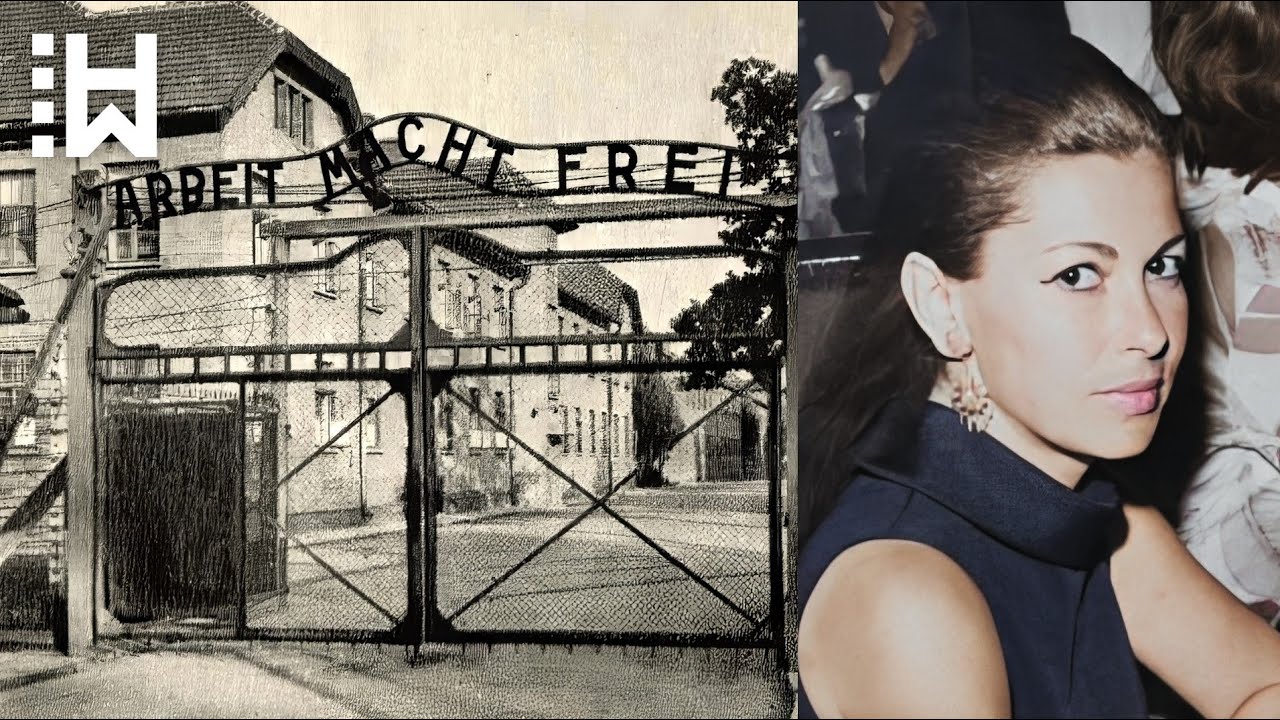
The crowded wagon shook.
Hundreds of people stood shoulder to shoulder in darkness, trying to understand what waited outside.
There was no room to sit.
No room to breathe.
No room to forget.
Among them was a young woman named Helena Citrónová.
She was twenty-one years old.
A girl who had once known ordinary things.
Family dinners.
Friends.
Music.
The streets of her hometown.
The small details that make a life feel permanent.
Until one day, history arrived at her door.
The doors opened.
Cold air rushed inside.
German voices shouted commands.
Guards stood outside.
Dogs barked.
People stepped down from the train carrying whatever they had managed to bring.
A bag.
A coat.
A photograph.
A final connection to the life they had before.
Helena looked around.
She saw fear on faces around her.
Children holding their parents’ hands.
Older people struggling to walk.
Families searching for each other.
Everyone was asking the same silent question:
Where are we?
The answer would become one of the darkest names in human history.
Auschwitz.
The World Before the Camp
Before Auschwitz, Helena’s life was not extraordinary.
That was what made what happened to her so devastating.
She was not a soldier.
Not a politician.
Not someone who believed she would become part of history.
She was simply a young woman living in eastern Slovakia.
A place where Jewish communities had existed for generations.
Families worked.
Children studied.
People built ordinary lives.
But Europe had changed.
The rise of Nazi Germany brought laws designed to isolate Jewish people from society.
Rights disappeared slowly.
Then quickly.
Names were recorded.
Movement was restricted.
People were separated from neighbors who had once known them.
For many victims, the Holocaust did not begin with deportation.
It began with small losses.
A job.
A school.
A business.
A place in society.
One restriction followed another until normal life became impossible.
Then came the trains.
The First Slovak Deportations
In March 1942, Slovakia began deporting Jewish citizens to Nazi concentration and extermination camps.
Helena was among the early transports.
Many of those sent away did not know their destination.
They knew only that they were being removed.
Taken somewhere else.
Separated from everything familiar.
The train carried her toward a place designed to destroy identity itself.
Auschwitz-Birkenau.
A place where names would become numbers.
Where families would disappear.
Where survival would depend on impossible decisions.
Arrival
When Helena entered Auschwitz, the first thing taken from her was not her belongings.
It was certainty.
The camp operated on confusion.
New arrivals did not know what would happen next.
They saw prisoners already there.
Thin faces.
Shaved heads.
Striped uniforms.
Eyes that looked older than their years.
The SS controlled everything.
Every movement.
Every command.
Every moment.
The guards were not simply workers at a prison.
They were part of a system built around terror.
Among the prisoners, rumors moved quickly.
Some said people were being sent away.
Some said they never returned.
Some whispered about gas chambers.
Many refused to believe what they heard.
Because sometimes the human mind protects itself from truths too painful to accept.
Helena was assigned to work in the “Canada” warehouses.
The name was cruelly ironic.
The area was where prisoners sorted the belongings taken from deported Jews.
Clothing.
Suitcases.
Jewelry.
Personal objects.
Pieces of lives that had been destroyed.
Every suitcase told a story.
A name written on a piece of luggage.
A child’s coat.
A family photograph.
Evidence that the people who arrived had once belonged somewhere.
Helena worked among the remains of other people’s lives.
And every day, she faced the same reality:
The camp was built to erase human beings.
The SS Guard
His name was Franz Wunsch.
He was an SS guard at Auschwitz.
Like many men who served in the concentration camp system, he was part of the machinery of Nazi oppression.
He wore the uniform.
He carried the authority.
He belonged to the organization responsible for unimaginable crimes.
Then something unexpected happened.
He noticed Helena.
The circumstances were deeply complicated.
There was no equality between them.
She was a prisoner.
He was a guard.
He held power over her life.
Any connection between them existed inside a world defined by fear and violence.
But Wunsch became attached to Helena.
According to later accounts, he used his position to provide her with certain protections.
Food.
Assistance.
Help during dangerous moments.
At one point, he reportedly intervened to help save Helena’s sister.
For Helena, this created a contradiction almost impossible to explain.
The man who represented the system imprisoning her was also a person who, at moments, helped her survive.
But Auschwitz was not changed by one individual action.
A single act of kindness did not erase participation in a criminal system.
This was the painful complexity surrounding their story.
The Impossible Question
Decades later, people would struggle with Helena’s story.
Some saw it as an example of humanity appearing in the darkest place imaginable.
Others asked difficult questions:
Can a person involved in a system of mass murder be separated from that system because they helped one individual?
Can survival create bonds that outsiders cannot understand?
Can gratitude exist alongside trauma?
Helena herself carried those contradictions.
She survived.
But survival came with memories.
And memories are not always simple.
In Auschwitz, every day was uncertain.
A prisoner could survive one moment and disappear the next.
A guard could offer help one day and remain part of oppression the next.
Nothing about the camp allowed simple answers.
Then, in January 1945, the Nazi regime began evacuating Auschwitz as Soviet forces approached.
The camp that had consumed so many lives was collapsing.
Prisoners were forced onto death marches.
The SS attempted to hide evidence.
The world was moving toward liberation.
Helena survived the evacuation.
She survived the war.
But her story did not end when Auschwitz ended.
Because 27 years later…
she would hear a name from the past.
Franz Wunsch.
And she would have to decide whether to return to the place she had spent decades trying to leave behind.
To be continued — Chapter 2: The SS Guard Who Returned to Face the Survivor