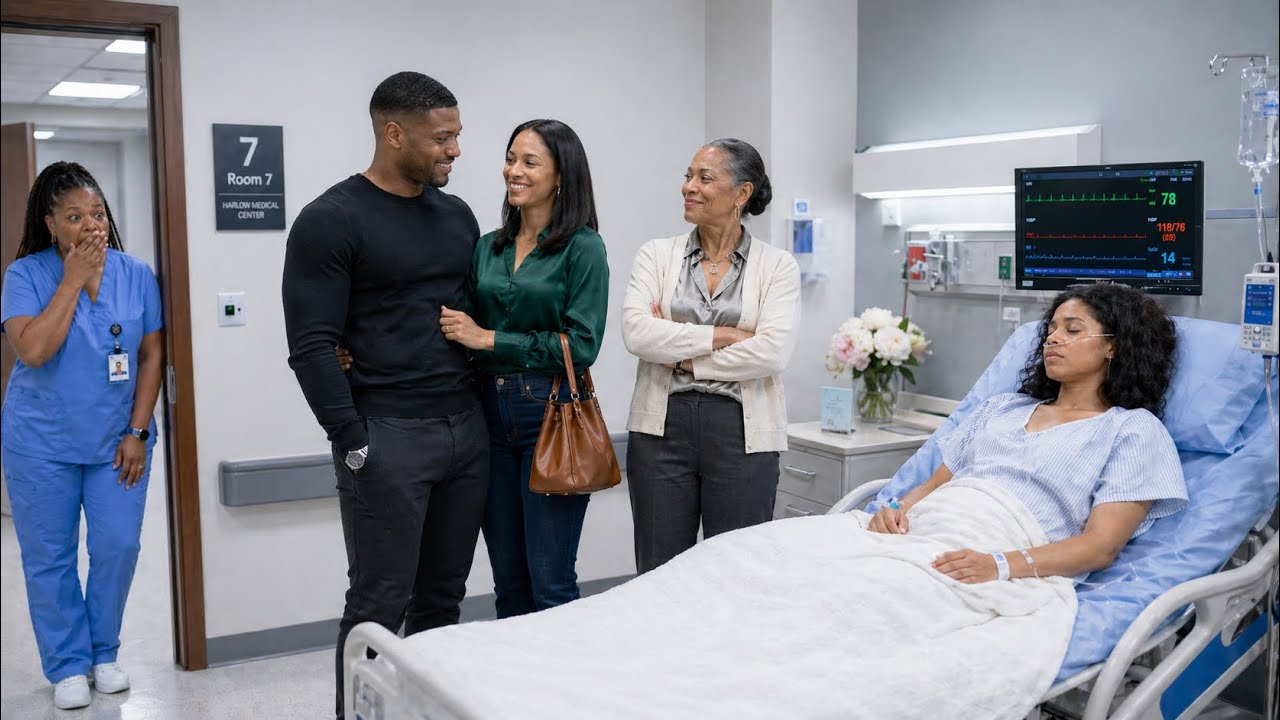
At 3:47 in the morning, Maya Briggs’ heart stopped beating.
Inside Delivery Room 7 at Harlow Medical Center, the monitors screamed, nurses moved without speaking, and Dr. Simone Adeyemi climbed onto a step stool to begin chest compressions.
Outside the room, Maya’s husband looked at his phone.
Not the red emergency light above the door.
Not the medical team rushing past him.
His phone.
And when the alarm inside suddenly went quiet, the expression that crossed his face was not grief.
It was calculation.
Dr. Adeyemi had been working for nineteen hours.
She was a high-risk obstetrician known for two things: never raising her voice and never giving up on a patient before the patient’s body had truly given up on her.
Maya Briggs was twenty-seven years old, thirty-nine weeks pregnant, and bleeding internally from a placental abruption that had progressed faster than anyone expected.
She had arrived shortly after midnight, pale and trembling, one hand protecting her stomach while the other gripped the admission desk.
“My husband is parking,” she had whispered.
Dex Briggs did not appear for another forty-three minutes.
By 2:00 a.m., Maya’s blood pressure had begun to fall.
At first, slowly.
Then in steps.
Nurse Tasha Otum noticed the pattern before the machine sounded its first warning. She noticed everything: the grayness around Maya’s lips, the way her fingertips had gone cold, the way she kept asking whether someone had called Dex even though he was already standing in the hallway.
“He knows I’m scared of hospitals,” Maya said.
Tasha adjusted the blanket over her shoulders.
“He’s here,” she replied carefully.
She did not add that Dex had not once asked to enter the room.
At 3:45, Delivery Room 7 reached the edge of what medicine could control.
Blood products were being pushed through one line. Medication flowed through another. Dr. Adeyemi called for an emergency delivery while another physician prepared for the possibility that they might lose both mother and child.
Two minutes later, Maya’s heart stopped.
The room changed instantly.
There was no panic. Panic wasted oxygen.
Dr. Adeyemi began compressions while Tasha called the code. The emergency team arrived so quickly that the final syllable of the announcement was still echoing overhead when the crash cart crossed the doorway.
“Continue blood.”
“Prepare for delivery.”
“Charge.”
The silence between commands felt wrong.
It was the kind of silence that existed only when everyone in the room understood how close they were to failing.
Outside, three people waited.
Dex Briggs stood nearest the wall, checking his phone every few seconds. He wore a charcoal jacket over a white shirt, dressed more like a man waiting for a business meeting than a husband who had driven his bleeding wife to the hospital.
Beside him stood Farah, introduced to the staff as Maya’s cousin.
But Tasha had seen Farah straighten Dex’s collar when she thought no one was looking.
She had seen his hand rest against the small of Farah’s back.
Not long enough to be obvious.
Long enough to be familiar.
The third person was Renata Briggs, Dex’s mother, who had complained twice about the parking fee and once about the temperature in the waiting area.
When a nurse rushed past carrying blood, Renata moved her handbag out of the way and sighed.
“How much longer is this going to take?”
Tasha heard her.
So did Dr. Adeyemi, who had stepped briefly into the hall to call for an additional surgical team.
Their eyes met.
Neither woman said anything.
But both understood the same thing.
This did not feel like a family waiting to hear whether someone they loved would live.
It felt like three people waiting for a decision that would affect them.
At 3:52, Maya’s heart began beating again.
The rhythm was weak and irregular, but it was there.
No one celebrated.
Dr. Adeyemi watched the monitor for three full seconds before issuing the next command. Maya was alive, but survival was still something the team had to earn minute by minute.
The emergency delivery continued.
Twenty-six minutes later, Dr. Adeyemi stepped into the hallway.
Her surgical cap was damp. A thin streak of blood marked one sleeve.
Dex stood immediately.
Renata did not.
“We lost Maya’s pulse,” Dr. Adeyemi said. “We were able to restore it. She is alive, but she remains in critical condition.”
Dex stared at her.
Then, half a second too late, he covered his mouth.
“Thank God.”
The words arrived before the emotion did.
Renata leaned forward.
“And the baby?”
Not “Maya.”
Not “Will she recover?”
The baby.
Dr. Adeyemi looked at all three of them.
“There is something I need to explain privately.”
She led them into a consultation room across from the nurses’ station.
Tasha remained outside, entering notes into Maya’s chart. Through the narrow glass panel in the door, she could see the moment Dr. Adeyemi delivered the news.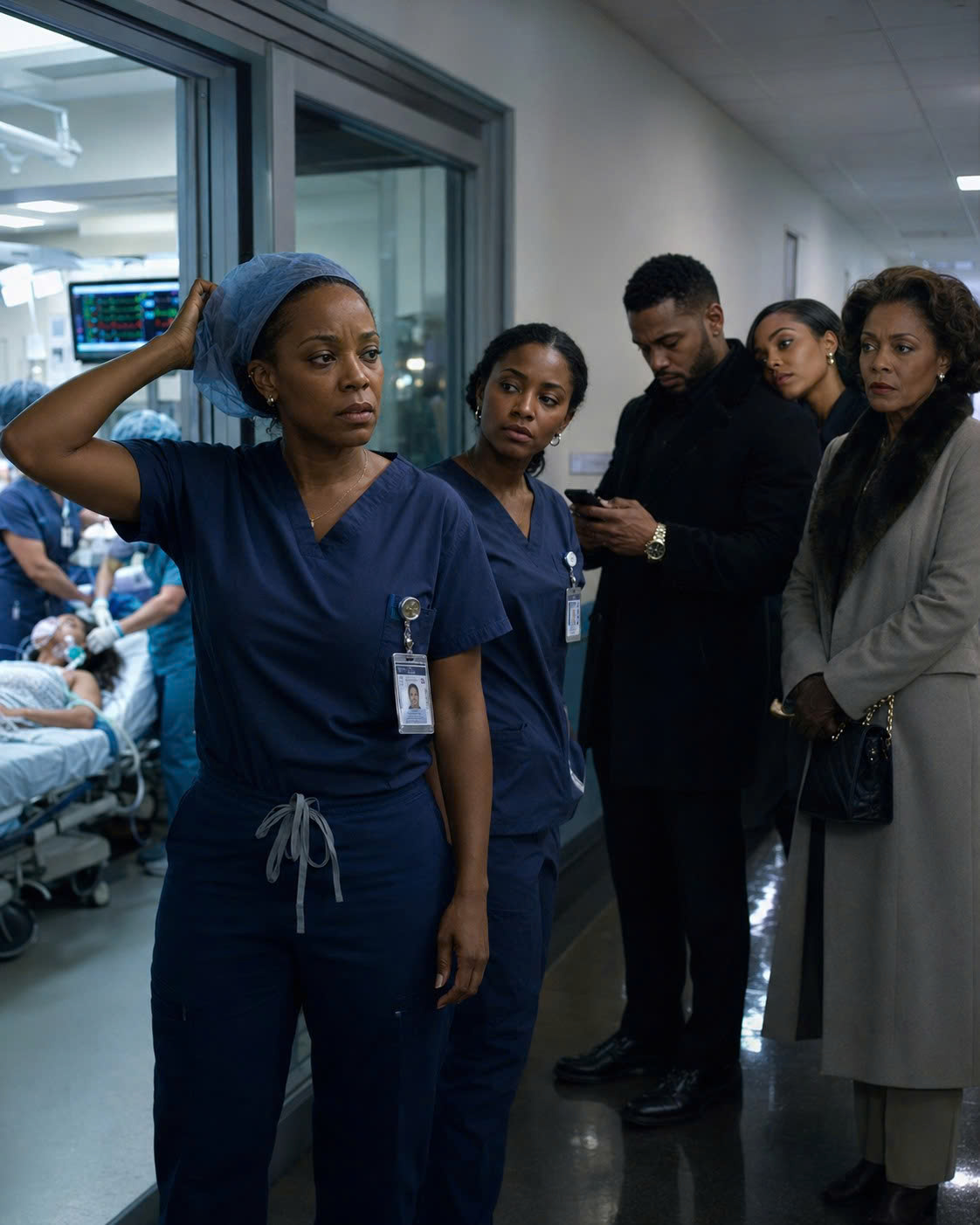
Dex’s shoulders dropped.
Renata went completely still.
Farah did not look at Dr. Adeyemi.
She looked at Dex.
Maya had not been carrying one child.
She had been carrying twins.
One baby had been positioned directly behind the other during earlier scans. What had repeatedly appeared to be shadowing had concealed a second, smaller fetus.
Both babies had been delivered during the emergency.
Twin A weighed three pounds, eleven ounces and required respiratory support in the neonatal intensive care unit.
Twin B weighed four pounds, one ounce and was breathing independently.
Both were alive.
And, barring a catastrophic reversal, Maya was expected to survive too.
Most families would have cried.
Some would have laughed from shock.
Some would have fallen into chairs.
Dex looked like a man recalculating figures in his head.
Renata’s face did not soften.
Farah watched Dex as though waiting for instructions.
Dr. Adeyemi rested both hands on the table.
“Your wife is alive,” she said directly to Dex.
He nodded.
“Your children are alive.”
Another nod.
“She will require extensive support. So will the babies. Whatever plans your family had before tonight, those plans now need to include all three of them.”
The word “plans” landed heavily.
For the first time, Dex’s eyes locked onto hers.
Dr. Adeyemi held his gaze until he looked away.
When the consultation ended, Dex did not ask to see Maya.
He walked toward the elevators.
Farah followed.
Renata remained behind long enough to ask when the hospital would need insurance information.
Then she followed them too.
Tasha watched the elevator doors close.
When she returned to Delivery Room 7, Maya had been transferred to intensive care.
Two empty neonatal bassinets remained near the wall, their blankets folded into perfect squares.
Tasha stood looking at them for a moment.
They did not feel empty.
They felt like evidence that something had gone wrong with a plan no one had yet admitted existed.
Maya woke forty-one hours later.
Her first clear memory was of Dr. Adeyemi sitting beside her bed with a paper cup of coffee untouched between her hands.
The room was quiet. Morning light moved through the blinds in narrow strips.
Maya tried to speak, but her throat hurt.
Dr. Adeyemi leaned closer.
“You are safe,” she said. “Your babies are safe.”
Maya’s eyes widened.
“Babies?”
Dr. Adeyemi did not rush.
She explained the cardiac arrest, the emergency surgery and the twins. She explained that Maya had lost enough blood to place every organ under stress, but that her recovery was moving in the right direction.
She explained the NICU.
Then she stayed while Maya cried.
Not loudly.
Maya’s tears slid silently toward her ears as she stared at the ceiling, trying to understand how she had gone into the hospital expecting one child and awakened as the mother of two.
Later that afternoon, nurses wheeled her to the NICU.
The room was dim, lit by monitors and soft overhead lamps.
One baby lay under a web of tubes, the tiny rise and fall of her chest assisted by a machine. The other slept with one fist pressed against her cheek.
Maya placed her fingertips through the opening of the first incubator.
“They were both there,” she whispered.
“All that time.”
Dr. Adeyemi stood several feet away.
She understood that some moments did not need a doctor’s explanation.
Maya did not name the babies immediately.
She wanted to see their faces first.
She wanted to learn which one settled when she spoke and which one opened her eyes at the sound of her voice.
Only then did she name them Reese and Wren, drawn from the middle names of the grandmother who had raised her.
Reese, for endurance.
Wren, for the small bird her grandmother used to call fearless because it sang even when storms approached.
On the third day, Maya finally asked the question no one had volunteered to answer.
“Where is Dex?”
Dr. Adeyemi closed the chart in her hands.
“He left shortly after receiving the update.”
“He came back?”
“Not while I was present.”
Maya looked toward the window.
“And Farah?”
Dr. Adeyemi paused.
“She left with him.”
Maya’s expression changed slowly.
The pain remained, but something colder moved underneath it.
“Farah isn’t my cousin,” she said.
Dr. Adeyemi said nothing.
“She works with Dex.”
Another silence.
Maya turned back toward her.
“Did they look surprised that I lived?”
It was not a question a physician normally answered.
But Dr. Adeyemi had learned that protecting a patient sometimes required more than protecting her organs.
“They did not react the way I expected a family to react,” she said.
Maya nodded once.
Then she asked for a lawyer.
Not her husband.
Not his mother.
A lawyer.
Attorney Lena Park arrived the next morning carrying a slim laptop and a legal pad.
She spent two hours with Maya behind a closed door.
By the time she left, Maya had revoked Dex’s medical decision-making authority, restricted his access to the babies, changed the contact permissions on every account she could reach and requested an emergency review of several documents Dex had asked her to sign during the final weeks of pregnancy.
On the fifth day, Dex arrived with flowers.
They were real lilies, expensive ones, arranged carefully enough to look spontaneous.
He paused at the door as though waiting for Maya to reward him for appearing.
Maya was seated upright in bed.
“Close the door,” she said.
Dex obeyed.
“Sit down.”
He looked surprised, but sat.
For the next twenty minutes, he offered every sentence people use when they are trying to regain control of a story.
He had been scared.
He had needed air.
Farah had only been helping him.
His mother had been under stress.
He had not understood how serious the situation was.
He had gone home to shower.
He had planned to return.
Maya listened without interrupting.
When he finished, she folded her hands over the blanket.
“You went home to shower,” she repeated.
“Yes.”
“Before seeing whether I was conscious.”
Dex leaned forward.
“Maya, I wasn’t thinking clearly.”
“But you were thinking clearly enough to call the insurance company at 4:16 in the morning.”
His face emptied.
It happened in less than a second.
The muscles around his mouth stopped moving. His eyes flicked toward the door. His right hand tightened around his phone.
Maya watched recognition arrive.
Not guilt.
Recognition.
The realization that she knew.
Attorney Lena Park had found the call in records from their shared family account. She had also found emails Dex had sent to Renata and Farah during Maya’s final month of pregnancy.
The messages did not contain a murder plot.
They contained something more ordinary and, in Maya’s eyes, more believable.
A financial one.
Maya’s grandmother had left her controlling ownership in Briggs Community Pharmacies, a regional business Maya had quietly expanded from three struggling locations to eleven profitable clinics.
Dex had spent years presenting himself as the architect of that growth.
He was not.
Maya was.
Under the terms of her grandmother’s trust, Dex could manage Maya’s voting shares temporarily if she died while their child was still a minor.
He believed one baby was coming.
He believed Maya’s placental complications made her unlikely to survive delivery.
And three weeks before she entered the hospital, he had prepared paperwork that would have placed operational control of the company in his hands.
The emails showed that Farah was not merely his colleague.
They had been having an affair for eleven months.
Renata knew.
All three had discussed what they called “the transition.”
They had expected Maya’s death to make Dex the public face of a grieving family and the private controller of a company he had never built.
But the trust contained a clause Dex had overlooked.
If Maya survived, control remained entirely hers.
If multiple children survived her, the shares would eventually pass equally to them under an independent trustee.
The twins had not doubled Dex’s opportunity.
They had destroyed it.
That was why Renata had asked about the baby before asking about Maya.
That was why Farah had watched Dex’s face when Dr. Adeyemi announced the twins.
That was why Dex had left for the elevators instead of going to his wife.
He had not been overwhelmed by grief.
He had been trying to stop documents already in motion.
“You thought I was going to die,” Maya said.
Dex opened his mouth.
She raised one hand.
“And before you explain again, understand this: I’m not saying you caused what happened to me.”
His shoulders loosened slightly.
Maya continued.
“I’m saying you were prepared to benefit from it before my heart had even stopped.”
The relief vanished.
Outside the room, Tasha was updating a medication order when Dex’s voice rose.
“You’re twisting private conversations.”
Maya’s voice never changed.
“No. I’m reading them.”
The room went silent.
Dex emerged forty-eight minutes later carrying nothing.
Maya kept the flowers.
She asked Tasha to place them on the windowsill, as far from her bed as possible.
Within a week, Dex had been removed from every management role at the company.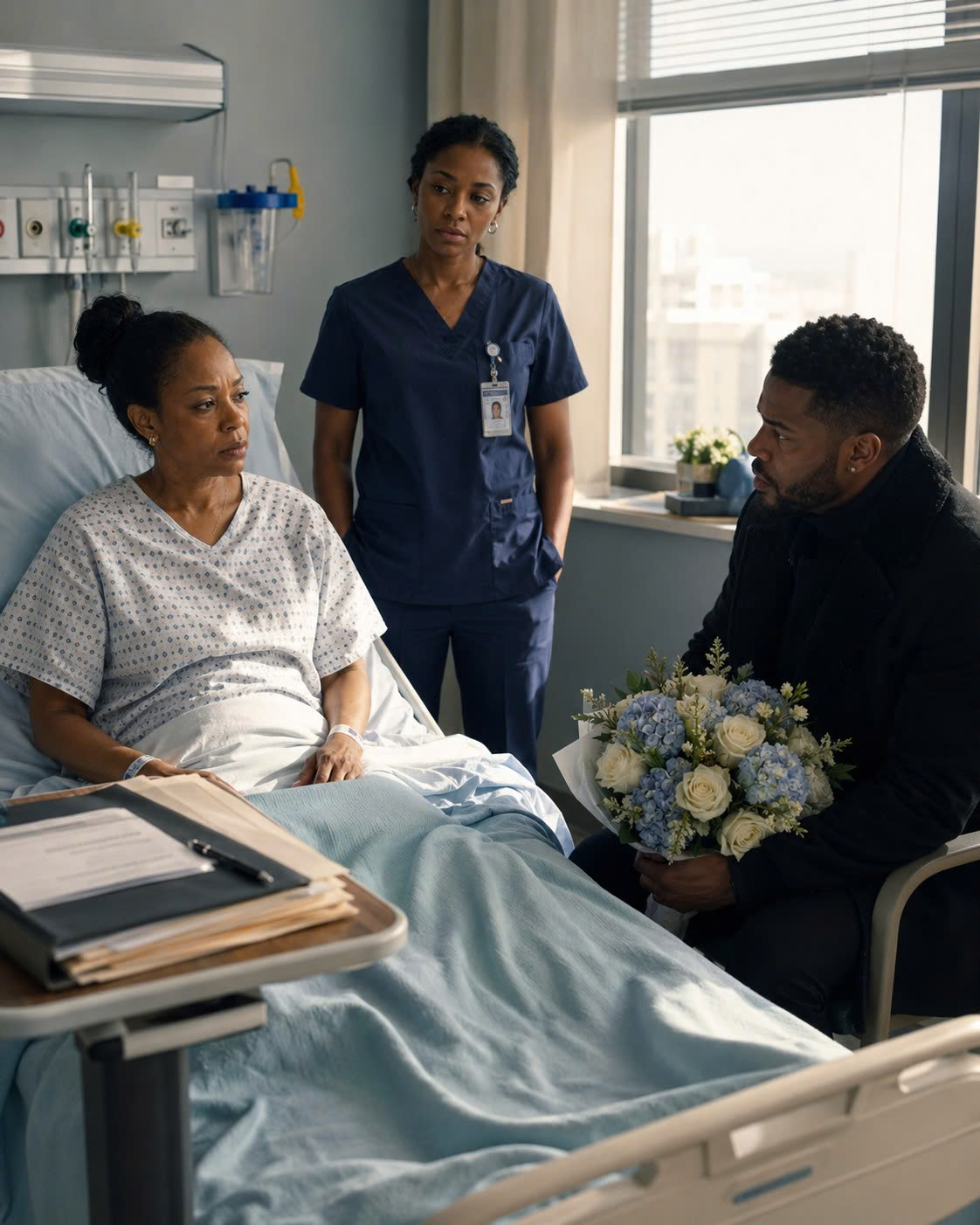
The emergency court order restricted his access to Maya’s accounts and prevented him from entering the NICU without supervision.
Farah resigned after employees learned she had helped prepare succession announcements before Maya entered labor.
Renata stopped calling when she realized every voicemail was being preserved.
The divorce filing reached Dex before Maya left the hospital.
For twelve days, Dr. Adeyemi visited Room 7 daily.
Sometimes she checked Maya’s incision or reviewed laboratory results.
Sometimes she asked about Reese and Wren.
Sometimes she simply sat for a few minutes while Maya rested.
On Maya’s final afternoon at Harlow Medical Center, the babies were still in the NICU but growing stronger.
Wren no longer needed respiratory support.
Reese had gained six ounces and had developed a habit of gripping the nurse’s finger during feeding.
Dr. Adeyemi entered the room to find Maya signing discharge papers.
Maya looked up.
“You stayed,” she said.
Dr. Adeyemi smiled faintly.
“I was your doctor.”
“No. I mean that night.”
Maya placed the pen down.
“You stayed in the room. You stayed in the hallway. You saw what they were doing, and you didn’t pretend it was normal.”
Dr. Adeyemi pulled a chair closer.
“I could not know what they were planning.”
“But you knew something was wrong.”
“Yes.”
“And when I woke up, you told me the truth without deciding what I could handle.”
Dr. Adeyemi looked through the glass toward the NICU corridor.
“Your body had already fought hard enough. You should not have had to fight a false version of what happened too.”
Maya nodded.
For a while, neither woman spoke.
Then Dr. Adeyemi asked, “Have you decided when the girls will come home?”
“Soon,” Maya said. “Not as soon as I’d like. But soon.”
“They are going to become something extraordinary.”
Maya looked toward the photograph beside her bed.
Reese was asleep in it.
Wren was awake, her dark eyes turned toward the hospital lights.
“I think they already have.”
Before leaving, Maya visited the NICU one more time.
She placed one hand on each incubator and spoke softly enough that only her daughters could hear.
“We still have time.”
The monitors continued their steady rhythm.
The bassinets that had once stood empty were empty no longer.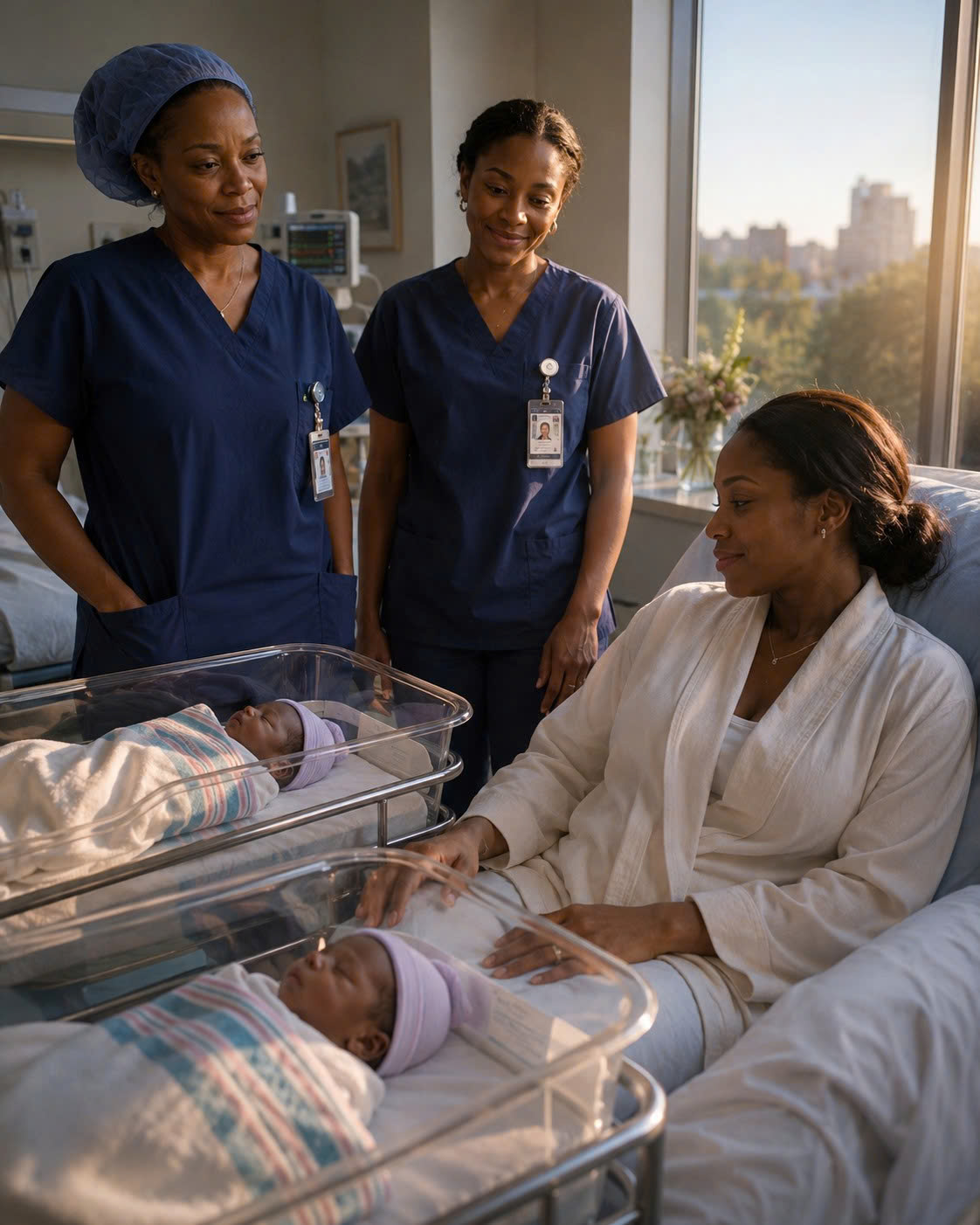
And somewhere beyond the hospital walls, three people were learning that they had mistaken silence for surrender, vulnerability for weakness and a medical emergency for an opportunity.
Maya had lost her heartbeat for five minutes.
She lost her marriage in the days that followed.
But she left the hospital with her life, her daughters, her company and something Dex had never expected her to recover.
The truth.
Because family is not defined by who waits in the hallway when your heart stops.
It is defined by who fights to bring you back—and who is still standing beside you when you finally open your eyes.