At 7:42 on a cold Monday morning, Evelyn Brooks was fired from the hotel where she had worked for thirty-one years.
Not in an office.
Not with dignity.
The general manager made her stand beside the front desk while employees, guests, and two uniformed security guards watched.
“You stole hotel property,” Greg Harlan announced, holding up a printed incident report. “After repeated warnings, we have no choice but to terminate your employment immediately.”
Evelyn stared at the paper in his hand.
The “property” was a breakfast sandwich and a carton of milk.
Both had been scheduled to be thrown away.
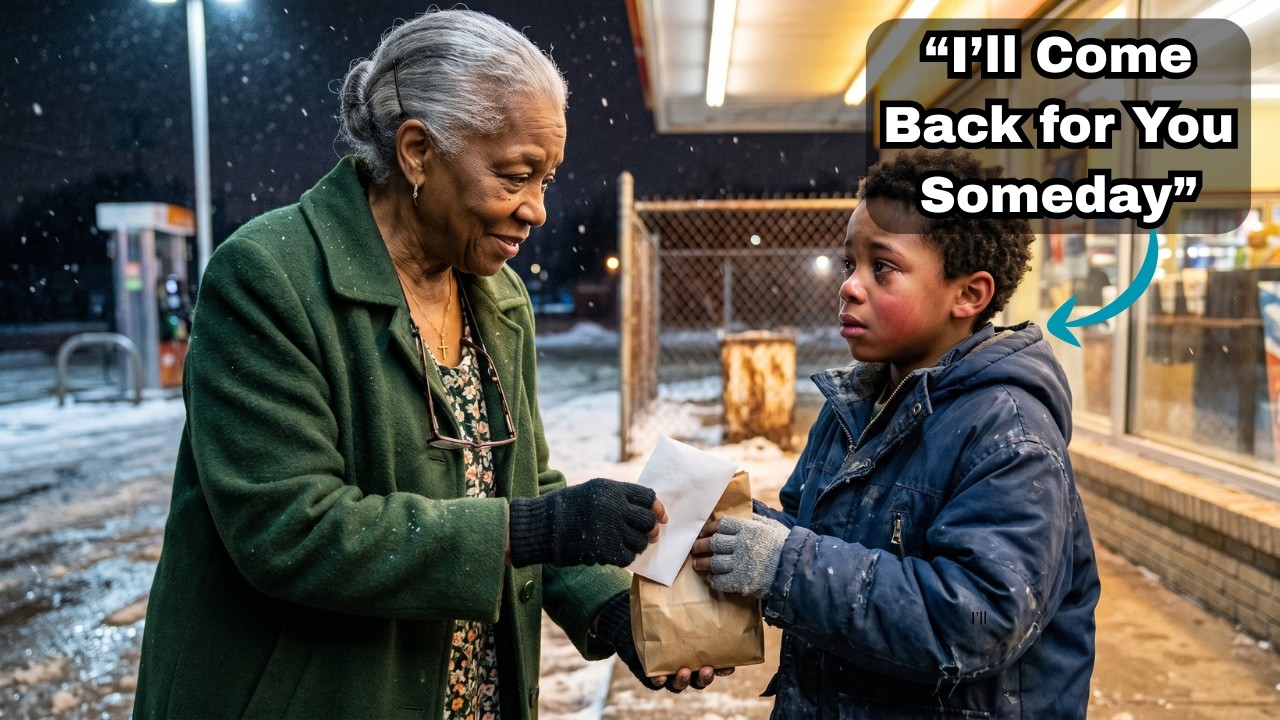
Evelyn had given them to an eight-year-old boy whose mother had spent the night sleeping in her car behind the hotel.
“I asked the kitchen supervisor,” Evelyn said quietly. “He told me the food was going into the trash.”
Greg straightened his expensive tie.
“You did not have written authorization.”
Around them, the lobby of the Ashford Grand Hotel fell silent.
Bellmen stopped moving luggage. The young receptionist lowered her eyes. A housekeeper named Rosa gripped the handle of her cleaning cart so tightly that her knuckles turned white.
Everyone knew what was really happening.
Evelyn was sixty-seven years old.
In twelve days, she would qualify for the hotel’s enhanced retirement package, including a pension supplement earned after thirty-one years of service.
Firing her for misconduct meant the hotel could challenge part of that benefit.
Greg had spent months cutting costs.
Evelyn had become another number he wanted removed from a spreadsheet.
“You could have let me retire,” she said.
For the first time, her voice trembled.
Greg smiled without warmth.
“Retirement is earned by employees who follow policy.”
One of the guards stepped forward.
Evelyn slowly removed the gold name badge from her uniform. The badge was scratched around the edges, but she had polished it every morning before work.
She placed it on the marble counter.
Then she picked up a small cardboard box containing her spare shoes, an old photograph of her late husband, and a folded piece of paper she had kept in her locker for more than two decades.
As she walked toward the revolving doors, Greg called after her.
“Security will make sure you don’t return to staff areas.”
Evelyn stopped.
For a moment, she stood completely still.
Then she looked over her shoulder and said, “People always remember how you made them feel when they had nothing.”
Greg gave a dismissive laugh.
“People remember whatever they can afford to remember.”
Evelyn walked outside into the cold.
Twenty-four years earlier, a twelve-year-old boy had entered that same lobby soaking wet.
His name was Malik Carter.
His shoes had holes in the soles. His jacket was too thin for the November rain, and he carried a plastic grocery bag containing two schoolbooks and a bottle of medicine.
His mother, Denise, cleaned offices at night and worked weekend shifts in a nursing home laundry room.
That afternoon, she had collapsed at work.
A coworker had taken her to the hospital, but Malik didn’t know which one. Their electricity had been disconnected two days earlier, and their apartment phone no longer worked.
He had walked three miles trying to find the bus station.
When the rain became too heavy, he stepped inside the Ashford Grand.
The hotel looked like another world.
Crystal lights hung from the ceiling. A pianist played softly beside the lounge. Guests in tailored coats crossed the marble floor without noticing the wet boy standing near the entrance.
Malik did not ask for money.
He approached the front desk and asked if he could use the telephone.
Greg Harlan was an assistant manager then.
He was younger, thinner, and just as certain that a title made him more important than the people around him.
Greg looked Malik up and down.
“The public phone is outside.”
“It’s raining, sir.”
“That is not the hotel’s responsibility.”
“I just need to call the hospital. My mom—”
Greg raised a hand.
“I heard you.”
At that moment, a guest near the lobby sofa began searching frantically through her handbag.
“My wallet,” she said. “My wallet is gone.”
Greg’s eyes immediately moved toward Malik.
The boy noticed.
So did everyone else.
“I didn’t take anything,” Malik said.
Greg walked around the counter.
“No one accused you.”
But his tone already had.
A security guard blocked the front entrance. Another approached Malik and told him to empty his pockets.
Malik’s face burned as guests watched.
He placed everything he had on a side table: thirty-eight cents, a library card, a broken pencil, a bus schedule, and the bottle of medicine.
Greg picked up the bottle.
“Whose name is on this?”
“My mother’s.”
“Then why do you have it?”
“I was bringing it to her.”
Greg studied the label as though a twelve-year-old boy carrying his mother’s blood-pressure medication was evidence of a crime.
“I think we should call the police.”
That was when Evelyn stepped between them.
She had been working at the Ashford Grand for seven years. She was a housekeeping supervisor, but Greg often spoke to her as if she were invisible.
“Before you call anyone,” she said, “you might want to look beneath the sofa.”
Greg frowned.
Evelyn walked across the lobby, knelt beside the velvet sofa, and reached underneath.
She pulled out the missing wallet.
The guest gasped.
“Oh. I must have dropped it.”
No one apologized to Malik.
The security guard stepped away from the entrance. The guests returned to their conversations. The pianist kept playing.
Greg handed back the medicine.
“You can leave now.”
Evelyn looked at Malik’s wet clothes and shivering hands.
“He asked to use the phone.”
“He is not a guest.”
“He is a child.”
Greg leaned closer to her.
“Do not turn this into a problem, Evelyn.”
She held his gaze.
“The problem started before I said anything.”
Evelyn took Malik through the employee hallway and into the housekeeping office.
She gave him a towel and found a sweatshirt in the lost-and-found box. Then she brought him soup, half a turkey sandwich, and a cup of hot chocolate from the staff cafeteria.
Malik ate slowly at first.
Then hunger took over.
While he ate, Evelyn called three hospitals until she found his mother.
Denise was stable, but doctors wanted to keep her overnight. Evelyn arranged for a taxi to take Malik there and paid the driver with money from her own purse.
Before he left, she wrote her name and the hotel’s telephone number on a piece of paper.
“Call here if you need help,” she said. “Ask for Miss Evelyn.”
Malik folded the paper carefully.
“Why are you helping me?”
Evelyn adjusted the borrowed sweatshirt around his shoulders.
“Because somebody should.”
Malik looked toward the lobby where Greg was laughing with a group of guests.
“One day,” the boy said, “I’m going to have enough money that nobody can treat my mother like she doesn’t matter.”
Evelyn smiled.
“Money doesn’t teach people how to respect others.”
“Then I’ll teach them.”
He paused at the door.
“And I’ll come back for you someday.”
Evelyn expected to forget the promise.
Children said hopeful things when they were afraid.
But three weeks later, an envelope arrived at the hotel.
Inside was a handwritten note.
Dear Miss Evelyn,
My mother is home now. She said to thank you for treating me like I belonged somewhere. I don’t have anything to give you yet, but I will remember.
Malik
Evelyn kept that note in her locker for twenty-four years.
Malik kept his promise to remember.
His life did not suddenly become easy.
His mother recovered and returned to work, but medical bills followed them for years. They moved twice. Malik worked at a grocery store after school and cleaned a neighborhood gym on weekends.
He earned a scholarship to study business administration.
During college, he worked the night shift at a roadside motel. He learned how hotels made money, how they lost it, and how quickly employees were blamed for decisions made by executives.
After graduation, he joined a small hospitality company as a management trainee.
He was often the youngest person in the room.
Sometimes he was the only Black person.
He watched people assume he was a driver, a porter, or someone’s assistant.
Malik rarely corrected them immediately.
He listened.
People revealed more when they believed the least powerful person in the room did not matter.
Over the next two decades, he built a reputation for turning around struggling hotels without destroying the people who worked in them.
He promoted housekeepers into management. He created emergency funds for employees. He required every executive to spend two days each year working beside cleaning, maintenance, and kitchen teams.
Eventually, Malik founded Carter Meridian Hospitality.
By the time he was thirty-six, the company managed eleven hotels.
By forty-one, it owned twenty-three.
Yet he never forgot the Ashford Grand.
He never forgot the cold marble beneath his wet shoes.
And he never forgot the woman who had stepped between him and two security guards when everyone else looked away.
For years, Malik tried to find Evelyn.
The hotel refused to release employee information. Letters addressed to her were returned. When he called, receptionists transferred him to disconnected extensions or promised messages that were never delivered.
Then Carter Meridian was invited to bid on the Ashford Grand.
The hotel had once been one of the most respected properties in the city, but guest complaints were rising. Employee turnover had nearly tripled. Maintenance had been delayed, and several long-term workers had filed complaints about unfair treatment.
Malik did not tell anyone why he wanted that particular hotel.
He simply told his acquisitions team, “Look at everything.”
They did.
During the review, they found emails from Greg Harlan ordering managers to replace older employees with lower-paid workers.
They found altered performance records.
They found a spreadsheet listing pension dates beside employee names.
Next to Evelyn Brooks’s name, Greg had written:
Remove before eligibility. Too expensive.
Malik read the sentence twice.
Then he closed his laptop and booked a flight.
The acquisition was scheduled to be completed at nine o’clock on Monday morning.
Malik arrived at the Ashford Grand at 7:25.
He wore a plain navy coat and carried no briefcase. His legal team was waiting in a conference room upstairs, but he entered through the main lobby alone.
Greg did not recognize him.
To Greg, Malik was simply a Black man standing near the front desk without luggage.
“Deliveries use the service entrance,” Greg said.
“I’m not making a delivery.”
“Then can I help you?”
“I’m looking for Evelyn Brooks.”
Greg glanced at his watch.
“She no longer works here.”
“What happened?”
“Internal matter.”
Malik looked toward the front doors.
Through the glass, he saw Evelyn sitting on a bench with a cardboard box beside her.
He also saw her wiping tears from her face.
“What was she accused of?” Malik asked.
Greg’s impatience showed.
“Sir, as I said, it is an internal matter. Unless you are a registered guest, I need you to move away from the desk.”
Malik’s eyes returned to him.
“Do you always decide who belongs here before asking their name?”
Something in the question made Greg pause.
But only for a second.
“I don’t have time for this.”
Greg signaled to security.
The same humiliation was beginning again.
The marble lobby.
The watching employees.
The manager using authority as a weapon.
But this time, Malik was not twelve years old.
Before the guards reached him, a woman in a gray suit rushed from the elevators.
She was followed by two attorneys, the regional finance director, and the chairman of the hotel’s ownership group.
“Mr. Carter,” she said, slightly breathless. “We’ve been waiting upstairs.”
Greg’s raised hand froze in the air.
The chairman stepped forward.
“Greg, I don’t believe you’ve met Malik Carter, founder and chief executive of Carter Meridian Hospitality.”
The color left Greg’s face.
The chairman continued.
“As of nine o’clock this morning, Carter Meridian is the majority owner of the Ashford Grand.”
The lobby became completely silent.
Malik did not look at Greg.
He walked outside and approached Evelyn.
She stood when she saw him.
“May I help you?” she asked, still holding the box.
Malik noticed the gold name badge resting on top of her belongings.
Then he saw the folded note in her hand.
His note.
“You already did,” he said.
Evelyn studied his face.
For several seconds, there was no recognition.
Then Malik reached into his coat and removed an old, worn library card sealed inside a clear plastic sleeve.
The photograph showed a thin twelve-year-old boy with serious eyes.
Evelyn covered her mouth.
“Malik?”
He smiled.
“I told you I’d come back for you someday.”
The box slipped from her hands.
Malik caught it before it hit the ground.
Evelyn touched his face as if she needed to make sure he was real.
Behind the glass doors, employees watched her pull him into an embrace.
Rosa began to cry.
The young receptionist pressed both hands over her heart.
Greg stood beside the front desk, motionless.
Malik walked Evelyn back into the hotel.
This time, no one tried to stop them.
He asked all available employees to gather in the ballroom. Greg was told to attend as well.
On the large screen behind the podium, Malik’s legal team displayed the email about Evelyn’s pension.
Remove before eligibility. Too expensive.
A murmur spread across the room.
Greg stared at the screen.
Then he looked at Evelyn.
Then at Malik.
His mouth opened, but no words came out.
Malik placed both hands on the podium.
“Twenty-four years ago, I entered this hotel wet, frightened, and looking for help. A manager decided I was dangerous before he knew my name.”
Greg’s shoulders stiffened.
Recognition moved across his face slowly.
His eyes narrowed first.
Then widened.
His lips parted as the memory returned.
The lost wallet.
The medicine bottle.
The boy in the borrowed sweatshirt.
Malik looked directly at him.
“You told me the public phone was outside.”
Greg’s face went gray.
Several longtime employees turned toward him.
Malik continued.
“Mrs. Brooks found the missing wallet. She fed me. She called hospitals until she found my mother. She paid for a taxi she could not afford.”
He lifted the old handwritten note.
“She gave dignity to a child who had nothing to offer her.”
Greg finally spoke.
“Mr. Carter, I had no idea—”
“That was the problem,” Malik said. “You believed people mattered only when you knew what they could do for you.”
Greg lowered his eyes.
Malik’s voice remained calm.
“We also found evidence that employee records were altered to avoid paying earned benefits. Those documents have been forwarded to outside counsel.”
The room erupted in whispers.
Greg gripped the back of a chair.
“You can’t humiliate me in front of my staff.”
Malik looked around the ballroom.
“No. Your actions did that.”
Greg was terminated for cause that morning.
The hotel opened an independent review of every dismissal and denied retirement claim made during his time as general manager.
Three former employees received compensation.
Two were offered their jobs back.
Evelyn’s retirement benefits were restored in full, including the supplement Greg had tried to take from her.
But Malik did not stop there.
He asked Evelyn to become Carter Meridian’s first Director of Employee Dignity, a paid advisory role that allowed her to train hotel managers across the company.
She accepted on one condition.
“I don’t want a fancy office,” she said. “I want access to the kitchens, laundry rooms, and housekeeping floors. That’s where you learn what a hotel is really like.”
Malik agreed.
Six months later, the Ashford Grand opened the Evelyn Brooks Community Table.
Every evening, untouched surplus food from the hotel’s kitchens was packaged and distributed through local shelters and family-support programs.
No employee needed written permission to treat a hungry child like a human being.
At the opening ceremony, Evelyn stood beside Malik beneath a small brass plaque.
It read:
Dignity costs nothing. The absence of it can cost everything.
A reporter asked Malik whether buying the hotel had been his way of repaying Evelyn.
Malik shook his head.
“You can repay money,” he said. “You can return a favor. But when someone protects your dignity at the moment the world is trying to take it from you, that becomes part of who you are.”
Evelyn looked at the man he had become.
“You really remembered all these years?”
Malik smiled.
“I remembered because you were kind when there was no audience, no reward, and no reason to believe I could ever help you.”
The people who change our lives are not always the ones who give us the biggest opportunities.
Sometimes, they are simply the ones who refuse to let us be humiliated when everyone else has decided to look away.
So be careful how you treat the person who appears to have nothing—because kindness is remembered long after power changes hands, and one day, they may return with everything except the ability to forget.