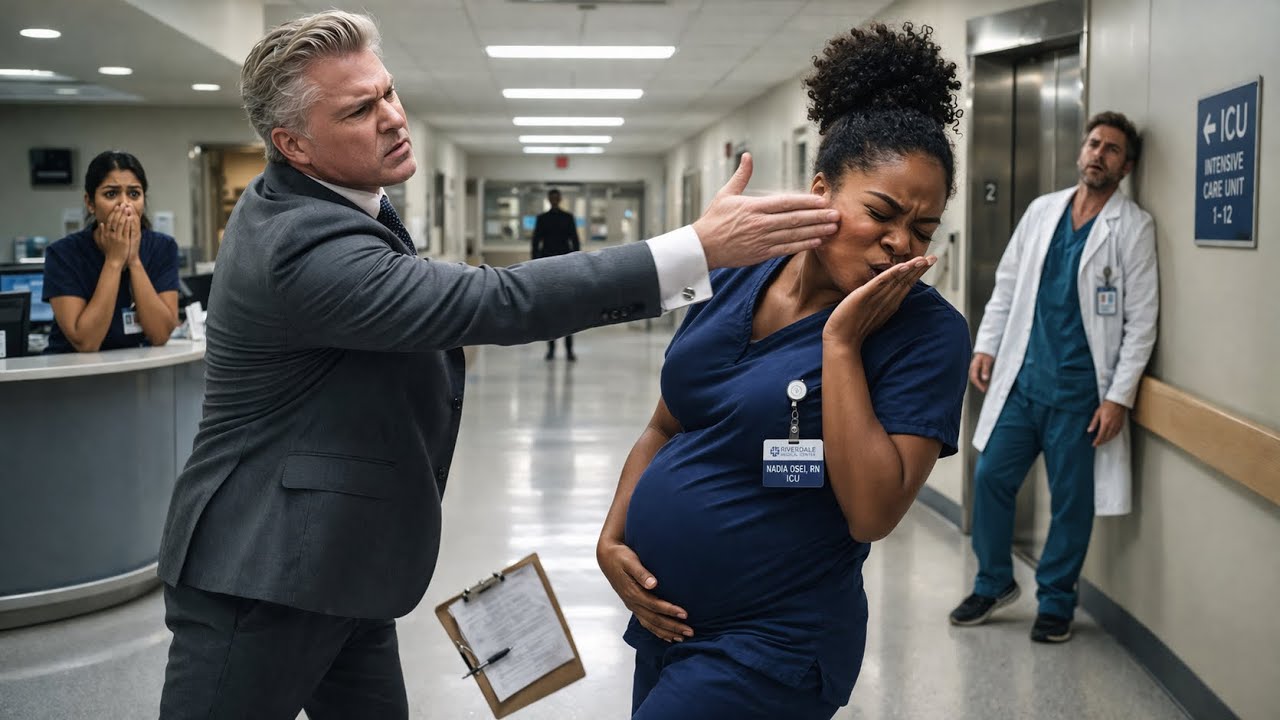
At 9:17 on a Monday morning, the CEO of Halden Medical Systems fired the receptionist in front of a lobby full of employees.
Her mistake?
She refused to let his “important guest” enter the executive floor without identification.
“You have ten minutes to clear your desk,” Richard Vale said, loud enough for everyone near the elevators to hear. “We need people who understand business, not people who hide behind rules.”
Leah Moreno looked at him without raising her voice.
“Would you like me to record that you are personally authorizing unverified access?”
Richard gave a short laugh.
“Record whatever you want. You no longer work here.”
The man standing beside him smirked.
He wore an expensive navy suit and carried a slim leather briefcase. He had introduced himself as Martin Kessler, a strategic adviser expected by the CEO.
But his name was not on the visitor list.
He had no employee escort.
And when Leah asked for a government-issued ID, he said he had left his wallet in the car.
Normally, that would have ended the conversation.
Halden manufactured monitoring equipment for hospitals. Its executive floor contained unreleased product designs, pricing agreements, patient-data compliance reports, and the confidential documents for a possible acquisition.
Three weeks earlier, every front-desk employee had received a new security directive.
No exceptions.
Not for executives.
Not for investors.
Not for anyone who claimed to know someone important.
 Leah had read every page.
Richard apparently had not.
He stepped closer to the desk and lowered his voice, though not enough to keep the growing crowd from hearing him.
“Do you have any idea what today is?”
“Yes,” Leah said. “The Northbridge delegation arrives at ten.”
“Then you understand why I don’t have time for this.”
“I understand why the building is under restricted-access protocol.”
Richard’s jaw tightened.
For twelve years, he had run Halden with the confidence of a man who believed every room belonged to him.
He was polished in interviews, charming at investor dinners, and famous for remembering the names of people who could help him.
He rarely remembered the names of people who could not.
Leah had worked at Halden for six years.
She knew which board members preferred the side entrance, which engineers forgot their badges, which delivery drivers needed access to the loading dock, and which executives tried to wave guests through without signing them in.
She had prevented lost laptops from leaving the building.
She had caught a fake courier attempting to access the finance department.
Once, she had recognized the symptoms of a stroke in a visiting supplier and called emergency services before anyone else understood what was happening.
She never spoke about any of it.
To Richard, she was still just the woman behind the desk.
Martin Kessler leaned one elbow on the counter.
“Richard, we’re wasting time.”
That was when Leah noticed something small.
Martin knew the CEO’s first name, but Richard had not formally introduced him.
More importantly, Martin had arrived through the underground garage.
Visitors were not supposed to know the garage entrance code.
Leah turned her monitor slightly away from him.
“Mr. Kessler, I can issue a temporary badge as soon as I verify your identity.”
“I told you,” Martin said. “My wallet is in the car.”
“I can wait.”
Richard placed both hands on the marble counter.
“No, you can’t.”
The lobby went quiet.
An assistant holding two coffees stopped near the elevators. A facilities technician paused beside the security gate. Even the morning courier seemed to understand that something ugly was about to happen.
Richard pointed toward the small storage room behind reception.
“Get a box.”
Leah looked at him.
“For what?”
“For your belongings.”
Someone near the elevator inhaled sharply.
Richard seemed to enjoy the silence that followed.
He straightened his jacket and turned slightly so the people watching could see his face.
“This company is hours away from the most important meeting in its history,” he said. “And you have chosen today to embarrass me in front of a guest.”
“I’m following the access protocol.”
“You’re a receptionist.”
The words landed harder than the firing.
Not because Leah was ashamed of her job.
Because of the way Richard said it.
As if her position made her judgment worthless.
As if the desk between them was proof that he mattered and she did not.
Leah glanced at the people watching. Some looked down. Others stared at Richard with the frozen expressions employees wear when they are afraid their faces might reveal too much.
Then she opened a drawer.
Richard smiled, assuming she had surrendered.
Instead, Leah removed a one-page authorization form and placed it on the counter.
“If you are overriding security,” she said, “please sign here.”
Richard stared at the paper.
“You cannot be serious.”
“It documents that I denied access and that you personally approved entry.”
Martin’s smirk disappeared for a second.
Richard snatched the pen.
He signed his name with a hard, sweeping motion, then wrote the time beside it.
9:21 a.m.
“There,” he said, sliding the form back toward her. “Now do your job one final time and open the gate.”
Leah examined the signature.
Then she scanned the document into the visitor system.
Only after the digital copy was stored did she press the button.
The glass gate unlocked.
Richard walked through first.
Martin followed without looking back.
The moment the elevator doors closed, the lobby came alive with whispers.
Dana, the human resources director, hurried down from the second floor less than five minutes later.
She looked pale.
“Leah, come with me.”
“Am I being terminated?”
Dana glanced toward the security cameras.
“Richard said you were.”
“That wasn’t my question.”
Dana exhaled.
“No termination has been processed.”
“But he ordered me to leave.”
“I need to speak with legal.”
Leah nodded.
She did not cry.

She did not beg.
She did not say the things people later imagined they would have said in her position.
She simply printed the visitor record, placed it in a blue folder, and removed a sealed envelope from beneath her keyboard.
On the front of the envelope were four words:
FOR BOARD COUNSEL ONLY.
Dana noticed it.
“What is that?”
“Something they requested.”
“Who requested it?”
Leah looked at the elevator indicator as it moved toward the thirty-eighth floor.
“The people Richard is meeting at ten.”
Upstairs, the executive conference room had been prepared like a stage.
Glass bottles of water stood beside leather folders. A screen displayed both company logos. The city stretched beyond the windows in a bright July haze.
Halden’s board members were already seated.
Across from them sat representatives from Northbridge Health Technologies, the company considering a $480 million acquisition.
Richard entered with Martin beside him.
“Apologies for the delay,” Richard said. “A minor staffing issue.”
The chairwoman of Halden’s board, Evelyn Shaw, looked at Martin.
“And you are?”
“Martin Kessler,” Richard said before Martin could answer. “My strategic adviser.”
Evelyn did not smile.
“I don’t recall approving an outside adviser for this meeting.”
“He won’t be staying,” Richard said. “He just needs five minutes with me.”
At the far end of the table, Northbridge’s general counsel closed her folder.
“Mr. Vale, no unlisted visitors are permitted on this floor today.”
Richard laughed lightly.
“Apparently everyone is obsessed with that rule this morning.”
No one laughed with him.
Martin shifted his briefcase from one hand to the other.
Evelyn’s eyes moved toward Richard.
“How did he get upstairs?”
“I authorized him.”
“Was he verified?”
Richard’s smile became thinner.
“I know him.”
“That was not my question.”
Before Richard could answer, the conference-room door opened.
Dana entered with Leah and two members of building security.
Richard rose from his chair.
“What is she doing here?”
Leah carried the blue folder and the sealed envelope.
She did not look at Richard.
She walked directly to Miriam Cole, Northbridge’s general counsel, and placed both items on the table.
Miriam checked the envelope’s seal.
“Thank you, Ms. Moreno.”
Richard’s face changed.
It was not fear yet.
It was confusion.
The kind that appears when a person discovers that someone they considered unimportant has been involved in conversations they knew nothing about.
“What is this?” he asked.
Miriam opened the blue folder first.
Inside was the authorization form Richard had signed less than forty minutes earlier.
His signature appeared beneath the sentence:
I accept responsibility for granting access to an unverified visitor during restricted-access protocol.
Miriam read the sentence aloud.
No one moved.
Richard looked at Leah.
“You set me up.”
“No,” Leah said. “I asked for identification.”
Miriam then opened the sealed envelope.
Inside were copies of visitor logs covering fourteen months.
Certain entries had been highlighted in yellow.
Martin Kessler’s name appeared eleven times.
On seven of those dates, he had entered through the underground garage.
On four dates, there was no record of him leaving.
Beside each entry was the name of the executive who had approved the visit.
Richard Vale.
Evelyn slowly removed her glasses.
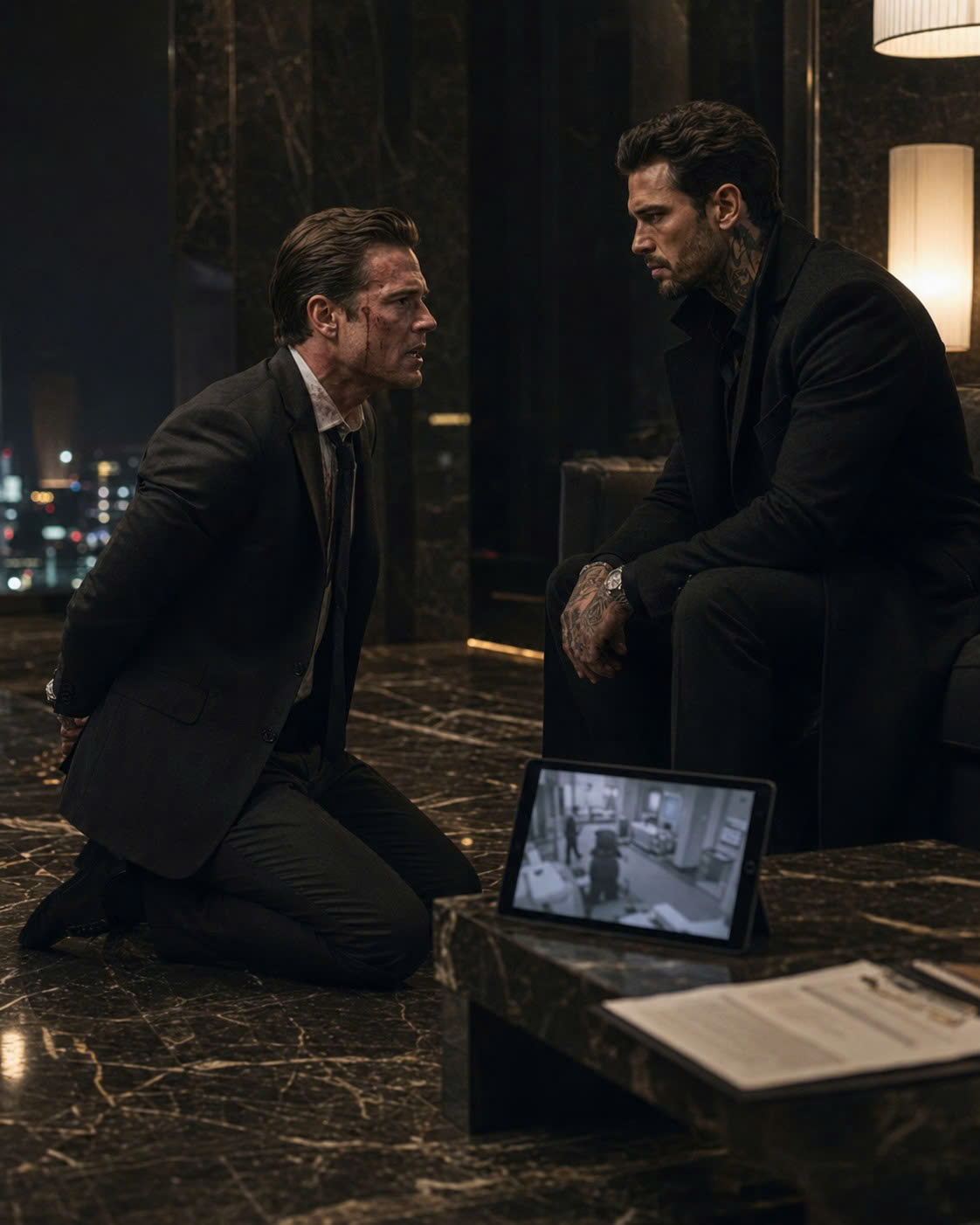
“Why were these records sent to Northbridge counsel?”
Miriam answered without looking away from the documents.
“Because three weeks ago, we discovered that confidential acquisition materials had been shared with an outside bidder.”
Richard sat down.
The room became so quiet that the air-conditioning seemed loud.
Miriam continued.
“Our forensic team traced multiple document transfers to a personal device associated with Martin Kessler.”
Martin stepped toward the door.
One of the security officers moved in front of it.
“This is ridiculous,” Martin said. “I’m not an employee. You can’t detain me.”
“No one is detaining you,” Miriam replied. “You are free to leave the meeting. Building security will escort you directly outside while counsel contacts the authorities.”
Richard looked from Martin to the visitor logs.
Then he looked at Leah.
For the first time that morning, he said her name.
“Leah, what did you do?”
She stood with her hands folded in front of her.
“I noticed that Mr. Kessler’s visits often occurred shortly before confidential pricing information appeared in competitor proposals.”
“You had no access to competitor proposals.”
“No. But I had access to visitor records.”
Richard opened his mouth, then closed it.
Leah continued.
“Six weeks ago, someone attempted to delete three of his entries. The system retained the archive copies. I reported the discrepancy to internal audit.”
Evelyn turned toward the chief financial officer.
“Were you aware of this?”
He shook his head.
Richard leaned back in his chair.
Color had drained from his face.
His right hand rested on the table beside the authorization form. A few minutes earlier, that same hand had signed it with impatient confidence.
Now his fingers would not stop moving.
He looked again at Leah, but the contempt was gone.
In its place was calculation.
Then recognition.
He finally understood why she had insisted on the signature.
He understood why she had scanned it before opening the gate.
And he understood that the woman he had humiliated in the lobby had spent months preserving the evidence now spread across the boardroom table.
Outside the glass wall, employees had begun gathering at a distance.
They could not hear the conversation.
But they could see Richard’s shoulders collapse.
They could see Martin standing between two security officers.
They could see the board chair speaking while Richard remained completely silent.
Evelyn pushed the documents toward him.
“Did you provide Mr. Kessler with access to acquisition materials?”
“No.”
“Did you receive compensation from him or any entity connected to him?”
“No.”
“Then you will have no objection to an independent review of your devices, financial disclosures, and communications.”
Richard’s eyes moved toward Martin.
That glance lasted less than a second.
It was enough.
Evelyn turned to the board members.
“I move that Richard Vale be suspended from all duties, effective immediately, pending investigation.”
The motion was seconded before Richard could speak.
The vote was unanimous.
Two hours earlier, Richard had ordered Leah to clear her desk.
Now security waited while he cleared his office.
Employees watched from behind glass walls as boxes were carried toward the elevator.
No one applauded.
Real consequences rarely arrive with dramatic music.
They arrive through signed resolutions, disabled access cards, preserved emails, and people who suddenly stop returning your calls.
The acquisition was delayed but not cancelled.
Investigators later found that Martin had been paid as a consultant through a vendor controlled by Richard’s former business partner. Several confidential files had been shared from Richard’s personal account.
The board terminated Richard for cause.
Martin was charged in connection with the theft of corporate information.
Dana formally apologized to Leah on behalf of the company.
The board offered her reinstatement with back pay, even though her termination had never been legally processed.
Leah accepted one condition.
She would not return to the reception desk.
Three months later, she became Halden’s manager of access compliance and internal reporting.
Her first change was simple.
Every employee, from temporary staff to the new interim CEO, would follow the same visitor policy.
No private exceptions.
No verbal overrides.
 No one too important to sign their name.
On Leah’s first day in the new role, the facilities technician who had witnessed the firing stopped by her office.
“I wish I had said something that morning,” he admitted.
Leah looked through the glass toward the lobby downstairs.
“You were afraid.”
“I was.”
“So was I.”
He seemed surprised.
“You didn’t look afraid.”
Leah gave a small smile.
“Being calm doesn’t mean you aren’t afraid. Sometimes it means you have decided the record matters more than the moment.”
The company eventually completed the acquisition.
The old reception desk remained in the lobby, but the policy Richard had mocked was framed on the wall behind it.
Beneath the policy was a single sentence approved by the board:
Authority does not remove accountability.
Richard had believed power meant never having to explain himself to the person behind the desk.
What he learned too late was that the person everyone overlooks is often the one who sees everything—and justice begins the moment she decides to keep the receipts.