The music world is reeling this morning after explosive court documents reveal the depths of Daryl Hall’s fury toward his former partner John Oates, a betrayal so profound that Hall has finally broken a half-century of public silence. At 79 years old, the legendary singer has laid bare his raw emotions in a sworn declaration, accusing Oates of the ultimate partnership betrayal in a clandestine deal to sell their shared legacy to a corporate giant without a single phone call. The revelation comes after months of legal wrangling that has torn apart one of the most successful duos in music history.
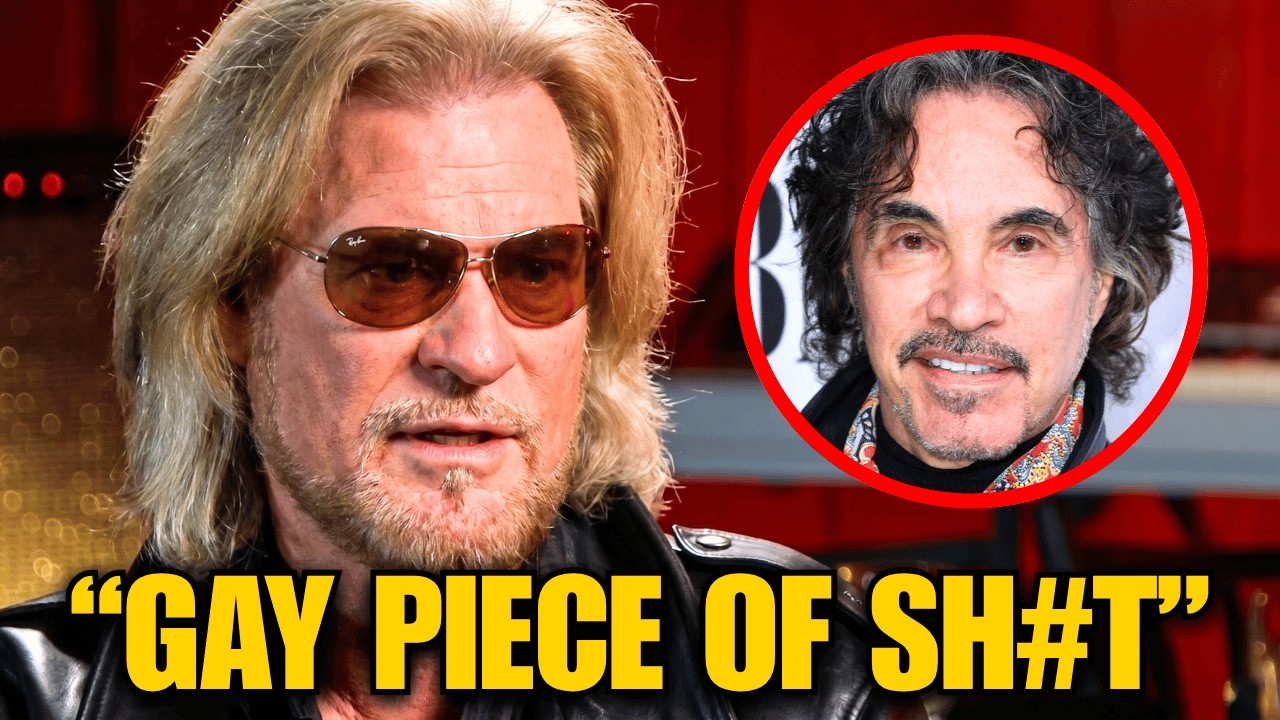
Hall and Oates, the best-selling duo of all time with six number one hits and six platinum albums, have been locked in a bitter legal dispute since last November. Hall filed suit in Nashville Chancery Court to block Oates from selling his 50% stake in their joint company, Whole Oates Enterprises, to Primary Wave Music, a major rights investment firm. Hall claims he was blindsided by the move, which he learned about just days before an international tour.
In his court filing, Hall stated that there was no amount of money that could compensate him for being forced into a partnership he never agreed to, describing the harm as unimaginable.
The dispute centers on control of the Hall and Oates brand, including trademarks, royalties, and digital assets worth millions. Hall argued that Oates had engaged in surreptitious negotiations while claiming publicly he wanted to maintain their partnership. The judge initially granted a temporary restraining order, freezing the sale, and later extended the freeze during arbitration.
Oates fired back with his own declaration, calling Hall’s claims inflammatory and inaccurate, insisting that the sale was permitted under their business agreement. He expressed deep hurt and said he loved Hall like a brother, even as their relationship crumbled.
To understand the magnitude of this betrayal, one must look back at the improbable origin of Hall and Oates. They met in 1967 at a Philadelphia ballroom during a gang fight, escaping into the same elevator, two strangers who would become roommates and then creative partners. The name Hall and Oates was born from a mailbox label, not a grand vision.
Over the next five decades, they built an empire on soul-infused pop, from Rich Girl to Maneater, becoming the most commercially successful duo in rock history. But behind the harmony, a growing divide festered. Hall was the dominant frontman, writing and singing most of the hits, while Oates was often relegated to the background, a dynamic that fueled quiet resentment.

By their own admission, the two men had stopped speaking meaningfully for nearly 20 years before the lawsuit. They would arrive separately at concerts, perform the hits, and leave without a word. Oates moved to Colorado and later Nashville, building a life apart from his partner.
Hall felt the creative spark die around 2000, and the partnership became purely a business machine. In interviews before the lawsuit, Hall had already downplayed Oates’s role, calling him a business partner not a creative one. The stage was set for a collision that would shatter their public facade.
Hall’s sworn declaration does not hide his anger. He wrote that Oates’s behavior had become adversarial and aggressive, and that his trust was irreparably broken. He said the secret negotiation with Primary Wave was the ultimate partnership betrayal, a move made in bad faith.
For Hall, who had spent decades carefully shielding their personal tensions from fans, the decision to air this in court was an act of desperation. He knew the cost would be permanent. The timing was especially cruel, he said, arriving just before he was set to leave for a tour spanning the West Coast, Japan, and the Philippines.
Oates responded with a gentler tone in public appearances, telling Good Morning America in 2024 that the legal wrangling was ruining his life and making him unhappy. He said he decided to step aside the way people do all the time. He suggested that Hall had changed over the years and that the dispute was a family growing apart.
 Oates even read a Taoist passage about walking a path with a companion and not holding them back when it was time to part. He said he wished Hall the best and hoped Hall could pursue his dream of being a respected solo artist. The contrast between Hall’s fury and Oates’s philosophical detachment could not be starker.
The legal battle moved into confidential arbitration, and in August 2025, the matter reached a final judgment, with the details sealed. No one outside the room knows who won or what financial terms were reached. But both men have made it clear there will be no reunion.
Hall said the ship has gone to the bottom of the ocean, and he has not spoken to Oates in a very long time. He has moved on with solo projects, releasing an album in 2024 and headlining his first solo show at London’s Royal Albert Hall. Oates has also released new music, returning to his soul roots, and says he feels liberated from the partnership that once felt like a museum he could not wait to leave.
The real question is not why Daryl Hall hates John Oates, but what happened to make him call it the ultimate betrayal. The answer lies in the 50-year imbalance of their partnership. Hall was the star, the voice, the face.
Oates was the supporting player, the background harmony, the name that came second on the mailbox. For decades, Hall believed they were brothers in music, but Oates felt increasingly like a silent partner in his own legacy. When Oates decided to sell his stake without a long conversation, he was acting not out of malice but out of exhaustion, a man who had run out of other ways to be heard.
Hall could not see it that way. He saw only the coldness of a business transaction, the final confirmation that to Oates, it had always been about the money.

Yet even as the two men air their grievances in court filings and interviews, the music endures. Sara Smile, She’s Gone, You Make My Dreams, Maneater, Out of Touch, I Can’t Go for That, Rich Girl, Kiss on My List, Private Eyes. These songs are woven into the fabric of American culture, playing at weddings, on first dates, in restaurants, and on long drives.
They are the soundtrack to millions of lives, and they will outlive the bitterness. No arbitrator can unwrite a classic, no sealed file can erase the magic of those harmonies. The legacy of Hall and Oates is not the legal fight but the 29 top 40 hits, the 50 years of sold-out arenas, the unique fusion of Philadelphia soul and pop that defined an era.
At 79, Daryl Hall is not consumed by hatred, but by a grief that looks like anger. He gave his life to something extraordinary, and the person he built it with treated it, in Hall’s eyes, like a simple transaction on the way out the door. That wound does not heal easily at an age when every year counts.
Oates, for his part, has moved on with a new lease on his creative life, comparing his decades inside the machine to walking through a museum where your feet start to hurt. He says he has no desire to look back. The silence between them is now a chasm, filled only by lawyers and sealed verdicts.
The breaking news here is not just a lawsuit, but the final unmasking of one of music’s most enduring myths. The perfect duo was never perfect. The harmony was always undercut by dissonance.
The 50-year partnership that produced so much joy ended with a deal made in silence. Daryl Hall believed he deserved one phone call, and he says he never got it. That simple, human longing for respect and communication is at the heart of this story.
It is a cautionary tale about the price of fame, the fragility of trust, and the lonely reality behind the glitz of the stage. As both men move forward alone, the world is left with the music, still playing, still healing, still reminding us that even the deepest wounds can coexist with the most beautiful art.