Part 1 — The Paper They Slid Across the Wedding Table
At my sister’s wedding, right between the champagne toast and the first dance, my father slid a folded document across the table and said, “Just sign it. Don’t make this about you.”
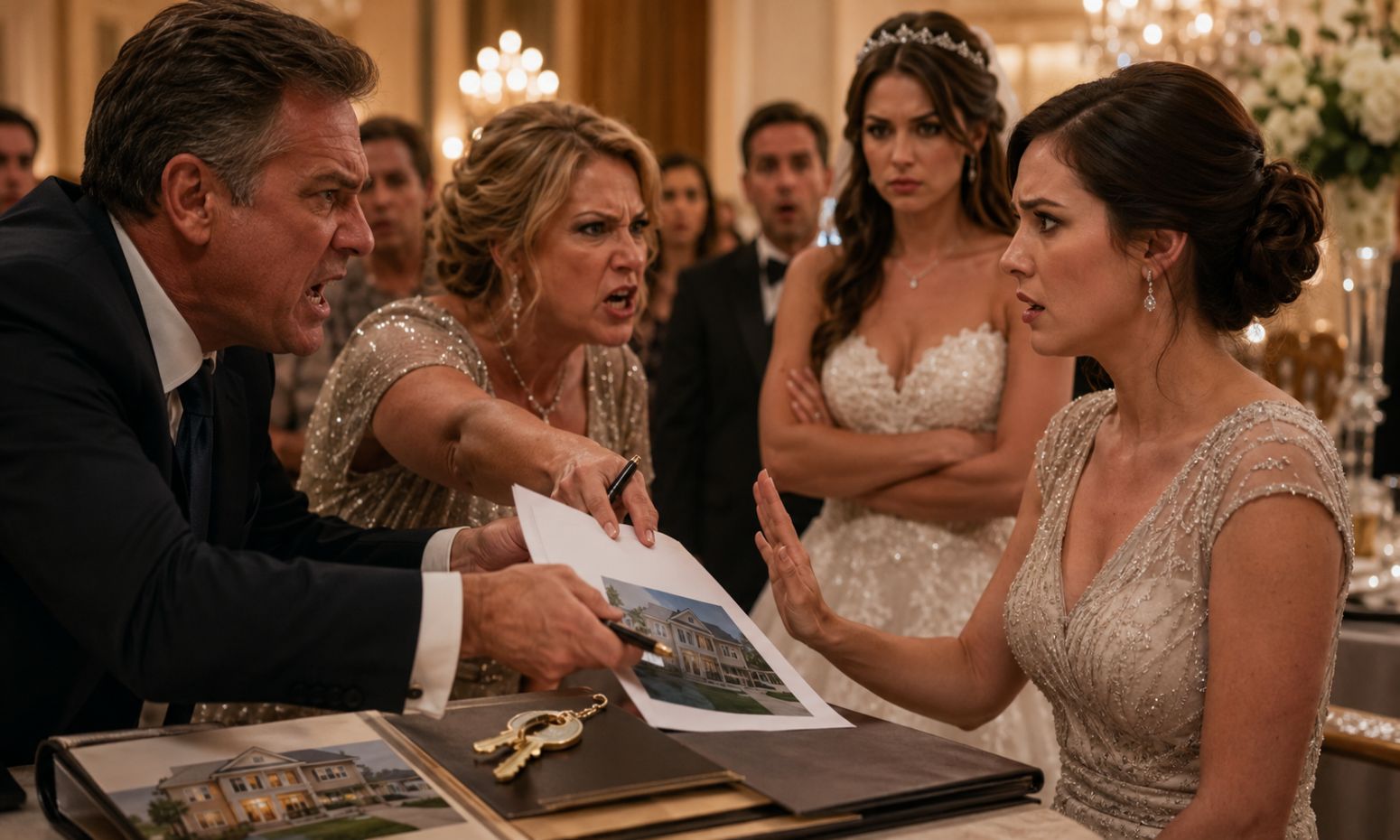
I remember looking down at the paper before I looked at him.
Because some part of me already knew.
The header was from a real estate attorney.
The address was my address.
And halfway down the page, in clean black ink, were the words: Transfer of Ownership.
My parents were asking me to sign over my $600,000 home.
At my sister’s wedding.
In front of my entire family.
My name is Claire Bennett. I’m thirty-two years old, and for most of my adult life, I have been described by my relatives as “the responsible one.” It sounded like a compliment when I was younger. Over time, I realized it was just a nicer way of saying they expected me to absorb whatever problem nobody else wanted to handle.
I bought my house four years earlier after saving for nearly a decade.
It wasn’t a mansion. It was a modest three-bedroom craftsman on a quiet street in Portland with creaky floors, a tiny backyard, and a kitchen window that caught the morning sun. But to me, it was proof that I had survived something my family rarely acknowledged.
I had worked nights through college.
I had skipped vacations.
I had driven the same dented Honda for eleven years.
I had watched friends decorate apartments, take trips, get engaged, and post photos from places I couldn’t afford to visit, while I kept moving money into an account labeled simply: House.
When I finally closed on it, I cried in the empty living room.
Not loudly.
Just quietly, with the keys in my hand.
For the first time in my life, something was mine.
My younger sister, Madison, never understood that.
Madison was beautiful in the effortless way that made strangers kind to her. She was charming, dramatic, and somehow always at the center of the room without trying. Growing up, she got forgiven faster. Help came easier. Mistakes became stories. Mine became lessons.
When she dropped out of college after one semester, my parents said she was “finding herself.”
When I changed majors because I couldn’t afford the extra year, they said I needed to be realistic.
When she crashed my mother’s car at twenty-three, Dad said accidents happen.
When I asked for help with a $900 dental bill, he told me adulthood was about planning ahead.
I learned early not to ask.
So when Madison got engaged to Ryan Whitaker, my parents treated it like the family had won a prize. Ryan came from money. His parents owned three restaurants and a lake house. Madison’s ring looked like something displayed under museum lighting.
The wedding was planned in eight months and cost more than my first three years of rent combined.
My mother called me almost every week during the planning.
Not to ask how I was.
To ask what I could contribute.
Could I pay for the bridal shower deposit?
Could I cover the floral balance “just until Friday”?
Could I lend Madison my car for appointments because hers needed repairs?
Each request came wrapped in the same sentence.
“She’s your only sister.”
And each time I said no, the silence on the other end of the phone got colder.
The first real warning came two weeks before the wedding.
I was at home, repainting the guest room, when my mother called and said, too casually, “Your father and I were thinking about Madison and Ryan’s future.”
I held the paint roller above the tray.
“What about it?”
“They’re newly married. They need a stable place to start.”
I waited.
Then she said, “Your house would be perfect for them.”
For a moment, I thought she meant temporarily. Maybe a few weeks while they found an apartment.
But then she kept talking.
“You don’t really need all that space by yourself, Claire. And Madison wants children soon.”
I remember staring at the pale blue paint on the wall, feeling something in my chest tighten.
“My house is not available,” I said.
My mother sighed, the way she always did when she wanted me to feel difficult.
“Nobody said available. We’re talking about family.”
That was the first time I told her clearly.
“No.”
She hung up without saying goodbye.
After that, my father started calling.
His approach was different. He didn’t sigh. He negotiated like I was an employee who had misunderstood company policy.
He said my house had appreciated because of the market, not because of anything I did.
He said Madison and Ryan deserved a strong beginning.
He said I was single, childless, and financially “flexible.”
Then he said something that sat in my stomach for days.
“You have always been good at landing on your feet.”
I knew what he meant.
They could take from me because I would survive it.
The wedding was held at the Rosemont Hotel, in a ballroom with gold chandeliers, white roses, and a string quartet playing near the entrance. Madison looked radiant. My mother cried before the ceremony even started. My father walked her down the aisle with the face of a man delivering treasure.
I sat in the second row and told myself to get through the day.
Smile in the photos.
Toast the bride.
Leave early.
That was the plan.
For nearly three hours, it worked.
Then dinner was served.
I was placed at the family table, between my Aunt Linda and an empty chair reserved for my father. During the main course, he appeared beside me in his tuxedo, holding a leather folder under one arm.
My mother followed behind him.
So did Madison.
Still in her wedding dress.
That was when I knew this wasn’t a conversation.
It was a performance.
My father sat down, opened the folder, and pulled out the document.
“Claire,” he said quietly, though everyone nearby could hear, “we need you to do the right thing tonight.”
I looked at Madison.
Her eyes were dry.
Not nervous.
Expectant.
My mother leaned closer. “We’ve discussed this as a family.”
I almost laughed.
Because apparently, “as a family” meant everyone except the person whose name was on the deed.
Dad placed a pen beside the paper.
“The attorney prepared everything. You sign tonight, and after the honeymoon they can begin moving in.”
The table went still.
Aunt Linda lowered her fork.
Across from me, Ryan’s mother blinked as if she had just walked into the wrong room.
I looked from the document to my father.
“No.”
His jaw tightened.
Madison’s smile disappeared for half a second, then returned sharper.
“Claire, please don’t embarrass me at my wedding.”
I felt every eye shift toward me.
My mother’s voice dropped into that soft, dangerous tone she used when she wanted obedience without witnesses noticing.
“You are thirty-two years old. You can start over. Madison is starting a family.”
I picked up the paper, slowly folded it back along the crease, and placed it on the table.
“I said no.”
My father’s face changed then.
Not fully. Just enough.
The polite wedding mask slipped, and underneath it was something harder.
He leaned in and whispered, “Then we’ll tell everyone what really happened with the house.”
For the first time that night, I felt cold.
Because there was something about my house my family didn’t know.
Something I had kept quiet for four years.
And if my father thought his threat would scare me into signing, he had no idea what was waiting for him.
[Confirm to continue Part 2]