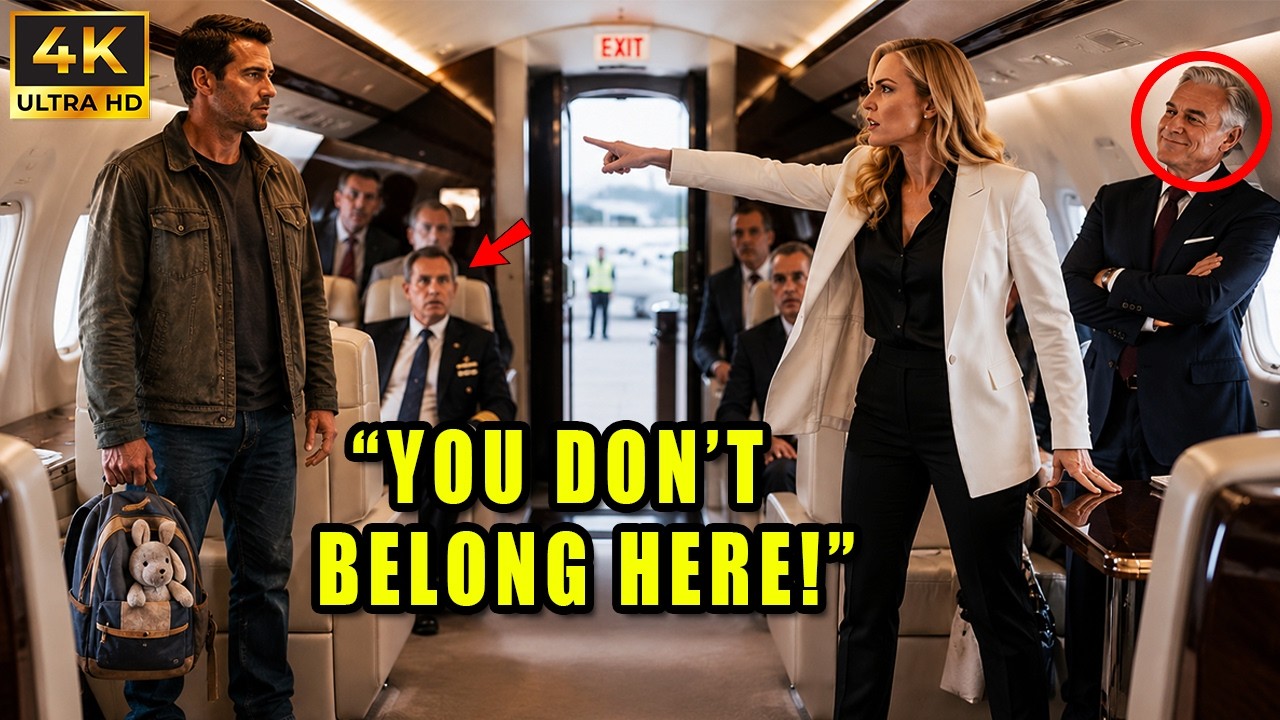
The CEO Threw Him Off Her Private Jet—Then the Aircraft Refused to Take Off Without Him
The first thing Celeste Mercer noticed about the man sitting inside her private jet was his coat.
It was old enough to have lost its shape at the shoulders. His shoes were scuffed. A faded canvas backpack rested between his feet, the kind a child might take to school.
He did not look like an executive.
He did not look like a client.
And in the polished cabin of a $42 million aircraft parked at Chicago’s Midway Executive Airfield, he looked like someone who had entered through the wrong door.
Celeste stopped at the top of the boarding stairs.
“Who is that?”
Captain Sterling Quinn glanced toward the cabin.
“Weston Hale. I brought him aboard as a technical observer.”
Celeste’s expression tightened.
“You brought an unidentified stranger onto my aircraft?”
“He identified a fault in the fuel-line sensor connector,” Quinn said. “Maintenance confirmed it. We would have delayed departure without him.”
Garrett Holloway, Celeste’s senior strategic adviser, stepped closer.
He studied Weston through the open cabin door and lowered his voice.
“A man with no company credentials, no security clearance and no visible connection to this trip is sitting ten feet from confidential Northbridge documents.”
Quinn kept his tone even.
“He has identification.”
“That is not the same as authorization.”
Inside the cabin, Weston heard every word.
He did not turn around.
He was staring at his phone, watching the small circle beside his daughter’s name spin while the call tried to connect.
Eight-year-old Piper answered on the fourth ring.
“Dad?”
“I’m here.”
“Are you on the plane?”
Weston looked through the window at the gray Chicago sky.
“I’m getting there.”
“You promised.”
“I know.”
A nurse said something in the background. Piper’s voice dropped.
“They said the surgery isn’t scary. But that usually means it is.”
Weston closed his eyes for half a second.
“You remember what we talked about?”
“That I count backward from twenty.”
“And what happens before you reach zero?”
“You get there.”
“That’s right.”
The cabin door remained open behind him.
He could feel the conversation waiting.
“I’ll see you when you wake up,” he said.
“You promise?”
“I promise.”
The call ended.
Celeste stepped into the cabin.
Up close, she noticed that Weston was older than she had first assumed, perhaps in his early forties. His hands were rough, with a thin white scar crossing one thumb. He sat quietly, as though he had no interest in proving he belonged there.
That seemed to irritate Garrett more.
“Mr. Hale,” Celeste said, “this is a restricted corporate flight.”
Weston stood.
“Captain Quinn invited me aboard.”
“Captain Quinn does not control corporate access.”
Quinn’s jaw shifted, but he said nothing.
Celeste continued.
“I appreciate whatever assistance you provided on the ground. But you cannot travel with us.”
Weston looked at Quinn.
The captain gave the smallest apologetic nod.
“Understood,” Weston said.
No argument.
 No demand for compensation.
No attempt to explain that his commercial flight had been canceled because of the weather, that two airlines had rerouted him through Denver, and that every alternative would put him in San Francisco hours after Piper’s surgery.
He bent down and lifted the canvas backpack.
A plastic hospital bracelet hung from one zipper. Piper had attached it there after her last appointment because she said it would bring him luck.
Garrett noticed it and looked away.
Weston walked toward the door.
A few members of Celeste’s advisory team watched from their seats. One pretended to read an email. Another shifted uncomfortably but remained silent.
At the stairs, Weston paused.
A maintenance screen near the service panel had flickered from green to red.
The warning appeared for less than two seconds.
ORIGINAL DESIGN AUTHORITY MISMATCH.
Then it disappeared.
Weston turned back.
“Captain.”
Quinn looked up.
“Do not take off.”
Garrett gave a dry laugh.
“You were asked to leave.”
Weston ignored him.
“The maintenance display just called an original-authority mismatch. If that warning came from the Guardian layer, the aircraft is not safe to launch.”
Celeste folded her arms.
“You saw a message on a service screen for two seconds.”
“I designed the message.”
The cabin went still.
Garrett stepped between them.
“That system was developed by Holloway Aviation Labs.”
Weston’s eyes moved to him for the first time.
“Yes,” he said. “It was.”
Then he walked down the stairs.
Celeste watched him cross the tarmac without looking back.
“Close the door,” she said.
Twelve minutes later, the jet began taxiing.
Quinn received clearance and guided the aircraft toward the runway. Rain tapped against the windshield. The cabin lights dimmed automatically.
Celeste opened the Northbridge briefing on her tablet.
The meeting in San Francisco would determine whether Mercer Aerotech retained control of its largest defense-adjacent aviation contract. Missing the time slot could give the board an excuse to replace her.
Garrett sat across the aisle.
“Once we are airborne, I’ll call Vaughn and make sure the committee is aligned.”
Before Celeste could answer, the cockpit screens changed.
Every primary display went amber.
Then red.
A warning filled the center panel.
FLIGHT AUTHORIZATION SUSPENDED.
ORIGINAL ENGINEER VALIDATION REQUIRED.
Quinn stopped the aircraft.
His co-pilot entered the standard override code.
Rejected.
They tried the maintenance bypass.
Rejected.
Ground engineering attempted remote authentication.
Rejected.
The aircraft remained motionless on the taxiway, engines running, runway clearance ticking away.
Garrett entered the cockpit.
“It is a software error.”
Quinn did not look at him.
“Then the software is rejecting every authorized code in the company database.”
“Recycle the flight computers.”
“We already did.”
“Disconnect the Guardian layer.”
Quinn turned slowly.
“At this stage of taxi?”
“It is an advisory system.”
“No,” Quinn said. “It has physical authority over launch clearance.”
Garrett’s face hardened.
“Since when?”
A voice came through the cockpit speaker.
It was Brielle Dawson from Mercer’s ground operations center.
“Captain, I pulled the validation metadata.”
“What does it show?”
A pause.
“The system is not asking for a company administrator.”
Celeste had reached the cockpit door.
“Who is it asking for?”
Brielle answered carefully.
“Weston Hale.”
No one spoke.
On the main display, the warning refreshed.
ORIGINAL ENGINEER KEY REQUIRED.
Celeste looked at Garrett.
“You said Holloway Labs developed this system.”
“They did.”
“Then why is his name inside it?”
Garrett adjusted his cuff.
“Legacy metadata. It proves nothing.”
Quinn pointed at the locked flight controls.
“It is proving something.”
Celeste turned to Delaney Ross, her chief of staff.
“Find him.”
Delaney found Weston in the public waiting area near a vending machine.
He was sitting beneath a departure board, trying to book a seat on a flight that had already been delayed three times.
“The aircraft is locked,” she said.
Weston kept looking at his phone.
“I warned you.”
“It is asking for your authorization.”
He finally looked up.
“Your CEO removed me because I looked like a security risk.”
“The airplane appears to disagree.”
Weston stood, but he did not pick up his bag.
“If I come back, Garrett Holloway does not touch the system.”
Delaney hesitated.
“And he does not issue instructions through anyone else.”
“I’ll tell Celeste.”
“No. She agrees before I step onto that aircraft.”
Delaney called.
Celeste agreed.
When Weston returned, the cabin looked different.
The same people who had avoided eye contact now watched him walk down the aisle. No one commented on his coat. No one looked at his shoes.
Celeste stood outside the cockpit.
“I made a judgment without enough information.”
Weston placed his backpack beneath a seat.
“You made it with the information you considered important.”
Her lips parted, but no answer came.
He entered the rear avionics compartment.
The Guardian architecture had once been as familiar to him as the layout of his own home. He had designed it after three years of studying incidents in which automated systems continued following external commands while pilots struggled to regain control.
His principle had been simple: machinery could assist human judgment, but it could never quietly replace it.
HGS-0 was the last barrier.
If an outside command attempted to override the crew without the required physical confirmation, the aircraft would refuse to leave the ground.
Holloway Aviation Labs had hated the protocol.
Garrett had called it “commercially inconvenient.”
Investors preferred systems described as seamless. Airlines preferred fewer confirmations. Sales teams preferred phrases such as frictionless safety.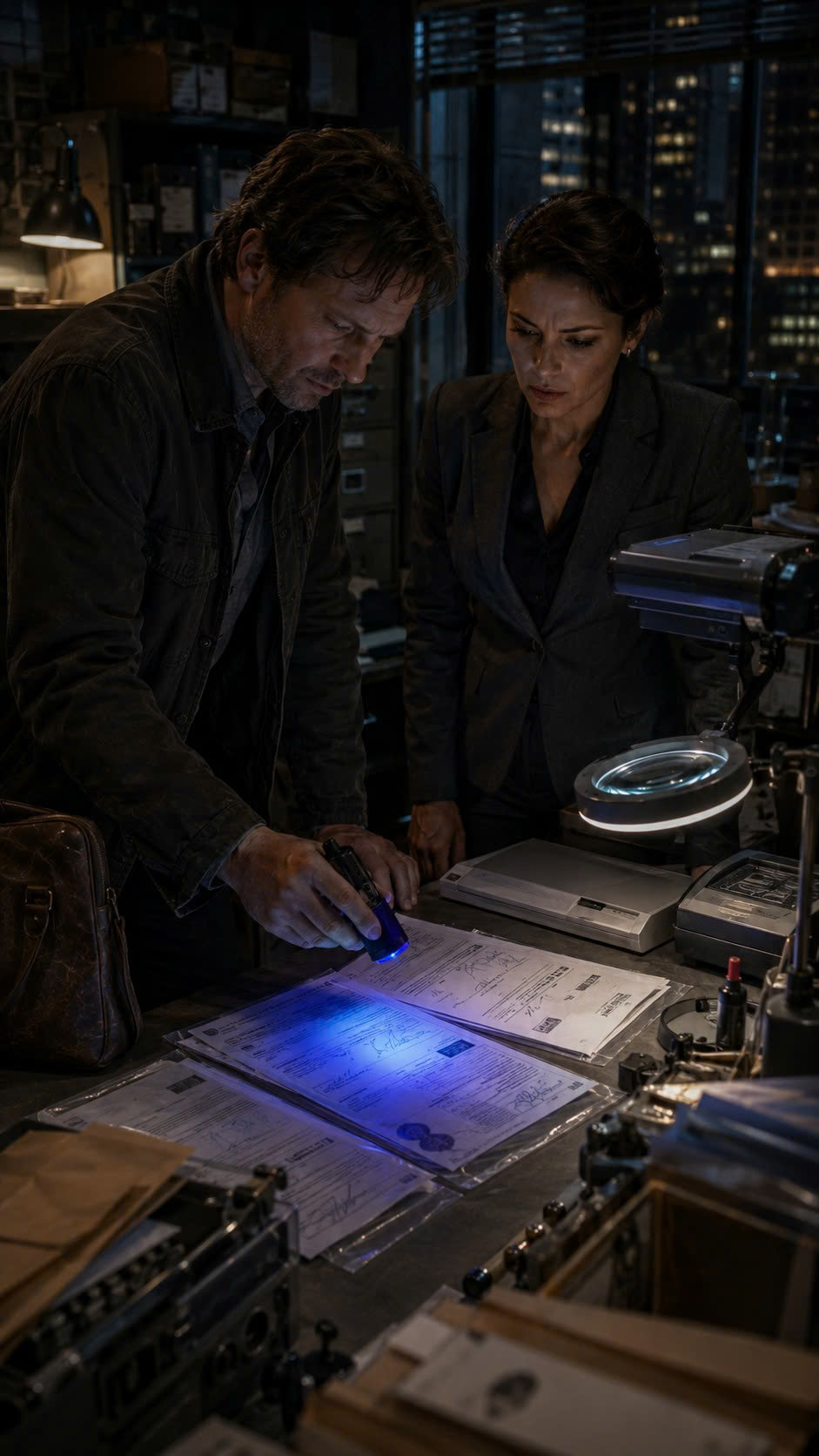
Weston had told them that real safety was supposed to create friction when someone tried to do something dangerous.
Months later, during a test flight, an altered version of the software generated an irregular control response.
Garrett blamed the architecture.
Weston’s access was revoked. His name disappeared from the technical material. The company told industry partners that he had left after performance concerns.
Within a year, he could not get an interview.
His marriage did not survive the financial collapse that followed.
But they had failed to remove one thing.
The original system still knew who had built it.
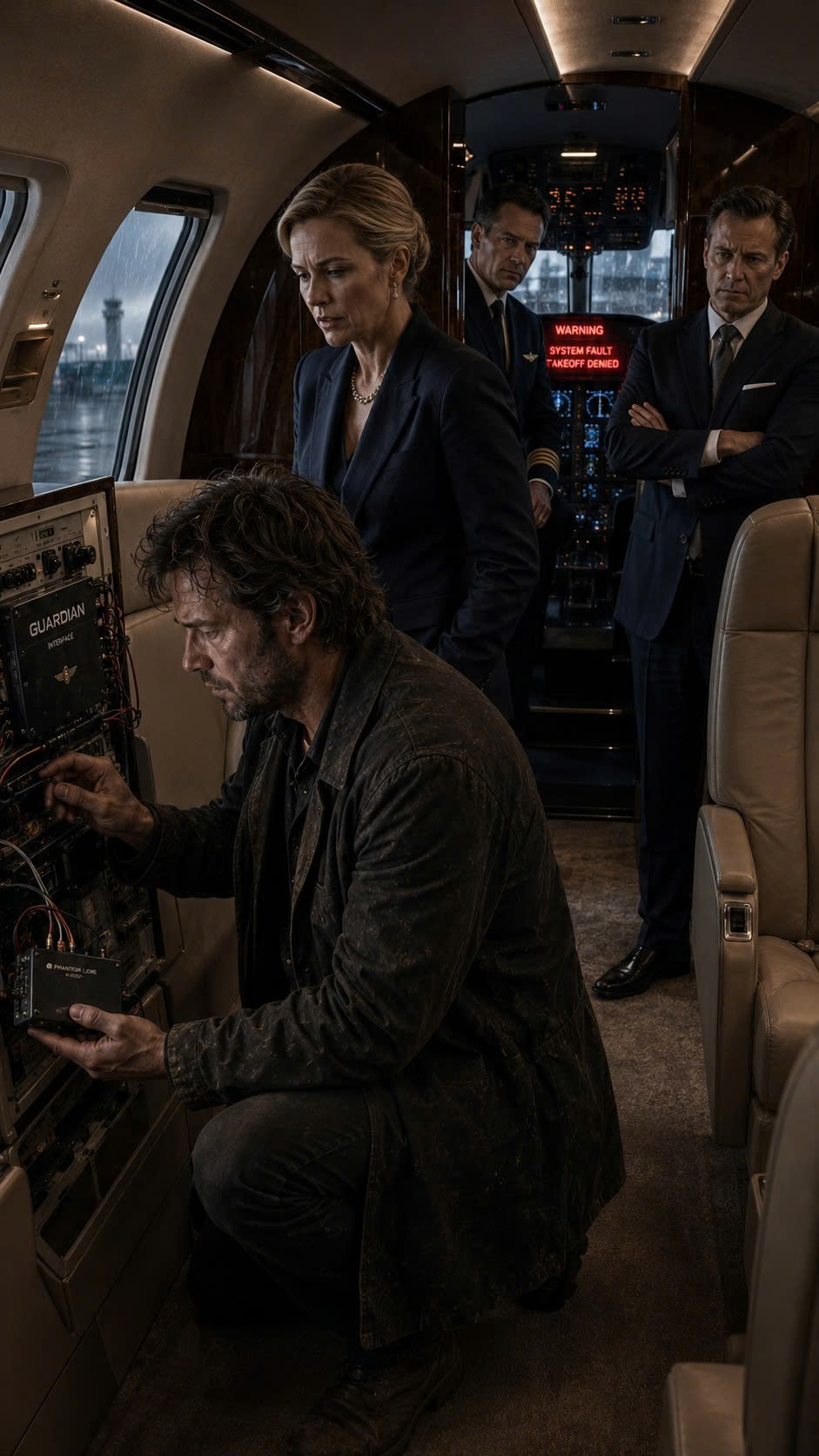
Weston opened the avionics housing and stopped.
A black module had been installed beside the Guardian interface. It carried no standard manufacturer marking. Its connector had been forced through a maintenance port never intended for permanent hardware.
Quinn leaned closer.
“What is it?”
“Something that should not be here.”
“Can you remove it?”
“Not yet.”
Weston traced the wiring.
“If I disconnect it in the wrong sequence, the logic trap will push Guardian into permanent lockdown.”
Garrett stood at the edge of the compartment.
“You are speculating.”
Weston did not look up.
“You agreed not to interfere.”
“I am responsible for the commercial consequences of this delay.”
“And I am responsible for making sure this aircraft does not kill anyone.”
Garrett stepped forward.
Celeste raised one hand.
“Leave the compartment.”
His head turned sharply.
“Celeste—”
“Now.”
For the first time that morning, Garrett obeyed.
Weston began assigning tasks.
Quinn would remain in the cockpit and enter commands as Weston called them. Brielle would compare the aircraft logs with Mercer’s ground archive. Celeste would provide biometric executive authorization only when the system reached the correct verification layer.
They worked through one lock after another.
The first restored access to the original Guardian kernel.
The second exposed unsigned maintenance changes.
The third revealed a list of command rules hidden beneath a routine weather-contingency update.
Brielle’s voice changed when she saw them.
“I found a shadow navigation table.”
“Read the destinations,” Weston said.
“Chicago. San Francisco. Denver. Salt Lake…”
She stopped.
“What?”
“There is one private field listed only as Red Veil.”
Quinn frowned.
“I know it. Small runway in northern Nevada. No regular traffic.”
Weston examined the module’s routing logic.
The aircraft was not merely being prevented from taking off.
The lock had activated because the unauthorized module contained a delayed instruction. Once the jet reached cruising altitude, the module would create a false weather emergency, request a diversion and feed the autopilot a replacement route.
On paper, it would look like a legitimate contingency response.
In practice, the crew would be fighting a system that believed the alternate destination had already been approved.
Celeste stared at the screen.
“Why Red Veil?”
Brielle searched the corporate files.
“There is a private logistics company registered there. It acquired options against Mercer’s Northbridge deal three weeks ago.”
“Who owns it?”
“Layered entities. I’m tracing them.”
Garrett appeared in the doorway again.
“This is absurd. Alternate airport tables are standard.”
Weston pointed to the code.
“Standard alternate tables do not conceal themselves until cruise altitude.”
“Then it is a vendor mistake.”
“It carries an internal maintenance signature.”
Garrett’s face remained composed, but one hand closed around the edge of the doorway.
Brielle spoke through the speaker.
“I have the access group.”
Celeste looked toward the cockpit.
“Say it.”
“The update was authorized through Garrett’s Strategic Advisory Group.”
Every head turned.
Garrett’s hand released the doorway.
For one second, his eyes moved toward the exit instead of the people in front of him.
That was the moment Celeste understood.
Not when the name appeared in the logs.
Not when the module was discovered.
It was the small movement of his eyes—the instinctive search for a way out before anyone had accused him directly.
Garrett straightened.
“My group approves dozens of contingency updates. That does not mean I installed anything.”
“Who had physical access?” Celeste asked.
“The maintenance contractor.”
“Selected by whom?”
He said nothing.
Brielle answered.
“Garrett’s office.”
The cabin had become completely silent.
The advisers who had watched Weston being removed now watched Garrett’s face lose its color.
Weston returned to the module.
“This aircraft was not the target,” he said.
Celeste looked at him.
“You were.”
If the plane diverted under suspicious circumstances, Celeste would miss the Northbridge meeting. The board would question her control of the company. Garrett and his allies could use the failure to force a leadership vote.
A manufactured emergency would look like bad luck.
A hidden diversion would create chaos without leaving an obvious order from anyone.
But the people who altered Guardian had not understood the original protocol.
HGS-0 had recognized the external command and locked the aircraft before it could become airborne.
The feature Garrett had once tried to remove was the only reason his plan had failed.
Weston rebuilt the original authentication chain from memory.
Quinn entered the cockpit sequence.
Brielle verified the server hash.
Celeste placed her thumb against the executive authorization pad.
The system processed the request.
For several seconds, nothing happened.
Then the red warning disappeared.
FLIGHT CONTROL RESTORED.
ORIGINAL AUTHORITY VERIFIED.
The cabin released a collective breath.
Weston closed the avionics panel.
“Do not celebrate yet. Whoever installed that module had internal access, technical knowledge and confidence that no one would inspect the original code.”
Celeste looked toward Garrett.
Security personnel were already moving down the aisle.
He tried one final time.
“You cannot detain me based on an engineer’s interpretation.”
Weston stood.
“No.”
He looked at the access logs on the screen.
“But they can detain you based on your authorization key.”
Garrett’s eyes dropped to the display.
His mouth opened, then closed.
The polished confidence that had filled the cabin thirty minutes earlier was gone. His shoulders had narrowed. His face seemed suddenly older under the overhead lights.
No one looked away this time.
The aircraft departed twenty-seven minutes later.
Weston sat near the cockpit with Piper’s backpack beneath his feet.
Celeste offered him a seat in the executive section.
He declined.
During the flight, Brielle secured the logs and sent copies to outside counsel. Quinn documented the physical module. Delaney contacted federal aviation authorities and arranged security at the San Francisco terminal.
Garrett remained seated at the rear of the aircraft with two security officers.
When they landed, Weston turned on his phone before the jet had fully stopped.
The hospital had left a message.
Piper’s procedure had gone well. She was awake, groggy and asking whether her father had beaten the weather.
Weston pressed the phone against his forehead.
Celeste approached quietly.
“Northbridge’s representatives are waiting. Garrett’s allies have already told them we experienced a minor software delay.”
“I need to get to the hospital.”
“I have a car ready. But I need ten minutes.”
“For what?”
“For them to hear the truth from the person who understands it.”
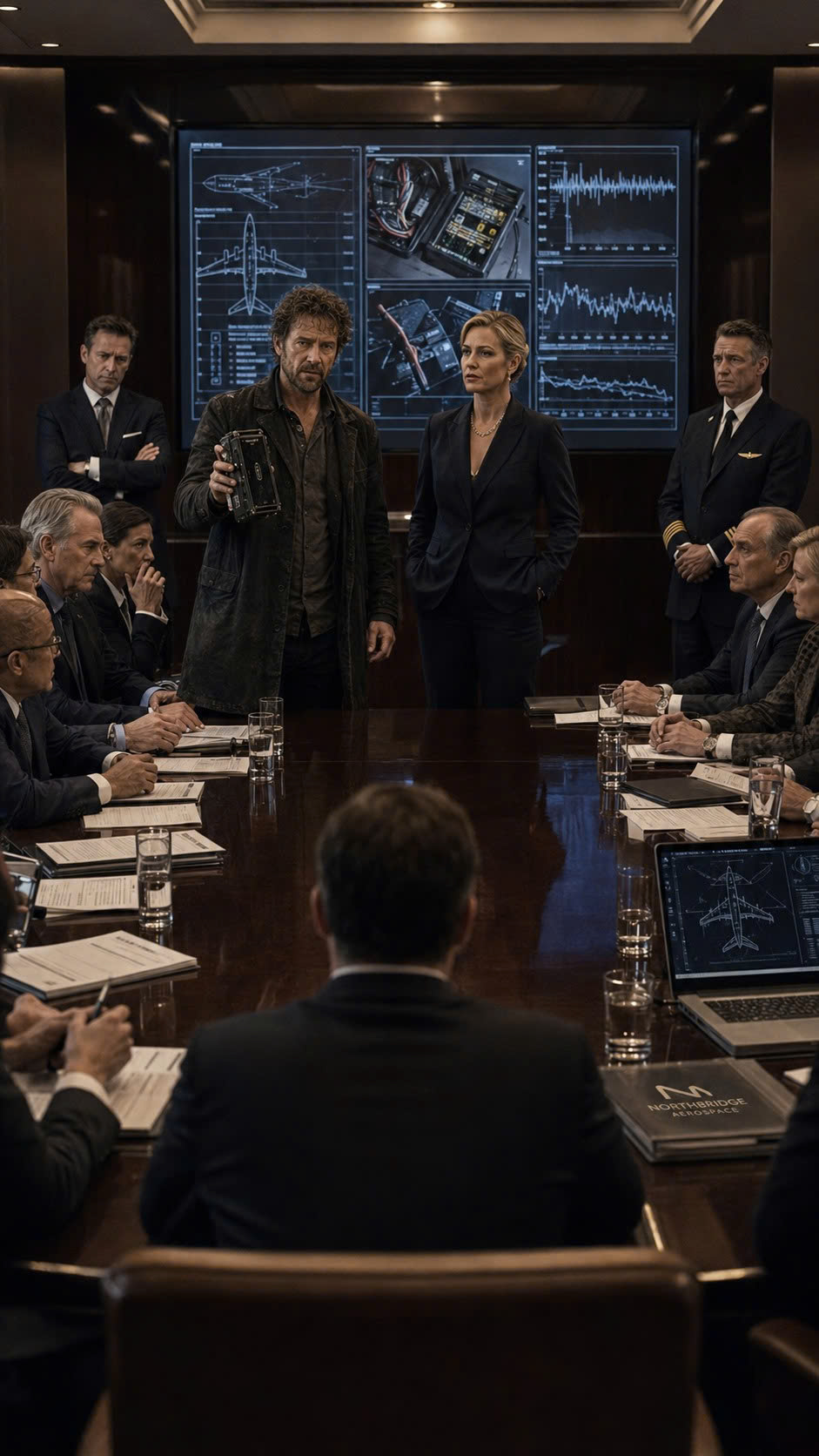
The Northbridge meeting began in a private conference room at the terminal.
Garrett’s board ally, Vaughn Mercer, was already telling the committee that the delay had been caused by an obsolete safety protocol created by a former contractor.
Then Weston entered.
One of the Northbridge directors leaned forward.
“Weston Hale?”
Weston stopped.
“You know the name?”
“I read your human-command authority paper twelve years ago.”
Vaughn’s face tightened.
Celeste placed the recovered module on the table.
Then the evidence followed.
Brielle presented the independent logs.
Quinn confirmed the hardware had been installed during a maintenance window controlled by Garrett’s group.
Outside counsel, Lawson Drake, produced archived design files carrying Weston’s signature. He also produced emails in which Garrett had demanded that the confirmation barriers be reduced for commercial reasons.
One message from Vaughn was even shorter.
Proceed. We can address the safety objections after launch.
No one in the room spoke for several seconds.
Weston did not raise his voice.
“A safety system is a contract between the people who build it and the people who trust their lives to it. The machine may advise. It may warn. It may even refuse an unsafe command. But it must never be redesigned in secret to serve a schedule, a stock price or someone’s ambition.”
He looked at the module on the table.
“The moment you turn safety into a weapon, you are no longer managing risk. You are creating it.”
The board voted that afternoon.
Garrett was suspended pending criminal and regulatory investigation.
Vaughn was removed from the oversight committee.
Celeste retained her position as CEO.
Mercer Aerotech issued a formal correction acknowledging Weston Hale as the original lead engineer of the Guardian safety architecture.
Celeste offered him a public apology.
Weston asked for only three things.
His authorship restored.
The original safety barriers reinstated.
And every aircraft carrying the system independently inspected.
Four months later, the jet returned to service with the authentic Hale Guardian architecture.
HGS-0 was restored exactly as Weston had designed it. His name appeared in the certification records, engineering manuals and patent history.
Brielle was promoted to director of systems integrity.
Quinn joined the company’s independent safety council.
Delaney created a policy requiring technical objections to be reviewed before executive travel decisions.
And Celeste banned Garrett’s “frictionless safety” phrase from every Mercer Aerotech presentation.
Weston did not return to the life he had before.
He built a better one.
He accepted a role leading an independent aviation safety lab, with one condition: no executive could remove an engineering safeguard without a signed public record explaining why.
On his first official flight after the recertification, Piper traveled with him.
She was still wearing the pink hospital bracelet she had saved from her surgery.
As they boarded, she placed one hand on the side of the aircraft and looked up at her father.
“Is this the plane that kicked you off?”
“The people did,” Weston said. “The plane asked me to come back.”
Piper climbed into the cabin and listened as the engines started.
The displays turned green.
The aircraft waited for the crew’s command.
She smiled.
“It listens better now.”
Weston looked across the cabin at the system carrying his name again.
“Yes,” he said. “It finally remembers who it is supposed to serve.”
Because the most dangerous mistake is not underestimating the quiet person in the worn-out coat—it is building a world that recognizes someone’s value only after everything stops working without them.