Chapter One: The Language They Thought I Didn’t Know
The first thing I noticed was that my wife stopped touching her wine.
The second was the way her boss watched her not touch it.
We were seated beneath a chandelier shaped like frozen rain in the private dining room of the Alder House Hotel, thirty floors above downtown Chicago. Beyond the glass, March sleet streaked the windows and turned the city lights into bleeding gold.
My wife, Claire, sat across from me in a black dress I had bought for our fifteenth anniversary.
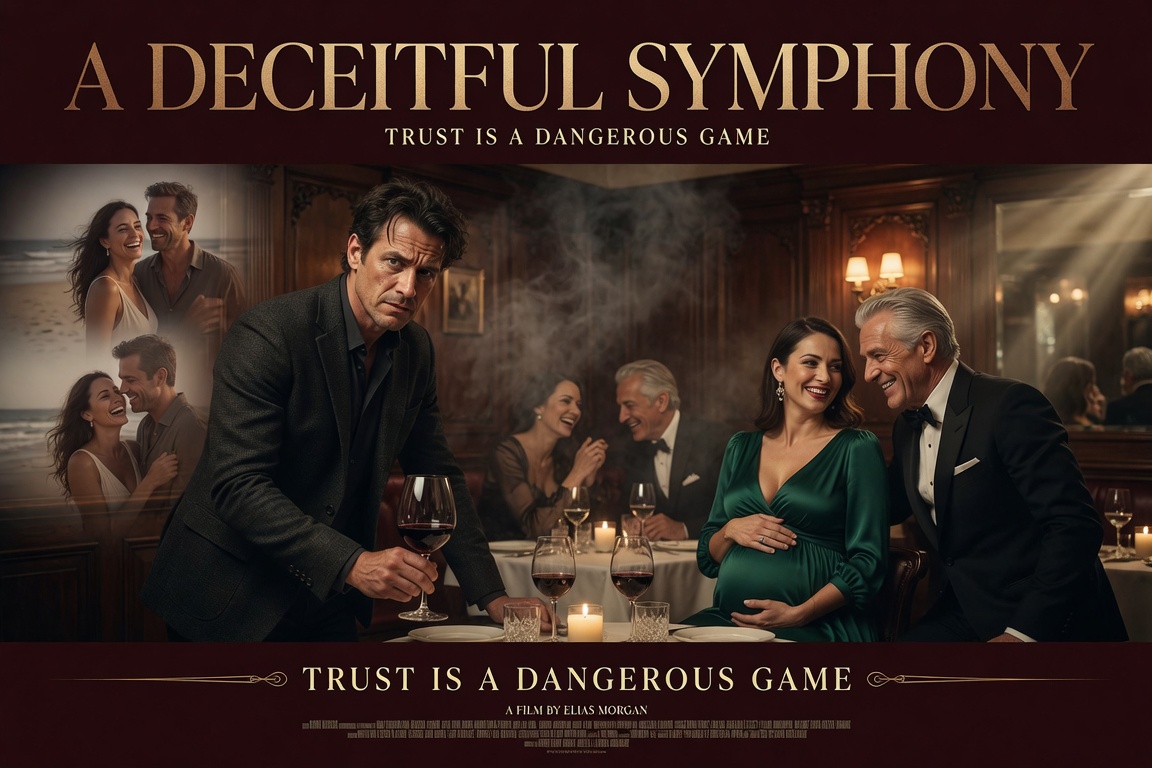
Her boss, Lukas Brenner, sat beside her.
That had not been the original seating arrangement.
When the hostess first placed the cards, Claire’s name had been next to mine. Lukas had lifted the card between two fingers, smiled, and said, “We’ll be discussing the Hamburg expansion. I hope you don’t mind, Nathan.”
He had moved her to his side before I answered.
I did mind.
I simply did not show it.
Lukas was forty-three, tall, athletic, and polished in the expensive way of men who had learned that confidence could be tailored. He ran North American development for Voss-Hartmann, a German medical systems corporation preparing to acquire the company where Claire worked.
To most people at the table, I was Claire’s quiet husband.
The one who repaired old clocks in a workshop behind our house.
The one who wore the same dark suit to every formal dinner.
The one Claire sometimes described as “technically retired,” though I had never used those words.
Around us sat twelve executives, two corporate attorneys, a venture banker from New York, and Claire’s younger brother, Michael, who had recently been hired as a “strategic integration specialist” despite having no experience in strategy or integration.
Michael gave me a small salute with his champagne glass.
“Still awake over there, Nate?”
A few people laughed.
Claire’s smile tightened.
I turned the stem of my water glass between my fingers.
“I’m managing.”
“Good,” Michael said. “Big words flying around tonight.”
More laughter.
He had made versions of that joke for years.
At Thanksgiving, when I corrected the thermostat.
At Christmas, when the family discussed interest rates.
At our daughter Sophie’s graduation, when he told one of her professors that I “did something with antique gears.”
I had learned that people reveal more when they believe you have nothing to contribute.
A server placed a plate of seared salmon in front of Claire.
She inhaled once, sharply.
Then she pushed the plate away.
Lukas noticed.
His eyes dropped to her hands.
In German, softly enough that he believed the table noise would bury it, he said, “Du solltest etwas essen. Es ist nicht gut für das Baby.”
You should eat something. It isn’t good for the baby.
My fingers stopped on the glass.
Claire’s face changed for half a second.
Not surprise.
Fear.
She answered in German.
“Ich kann nicht. Mir wird schon vom Geruch schlecht.”
I can’t. The smell already makes me sick.
Lukas leaned closer.
“Hat Nathan immer noch keine Ahnung?”
Does Nathan still have no idea?
Claire looked at me.
Our eyes met.
Then she lowered hers.
“Noch nicht.”
Not yet.
The table continued around us.
Forks touched porcelain.
Ice clicked against crystal.
Michael was telling a story about an airport lounge in Dallas. Someone near the window laughed too loudly. A waiter refilled a glass.
Inside me, something old and carefully built cracked without making a sound.
Claire was pregnant.
My wife of nineteen years was pregnant.
And the man beside her knew before I did.
Lukas glanced toward me and smiled.
It was not the smile of a lover.
It was worse.
It was the smile of a man who believed he had already won.
He continued in German.
“Nach der Übernahme wird alles einfacher. Das Haus, die Anteile, sogar Sophie. Er wird keine Wahl haben.”
After the acquisition, everything will be easier. The house, the shares, even Sophie. He won’t have a choice.
Claire pressed her napkin into her lap.
“You said no one would be hurt.”
“No one has to be hurt. Nathan signs, you file, and we begin again.”
My heart did not race.
That surprised me.
Instead, every sound in the room became precise.
The soft hiss of sleet against glass.
The small mechanical hum above the wine cabinet.
Claire’s thumbnail scraping the edge of her wedding ring.
I had spent twenty-seven years repairing systems people noticed only when they failed.
I knew what failure sounded like before the alarm.
Lukas reached for Claire’s hand beneath the table.
I could not see whether she let him hold it.
I no longer needed to.
Michael raised his glass again.
“To Voss-Hartmann,” he announced. “And to Claire, who finally dragged this sleepy little company into the real world.”
The executives lifted their glasses.
Claire did not.
I set mine down.
Then I looked directly at Lukas and answered in German.
“Das Problem mit einem Plan, den man in einer fremden Sprache bespricht, ist, dass die Sprache vielleicht gar nicht fremd ist.”
The problem with discussing a plan in a foreign language is that the language may not be foreign at all.
The room did not go silent at once.
Silence moved across it.
One chair at a time.
One face at a time.
Michael’s grin disappeared first.
Lukas did not move.
Claire’s napkin slipped from her hand and fell to the floor.
I continued in German.
“And before either of you explains the baby, the house, the shares, or my daughter, I suggest you choose your next words carefully.”
Claire’s lips parted.
“Nathan—”
I raised one finger.
Not in anger.
In control.
“English,” I said. “Everyone deserves to understand what happens next.”
Lukas leaned back slowly.
His confidence returned in pieces.
“You have misunderstood a private conversation.”
“No.”
I looked at Claire.
“I understood every word.”
Her face had gone pale beneath the makeup.
Michael gave a nervous laugh.
“Come on, Nate. Since when do you speak German?”
“Since I was nine.”
The venture banker set down his fork.
One of the German attorneys stared at me with sudden recognition.
Not of my face.
Of my accent.
Lukas saw it too.
His shoulders stiffened.
I spoke again, still calm.
“My mother was born in Bremen. My father taught mechanical engineering in Munich for six years. I studied in Stuttgart. I negotiated my first manufacturing license in German.”
Michael blinked.
“You studied engineering?”
Claire closed her eyes.
She knew some of it.
Not all.
That had been our mistake.
We had each mistaken silence for safety.
Lukas placed both hands flat on the table.
“Whatever you think you heard, this is neither the place nor the time.”
“Actually,” I said, “this may be the only place and time that matters.”
I turned toward the German attorneys.
“Did Voss-Hartmann’s board receive the disclosure regarding the Crosswell patents?”
Neither answered.
Lukas’s face changed.
A tiny shift.
Enough.
I looked at Claire.
She had been afraid I would understand the pregnancy.
Lukas had been afraid I would understand the acquisition.
They had both underestimated which betrayal would destroy them first.
Chapter Two: The Name Beneath the Name
No one left the table.
That was the first intelligent decision anyone made that night.
The senior German attorney, a woman named Dr. Eva Neumann, closed the folder beside her plate.
“Mr. Cross,” she said, “what is your relationship to the Crosswell patents?”
Michael rolled his eyes.
“Here we go.”
Claire whispered, “Michael, stop.”
I looked at him.
He had our daughter’s eyes, though he was not her uncle by blood. Claire and Michael shared the same pale gray gaze inherited from their mother.
For nineteen years, I had paid Michael’s debts twice, funded his failed brewery, and given him a job he was unqualified to hold because Claire believed responsibility might teach him discipline.
It had taught him entitlement.
“My relationship?” I repeated.
Dr. Neumann nodded.
“I designed them.”
The room held still.
The Crosswell patents governed a pressure-regulation valve used in neonatal incubators, mobile surgical units, and emergency oxygen systems. The design was not glamorous. It did not appear in television commercials. Most doctors never knew its name.
But when power failed in a rural hospital or a transport unit crossed uneven terrain, those valves kept air pressure stable enough for fragile lungs.
My name was not publicly attached to them.
Crosswell Medical Systems held the licenses.
Claire’s company.
The company her father had supposedly founded.
Lukas’s fingers tightened around the edge of the table.
“That is not possible.”
“It’s well documented.”
“Crosswell was founded by Arthur Crosswell in 1998.”
“No,” I said. “Arthur incorporated it in 1998.”
Claire looked down.
Her father had been dead six years.
In family stories, Arthur Crosswell was a visionary industrialist who built a medical technology company from a rented garage.
The garage had been mine.
The original prototype had been mine.
The bank had refused to lend money to a twenty-six-year-old engineer with a foreign-born mother, no commercial record, and eighty thousand dollars in student debt.
Arthur had supplied the capital.
In return, he took fifty-one percent of the company, placed his surname on the door, and promised that when the debt was repaid, control would return to me.
Then Claire and I fell in love.
Promises became family conversations.
Family conversations became postponed meetings.
And postponed meetings became history.
Michael shook his head.
“Dad invented those valves.”
“Your father sold them.”
“You expect us to believe he stole your company?”
“No.”
I looked at Claire.
“I expect you to believe that I let him keep it.”
Her eyes lifted.
“Nathan.”
“I was twenty-eight when Sophie was born. Arthur had just undergone heart surgery. Your mother was caring for him. You were finishing law school. I thought time would solve what confrontation might destroy.”
Lukas interrupted.
“This personal history has no relevance to the acquisition.”
“It has every relevance.”
I reached into the inside pocket of my jacket and removed a slim black envelope.
Claire stared at it.
“What is that?”
“The original licensing agreement.”
Lukas laughed once.
“Original agreements are held in the company archive.”
“Copies are.”
I slid the envelope toward Dr. Neumann.
She did not touch it immediately.
“Why do you carry this?”
“Because two weeks ago, someone entered my workshop and photographed the lockbox beneath my lathe.”
Claire’s breathing stopped.
Michael looked at her.
Then at Lukas.
A muscle jumped in Lukas’s cheek.
I continued.
“The person missed the second compartment.”
Dr. Neumann opened the envelope.
Inside lay a notarized agreement, yellowed along the edges but carefully preserved. She read the first page, then the second.
The corporate attorney beside her leaned closer.
Their eyes moved faster.
Lukas’s voice hardened.
“This is theater.”
Dr. Neumann did not look up.
“No.”
The single word carried more authority than a shout.
She placed one finger against a paragraph.
“Upon any change of controlling ownership, all exclusive licenses revert to the inventor unless written consent is obtained.”
Michael frowned.
“What does that mean?”
I answered.
“It means Voss-Hartmann can buy the buildings, payroll, trademarks, equipment, and contracts.”
I looked at Lukas.
“But without my signature, they cannot legally manufacture the technology responsible for seventy-two percent of Crosswell’s revenue.”
The venture banker swore under his breath.
Claire stared at me as though I had become a stranger at the table.
Perhaps I had.
Or perhaps she was seeing the man who had always been sitting across from her.
Dr. Neumann turned to Lukas.
“Were you aware of this provision?”
“No.”
I watched him answer.
His chin stayed level.
His eyes did not move.
But his right thumb rubbed once against the side of his index finger.
A small self-soothing gesture.
Claire had done the same thing whenever she lied to her father.
Dr. Neumann saw it too.
She asked again.
“Were you aware of the inventor’s retained rights?”
Lukas glanced at Claire.
That was answer enough.
The attorney beside Dr. Neumann opened his laptop.
The atmosphere at the table shifted from family scandal to corporate emergency.
People understood corporate danger better than emotional betrayal.
Money gave fear a language everyone recognized.
Claire reached toward me.
“Nathan, please. Let’s go somewhere private.”
“You chose the room.”
Her hand stopped.
She lowered it.
For the first time since I had spoken German, I allowed myself to look at her fully.
Claire was forty-five.
She had worn her dark hair shorter since becoming chief legal officer at Crosswell. Tonight, a loose strand clung to the corner of her mouth. Her face was beautiful in the way old homes are beautiful after surviving winters—fine cracks, softened edges, evidence of weather.
I had loved her for more than half my life.
That love had not vanished.
That was the problem.
Pain is simpler when love is gone.
“Is the baby mine?” I asked.
No one looked away.
Claire’s eyes filled immediately.
Lukas spoke.
“This is not—”
“Be quiet.”
My voice did not rise.
He stopped.
Claire looked at her hands.
“I don’t know.”
A spoon fell at the far end of the table.
Michael whispered something I could not hear.
The words entered my body without finding a place to land.
I had expected no.
I had not expected uncertainty.
“How far along?”
“Ten weeks.”
I counted backward without meaning to.
January.
The freezing rainstorm.
The Crosswell retreat in Lake Geneva.
Claire had returned early on Sunday morning and slept until evening. She had said the sessions ran late.
I had made soup.
Lukas leaned toward her.
“Claire, you do not owe him a public interrogation.”
She turned on him.
“I owe him more than you understand.”
That was the first moment she sounded like my wife.
It came too late to comfort me.
Dr. Neumann closed the agreement.
“Mr. Brenner, Voss-Hartmann is suspending tonight’s presentation pending an internal review.”
His face hardened.
“You do not have the authority.”
“I am the board’s transaction counsel.”
“The board appointed me to lead North American integration.”
“And the board appointed me to prevent fraudulent acquisitions.”
The word struck the table.
Fraudulent.
Claire stood.
Her chair scraped backward.
“I need air.”
She took one step.
Then her knees gave way.
I was out of my chair before Lukas moved.
I caught her beneath the arms.
For one second, her body folded against mine exactly as it had when Sophie was born and the doctor told us our daughter was not breathing.
Claire’s fingers seized my sleeve.
“Nathan.”
The room blurred around her.
“Call a doctor,” I said.
Someone moved.
Lukas remained frozen.
Claire looked up at me, terrified.
Not of exposure.
Not of losing the company.
Of losing the child.
“Please,” she whispered.
I held her steady while the woman who had betrayed me clung to my jacket.
Then she said something so quietly only I could hear.
“Lukas changed the documents. I tried to stop him.”
Chapter Three: The House We Built Wrong
The hospital smelled of antiseptic, burnt coffee, and wet wool.
Claire was admitted for observation after the emergency physician found signs of severe dehydration and elevated blood pressure. The baby’s heartbeat was present.
The doctor did not say healthy.
He said present.
I sat alone in a waiting room beneath a television playing a muted cooking show. Snowmelt dripped from coats along the wall. A vending machine hummed beside a row of plastic chairs.
At 11:43 p.m., Sophie arrived.
Our daughter was twenty-one, tall and narrow-shouldered, with dark curls she never bothered to tame. She wore a Northwestern University sweatshirt beneath a green parka and had one boot unlaced.
“Where is Mom?”
“Upstairs.”
“Is the baby okay?”
I looked at her.
She stopped.
“You knew?”
Her face gave away the answer.
Something inside me sank another inch.
“How long?”
Sophie sat beside me.
“Two weeks.”
“And you said nothing.”
“She asked me not to.”
“I’m your father.”
“She’s my mother.”
The old instinct rose in me—the instinct to stay calm so others could fall apart safely.
Tonight, calm felt less like strength and more like a room I had locked myself inside.
“Did she tell you who the father might be?”
Sophie looked toward the television.
“That means yes.”
“She said she made a mistake.”
“One?”
Sophie’s jaw tightened.
“I’m not defending her.”
“You kept her secret.”
“She was scared.”
“So was I. I simply didn’t know why.”
She flinched.
I regretted the words immediately.
Not because they were false.
Because they were aimed at the wrong person.
I rubbed both hands over my face.
“When did our family become a collection of people protecting one another from the truth?”
Sophie’s eyes filled.
“Maybe when you taught us that silence was kindness.”
I lowered my hands.
The muted television showed a chef slicing an onion.
Perfect even pieces.
No sound.
Sophie continued.
“You never told Mom how angry you were about Grandpa keeping the company.”
“That was between adults.”
“I was eighteen when he died.”
“You were still our child.”
“I’m still your child now, and everyone expects me to carry secrets.”
Her voice broke on the last word.
I looked at her.
Really looked.
She had been carrying Claire’s pregnancy, Michael’s involvement in the acquisition, and whatever else the adults around her had deposited in her hands.
“What else do you know?”
She shook her head.
“Sophie.”
“Uncle Michael has been moving money.”
My spine stiffened.
“From where?”
“I don’t know. He asked me to sign something last month.”
“What?”
“A family shareholder acknowledgment. He said it only confirmed that I wouldn’t challenge Mom’s authority during the acquisition.”
“Did you sign it?”
“No.”
Relief came first.
Then fear.
“Why not?”
“Because the document called me a contingent trust beneficiary.”
The vending machine compressor clicked off.
The waiting room became strangely quiet.
“What trust?”
“That’s what I asked.”
She pulled out her phone and opened a photograph.
The document bore the name:
ARTHUR CROSSWELL FAMILY CONTINUITY TRUST
I read the first paragraph.
My name appeared nowhere.
Claire and Michael were listed as current trustees.
Sophie was a contingent beneficiary.
And Crosswell Medical Systems shares—shares I had believed were divided between Claire, Michael, and Arthur’s estate—were held by the trust.
The trust had been created nine months before Arthur’s death.
My signature appeared on the final page.
I had never seen it before.
“That isn’t mine.”
Sophie’s breath caught.
“I thought so.”
“You know my signature?”
“You write notes on every birthday card like you’re signing a treaty.”
Despite everything, I almost smiled.
Then I zoomed in.
The forged signature was good.
Too good for Michael.
Claire had spent nineteen years watching me sign documents.
My chest tightened.
“Did your mother know you had this?”
“No.”
“Send it to me.”
She did.
I forwarded it to one person.
Maya Chen.
Maya had been my patent attorney for twenty-four years, my business partner for eleven, and the only person besides me who knew the full history of Crosswell.
She called within thirty seconds.
“Nathan, where did you get this?”
“Sophie.”
“Is Claire with you?”
“In the hospital.”
“What happened?”
“Later. Is the trust valid?”
“Not with a forged consent, but that may not be its only problem.”
“What other problem?”
“The assets listed in Schedule B.”
“I only have the signature page.”
“Then get the whole document.”
Her voice changed.
“And do not return home alone.”
I looked at Sophie.
“Why?”
“Because if Michael and Brenner believe the acquisition is collapsing, they may try to secure the originals tonight.”
“The originals are in my workshop.”
“I know.”
My pulse finally accelerated.
For years, my workshop had been a family joke.
Nathan’s clock room.
Nathan’s little retirement cave.
No one asked why the windows contained laminated glass or why the interior door used a mechanical lock instead of a keypad.
The workshop held prototype drawings, license records, test reports, and correspondence proving that Arthur’s ownership had always been conditional.
It also held Mara.
Not a person.
A machine.
The first functioning Crosswell pressure regulator, named after my mother, Maria Cross, who had died before the company earned its first dollar.
Its internal design contained one feature never included in the patent filing.
A feature that could invalidate every unauthorized replica Voss-Hartmann intended to produce.
I stood.
“Sophie, stay here.”
“No.”
“I need you with your mother.”
“You need someone who doesn’t lie to you.”
The sentence stopped me.
She rose and tied her boot.
“I’m coming.”
At midnight, the hospital corridor lights reflected in the glass as we walked toward the elevator.
Before the doors opened, Claire’s nurse called my name.
Claire stood ten feet away in a hospital gown and open coat, one hand pressed against the wall.
Her face was colorless.
“You can’t go home,” she said.
I watched her hand tremble.
“Why?”
“Because Michael knows where the second key is.”
Chapter Four: The Workshop
We reached the house at 12:28 a.m.
The security lights were off.
That was wrong.
Our home stood in Evanston on a narrow street lined with bare maples and century-old brick houses. Meltwater shone black along the curbs. Wind pushed thin ice against the storm drains.
Sophie parked across the street.
I held one hand up.
“Stay in the car.”
“You said no more secrets.”
“This isn’t a secret. It’s a safety instruction.”
She glared at me.
Then she locked the doors.
Progress.
I crossed the street slowly.
The side gate was open.
A strip of yellow light showed beneath the workshop door.
I did not enter.
I circled to the rear window.
Inside, Michael stood beside my workbench.
Lukas was with him.
So was a third man wearing gloves and holding a document scanner.
They had removed two metal cases from the floor safe.
Michael lifted a folder.
“This is just test data.”
Lukas grabbed it from him.
“Then find the manufacturing appendix.”
“I told you, he keeps everything in some private code.”
“It is not a code. It is German notation.”
Michael swore.
The third man opened a drawer.
Tools struck the floor.
My father’s calipers skidded beneath the bench.
Something in me went still.
Not calm.
Stillness is different.
Calm can forgive.
Stillness measures distance.
I called 911, gave the address, and reported a burglary in progress.
Then I photographed the three men through the window.
Lukas turned at the faint sound of the camera shutter.
Our eyes met through the glass.
For half a second, neither of us moved.
Then he shouted.
I stepped away from the window.
The rear door burst open.
Lukas came out first.
He stopped when he saw my phone.
Michael followed.
“Nate, wait.”
The third man remained inside.
Sirens sounded in the distance.
Lukas looked toward the street, calculating.
“You’re making another mistake,” he said.
“I’ve made several.”
My gaze moved to Michael.
“He was one of them.”
Michael’s face twisted.
“You think you’re some kind of victim? You let Dad carry your company for twenty-five years while you hid in this shed.”
“Your father did not carry it.”
“He gave you everything.”
“He gave me money and took control.”
“He gave you his daughter.”
The words entered the night like broken glass.
I took one step toward him.
Michael flinched.
That hurt more than the insult.
I stopped.
A police cruiser turned onto the street.
Blue light spilled across the houses.
Lukas lowered his voice.
“You can still stop this.”
“No.”
“If the police enter that building, confidential transaction documents become evidence. The acquisition collapses. Crosswell loses the German distribution agreement. Four hundred employees face layoffs.”
“You broke into my workshop to save their jobs?”
“I broke in because your vanity threatens everyone.”
The first cruiser stopped at the curb.
Two officers approached with hands near their weapons.
I raised mine and identified myself.
Michael began talking immediately.
“It’s a family misunderstanding. We have access to the property.”
“Do you live here?” one officer asked.
“No, but my sister—”
“Did the homeowner invite you inside tonight?”
Michael looked at me.
“No.”
Lukas presented a business card.
“I am an executive with Voss-Hartmann. The materials in this building belong to Crosswell Medical Systems.”
“They do not,” I said.
The third man tried to leave through the front door carrying a metal case.
An officer stopped him.
“What’s in the case?”
He looked at Lukas.
The officer noticed.
“Set it down.”
The man obeyed.
When the lid opened, Maya’s original patent correspondence lay inside.
Beneath it was the Mara prototype wrapped in oilcloth.
My mother’s name, engraved by hand, caught the flashing blue light.
Michael stared at it.
“What is that?”
“The reason the company exists.”
His face shifted.
For years, he had dismissed the workshop as a place where an aging brother-in-law played with clocks.
Now he understood that the joke had been built around a room he had never bothered to see.
Claire arrived while the police were placing Lukas in a cruiser.
She stepped from a rideshare wearing the hospital coat over her gown.
Snow had begun falling again.
“Nathan.”
I looked at her bare legs, the plastic hospital bracelet, the fear in her face.
“You left the hospital.”
“I had to stop them.”
“You knew they were coming.”
“I knew Michael had the key. I didn’t know Lukas would use it tonight.”
An officer approached her.
“Ma’am, do you have access to this property?”
“Yes. I live in the main house.”
“Did you authorize these men to enter the detached building?”
Claire looked at her brother.
Michael shook his head slightly.
It was almost invisible.
She saw it.
So did I.
“No,” she said.
Michael’s face collapsed.
“Claire.”
“No,” she repeated. “I did not authorize them.”
The officer nodded and walked away.
Michael stared at his sister.
“You’re choosing him?”
Claire pressed one arm over her stomach.
“I’m choosing the truth.”
He laughed bitterly.
“Now?”
She looked at me.
“Yes,” she said. “Now.”
The police took all three men into custody pending investigation. Because Lukas claimed corporate ownership of the documents, the metal cases remained sealed until a judge could determine custody.
As the cruisers left, Sophie came across the street and wrapped a blanket around her mother.
Claire leaned into her.
For a moment, they looked like two exhausted women waiting at the edge of a disaster.
Then Claire turned to me.
“There’s something you need to know before Maya sees the trust.”
“What?”
“The baby isn’t the only reason Lukas believed he could control me.”
Her eyes moved toward the dark workshop.
“I gave him your medical records.”
Chapter Five: The Diagnosis
The records were real.
That made the betrayal harder to dismiss.
Three years earlier, I had suffered a transient ischemic attack in my workshop. A small clot briefly interrupted blood flow to my brain. I lost feeling in two fingers and forgot the word “hinge” for seven minutes.
Claire found me sitting on the floor beside the lathe.
At the hospital, the neurologist explained that it was a warning, not a sentence. I changed my diet, began medication, and underwent regular imaging.
There had been no recurrence.
We told Sophie I had experienced a blood pressure event.
We told Michael nothing.
Claire kept the complete records because she managed our insurance and medical files.
Six months ago, Lukas convinced her that Voss-Hartmann’s acquisition team needed to evaluate “key-person risk” surrounding the patent rights.
She sent him the records.
He used them to draft a petition claiming I lacked capacity to control the licenses.
The petition had not yet been filed.
It did not need to be.
Its existence was leverage.
We sat in Maya’s office the next morning while gray light spread across Lake Michigan.
Maya was fifty-one, small, sharp-eyed, and incapable of pretending patience when she felt none. Her office contained no family photographs, only framed patents and a single watercolor of Shanghai harbor.
She placed the draft petition on the table.
“They intended to file this immediately after the acquisition announcement.”
Claire sat opposite her in yesterday’s dress beneath a borrowed coat.
“What would it have done?”
“Frozen Nathan’s licensing authority pending examination. Voss-Hartmann would argue that any refusal to consent resulted from impairment.”
“I told Lukas Nathan was healthy.”
“You gave him the documents needed to imply otherwise.”
Claire flinched.
Maya did not soften.
“Did you also forge Nathan’s consent to the family trust?”
“No.”
“Did you know his signature was forged?”
Claire looked at the table.
“I suspected.”
My hands remained flat on my knees.
Maya watched her.
“When?”
“After Dad died. Michael brought me the final documents. Nathan’s signature looked wrong.”
“And what did you do?”
“I asked Michael.”
“What did he say?”
“That Dad had arranged the signature because Nathan was traveling.”
“Was Nathan traveling?”
Claire closed her eyes.
“No.”
The office heating system clicked on.
Warm air moved through the vent above us.
Maya opened the full trust instrument.
Schedule B listed thirty-eight percent of Crosswell Medical Systems.
The shares Arthur had promised would return to me.
Instead, he had placed them in a trust controlled by Claire and Michael.
Upon the sale of the company, Michael would receive twelve percent of the proceeds.
Claire would receive eighteen.
Sophie would receive eight.
I would receive nothing.
The trust contained another provision.
If I challenged ownership, Claire could authorize use of company funds to defend the trust.
In other words, the company built on my designs would pay attorneys to keep me from reclaiming them.
Maya removed her glasses.
“Arthur planned this carefully.”
Claire’s voice barely carried.
“He was afraid Nathan would take the company after he died.”
“I had the right to.”
“He believed the employees needed continuity.”
“He believed control and continuity were the same thing.”
Claire looked at me.
“I didn’t know the percentages.”
“You signed as trustee.”
“I signed where Dad told me.”
“Just as Sophie was expected to sign where you told her.”
Her face tightened.
The truth had begun repeating itself across generations.
That was how families preserved damage.
Not through hatred.
Through habit.
Maya turned to me.
“You can void the trust, reclaim the shares, terminate the acquisition, and sue Claire and Michael for breach of fiduciary duty.”
Claire’s hands gripped the edge of the chair.
“What happens to Crosswell?”
“Depends on Nathan.”
Maya waited.
So did Claire.
For most of my adult life, other people had decided what I would tolerate.
Arthur decided I would remain the quiet inventor.
Claire decided I did not need to know about the trust.
Michael decided I was too simple to understand an acquisition.
Lukas decided my medical history could become a weapon.
They had confused my restraint with permission.
“I want a special board meeting,” I said.
“When?”
“Tomorrow morning.”
Claire looked up.
“You can’t call one. You’re not a director.”
Maya slid another document across the table.
It was the original corporate bylaws.
A provision on page twelve granted the founding inventor a permanent nonvoting board seat and the right to call a meeting on any matter affecting the patents.
Arthur had never amended it.
He had simply stopped inviting me.
Claire read the clause.
“How long have you known?”
“Since the day I signed it.”
“You could have walked into any meeting.”
“Yes.”
“Why didn’t you?”
I looked toward the lake.
Ice floated near the shore in broken white plates.
“Because I thought being needed was less important than keeping the family intact.”
Maya’s expression hardened.
“And now?”
“Now I understand that a family held together by one person’s silence is already broken.”
Claire began to cry.
Quietly.
No shaking shoulders.
No dramatic collapse.
Tears simply moved down her face while she stared at the trust her father created and she helped preserve.
“I loved you,” she said.
The past tense hurt.
“You may still.”
She looked at me.
“That would be worse.”
“Yes.”
Maya gathered the documents.
“The board meeting is at nine tomorrow. Voss-Hartmann will send counsel. Crosswell’s directors will attempt to delay.”
“They can try.”
Claire stood slowly.
She looked exhausted.
“There’s one more thing.”
Maya’s jaw tightened.
“There is always one more thing.”
Claire turned to me.
“The pregnancy began during the Lake Geneva retreat.”
“I know.”
“Lukas came to my room.”
I said nothing.
“I told him to leave.”
Her voice cracked.
“He said the acquisition would fail unless I convinced you to sign. He said Michael had already moved company money, and if the board investigated, Michael would go to prison.”
“And then?”
“I drank.”
Maya’s eyes sharpened.
Claire continued.
“I had stopped drinking for months. That night I ordered a bottle of wine. I remember arguing. I remember Lukas touching my face. I remember telling him I hated him.”
My chest tightened.
“What are you saying?”
“I’m saying I woke up in his room and did not remember choosing to go there.”
The office became completely still.
Claire covered her mouth.
“I didn’t know what to call it. I still don’t.”
Maya spoke carefully.
“Did you consent?”
“I don’t know.”
“That is not the same as yes.”
Claire lowered her hand.
“Afterward, he told me we had both made a mistake. Then he started using it. The messages. The pregnancy. Michael’s theft. Everything.”
My anger changed shape.
It did not disappear.
Claire had still hidden the trust.
Still given away my records.
Still participated in the plan to strip my rights.
But the affair I had imagined as a simple betrayal now contained a darker possibility.
“Do you have the messages?” Maya asked.
“Yes.”
“Do not delete anything.”
Claire looked at me.
“I should have told you.”
“Yes.”
“I thought if the acquisition closed, I could protect Michael, protect the employees, and then leave Lukas behind.”
“You thought control would arrive after surrender.”
She nodded.
I understood that mistake.
I had made it for twenty years.
Chapter Six: The Boardroom
Crosswell Medical Systems occupied an eight-story building near the North Branch of the Chicago River.
The lobby displayed a bronze bust of Arthur Crosswell.
Beneath it, an inscription read:
VISION IS THE COURAGE TO BUILD WHAT OTHERS CANNOT SEE.
I stopped in front of it.
Arthur’s metal eyes looked over my shoulder toward the elevators.
Claire stood beside me.
“He chose the quote himself.”
“I know.”
“You never told me you hated that statue.”
“I don’t hate the statue.”
“What do you hate?”
“The empty pedestal it created around him.”
At 8:57, we entered the boardroom.
Seven directors sat around the table.
Michael’s chair was empty.
He had been released pending charges but barred from company property.
Lukas attended by video with Voss-Hartmann counsel. He wore a dark suit and looked rested.
Men like him understood that appearance could survive almost anything if maintained early enough.
Dr. Neumann sat in a separate video window.
Maya placed the original license agreement in front of each director.
The chairman, Robert Hale, cleared his throat.
“Nathan, I want to begin by acknowledging your historical contribution.”
“Historical?”
He shifted.
“Foundational.”
“Better.”
One director looked down to hide a smile.
Hale continued.
“We all regret the family issues surrounding the transaction.”
“This is not a family issue.”
I looked around the table.
“It is an ownership issue, a fraud issue, an intellectual property issue, and possibly a criminal conspiracy.”
Lukas spoke from the screen.
“That language is irresponsible.”
“You entered my workshop without permission.”
“I entered premises containing corporate assets.”
“With a hired document technician at midnight.”
“To preserve records you threatened to destroy.”
I leaned forward.
“You believed I was mentally incompetent, yet you feared I could destroy a transaction you claimed I did not understand.”
He said nothing.
Maya distributed copies of the trust.
“The signature attributed to Nathan Cross has been examined by a forensic document specialist. Preliminary findings indicate it was traced from a 2014 licensing amendment.”
A director named Olivia Stern turned toward Claire.
“You were a trustee.”
Claire nodded.
“Did you know?”
“I knew the signature might not be authentic. I chose not to investigate.”
The honesty moved through the room uneasily.
Corporate rooms prefer lies that require committees.
Plain truth makes procedure look cowardly.
Hale removed his glasses.
“Why are you admitting this?”
“Because my silence helped create the crisis.”
Lukas laughed.
“Claire is under extraordinary emotional pressure.”
She turned toward the screen.
His expression changed when he saw her face.
Not afraid.
Finished.
“I have provided Dr. Neumann with all communications between us,” Claire said. “Including your threats concerning my brother, my husband’s medical records, and the pregnancy.”
The boardroom did not react immediately.
Then Olivia whispered, “Pregnancy?”
Lukas’s image froze for half a second.
A connection delay.
Or shock.
“You are confused,” he said.
“No.”
Claire’s hands trembled, but her voice did not.
“I was confused for three months. I am not confused today.”
Dr. Neumann spoke.
“Voss-Hartmann has placed Mr. Brenner on immediate administrative suspension. The company is withdrawing from the acquisition pending investigation.”
The chairman’s face went slack.
“Withdrawn?”
“Our board cannot proceed where title to essential intellectual property is disputed and transaction leadership may have engaged in misconduct.”
The chief financial officer leaned toward Hale.
“If they withdraw, our credit facility triggers review.”
“That is not Nathan’s fault,” Claire said.
Every head turned toward her.
She continued.
“We created a company dependent on technology we never truly owned and leadership we never properly acknowledged. We treated Nathan’s patience as a permanent asset.”
Hale looked at me.
“What do you want?”
There it was.
The question people ask when they finally realize the quiet man in the room has power.
They expect revenge.
They expect a number.
They expect humiliation because humiliation is what they offered.
“I want the trust voided.”
Maya placed a rescission document on the table.
“I want the stolen shares returned.”
Another document.
“I want an independent audit of every transaction Michael approved in the last five years.”
The CFO looked ill.
“And I want Claire removed as chief legal officer pending the audit.”
Her eyes closed.
She had known.
It still hurt.
Hale cleared his throat.
“And after that?”
“I will grant Crosswell a temporary twelve-month license to continue manufacturing under current terms.”
Relief moved around the table.
I raised one hand.
“Under conditions.”
The relief stopped.
“First, no layoffs resulting from the failed acquisition.”
The CFO opened his mouth.
I continued.
“Executive bonuses will be suspended before a single production employee loses a paycheck.”
Olivia nodded slowly.
“Second, the company will establish an employee ownership pool funded with ten percent of recovered shares.”
Hale frowned.
“That is substantial.”
“So were their contributions.”
“Third, Crosswell will create a medical access division supplying emergency pressure systems at cost to rural hospitals.”
One director leaned back.
“That could reduce margins.”
“It will.”
Hale stared at me.
“You are using this crisis to reshape the company.”
“No.”
I looked at Arthur’s empty chair.
“I am ending a shape built on a lie.”
Maya slid the final document across the table.
It named me interim executive chairman for eighteen months, subject to shareholder approval.
Claire looked at the title.
Then at me.
“You’re taking control.”
“I’m taking responsibility.”
Hale folded his arms.
“And if the board refuses?”
“The patent licenses terminate in thirty days.”
Silence.
No raised voices.
No threats.
Only the clean mechanical sound of consequence arriving on schedule.
One by one, the directors voted.
Olivia voted yes first.
The CFO followed.
Then two others.
Hale waited until the majority was unavoidable.
“Yes,” he said quietly.
The motion passed.
Lukas remained visible on the screen.
His face had lost its polish.
“You think this makes you powerful?” he asked me.
“No.”
I looked at him.
“It proves I always was.”
Then Dr. Neumann disconnected his feed.
Chapter Seven: The Price of Patience
Michael came to the house three nights later.
Rain tapped against the kitchen windows. The clocks in my workshop had all been stopped while police completed their evidence photographs, leaving the property unnaturally quiet.
He stood beneath the porch light in a wrinkled coat.
For the first time in years, he wore no watch.
I opened the door but did not invite him inside.
“Claire won’t answer.”
“She’s resting.”
“Is she here?”
“Yes.”
He looked past me toward the staircase.
“I need to explain.”
“To her or to me?”
“Both.”
“Start with the money.”
His jaw tightened.
“I moved six-point-four million dollars through vendor contracts.”
“Why?”
“To keep the company alive.”
“Try again.”
He looked down.
“I covered losses from the Denver facility.”
“You hid them.”
“The board would have shut it down.”
“The facility employed eighty people.”
“That’s why I did it.”
“Where did the rest go?”
Rainwater ran from his hair onto his collar.
“Investments.”
“What investments?”
“Private energy funds. Crypto. A logistics platform.”
“How much did you lose?”
“All of it.”
There was no drama in the answer.
Only exhaustion.
Michael had spent his life trying to become the kind of man strangers assumed his father had been.
Arthur entered rooms and made people believe certainty was leadership.
Michael inherited the performance without the discipline beneath it.
“Lukas found out,” he said. “He offered to bury it after the acquisition.”
“In exchange for the patents.”
“In exchange for control.”
“And Claire?”
“I told her prison would kill Mom.”
Their mother, Judith, lived in assisted care after a stroke. Claire visited every Sunday.
Michael knew which fear to use.
“You made your sister protect you.”
“She always protected me.”
“You say that as if it were her purpose.”
His face hardened.
“You protected her too.”
“Yes.”
“From knowing who her father really was. From knowing what he did to you. From knowing the company was built on your work. You made silence look noble, Nathan. We all learned from you.”
The accusation landed because part of it belonged to me.
I did not step aside.
“Learning from my weakness does not excuse choosing your own.”
He laughed bitterly.
“There it is. Saint Nathan finally judges us.”
“I am not a saint.”
“What are you, then?”
“A man who waited too long.”
The rain strengthened.
Michael looked toward the dark street.
“What happens to me?”
“The audit goes to the board and prosecutors.”
“You could stop it.”
“I could.”
Hope appeared in his face.
I let him feel it for one second.
“I won’t.”
His mouth tightened.
“After everything Dad gave you.”
“Your father gave me a loan.”
“He gave you family.”
“No. Claire did.”
He looked past me again.
“Does she hate me?”
“I don’t know.”
“Do you?”
I thought of the workshop door. The stolen key. My father’s tools on the floor. Sophie being asked to sign a trust she did not understand.
“No.”
Michael’s eyes lifted.
“I simply no longer trust my love for you to make decisions that belong to justice.”
The porch light reflected in the water along his face.
For a moment, he looked much younger.
Then the door behind me opened.
Claire stood in the hallway wearing a gray robe.
Michael’s breath caught.
“Claire.”
She came to the threshold but stayed inside.
“You told me Mom would die if you went to prison.”
“She might.”
“No. You meant I would feel responsible if something happened to her.”
“I was scared.”
“So was I.”
He began to cry.
Not loudly.
His shoulders folded inward, and he pressed one fist against his mouth.
Claire watched him.
I could see the old instinct inside her—the sister who had covered his gambling debt at twenty-two, lied to their father at twenty-seven, and hired him at Crosswell at thirty-eight.
She took one step forward.
Then stopped.
“I love you,” she said.
Michael lowered his hand.
“But I will not save you from what you did.”
He closed his eyes.
Claire continued.
“I will visit you. I will help Mom understand. I will make sure you have a real attorney.”
He looked at her.
“But I will not lie again.”
Michael nodded once.
He walked back into the rain without asking to come inside.
Claire closed the door.
Neither of us spoke for a long time.
Then she said, “That felt cruel.”
“No.”
“What did it feel like to you?”
“Expensive.”
She looked at me.
“Truth usually is.”
Chapter Eight: The Child
The paternity test could not be performed safely until later in the pregnancy.
We waited.
Waiting became its own country.
Claire moved into the guest room.
I remained in our bedroom but slept badly. Some nights, I walked to the workshop and sat beside the Mara prototype in the dark.
Crosswell consumed my days.
The audit revealed years of poor oversight, inflated vendor contracts, and executive bonuses tied to manipulated projections. Nothing beyond Michael’s theft was criminal, but much of it was shameful.
We replaced three directors.
We cut no production jobs.
Executive parking spaces became employee childcare spaces, which caused more outrage than the suspended bonuses.
Sophie joined the company for the summer, not as an heir but as an intern in the rural access division.
She refused the office offered to her and worked in a cubicle beside procurement.
One afternoon, she placed a photograph on my desk.
It showed a mobile neonatal unit at a clinic in southern Illinois. A premature baby lay beneath clear plastic while a Crosswell valve regulated the oxygen line.
“That’s why you didn’t shut the company down,” she said.
“Yes.”
“You could have.”
“Yes.”
“Were you ever tempted?”
I looked at the photograph.
“Every hour.”
Sophie smiled slightly.
“Mom says that’s the difference between revenge and justice.”
“How is she?”
“You live in the same house.”
“That wasn’t my question.”
Sophie sat across from me.
“She’s scared you’ll stay married because of the baby.”
“I haven’t decided anything.”
“She’s also scared you’ll leave because of it.”
“That is generally how uncertainty works.”
“Dad.”
I leaned back.
The city moved beyond the windows, summer light reflecting off the river.
“I do not know whether trust can grow back.”
“Do you still love her?”
“Yes.”
“Then why is that not enough?”
“Because love is a reason to try. It is not proof that trying will succeed.”
Sophie absorbed that.
At twenty-one, she still believed strong emotions should produce clear instructions.
Age had taught me the opposite.
The stronger the feeling, the more carefully it should be handled.
In August, Claire and I sat in a genetic counselor’s office while rain darkened the windows.
The test results lay in a sealed envelope on the desk.
Claire wore a blue maternity dress. Her stomach had begun to show.
The counselor explained the procedure, accuracy rates, and confidentiality.
Her voice seemed to come from another room.
Claire reached for the envelope.
Then stopped.
“You open it.”
I looked at her.
“Why?”
“Because I’ve controlled enough information.”
I broke the seal.
The page contained percentages, markers, and clinical language.
One sentence mattered.
Probability of paternity: 99.997%.
I was the father.
Claire covered her face.
A sound escaped her—not relief exactly. Relief mixed with grief, shame, and something close to disbelief.
I read the line again.
My child.
Our child.
I expected joy to arrive cleanly.
It did not.
Joy came carrying everything that had happened before it.
I placed the paper on the desk.
Claire lowered her hands.
“I don’t deserve for you to be happy.”
“This is not about deserving.”
“I thought if the baby was Lukas’s, you would leave and everything would be simple.”
“Nothing about that would have been simple.”
“I know.”
She looked down at her stomach.
“I hated myself for hoping it was yours.”
“Why?”
“Because then I would have one more bond to use against you.”
I reached across the desk.
My hand stopped halfway.
Claire saw it.
So did I.
For nineteen years, touching her had required no decision.
Now every gesture passed through memory.
The German words at dinner.
The trust.
The medical records.
The hospital bracelet.
The possibility that Lukas had exploited her while she was impaired.
Love remained.
But innocence was gone.
I placed my hand on the desk between us.
Claire placed hers beside it.
Not touching.
Close.
“We need to start with facts,” I said.
She nodded.
“The child is mine.”
“Yes.”
“You cooperated with a plan to remove my control of the patents.”
“Yes.”
“You concealed the forged trust.”
“Yes.”
“You gave Lukas my medical records.”
“Yes.”
“You may have been coerced and assaulted.”
Her eyes closed.
“Yes.”
“One truth does not erase another.”
“I know.”
“And your pain does not erase mine.”
“I know.”
I looked at her.
“What do you want?”
“To become someone you do not have to protect yourself from.”
The answer was better than forgiveness.
Forgiveness asked me to act.
Change placed the work on her.
I moved my hand the final inch.
Our fingers touched.
Not reconciliation.
Not yet.
A beginning.
Chapter Nine: What the Company Was Worth
Eighteen months later, Crosswell held its annual meeting in the same hotel where Claire had spoken German beside Lukas.
The private dining room had been converted into a conference space. The frozen-rain chandelier still hung overhead.
This time, the seating cards were not moved.
Claire sat in the front row beside Sophie.
Our son, Samuel Arthur Cross, slept against her chest in a blue carrier.
We had given him Arthur’s name not to honor the myth, but to separate the man from the damage he caused.
Claire and I were still married.
We were also still in therapy.
Some weeks, trust felt like a bridge under construction.
Other weeks, it felt like two people standing on opposite banks describing the river.
But Claire had testified against Lukas.
She had resigned from Crosswell and surrendered her trustee interest before the court voided the trust.
She later joined a nonprofit supporting professionals facing workplace coercion and financial abuse.
Michael pleaded guilty to wire fraud and embezzlement. He received four years in federal prison and restitution obligations that would follow him long after release.
Claire visited him once a month.
She never carried messages for him to the company.
Lukas’s case took longer.
Voss-Hartmann terminated him after its investigation confirmed he had concealed the license risk, accessed protected medical information, and directed the workshop entry.
Criminal charges related to the burglary remained pending.
The question of what happened in Lake Geneva could not be resolved neatly. Claire chose not to pursue a separate prosecution. She did, however, provide a sworn account during the corporate investigation.
Some truths never receive a verdict.
They remain true anyway.
At the annual meeting, I stood beneath a screen displaying Crosswell’s new ownership structure.
Employees held twenty-two percent of the company.
The Cross family held thirty-one.
The rest belonged to long-term institutional investors under voting restrictions.
No one person could quietly sell the company again.
That had been intentional.
“We used to measure Crosswell’s worth by acquisition offers,” I told the room.
Seven hundred employees watched from the ballroom and remote facilities.
“Then we nearly lost the company because too many people confused price with value.”
On the screen appeared photographs of rural clinics, emergency units, and engineers assembling valves at the Chicago plant.
“Price is what someone offers when they want control.”
I looked toward Claire.
“Value is what remains when control is taken away.”
Samuel woke and made a small protesting sound.
Several people smiled.
I continued.
“This company was built by an inventor who stayed silent too long, a financier who took more credit than he earned, employees who carried responsibilities they were never shown, and a family that hid difficult truths until those truths became dangerous.”
No applause.
Not yet.
I did not want applause for confession.
“We cannot correct the past by replacing one myth with another. Arthur Crosswell was neither a hero nor a monster. He was a frightened, ambitious man who believed possession was the same as protection.”
I paused.
“I understood him too late because I shared that fear.”
Claire’s eyes filled.
“I believed silence protected my family. It protected the lies inside it.”
The room remained still.
“Today, no executive at Crosswell has unilateral authority over the patents. No family member receives a position without independent approval. No employee must risk a career to report misconduct. And no acquisition can proceed without a public review of its effect on workers and patients.”
Now the applause began.
Slowly.
Not explosive.
Real.
Afterward, people gathered near the stage.
Engineers asked questions.
Production workers took photographs with Samuel.
A nurse from Kentucky told me a mobile unit using our new low-cost regulator had saved two infants during a tornado.
Near the windows, Dr. Neumann waited.
She had flown from Frankfurt to attend.
“You look less retired,” she said.
“I was never retired.”
“No. You were hiding.”
German directness had always comforted me.
“Perhaps.”
She looked toward Claire.
“How are things?”
“Honest.”
“That is not the same as good.”
“No.”
“But it can become good.”
I nodded.
Before leaving, Dr. Neumann handed me a small package.
Inside was a brass gear from a nineteenth-century Bremen ship clock.
“My father collected them,” she said. “He believed damaged mechanisms should keep one original scar after repair.”
“Why?”
“So no one mistakes restoration for innocence.”
That evening, after the ballroom emptied, Claire and I stood beneath the chandelier.
Snow had begun falling beyond the windows, soft and white against the city.
She held Samuel.
“I hate this room,” she said.
“So do I.”
“Why did you hold the meeting here?”
“Because leaving places to memory gives them too much power.”
She looked at the table where Lukas had sat beside her.
“I thought speaking German made me invisible.”
“No.”
“I thought you were the only person in the room who could not understand.”
“I know.”
Her mouth tightened.
“I underestimated you.”
“Everyone did.”
“Did you enjoy it?”
The question deserved honesty.
“Sometimes.”
“That hurt us.”
“Yes.”
She adjusted the blanket around Samuel.
“I underestimated you because you made being underestimated easy.”
“I know.”
We had reached the part of healing no one puts in stories.
The part where both people identify the weapon they brought.
Claire used secrecy to manage fear.
I used humility to avoid confrontation.
Her choices had caused more immediate damage.
Mine had helped create the room where those choices grew.
Neither truth erased the other.
Samuel opened his eyes.
Dark gray, like Claire’s.
He stared up at the chandelier as if the light had personally offended him.
I touched one finger to his hand.
He closed his fist around it.
Claire watched us.
“What do we tell him someday?”
“The truth.”
“All of it?”
“When he is old enough.”
She smiled sadly.
“That sounds familiar.”
I smiled too.
“Then perhaps we tell him the truth in pieces, but never lies.”
She leaned her head against my shoulder.
This time, I did not hesitate before placing my arm around her.
Chapter Ten: Fluent
Three years after the dinner, I returned to my workshop on a cold Saturday morning.
The clocks were running again.
A French carriage clock ticked beside an American railway watch. A German regulator marked each second with a low wooden beat.
Samuel sat on a stool wearing plastic safety glasses much too large for his face.
He held a brass screw between his fingers.
“Where?”
He had inherited my habit of asking questions with one word.
I pointed to the open clock case.
“Dort.”
He frowned.
“English.”
“That means there.”
He placed the screw correctly.
Claire stood in the doorway holding two mugs of coffee.
“You’re teaching him German?”
“He asked.”
“He is three.”
“He asked with confidence.”
She handed me a mug.
Her wedding ring was different now.
The original remained in a drawer upstairs.
After two years of therapy, separation, rebuilding, and deliberate choice, we had renewed our vows privately in the workshop.
The new ring was plain steel.
No diamonds.
No family heirloom.
Nothing inherited from a story we had not written ourselves.
Sophie entered behind her carrying a stack of envelopes.
“Board packets,” she said.
At twenty-four, she worked in healthcare policy in Washington and refused every offer to join Crosswell.
I was proud of her for that.
She placed the packets on my bench.
“One more thing.”
She handed me a cream-colored envelope from the federal correctional facility where Michael was completing his sentence.
Claire looked at it.
“He’s eligible for release in six months.”
“I know.”
“Are you going to offer him a job?”
“No.”
Sophie raised an eyebrow.
“Mom thought you might.”
Claire looked defensive.
“I said he would need work.”
“He will,” I said. “Just not at Crosswell.”
“Do you forgive him?” Sophie asked.
“I am working on it.”
“That sounds like no.”
“It sounds like the truth.”
Samuel dropped a washer.
It rolled beneath the bench.
He climbed down to retrieve it.
Claire watched him crawl across the floor.
“I used to think forgiveness meant returning things to how they were.”
“Things were not good as they were.”
“I know.”
The German clock struck ten.
Its bell filled the workshop, deep and steady.
Samuel emerged holding the washer above his head.
“Found it!”
I lifted him onto the stool.
He placed the washer beside the screw.
Then he looked at Claire and said in careful German, “Mama, das Baby braucht Luft.”
Mama, the baby needs air.
Claire froze.
The sentence came from the old Crosswell demonstration phrase I had taught him while explaining the Mara prototype.
She looked at me.
For one second, the past entered the room.
The dinner.
The pregnancy.
Lukas’s voice.
My reply.
Then Samuel giggled.
Claire crossed the room and kissed the top of his head.
“Yes,” she answered in German. “And we make sure the baby can breathe.”
She looked at me as she said it.
Not everything broken returns to its original shape.
Some things should not.
A repaired clock carries new pins, replacement springs, and teeth filed by hands that did not create the first design. Its value does not come from pretending it was never damaged.
Its value comes from keeping accurate time after the damage is known.
I had once believed revenge would mean taking back the company, exposing the affair, and forcing everyone who underestimated me to finally see my worth.
I was wrong.
Revenge would have kept me tied to the people who hurt me.
Justice did something harder.
It returned the patents.
Protected the employees.
Held Michael accountable.
Removed Lukas from power.
Forced Claire to face what she had done.
And forced me to face what I had avoided.
The company survived.
The marriage changed.
The family lost its name as a shield and found something more difficult beneath it.
Responsibility.
Samuel pressed his small finger against the brass wheel.
The mechanism began to move.
One gear turned another.
The hands advanced.
Claire stood beside me, no longer speaking in a language she believed I could not understand.
Sophie opened the curtains.
Winter light filled the workshop.
And for the first time in years, nothing important in our family needed translation.