The set of Stanley Kubrick’s Full Metal Jacket was a war zone long before the cameras rolled. In a series of explosive new interviews and a forthcoming documentary by star Matthew Modine, the surviving cast has shattered decades of silence to reveal the brutal, bizarre, and secretly defiant truth behind one of cinema’s most intense productions.
R. Lee Ermey, the former Marine drill instructor turned actor, performed his legendary role as Gunnery Sergeant Hartman with multiple broken ribs. He suffered a serious car accident just before filming the boot camp sequences, but refused to delay production.
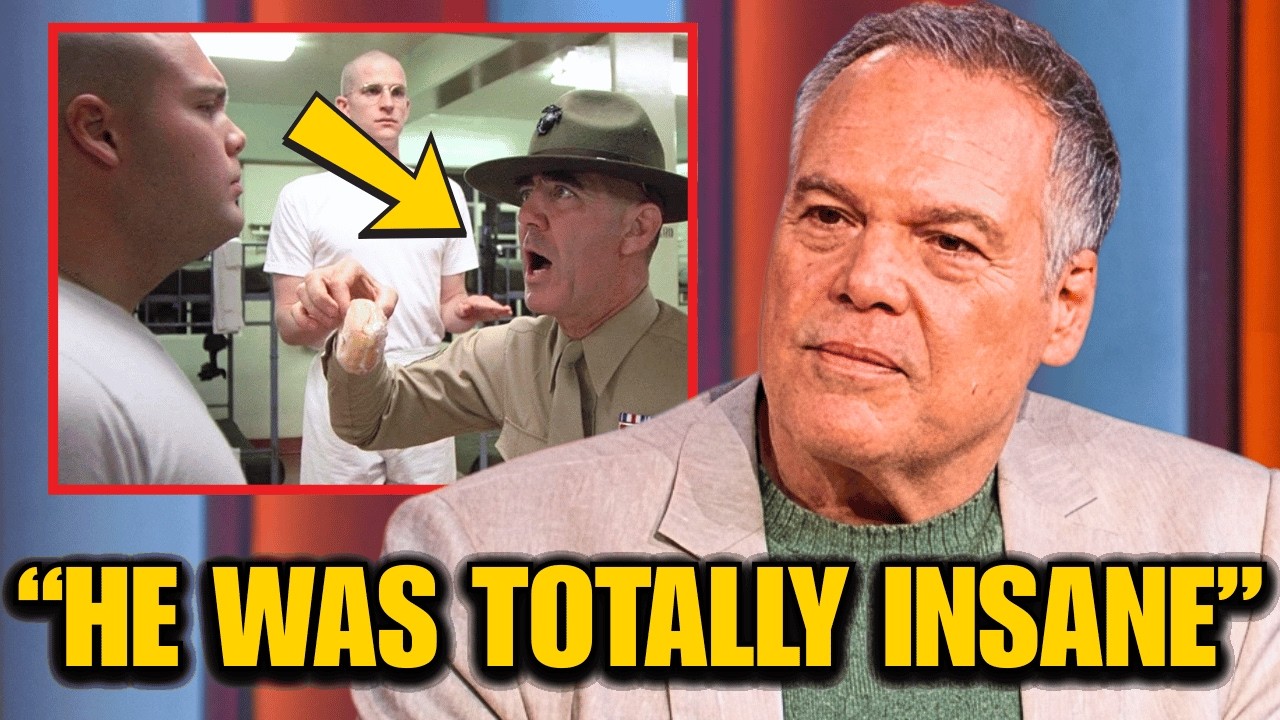 Between takes, he would gasp in pain, bending over to catch his breath. The moment the director called action, he transformed into a terrifying, unstoppable force. Over 50 percent of Hartman’s iconic dialogue was improvised by Ermey, including the infamous jelly donut scene.
Kubrick, known for controlling every word, made an exception for Ermey’s raw authenticity.
Vincent D’Onofrio’s transformation into Private Pyle nearly destroyed him. He gained 70 to 75 pounds in just a few months by eating constantly and avoiding exercise. Kubrick kept him isolated from the other actors, forbidding friendships on set to heighten Pyle’s vulnerability.
D’Onofrio lived in character, never interacting normally with the cast. The bathroom scene, one of the most haunting in cinema history, took weeks to film. The lighting alone required seven days to perfect.
D’Onofrio later admitted the process was physically and mentally exhausting, leaving him to spend months recovering after filming ended.
Matthew Modine, who played Private Joker, kept a meticulous diary throughout production. His entries read like a war log, documenting the exhaustion, the frustration, and the sheer number of takes Kubrick demanded. Some scenes were shot more than 100 times.
Modine revealed that Kubrick deliberately shot the Vietnam battle sequences first, before the boot camp scenes. This meant the actors were thrown into chaos and ruin without any emotional preparation. The disorientation they felt on set mirrored the confusion of actual combat, making their performances unnervingly real.
The Vietnam half of the film was not shot in Vietnam. Kubrick transformed Beckton Gas Works in England into a massive destroyed city, spending millions to blow up buildings, place debris, and create a lifelike war zone. He hired real Vietnam veterans as extras, whose genuine reactions to explosions and gunfire forced the actors to stay on edge.
 Some scenes were so visually and emotionally overwhelming that Kubrick himself cut them from the final film. The set was physically dangerous, with smoke, falling debris, and constant noise making every moment a challenge.
But what may shock audiences most is the secret rebellion that unfolded behind Kubrick’s back. The cast, under immense pressure and isolation, began swapping props, altering lines, and injecting small bits of chaos into their performances. These improvised moments were so natural that Kubrick, notorious for controlling every detail, never caught them.
Many of these unscripted actions made it into the final movie, adding a layer of spontaneity that Kubrick’s meticulous planning could not achieve. Modine’s upcoming 2025 documentary, A Modern Art Masterpiece: The Untold Story of Full Metal Jacket, includes a rare audio clip of Kubrick laughing at a prank the cast played on him. That single laugh redefines the director’s legacy on this film, revealing a collaboration between his iron control and the actors’ creative defiance.
The cast used these secret pranks to maintain their sanity and bond with one another. Modine has said that Joker’s sarcasm and wit were directly inspired by the real-life banter and trickery happening off camera. D’Onofrio added that these small acts of rebellion broke the constant tension, giving the ensemble the emotional fuel to endure the grueling physical demands.
The pranks were not acts of disrespect but survival mechanisms that ultimately made the film feel more alive.
Kubrick’s decision to film the chaotic Vietnam scenes first was a psychological masterstroke. By forcing the actors into simulated combat before they ever stepped into the structured boot camp, he ensured that their performances in the training sequences carried a haunted, weary quality. The exhaustion and disorientation they felt bled into every scene, making the film’s first half feel terrifyingly real.
The director’s obsession with control extended to the smallest details: he demanded perfect lighting, precise gestures, and emotional authenticity that could only come from pushing actors past their limits.
 Ermey’s performance remains the gold standard for drill instructors in cinema. His broken ribs, his improvisation, and his refusal to let physical pain diminish his presence set a new benchmark for realism. The cast has now confirmed that Ermey’s tirades were not just acting but a reflection of his own military experience, and that Kubrick wisely allowed him to run wild within the script’s framework.
The result is a character so vivid that audiences still feel the sting of his words decades later.
The toll on D’Onofrio was severe. Gaining 75 pounds rapidly changed his metabolism, his breathing, and his entire physicality. He described feeling trapped in his own body, much like Pyle himself.
The isolation Kubrick enforced meant D’Onofrio had no one to lean on, forcing him to channel every ounce of loneliness into the character. The bathroom scene, where Pyle finally snaps, required D’Onofrio to be in a state of genuine psychological distress. The weeks of filming, combined with the oppressive lighting setup, pushed him to the edge of a breakdown.
Modine’s diary provides a day-by-day account of the madness. He recorded how the cast would sometimes laugh hysterically between takes to cope, then snap back into intense focus. The brotherhood that formed among the actors was a direct response to Kubrick’s authoritarian approach.
They found ways to support each other silently, through gestures, inside jokes, and small acts of kindness that the director never saw. This camaraderie mirrored the bonds of real Marines, adding another layer of truth to the film.
The Vietnam set at Beckton Gas Works was a feat of engineering and destruction. Kubrick spent millions to create a believable war zone, complete with burned-out buildings, rubble, and smoke machines. The real veterans hired as extras would sometimes react to explosions in ways that surprised the actors, forcing them to stay in character and respond naturally.
 Kubrick’s decision to delete certain scenes, as confirmed by cast members, shows that even he recognized when the chaos became too overwhelming to serve the story.
The secret pranks are now being revealed as a crucial element of Full Metal Jacket’s success. Modine’s documentary captures audio of Kubrick’s genuine laughter at a cast prank, humanizing the director often portrayed as a cold perfectionist. The actors’ defiance was not rebellion but a form of creative collaboration.
By injecting spontaneity into Kubrick’s controlled environment, they made the film feel less staged and more alive. These hidden moments are what give the movie its timeless edge.
For decades, the stories of broken ribs, extreme weight gain, and secret rebellions remained buried under the weight of Kubrick’s legend. Now, with Modine’s documentary and new interviews, the full picture emerges. Full Metal Jacket was not just a film about the dehumanizing nature of war.
It was a production that became a war in itself, pushing every participant to their breaking point. And in that crucible, the cast found ways to fight back, to laugh, and to create something that still resonates as one of the most brutally honest war films ever made.
The revelations are staggering. R. Lee Ermey acting through shattered ribs.
Vincent D’Onofrio risking his health for authenticity. The cast secretly undermining Kubrick’s control to save their own sanity. These are not just behind-the-scenes anecdotes.
They are the raw, untold history of a masterpiece born from chaos. As Modine’s documentary prepares to debut in 2025, audiences will finally see the human faces behind the helmets and hear the laughter that echoed between the explosions.
What shocked you most? The drill instructor who refused to stop despite his injuries, the actor who nearly lost his mind to gain seventy-five pounds, or the secret pranks that fooled one of cinema’s most demanding directors? The truth is now on the record, and it changes everything we thought we knew about Full Metal Jacket.