Family Demanded Everything in Court—Then Military Police Stormed In When I Handed the Judge a File
The first lie was spoken before my father’s coffin had been lowered into the ground.
My brother stood beneath a black umbrella, rain running from its edges in silver threads, and told the funeral director I had no right to receive the folded flag.
“She hasn’t been part of this family for twenty years,” Raymond said.
The words carried farther than he intended.
One of the soldiers looked at me.
He was young enough to have been born after my first deployment, but he recognized the posture. The stillness. The way my hands rested at my sides without fidgeting, even as my mother stared through me as though I were something the rain had washed onto her shoes.
The funeral director lowered his voice.
“Mr. Carter, the flag is presented according to the family’s instructions.”
“My mother is next of kin.”
Raymond nodded toward Evelyn Carter, who stood rigid beneath a lace-edged umbrella. At seventy-six, she still wore grief like formal jewelry—carefully chosen, visible from a distance, and never allowed to disturb her makeup.
My mother did not look at the coffin.
She looked at me.
“Give it to Raymond,” she said. “He stayed.”
The honor guard commander hesitated.
Then a voice came from behind us.
“That is not what Colonel Carter requested.”
Every face turned.
Thomas Avery, my father’s attorney, approached through the rain with a cane in one hand and a sealed envelope in the other. He was eighty-one, narrow as a fence post, and carried himself with the stubborn dignity of a man who had spent half a century watching wealthy people confuse volume with authority.
He stopped beside the grave.
“Arthur left written instructions,” he said. “The flag goes to his daughter, Genevieve.”
Raymond’s jaw tightened.
My mother’s lips parted by half an inch.
That was all.
But I knew them both well enough to understand what had just happened.
The funeral had ended.
The war had begun.
The soldiers lifted the flag from my father’s coffin. Each fold was precise, the blue field disappearing beneath disciplined hands until only the white stars remained.
When the commander stepped toward me, the rain struck his dress cap in soft, steady taps.
“On behalf of the President of the United States, the United States Army, and a grateful nation…”
I heard the words, but my attention had fixed on the coffin.
Colonel Arthur Carter had been difficult, proud, and emotionally economical. He could organize a disaster zone in six hours but needed three days to say he was sorry. He had taught me to clean a rifle before he taught me to change a tire. He had attended my commissioning ceremony, missed my wedding, and called me every Sunday for eleven years without once saying he was lonely.
Now he lay beneath polished walnut while my brother watched the flag settle into my hands.
Raymond stepped close enough for me to smell peppermint and expensive cologne.
“You always did know how to make an entrance,” he murmured.
I kept my eyes on the flag.
“I came to bury Dad.”
“You came for the house.”
I finally looked at him.
Raymond Carter was fifty-two and still handsome in the careful, maintained way of men who believe appearance is a form of evidence. His silver hair had been cut that morning. His suit was too new for a funeral. A tiny gold anchor gleamed on his tie, though he had never served a day in uniform and became seasick on ferries.
Behind him, reporters from the local paper huddled near the cemetery gate.
Raymond had invited them.
He wanted the town to see him grieving.
He wanted witnesses.
“I don’t want anything from you,” I said.
His smile showed no warmth.
“That’s good, Jenny. Because there’s nothing here for you.”
He had not called me Jenny since we were children.
Back then, he used it only when he wanted something.
My mother turned away before the coffin began to descend. Raymond followed her, guiding her with one hand at the small of her back.
To anyone watching, he looked protective.
Only I noticed the way his fingers pressed hard enough to wrinkle her coat.
Thomas Avery waited until they had crossed the cemetery.
Then he leaned toward me.
“Your father expected trouble.”
I looked down at the sealed envelope in his hand.
“How much trouble?”
Thomas glanced at the reporters, then at a dark SUV idling beyond the iron gates.
“Enough that he asked me not to discuss his will anywhere your brother could control the doors.”
A coldness moved through me that had nothing to do with the rain.
“Where, then?”
“My office. Nine tomorrow morning.”
He pressed the envelope into my hand.
It contained only one sentence, written in my father’s unmistakable block letters.
Trust the house. Not the family.
That night, someone broke into my motel room.
Nothing was stolen.
But the folded flag had been taken from its case, unfolded across the bed, and left beneath a dead blackbird.
Pinned to the bird’s wing was a note.
Leave before the will is read.
I stood in the doorway without moving.
The motel’s neon sign flashed red through the curtains, bathing the room in pulses of color. Red bedspread. Darkness. Red carpet. Darkness.
The air smelled of bleach, wet feathers, and copper.
Most people would have called the police immediately.
I closed the door first.
Then I photographed everything.
The lock had not been forced. The intruder had used a key or a bypass tool. The bird had been killed elsewhere; there was no blood spatter on the walls. The note had been typed on heavy cotton paper, the sort sold at stationery stores to people who still believed intimidation deserved quality materials.
I lifted the edge of the flag with a tissue.
Beneath it, pressed into the bedspread, was a partial boot print.
Military tread.
But not a current service boot.
Too broad through the heel.
Too shallow in the center.
A costume-store imitation, perhaps, or an old surplus pair worn by someone who wanted me to notice.
That was the first mistake.
The second was believing I would be frightened by a uniform.
I called the sheriff’s office.
Deputy Lena Ortiz arrived thirteen minutes later with rain on her shoulders and a hand resting near her holster. She was forty, compact, observant, and had the cautious eyes of someone who had spent too many years hearing half-truths from both sides of domestic disputes.
She surveyed the room.
“This about the funeral?”
“Probably.”
“You have enemies?”
“Professionally or personally?”
She glanced at me.
“That answer usually means yes.”
She photographed the boot print, bagged the note, and called animal control for the bird. When she reached for the flag, I stopped her.
“I’ll handle it.”
Something in my voice made her withdraw her hand.
I folded it myself.
Not perfectly. No one folds a burial flag perfectly alone. But I did it slowly, pressing each edge flat, restoring dignity to something meant to be desecrated.
Lena watched.
“You served?”
“Army.”
“How long?”
“Twenty-four years.”
Her expression shifted, not into admiration, but recalibration.
“Rank?”
“Colonel.”
The room fell quiet except for the buzzing neon.
Lena looked again at the fake boot print.
“Your family know that?”
“They know I was in the Army.”
“That isn’t what I asked.”
“No,” I said. “They don’t know much else.”
She gave me her card.
“Maybe they should.”
The next morning, Thomas Avery’s office smelled of dust, cedar, and burnt coffee. The building had once been a bank. Thick stone walls muffled the traffic outside, and the original vault door still stood behind reception, painted green and used to store estate files.
Raymond arrived seven minutes late.
My mother came with him.
So did Raymond’s wife, Claire, a thin woman with tired eyes and a diamond ring large enough to look defensive. Their son, Austin, followed while typing on his phone. At twenty-six, he had inherited Raymond’s confidence without acquiring the discipline needed to support it.
Thomas closed the conference room door.
“No recording,” he said.
Austin did not look up.
“I’m taking notes.”
“You’re filming.”
The phone lowered.
Raymond smiled as if indulging a servant.
“Thomas, let’s not make this theatrical.”
“You brought a newspaper photographer to a private funeral.”
“That was community interest.”
“You told him Genevieve was expected to cause a scene.”
All eyes turned toward me.
I sat at the far end of the table with my father’s flag case beside my chair.
Raymond adjusted his cuff.
“I said emotions might run high.”
Thomas opened a thick folder.
“Arthur Carter’s will is straightforward. Certain financial accounts are divided among the surviving spouse and children. Personal effects are distributed according to a separate memorandum.”
My mother’s shoulders loosened.
“The residence known as Breakwater House, including its land, fixtures, archives, outbuildings, coastal rights, and all contents not otherwise designated…”
Thomas paused.
Rain touched the old windows.
“…is left solely to Genevieve Anne Carter.”
My mother made a sound like air leaving a punctured tire.
Claire covered her mouth.
Austin finally stopped touching his phone.
Raymond stared at Thomas.
“No.”
Thomas continued as if no one had spoken.
“The transfer is immediate upon probate.”
“No,” Raymond repeated. “Read it again.”
“I have read it correctly.”
“That house belongs to the family.”
“It belonged to Arthur.”
“I maintained it.”
“You submitted invoices to him.”
“I managed the property.”
“You attempted to list it for sale twice without authorization.”
Raymond’s palm struck the table.
The coffee cups rattled.
My mother flinched.
Then she looked at me with an expression I remembered from childhood—the one she wore whenever Raymond broke something and she had already decided I would be blamed.
“You did this,” she said.
I met her eyes.
“I didn’t know.”
“You filled his head with poison.”
“I spoke to Dad once a week.”
“Exactly.”
She leaned forward. Beneath the powder, age and rage pulled at her face.
“While your brother was here replacing the roof, driving him to appointments, handling taxes, speaking to contractors, you called from wherever the Army sent you and made him feel important.”
“He was important.”
“To you, perhaps, when you needed his approval.”
Raymond placed a calming hand on her arm.
It was an excellent performance.
He waited until she had said the cruel thing, then became the reasonable son.
“Mother, stop. This is what she wants.”
I looked at him.
“What do I want?”
“To divide us. To punish us for building lives while you chased medals.”
Thomas closed the file.
“Raymond.”
“No. She needs to hear it.”
He rose from his chair.
“You left. Dad got sick, and you left. Mother needed help, and you left. The furnace failed, the bluff eroded, the insurance doubled, and you were gone. Now you come back wearing black and carrying a flag as if sacrifice belongs only to you.”
His face had reddened, but the anger was not entirely false.
That mattered.
Raymond had stayed.
He had also billed my father’s estate $186,000 over six years for “property management services,” but he had stayed.
People rarely become dangerous because every part of their grievance is invented.
They become dangerous when one true injury gives permission to a thousand lies.
“I didn’t ask Dad for the house,” I said.
“Then give it up.”
The room stilled.
My mother seized the opening.
“Sign it over to Raymond.”
“No.”
The word was quiet.
That made it land harder.
Raymond’s mouth flattened.
“You just said you didn’t want it.”
“I said I didn’t ask for it.”
“What’s the difference?”
“My father made a decision.”
“He was medicated.”
Thomas’s eyes sharpened.
“Be careful.”
“He had dementia.”
“He did not.”
“He was confused.”
“He passed two competency evaluations.”
“Arranged by whom?”
“An independent geriatric specialist.”
“Paid by Genevieve?”
I felt something shift beneath the conversation.
This was not outrage.
It was preparation.
Raymond had arrived with a case already built.
He opened his leather briefcase and removed a stack of documents.
“We filed a petition yesterday challenging the will on grounds of undue influence, diminished capacity, and coercion.”
Thomas did not reach for the papers.
“You filed before the will was read.”
“I knew what she’d done.”
“You guessed.”
“I protected my family.”
Austin angled his phone toward me again.
This time, I let him record.
Raymond slid another paper across the table.
“We’re also seeking a temporary restraining order preventing Genevieve from entering the property.”
My mother watched me closely.
They expected anger.
Perhaps even hoped for it.
A decorated former officer threatening her grieving family would make a compelling headline.
I placed both hands flat on the table.
“On what grounds?”
Raymond’s smile returned.
“Your history of instability.”
Thomas went still.
“What history?”
Raymond withdrew a photocopied medical form.
Across the top was the name of an Army behavioral health clinic.
My name appeared beneath it.
The diagnosis box had been marked in black ink.
Post-traumatic stress disorder. Dissociative episodes. Potential threat response under familial stress.
For the first time that morning, my pulse changed.
Not because the diagnosis was accurate.
Because the document was classified.
Or had once been.
The original assessment belonged to an internal review following an operation in Kunar Province fourteen years earlier. It contained details sealed under military authority. Fewer than twelve people should ever have seen it.
Raymond mistook my silence for fear.
“There she is,” he said softly. “There’s the real Genevieve.”
My mother turned toward me.
“Is it true?”
The question might have hurt if she had sounded concerned.
Instead, she sounded relieved.
She had found a diagnosis large enough to carry every accusation she had ever made.
Thomas reached for the page.
“Where did you get this?”
“Anonymous source.”
“That is not an answer.”
“It arrived by mail.”
“When?”
“Last month.”
Before my father died.
Before the funeral.
Before the will was read.
I looked at the lower-right corner.
The copy bore a faint numerical watermark, almost invisible beneath the toner.
Document tracking code.
Every classified printout carried one.
I memorized the digits.
Then I looked at Raymond.
“You should withdraw that filing.”
His eyebrows lifted.
“Or what?”
“Or the house will become the least important thing you lose.”
Claire whispered his name.
Raymond laughed.
It was too loud for the room.
“There it is again. The threat.”
“No,” I said. “That was advice.”
By noon, the story was online.
ESTRANGED SOLDIER DAUGHTER INHERITS MILLION-DOLLAR COASTAL ESTATE
By three, the headline had changed.
FAMILY QUESTIONS MENTAL FITNESS OF FORMER ARMY OFFICER IN BITTER WILL DISPUTE
Austin posted a video from the conference room. He edited out the part where Thomas questioned the source of the medical record. He kept my sentence about Raymond losing more than the house.
The clip was shared eleven thousand times in forty-eight hours.
Strangers decided I was greedy.
A radio host called me “another damaged veteran being handed a weaponized victim narrative.”
Someone spray-painted TRAITOR across the wooden gate at Breakwater House.
The restraining order was granted.
I could not enter the home my father had left me.
Raymond moved in the next morning.
He told reporters he was “protecting family property.”
My mother stood beside him on the front steps, wrapped in my father’s old wool coat, and said she feared for her safety.
I watched the interview from the motel television.
Behind them, through the open front door, two men carried archive boxes down the hallway.
I paused the screen.
Zoomed in.
Each box had once been stored in my father’s basement map room.
Thomas had told me the room remained locked.
Only my father and I knew the combination.
At least, that was what I had believed.
I called Deputy Ortiz.
“They’re removing documents from the house.”
“Probate records?”
“Military records.”
“What kind?”
“The kind that do not belong to the estate.”
There was a pause.
“Can you prove that?”
“Not without entering the house.”
“And the judge’s order says you can’t.”
“Correct.”
“You sound very calm about that.”
“I’m working on alternatives.”
“What alternatives?”
I looked at the watermark number I had written on the motel notepad.
“Ones my brother won’t enjoy.”
The Department of Defense hotline transferred me four times.
The fifth person did not introduce himself.
I gave him my full name, service number, the watermark code, and the title of the operation associated with the leaked assessment.
The line became silent.
Not dead.
Silent.
A practiced silence, the kind that meant someone had stopped typing because the information on his screen had changed the shape of the conversation.
“Colonel Carter,” he said, “where are you currently located?”
“Port Lawson, North Carolina.”
“Are you in possession of the document?”
“My brother is.”
“How did he obtain it?”
“He claims it was mailed anonymously.”
“Do you believe him?”
“No.”
“Do you have reason to believe additional materials are compromised?”
I watched the frozen television image of the men carrying boxes from Breakwater House.
“Yes.”
“Do not attempt recovery.”
“I wasn’t planning to.”
“Do not alert the possessor.”
“He has already filed the document in county court.”
This time the silence was longer.
“Under seal?”
“Public attachment.”
The man exhaled once.
“Colonel, you will receive contact instructions.”
“From whom?”
The line disconnected.
Two hours later, a woman named Major Naomi Bell called from Fort Bragg.
Her voice was low and exact.
“Ma’am, do you remember a Sergeant First Class Miles Danner?”
I closed my eyes.
The motel room disappeared.
For a moment, I smelled diesel, dust, and the scorched rubber of a convoy tire.
“Yes.”
“Mr. Danner left military service eight years ago. He has since worked as a private security consultant.”
“For whom?”
“Most recently, a shell company called Atlantic Heritage Recovery.”
The name meant nothing.
Then Naomi added, “The registered office is shared with Carter Coastal Management.”
My brother’s company.
I sat down on the edge of the bed.
Miles Danner had once been my communications specialist.
He was brilliant, reckless, and loyal until loyalty cost him something.
During the Kunar operation, he bypassed a security protocol to contact a civilian source. The breach revealed our extraction route. Two soldiers were killed in the ambush that followed.
Danner blamed me when the investigation ended his career.
I had testified truthfully.
He had never forgiven me.
“How long has he worked for Raymond?”
“We don’t know.”
“What does Atlantic Heritage recover?”
“Officially? Maritime records and historical documents.”
“And unofficially?”
“We’re still determining that.”
I looked again at my father’s note.
Trust the house. Not the family.
“What was my father involved in?”
Naomi did not answer immediately.
“Your father contacted Army Criminal Investigation Division six months ago.”
The floor seemed to tilt beneath me.
“Why?”
“He reported that someone had offered to buy archived material from his military collection. When he refused, items began disappearing.”
“What items?”
“Field logs. Signal maps. Personnel lists. Several retired encryption components.”
My father had never mentioned any of it.
Not during our Sunday calls.
Not when his voice grew weaker.
Not even three weeks before his death, when he said, “The house remembers more than people do.”
I had thought he was being sentimental.
He had been warning me.
“Did he name Raymond?”
“No.”
“Danner?”
“No.”
“He must have suspected someone.”
“He did.”
“Who?”
Naomi’s answer came carefully.
“You.”
The word entered the room and removed all sound.
I stared at the wall.
“Why?”
“Your credentials were used to access a restricted archival database four times in the last year.”
“I retired eighteen months ago.”
“We know.”
“Then you know I didn’t do it.”
“We know your credentials were used.”
The distinction was deliberate.
“Am I under investigation?”
“You were.”
“Were?”
“Your father gave CID access to the house’s internal surveillance system.”
I thought of the old coastal home with its salt-streaked windows and groaning pipes.
“What surveillance system?”
“That,” Naomi said, “is what we need you to help us understand.”
Breakwater House had been built in 1912 on a granite rise above the Atlantic. It was not beautiful in the easy way of beach homes designed for rental brochures. Its roofline was severe. Its cedar shingles had silvered with age. The north side faced storms directly, and every winter the windows rattled like teeth.
My father loved it because it had endured.
He bought it after retiring from the Army and converted the basement into an archive. Unit rosters. declassified maps. oral histories. letters from men whose children had never known what their fathers sounded like before war.
Raymond called it junk.
Then, two years earlier, he discovered collectors would pay thousands for original military documents.
That was when his interest changed.
At the preliminary hearing, every bench was occupied.
The case had become local entertainment.
My mother entered on Raymond’s arm. Claire followed with a leather folder clutched against her chest. Austin wore a navy suit and the solemn expression of a man arriving at an event he intended to monetize later.
Raymond’s attorney was Celia Dunn, a former prosecutor with polished white hair and a voice that could make an accusation sound like a civic duty.
She presented photographs of me in uniform.
Not heroic ones.
The worst ones.
Me stepping from an aircraft after forty-eight hours without sleep. Me shouting orders during flood relief. Me staring past the camera at a memorial service with my face emptied by grief.
“Colonel Carter’s service is honorable,” Celia said. “But honorable service does not eliminate psychological injury.”
She called my mother first.
Evelyn walked to the witness stand in black heels.
Celia approached gently.
“Mrs. Carter, were you afraid when your daughter returned?”
My mother lowered her eyes.
“I didn’t know who she was anymore.”
“Had she threatened the family?”
“Not in direct words.”
“What did she do?”
“She watched us.”
A murmur moved through the gallery.
Celia let the silence grow.
“How?”
“She notices everything. Doors. Windows. Who is standing where. She never relaxes. When she looks at you, it feels as though she’s deciding what you might do.”
That was true.
It was also not evidence of madness.
But truth, placed inside the right frame, can become a convincing lie.
“Did your husband fear her?” Celia asked.
My mother hesitated.
Then she nodded.
I looked at her.
She did not look back.
Celia displayed an email allegedly written by my father.
Genevieve has become fixated on the house. I worry what she might do if she believes I have chosen Raymond.
Thomas leaned toward me.
“Have you seen that before?”
“No.”
The email was dated four months earlier.
On that date, I had been in the hospital recovering from spinal surgery.
My father had called twice.
He never mentioned the house.
Celia continued.
“Mrs. Carter, what do you believe Arthur intended?”
“He wanted Raymond to have the home. Raymond has children. A family. A future.”
“And Genevieve?”
My mother’s fingers tightened around the tissue in her hand.
“Genevieve chose the Army.”
There it was.
Not hatred.
Not even greed.
The old wound beneath everything.
When I was nineteen, my mother begged me not to enlist.
Her younger brother had died in Vietnam. His body came home beneath a flag, and part of her had remained at that train station forever.
My career had not merely frightened her.
To her, every promotion had been proof that I kept choosing the institution that had taken him.
She believed she had been abandoned twice by the same uniform.
That did not excuse what she was doing.
But it explained why she could do it without believing herself cruel.
When cross-examination began, Thomas stood slowly.
“Mrs. Carter, did Arthur ever tell you he feared Genevieve?”
“Yes.”
“When?”
She looked toward Raymond.
It lasted less than a second.
But the courtroom saw it.
“Last spring.”
“Where?”
“At home.”
“What room?”
“The kitchen.”
“What time of day?”
“I don’t remember.”
“Was Raymond present?”
“I don’t remember.”
“Did Arthur tell you Genevieve threatened him?”
“He said she was becoming intense.”
“That wasn’t my question.”
Celia rose.
“Argumentative.”
“Sustained.”
Thomas changed direction.
“Mrs. Carter, did you know your son billed Arthur’s estate for property management?”
“I knew Raymond helped.”
“Did you know the total amount?”
“No.”
“One hundred eighty-six thousand dollars.”
Raymond shifted in his seat.
My mother’s face changed.
Not dramatically.
Just enough.
Thomas continued.
“Did you know Raymond attempted to sell Breakwater House to a private buyer nine months before Arthur’s death?”
“No.”
“Did you know the buyer was Atlantic Heritage Recovery?”
Raymond’s attorney stood so quickly her chair struck the floor.
“Objection. Relevance.”
Thomas looked at the judge.
“It goes directly to financial motive.”
The judge allowed the question.
My mother stared at Raymond.
He kept his eyes forward.
“No,” she whispered.
That was the first crack.
The next came when Raymond testified.
He spoke beautifully.
He described repairing storm damage, coordinating nurses, cooking meals, changing lightbulbs, and sitting beside my father through long nights of confusion.
Some of it was true.
He had been there.
He had also photographed my father’s medication schedule and used it to argue that morphine had rendered him incompetent on the day he signed the will.
Thomas placed the pharmacy records on the screen.
“Mr. Carter, your father was prescribed morphine on March twelfth?”
“Yes.”
“And he signed the revised will March fifteenth?”
“Yes.”
“So your position is that he lacked capacity.”
“Absolutely.”
Thomas adjusted his glasses.
“Would it surprise you to learn the prescription was never filled?”
Raymond blinked.
Celia looked down at her notes.
Thomas enlarged the pharmacy record.
Prescription canceled by patient.
The gallery stirred.
Raymond recovered quickly.
“He had other medications.”
“None associated with cognitive impairment.”
“He was eighty.”
“So is your attorney.”
A laugh escaped from the rear bench.
The judge struck her gavel.
Thomas approached the witness stand.
“Mr. Carter, where did you obtain Colonel Carter’s military medical file?”
“It was mailed to me.”
“By whom?”
“I don’t know.”
“Did the envelope have a postmark?”
“I threw it away.”
“Did it include a letter?”
“No.”
“So a classified psychological document concerning your estranged sister simply appeared in your mailbox?”
“I didn’t know it was classified.”
“You knew it was private.”
“I knew it was relevant.”
“To the will?”
“To public safety.”
Thomas held his gaze.
“Did Miles Danner send it?”
Raymond’s face did not collapse.
That would have been too obvious.
Instead, his eyes moved toward the gallery.
Third row.
Left side.
A broad-shouldered man in a brown jacket sat near the aisle.
His hair had gone gray, but I recognized the scar beneath his right ear.
Miles Danner stood.
Then he walked out.
I did not turn to follow him.
Neither did the two plainclothes investigators seated near the rear doors.
They were already moving.
Raymond looked back at Thomas.
“I don’t know that name.”
The answer was smooth.
Too smooth.
The judge recessed the hearing until the following week.
Outside, reporters swarmed the courthouse steps.
Celia positioned Raymond between my mother and Claire.
“Mr. Carter,” a journalist shouted, “did you knowingly submit classified material?”
“No,” he replied. “My only concern is protecting my mother from a woman trained in violence.”
Cameras turned toward me.
I continued down the steps.
Austin blocked my path with his phone.
“Anything to say to the family you abandoned?”
Deputy Ortiz moved closer, but I raised one hand.
Austin grinned.
He believed he had won something.
I looked directly into his camera.
“Ask your father why he sold photographs of the basement archives three months before Grandpa died.”
The grin vanished.
Behind him, Raymond stopped speaking.
It was the first moment of recognition.
Not full recognition.
Not yet.
But his shoulders drew back, and his face lost color beneath the courthouse lights.
He understood that I knew about Atlantic Heritage.
He did not yet understand how much.
That night, my mother came to the motel.
She stood outside my door in a raincoat, holding an old biscuit tin.
I let her in.
She did not sit.
For several seconds, she studied the folded flag case on the dresser.
“Your father used to polish his shoes the night before you called,” she said.
I said nothing.
“He pretended he didn’t.”
Her fingers tightened around the tin.
“He would say, ‘Genevieve is calling tomorrow,’ as if you were an inspection.”
A tired smile touched her mouth, then disappeared.
“Why didn’t he leave the house to Raymond?”
“You should have asked him.”
“I did.”
“What did he say?”
“He said Raymond loved what the house was worth. You loved what it remembered.”
The neon sign outside flickered blue across her face.
She set the biscuit tin on the bed.
Inside were old keys, receipts, photographs, and a brass compass that had belonged to my grandfather.
At the bottom lay a small black device no larger than a deck of cards.
“What is this?”
“I found it in Arthur’s desk after he died. Raymond told me it was a hearing-aid charger.”
It was not.
I turned it over.
A narrow data port ran along one side. On the back, my father had scratched two letters.
G.C.
“For me?”
My mother’s mouth trembled.
“I don’t know.”
“Yes, you do.”
She looked at the door.
Then back at me.
“Raymond said if you got the house, you would sell it and disappear again. He said I would have nowhere to live.”
“You have a life tenancy under Dad’s will.”
She looked confused.
“Thomas explained it during the reading.”
“Raymond took me outside before that part.”
The room went very still.
My mother sank into the chair beside the window.
“He said the will left me nothing.”
I sat across from her.
“What did he ask you to do?”
Her eyes filled, but no tears fell.
“To tell the truth as I remembered it.”
“That isn’t what I asked.”
Her gaze dropped.
“He gave me the email.”
“The one supposedly from Dad.”
She nodded.
“Did Dad write it?”
“I don’t know.”
“Yes, you do.”
Her voice became small.
“No.”
The word barely crossed the space between us.
There are victories that feel like defeat.
I had wanted the lie exposed.
I had not wanted to watch my mother understand that her son had used her fear to make her commit perjury.
“He said it was what Arthur meant,” she whispered. “He said legal language mattered less than intent.”
“And you believed him?”
“I needed to.”
That was the most honest thing she had said in years.
I picked up the black device.
“Did Raymond know you took this?”
“No.”
“Then you can’t go home tonight.”
Her head lifted.
“He would never hurt me.”
“Maybe not intentionally.”
The sentence frightened her more than an accusation would have.
I called Deputy Ortiz.
While we waited, I connected the device to my laptop.
The screen remained black for twelve seconds.
Then a password field appeared.
Beneath it was a clue.
The day she came home.
I typed the date of my return from my first deployment.
The device unlocked.
Folders filled the screen.
Video files.
Audio.
Scanned ledgers.
Photographs of missing archive items.
My father had not merely installed surveillance.
He had built a case.
The earliest recording showed Raymond entering the basement with Miles Danner.
The date was eleven months before my father died.
Danner photographed documents while Raymond opened cabinets.
“This one?” Raymond asked.
“Not enough value.”
“How much for the signal notebooks?”
“Depends what’s inside.”
“They’re old.”
“Old doesn’t mean useless.”
Raymond looked toward the basement stairs.
“He thinks he’s preserving history.”
Danner smiled.
“History is just intelligence that has lost its security stamp.”
The next video showed my father confronting Raymond in the map room.
Arthur Carter was thinner than I remembered, one hand braced against the table.
“You’ve been selling from the archive.”
Raymond closed the cabinet.
“I’ve been preserving value.”
“You stole.”
“I recovered costs.”
“You billed me for those costs.”
“You left me to keep this place standing.”
“It was never yours.”
Raymond’s face changed.
Not into rage.
Into something younger.
“You gave everything important to her.”
My father’s expression softened.
That seemed to anger Raymond more.
“I gave Genevieve nothing she didn’t earn.”
“And me?”
“I gave you chance after chance.”
“You gave me errands.”
“I gave you trust.”
“You gave her your pride.”
The words landed harder than any shout.
Raymond stepped closer.
“You stood when she entered a room. Did you know that? Even after you got sick. You straightened your back when her name came up.”
My father looked at him for a long time.
“I was proud of you too.”
“No. You were grateful.”
“Raymond—”
“I don’t want gratitude.”
“What do you want?”
“For once?” Raymond’s voice broke. “I want to be the child you would have followed into a fire.”
The video ended there.
My mother covered her face.
I understood then that the house was never the true inheritance.
Raymond wanted proof that our father had valued him most.
Money had simply become the language he used to demand it.
The final folder was labeled FOR GENEVIEVE—COURT ONLY.
Inside was a scanned affidavit signed by my father, a list of compromised records, and a video filmed three weeks before his death.
He sat in the library beneath the brass ship clock, a blanket over his knees.
“Genevieve,” he began, “if you’re seeing this, Raymond has contested the will.”
He coughed into a handkerchief, waited, then continued.
“Your brother is not evil. He is frightened. Frightened men do terrible accounting. They turn every kindness into debt and every disappointment into theft.”
My throat tightened.
“I should have stopped him earlier. I kept believing shame would correct what love had failed to reach.”
He looked toward someone off camera.
Then back at the lens.
“The material he took is not merely valuable. Some of it identifies former interpreters and local partners whose families remain vulnerable. I reported the breach. I also delayed the investigation.”
He lowered his eyes.
“Because he is my son.”
My mother made a broken sound beside me.
“That delay is my dishonor,” he said. “Do not inherit it.”
He leaned closer.
“The house is yours because you are the only one I trust to return what was taken. Not because I loved Raymond less. Because you understand that duty is what remains when love becomes inconvenient.”
The screen went black.
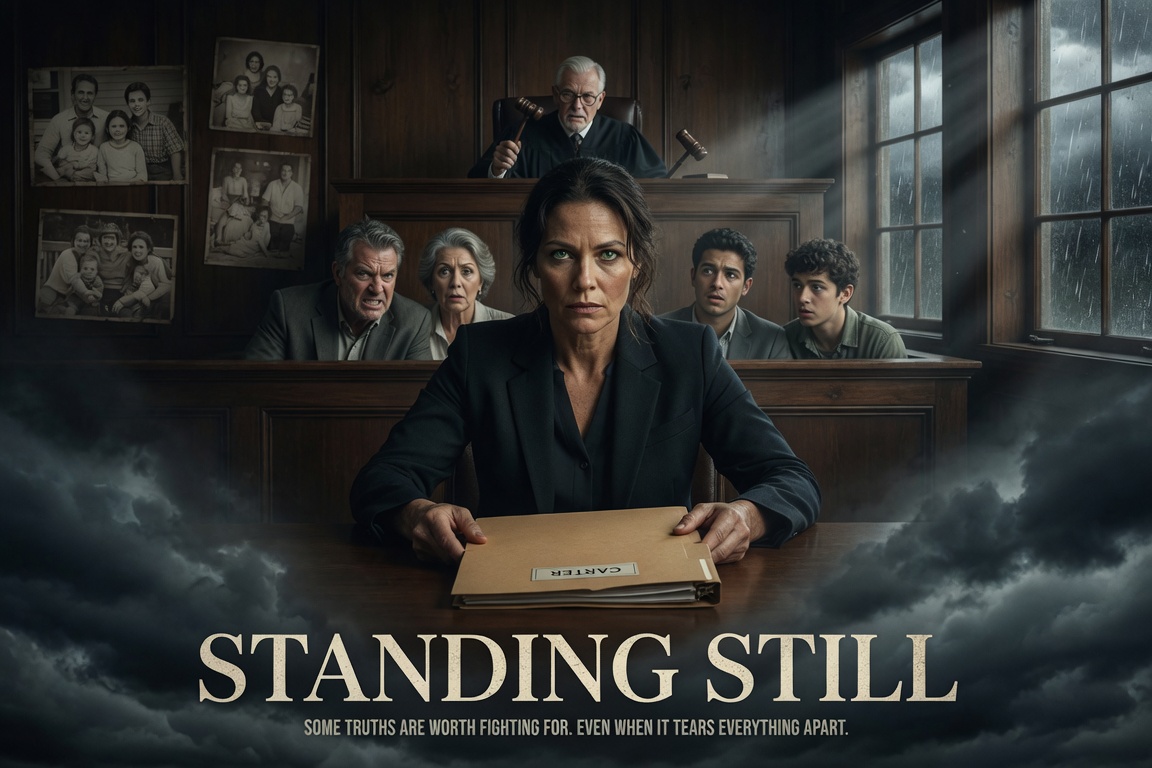
At the final hearing, Raymond demanded everything.
The house.
The archives.
Control of the trust.
Reimbursement of legal fees.
A permanent protective order against me.
Celia Dunn spoke for nearly an hour.
She described me as secretive, emotionally detached, and conditioned to dominate. She argued that my father had romanticized my military career while overlooking Raymond’s sacrifices.
Then she made one final request.
“Your Honor, given Colonel Carter’s history and the sensitive nature of materials allegedly stored at the property, we ask that she be ordered to surrender all files in her possession.”
The judge looked at Thomas.
“Response?”
Thomas rose.
“My client is prepared to surrender one file.”
He nodded toward me.
I stood and carried a sealed gray folder to the bench.
Raymond watched me approach.
His confidence returned.
He thought it was a concession.
The judge examined the cover.
Her expression changed.
“Counsel, approach.”
Celia moved first.
Thomas joined her.
The judge spoke too quietly for the gallery to hear, but Celia’s shoulders stiffened.
Raymond leaned toward Claire.
“What is it?”
I returned to my seat.
The judge pressed the call button beside her bench.
A side door opened.
Six uniformed military police officers entered the courtroom.
Behind them came Major Naomi Bell and two CID special agents in dark suits.
The gallery erupted in whispers.
Raymond stood halfway.
Celia grabbed his sleeve.
“Sit down.”
“What is happening?”
“Sit down.”
The judge raised her gavel.
“Order.”
The courtroom fell silent.
Major Bell handed a document to the bailiff, who passed it to the judge.
The judge read it, then looked at Raymond.
“Mr. Carter, the file submitted by Colonel Carter contains evidence relevant to an active federal investigation involving theft of protected military archives, unlawful access to restricted systems, trafficking in government property, identity misuse, obstruction, and the public disclosure of sealed medical material.”
Raymond stared at me.
His face had emptied.
“No,” he said.
Not loudly.
Almost privately.
As though correcting the universe.
The lead CID agent stepped forward.
“Raymond Ellis Carter, stand and place your hands where we can see them.”
My mother closed her eyes.
Claire’s folder slipped from her lap and struck the floor.
Papers spread across the tiles.
Among them were bank statements.
Transfers from Atlantic Heritage Recovery.
Hundreds of thousands of dollars.
Celia looked down.
Then at Claire.
“You had these?”
Claire’s lips trembled.
“He told me they were consulting fees.”
The agent repeated the command.
“Mr. Carter. Stand.”
Raymond rose slowly.
His hands hovered at his sides.
Then Danner appeared in the doorway between two additional officers, wrists cuffed in front of him.
That was the moment.
The true recognition.
Raymond’s eyes locked onto Danner.
Danner looked away.
Every defense left my brother’s face at once.
His mouth opened, but nothing came.
The courtroom saw it happen.
The arrogant certainty.
The public grief.
The righteous son who had spent weeks telling cameras he was protecting his mother.
All of it collapsed into one stunned, naked silence.
He turned toward me.
“Jenny.”
I had not heard my childhood name spoken with fear before.
“You did this?”
I looked at him across the courtroom.
“No.”
My voice carried into every corner.
“You did.”
He shook his head.
“You don’t understand.”
“I understand enough.”
“Dad was going to erase me.”
“He tried to protect you.”
“By giving you the house?”
“By delaying the investigation.”
His face twisted.
“He always chose you.”
“No, Raymond. He kept choosing you long after you gave him reasons not to.”
The words struck harder than I intended.
He stepped back.
An officer caught his arm.
The judge ordered the military evidence sealed and referred all relevant matters to federal court. She dismissed the challenge to the will with prejudice. She dissolved the restraining order immediately.
Then she addressed my mother.
“Mrs. Carter, evidence suggests that your testimony may have been influenced through fraud. I strongly advise you to obtain independent counsel.”
My mother stared at the floor.
For once, Raymond could not tell her what to think.
Outside the courthouse, rain had stopped.
The steps shone beneath a hard white sky.
Reporters crowded the barriers, shouting questions as officers led Raymond toward a waiting vehicle.
He paused before entering.
Cameras clicked.
“Genevieve!”
I stopped.
His hands were cuffed behind him.
His tie had shifted sideways. One shoelace had come loose. Without the careful posture, the tailored suit, and the people arranged around him, he looked smaller.
Not harmless.
Just human.
“Tell them I took care of Dad,” he said.
The reporters quieted.
I looked at my brother.
“You did.”
His face tightened.
“Then tell them.”
“I will.”
Hope moved across his features.
Then I finished.
“And I’ll tell them you stole from him. Both things are true.”
The officers placed him in the vehicle.
I did not watch it drive away.
Breakwater House smelled of cedar, seawater, and rooms left closed too long.
I returned three days later with my mother, Deputy Ortiz, Major Bell, and a federal recovery team.
The graffiti remained on the gate.
TRAITOR.
My mother stopped in front of it.
“I’ll have it painted.”
“No.”
She looked at me.
“We’ll sand it off,” I said. “Paint hides damage. Sanding removes it.”
Inside, sunlight crossed the hardwood floors in long pale bands. Dust floated through the air. The brass ship clock ticked in the library.
My father’s chair remained beside the window.
On the table rested two coffee cups.
One was his.
The other belonged to Raymond.
He had probably sat there during those last months, arguing, repairing things, resenting every minute he spent hoping our father would finally say the right words.
My mother touched the back of the chair.
“I helped him believe you didn’t love us.”
I did not answer immediately.
From the basement came the muffled voices of investigators cataloging the archive.
“You believed I chose the Army over you,” I said.
“You did.”
There was no accusation in her voice now.
Only exhaustion.
“Yes,” I said. “Sometimes I did.”
She turned.
The admission surprised her.
“I thought duty made every absence honorable,” I continued. “It didn’t.”
Her eyes filled.
“But you chose Raymond too,” I said. “Every time you needed one of us to be innocent and one of us to be guilty, you chose him.”
A tear moved through the powder on her cheek.
“I was afraid of losing him.”
“And you weren’t afraid of losing me?”
She looked at me for a long time.
“I thought I already had.”
The clock ticked between us.
Some wounds do not close because someone apologizes.
They close slowly, through behavior repeated after the apology has stopped feeling dramatic.
My mother moved into the east bedroom under the life tenancy my father had written for her. She hired her own attorney. She gave a full statement to investigators and admitted the email was false.
Claire filed for divorce.
Austin deleted the courtroom videos, though copies remained everywhere. For the first time in his life, he discovered that the internet keeps what shame asks it to forget.
Miles Danner accepted a plea agreement and provided records identifying buyers, brokers, and collectors in three states.
Raymond went to federal prison.
At sentencing, the prosecutor asked me to speak.
I declined.
Not because I forgave him.
Not because I wanted mercy.
Because I refused to let the worst thing my brother had done become the central story of my life.
Instead, I submitted my father’s video.
The judge watched Arthur Carter describe frightened men, terrible accounting, and the dishonor of protecting family from consequences.
Raymond watched too.
When the screen went dark, he bowed his head.
For the first time, no one rushed to lift it for him.
A year later, Breakwater House reopened as the Carter Center for Military Memory.
Not a museum of weapons.
A place for voices.
We preserved letters, interviews, maps, and the names of interpreters who had once existed only in classified footnotes. Veterans brought boxes from their attics. Widows brought cassette tapes. Adult children arrived carrying stories they had been too young to understand when their parents were alive.
My mother volunteered every Thursday.
She sat near the front desk beneath a photograph of my father and learned to say my full name when visitors asked who had restored the house.
“Colonel Genevieve Carter,” she would say.
Not Jenny.
Not my difficult daughter.
Not the one who left.
Colonel Genevieve Carter.
One afternoon, I found her in the archive room holding the funeral flag.
The same flag someone had unfolded beneath a dead bird.
She had placed it in a new walnut case.
“I thought it belonged here,” she said.
I ran my fingers along the glass.
“No.”
Her face fell.
Then I lifted the case.
“It belongs in the library.”
Together, we carried it upstairs.
We placed it above my father’s chair, where evening sunlight struck the stars and turned the glass gold.
Outside, waves broke against the granite bluff.
The house did not tremble.
It had survived storms, theft, betrayal, and the people who mistook possession for love.
So had I.
My family had entered court believing power meant taking everything from the person least willing to fight in public.
What they learned was that silence is not surrender, dignity is not weakness, and the person who refuses to destroy you may still be the one who makes certain you can never hide from what you have done.