The first sign that my son was trying to kill me was not the poison.
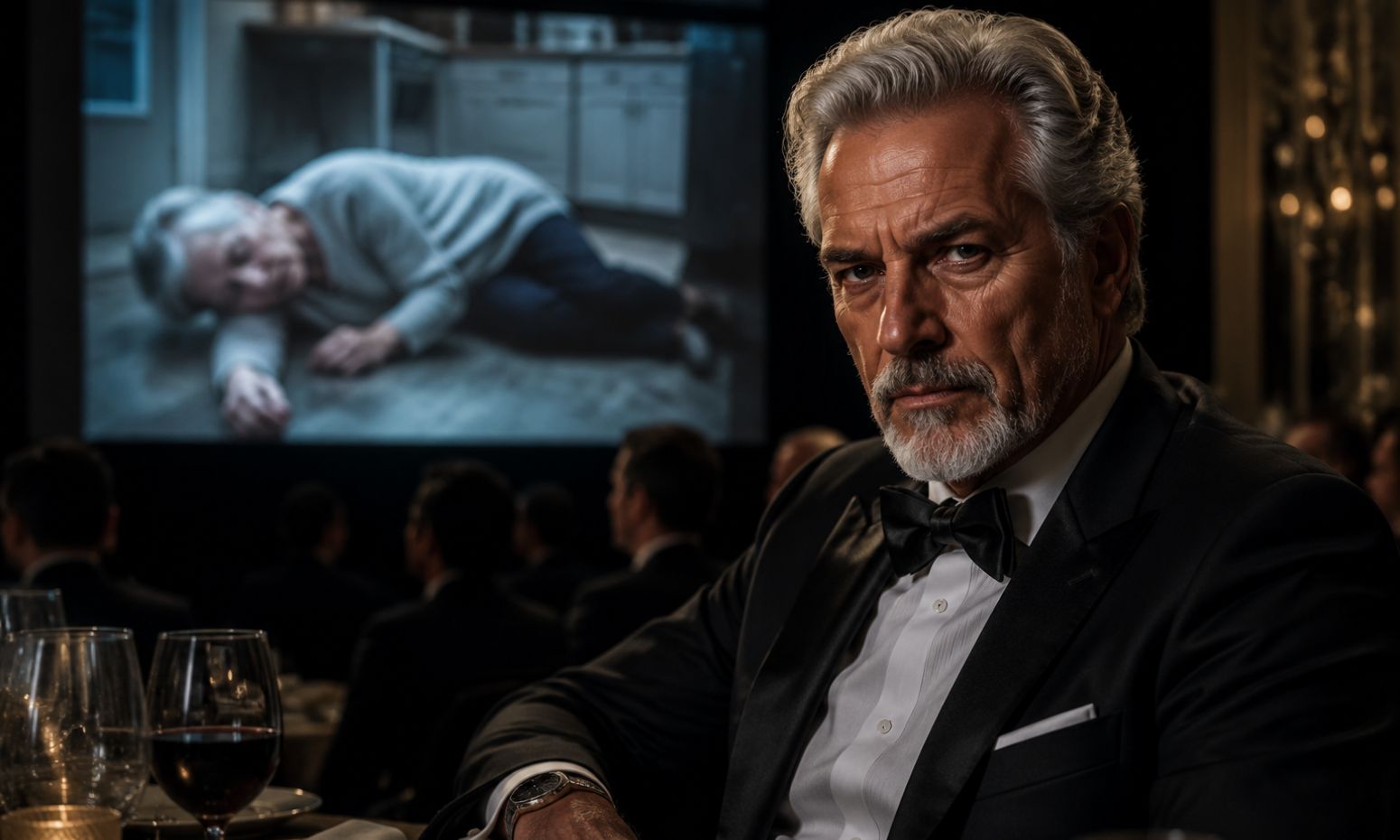
It was the patience.
People imagine betrayal arrives with shouting, anger, or a dramatic confession. They imagine the villain losing control.
But my son never lost control.
That was what made him dangerous.
For months, Daniel visited my house every Sunday afternoon. He brought groceries. He fixed small things around the property. He sat across from me at the kitchen table, smiling warmly while asking questions about my health, my finances, and whether I had “finally thought about the future.”
At seventy-two years old, I had learned that people reveal themselves through the questions they ask.
Daniel rarely asked, “How are you?”
He asked, “Have you updated your will?”
He asked, “Who handles your accounts now?”
He asked, “What happens to the house if something happens to both you and Mom?”
At first, I ignored it.
Because he was my son.
And parents have a strange weakness.
We spend years teaching ourselves to notice danger in strangers while convincing ourselves that the people we love could never hurt us.
I wanted to believe Daniel was simply worried.
I wanted to believe the expensive watch on his wrist and the new car parked outside were signs of ambition, not desperation.
I wanted to believe the way he looked around my home was nostalgia, not calculation.
But then my wife, Evelyn, got sick.
It started with small things.
A headache.
Then dizziness.
Then exhaustion so severe that she stopped gardening, something she had done every morning for thirty years.
Doctors ran tests.
They found nothing obvious.
“Stress,” one doctor suggested.
“Age,” another said.
I hated that answer.
Age was a convenient explanation. It allowed people to stop looking.
But I had spent forty years building my company from a one-room workshop into a successful manufacturing business. I knew something about problems.
The biggest failures rarely begin with explosions.
They begin with tiny numbers that nobody questions.
A machine producing one defective part.
A report with one missing page.
A person asking one unusual question.
So I started paying attention.
And what I noticed made my stomach turn.
Daniel was always nearby when Evelyn became sick.
He was the one making her tea.
He was the one bringing her vitamins.
He was the one telling everyone, “Mom just needs rest.”
He said it so often that people stopped asking whether it was true.
Then came the night that changed everything.
Evelyn collapsed during dinner.
One minute she was telling me about a flower she wanted to plant in the backyard.
The next, her hand slipped from the table.
The ambulance arrived within minutes.
At the hospital, the doctor looked confused.
Not panicked.
Confused.
That was worse.
After more tests, a specialist asked us a question I still remember.
“Has anyone close to her been giving her supplements, herbal products, or anything not prescribed by us?”
I looked at Evelyn.
Then I looked at the hospital room door.
Because suddenly, every Sunday afternoon came back to me.
Every cup of tea.
Every bottle of vitamins.
Every time Daniel insisted, “I’m just trying to help.”
The police became involved quietly.
No accusations.
No dramatic arrests.
Just questions.
And while everyone else focused on Evelyn’s recovery, I began looking at something else.
My fortune.
For most of my life, people assumed money was the greatest thing I had built.
They were wrong.
The greatest thing I built was a system.
I knew exactly where every dollar went. I knew who had access to what information. I knew which documents mattered and which ones were distractions.
And years earlier, after watching too many wealthy families destroy themselves over inheritance, I had made one decision.
I created a plan.
Not because I expected my own son to betray me.
Because I understood human nature.
Daniel thought he knew everything about my finances.
He knew about the house.
He knew about my investments.
He knew about the company.
He knew the value of the accounts everyone talked about.
But he did not know the one thing that mattered.
He did not know the trap.
Three days after Evelyn was hospitalized, Daniel came to my house.
He walked through the front door without hesitation.
The same confidence.
The same smile.
The same son everyone else believed he was.
“I’m glad Mom is getting better,” he said.
I watched his face carefully.
Not his words.
His face.
There was relief there.
But not the relief of a husband whose wife survived.
The relief of someone whose plan had been interrupted.
Then he placed a folder on the table.
“I think we need to talk about making things easier,” he said.
I opened the folder.
Inside was a revised power of attorney.
A document giving him control over my financial decisions.
I looked up.
“Why do you think I need this?”
He smiled.
“Dad, you’re getting older. You need someone you trust.”
Someone you trust.
Funny how those words sound different when spoken by someone who has already broken that trust.
I closed the folder.
“Daniel,” I said calmly, “there’s something you should know.”
He leaned forward.
“What?”
I looked directly into my son’s eyes.
“The person who gave me the most useful information about you was not the police.”
His smile disappeared for half a second.
Just half.
But I saw it.
The first crack.
He stood up slowly.
“What are you talking about?”
I didn’t answer.
Because the truth was, Daniel still believed he was in control.
He believed I was an old man protecting his wife, confused by suspicion, too emotional to see clearly.
He had no idea that every step he took had been recorded.
Every conversation.
Every financial move.
Every document.
And most importantly…
He had no idea that the fortune he came to steal was never the only thing I had protected.
[Confirm to continue Part 2]


