In 1944, Rome became the scene of one of Nazi Germany’s most infamous acts of revenge.
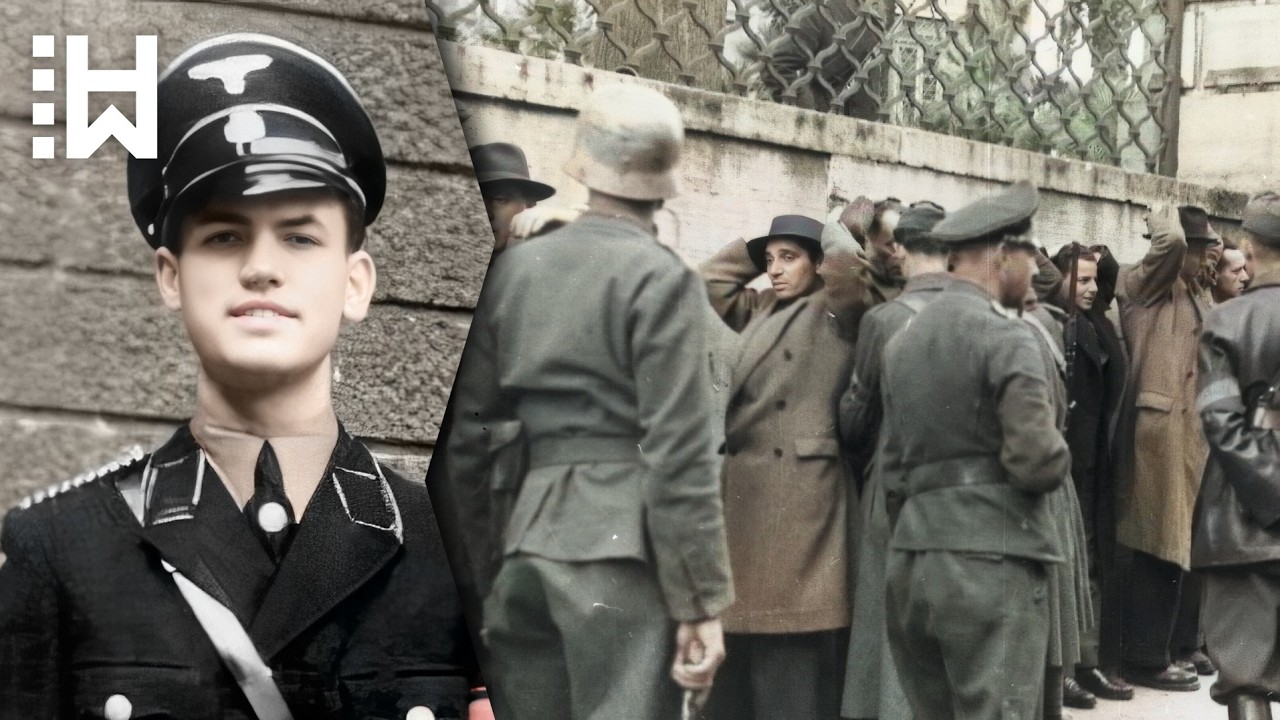
Behind the massacre was a man who would later live openly for decades under a false identity.
His name was Erich Priebke.
At the height of World War II, he was a young SS officer serving inside the Nazi occupation system in Italy. Decades later, he would become one of the last major Nazi criminals to face trial.
His story began far from Italy.
Born in 1913 in Hennigsdorf, Germany, Priebke grew up as an ordinary young man. After losing his parents early in life, he was raised by relatives. Before entering politics, he worked as a waiter in Germany, England, and Italy.
He married Alicia Stoll and built what appeared to be a normal family life.
Then Germany changed.
In 1933, Adolf Hitler came to power.
That same year, Priebke joined the Nazi Party. By 1936, he had entered the Gestapo and later became a member of the SS.
Step by step, an ordinary citizen became part of a system built on repression.
Because he spoke Italian, Priebke was sent to Rome in 1941, where he worked under SS commander Herbert Kappler.
At first, Rome was not a battlefield like the Eastern Front.
But after Italy surrendered to the Allies in 1943, everything changed.
Mussolini was removed from power. The new Italian government signed an armistice with the Allies. Germany reacted immediately by occupying central and northern Italy, disarming Italian forces, and taking control of Rome.
The city became a place of fear.
The German occupation targeted resistance fighters, political opponents, Jews, and anyone suspected of opposing Nazi rule.
Executions and arrests became common.
Then came the event that would define Priebke’s name forever.
On March 23, 1944, Italian resistance fighters attacked a German police unit marching through Via Rasella in Rome.
A bomb exploded.
Thirty-three German soldiers were killed.
The Nazi response was immediate.
German commanders ordered a reprisal.
The plan was simple and brutal:
Ten Italians would be killed for every German soldier who died.
The victims would not be judged.
They would be selected.
Priebke became directly involved in preparing the list.
He searched records.
He reviewed prisoners.
He helped choose people to fill the required number.
The victims came from different backgrounds.
Political prisoners.
Resistance members.
Jewish civilians.
Ordinary people caught inside a system where human life had been reduced to numbers.

On March 24, 1944, trucks carried the prisoners to the Ardeatine Caves outside Rome.
Their hands were tied.
They had no trial.
No chance to defend themselves.
One by one, groups of five were taken into the caves and executed.
The victims were forced to kneel.
Shots echoed through the underground tunnels.
The bodies piled higher as the killings continued.
Priebke participated directly in the massacre.
By the end, 335 people had been murdered.
Five more than the original number required.
The reason was a mistake in counting, but for the victims’ families, the number could never be reduced to statistics.
Each person had a name.
A family.
A life that ended because of a decision made by the Nazi occupation system.
After Rome was liberated in June 1944, the truth of the massacre emerged.
The caves were opened.
Bodies were discovered underground.
Personal belongings helped identify the victims.
The Ardeatine Caves became a symbol of Nazi brutality in Italy.
But Priebke’s story did not end there.
After the war, he was captured and held by British forces.
In 1946, he escaped.
Like many former Nazi officials, he used underground escape networks that helped war criminals flee Europe.
Using a false identity, he eventually reached Argentina.
There, he disappeared into ordinary life.
For nearly fifty years, Priebke lived in Bariloche, a city with a large German-speaking community.
He worked as a waiter and later owned a delicatessen.
He became respected locally.
He traveled.
He lived openly.
Meanwhile, the families of those murdered at Ardeatine waited decades for justice.
Then, in 1994, journalist Sam Donaldson and ABC News located him.
When confronted on camera, Priebke did not deny his involvement.
He admitted being present during the massacre.

But he defended himself with a familiar argument:
He was only following orders.
Later, he continued to justify his actions, claiming the victims were connected to terrorism and that he had no real choice.
For survivors and families of the victims, those words reopened old wounds.
The case returned to Italy.
After a long legal process, Priebke was tried in Rome in 1996.
He was convicted for his role in the Ardeatine Caves massacre and sentenced to life imprisonment.
Because of his age, he spent his final years under house arrest in Rome.
He died on October 11, 2013, at the age of 100.
Even his death became controversial.
Some wanted him buried in Argentina.
Others refused to allow his grave to become a gathering place for extremist supporters.
A planned funeral caused protests and conflict.
Eventually, Italian authorities buried him in an undisclosed location near Rome.
The story of Erich Priebke is not only about one man.
It is about how ordinary people can become part of systems of extraordinary violence.
He was not the highest leader of Nazi Germany.
But he was an important link in the chain.
He helped transform orders into actions.
Numbers into deaths.
Paperwork into murder.
For almost half a century, he lived freely while the memory of those killed at the Ardeatine Caves remained.
His trial came late.
But it carried a message that history continues to repeat:
Following a criminal system does not erase personal responsibility.
And crimes hidden by time do not disappear.