The German shepherd had been trained to obey gunfire, hand signals, and commands whispered through smoke.
But that morning, in the pediatric wing of Naval Medical Center San Diego, he ignored everyone.
“Move the dog,” the hospital administrator ordered.
The K9 did not move.
“Ranger, down,” a military police handler commanded.
The dog’s ears twitched at the sound of his name, but his body remained planted across the doorway of Room 417.
Behind him, nine-year-old Lily Mercer lay unconscious beneath a thin white blanket.
Her father, Navy SEAL Captain Daniel Mercer, had been declared missing during an overseas operation six days earlier.
No one knew how Ranger had escaped the military transport facility.
No one understood how he had crossed nearly eight miles of unfamiliar streets.
And no one could explain why the combat dog was now guarding the captain’s daughter as if an entire enemy unit were coming down the hospital corridor.
Every time a doctor approached, Ranger rose.
Every time security stepped closer, a low warning rolled through his chest.
He had not bitten anyone.
He had not lunged.
But the message was clear.
No one was entering that room.
By 7:20 a.m., the corridor had been sealed.
Two military police officers stood near the elevators. A hospital attorney was on the phone. The head of pediatrics had already warned that Lily’s condition was worsening.
Her fever had climbed to 104.
She needed medication.
She needed fluids.
And the only thing standing between her and the medical team was an eighty-pound dog trained to stop grown men in body armor.
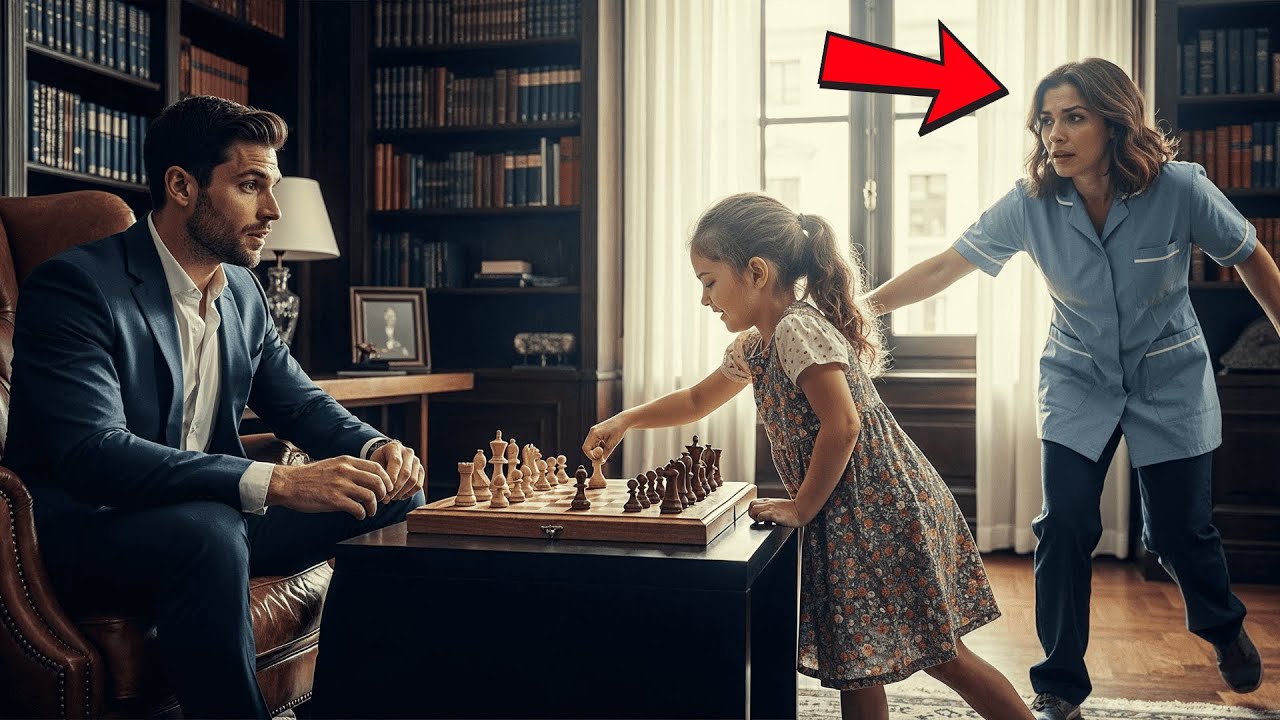
Dr. Alan Pierce, the attending physician, stared through the narrow glass panel in the door.
“This has gone far enough,” he said. “Sedate him.”
The handler beside him hesitated.
“Sir, that dog spent three deployments with Captain Mercer.”
“I don’t care if he spent ten.”
“With respect, you should.”
Pierce turned sharply.
The handler kept his voice low.
“Ranger doesn’t disobey without a reason.”
Dr. Pierce looked back through the glass.
Inside the room, the shepherd sat beside Lily’s bed, his eyes fixed on the hallway.
The girl’s face was pale. Damp strands of hair clung to her forehead. One small hand rested near the edge of the mattress.
Ranger leaned toward it every few seconds, touching her fingers with his nose.
Then he would look toward the door again.
Watching.
Waiting.
Nurse Elena Ruiz arrived halfway through the argument.
She had worked the night shift and should have been driving home, but a colleague had called her from the parking garage.
“You need to see this,” the colleague had said. “There’s a military dog barricading a patient’s room.”
Elena had almost laughed.
Then she heard the patient’s name.
Lily Mercer.
She stopped so abruptly that another nurse nearly walked into her.

Elena had met Lily only once, three years earlier, at a military family event. The girl had been six years old, missing two front teeth, carrying a plastic stethoscope around her neck.
Her father had stood nearby in civilian clothes, though nothing about him looked civilian.
Captain Daniel Mercer had the stillness of a man who noticed every exit before he noticed the decorations.
Ranger had been beside him.
Elena remembered kneeling to greet the dog.
Mercer had immediately stopped her.
“Don’t reach over his head.”
She withdrew her hand.
“Sorry.”
“He’s not unfriendly,” Mercer said. “He just likes people to introduce themselves properly.”
Then he had said something to Ranger.
Not the dog’s name.
Something else.
A word that made the shepherd relax instantly.
Elena had forgotten the moment until now.
She stepped closer to Room 417.
Ranger saw her through the glass.
His posture changed.
Not much.
Just enough.
His ears tilted forward, and the growl in his chest softened.
The handler noticed.
“Do you know that dog?”
“I met him once.”
“That won’t be enough.”
Elena studied Ranger’s eyes.
“No,” she said quietly. “But maybe he remembers more than we think.”
Dr. Pierce looked at her name badge.
“You’re off shift, Nurse Ruiz.”
“I know.”
“Then let trained personnel handle this.”
Elena looked toward Lily.
The girl’s breathing was shallow.
“How long has she been febrile?”
“Her chart is not your concern.”
“How long?”
Pierce’s jaw tightened.
“Since just after five.”
“And the dog arrived when?”
The handler answered.
“About six fifteen.”
Elena looked down the corridor.
“Who was inside the room before he got here?”
There was a pause.
Dr. Pierce folded his arms.
“Several people. Nurses. A resident. Environmental services.”
“Anyone from outside the hospital?”
“That is irrelevant.”
Elena turned toward him.
“A combat dog broke out of secure transport, traveled across the city, entered a hospital, found one specific room, and refuses to let anyone near the child of his missing handler.”
She held his gaze.
“I don’t think anything is irrelevant right now.”
The hospital administrator stepped forward.
“We don’t have time for theories. The child requires treatment.”
Elena nodded.
“Then let me enter.”
The handler shook his head.
“Ma’am, he may recognize your scent, but that doesn’t mean he’ll let you through.”
“He might.”
“And if he doesn’t?”
Elena did not answer.
She walked toward the door.
Three people told her to stop.
She stopped two feet from the glass.
Ranger rose.
His paws made no sound against the polished floor inside the room.
His shoulders were level with the mattress.
The dog stared at her.
Elena stared back.
For a moment, the corridor became completely silent.
She could hear the faint electronic rhythm of Lily’s heart monitor.
She could hear Ranger breathing.
She could hear Dr. Pierce behind her, impatiently whispering to security.
Then Elena remembered the military family event.
Mercer’s warning.
Don’t reach over his head.
The word he had used afterward.
It had sounded strange at the time. Not like a normal command. More like a nickname spoken into a radio.
Elena lowered herself slowly until she was crouching.
She kept both hands visible.
Then she spoke through the door.
“Falcon.”
Ranger froze.
The handler’s face changed.
“What did you say?”
Elena did not look away from the dog.
“Falcon.”
Ranger’s ears lowered slightly.
His mouth opened. His breathing shifted from guarded to uncertain.
The handler stepped closer.
“That’s not his call sign.”
“No,” Elena said. “It was Captain Mercer’s.”
Every person in the corridor went still.
Inside the room, Ranger looked toward Lily.
Then back at Elena.
Elena placed one palm flat against the glass.
“Falcon sent me.”
It was not true.
But the dog could not know that.
For several long seconds, Ranger did nothing.
Then he walked toward the door.
Security officers reached for their equipment.
“Don’t,” Elena warned.
Ranger stopped inches from the glass.
His eyes moved over her face.
Elena whispered, “Easy.”
The dog sniffed along the gap beneath the door.
Then he sat.
The handler exhaled.
“That’s permission.”
Dr. Pierce stepped forward.
The dog stood again.
The growl returned instantly.
The handler held out an arm.
“Not for you.”
Pierce stared at him.
“What?”
“He’s allowing her. Not the rest of us.”
Elena reached for the handle.
The door opened three inches.
Ranger remained still.
She opened it wider and slipped inside.
The moment she crossed the threshold, the dog moved behind her.
Not attacking.
Blocking the entrance again.
Elena closed the door.
Through the glass, Dr. Pierce gestured furiously for her to unlock it.
She ignored him.
She approached Lily’s bed with slow steps.
Ranger followed close enough that she could feel his breath against her leg.
Lily looked smaller than Elena remembered.
Her cheeks were flushed from the fever. An IV line ran into her left arm, though the fluid bag above her was nearly empty.
Elena checked the monitor.
Heart rate elevated.
Oxygen level slightly low.
Blood pressure unstable but not critical.
She touched Lily’s forehead.
The girl stirred.
“Dad?”
Elena’s chest tightened.
“No, sweetheart. It’s Elena. I’m a nurse.”
Lily’s eyelids fluttered but did not open.
Ranger pressed his nose against the girl’s shoulder.
Elena reached for the chart at the foot of the bed.
Before she could open it, Ranger growled.
She stopped.
His gaze was fixed on the rolling medication tray beside the bed.
Elena looked at the tray.
Two sealed syringes.
A medication vial.
A small plastic cup.
Nothing unusual at first glance.
She took one step toward it.
Ranger moved between her and the tray.
“Elena,” the handler called through the door. “What is he doing?”
She held up one finger.
Ranger sniffed the lower shelf.
Then he looked toward the trash bin.
Elena crouched.
Inside the bin were gloves, gauze, an empty saline wrapper, and a crumpled medication label.
She reached toward it.
Ranger did not stop her.
Elena pulled the label out with two fingers.
The name printed across it was Lily Mercer.
The medication was midazolam.
A sedative.
Elena looked at the monitor again.
Lily had not been scheduled for sedation.
She checked the electronic chart mounted beside the bed.
No order for midazolam.
No procedure planned.
No note explaining why it had been brought into the room.
Her eyes moved to the two syringes on the tray.
One was labeled as an anti-nausea medication.
The other had no label at all.
The door handle rattled.
Dr. Pierce’s voice came through the glass.
“Open the door now.”
Elena held up the crumpled label.
“What was this doing in her room?”
Pierce stared.
For half a second, his expression went blank.
Then irritation returned.
“Probably left from another patient.”
“In a pediatric isolation room?”
“Medication errors happen.”
“An unlabeled syringe is not an error. It’s a violation.”
“Unlock the door.”
Ranger moved closer to Elena.
She looked at the dog.
His attention was no longer on the hallway.
It was on Dr. Pierce.
Elena felt a chill move through her.
“When did Captain Mercer go missing?” she asked.
The handler answered from outside.
“Six days ago.”
“And when was Lily admitted?”
“Last night.”
“Why?”
Dr. Pierce responded before anyone else could.
“Viral symptoms. Dehydration.”
Elena opened the chart.
There were lab results. Fever notes. A record of vomiting. But something was missing.
No emergency department intake assessment.
No parent signature.
No ambulance report.
She scrolled back.
Lily’s admission had been entered directly by Dr. Pierce at 11:43 p.m.
“Who brought her here?”
Pierce’s face hardened.
“This is not the time.”
“Who brought her here?”
The administrator looked at Pierce.
“I assumed family.”
Elena searched the chart again.
Emergency contact: Daniel Mercer.
Status: Missing in action.
Secondary contact: blank.
“How did a nine-year-old child get admitted without a guardian?”
No one answered.
Ranger’s growl deepened.
Elena looked at Lily.
There was a faint bruise near the inside of her wrist.
Not from the IV.
A narrow reddish mark, like someone had gripped her too tightly.
Then Lily whispered something.
Elena leaned closer.
“What was that?”
The girl’s lips moved again.
“Dad said… don’t tell the doctor.”
Elena felt every muscle in her body tighten.
“Don’t tell the doctor what?”
Lily’s eyes opened slightly.
She looked terrified.
“The numbers.”
Dr. Pierce struck the door with his palm.
“That child is delirious.”
Ranger lunged toward the glass.
The sound that came from him stopped everyone in the corridor.
He did not bark.
He roared.
Pierce stepped backward so quickly that he struck the opposite wall.
For the first time, the confidence left his face.
Elena saw it happen.
His eyes widened.
His lips parted.
And his gaze dropped to the medication label in her hand.
Not to the dog.
Not to Lily.
To the label.
The handler saw it too.
So did the administrator.
The entire corridor went silent.
Elena turned back to Lily.
“What numbers, sweetheart?”
Lily swallowed.
“Dad put them in my bracelet.”
Elena looked at her wrist.
A blue braided bracelet circled the arm without the IV.
It looked homemade.
Ranger placed one paw against the edge of the bed.
Elena gently rotated the bracelet.
On the underside was a tiny metal clasp.
Stamped into it were eight digits.
Not a phone number.
Coordinates.
The handler outside the room leaned toward the glass.
“What do you see?”
Elena read the numbers aloud.
His face drained of color.
He pulled out his phone and stepped away.
Dr. Pierce moved toward the elevator.
A military police officer blocked him.
“I need to make a call,” Pierce said.
“You can make it here.”
“This is absurd.”
The officer did not move.
Pierce looked toward the stairwell.
The second officer stepped in front of it.
Inside the room, Elena held Lily’s hand.
“Did your father give you this?”
Lily nodded faintly.
“The night before he left.”
“What did he say?”
“He said if something happened, Ranger would know.”
The handler returned.
His expression had changed completely.
“Those coordinates belong to a private storage facility near Coronado.”
The administrator looked confused.
“What does that have to do with Dr. Pierce?”
The handler stared through the glass at him.
“Pierce served as a civilian medical contractor attached to Captain Mercer’s unit three years ago.”
Every head turned.
Pierce’s face went pale.
“That is confidential personnel information.”
The handler continued.
“He was removed after Mercer filed a report regarding missing trauma supplies and falsified inventory records.”
“That investigation cleared me.”
“No,” said a voice from the elevator. “It stalled.”
Two men in civilian suits stepped into the corridor.
The taller one held up federal identification.
“Naval Criminal Investigative Service.”
Dr. Pierce looked at the administrator.
“You called them?”
The administrator slowly shook his head.
The agent looked toward Room 417.
“We received an automated emergency signal from Captain Mercer’s account at 6:12 this morning.”
The handler stared at him.
“That’s when Ranger reached the hospital.”
The agent nodded.
“The signal was tied to the dog’s tactical collar.”
Everyone looked through the glass.
Elena saw the small black device beneath Ranger’s fur.
A tracking module.
The agent continued.
“Captain Mercer modified the transmitter before deployment. If Ranger entered a designated medical facility while separated from him, the system would alert us.”
Dr. Pierce’s voice cracked.
“That proves nothing.”
“No,” the agent said. “But the storage locker might.”
The second agent held up a phone.
“A team opened it six minutes ago.”
Pierce stopped breathing.
Inside the locker, investigators found copies of shipping records, encrypted drives, offshore payment instructions, and photographs linking stolen military pharmaceuticals to a private distribution network.
At the center of the records was Dr. Alan Pierce.
But there was more.
A voice recording had been stored on one of the drives.
Captain Mercer had made it two days before his final mission.
In the recording, he explained that he had discovered someone was leaking medical and operational information through contractor channels.
He believed the network had compromised his team’s route.
He did not know who could be trusted.
So he had hidden the coordinates in the one place no one would search.
His daughter’s bracelet.
Ranger had been trained to recognize it.
If Mercer failed to return, the dog was supposed to find Lily and protect her until someone used the captain’s call sign.
Falcon.
Elena had not been chosen by coincidence.
Three years earlier, when Mercer taught her the call sign at the family event, he had not been making casual conversation.
He had watched how she approached Ranger.
He had noticed that she listened when corrected.
He had remembered her name.
Weeks before his last deployment, Mercer had added Elena Ruiz to a sealed list of trusted medical personnel.
She never knew.
But Ranger did.
The dog had not been preventing doctors from treating Lily.
He had been preventing one doctor from reaching her.
The unlabeled syringe was later tested.
It contained a concentration of sedative high enough to suppress Lily’s breathing.
Combined with her fever and dehydration, it could have killed her quietly.
Her death would likely have been blamed on complications from illness.
Dr. Pierce insisted the syringe had been planted.
Then investigators reviewed the hallway cameras.
At 5:48 a.m., Pierce entered Lily’s room alone with the medication tray.
At 5:51, Lily’s heart rate spiked.
At 5:54, she tried to pull out her IV.
At 6:15, Ranger appeared at the far end of the corridor.
The footage showed the shepherd running directly past nurses, carts, and security personnel.
He did not hesitate.
He reached Room 417 just as Pierce stepped inside for the second time.
Ranger slammed into the door before it closed.
Pierce stumbled backward.
The syringe fell from his hand.
The dog placed himself between the physician and Lily.
And there he remained.
When the agents played the footage in the corridor, no one spoke.
Dr. Pierce watched himself on the screen.
His shoulders slowly collapsed.
His face lost all color.
The arrogance that had filled his voice twenty minutes earlier disappeared.
He looked through the glass toward Ranger.
The shepherd stared back.
Pierce lowered his eyes first.
That was the moment everyone understood.
Ranger had not escaped.
He had completed his mission.
Dr. Pierce was arrested before noon.
The investigation that followed exposed a network responsible for stolen military medical supplies, illegal pharmaceutical sales, and the disclosure of restricted deployment information.
Three contractors and two logistics officers were later charged.
Pierce eventually accepted a plea agreement after his fingerprints were found on the unlabeled syringe and his login credentials were linked to the compromised records.
Lily recovered.
Her fever broke the following evening.
For two days, Ranger refused to leave the foot of her bed.
Hospital staff brought him water, food, and a folded military blanket.
He accepted the water.
He barely touched the food.
Each time Lily opened her eyes, the first thing she saw was the dog watching her.
On the third morning, she managed to sit up.
Ranger immediately placed his head in her lap.
“You found me,” she whispered.
His tail struck the floor once.
Then the door opened.
Two naval officers entered.
Elena knew before they spoke that the news was not simple.
Captain Daniel Mercer had been found alive.
His team had been ambushed after their route was compromised, but Mercer and another operator had survived. They had moved through hostile territory for nearly a week before reaching an extraction point.
He arrived in San Diego four days later with a bandaged shoulder, cracked ribs, and strict orders not to walk without assistance.
He ignored the last order.
When he appeared at the end of the pediatric corridor, Lily saw him first.
“Dad!”
Ranger lifted his head.
For the first time since entering the hospital, the shepherd looked uncertain.
Mercer stopped twenty feet away.
The corridor filled with nurses, agents, doctors, and staff who had heard the story.
No one moved.
Mercer looked at the dog.
Then he tapped two fingers against his chest.
“Ranger. Home.”
The shepherd ran.
He struck Mercer hard enough to make the injured officer stagger backward.
Mercer dropped to one knee, wrapped both arms around the dog, and pressed his face against Ranger’s neck.
The captain who had survived gunfire, exposure, and six days behind enemy lines began to cry.
Ranger made a sound Elena had never heard from a working dog before.
Not a bark.
Not a whine.
Something between relief and grief.
Then Mercer stood and walked into Lily’s room.
He gathered his daughter carefully against his chest.
She clung to him with both arms.
“You said Ranger would know.”
Mercer looked over her shoulder at the dog.
“He always knows.”
Later, he found Elena near the nurses’ station.
“You used the call sign,” he said.
“I remembered it.”
“I was hoping you would.”
Elena stared at him.
“You planned this three years ago?”
“No.” He glanced toward Lily’s room. “I started noticing people I could trust three years ago.”
He explained that operators were trained to prepare for failure.
Not because they expected to lose.
Because other people’s lives depended on what happened if they did.
He had trusted technology to send the alert.
He had trusted his daughter to protect the bracelet.
He had trusted Ranger to reach her.
And he had trusted one nurse to listen instead of forcing her way past a warning she did not understand.
Elena looked through the window.
Ranger lay beside Lily’s bed, finally asleep.
“You gave a dog an impossible mission.”
Mercer shook his head.
“No. I gave him his family.”
Months later, a framed photograph appeared in the pediatric wing.
It showed Lily sitting between her father and Ranger on a beach near Coronado.
Beneath it was a small engraved plaque.
It did not mention the criminal investigation.
It did not mention the stolen records.
It did not mention the doctor who had nearly silenced a child to protect himself.
It carried only one sentence:
“Loyalty is not blind obedience. Sometimes, loyalty is knowing exactly whom not to trust.”
People often assume the loudest person in the room has the most authority.
They assume uniforms, titles, and credentials are proof of character.
But that morning, a trained physician demanded obedience while a dog demanded caution.
Only one of them was trying to save the child.
And sometimes, the one who refuses to step aside is the only one standing between innocence and the person everyone else was taught to trust.