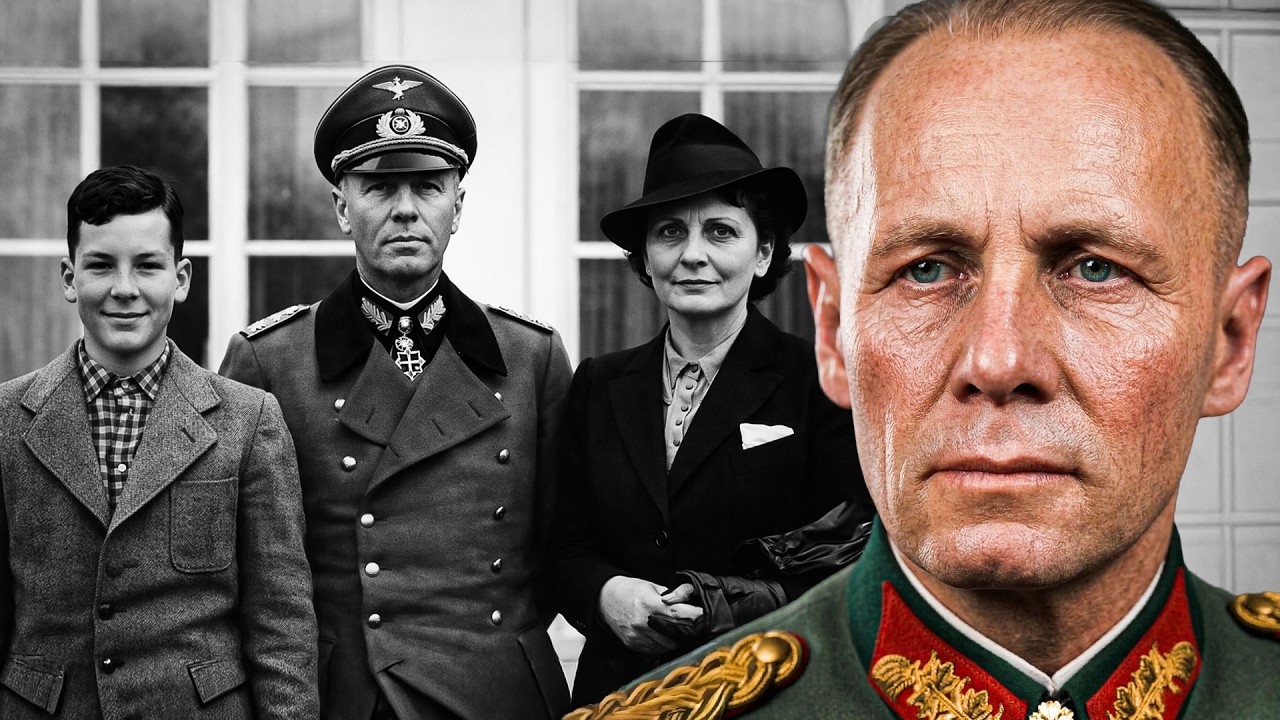
In the summer of 1941, Riga was a city trapped between two collapsing worlds.

The Soviet Union was retreating.
Nazi Germany was advancing.
The streets of Latvia’s capital were filled with uncertainty, fear, and the sound of a new occupying force taking control.
For many Latvians, the arrival of German troops was initially seen through the lens of recent Soviet repression. Thousands had been deported under Soviet rule. Intellectuals, officials, and religious figures had disappeared. Anger and resentment were everywhere.
But another nightmare was about to begin.
The German occupation did not bring freedom.
It brought a different system of terror.
And in the middle of this chaos, one man saw an opportunity to transform himself from an ordinary police officer into one of the most feared figures in Latvia.
His name was Viktors Arajs.
Before the war, no one could have predicted the role he would later play.
He was born in 1910 in Baldone Parish, Latvia, into a family that struggled with hardship. His father disappeared during World War I, leaving his mother to raise the family during difficult years.
Growing up, Arajs experienced poverty and uncertainty.
Those early years shaped him.
He developed a strong desire for status and recognition.
After completing military service, he studied economics and law at the University of Latvia. There, he became involved in nationalist student circles and joined Lettonia, an organization associated with Latvian nationalism.
He was intelligent.
Ambitious.
And increasingly attracted to political movements that promised strength and order.
But his academic career did not last.
Economic difficulties forced him to leave university.
He eventually became a police officer in Riga and nearby areas.
On the surface, he was building a respectable career.
He married Zelma Zeibote, the daughter of a wealthy shop owner, and appeared to be moving toward a stable life.
But beneath that image was a man searching for influence.
He wanted to matter.
He wanted power.
And history soon gave him the opportunity.
![Vietsub] Trailer Movie Trường Tân Hồ - YouTube](https://i.ytimg.com/vi/7p_adbsh4X0/maxresdefault.jpg)
Before the war, Latvia’s Jewish community was one of the most important parts of the country’s cultural life.
Around 95,000 Jews lived in Latvia before the German invasion. They were teachers, doctors, businessmen, artists, writers, and community leaders.
Riga was home to Jewish newspapers, schools, religious institutions, and intellectual circles.
It was a community that had existed for generations.
Within only a few years, almost all of it would be destroyed.
The rise of Nazi Germany transformed European society through racism and violence.
The Nazis did not see Jewish communities as citizens.
They saw them as enemies.
After Germany invaded the Soviet Union in June 1941, the Holocaust expanded rapidly across Eastern Europe.
The Baltic region became one of the first areas where mobile killing units, known as Einsatzgruppen, carried out mass executions.
But Nazi Germany did not operate alone.
They depended on local collaborators.
They needed people who knew the streets.
People who spoke the language.
People who understood the communities.
People willing to point at neighbors and say:
“That person.”
Arajs became one of those people.
When German forces entered Riga in July 1941, he immediately recognized the opportunity.
The new occupiers needed local support.
The old police structures were collapsing.
Power was available to anyone willing to take it.
Soon, Arajs was introduced to Hans Dressler, a Latvian interpreter working with SS Brigadeführer Franz Stahlecker, the commander of Einsatzgruppe A.
That meeting changed everything.
Arajs was offered the chance to create a Latvian auxiliary unit.
Officially, it was supposed to maintain order.
In reality, it became an instrument of Nazi terror.
The Arajs Commando was born.
At first, the unit consisted of several hundred men.
They came from different backgrounds.
Students.
Former soldiers.
Police officers.
Nationalist extremists.
They were not all trained killers.
But they shared one thing:
They were willing to serve a system that gave them permission to use unlimited violence.
The Nazis gave them weapons.
Authority.
Protection.
And a target.
The first targets were Latvia’s Jewish population and anyone considered politically dangerous.
Riga changed almost overnight.
Nazi flags appeared across the city.
German authorities took control.
Propaganda spread the idea that Jews were responsible for communism and Soviet oppression.
The message was repeated through newspapers, public announcements, and official speeches.
Hatred was transformed into policy.
Then came the first major crime.
The Great Coral Synagogue.
Located on Gogolya Street in Riga, it had been one of the most important Jewish religious centers in Latvia.
In early July 1941, Arajs Commando members surrounded the area.
Jewish civilians were captured.
People were forced inside.
The doors were locked.
The building was set on fire.
Those trapped inside had almost no chance.
The screams from the burning synagogue became one of the first signs that the Nazi occupation would not be a normal military administration.
It was the beginning of systematic destruction.
Other synagogues were attacked.
Jewish homes were looted.
People were arrested.
The violence became public.
And the world of Riga’s Jewish community began to disappear.
The Nazis attempted to present these events as spontaneous revenge by local citizens.
But the reality was far more organized.
The violence followed orders.
It served a larger plan.
Arajs and his men were becoming part of a machine that turned murder into administration.
The next stage was even more systematic.
The killings moved away from city streets and into forests outside Riga.
Biķernieki Forest became one of the largest execution sites in Latvia.
A place that had once been quiet became a place of death.
Victims were transported there in vehicles disguised as police transport.
Their names were recorded.
Their movements were controlled.
The process became routine.
That was one of the most terrifying aspects of the Holocaust:
The destruction of human beings was not always carried out in moments of uncontrolled violence.
Often, it happened through schedules.
Lists.
Reports.
Forms.
The victims were reduced to numbers before they were reduced to silence.
At Biķernieki, thousands were murdered.
Jews from Riga.
Political opponents.
People accused of supporting Soviet rule.
Anyone classified as an enemy of the Nazi system could become a target.
The men of Arajs Commando were no longer simply helping the occupiers.
They were helping create a system where entire communities could vanish.
But the worst was still ahead.
In late 1941, the Nazis turned their attention to the Riga Ghetto.
Thousands of Jewish families were trapped there.
They lived with hunger, disease, and constant fear.
Then, on November 30, 1941, the gates opened.
Not for freedom.
For death.
The SS and their collaborators surrounded the ghetto.
Residents were ordered to leave.
Many were told to bring their belongings.
They did not know they were walking toward mass graves.
Men, women, children, and elderly people were forced onto the roads.
Those who could not keep moving were shot.
The march led toward Rumbula Forest.
There, the killing operation had been prepared in advance.
Large pits had already been dug.
The victims were forced to surrender valuables and clothing.
Then they were murdered in groups.
The process continued for hours.
The dead were placed into layers inside the pits.
The next victims were forced to stand where others had fallen.
The Rumbula massacre became one of the largest single episodes of mass murder in the Holocaust.
Around 25,000 people were killed during the two operations in November and December 1941.
The Riga Jewish community was almost completely destroyed.
A civilization that had existed for generations was erased in months.
For Arajs, however, this was not the end of his rise.
The success of his unit made him valuable to the Nazi system.
He had proven that local collaborators could help carry out mass murder on a scale that Germany alone could not manage.
The Arajs Commando had become more than a police unit.
It had become a symbol of how ordinary individuals could become part of extraordinary crimes.
And as the war expanded eastward, Arajs and his men would move with it.
The forests of Latvia would not be the final place where their violence was unleashed.
The next chapter would take them beyond Latvia’s borders, where the same methods would be used against new communities under the name of fighting “enemies” of Nazi Germany.
After the destruction of Riga’s Jewish community, the Arajs Commando did not disappear.
Instead, it became more deeply integrated into the Nazi occupation system.
The unit had already proven its usefulness.
It had shown German authorities that local collaborators could do what the SS needed most: identify people, control communities, and carry out violence with local knowledge.
For Nazi Germany, this was valuable.
The occupation of Eastern Europe was too large to be controlled by German personnel alone.
They needed partners.
They needed people who understood the language.
People who knew the villages.
People who knew who was Jewish, who was politically active, and who could be accused of resistance.
Arajs and his men became exactly that.
By 1942, the nature of their mission expanded.
The Holocaust in Latvia had already destroyed much of the Jewish population, but the Nazi war machine continued moving eastward.
The Arajs Commando was transferred into operations beyond Latvia, especially in areas of Belarus and the Soviet territories occupied by Germany.
Officially, these missions were described as anti-partisan operations.
The language sounded military.
The reality was often different.
Villages were surrounded.
Civilians were questioned.
Communities were accused of helping resistance fighters.
Then punishment followed.
The definition of “enemy” became dangerously broad.
A person did not need to carry a weapon to become a target.
A family connection.
A rumor.
A suspicion.
Any of these could be enough.
The methods developed in Latvia followed the unit wherever it went.
Fear first.
Control second.
Violence last.
The pattern was repeated again and again.
A village would be surrounded early in the morning.
Residents would be gathered.
Information would be demanded.
Those considered dangerous would be separated.
The rest would learn that cooperation with the occupation system offered no real safety.
The goal was not only to kill opponents.
It was to create obedience through terror.
In Belarus, the destruction became even larger.
Entire villages disappeared.
Homes were burned.
Families were destroyed.
The phrase “anti-partisan operation” became a cover for actions that often targeted civilians.
For Arajs, this was the height of his influence.
The man who had once been an ordinary police officer now commanded a unit recognized by the Nazi leadership.
He received promotions.
He gained authority.
His name appeared in German documents not as a prisoner or suspect, but as a valuable collaborator.
The system rewarded him.
But the reward came from participation in mass murder.
By this stage, the Arajs Commando represented one of the darkest examples of local collaboration during the Holocaust.
The crimes committed were not carried out by one person alone.
They required many participants.
People who guarded prisoners.
People who transported victims.
People who created lists.
People who followed orders.
People who decided not to question what they were doing.
The tragedy of Arajs was not simply that he served Nazi Germany.
It was that he actively used the system to gain power.
He was not forced into the role.
He embraced it.
But the war began changing.
By 1944, the Soviet Red Army was advancing westward.
German control over the Baltic region weakened.
The same empire that had created Arajs’s power was now collapsing.
The men who had once seemed untouchable began searching for ways to survive.
The Arajs Commando was dissolved.
Some members were absorbed into other German military formations.
Others disappeared into the chaos of the final months of the war.
Arajs himself retreated west with the collapsing German forces.
For a man who had spent years deciding the fate of others, his own future had become uncertain.
When Germany surrendered in 1945, the world began searching for those responsible for Nazi crimes.
Many high-ranking officials were captured.
Others escaped.
Some changed names.
Some built new lives far away from the places where they had committed crimes.
Arajs became one of those who disappeared.
He was captured by British forces during postwar screening of German prisoners.
But the evidence against him was not immediately complete.
Without enough documentation and witnesses available at the time, he was eventually released.
That decision allowed one of Latvia’s most notorious collaborators to walk free.
After his release, Arajs moved through postwar Europe.
The world was rebuilding.
Cities were recovering.
Families were searching for missing relatives.
But the people responsible for destroying those families were often hiding among ordinary citizens.
Arajs eventually settled in West Germany.
He adopted another identity.
He used the name Viktor Zeibote, connected to his former wife’s family name.
To neighbors, he appeared to be another quiet man rebuilding his life after the war.
He worked in a printing business in Frankfurt.
He lived without public attention.
For decades, the past seemed buried.
But history had not forgotten.
In the 1960s and 1970s, investigators began reopening cases connected to Nazi crimes.
New documents were discovered.
Old witnesses came forward.
The work was slow because many records had been destroyed and many survivors had already died.
But every testimony added another piece to the picture.
The investigators followed the trail back to the Arajs Commando.
They examined wartime documents.
They compared names.
They studied SS records.
Eventually, they discovered that the quiet man living in Frankfurt was not who he claimed to be.
He was Viktors Arajs.
The man who had commanded a unit responsible for some of the worst crimes in Latvia.
His arrest shocked those who believed the past had disappeared.
Survivors who had carried memories for decades finally had the opportunity to speak.
They described what the Arajs Commando had done.
They described the fear in Riga.
The killings in the forests.
The destruction of families.
The disappearance of entire communities.
Among those who testified were survivors who had seen the consequences of Arajs’s actions firsthand.
Their memories transformed historical documents into human stories.
A name on a page became a person.
A number became a life.
A statistic became a family that never returned.
In December 1979, the trial of Viktors Arajs began in Hamburg.
It was one of the last major trials involving a leader of a Holocaust killing unit.
The courtroom examined not only what Arajs had ordered, but what role he personally played.
His defense followed arguments familiar from many postwar cases.
He suggested that he was part of a larger system.
He implied that responsibility belonged to higher authorities.
But the court rejected that argument.
A criminal system does not erase individual choices.
A person who helps carry out crimes remains responsible for those actions.
On December 21, 1979, Arajs was convicted and sentenced to life imprisonment.
The verdict came decades after the crimes.
Many victims had already died.
Many families would never receive full answers.
But the judgment carried an important message:
Time does not erase responsibility.
Inside prison, Arajs remained silent.
He did not offer a meaningful apology.
He did not publicly accept responsibility for the destruction connected to his name.
He spent his final years away from public attention.
On January 13, 1988, at the age of 77, Viktors Arajs died in prison.
The man who once believed power could protect him ended his life as a prisoner.
His death did not close the history of the Arajs Commando.
Because the real legacy was not about one man.
It was about thousands of victims.
The Jewish families of Riga.
The people murdered in Biķernieki Forest.
The victims of Rumbula.
The civilians destroyed in occupied territories.
Their names and memories became the true record of what happened.
Today, memorials across Latvia preserve those memories.
Forests that once hid crimes now carry monuments.
Places of death have become places of remembrance.
The story of Viktors Arajs remains a warning about how quickly ambition can become cruelty when a person chooses power over humanity.
He was not the architect of Nazi ideology.
But he became one of its most effective local instruments.
And history remembers him not because he gained power.
It remembers him because of the terrible price paid by those who suffered under it.