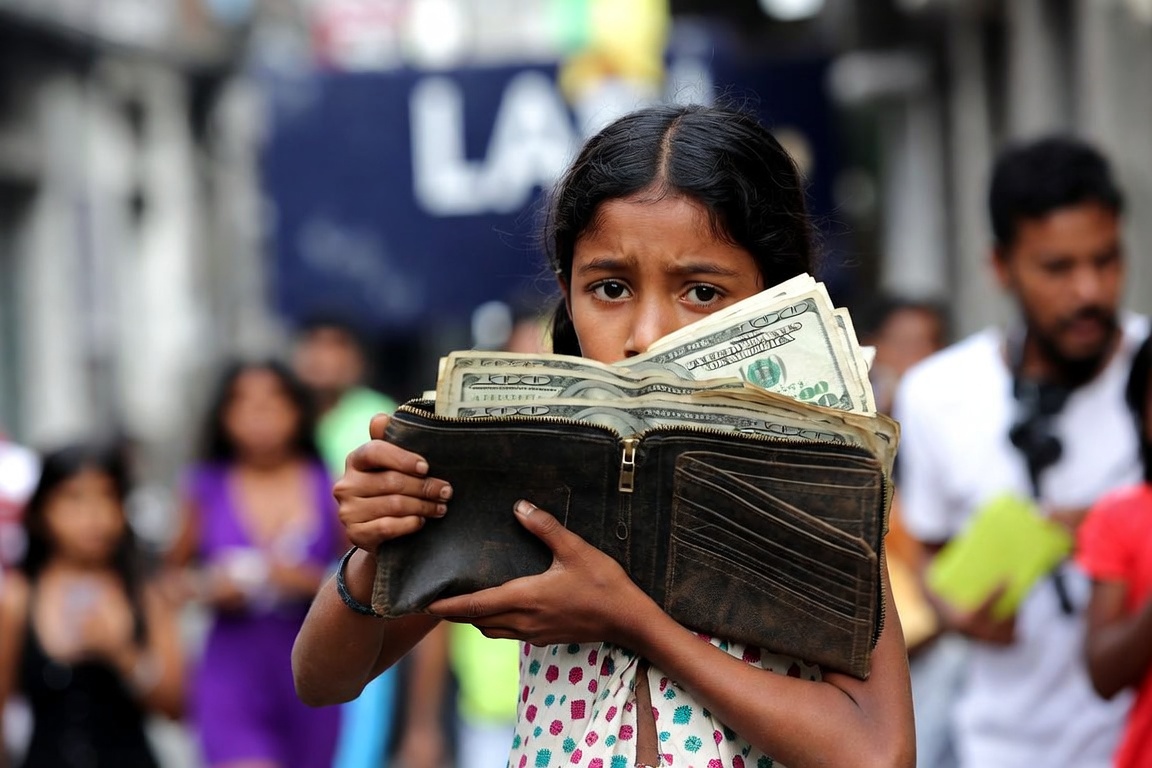
The little girl stole Eric Brian’s wallet in broad daylight.
Not from a table.
Not from an open briefcase.
She pulled it straight from the inside pocket of his tailored jacket while he stood on the busiest avenue in the city, surrounded by executives, chauffeurs, street vendors, and people who recognized his face from business magazines.
For one stunned second, nobody moved.
Then the girl ran.
“Hey!”
Eric’s shout cut through the traffic.
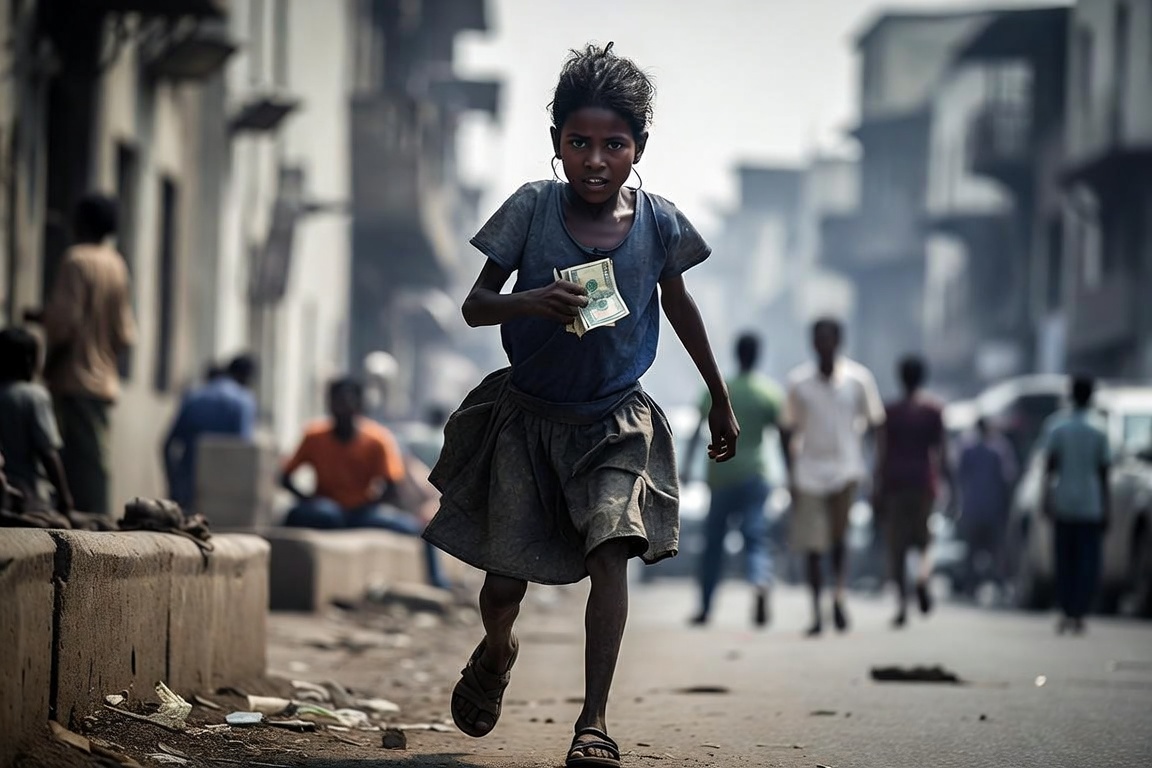
The child glanced back once. She could not have been older than eleven. Her faded blue dress hung loosely from her thin shoulders, and one of her sandals was held together by a piece of string.
She clutched his wallet against her chest and disappeared between two fruit stalls.
Eric did not think.
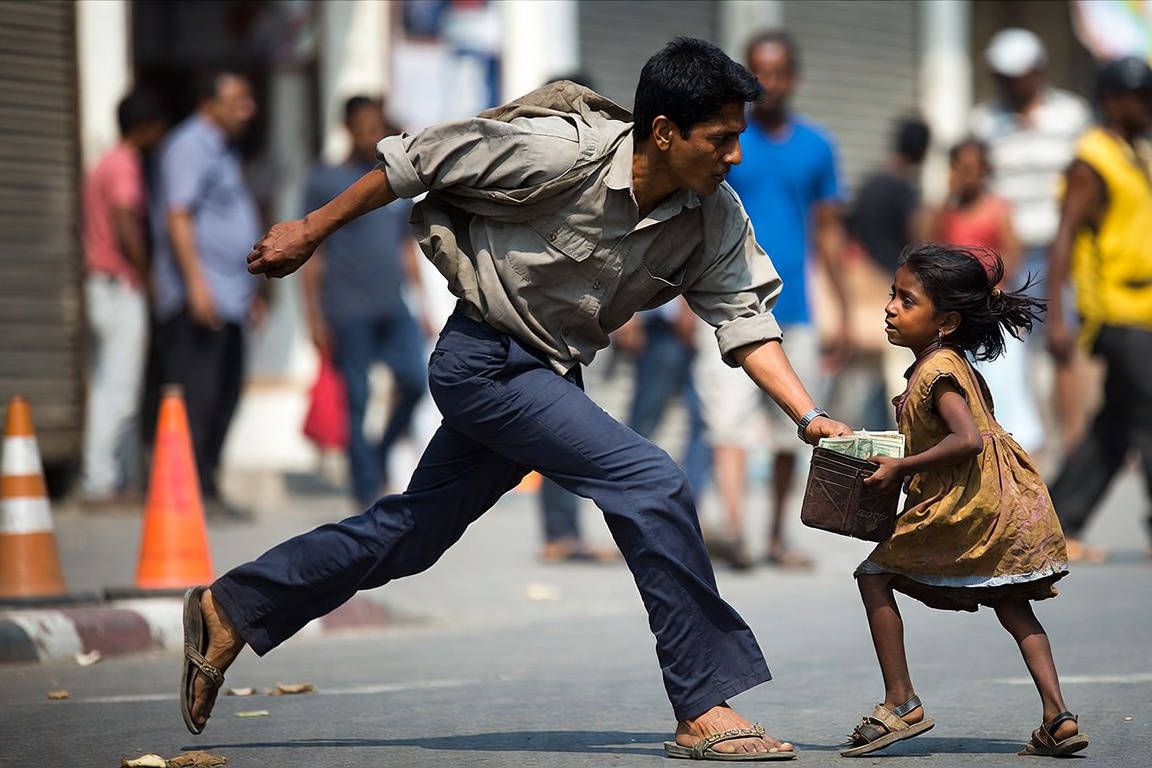
He chased her.
His assistant called after him. A security guard rushed forward. A black sedan waited at the curb with its rear door open.
Eric ignored all of it.
He was one of the richest men in the country. His photograph appeared on airport billboards. Politicians returned his calls. Entire companies changed direction when he entered a meeting.
And now a ragged child had reached into his jacket as though he were just another careless man on the street.
The humiliation burned hotter than the loss.
“Stop!” he shouted.
The girl kept running.
She moved through the crowd with desperate speed, slipping between pedestrians and market carts, nearly falling twice. Eric followed, expensive shoes striking cracked pavement, anger pushing him deeper into a part of the city he usually saw only through tinted glass.
She crossed an intersection against the light.
A taxi screamed to a stop.
The driver leaned on his horn, but the girl did not slow down.
Neither did Eric.
He was close enough now to see how badly she was limping.
Still, she ran.
She ran as though the wallet did not contain money.
She ran as though it contained time.
The avenue narrowed into a row of old buildings. Glass storefronts became rusted shutters. Clean sidewalks gave way to broken concrete. The crowd thinned.
The girl turned sharply into an alley.
Eric followed.
The alley was narrow, sunless, and blocked at the far end by a high brick wall.
She stopped.
For several seconds, the only sound was their breathing.
The girl turned around slowly.
Her back pressed against the wall. Her small hands trembled around the wallet.
Eric stepped toward her.
“Give it back.”
She did not move.
“I said give it back.”
He held out his hand.
The girl’s eyes shifted toward the alley entrance, but there was nowhere to go. Eric stood between her and the street.
“You thought you could steal from me and disappear?” he said. “Do you know what happens to people who do that?”
Her lips parted, but no words came.
Eric took another step.
The girl flinched.
That should have stopped him.
It did not.
He reached forward and pulled the wallet from her hands.
She released it immediately.
Eric opened it.
The cash was still there.
Every bill.
His credit cards remained in their slots. His identification had not been touched. Even the folded receipt from a hotel dinner was exactly where he had left it.
He looked up.
The girl was still pressed against the wall.
“What is this?”
She stared at the ground.
“You took my wallet, but you didn’t take anything.”
Silence.
Eric’s anger shifted into confusion.
“Why?”
The girl swallowed.
When she finally spoke, her voice was so quiet that he nearly missed it.
“Because I didn’t want your money.”
Eric frowned.
“Then why did you steal it?”
Her eyes lifted to his.
They were not the eyes of a thief.
They were exhausted eyes. Hollow eyes. The eyes of someone who had been awake for too many nights, listening to something terrible happen in the dark.
“I needed you to follow me,” she whispered.
Eric said nothing.
The girl tightened her fingers around the side of her dress.
“My mother is dying.”
The rage inside him disappeared so quickly that it left him unsteady.
“What?”
“She has been sick for days. She can’t stand anymore. She keeps burning, then shaking. She says she’s fine, but last night she forgot my name.”
Eric stared at her.
The girl continued, each word coming faster now, as though silence had been holding them back.
“I asked everyone near our building. I knocked on doors. I went to the clinic. I went to the pharmacy. They said I needed money. I tried to speak to people on the rich street, but no one stopped.”
Her voice cracked.
“You looked at me.”
Eric felt something tighten in his chest.
“You looked at me for one second,” she said. “So I thought if I took something important, you would have to see me.”
She wiped her face quickly with the heel of her hand.
“I’m sorry. I wasn’t going to keep it. I just needed someone to come.”
The alley seemed to grow smaller around him.
Minutes earlier, Eric had imagined police officers dragging her away. He had imagined teaching her a lesson about consequences.
Now he saw the broken sandal.
The thin wrists.
The dirt beneath her fingernails.
The way she had chosen a dead-end alley because she had never intended to escape.
She had only needed to be caught.
“What is your name?” he asked.
“Zara.”
“How old are you?”
“Eleven.”
“Where is your father?”
“He left when I was little.”
“Any relatives?”
She shook her head.
“My mother is all I have.”
Eric looked at the wallet in his hand.
The leather was handmade in Milan. It had cost more than most families in this neighborhood earned in several months.
For years, he had carried it without thinking.
Zara had risked arrest to make him notice her for five minutes.
“Take me to your mother,” he said.
She blinked.
“What?”
“Take me to her.”
Suspicion appeared on her face.
“Are you calling the police?”
“No.”
“You won’t let them take me?”
“No one is taking you anywhere.”
She searched his expression as though kindness were a language she no longer trusted.
Then she stepped away from the wall.
“This way.”
They left the alley together.
At the entrance, Eric’s assistant and two security guards were waiting, breathless and alarmed.
“Mr. Brian,” his assistant said, “we called local security. The girl—”
“Cancel it.”
The assistant looked at Zara.
“Sir?”
“I said cancel it.”
Eric placed the wallet back inside his jacket.
“My meeting is postponed.”
“But the investors are already—”
“Postponed.”
His voice left no room for discussion.
Zara began walking.
Eric followed her.
The distance from the financial district to her neighborhood was less than two miles, but it felt like crossing between two countries.
They passed coffee shops where people paid twelve dollars for drinks they abandoned half-finished.
Then they passed a corner where three children shared a piece of bread.
They walked beneath towers carrying Eric’s company logo.
Then they entered streets where electricity came and went without warning.
The buildings became smaller, older, and more crowded. Water ran along the gutters. Laundry hung between windows. Rusted roofs leaned under the weight of years.
People watched Eric as he passed.
His suit did not belong there.
Neither did the watch on his wrist, nor the polished shoes now coated in dust.
Zara moved quickly, looking back every few steps to make sure he had not changed his mind.
At the end of a narrow lane, she stopped beside a building with cracked yellow walls.
The front door hung unevenly from one hinge.
“Upstairs,” she said.
The stairwell smelled of damp concrete and smoke. There were no lights. Zara climbed by memory.
On the third floor, she pushed open a wooden door.
The room behind it was barely large enough for a bed, a table, and a small cooking stove.
A woman lay on a thin mattress near the window.
Her face shone with fever.
A damp cloth rested on her forehead, but it had long since warmed against her skin.
“Mama?”
Zara rushed to her side.
The woman did not respond.
Zara touched her shoulder gently.
“Mama, I brought someone.”
The woman’s eyes opened a fraction.
“Zara?”
“I’m here.”
Her mother tried to sit up, but a violent cough forced her back down.
Eric stood near the door.
He had visited poverty before.
He had toured charity projects with photographers. He had opened shelters with cameras recording every handshake. He had sat at polished tables while nonprofit directors explained hunger using charts.
This was different.
There were no cameras.
No prepared speeches.
No applause.
Only a child kneeling beside her mother, pretending not to be terrified.
Eric approached the mattress.
“How long has she been like this?”
“Five days,” Zara said.
“Has a doctor seen her?”
“At the clinic.”
“What did they say?”
“She had an infection. They gave us medicine for two days.”
“Only two?”
“We could not pay for the rest.”
Eric looked around the room.
On the table stood an almost empty bottle of water, half a packet of crackers, and a plastic pharmacy bag.
He picked it up.
Inside was a prescription.
The medication was common.
The cost printed at the bottom was less than what Eric had spent on lunch the previous afternoon.
“Why didn’t you take her to the hospital?” he asked.
Zara looked down.
“We did.”
“And?”
“They kept her one night. Then they asked about insurance.”
Eric’s jaw tightened.
“We don’t have any,” she continued. “They said we still owed money from before. They gave us papers and told us to go home.”
Her mother began shaking.
At first it was subtle. Then her whole body trembled beneath the thin blanket.
Zara grabbed her hand.
“Mama?”
Eric pulled out his phone.
“I need an ambulance,” he said as soon as the call connected. He gave the address, repeated it twice, then added his name.
The operator’s tone changed immediately.
“Highest priority,” Eric said. “Send a medical team now.”
He ended the call.
Zara stared at him.
“Will they come?”
“Yes.”
“They said that before.”
“They will come.”
“How do you know?”
Eric looked at her.
“Because this time they know who called.”
The answer left a bitter taste in his mouth.
Zara seemed to understand the unfairness of it even if she did not respond.
Eight minutes later, sirens entered the neighborhood.
People opened windows. Children ran toward the lane. A medical team climbed the dark stairs carrying equipment.
The lead paramedic took one look at Zara’s mother and began issuing orders.
“Severe dehydration. High fever. Blood pressure dropping.”
They placed an oxygen mask over her face.
Zara stepped back, trembling.
Eric put a hand on her shoulder.
She stiffened at first, then allowed it.
As the paramedics lifted the woman onto a stretcher, her eyes opened.
She saw Eric.
Confusion crossed her face.
“Who…?”
“He’s helping us,” Zara said.
Her mother tried to speak, but the oxygen mask muffled the words.
They carried her downstairs.
Outside, neighbors had gathered in the lane.
Some recognized Eric.
Phones appeared.
Whispers moved through the crowd.
He ignored them.
Zara climbed into the ambulance beside her mother.
A paramedic turned to Eric.
“Family only.”
“She has no one else,” Eric said.
The paramedic hesitated.
Eric stepped inside.
“Then today, she has me.”
The ambulance doors closed.
At the hospital, everything happened quickly until money entered the conversation.
Doctors rushed Zara’s mother into emergency care. Nurses attached monitors, started fluids, drew blood, and moved her behind a set of swinging doors.
Zara stood in the hallway staring after her.
Eric remained beside her.
Twenty minutes later, a hospital coordinator approached carrying a tablet.
“Mr. Brian?”
“Yes.”
“We understand you arrived with the patient.”
“I did.”
“Are you a relative?”
“No.”
The coordinator glanced at Zara.
“We need a guardian to complete intake.”
“She is eleven.”
“Yes, which creates a complication.”
“Her mother is unconscious.”
“I understand, but the patient has an outstanding balance from a previous admission. There is also no active insurance policy, no government assistance record, and no verified employment.”

Eric stared at her.
“She is in emergency care.”
“She is currently being stabilized. However, if the physician recommends extended treatment, we will need a financial authorization.”
“Then authorize it.”
The coordinator paused.
“I’m sorry?”
“I’ll pay.”
Zara looked up at him.
The woman’s professional smile returned.
“Of course. We’ll need a deposit.”
“How much?”
She named an amount.
Eric pulled a card from his wallet.
The same wallet Zara had taken less than an hour earlier.
He handed it over.
The coordinator left.
Zara sat on a plastic chair, her feet not quite reaching the floor.
“Will she be okay?” she asked.
Eric sat beside her.
“I don’t know yet.”
She folded her hands tightly.
“People always say that before something bad happens.”
Eric had no answer.
A security officer entered the hallway and spoke quietly to the receptionist. The receptionist pointed toward Zara.
The officer approached.
“Is this the child from Market Avenue?”
Eric stood.
“Why?”
“We received a report about a stolen wallet.”
“The report has been withdrawn.”
“We were told she may also match a description from a shoplifting incident last month.”
Zara’s face changed.
Not guilt.
Fear.
The kind of fear that came from experience.
The officer reached toward her arm.
Eric stepped between them.
“Do not touch her.”
“Sir, I’m just doing my job.”
“So am I.”
The officer recognized him then.
His posture shifted.
“Mr. Brian, I wasn’t aware—”
“That is the problem.”
The hallway became quiet.
Nurses slowed. A receptionist looked up. Two families waiting nearby turned to watch.
“You were not aware who I was,” Eric continued. “And the moment you became aware, your tone changed.”
The officer’s face reddened.
“We had a complaint.”
“The wallet was mine. Nothing was taken. I withdrew the complaint.”
“There is still the other incident.”
Zara spoke from behind Eric.
“I took bread.”
The words were barely audible.
Eric turned.
She looked at the floor.
“My mother had not eaten for two days.”
The officer crossed his arms.
“Taking something without paying is still theft.”
Eric looked at him.
“So is sending a dying woman home because she cannot produce a card.”
The officer said nothing.
“You are not removing this child from the hospital while her mother is fighting for her life,” Eric said. “Any questions can wait. If you believe otherwise, call your supervisor and ask him to call me.”
Recognition spread through the officer’s face—not of Eric’s name, but of the power attached to it.
His mouth opened.
Then closed.
He took one step back.
“All right. We’ll follow up later.”
As he walked away, the families in the waiting area continued watching.
Zara stared at Eric.
“Why did he listen to you?”
Eric sat down again.
“Because people listen when they think there will be consequences.”
“Would he have listened to me?”
The question struck harder than accusation.
“No,” Eric said.
Zara looked toward the emergency doors.
“That’s why I took your wallet.”
Hours passed.
Eric missed three meetings.
His assistant sent updates. The board wanted to know whether the acquisition vote should proceed without him. A finance director marked an email urgent. A television network requested a comment about the photographs circulating online.
Eric turned off his phone.
Near noon, a doctor entered the hallway.
“Family of Elena Torres?”
Zara jumped to her feet.
“That’s my mother.”
The doctor looked at Eric.
“I’m Eric Brian. I’m covering her care.”
The doctor nodded.
“She has severe pneumonia complicated by an untreated bacterial infection. Her oxygen levels were dangerously low. We have started intravenous antibiotics, but there is fluid around one lung.”
Zara’s face went pale.
“Is she going to die?”
The doctor crouched so they were at eye level.
“We are doing everything we can.”
Eric heard the phrase Zara hated.
He stepped forward.
“What does she need?”
“Continued monitoring, a drainage procedure, several days of intensive treatment, possibly surgery if she does not respond.”
“Do it.”
“There are authorization protocols—”
“I already provided payment.”
“This is beyond the initial deposit.”
“Then take another.”
The doctor hesitated.
“The hospital administrator will need to approve the procedure schedule.”
“Why?”
“Because the patient has a prior unpaid balance and no long-term coverage.”
Eric stared at him.
“You just said she may die.”
“I understand your frustration.”
“No, you understand the policy. I understand the sentence you just said.”
The doctor lowered his voice.
“I am trying to help her. But I cannot control administration.”
Eric took out his phone.
He called the chairman of the hospital board.
The man answered on the second ring.
“Eric, I heard you were in the building.”
“I am.”
“What’s going on?”
“A woman named Elena Torres needs immediate treatment. Your staff is discussing balances while fluid collects around her lung.”
A pause.
“I’m sure they are following standard procedure.”
“Then your standard procedure is a disgrace.”
“Eric—”
“I have donated to this hospital for nine years. My name is on the east wing.”
“It is, and we are grateful.”
“Take it off.”
Silence.
“Excuse me?”
“Remove my name from the building unless this woman receives every treatment her doctors recommend without another delay.”
“Let’s not make an emotional decision.”
Eric looked at Zara.
She stood beneath fluorescent lights wearing a torn dress and broken sandals, listening to wealthy men debate whether her mother deserved oxygen.
“This is the first decision I’ve made today that is not emotional enough.”
The chairman’s tone changed.
“I’ll call administration.”
“Do it now.”
Within ten minutes, the coordinator returned with new forms.
Within twenty, Elena was moved to a private critical-care room.
Within an hour, the drainage procedure began.
Zara watched everything with cautious disbelief.
She did not thank Eric again.
He was glad.
Gratitude would have made it easier for him to imagine he had solved something.
He had not.
He had merely forced one door open because he possessed the kind of name that could open it.
That evening, Elena’s condition stabilized.
The doctor said the next twenty-four hours would remain critical, but the antibiotics were beginning to work.
A nurse brought Zara a sandwich.
She ate half and wrapped the rest carefully in a napkin.
“You can finish it,” Eric said.
“It’s for Mama.”
“They’ll give her food when she can eat.”
Zara still placed the sandwich in her bag.
Scarcity had taught her not to trust promises made by full people.
Eric sat across from her.
“Where do you go to school?”
“I don’t.”
“Why not?”
“I did before Mama got sick.”
“How long ago?”
“A few months.”
“Who stays with you during the day?”
“No one.”
“Does anyone check on you?”
She shook her head.
Eric looked through the glass wall at Elena.
For the first time, he wondered how many forms, policies, and silent decisions had been required for a child to vanish from school without anyone coming to find her.
The next morning, Elena opened her eyes.
Zara was asleep with her head resting beside the bed.
Eric stood near the window speaking quietly with a nurse.
“Elena?” the nurse said.
Her eyes moved slowly around the room.
Then they found Zara.
Her fingers twitched.
Zara woke instantly.
“Mama?”
Elena tried to raise her hand.
Zara caught it with both of hers.
“You’re okay,” she said, crying now. “You’re in the hospital. They gave you medicine.”
Elena looked toward Eric.
Fear and confusion entered her face.
“Who is he?”
Zara wiped her cheeks.
“His name is Eric. He helped us.”
Elena’s expression did not soften.
“Why?”
The question was not rude.
It was careful.
People who had survived by expecting disappointment did not accept miracles without checking the price.
Eric stepped closer.
“Your daughter found me.”
Zara looked down.
Elena noticed.
“What happened?”
“She took my wallet.”
Elena’s eyes widened.
“Zara!”
“She didn’t take any money,” Eric said quickly. “She only wanted me to follow her.”
Elena closed her eyes.
Shame crossed her face.
“I’m sorry.”
“You have nothing to apologize for.”
“My child should never have had to do that.”
“No,” Eric said. “She should not have.”
Something in his voice made Elena look at him again.
He did not mean that Zara should have behaved differently.
He meant the world should never have placed her in that position.
A nurse entered carrying Elena’s updated file.
She checked the IV line, adjusted the monitor, and set the folder on the table.
A printed employment history form lay on top.
Eric glanced at it.
Then froze.
Under previous employer, it read:
Brian Global Holdings.
He picked up the page.
“You worked for my company?”
Elena’s face became guarded.
“I cleaned offices at the West Tower.”
“For how long?”
“Six years.”
Eric stared at the form.
“When did you leave?”
“I did not leave.”
Her voice remained weak, but the distinction was clear.
“I was removed.”
“When?”
“Eight months ago.”
Eric felt a cold pressure settle behind his ribs.
“Why?”
“They said the company was restructuring. The cleaning team was outsourced.”
The word struck him with terrible familiarity.
Restructuring.
He had used it in dozens of meetings.
It sounded clean.
Responsible.
Necessary.
Elena continued.
“The new contractor kept some workers. Not me. They said I had missed too many days.”
“Why had you missed work?”
“Zara had a lung infection. I stayed home with her.”
Eric looked at Zara.
She sat quietly beside the bed.
“What happened after you lost the job?” he asked.
Elena gave a tired laugh with no humor in it.
“What happens to everyone without savings?”
She looked toward the window.
“We used the last money for rent. Then we moved. I found temporary work washing dishes, but the hours changed every week. When I got sick, they replaced me.”
Eric’s fingers tightened around the paper.
“Did you receive severance?”
“No.”
“Health coverage?”
“It ended the day the contract changed.”
“That was not supposed to happen.”
Elena looked at him.
“It happened.”
Three words.
No anger.
No dramatic accusation.
That made them worse.
Eric sat down.
Memory returned in fragments.
A boardroom thirty floors above the city.
A presentation titled Operational Efficiency Initiative.
Colored graphs.
Projected annual savings.
A consultant explaining that outsourcing facilities staff would reduce liability and improve flexibility.
Eric remembered asking one question.
“How much?”
“Fourteen million annually,” the finance director had replied.
Eric had nodded.
“Approve it.”
The discussion had lasted less than seven minutes.
He had never asked how many people would lose insurance.
He had never asked whether missed shifts were connected to sick children.
He had never asked what happened after the savings appeared on the next quarterly report.
Fourteen million dollars.
A line on a screen.
Applause from investors.
A larger bonus for the executive team.
And an eleven-year-old girl running through traffic with his wallet because her mother could not breathe.
Eric placed the paper on the table.
“I approved that restructuring.”
Elena said nothing.
“I did not know your name,” he continued.
“That made it easier.”
Her words were quiet.
They landed with more force than shouting.
Eric looked at her.
Elena’s breathing was still shallow, but her eyes were steady now.
“You didn’t have to know my name,” she said. “You only had to know people worked there.”
The room fell silent.
Zara looked from her mother to Eric.
He had spent years being praised for making difficult decisions.
He had told interviewers that strong leaders could separate emotion from business.
He had been admired for his ability to cut quickly, close divisions, and remove what reports called inefficiency.
Now the consequence of that efficiency lay in a hospital bed.
Elena had not become poor because she lacked discipline.
She had not lost everything because she refused to work.
She had cleaned his buildings at night while he slept.
Then one morning, a decision with his signature erased her job, her insurance, and the fragile structure holding her life together.
Eric stood and walked toward the window.
Far below, cars moved through the city.
From this height, poverty was invisible.
Everything looked organized.
That had always been the danger.
“I’m sorry,” he said.
Elena watched him.
“I know that doesn’t repair anything.”
“No,” she said. “It doesn’t.”
He nodded.
For perhaps the first time in years, nobody rushed to soften the truth for him.
No assistant reframed it.
No lawyer reduced it to risk.
No communications director prepared a statement.
“I will cover your treatment,” he said.
“You already did.”
“And your housing.”
Elena’s face hardened slightly.
“I do not want charity.”
“This is not charity.”
“What is it?”
Eric turned back toward her.
“A debt.”
She held his gaze.
“You cannot pay every person harmed by one decision.”
“No,” he said. “But I can stop pretending the decision was harmless.”
He picked up his phone and called his chief operating officer.
The man answered immediately.
“Eric, the board has been asking—”
“I need the complete file on the facilities outsourcing program.”
A pause.
“Which part?”
“All of it. Contracts, dismissals, severance records, health-benefit termination dates, complaints, appeals, everything.”
“That is a large review.”
“Start now.”
“Is this about the hospital photos?”
“It is about the people we removed.”
“We followed legal procedure.”
Eric looked at Elena.
“I did not ask whether it was legal.”
The executive fell silent.
“Bring the board together tomorrow morning,” Eric continued.
“We already postponed the acquisition vote.”
“Cancel it.”
“Eric, that deal has taken nine months.”
“Then it can survive one more week.”
“What should I tell them?”
“Tell them we are reviewing what our savings cost other people.”
The next morning, Eric entered the Brian Global boardroom wearing the same suit he had worn when Zara stole his wallet.
He had not gone home.
Twelve executives sat around the long glass table. Screens displayed market projections and acquisition models.
His chief financial officer began speaking before Eric had taken his seat.
“We understand yesterday was upsetting, but we should be careful not to let one emotional case disrupt the strategic direction of the company.”
Eric looked at him.
“One emotional case?”
“I mean one unfortunate situation.”
Eric placed Elena’s employment record on the table.
Then he placed a stack of additional files beside it.
His team had worked through the night.
The files contained hundreds of names.
Workers who had lost coverage.
Workers who had filed appeals and received no response.
Workers dismissed after absences related to illness, caregiving, or transportation problems.
People reduced to employee identification numbers.
The chief financial officer glanced at the stack.
“We cannot assume the company is responsible for everything that happened afterward.”
“No,” Eric said. “But we can stop assuming we are responsible for nothing.”
The general counsel leaned forward.
“All outsourcing decisions complied with labor requirements.”
“Then the requirements were too low.”
“That is not a legal conclusion.”
“It is a moral one.”
The room shifted.
Eric had rarely used words like moral in meetings. He had considered them imprecise.
Now he understood that financial language could also be imprecise.
Savings did not reveal who skipped medicine.
Efficiency did not show who lost a home.
Headcount reduction did not show a child stealing a wallet to summon help.
A board member cleared his throat.
“What exactly are you proposing?”
Eric pressed a button.
The acquisition presentation disappeared.
A new document filled the screen.
“First, we establish a compensation fund for every facilities employee displaced in the outsourcing program.”
The chief financial officer shook his head.
“That could cost tens of millions.”
“We saved fourteen million in the first year.”
“That money has already been allocated.”
“Then unallocate it.”
“Eric—”
“Second, we restore health coverage retroactively for workers whose benefits ended without transition support.”
“That is administratively complicated.”
“So was removing them. We managed that quickly.”
No one answered.
“Third, any future restructuring requires an impact review that includes health coverage, caregiving responsibilities, severance, and reemployment support.”
A board member frowned.
“We are not a social agency.”
“No,” Eric said. “We are an employer. That should mean something.”
The chief financial officer leaned back.
“And what triggered this transformation? A girl stealing your wallet?”
Eric looked around the table.
“Yes.”
A few executives exchanged glances.
He continued before anyone could speak.
“She stole it because people like us had trained her to believe that the only way to be noticed was to create a problem powerful enough to inconvenience us.”
The room became completely still.
Eric placed both hands on the table.
“She did not take one dollar. She ran until I followed her to a room where her mother—our former employee—was dying after losing the insurance attached to the job we eliminated.”
The chief financial officer’s face changed.
Not enough to become remorse.
Enough to become uncomfortable.
Eric saw it.
The first moment of recognition.
The executive looked down at Elena’s file. Then at the stack of names. Then at the glass wall overlooking the city.
For the first time, the numbers had faces.
“I approved the program,” Eric said. “So I am not standing here to blame this table while protecting myself. My signature is on it. My bonus increased after it. My name appears on the annual report that celebrated the savings.”
He paused.
“That ends today.”
The board voted for the review.
Not unanimously.
But enough.
Over the following weeks, Elena recovered slowly.
The infection left her weak, but she could breathe without assistance. The color returned to her face. She began walking the hospital corridor with Zara beside her.
Eric visited almost every day.
At first, Elena remained cautious.
He never blamed her.
He had learned that trust offered too quickly by the powerful was often another kind of demand.
So he did not ask for forgiveness.
He showed up.
He arranged for an independent attorney to help Elena review every document connected to her dismissal.
He paid the hospital directly, but placed additional money in a protected account controlled by Elena—not by him.
He found a temporary apartment near Zara’s former school.
When Elena objected, he explained that it was part of a compensation package being offered to other displaced workers as well.
“You are not an exception,” he told her. “You are the reason we finally looked.”
Zara returned to school three weeks later.
On her first morning, she stood in the apartment doorway wearing a clean uniform and new shoes.
She looked down at them repeatedly.
“They feel strange,” she said.
“Because they fit,” Elena replied.
Eric had come to drive them, but Elena insisted they take the bus.
“She needs to know how to get there herself,” she said.
So Eric rode the bus with them.
Passengers recognized him. A few took pictures. He ignored them.
Zara sat by the window.
At one stop, they passed the avenue where she had taken his wallet.
She looked at Eric.
“Were you very angry?”
“Yes.”
“Did you hate me?”
“For about thirty seconds.”
“What changed?”
He considered the question.
“You made me open the wallet.”
Zara frowned.
“But you already owned it.”
“I had owned it for years,” he said. “I had never really opened it.”
She did not fully understand, but Elena did.
Months later, Brian Global announced a worker restoration program.
The press described it as an ambitious corporate responsibility initiative.
Eric disliked the phrase.
It made the change sound generous.
He knew better.
Former employees received back pay, medical support, job placement assistance, or direct reinstatement where possible. Some returned. Others refused.
Several spoke publicly about the damage the outsourcing program had caused.
Eric did not silence them.
At the first employee forum, a former cleaner stood at a microphone and said, “You did not save us. You stopped hurting us.”
The room waited for Eric to react.
He nodded.
“You’re right.”
That clip spread online faster than any prepared speech his communications team had ever produced.
A year after the chase, Elena entered the lobby of the West Tower again.
Not as a cleaner.
She had completed a training program in workplace services administration and accepted a position on the company’s employee support team.
She had been hesitant.
“I do not want a job because you feel guilty,” she told Eric.
“You are not being hired because of my guilt.”
“Then why?”
“Because you understand what our policies look like from the other side.”
Her role gave her authority to intervene when workers faced medical emergencies, caregiving crises, eviction risk, or sudden benefit loss.
On her first day, she wore a dark green blouse and carried a folder beneath her arm.
Employees who remembered her stopped in the hallway.
Some hugged her.
Some cried.
Eric watched from a distance.
He did not step into the moment.
It belonged to her.
Zara changed too.
She grew stronger. She laughed more easily. She joined a school reading club and became known for asking questions teachers could not answer quickly.
But she kept the old broken sandal.
Elena once asked why.
Zara placed it in a box beneath her bed.
“So I remember I could still run.”
Eric kept something as well.
The wallet.
He never replaced it, though the leather became scratched and the stitching loosened.
Inside, behind his identification card, he placed a small folded piece of paper.
It contained one sentence Zara had written for him during a school assignment:
People do bad things sometimes because every good way has been closed.
Two years after their first meeting, Eric invited Zara and Elena to the annual Brian Global leadership conference.
Thousands of employees filled the auditorium.
Executives sat in the front rows.
The event had once focused almost entirely on profit, growth, and market expansion.
That year, Eric walked onto the stage carrying no presentation remote.
Only the wallet.
A large image of Zara’s original pharmacy receipt appeared on the screen behind him.
The amount was small.
Less than the cost of one dinner in the boardroom.
“This,” Eric said, “is what stood between one of our former employees and the medicine she needed to stay alive.”
The room was silent.
He told them about the street.
The chase.
The alley.
He did not call himself a hero.
He described his anger. His pride. His failure to see the child in front of him.
Then he invited Zara onto the stage.
She was thirteen now.
Still small, but no longer fragile.
She walked toward the microphone as the audience applauded.
Eric raised a hand.
The applause faded.
“Do not applaud her yet,” he said. “Listen to her first.”
Zara looked across the auditorium.
In the front row sat the same chief financial officer who had once called her mother one unfortunate situation.
He had remained with the company after publicly supporting the compensation program, though his influence had changed. He was quieter now. More careful.
Zara placed both hands on the podium.
“When I took Mr. Brian’s wallet,” she began, “I knew stealing was wrong.”
No one moved.
“I also knew my mother might die before anyone agreed to help us.”
She looked toward Eric.
“I did not think a rich man would give me money because I asked. I thought he would only follow me if I took something.”
Her eyes moved toward the executives.
“And I was right.”
The words passed through the room like a current.
The chief financial officer lowered his gaze.
Zara continued.
“I am not proud that I stole. But I am not ashamed that I saved my mother.”
Elena stood near the side of the stage, tears shining in her eyes.
Zara turned toward her.
“She taught me that dignity means you should never have to beg for the right to keep someone alive.”
Then she faced the audience again.
“So when your company makes a decision, and the decision looks small because it is one line in a report, please remember that someone may have to carry that line home.”
The entire auditorium remained silent.
Not empty silence.
Recognition.
The kind that arrives when people can no longer pretend they do not understand.
The chief financial officer looked up.
His face had lost its polished confidence.
His jaw tightened. His eyes moved from Zara to Elena, then to the wallet in Eric’s hand.
He finally saw it.
Not the theft.
The cost.
Eric stepped beside Zara.
“I chased her because I thought she had taken something from me,” he said.
He looked across the room.
“But the truth was, my company had taken something from her family first.”
No one applauded immediately.
The statement was too heavy for that.
Then Elena began clapping.
One person joined her.
Then another.
Within seconds, the auditorium rose.
Zara did not smile at the attention.
She reached for her mother’s hand.
Eric stood slightly behind them.
That was where he belonged.
Later, after the conference, the three of them walked outside together.
The city was loud around them. Cars moved through the avenue. Vendors called from the sidewalks. Office workers hurried past with phones in their hands.
They reached the corner where the chase had begun.
Zara stopped.
“What would you do now?” she asked Eric.
“If someone took your wallet again?”
Eric looked at the crowd.
“I would still try to get it back.”
Zara laughed.
Elena shook her head.
“But,” he added, “I would ask why before deciding who they were.”
Zara considered this.
“That’s better.”
They continued walking.
At the next intersection, a boy approached the group selling packets of tissues. Most people passed without looking.
Eric stopped.
Not because he wanted to feel generous.
Not because anyone was watching.
He stopped because he had finally learned that ignoring someone was also a decision.
He asked the boy his name.
And for the first time in his life, Eric Brian understood that power was not proven by how many people were forced to notice you.
It was proven by how quickly you noticed those the world had trained itself not to see.