The wind screamed through the Appalachian mountains like something alive.
But inside the limestone cave, six Navy SEALs heard something worse.
Static.
No emergency pulse.
No encrypted locator signal.
Nothing from Captain Daniel Ashford’s beacon except a thin electronic hiss that appeared every nine seconds and vanished before the communications unit could lock onto it.
For six hours, Hurricane Elena had torn across the mountains with winds reaching 140 miles per hour. Trees had been ripped from the earth. Roads had disappeared beneath mudslides. Entire sections of the forest were moving downhill in rivers of black water.
Our extraction helicopter had turned back before midnight.
Satellite communications had failed forty minutes later.
And somewhere outside, our commanding officer had disappeared.
Master Chief Raymond Callahan stood near the cave entrance with rainwater running from his helmet. He had been outside three times, trying to force the radio to connect with command.
Each time, he returned looking older.
At 3:17 in the morning, he finally removed his headset.
“Captain Ashford is to be considered killed in action,” he said.
No one responded.
Senior Chief Marcus Lindren stared at the cave floor. Petty Officer Jack Sullivan, our medic, slowly closed the trauma kit he had kept open for hours. Tommy O’Connor, the team’s explosives specialist, leaned against the wall with both hands wrapped around a metal cup he had forgotten to drink from.
Callahan looked at each of us.
“We move at first light,” he continued. “We’ll recover the captain’s remains when conditions allow.”
That was when I stopped cleaning my rifle.
The sound was small, but inside that cave, everyone noticed it.
Lindren lifted his eyes toward me.
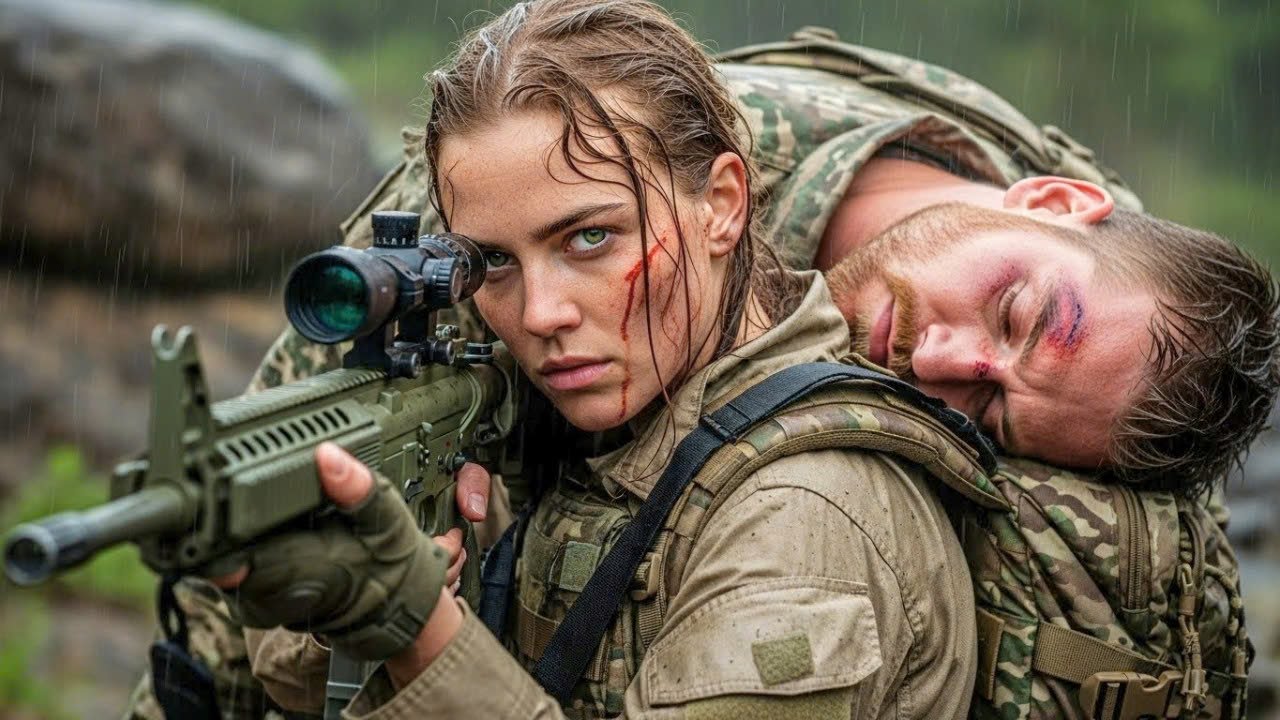
I was twenty-six years old, five feet four inches tall, and weighed barely 124 pounds with dry equipment. On paper, I was the least physically imposing operator in the cave.
That was one reason some men called me Ghost.
The other reason was that during training exercises, people rarely saw me until I wanted them to.
My official designation was Petty Officer First Class Kira Donovan, sniper and reconnaissance specialist.
To some members of the team, however, I was still the experiment.
The woman who had passed every test but somehow remained one mistake away from confirming everything they had expected.
I placed the bolt back into my rifle.
“He may not be dead,” I said.
Rain hammered the mountain outside.
Lindren exhaled through his nose.
“We lost his locator six hours ago.”
“We lost the signal,” I replied. “That isn’t the same thing.”
“He fell during the eastern ridge collapse.”
“We didn’t see him fall.”
“We saw half the mountain come down.”
“But we didn’t see him under it.”
Lindren stepped closer.
He had been a SEAL for eighteen years. His left shoulder carried the stiffness of an old gunshot wound, and his voice had the weight of someone accustomed to ending arguments.
“This isn’t a training exercise, Donovan.”
“I know.”
“Captain Ashford is eighty-seven kilograms without gear. Even if you found him alive, you couldn’t carry him through that.”
He pointed toward the cave entrance.
A wall of rain moved sideways across the opening.
“You would be risking another life for a one-percent possibility.”
I reached for the waterproof map spread across a stone ledge.
“There are three places he could have reached after the ridge collapse.”
I pointed to a narrow ravine east of our position.
“The first is a drainage cut here. It leads to a rock shelf protected from the southern wind.”
My finger moved north.
“The second is an abandoned mining tunnel approximately nine hundred meters from the collapse.”
Then northeast.
“The third is a hunting shelter marked on a county survey from 1986. It won’t appear on our current satellite maps because the structure was removed, but the concrete foundation may still be there.”
Callahan studied the coordinates.
“How do you know about the survey?”
“I reviewed every historical terrain map before the mission.”
O’Connor gave a faint smile.
“Of course you did.”
Lindren did not smile.
“The ravine will be flooded. The mine could collapse. And that hunting shelter might not have existed for forty years.”
“All true.”
“So what exactly are you proposing?”
“One hour,” I said. “I check all three locations. Radio confirmation every fifteen minutes. If I find nothing, I return before dawn.”
Lindren stared at me as if I had suggested walking into a furnace.
“You’re proposing suicide.”
“No. I’m proposing reconnaissance.”
“In a Category Four hurricane.”
“I grew up in hurricanes.”
“That doesn’t make you invincible.”
“I didn’t say it did.”
He looked at Callahan.
“Master Chief, this should not even be a discussion.”
Callahan remained silent.
That silence gave me room.
I reached beneath my body armor and pulled out the small metal badge I wore on a cord around my neck.
It was scratched, darkened with age, and polished smooth around the edges from years of being touched.
The insignia of a Coast Guard rescue swimmer was stamped across the front.
“My father earned this,” I said.
Lindren’s eyes moved toward it.
For the first time that night, something in his expression changed.
It lasted less than a second.
Then it disappeared.
“Your father isn’t here,” he said.
“No. He died during Hurricane Sandy.”
Sullivan looked down.
Everyone on the team knew the basic story.
Few knew the details.
My father, Chief Petty Officer Patrick Donovan, had launched into the Atlantic on October 29, 2012, after a commercial fishing boat lost power south of New Jersey. The rescue helicopter had been flying at the edge of survivable conditions.
The boat carried five men.
The sea was forty feet high.
The first swimmer sent down suffered a shoulder injury and had to be recovered.
My father volunteered to go next.
He pulled three men from the water personally. He secured a fourth to the basket after the man lost consciousness. Then he swam back toward the sinking vessel for the fifth.
The helicopter crew saw him reach the man.
They saw him fasten the rescue strap.
Then a wave rolled the vessel over both of them.
The fisherman was recovered alive.
My father never surfaced.
I was twelve years old.
The last thing he had told me before leaving home was that storms were not chaos.
“They have rhythm,” he said. “Most people panic because they listen only to the noise. But if you stay calm, the storm will tell you when to move.”
At the memorial, a Coast Guard commander gave my mother this badge.
I had carried it ever since.
Lindren crossed his arms.
“Being related to a rescue swimmer does not make you one.”
“No,” I said. “But being raised by one taught me something important.”
“And what is that?”
“You don’t abandon a person because the conditions make saving them inconvenient.”
His jaw tightened.
“That isn’t what this is.”
“Then give me one hour to prove it.”
The cave fell silent again.
Callahan picked up the map.
“What is your movement plan?”
I explained it without hesitation.
I would follow the western rock line, where the mountain would block the strongest gusts. I would cross open areas only during pressure lulls. I would inspect the drainage cut first, then the mining tunnel, then the old shelter foundation.
If Captain Ashford was alive, I would stabilize him and transmit his position.
If he was mobile, I would guide him back.
If he was dead, I would confirm it.
“And if you encounter hostile forces?” Callahan asked.
“Observe and withdraw.”
“Immediately?”
“Yes, Master Chief.”
Lindren laughed once, without humor.
“She’s telling you what you want to hear.”
I turned toward him.
“You think I can’t handle it because I’m smaller.”
“I think you can’t carry an injured man twice your size through hurricane winds.”
“That isn’t the same statement.”
“It becomes the same statement when he dies beside you.”
“Then I’ll make sure he doesn’t.”
His face hardened.
“That confidence will get someone killed.”
“No,” I said quietly. “Certainty gets people killed. I’m not certain he’s alive. I’m saying there’s enough evidence to check.”
Callahan looked at the watch strapped over his sleeve.
“One hour,” he said.
Lindren turned sharply.
“Master Chief—”
“One hour. Radio confirmation every fifteen minutes. Donovan, if you see anything that suggests organized enemy activity, you withdraw. No engagement unless your life is threatened.”
“Yes, Master Chief.”
“If you miss two radio checks, we consider you compromised.”
“Understood.”
Lindren stepped toward Callahan.
“This is a mistake.”
Callahan looked him in the eye.
“Then let’s hope she returns in an hour and proves us both wrong.”
I began preparing my equipment.
Sullivan added a pressure dressing, a tourniquet, antibiotics, and two doses of pain medication to my medical pouch.
“You won’t be able to treat much out there,” he said.
“I only need to keep him alive until you reach us.”
O’Connor handed me a small waterproof flashlight.
“Battery is full.”
“Thank you.”
He tapped the shamrock patch sewn to his shoulder.
“For luck.”
Lindren stood near the cave entrance as I approached.
“You still have time to reconsider.”
“Are you asking me to?”
“I’m telling you that courage and stupidity often feel exactly the same before the consequences arrive.”
I placed my father’s badge beneath my armor.
“If I die trying to bring him back, at least I’ll know why I was out there.”
“That isn’t comforting.”
“It wasn’t meant to be.”
I stepped to the edge of the cave.
The hurricane struck me so violently that my left boot slid backward across the stone.
Rain hit my face like thrown gravel.
The forest beyond the entrance appeared and vanished through sheets of moving water.
I closed my eyes.
Not because I was afraid.
Because I needed to listen.
There it was.
The rhythm beneath the noise.
Forty to fifty seconds of crushing pressure as the outer bands swept across the slope.
Then a short reduction.
Twenty-five seconds.
Sometimes thirty.
A person who fought the wind continuously would exhaust themselves in minutes.
A person who waited for the right moment could move.
My father had taught me that when I was eleven years old, standing barefoot on a Florida beach while a tropical storm approached from the Gulf.
“Don’t fight the whole ocean,” he had said. “Fight the one wave in front of you.”
I opened my eyes.
The wind eased.
I moved.
The first hundred meters took nearly eight minutes.
Mud pulled at my boots. Broken branches flew between the trees. Twice, I dropped flat as pieces of the forest passed over me.
At the first radio check, I pressed the transmitter close to my mouth.
“Ghost to Shelter. Fifteen-minute confirmation. No contact. Visibility approximately ten feet. Continuing east.”
Callahan answered through heavy static.
“Shelter copies. Return if conditions worsen.”
Conditions could not have worsened without the mountain itself splitting open.
But I did not say that.
The drainage cut was filled with brown water moving fast enough to carry entire trees. I followed it north and checked the protected shelf.
Nothing.
No footprints.
No equipment.
No blood.
I marked it and moved toward the abandoned mining tunnel.
A large oak collapsed thirty feet in front of me.
The ground shook when it landed.
One of its upper branches struck the exact place where I would have been if I had moved during the gust instead of waiting.
I stared at it for half a second.
Then kept going.
At twenty-three minutes, I found the first sign.
A strip of camouflage fabric hung from a broken section of rock.
The edges were fresh.
The dye was still bleeding into the rain.
I removed it carefully.
There was a dark stain along one side.
Blood.
I transmitted.
“Ghost to Shelter. I found uniform fabric approximately four hundred meters east of the ridge. Possible blood trace. Evidence appears recent.”
Callahan answered immediately.
“Can you confirm it belongs to the captain?”
“Negative. But it matches his outer layer.”
Lindren’s voice came through.
“Donovan, fabric can travel in this wind.”
“Not into a crack beneath an overhang.”
Silence.
Then Callahan spoke.
“Continue to the next location.”
I climbed another two hundred meters.
At thirty-one minutes, I found a footprint beneath a slab of tilted stone.
The rain had not erased it because the rock protected the ground.
Size eleven.
Deep pressure on the right heel.
Captain Ashford had injured his left knee during a parachute operation three years earlier. When exhausted, he favored that leg, placing more weight on his right foot.
There was a second print farther ahead.
Then another.
He had been walking.
“Ghost to Shelter,” I said. “Confirmed human tracks. Size and gait are consistent with Captain Ashford. Estimated less than two hours old.”
No one answered for several seconds.
Then Sullivan’s voice came through.
“If he was walking two hours ago, he may still be alive.”
Lindren cut in.
“Or someone else is wearing his boots.”
“Why would anyone wear wet boots from an injured prisoner during a hurricane?” I asked.
No response.
Callahan said, “Follow the tracks. Ten minutes only.”
I continued northeast.
The footprints disappeared beyond the stone shelf, but broken vegetation created a trail. Someone had pushed through recently.
At thirty-eight minutes, I heard voices.
I lowered myself behind a cluster of rocks.
The language was Russian.
Four men moved through the trees approximately ninety meters ahead.
They wore mixed civilian and military equipment without national insignia. Their spacing was disciplined. Their weapons remained angled toward likely threat positions despite the storm.
These were not local criminals.
Two men carried a stretcher improvised from branches and tactical webbing.
A man lay on it.
Even through the rain, I recognized the torn sleeve of Captain Ashford’s uniform.
His face was gray.
His left leg hung at an unnatural angle.
But his chest moved.
He was alive.
The man walking behind the stretcher was older than the others, perhaps in his mid-fifties. A pale scar curved from the edge of his left eye toward his jaw.
I had seen his image during classified briefings.
Viktor Volkov.
Former Russian special operations.
Mercenary commander.
Suspected involvement in kidnappings, weapons transfers, and intelligence operations across three continents.
Officially, no one knew he was in the United States.
Unofficially, several agencies had been looking for him for years.
I raised the radio.
“Ghost to Shelter. I have visual confirmation. Captain Ashford is alive. Repeat, captain is alive.”
The response exploded through my earpiece.
Callahan’s voice.
“Confirm condition.”
“Unconscious or semi-conscious. Severe injury to left leg. Active bleeding. Four armed hostiles transporting him northeast.”
Lindren spoke next.
“You were ordered to withdraw after enemy contact.”
“I’m observing.”
“Then observe while moving backward.”
The four men stopped.
Volkov looked behind them.
I lowered my head.
One of the mercenaries scanned the trees with a thermal monocular.
My body had been exposed to freezing rain for nearly forty minutes. My outer clothing was close to the temperature of the rocks around me.
I pressed myself flat and did not move.
The scanner passed over my position.
The mercenary lowered it.
The group continued.
“Donovan,” Callahan said, “you are not authorized to engage.”
I watched blood drip from the bottom of the stretcher.
A dark line appeared in the mud.
“How far is the rescue element from my position?” I asked.
“We cannot move until we secure the cave equipment.”
“How long?”
“Twenty minutes at minimum.”
“Sullivan, based on visible blood loss, how long does the captain have?”
The medic hesitated.
“Without pressure and fluids? Possibly two hours. Maybe less.”
The mercenaries resumed climbing.
Their route led toward a narrow valley where a vehicle could be waiting.
If they reached it, Captain Ashford would disappear.
“Ghost,” Callahan said, “confirm you understand the order to observe and withdraw.”
I closed my eyes for one second.
I saw my father fastening his helmet in our kitchen before leaving for the last rescue of his life.
My mother had stood behind him, holding back tears.
I had asked whether the storm was too dangerous.
He knelt in front of me.
“There are moments when every sensible reason tells you not to go,” he said. “That’s why rescue crews exist. Not because we don’t feel fear. Because someone has to move toward the person everyone else is moving away from.”
Then he smiled.
“You have to go out. You don’t have to come back.”
People often misunderstood that sentence.
It did not mean life was disposable.
It meant duty could not be conditional on guaranteed survival.
I opened my eyes.
“I understand the order,” I said.
Then I began moving parallel to Volkov’s team.
The lead mercenary checked the path ahead.
Two carried the stretcher.
The fourth protected the rear.
Volkov moved beside the captain, occasionally checking his pulse.
He did not want Ashford dead.
That mattered.
A captor who needed a prisoner alive could be manipulated.
A captor who wanted a body could not.
I changed position during the strongest gusts, when branches, rain, and thunder covered my movement. During the quieter intervals, I remained still.
At forty-five minutes, Callahan transmitted again.
“Ghost, you have exceeded your authorized time. Report your movement.”
I did not answer immediately.
“Donovan,” Lindren said. “Return now.”
The rear guard turned toward the sound of a distant tree falling.
He was ninety-five meters from me.
The wind between us shifted left to right.
I studied the vegetation instead of relying on instruments. Leaves twisted. Rain changed angle. Mist flowed across the rock.
I could make the shot.
But making one shot was not the problem.
The problem was what happened after it.
“Ghost,” Callahan repeated. “I need your status.”
I pressed the transmitter.
“I remain the only friendly asset in position to prevent the captain’s extraction.”
“That does not change your order.”
“If I withdraw, they reach the valley in ten minutes.”
“Reinforcements are moving.”
“They won’t arrive in time.”
Lindren broke in.
“You cannot stop four trained men alone in this weather.”
I looked through the optic.
“I don’t need to stop four at once.”
Callahan remained silent.
“State your plan,” he said.
“Remove the rear guard. Reposition. Remove the lead. Their stretcher team will lose mobility. I’ll continue to disrupt until you reach us.”
“You have no support.”
“I have concealment.”
“You have hurricane-force wind.”
“So do they.”
Sullivan’s voice entered the channel.
“Master Chief, if they keep moving him without controlling the bleeding, the captain may not survive another hour.”
Callahan breathed heavily into the microphone.
“Ghost, engage only if you can maintain separation. The moment they close your position, you withdraw.”
“Understood.”
Lindren said something away from his microphone.
Then Callahan gave the order.
“You are cleared to engage at your discretion.”
I settled behind the rifle.
The rear guard paused near a tree.
The storm surged.
The branches bent.
I waited.
The gust began to weaken.
He took one step into the open.
I fired.
The rifle moved against my shoulder.
The sound disappeared into thunder.
The mercenary fell before the others understood what had happened.
The two stretcher carriers dropped to one knee. Volkov dragged Captain Ashford behind a rock.
The lead guard searched the trees.
He could not determine the direction of the shot.
Rain erased the visible disturbance before it formed.
I moved twenty meters downslope.
Volkov shouted an order in Russian.
The lead guard ran toward a cluster of stones, crossing a narrow opening.
I fired once.
He spun and disappeared behind the brush.
Two down.
Volkov understood immediately.
He was not facing random fire.
He was facing a sniper who could see through the weather better than his men could.
He fired several rounds into the trees to force movement.
I remained still.
One of the stretcher carriers left cover and crawled toward the fallen rear guard.
I picked up a loose stone and threw it toward my previous position.
It struck a tree.
The mercenary fired toward the sound.
His muzzle flash gave me his exact location.
My next shot struck him high in the chest.
He collapsed beside the stretcher.
Volkov pulled Captain Ashford upright and placed a pistol against his neck.
“American!” he shouted in English. “You see your officer?”
I watched through the scope.
Ashford’s eyes were partially open.
Volkov dragged him backward.
“You fire again, he dies!”
I remained silent.
Volkov fired one shot into the ground beside Ashford’s injured leg.
The captain’s body jerked.
“Ten seconds!” Volkov shouted. “Then I put the next one in his spine!”
I removed a grenade from my vest.
Volkov expected an attack from the direction of my last shot.
I threw the grenade far to his right.
The explosion shook water from the trees.
Volkov turned instinctively.
I fired.
At that exact moment, the wind changed.
The bullet struck the rock inches from his head.
Volkov disappeared into the abandoned mining tunnel, dragging Ashford with him.
Engine noise rose from the valley.
A vehicle.
Possibly more than one.
“Ghost to Shelter,” I said. “Three hostiles down. Volkov has moved the captain into the mine. I hear approaching vehicles.”
Callahan answered.
“We are eleven minutes from your position.”
“They may arrive first.”
“How many rounds?”
“Twenty-one rifle. Two pistol magazines. One fragmentation grenade.”
“Hold observation. Do not enter the tunnel.”
A burst of gunfire struck the rock beside me.
The remaining stretcher carrier was still alive.
He had crawled beneath a fallen tree and was firing blindly.
I changed position.
His weapon stopped.
He had to reload.
I crossed the opening during a gust and reached the outer wall of the mine.
The wounded mercenary saw me.
His eyes widened.
He had expected a larger figure.
Maybe several operators.
Not one exhausted woman with mud across her face.
He raised his rifle.
I fired first.
He dropped.
The tunnel entrance was black.
Water flowed from it around my boots.
I removed my sidearm and moved inside.
The storm faded behind me.
Every sound became sharper.
Water dripping.
Stone shifting.
Ashford breathing somewhere ahead.
Volkov’s footsteps.
I switched off my light.
A gunshot flashed in the darkness.
The bullet struck the wall near my shoulder.
I dropped and moved left.
Another shot.
Volkov was aiming at the sound of water disturbed by my boots.
I picked up a loose piece of rock and threw it farther into the tunnel.
He fired toward it.
I moved forward.
The mine divided into two passages.
A low groan came from the right.
Captain Ashford.
I followed it.
Volkov fired again.
This time the bullet cut through my sleeve and burned across my upper arm.
I felt warmth beneath the cold rainwater.
Not deep.
I kept moving.
The passage opened into an old storage chamber.
Ashford lay beside a rusted metal cart.
Volkov stood behind a stone column.
Only part of his shoulder was visible.
“You are very persistent,” he said.
His voice was calm.
“You crossed a mountain for one man.”
I said nothing.
“Your command already accepted his death.”
I moved behind the cart.
“You should ask why.”
The words stopped me.
Only for a fraction of a second.
But Volkov noticed.
He laughed softly.
“You do not know.”
“Step away from him.”
“Your captain knows.”
Ashford tried to lift his head.
Volkov fired toward me.
The round struck the cart.
Rust and metal fragments flew across my face.
I fired twice at the edge of the column.
Volkov pulled back.
I removed my last grenade, held it for a moment, and rolled it toward the left side of the chamber.
Volkov moved right to escape the expected blast.
That was the direction I wanted.
The grenade detonated behind a stone divider.
The confined explosion filled the mine with dust and pressure.
Volkov staggered into the open.
I fired.
The bullet struck him beneath the ribs.
He fired once as he fell.
His round passed above my head.
I crossed the room and kicked his pistol away.
Volkov pressed one hand against his side.
Blood spread between his fingers.
He looked at me with cold amusement.
“The Ghost,” he whispered. “They said you might interfere.”
I froze.
“They?”
He smiled.
Then coughed.
Dark blood appeared on his lips.
I moved to Captain Ashford.
His left leg was fractured. A bullet had passed through his thigh without striking the main artery, but the earlier wound near his hip had bled heavily.
I applied a pressure dressing.
His eyes opened.
“Donovan?”
“Yes, sir.”
He looked toward Volkov.
“How many?”
“Four outside. Him inside.”
“More coming.”
“I know.”
I injected pain medication and secured a temporary splint around his leg.
“You shouldn’t have come,” he said.
“With respect, sir, that decision has already been made.”
A faint smile crossed his face.
Then he gripped my wrist.
“Listen to me.”
His voice changed.
Urgent.
“Do not trust the extraction authentication.”
I thought the medication had confused him.
“Sir?”
“The beacon didn’t fail.”
Another engine approached outside.
Closer now.
Ashford forced himself to continue.
“It was disabled.”
“By Volkov?”
He shook his head.
“From our side.”
A burst of gunfire echoed at the tunnel entrance.
The reinforcements had arrived.
I moved behind the stone column and aimed toward the passage.
Six figures entered the outer section of the mine.
Their lights cut through the darkness.
Volkov laughed from the floor.
“Now she understands.”
I glanced at him.
He pulled something from beneath his jacket.
I fired.
His hand stopped moving.
A folded photograph fell from his fingers.
It showed a young woman standing beside a river, holding a child.
Volkov stared at it.
“My daughter,” he whispered.
Then his eyes lost focus.
The first mercenary entered the chamber.
I shot the light attached to his weapon.
Darkness returned.
The man fired toward my last position.
I had already moved.
I fired twice.
He fell.
The others spread across the passage.
A flash grenade rolled into the chamber.
I turned my face and covered my ears.
The explosion still hit like a hammer.
Light filled my skull.
My balance disappeared.
I felt the ground strike my knees.
Someone rushed me.
I saw only a shadow.
The man swung his rifle.
I moved inside the arc and drove my shoulder into his chest.
He was larger and stronger.
But he expected resistance from someone who could see.
I could not see.
So I did not fight for distance.
I held on, used his weight, and pulled him over the metal cart.
He struck the stone floor.
I found the knife at his vest and drove it into the space beneath his body armor.
Another man grabbed my hair and pulled me backward.
Pain cleared part of the fog from my head.
I struck his throat with my elbow.
He released me.
I turned, fired twice with my pistol, and heard him fall.
Bullets struck the wall.
I crawled behind the column.
“Ghost to Shelter,” I whispered into the radio. “Six additional hostiles. Mine chamber. Captain located and stabilized.”
Static.
Then Callahan’s voice.
“We are approaching the entrance.”
“Confirm your authentication phrase.”
“What?”
“Confirm the phrase.”
A pause.
Then Callahan answered.
“Black water, broken sky.”
The correct phrase was black water, silent sky.
My stomach tightened.
Ashford had been right.
“Incorrect,” I said.
Gunfire struck the wall above me.
The voice on the radio changed.
No longer urgent.
Almost amused.
“Donovan, this is Master Chief Callahan. Stand down.”
Captain Ashford looked at me.
I switched channels.
The voice followed.
The transmission was being forced across our frequency.
Someone had recorded or reconstructed Callahan’s voice.
Outside the mine, the mercenaries advanced again.
I counted at least three still moving.
Ashford pulled a small waterproof capsule from inside his torn uniform.
“Take this.”
“What is it?”
“Proof.”
He pushed it into my hand.
The capsule was no larger than a rifle cartridge.
“What proof?”
“That this mission was compromised before we left Virginia.”
A mercenary appeared.
I fired.
He fell backward into the passage.
Ashford continued.
“For six months, classified movement data has been sold to private buyers. Ship routes. drone corridors. Special operations schedules. Someone inside our logistics network has been feeding them everything.”
“Volkov?”
“Volkov was the collector. Not the source.”
“Who is the source?”
“I don’t know the real name. Only the identification marker.”
“What marker?”
Ashford looked toward the entrance.
“A green shamrock.”
For one moment, the entire storm seemed to disappear.
O’Connor’s patch.
For luck.
The waterproof flashlight he had given me.
The communications equipment he had helped prepare.
The static that appeared every nine seconds.
Not random interference.
A repeating jamming signal.
Tommy O’Connor had not simply known where we were going.
He had packed the devices that told Volkov exactly where to find us.
The final three mercenaries rushed the chamber from different angles.
I fired until the rifle bolt locked open.
One dropped.
A second continued forward.
I switched to my pistol.
He fired first.
The bullet struck my vest and knocked the breath from my body.
I hit the ground.
He moved toward me.
Captain Ashford reached for Volkov’s discarded pistol.
His injured hand could barely lift it.
The mercenary aimed at Ashford.
I fired from the floor.
Once.
Twice.
The man collapsed beside the captain.
The last attacker retreated toward the entrance.
I followed.
My ribs screamed with every breath.
He fired over his shoulder.
The bullet struck the tunnel wall.
I moved during the echo.
He reached the outside just as a violent gust tore across the mountain.
The wind knocked him sideways.
He grabbed a tree.
I waited.
Forty-five seconds of pressure.
Then the lull.
He lifted his weapon.
I fired my last pistol round.
He fell into the mud.
For several seconds, I heard nothing except the hurricane.
Then another voice came through my radio.
Weak.
Broken by static.
“Ghost, this is Shelter Actual.”
It was Callahan.
The real Callahan.
“Authentication,” I said.
“Black water, silent sky.”
I closed my eyes.
“Authenticated.”
“We are four minutes from the mine. Status?”
“Captain alive. Ten enemy combatants neutralized or incapacitated. I am wounded but mobile.”
“Ten?”
“Master Chief, listen carefully. Our communications are compromised. O’Connor is the source. Do not let him access the cave equipment.”
No answer.
“Master Chief?”
Callahan’s voice returned.
“O’Connor remained behind.”
“Why?”
“He claimed the relay unit was damaged.”
Ashford pulled himself upright.
His face had become pale.
“He isn’t repairing it,” he said.
“What is he doing?” Callahan asked.
Ashford looked at the capsule in my hand.
“Destroying the team.”
The truth appeared all at once.
The cave contained our communications logs, mission data, recovered documents, and backup tracking equipment.
It also sat beneath thousands of tons of unstable rock.
O’Connor was an explosives specialist.
He had argued for us to shelter there.
He had inspected the walls.
He knew exactly where to place charges.
At dawn, he could collapse the cave, kill everyone inside, and blame the hurricane.
If Captain Ashford’s body later appeared with Volkov’s men, the entire event could be explained as an enemy ambush followed by a natural disaster.
No witnesses.
No evidence.
“Callahan,” I said, “who is still at the cave?”
“Sullivan and Lindren were preparing equipment when we moved.”
“Warn them.”
“I can’t reach them.”
Ashford tried to stand.
His leg folded immediately.
I caught him.
“We have to go back,” he said.
“You cannot walk.”
“Then find a way.”
The rescue element reached us three minutes later.
Callahan entered first, followed by two operators from our outer security team.
He stopped when he saw the chamber.
Bodies.
Spent ammunition.
Blood across the stone.
Captain Ashford alive.
And me standing beside him with one empty rifle, one empty pistol, and Volkov’s photograph tucked into my vest.
Callahan stared.
“What happened here?”
“Later,” Ashford said. “We have to get to the cave.”
They built a stretcher from the abandoned frame and moved the captain outside.
Lindren’s voice suddenly came through the radio.
Distorted.
“Callahan, respond.”
“Lindren, report.”
“O’Connor locked the equipment chamber. He says command transmitted an emergency destruction order.”
“Do not let him activate anything.”
A gunshot sounded over the radio.
Then silence.
We started moving.
The return journey should have taken forty minutes.
We covered it in twenty-seven.
The hurricane fought every step.
Two men carried Ashford at a time. The rest moved around them, protecting the stretcher and pulling each other through the mud.
I took the rear position.
My upper arm bled beneath the torn sleeve. Every breath pressed the rifle plate against the bruise spreading across my chest.
Halfway back, Lindren transmitted again.
His voice was low.
“Sullivan is injured. O’Connor has wired the eastern wall. He says he has a dead-man trigger.”
Callahan answered.
“Can you see him?”
“Negative. He’s inside the storage passage. I’m behind the central shelf.”
“Do not engage.”
“He’s asking for Donovan.”
Everyone looked at me.
I pressed the radio.
“What do you want, Tommy?”
For a moment, only static answered.
Then O’Connor spoke in his own voice.
No imitation.
No false authentication.
“You should have followed the order, Ghost.”
His tone was almost friendly.
“You were always bad at accepting limits.”
“You disabled the captain’s beacon.”
“I prevented a much larger problem.”
“You sold him to Volkov.”
“I sold information. Volkov made his own decisions.”
Ashford lifted his head from the stretcher.
“Tell him I’m alive.”
I pressed the transmitter.
“You failed, Tommy.”
“I’m still breathing.”
“Captain Ashford is, too.”
The silence that followed lasted three seconds.
But it told us everything.
O’Connor had not expected Ashford to survive.
“Put him on,” he said.
Ashford took my radio.
“You should have checked whether Volkov completed the job.”
O’Connor’s breathing changed.
“Sir.”
“You’re finished.”
“No,” O’Connor said. “I’m adapting.”
“You murdered Americans for money.”
“You think this was about money?”
“What was it about?”
“People like you decide which lives are expendable from rooms no one else can enter. You classify mistakes. You bury reports. You call broken bodies acceptable losses.”
“This team trusted you.”
“This team used me.”
“And Volkov respected you?”
O’Connor laughed bitterly.
“At least he understood what information was worth.”
Ashford returned the radio.
“He’ll trigger the collapse before we reach the cave.”
Callahan looked at the slope ahead.
“We’re eight minutes away.”
I listened to the wind.
The strongest band was passing.
After it, the pressure would drop.
“Six minutes,” I said.
Lindren transmitted.
“I can see part of the wire. It runs behind the northern rock shelf.”
“Can you disconnect it?” Callahan asked.
“Not without exposing myself.”
O’Connor fired another shot.
The radio carried the echo.
“Five minutes,” O’Connor said. “Then the mountain solves everyone’s problem.”
I moved faster.
The cave entrance appeared through the rain.
No light came from inside.
Callahan signaled the others to stop.
O’Connor had placed himself deep enough that anyone entering would be silhouetted.
Lindren was trapped on the opposite side.
Sullivan was wounded.
Charges had been planted somewhere in the walls.
A direct assault could trigger the collapse.
I studied the terrain above the cave.
A narrow crack ran through the rock approximately fifteen feet over the entrance.
During our first inspection, O’Connor had called it too small for access.
For him, it was.
For me, it might not be.
I pointed toward it.
Callahan understood.
“No.”
“It reaches the storage passage.”
“You don’t know that.”
“I reviewed the cave survey.”
“You are injured.”
“So is everyone else.”
Ashford gripped Callahan’s sleeve.
“Let her move.”
Callahan looked at me.
“You have no ammunition.”
I removed the magazine from the rifle of one of the fallen mercenaries.
“The weapon doesn’t need to be mine.”
I climbed the slope.
Mud moved beneath my hands.
The crack was barely wider than my shoulders. Water poured through it.
I removed my vest, pushed it ahead, and crawled inside.
Stone scraped my back.
For thirty feet, I could not turn my head.
I moved by touch.
Behind me, the storm became distant.
Ahead, I heard O’Connor.
He was speaking to Lindren.
“You never liked her either, Senior Chief.”
“I underestimated her,” Lindren replied.
“No. You understood her. She doesn’t belong here.”
“She belongs here more than you do.”
O’Connor laughed.
“You think saying that now changes anything?”
“No.”
Lindren’s voice remained calm.
“But I’ll spend the rest of my life making sure I never make that mistake again.”
I reached the end of the crack.
Below me, a narrow shelf overlooked the storage passage.
O’Connor stood near the eastern wall.
A control device was strapped to his left hand.
Wires ran from it into two drilled openings in the rock.
Sullivan lay beside the communications unit with blood on his shoulder.
Lindren remained behind the central stone shelf.
O’Connor could not see me.
But I still did not have a clear shot.
The control device was positioned against his body.
If I killed him, his hand could tighten.
If I wounded him, he might trigger it intentionally.
I needed him to move.
Outside, Callahan began talking through the entrance.
“Tommy, you can still walk out.”
“No, Master Chief.”
“Give me the trigger.”
“So I can spend the rest of my life in a room without windows?”
“So the people in this cave survive.”
“They were dead the moment Ashford found the ledger.”
I looked toward the wall.
The wires were not connected directly to the explosives.
They ran into a small relay box beneath O’Connor’s backpack.
The waterproof flashlight he had given me used the same type of battery housing.
That was why he had insisted the battery was full.
The flashlight was not a gift.
It was a tracking device.
A backup in case his primary locator failed.
I pulled it from my equipment and examined the rear casing.
A tiny green light blinked beneath the seal.
Every nine seconds.
The same pattern as the static from Ashford’s beacon.
O’Connor had been tracking me from the moment I left the cave.
That was how Volkov’s reinforcements had found the mine.
I removed the battery.
The green light died.
Then I heard O’Connor whisper.
“Where did she go?”
He had lost my signal.
Callahan continued speaking.
“She’s outside.”
“No,” O’Connor said. “Her tracker stopped.”
His head turned toward the upper walls.
He understood.
I let the flashlight fall.
It struck the stone floor behind him.
O’Connor spun.
His hand lifted away from his body.
I fired.
The bullet struck the relay box.
Sparks exploded across the passage.
O’Connor screamed and dropped the control device.
Lindren rushed him.
They hit the ground together.
O’Connor reached for a pistol.
Lindren trapped his wrist.
I dropped from the shelf.
The impact sent pain through my ribs, but I stayed upright.
O’Connor pushed Lindren away and grabbed the damaged trigger.
Captain Ashford appeared at the cave entrance behind Callahan.
Two men held him upright.
Rain and blood covered his uniform.
For the first time, O’Connor saw him alive.
His entire face changed.
The confidence vanished first.
Then the anger.
Then something deeper.
Recognition.
His fingers stopped moving.
His mouth opened, but no words came.
Ashford had been the body he needed buried.
The witness he had already counted as dead.
Now the captain stood at the entrance, looking directly at him.
Around O’Connor, every member of the team had turned to watch.
Sullivan, pale from blood loss.
Lindren, breathing hard.
Callahan, weapon raised.
And me, standing between O’Connor and the damaged relay.
There was nowhere left for him to hide.
Not behind the storm.
Not behind false orders.
Not behind the uniform he had worn beside us.
O’Connor looked at the shamrock patch on his own shoulder.
Then he looked at Volkov’s blood on my sleeve.
“You killed him,” he said.
“Yes.”
“You don’t know what he could have told you.”
“He told me enough.”
O’Connor’s eyes moved to my empty pistol.
“You have nothing left.”
Lindren stepped beside me.
“She has us.”
O’Connor looked around the cave.
One by one, the men he had betrayed moved into position.
His shoulders lowered.
The trigger slipped from his hand.
Callahan crossed the distance and forced him to the ground.
No one celebrated.
There was only the sound of the hurricane outside and O’Connor’s breathing against the stone.
Lindren moved toward the relay box.
“Charges are still armed.”
Sullivan pushed himself upright.
“Secondary manual circuit.”
“Can you disable it?”
“With help.”
For the next four minutes, the entire team worked in silence.
Lindren exposed the wiring.
Sullivan identified the control path.
Callahan held emergency lights.
I followed the wires through the rear wall and found the backup power unit.
Ashford remained at the entrance, conscious through force of will.
When Sullivan finally separated the last connection, the relay light went dark.
No explosion came.
No mountain collapsed.
For several seconds, no one moved.
Then Callahan sat down heavily against the wall.
Lindren turned toward me.
Rainwater ran from his hair. Blood covered one side of his face where O’Connor had struck him.
“I was wrong,” he said.
“You were trying to protect the team.”
“No.”
His voice broke slightly.
“I was trying to protect myself from seeing it happen again.”
I waited.
He looked at the badge beneath my torn armor.
“I knew your father.”
The words struck harder than the bullet that had hit my vest.
“What?”
“I was Coast Guard before the Navy.”
The cave seemed to narrow around us.
Lindren reached beneath his collar and removed a faded identification tag.
“October 2012. Fishing vessel six miles south of Cape May.”
I stared at him.
He continued.
“I wasn’t on the boat. I was part of the helicopter crew. Your father went into the water after the first swimmer was injured.”
My mouth had gone dry.
“You were there?”
“I was operating the hoist.”
Images I had carried for fourteen years shifted in my mind.
A helicopter over black water.
My father beneath it.
A crew member watching from above.
Lindren’s eyes filled, but he did not look away.
“I lowered him into the sea. I raised four survivors. When the vessel rolled, I was the one who brought the fifth fisherman up.”
His voice dropped.
“And I was the one who couldn’t find your father.”
No one in the cave spoke.
“I recognized your name the first day you joined the unit,” he said. “I told myself I would make sure you never made the same choice he did.”
“The same choice?”
“To keep going when everyone else would have stopped.”
I looked toward Captain Ashford.
Alive.
Then toward O’Connor in restraints.
Then at the disabled charges.
“My father saved five people.”
“And lost everything.”
“He knew the cost.”
“So did your mother.”
His words hurt because they were true.
Lindren nodded slowly.
“I thought if I made you doubt yourself, you would stay inside the cave. I told myself it was leadership.”
“What was it really?”
“Fear.”
The word remained between us.
“I saw your father disappear into a storm,” he said. “Tonight, I watched his daughter walk into another one. I couldn’t bear the thought of failing twice.”
I removed the badge from beneath my armor.
For fourteen years, I had imagined it as the last surviving connection to a man no one around me truly remembered.
Now someone stood in front of me who had heard his voice over the radio.
Who had watched him enter the water.
Who had carried the survivors home.
“Did he say anything?” I asked.
Lindren closed his eyes.
“Yes.”
“What?”
“When I told him the aircraft commander wanted us to abort, your father looked up at me.”
Lindren swallowed.
“He said, ‘Tell him I’m already where I need to be.’”
I looked down at the badge.
For the first time, I did not see an object from the day my father died.
I saw proof of the person he had chosen to be.
The storm began to weaken near sunrise.
Military rescue helicopters reached us shortly after dawn, following a narrow corridor through the retreating bands of Hurricane Elena.
Captain Ashford was evacuated first.
Sullivan followed.
O’Connor was transported under armed guard with his restraints connected to the aircraft floor.
Before the doors closed, he looked at me.
The arrogance was gone.
He appeared smaller than he had inside the cave.
Not because his body had changed.
Because the uniform no longer protected the person beneath it.
Ashford underwent emergency surgery for internal bleeding, a shattered femur, and severe blood loss.
Doctors later said another thirty minutes without treatment would probably have killed him.
He survived.
The waterproof capsule contained transaction records, location data, encrypted communications, and financial transfers connected to a network of military contractors, foreign intermediaries, and compromised personnel.
O’Connor had not acted alone.
The shamrock had been a symbol used by a small group inside the logistics system to identify protected messages.
Within three weeks, eleven people were arrested.
Two senior contractors lost their security clearances.
A procurement executive disappeared before federal agents reached his home.
Volkov’s network collapsed after investigators traced the equipment recovered from the mine.
His daughter received the photograph anonymously, along with a short message.
“He carried this until the end.”
I did not sign it.
Some people questioned why I had returned a dead enemy’s photograph.
They expected hatred to simplify everything.
But hatred would not change what he had done, and kindness would not erase it.
The photograph belonged to someone who had not chosen his crimes.
Four days after the rescue, I visited Captain Ashford at the hospital.
Metal supports surrounded his injured leg. Monitors blinked beside the bed. He looked exhausted but awake.
He studied me for a moment.
“You disobeyed a direct order.”
“Yes, sir.”
“You entered a hostile position without support.”
“Yes, sir.”
“You engaged ten enemy combatants, recovered classified evidence, uncovered an internal betrayal, and returned through a hurricane with a damaged rifle and two cracked ribs.”
“Yes, sir.”
He nodded.
“Administrative paperwork will be unpleasant.”
“I assumed so.”
Then he smiled.
“You saved my life.”
I did not know how to respond.
So I said the only thing that felt true.
“You would have done the same.”
“No,” he replied. “I would like to believe I would have done the same. That is different.”
He reached toward the table beside the bed and picked up my father’s rescue swimmer badge.
I had given it to the nurses before entering surgery with him because I was afraid it might be lost during treatment.
Ashford held it out.
“Your father?”
“Yes.”
“I remember what you said during the briefing about people seeing limits differently.”
I took the badge.
“My father said impossible conditions don’t remove responsibility. They reveal it.”
Ashford looked toward the window.
“Then he trained you well.”
Four months later, the Navy held a ceremony at Coronado.
Official accounts described the operation carefully.
They mentioned extreme weather, hostile forces, lifesaving medical intervention, and the recovery of critical intelligence.
They did not describe every detail.
They did not mention the false radio voice.
They did not name the companies connected to the stolen data.
They did not explain how close an American team had come to being buried beneath a mountain by one of its own members.
Some truths remained behind classified doors.
But the people standing in formation knew.
My mother sat in the front row.
She held my father’s badge in both hands.
When the Secretary of the Navy pinned the Navy Cross to my uniform, she did not clap at first.
She simply looked at me.
For years, I had wondered whether following my father’s path had caused her more pain than pride.
Then she stood.
Tears ran down her face.
She saluted.
After the ceremony, Captain Ashford approached with a cane.
His recovery had been faster than expected, though doctors said he would always carry metal in his leg.
Callahan walked beside him.
Sullivan’s arm remained in a sling.
Lindren came last.
He stopped in front of my mother.
For several seconds, neither spoke.
Then he said, “Mrs. Donovan, I was with your husband during his final rescue.”
My mother’s face changed.
She reached for his hand.
“You brought those men home.”
“I couldn’t bring Patrick home.”
“He knew that might happen.”
“I’m sorry.”
She shook her head.
“You carried that apology for fourteen years.”
Lindren looked down.
“Yes, ma’am.”
“Then put it down.”
He closed his eyes.
My mother squeezed his hand.
“Patrick would not want the man who helped him save five lives to spend the rest of his own life believing he failed.”
Lindren’s shoulders trembled once.
Then the tension he had carried for more than a decade seemed to leave him.
That evening, I walked alone to the beach.
The Pacific was calm.
Small waves reached the sand and withdrew beneath the fading light.
I removed the Navy Cross and held it beside my father’s badge.
For most of my life, I had believed courage was a single moment.
A person entering the water.
A sniper pulling a trigger.
A soldier stepping into a storm.
But courage was rarely one moment.
It was the hundreds of decisions that came before it.
Studying a forgotten map when no one expected it to matter.
Listening while others dismissed you.
Moving when fear offered every reason to remain still.
Choosing duty without knowing whether anyone would understand the choice.
I looked toward the horizon.
“We brought him home, Dad,” I whispered.
The wind moved gently across the beach.
For the first time in fourteen years, I did not imagine my father somewhere beneath black water.
I imagined him standing in our old kitchen, fastening his rescue helmet and smiling because he already knew who he was.
Six months after Hurricane Elena, I was promoted to Chief Petty Officer.
The weather movement methods used during the rescue were developed into an advanced training program for special operations teams working in extreme environments.
Lindren volunteered to help teach the first course.
During the opening session, he stood before a room filled with experienced operators and displayed a photograph of the Appalachian cave.
Then he showed them the distance between the shelter and the mine.
Someone in the room asked how a lone sniper had crossed that terrain in hurricane-force winds.
Lindren answered without hesitation.
“She listened before she moved.”
Another operator asked whether the decision to search had been tactically reasonable.
Lindren looked toward me.
“No,” he said.
The room became quiet.
“It was not reasonable based on the information most of us had.”
He pointed to the map.
“But she had information we ignored. She had studied older terrain records. She recognized the storm cycle. She understood the captain’s gait. She saw possibilities the rest of us had already decided were impossible.”
He paused.
“The lesson is not to ignore orders or worship reckless decisions. The lesson is that experience becomes dangerous when it convinces you that no one younger, smaller, or different can see something you missed.”
No one moved.
Lindren continued.
“I thought strength meant knowing when to stop. She reminded me that sometimes strength means checking one more place.”
The story spread through the teams.
Details changed as stories always do.
Some claimed I had fired through rain so thick the bullets left tunnels in the water.
Others said I carried Captain Ashford for three miles alone.
One version insisted I had tracked Volkov by following blood droplets through a flooded river.
None of that was true.
The truth was less cinematic and more important.
I had been afraid almost every minute.
I had doubted every major decision.
I had missed a shot.
I had been knocked down, wounded, blinded, and nearly buried.
I had not won because I was fearless.
I had survived because fear never became the person making the decisions.
Years later, new operators still heard the story of the night the Ghost entered Hurricane Elena.
They heard about the captain everyone believed was dead.
The mercenary commander waiting in the mine.
The trusted teammate hiding a detonator.
The sniper who came out of the storm with blood on her uniform and her commander alive beside her.
But the instructors always ended the story with the detail people remembered most.
Before Kira Donovan stepped out of the cave, everyone had seen the same hurricane.
The same impossible terrain.
The same one-percent chance.
The storm did not change.
The mountain did not move.
The odds did not improve.
Only one person refused to accept that abandoning someone was the same thing as losing them.
And sometimes, the difference between a grave and a homecoming is one person willing to check the place everyone else has already given up on.
PART 2: The Ghost Protocol — The Secret That Nearly Destroyed the SEALs
Six months after Hurricane Elena, most people believed the story was over.
Captain Daniel Ashford survived.
The traitor inside the team was exposed.
The stolen intelligence network was dismantled.
Petty Officer First Class Kira Donovan became known as the sniper who walked into a hurricane and came back carrying her commander.
To the public, it was a story about courage.
To the military, it was a story about betrayal.
But to Kira Donovan, it was something else.
It was a question that refused to disappear.
Who had warned Volkov?
Because O’Connor was not the beginning.
He was only the person they caught.
And every time Kira looked at the evidence recovered from the Appalachian mine, one detail bothered her.
A detail everyone else ignored.
The enemy knew too much.
They knew Captain Ashford’s route.
They knew the backup shelter location.
They knew the emergency frequencies.
They knew where the SEAL team would hide when communications failed.
That was not information stolen by a single person.
That was operational knowledge.
The kind of information only existed inside rooms with locked doors.
Rooms where people wore American uniforms.
The first warning came at 02:13 in the morning.
Kira was asleep when her secure phone vibrated.
Not rang.
Vibrated.
Three short pulses.
One long.
A code she had never received before.
She opened her eyes immediately.
No one outside her command group should have had access to that channel.
The message contained only one sentence.
THE WRONG MAN CONFESSED.
Kira stared at the screen.
Then another message appeared.
IF YOU WANT THE TRUTH ABOUT ELENA, LOOK UNDER YOUR FATHER’S NAME.
Her heart stopped for half a second.
Her father.
Patrick Donovan.
The man whose badge she carried every day.
The man everyone believed died during Hurricane Sandy.
She immediately assumed it was a threat.
A psychological attack.
An attempt to manipulate her.
But then a third message arrived.
A photograph.
Old.
Grainy.
Taken from a Coast Guard archive.
It showed a rescue operation during Hurricane Sandy.
A helicopter above violent waves.
A rescue swimmer entering the ocean.
Her father.
But there was something else.
In the bottom corner of the photograph was another person.
A man standing on the deck of the rescue vessel.
Watching.
Kira zoomed in.
Her breathing changed.
She recognized the face.
Senior Chief Marcus Lindren.
Fourteen years earlier.
Before he joined the Navy.
Before he became the man who trained her.
Before he told her he failed to save her father.
The phone vibrated again.
ASK HIM WHY HE LIED.
Kira found Lindren before sunrise.
He was at the training facility, running recruits through close-quarter drills.
The moment he saw her expression, he knew.
“What happened?”
She placed the photograph on the table.
Lindren stopped moving.
For several seconds, he said nothing.
That silence told her more than any answer could.
“You knew.”
Lindren looked away.
“Kira—”
“You knew my father.”
“Yes.”
“You told me you were only part of the helicopter crew.”
“I was.”
“You didn’t tell me you were on the rescue vessel.”
His jaw tightened.
“I was nineteen years younger. I was a different person.”
“That isn’t an answer.”
The room became quiet.
The recruits outside continued training.
Punches.
Commands.
Footsteps.
But inside the office, everything felt frozen.
Finally, Lindren sat down.
“There are things about that night you were never told.”
“My father died saving people.”
“Yes.”
“Then why does it feel like everyone keeps hiding him from me?”
Lindren looked at the photograph.
“Because Patrick Donovan was not just a rescue swimmer.”
Kira said nothing.
“He was recruited.”
“By who?”
“The same people who later became interested in Captain Ashford’s operation.”
The words hit harder than she expected.
“What are you saying?”
Lindren opened a locked drawer.
Inside was a file.
Old.
Classified.
He placed it on the table.
The cover read:
PROJECT TIDAL MIRROR
Kira looked at him.
“What is this?”
“The reason your father was in that storm.”
Project Tidal Mirror was officially described as a weather prediction initiative.
A joint effort between military researchers, Coast Guard analysts, and private contractors.
Its purpose was simple:
Predict extreme weather events before they happened.
Save lives.
Reduce casualties.
But the classified documents told another story.
The project had discovered something unexpected.
Weather patterns could reveal movement.
Storms affected radar.
They disrupted satellites.
They created blind spots.
A hurricane was not just a natural disaster.
It was a shield.
Someone had realized that the worst weather on Earth could become the perfect cover for military operations.
And Patrick Donovan had discovered it.
He was not supposed to.
He was a rescue swimmer.
Not an intelligence officer.
But during Hurricane Sandy, he had recovered something from the ocean.
A waterproof container.
Inside was data belonging to a private military contractor.
Coordinates.
Financial records.
Names.
Including American officials.
His final rescue mission was not random.
Someone needed that evidence recovered.
Someone needed it destroyed.
And someone made sure Patrick Donovan never came home.
Kira stared at the file.
“No.”
Lindren did not speak.
“My father died saving a fisherman.”
“He did.”
“And this happened at the same time?”
“Yes.”
“Why didn’t you tell me?”
“Because the official investigation said the evidence was lost.”
“But it wasn’t.”
“No.”
Lindren looked at her.
“Your father gave it to me before the wave hit.”
Kira froze.
The room seemed to become smaller.
“You had it?”
“For fourteen years.”
“Where?”
Lindren reached into his jacket.
He removed a small metal case.
“I protected it.”
Kira stared.
“You let me believe my father died in an accident.”
“I let you believe the version that kept you alive.”
Her anger rose instantly.
“You don’t get to decide what I can handle.”
“No.”
Lindren’s voice was quiet.
“I learned that lesson during Elena.”
Inside the metal case was a memory device.
Old technology.
Military grade.
Still intact.
Kira connected it to an isolated system.
The files opened.
Hundreds of encrypted documents appeared.
Most were corrupted.
But one folder remained.
GHOST ORIGIN
Kira frowned.
“That name…”
Lindren nodded.
“It isn’t about you.”
She opened the folder.
The first document changed everything.
It contained a list.
Names.
Operators.
Analysts.
Rescue personnel.
People who had discovered information they were not supposed to see.
Beside each name was a status.
Transferred.
Retired.
Missing.
Deceased.
At the bottom of the list was one entry.
DONOVAN, PATRICK — STATUS: UNRESOLVED
Kira stared.
“Unresolved?”
“He was never officially declared killed by the original investigators.”
“But everyone said he died.”
“Everyone was told that.”
A cold feeling moved through her.
“My father survived?”
Lindren looked at her.
“I don’t know.”
For the first time in years, Lindren looked afraid.
Not worried.
Not concerned.
Afraid.
Three days later, Captain Ashford returned to active duty.
He requested one person for his new investigation team.
Kira Donovan.
The mission was unofficial.
No medals.
No press.
No public record.
Their target:
The people behind Project Tidal Mirror.
The people who had been operating inside the military system for more than a decade.
Their first clue came from an impossible discovery.
A dead man sent an email.
The email arrived from Viktor Volkov’s old account.
The account had been monitored since his death.
No activity.
No access.
No connection.
Until 04:00 on a Tuesday morning.
The message contained only coordinates.
And six words.
YOUR FATHER NEVER LEFT THE WATER.
The coordinates led them to an abandoned research station beneath an island off the coast of Maine.
The facility had been closed for twelve years.
Officially.
But when Ashford’s team entered, they found something impossible.
Fresh equipment.
Fresh footprints.
A working server.
Someone had been there recently.
Very recently.
Inside the main chamber, Kira found a wall covered with photographs.
Every person connected to Project Tidal Mirror.
Scientists.
Military officers.
Contractors.
And rescue personnel.
In the center was her father.
Patrick Donovan.
Not as a victim.
As a target.
Under his photograph were the words:
SUBJECT REFUSED COOPERATION.
Kira stepped backward.
“He knew.”
Ashford looked at the wall.
“He knew the project existed.”
“No.”
She pointed.
“He knew someone was hunting him.”
A sound came from the speakers above them.
A voice.
Old.
Distorted.
But familiar.
“Kira.”
Her entire body froze.
Everyone turned.
The recording continued.
“If you are hearing this, then they failed to erase everything.”
Ashford moved closer.
“Donovan?”
The voice continued.
“I don’t know who will find this. I don’t know if I survived long enough to explain.”
Kira covered her mouth.
Her father.
After fourteen years.
A recording.
A message.
A secret.
“Your mother was told I died.”
A pause.
“She was told that because it was safer.”
Kira’s eyes filled.
“Safer from what?”
The recording continued.
“The people behind Tidal Mirror do not kill because they hate you.”
A sound of breathing.
“They kill because they are afraid of what you know.”
The screen flickered.
Then one final sentence appeared.
THE STORM WAS NEVER THE THREAT.
A second line appeared.
THE PEOPLE WHO CREATED IT WERE.
The facility suddenly went dark.
Ashford raised his weapon.
“Kira.”
She heard footsteps.
Multiple.
Coming from below.
Someone else was inside.
Someone who knew they had found the station.
Then a voice echoed through the hallway.
A voice she recognized.
A voice she never expected to hear again.
“Hello, Ghost.”
Kira slowly turned.
A man stepped into the emergency lights.
Older.
Scarred.
But alive.
Her father’s old Coast Guard uniform hung beneath a tactical jacket.
Patrick Donovan looked directly at his daughter.
For fourteen years, she had carried his badge.
For fourteen years, she believed she carried his memory.
But the man standing twenty feet away forced her to question everything she knew.
Because the impossible truth was standing in front of her.
Her father had never died in Hurricane Sandy.
He had survived.
And someone had spent fourteen years making sure she never found out why.