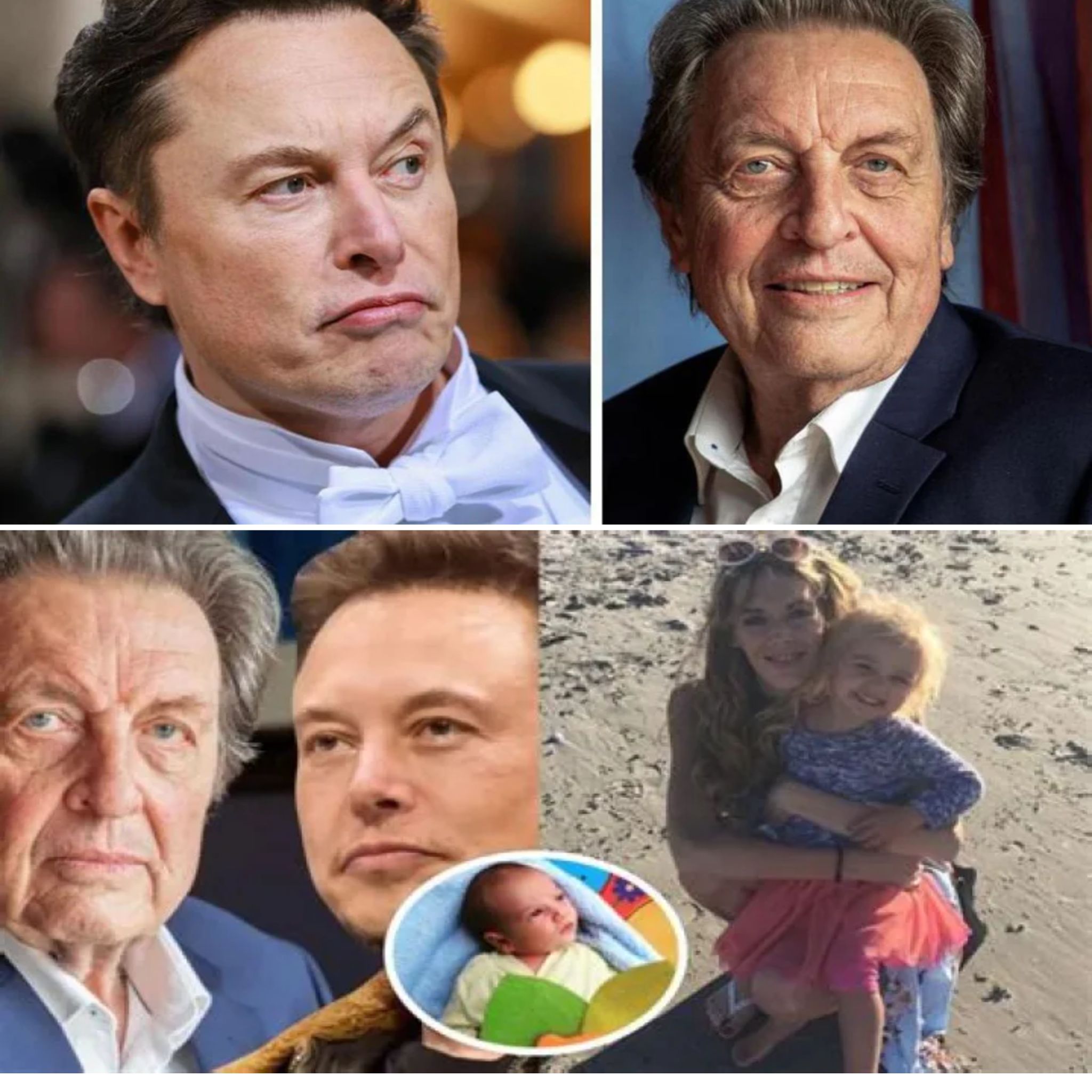
When Elon Musk discovered that his own father had secretly fathered a second child with the woman he had helped raise as a stepdaughter, the story did not merely reopen an old family wound.
It exposed just how deep that wound had always been.
For years, Elon had spoken carefully but harshly about his relationship with his father, Errol Musk. Their disagreements were not ordinary father-and-son disputes. They were the kind that left entire sections of a family divided, conversations unfinished, and people choosing silence over reconciliation.
Then came a revelation so disturbing that even those familiar with the Musk family’s complicated history struggled to process it.
Errol, then in his seventies, confirmed that he had fathered not one, but two children with Jana Bezuidenhout—his former stepdaughter, whom he had known since she was a young child.
And for nearly three years, the existence of the second baby had remained private.

The news emerged at a moment when Elon Musk’s own family life was already drawing worldwide attention.
Reports had recently revealed that Shivon Zilis, an executive at Neuralink, had given birth to twins fathered by Elon. The children had not previously been known to the public, adding another chapter to the billionaire’s rapidly expanding family.
When Elon later addressed the broader subject of fatherhood, he did not sound apologetic.
He spoke as someone who believed having children was not merely a personal choice, but a responsibility.
Elon had repeatedly warned about declining birth rates. In his view, the world was facing a population crisis, and people who could raise children had a duty to do so. With some of his older children already reaching college age, he explained that he now had more time to devote to the younger ones.
To many people, the comments sounded characteristically Musk-like: direct, unconventional, and rooted in a belief that humanity’s future depended on reproduction.
But then attention shifted to the man who had raised him.
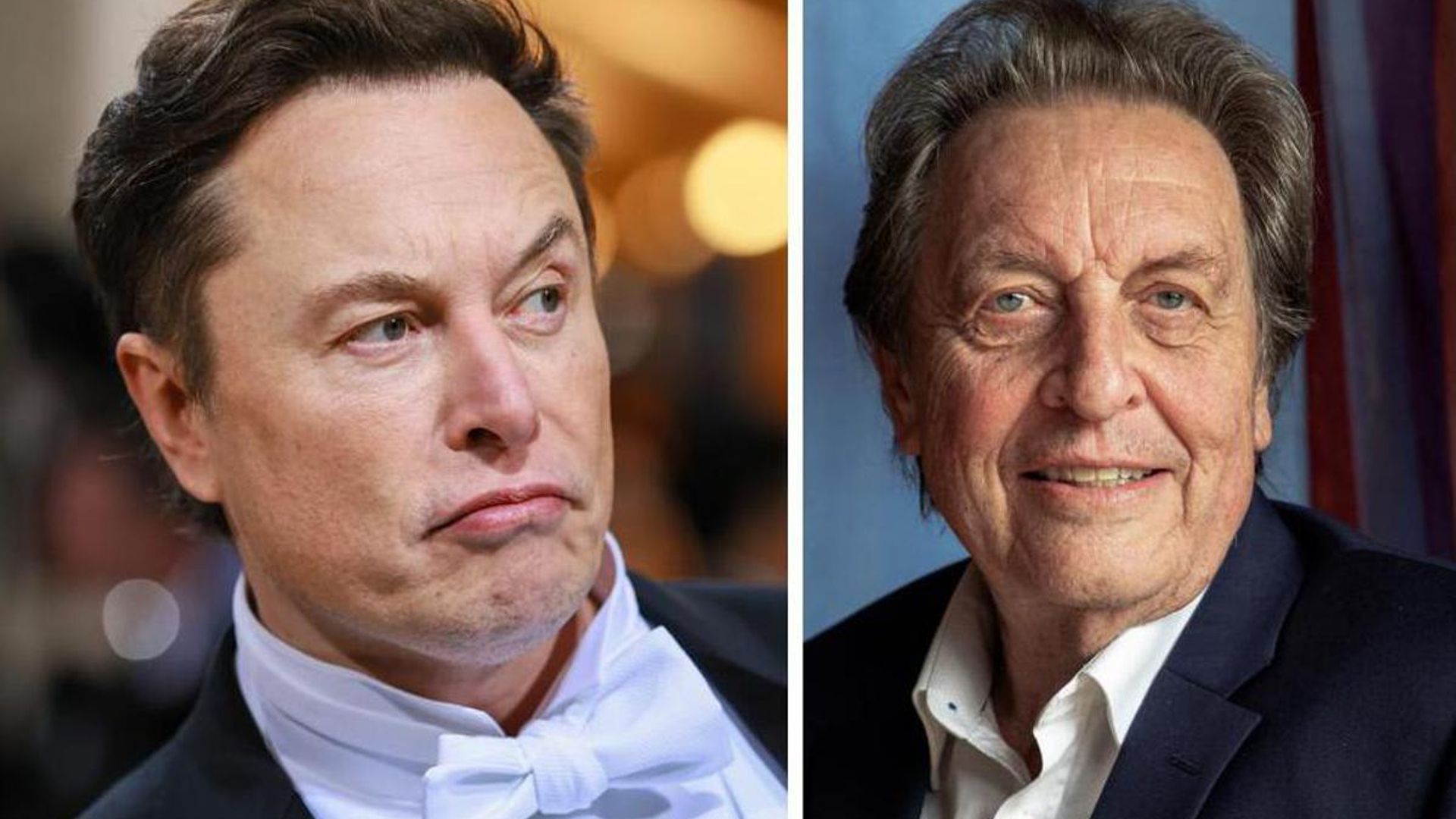,type=downsize)
Errol Musk appeared to share an even more uncompromising version of that belief.
“Reproduction is the only reason we are here on Earth,” Errol said in an interview.
The sentence was blunt.
But the family history behind it made the words far more unsettling.
Decades earlier, Errol had been married to Elon’s mother, Maye Musk. Their relationship ended in divorce after a difficult marriage. Maye later spoke publicly about the pain of those years, while Elon’s relationship with his father became increasingly strained.
Errol eventually married Heide Bezuidenhout, a widow who already had two children.
One of them was Jana.
She was approximately four years old when Errol entered her life.
He was not her biological father, but he became part of the household in which she grew up. He helped raise her. For years, their connection existed within the structure of a parent and child relationship, even without a biological tie.
That was why what happened later shocked so many people.
Errol and Heide eventually separated.
Years passed. Jana became an adult.
Then, in 2017, news emerged that Jana had given birth to a baby boy fathered by Errol.
The child was named Elliot Rush, although members of the family reportedly called him Rushi.
Errol did not deny it.
He confirmed that he and his former stepdaughter had become involved and had a child together.
The revelation reportedly caused an explosion within the Musk family.
Elon was already deeply estranged from his father. His public comments had made it clear that he did not see Errol as a misunderstood or merely difficult man.
In one interview, Elon described his father in devastating terms, calling him a “terrible human being” and saying that Errol had done “almost every evil thing you could possibly think of.”
Those were not the words of a son reacting to one isolated mistake.
They sounded like the conclusion of someone who believed he had spent years witnessing a pattern.
The birth of Jana and Errol’s first child pushed the family conflict into even darker territory.
Several relatives reportedly reacted with anger. Some struggled to accept that the man who had once occupied a parental role in Jana’s childhood was now the father of her baby.
For Elon, the situation was said to have contributed to an almost complete rupture with Errol.
There would be no easy explanation capable of making the arrangement feel normal.
No family statement could erase the fact that Errol had known Jana since she was a little girl.
And yet the story was not finished.
Two years after their son was born, Jana gave birth again.
This time, the baby was a girl.
She was born in 2019.
Unlike the first child, her existence was kept away from public attention. There was no major announcement. No public celebration. No immediate confirmation.
For years, very few people outside the family appeared to know.
Then Errol revealed it himself.
During an interview with The Sun, he confirmed that he and Jana had welcomed a second child together.
The admission transformed what many had assumed was a single shocking episode into something more deliberate.
The first pregnancy could no longer be dismissed as a moment of confusion followed by regret. The second child showed that the relationship had continued after the first wave of family outrage.
Errol said the second pregnancy had not been planned.
But he also made no attempt to distance himself from his belief that producing children was fundamentally important.
He spoke about reproduction as though it were a biological mission that stood above social discomfort, family judgment, or conventional boundaries.
According to Errol, his relationship with Jana had ended by the time he discussed the second child publicly.
He suggested their age difference was the main reason they had grown apart.
Errol was more than four decades older than Jana.
He explained that the gap eventually became difficult because they belonged to different generations. He described a disconnect in interests and lifestyle—the predictable distance between a woman still building her adult life and a man already in his seventies.
That explanation created its own moment of recognition.
For years, the family’s objections had focused on the history between them. Errol had known Jana as a child. He had been married to her mother. He had participated in raising her.
But when he finally described why the relationship had failed, he pointed to the age difference as though it were an ordinary incompatibility.
The most extraordinary part of the situation was treated as secondary.
There was no dramatic apology.
No public expression of regret.
Only the calm acknowledgment that the relationship had ended because the two of them were at different stages of life.
That was when the imbalance became impossible to ignore.
The man who had once held authority within Jana’s childhood home had eventually formed an adult relationship with her. When that relationship ended, he explained it through age and lifestyle, not through the history that had made it controversial in the first place.
The family did not need a courtroom or a televised confrontation to understand what had happened.
The facts spoke loudly enough.
There was also a bitter irony surrounding the timing of the revelation.
Elon Musk’s children were being counted by the media as evidence of his belief in population growth. His expanding family became the subject of jokes, criticism, and debate.
Then Errol’s comments created an uncomfortable parallel between father and son.
Both men had spoken publicly about reproduction.
Both had fathered children across different relationships.
Both appeared to believe that having more children served a larger purpose.
But the similarity ended there.
Elon’s complicated private life involved consenting adult partners and an openly stated concern about population decline.
Errol’s situation carried the weight of a past parental relationship with Jana—a history that changed how the public and members of the family viewed everything that followed.
What might have been presented as another story about an unconventional older father became a story about trust, power, and boundaries.
It also explained why Elon’s anger toward his father appeared to reach far beyond embarrassment.
By the time Errol confirmed the second child, Elon’s description of him no longer sounded exaggerated to many observers. It sounded like the accumulated judgment of a son who believed the public was only seeing one chapter of a much longer story.
Elon’s own childhood had already been marked by instability.
His parents divorced when he was young. He later chose to live with his father, a decision he reportedly came to regret. As an adult, he rarely softened his account of their relationship.
Despite Elon’s extraordinary success, Errol’s name continued to surface beside stories of family conflict.
There were arguments over the past.
Disputes over what had happened inside the home.
Contradictory accounts of who had helped whom.
And then there was Jana.
The revelation created consequences that no amount of wealth could contain.
Family members were reportedly furious. Relationships fractured further. The children themselves became part of a family structure that would be difficult to explain without reopening old pain.
Jana’s mother had once been Errol’s wife.
Jana had once been his stepdaughter.
Now Jana was the mother of two of his children.
The connections folded back upon themselves until ordinary family labels stopped working.
For the children, Errol was their father.
For Jana, he was their father and her former stepfather.
For Heide, he was her former husband and the father of her daughter’s children.
And for Elon, those children were both his half-siblings and the children of the woman who had once been raised within his extended family.
No public statement could make that structure simple.
Still, Errol appeared determined not to be shamed by the reaction.
His comments suggested that he viewed the birth of children as justification in itself. If a new life existed, then in his reasoning, reproduction had fulfilled its purpose.
But that belief overlooked the damage left behind.
Creating a child does not erase the conditions surrounding the child’s arrival.
Biology does not cancel responsibility.
And the ability to do something does not automatically make it wise, fair, or harmless.
The sharpest consequence was not a legal punishment or a financial loss.
It was isolation.
Errol admitted that he and Jana were no longer together. His relationship with Elon had already deteriorated to the point of near-total estrangement. Other family members had reportedly reacted with anger and disbelief.
The man who spoke proudly about extending his bloodline had helped create a family in which many of the people connected to him could barely remain in the same emotional room.
That contradiction was difficult to miss.
He had produced more descendants.
But he had not produced more unity.
The public often imagines wealth as protection from family chaos. Billionaires can buy privacy, lawyers, houses on separate continents, and entire teams to manage reputational crises.
But money cannot rewrite relationships.
It cannot turn betrayal into trust.
It cannot make a child forget who occupied a parental role during the earliest years of her life.
And it cannot force an adult son to respect a father whose choices he finds unforgivable.
Before all of these revelations, Elon Musk had already experienced the most devastating side of parenthood.
In 2002, he and his then-wife, Justine Wilson, welcomed their first son, Nevada Alexander Musk.
Ten weeks later, Nevada died from sudden infant death syndrome.
The loss was unimaginable.
Elon and Justine later became parents again, eventually welcoming twins and triplets through in vitro fertilization. As the years passed, Elon continued building companies while also building a large and increasingly complex family.
That history makes his public emphasis on children easier to understand, even for those who disagree with his views.
He had known both the joy of a child’s arrival and the horror of losing one.
But the revelation about Errol was not simply another story about a man wanting more children.
It was about what happens when personal desire is placed above the emotional boundaries that hold a family together.
The most haunting part was not the age gap by itself.
It was the history.
Errol had met Jana when she was a small child.
He had lived in a position of trust.
Years later, after his marriage to her mother ended, that relationship changed into something the rest of the family could not accept.
The second baby confirmed that the situation had continued despite the damage caused by the first revelation.
And when Errol finally spoke about it, he did so without the kind of remorse many people expected.
That silence became its own answer.
There are families broken by accidents, misunderstandings, and circumstances no one can control.
Then there are families broken by choices made repeatedly, even after the consequences are visible.
Errol Musk’s second child with Jana did not merely shock the public.
It showed why some wounds remain open no matter how many years pass, how much money is involved, or how famous the family becomes.
Because a family is not protected by a shared surname.
It is protected by boundaries, trust, and the certainty that the people given power over a child will never use that history for themselves.
And once that trust is destroyed, even the richest family on Earth cannot buy it back.