A Shy Assistant Drunk Texted “Come Get Me”—The Mafia Boss Arrived 10 Minutes Later
1. THE TEXT
At 11:51 p.m. on New Year’s Eve, Mila Winters stared at the three words glowing on her phone.
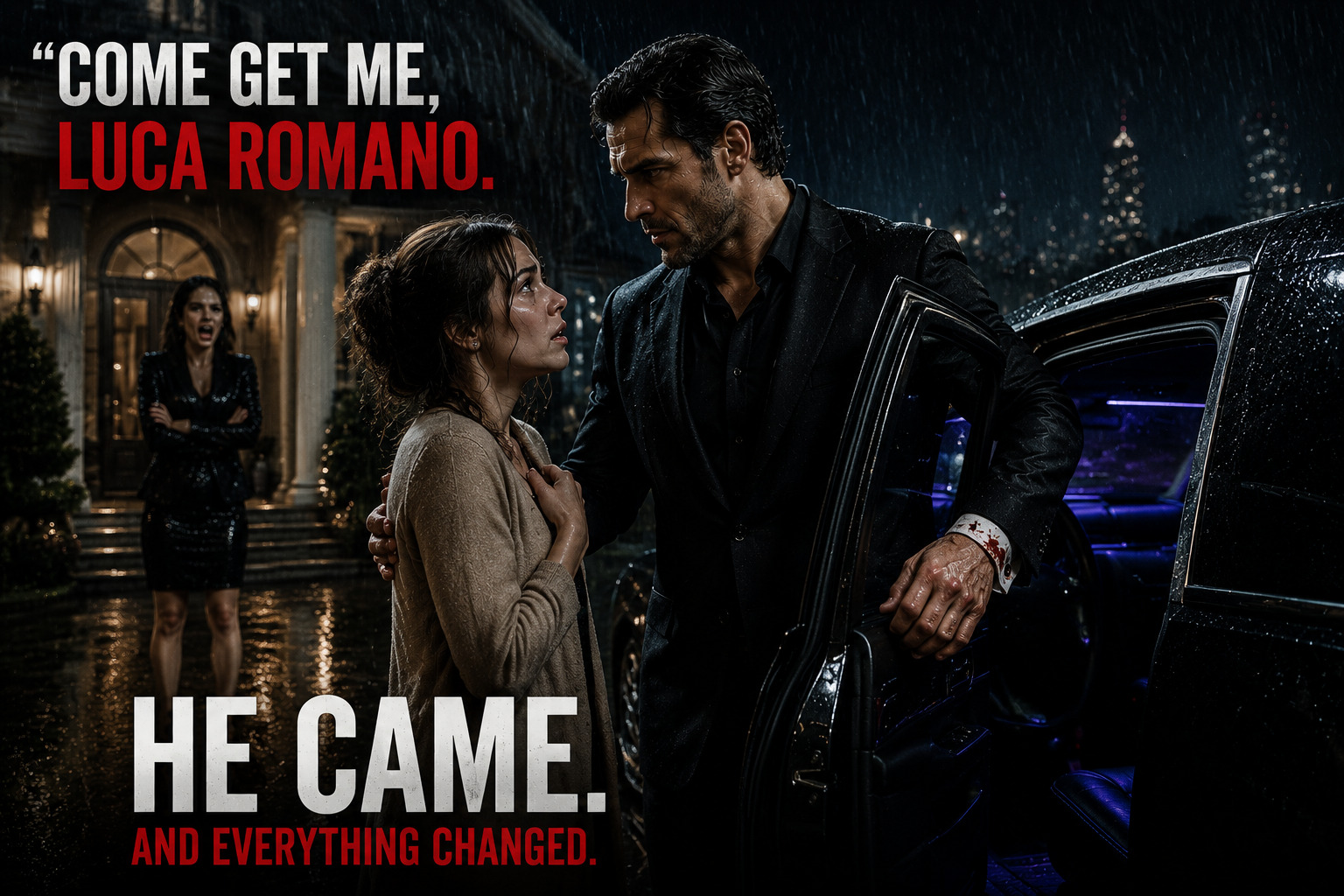
Come get me.
Her thumb hovered over Luca Romano’s name.
For three years, she had managed his calendar, screened his calls, remembered which senator hated lilies, which judge drank decaf, and which men had to be seated on opposite sides of a room if everyone expected to leave alive.
She had never called him Luca.
She had never contacted him after ten unless a building was on fire.
And she had certainly never texted him after drinking two glasses of champagne on an empty stomach while crying in the back seat of a cab.
The phone slipped against her palm.
The message sent.
Mila stopped breathing.
“No,” she whispered.
She pressed her thumb against the screen as if force could pull the words back through the glass.
Seven seconds later, three dots appeared.
Then his reply.
Lock your door. Stay away from the windows.
Her stomach tightened.
That was not the response of a man amused by his shy assistant’s drunken mistake.
That was an order.
Mila looked across her apartment.
The living room lights were off. Pale blue fireworks flashed behind the curtains, illuminating the narrow Brooklyn apartment in brief, cold pulses. Her mother’s brass mantel clock clicked above a shelf of secondhand novels. The radiator hissed. Somewhere below, a car horn blared and a crowd began counting down far too early.
Then someone stepped into the hallway outside her door.
Not the careless shuffle of her elderly neighbor.
Not the heavy tread of the couple upstairs returning from a party.
One slow step.
A pause.
Another.
Mila’s gaze dropped to the thin strip of darkness beneath the door.
A shadow blocked the light.
Her champagne haze vanished.
She backed away.
The doorknob moved.
Once.
Gently.
As if whoever stood outside did not want to frighten her until it was too late.
Her phone vibrated again.
Is someone there?
Before she could answer, a soft metallic scrape came from the lock.
Mila’s pulse struck the base of her throat.
She typed with both hands.
Yes.
Luca called immediately.
She answered without speaking.
“Kitchen,” he said.
His voice was low, steady, and terrifyingly awake.
She moved.
“Take the knife from the block. The long one.”
Mila crossed the tile floor. Her fingers closed around the handle of a carving knife she had never used.
“Now what?”
“Stand beside the refrigerator. Not in front of it.”
Another scrape came from the lock.
“You sound close,” she whispered.
“I am.”
The man outside stopped moving.
For one suspended second, the apartment held its breath with her.
Then a violent impact shook the door.
Mila bit back a scream.
A second impact followed—not against the lock, but against flesh.
There was a grunt. Shoes slid across the hallway floor. Something heavy struck the wall.
The shadow disappeared.
Mila heard Luca’s voice outside her apartment, no longer coming through the phone.
“Open the door, Mila.”
She remained frozen beside the refrigerator.
“Mila.”
The use of her first name broke the spell.
She approached the door and looked through the peephole.
Luca Romano stood in the hallway wearing a black wool coat over a tuxedo. Snow had melted in his dark hair, silvering the strands at his temples. A thin scar cut through the edge of his lower lip, almost invisible until he was angry.
Tonight, it looked white.
Two of his security men held a stranger facedown against the carpet.
The man’s gloved hand was still wrapped around a lock pick.
Luca lifted his gaze directly to the peephole.
“Open the door.”
Mila unlocked it.
He stepped inside, shut it behind him, and looked at the carving knife in her shaking hand.
“Good,” he said. “You listened.”
Then his eyes moved to the untouched glass on her table, the smeared mascara beneath her eyes, and the silver dress her sister had called “brave for someone with your shoulders.”
Luca’s expression changed.
Not softened.
Darkened.
“Who made you cry?”
A burst of gold light exploded beyond the curtains.
Outside, New York roared toward midnight.
Inside the hallway, one of Luca’s men pulled a folded piece of paper from the intruder’s coat.
“Boss,” he said.
Luca took it.
Mila watched his face as he read the message.
His jaw tightened.
“What does it say?” she asked.
Luca looked at the brass watch on her wrist—the only thing she owned that had belonged to her mother.
Then he handed her the paper.
Four words had been printed in black ink.
RETURN WHAT EVELYN STOLE.
Mila’s mother had been dead for twenty years.
And suddenly, someone was willing to break into her apartment to get something back.
2. TEN MINUTES
Luca’s men removed the intruder through the service stairs before the police sirens began.
Mila did not ask where they were taking him.
People who worked for Luca Romano learned which questions created answers they could not forget.
He stood in the center of her apartment, scanning the room with the silent precision of a man who had survived by noticing what everyone else dismissed.
At forty-one, Luca was younger than the rumors made him sound and more dangerous than his photographs suggested. The newspapers called him the billionaire chairman of Romano Holdings. Federal investigators preferred less flattering descriptions. Men who worked under him simply called him Boss.
Mila had spent three years watching rooms change when he entered them.
She had never seen him enter one for her.
“You arrived in ten minutes,” she said.
“Nine.”
“That’s impossible.”
“I was in Brooklyn.”
“At midnight? On New Year’s Eve?”
His eyes settled on her face. “You sound disappointed.”
“I sound confused.”
“That’s healthier.”
She folded her arms, trying to stop herself from shaking. “Why were you in Brooklyn?”
Luca glanced toward the door.
“Because the man outside your apartment had been following you since you left the Beaumont Hotel.”
The name of her family’s gala landed between them.
Mila felt suddenly sober.
“You had someone watching me?”
“I had someone watching him.”
“That is not an answer.”
“It is the only answer we have time for.”
He crossed to the window and pulled the curtain aside by an inch. Snow drifted through the orange streetlight. Three black SUVs waited below with their engines running.
“You’re leaving,” he said.
“This is my home.”
“It was searched while you were at the gala.”
Mila looked around.
Nothing appeared disturbed. Her books remained straight. The framed photograph of her mother stood beside the clock. The blue ceramic bowl near the door still held her keys and two quarters.
Then she noticed the bowl had been turned slightly to the left.
Her mother’s photograph was angled toward the wall.
Someone had touched everything carefully enough to make her doubt herself.
Luca saw the realization reach her.
“Pack a bag.”
“I’m not going anywhere until you tell me what that note means.”
“I don’t know yet.”
“You knew my mother’s name.”
His silence answered too much.
Mila stepped toward him. “How?”
Outside, the first official countdown began to roll across the city.
Ten.
Luca’s gaze moved to the brass watch on her wrist.
Nine.
“Your mother worked for my family.”
Mila stared at him.
Eight.
“She was a bookkeeper?”
“No.”
Seven.
“A lawyer?”
“No.”
Six.
“What did she do?”
Luca’s shoulders seemed to settle beneath the weight of an old decision.
Five.
“She found the things my father paid people not to see.”
Four.
Mila’s mouth went dry.
Three.
“And then?”
Two.
“She tried to expose him.”
One.
The sky erupted.
Fireworks burst over the East River, turning the windows white and gold. The city screamed, kissed, laughed, and lifted glasses toward a future it believed would be different from the year before.
Mila stood motionless in her dark apartment.
“My mother died in a car accident,” she said.
Luca looked at her as fireworks reflected in his eyes.
“That is what your father told you.”
The world tilted.
Mila grabbed the edge of the table.
Luca moved toward her, but she raised the knife between them.
“Don’t.”
He stopped immediately.
For the first time since she had known him, Luca Romano looked uncertain.
Not afraid of the blade.
Afraid of her.
“You knew,” she said.
“I knew the official story was a lie.”
“For how long?”
“Longer than I’ve known you.”
The city continued celebrating beyond the glass.
Mila thought of every morning she had carried his espresso into the office. Every late meeting. Every quiet glance she had mistaken for impatience. Every time he had asked whether she was taking a car home and she had insisted on the subway.
“You hired me because of her.”
“I approved your interview because of her.”
“That is the same thing.”
“No.” His voice sharpened. “You got the job because you corrected a forty-page acquisition schedule in twelve minutes after three vice presidents missed the error.”
“I was hired as an assistant.”
“You were hired close enough that I could keep you alive.”
The words struck harder than they should have.
Mila lowered the knife.
“You’ve been watching me.”
“Yes.”
“For three years?”
“From the day you walked into my building wearing a gray coat with a broken button and apologized to the receptionist for arriving nine minutes early.”
“That’s not normal.”
“Nothing about my life is normal.”
“And nothing about mine was supposed to be dangerous.”
Luca’s gaze dropped briefly to the note in her hand.
“Your life became dangerous before you were old enough to understand the word.”
She wanted to slap him.
She wanted to demand every answer.
Instead, her knees weakened.
Luca caught her before she hit the floor.
His hand closed around her waist, warm and firm. The other steadied her wrist, guiding the knife away without taking it from her.
Mila looked up.
They had stood close before—in elevators, behind crowded conference tables, once in a service corridor while gunshots sounded three floors below.
This was different.
He smelled of winter air, cedar, and the faint smoke of someone else’s cigarette. A tiny cut marked his cheekbone. His pulse beat steadily beneath the open collar of his shirt.
“You should hate me,” he said.
“I’m considering it.”
“You should consider it from somewhere secure.”
Her laugh escaped unexpectedly, cracked and breathless.
Luca’s eyes moved to her mouth.
The fireworks shifted from gold to red.
Mila had spent her entire life waiting for permission—to speak, to leave, to want something larger than the space her family had assigned her.
Tonight, loneliness had sent three reckless words into the dark.
For once, she did not apologize for them.
She caught Luca by the lapel and kissed him.
He did not touch her for one stunned heartbeat.
Then his hand rose to her face.
The kiss was not gentle. It was not polished. It carried three years of swallowed sentences, midnight meetings, almost-touches, and the exhausting discipline of two people who had mistaken restraint for safety.
When Luca pulled back, his forehead rested against hers.
“Mila.”
She heard warning in her name.
“Don’t make this smaller than it is,” she whispered.
His thumb moved once across her cheek.
“I was trying not to make it fatal.”
A loud crack sounded from the street.
The living room window splintered.
Luca drove her to the floor as a bullet buried itself in the wall above them.
The kiss ended beneath falling glass.
And the year began with someone trying to kill them both.
3. THE HOUSE WITH NO PHOTOGRAPHS
Luca’s safe house stood behind an unmarked brick wall in Red Hook, facing the frozen harbor.
From the street, it looked abandoned.
Inside, warm amber lights washed over oak floors, steel doors, and windows thick enough to turn gunfire into dull taps. The air smelled of coffee, old wood, and the salt drifting off the East River.
There were no family photographs.
No trophies.
No evidence anyone lived there except a black coat over one chair and a chessboard frozen halfway through a game.
Mila sat at the kitchen island while a doctor removed a glass splinter from Luca’s shoulder.
He did not flinch.
She watched the doctor place two neat stitches beneath his collarbone.
“You can stop staring,” Luca said.
“I’m evaluating whether you’re human.”
“And?”
“The evidence is inconclusive.”
The corner of his mouth moved.
It was the closest thing to a smile she had seen from him all night.
His head of security, Rafael Cruz, entered carrying a clear evidence bag. Inside lay the intruder’s phone, lock picks, and a gold cuff link shaped like a compass.
“We identified him,” Rafael said. “Martin Keene. Private security contractor. Former NYPD.”
“Who paid him?”
“Shell company registered in Delaware. Money came through Marrow Advisory.”
Mila’s fingers tightened around her coffee cup.
She knew the name.
“Marrow Advisory paid a consulting invoice to Winters Capital last month.”
Luca turned toward her.
“You’re sure?”
“I processed the executive scheduling around the audit committee. Marrow appeared in a footnote.”
“That was not in the board packet.”
“It was in the version sent to your chief financial officer.”
Luca’s expression hardened.
“Adrian.”
Adrian Moretti had worked for Luca’s father before Luca was born. At fifty-eight, he wore custom suits, quoted Roman emperors, and treated the legitimate executives at Romano Holdings like children playing with borrowed furniture.
He had never liked Mila.
He called her “little mouse” when Luca could not hear.
Or when he believed Luca could not hear.
Rafael placed another item on the counter.
Mila’s mother’s brass watch.
She looked down at her wrist.
The strap remained there, but the casing felt lighter.
The back plate had been removed.
Luca picked it up carefully.
A narrow cavity lay beneath the clockwork.
Empty.
“Someone searched it before tonight,” he said.
Mila remembered her father borrowing the watch after her mother’s funeral. He had kept it for nearly a year, claiming it needed repair.
“What was inside?”
Luca looked at her.
“I was hoping you knew.”
Rafael’s phone rang. He stepped away.
Mila rubbed both hands over her face.
At thirty-four, she had built an entire life around being useful enough not to be abandoned. She arrived early. Stayed late. Remembered birthdays. Smoothed over tempers. Made other people appear organized.
Her family called it modesty.
Her colleagues called it reliability.
Only now did she recognize it as fear.
When she was fourteen, her mother had left work after receiving a panicked call from Mila, who believed someone was trying to break into the house.
The intruder had been a tree branch striking the kitchen window.
Evelyn Winters had died on the drive home.
For twenty years, Walter Winters had never openly blamed his younger daughter.
He had not needed to.
Every sigh had done it for him.
“You were the reason she was on that road,” he once said after too much bourbon. “But you were a child. We forgive children.”
Mila had spent the rest of her life trying to deserve forgiveness.
Luca dismissed the doctor and sat across from her.
“What happened at the gala?”
“It doesn’t matter.”
“It mattered enough that you texted me.”
She stared into her coffee.
“My sister announced her pregnancy.”
“That should not make you cry.”
“It didn’t.”
“What did?”
Mila wished he would raise his voice. Anger was easier to resist than patience.
“Cassandra made a toast,” she said. “She thanked my father for teaching us to aim high. Then she thanked me for proving every family needs someone willing to handle the small things.”
Luca’s face became still.
“The room laughed,” Mila continued. “My father said I had always been happiest behind the scenes. Then he told everyone I worked for you because dangerous men made ordinary women feel interesting.”
A vein moved at Luca’s temple.
“He said that publicly?”
“Yes.”
“And you left alone.”
“I did not expect a hired man outside my apartment.”
“You should not have had to expect one.”
The words settled into the room.
No one had ever said that to her before.
Not that she should have been smarter.
Not that she should have known better.
Only that she should have been safe.
Mila looked at him.
“Why did my mother investigate your father?”
Luca leaned back, his stitched shoulder rigid beneath the white shirt.
“Twenty-one years ago, Romano Shipping controlled the docks from Newark to Red Hook. My father moved goods for anyone who paid enough. Weapons. Stolen art. Cash.”
“And my mother?”
“She was his compliance director.”
Mila almost laughed. “My mother hated parking tickets.”
“She also built the internal system that tracked every shipment. Your father’s firm audited the books.”
The room seemed to narrow.
“Walter worked with your father?”
“Closely.”
“You’re saying my father knew.”
“I’m saying he may have known more than anyone.”
Rafael returned before Mila could answer.
“We recovered one message from Keene’s phone,” he said.
He placed the device on the island.
The screen showed a text received at 11:39 p.m.
Get the watch. Frighten her if necessary. Do not let Romano take her alive.
Mila read it twice.
Then she noticed the sender’s initials.
A.M.
Adrian Moretti.
Luca’s oldest adviser.
The man who had stood beside him at his father’s funeral.
Luca stared at the phone until the muscles in his hand tightened.
“He knows about the watch,” Mila said.
“Yes.”
“He knows about my mother.”
“Yes.”
“And he wants me dead.”
Luca lifted his gaze.
“No. If Adrian wanted you dead, Keene would have brought a gun instead of lock picks.”
Mila looked toward the bulletproof windows.
“Someone brought a gun.”
“That was not Adrian.”
“How do you know?”
“Because Adrian never shares a target.”
The lights went out.
Darkness swallowed the kitchen.
A second later, the steel shutters began closing over the windows.
Rafael drew his weapon.
Luca caught Mila’s wrist and pulled her behind the island.
From somewhere beneath the house came a mechanical groan.
Then the unmistakable sound of a door unlocking.
Someone had entered Luca Romano’s safest house from below.
4. THE WOMAN IN THE LEDGER
The intruder emerged from the cellar with both hands raised.
She was sixty-two, silver-haired, and furious.
“Put the gun down, Rafael,” she said. “If I wanted Luca dead, I would have poisoned his coffee twenty years ago.”
Luca rose slowly.
“Aunt Sofia.”
Mila had seen Sofia Romano twice at company functions. Officially, she chaired the Romano Foundation. Unofficially, half the men in Luca’s organization lowered their voices when she entered a room.
Sofia removed a wet scarf and dropped it on the counter.
“Adrian has people monitoring the street,” she said. “You had six minutes before they cut the backup line. I cut it first.”
Her eyes moved to Mila.
“So,” she said. “Evelyn’s daughter finally sent the message.”
Mila felt Luca become motionless beside her.
“What message?” she asked.
Sofia looked at him.
“You did not tell her.”
“There wasn’t time.”
“You had three years.”
Mila stepped away from Luca.
“Tell me now.”
Sofia opened her handbag and removed an envelope yellowed at the edges.
On the front, in handwriting Mila recognized instantly, were three words.
For the Romanos.
Mila’s knees weakened.
She reached for it.
Luca caught Sofia’s wrist before she could hand it over.
“Not here.”
Sofia’s gaze sharpened. “You cannot protect her by deciding what she is allowed to know.”
“That is not what I’m doing.”
“It is exactly what every Romano man says before he ruins a woman’s life.”
Mila took the envelope from Sofia’s fingers.
Inside was a single sheet of paper.
The ink had faded, but her mother’s handwriting remained precise.
If Mila ever contacts Luca with the words “Come get me,” believe her before you believe anyone else. Take her somewhere safe. Give her the blue ledger. Then tell her everything you were too afraid to tell me.
Mila read the letter in silence.
She looked up at Luca.
“You knew those words.”
His face gave her the answer.
“That’s why you came.”
“I would have come regardless.”
“But that’s why you came in ten minutes.”
“I was already tracking Keene.”
“You recognized the phrase.”
“Yes.”
The confession landed like a second betrayal.
“What blue ledger?” she asked.
Sofia looked toward the chessboard.
Luca closed his eyes briefly.
Then he crossed the room, lifted the black queen, and pressed a hidden switch beneath the square.
A compartment opened in the wall.
Inside lay a thin blue notebook.
Mila recognized it before he touched it.
Her mother carried that ledger everywhere during the final year of her life.
After the funeral, Walter said it had burned in the wreck.
Luca placed it on the kitchen island.
The cover was scarred by heat.
Mila opened it.
Every page appeared blank.
“There’s nothing here.”
“Not under normal light,” Sofia said.
Rafael brought a small ultraviolet lamp.
Numbers rose from the paper in violet ink.
Dates.
Bank transfers.
Shipments.
Names.
Romano.
Moretti.
Winters.
Mila followed the lines until she found her father’s signature beside an amount large enough to fund a hospital.
“What is this?”
“A theft,” Luca said. “From the dockworkers’ pension fund. Forty-six million dollars over six years.”
Her pulse thudded in her ears.
“And your father?”
“Ordered it.”
“Adrian?”
“Built the system.”
“My father?”
“Made it appear legal.”
Mila turned another page.
A list of initials filled the margin, linked by arrows and numbers.
The pattern seemed familiar.
Not the information.
The structure.
She had seen it in calendar revisions, vendor contracts, and expense approvals at Romano Holdings.
The scheme had never ended.
It had simply changed names.
“Marrow Advisory,” she whispered.
Luca moved closer.
“What?”
“The old transfers repeat every thirteen entries. The same interval appears in Marrow’s consulting bills.”
She took a pen and wrote the numbers on a napkin.
“Your board packets show separate vendors, but the approval times follow this sequence. Someone is using meeting schedules as authorization codes.”
Rafael stared at her.
Luca did not.
He looked almost relieved.
“You see it,” he said.
Mila lifted her head. “You knew I would.”
“I hoped.”
“Is that why you kept me as your assistant?”
“No one kept you anywhere.”
“I applied for two internal promotions.”
His silence lasted half a second too long.
Mila’s chest went cold.
“You blocked them.”
“I delayed one.”
“Why?”
“Because the transfer would have put you under Adrian.”
“You had no right.”
“He would have used your access and killed you when he was finished.”
“You could have told me.”
“I could not prove it.”
“So you decided for me.”
“I kept you alive.”
“You controlled my life.”
Luca’s eyes flashed. “Those are not always different things in my world.”
“That is exactly the problem.”
The words struck him.
He stepped back.
Sofia watched them with a sadness that suggested she had seen the same argument destroy generations.
Mila shut the ledger.
“I’m going to my father.”
“No,” Luca said.
“I need to hear him lie.”
“You already know he will.”
“I need to see which lie he chooses.”
Luca moved between her and the door.
“You are not walking into Winters Capital with Adrian looking for you.”
“Then come with me.”
His brows drew together.
Mila held his gaze.
“Not in front of me. Not around me. Beside me.”
For several seconds, neither moved.
Then Luca took a phone from his pocket.
“Rafael, prepare the cars.”
Sofia exhaled.
Luca looked at Mila.
“Your father’s emergency board meeting begins at nine.”
“How do you know?”
“I own twenty-two percent of his company.”
Mila stared at him.
Luca buttoned his coat over the bloodstained shirt.
“Your father has spent years pretending I am the most dangerous man in your life.”
His voice dropped.
“Let’s find out why.”
5. THE SMALL THINGS
Winters Capital occupied the top five floors of a glass tower overlooking Central Park.
On New Year’s morning, snow softened the city into silence. Plows pushed gray slush along Fifth Avenue. The sidewalks smelled of wet wool, diesel, and burnt sugar from a cart preparing roasted nuts for tourists who had not yet awakened.
Inside the boardroom, everything gleamed.
Walnut table.
Cream leather chairs.
Water glasses aligned like soldiers.
Walter Winters sat at the head beneath a portrait of himself breaking ground on the company’s first development.
He was sixty-three, silver-haired, and handsome in the careful manner of men who considered aging a hostile negotiation. His navy suit was immaculate. His cuff links were tiny gold compasses.
The same design found in Martin Keene’s pocket.
Mila stopped in the doorway.
Walter’s eyes flicked to Luca, then to their joined entourage.
“Mila,” he said. “We were worried.”
Cassandra sat to his right in white cashmere, one hand resting protectively over her stomach. Her husband, Daniel Hale, stared at the table.
Adrian Moretti occupied the chair opposite Walter.
He smiled when he saw Mila.
“Little mouse,” he said. “You survived the night.”
Luca’s men shifted.
Mila spoke before they could.
“Were you disappointed?”
Adrian’s smile remained, but his eyes changed.
Walter rose.
“Whatever Luca has told you, this is not the place.”
“You called an emergency board meeting.”
“To discuss a security breach at Romano Holdings.”
“My credentials were used.”
“You have been under strain.”
Mila heard the strategy immediately.
Not accusation.
Concern.
A fragile daughter. A drunken mistake. An unstable employee involved with a dangerous man.
Walter had been arranging the story before she entered the room.
Cassandra stood and crossed toward her.
“You should sit down,” she said softly. “Dad told us about the text.”
Mila looked at her. “What text?”
“The one you sent your boss.”
Only Luca and the men in the safe house knew.
Walter had received the information from someone watching Luca’s communications.
Adrian leaned back.
“An assistant contacting the chairman in an intoxicated state could create reputational complications.”
Luca’s gaze moved to him.
“The next time you discuss Mila’s reputation, Adrian, make sure your own phone has been wiped properly.”
For the first time, Adrian’s smile faltered.
Walter lifted one hand.
“Threats will not help.”
“That was not a threat,” Luca said. “It was professional advice.”
Mila placed the blue ledger on the table.
The room became silent.
Walter’s face did not move.
But his right thumb pressed hard against the edge of his cuff link.
Recognition.
There it was.
Small enough to miss if she had not spent her life studying other people’s moods before they became punishment.
“Where did you find that?” he asked.
“You told me it burned.”
“I believed it had.”
“You also told me Mom was a bookkeeper.”
“She was.”
“For Romano Shipping.”
Walter looked toward Luca. “You had no right to involve her.”
“She was involved before I was born.”
“You do not know what you’re talking about.”
Mila opened the ledger beneath the ultraviolet lamp Rafael placed on the table.
Violet numbers appeared.
Daniel Hale inhaled sharply.
Cassandra’s hand slipped from her stomach.
Walter did not look at the pages.
He looked at Mila.
“You have always had an active imagination.”
“When I was fourteen, did Mom die coming home to me?”
The question cut through every prepared argument.
Walter’s mouth tightened.
“This is not the place.”
“Did she?”
“Yes.”
Mila felt the old guilt rise automatically.
Then she saw Luca standing beside her.
Not rescuing.
Not answering.
Simply refusing to let her face the lie alone.
“What time did I call her?” Mila asked.
Walter blinked.
“What?”
“The night she died. What time did I call?”
“You were frightened. It was late.”
“I checked the phone records.”
She had not.
Walter did not know that.
“You called shortly before ten,” he said.
Mila opened her mother’s ledger to the final page.
Evelyn had written one ordinary sentence in visible ink.
Mila’s school concert—7:30. Don’t be late again.
The concert had ended at nine.
Her mother had attended.
Mila remembered the red scarf in the audience. The smile from the back row. The two of them eating French fries afterward because Walter had missed another family night.
Mila had never called her mother from home.
She had been with her.
The memory had been buried beneath twenty years of repetition.
Walter had told the lie so many times that her grief had reshaped itself around it.
“You blamed me,” Mila whispered.
Walter’s face lost color.
“To keep you away from her work,” he said.
Cassandra turned toward him. “What does that mean?”
Walter’s hand flattened against the table.
“Your mother became obsessed. She believed she could expose men who had governments in their pockets. I tried to protect this family.”
“You made me believe I killed her.”
“I made you afraid of asking questions.”
The bluntness of it silenced the room.
Walter seemed to hear himself only after the words were spoken.
Cassandra stared at him, one hand covering her mouth.
Mila’s pain did not arrive as tears.
It arrived as clarity.
Her father had not underestimated her.
He had spent twenty years making sure she underestimated herself.
Adrian stood.
“This sentimental performance is irrelevant. Romano Holdings lost eleven million dollars last night. The transfer originated from Mila’s credentials.”
He placed a printed report on the table.
Every timestamp pointed to her.
Every authorization carried her digital signature.
Walter looked at her with rehearsed sorrow.
“We can keep this private. You enter treatment, resign quietly, and let the lawyers handle the rest.”
Luca’s body became still.
Mila touched his sleeve before he could speak.
She read the report.
Then she smiled.
Adrian frowned.
“What is amusing?”
“The timestamp.”
“It came from the server.”
“It came from a server set to Coordinated Universal Time.”
No one spoke.
Mila pointed to the authorization column.
“My account requires a physical security key after eight p.m. Eastern. I was at the Beaumont when this transfer occurred.”
Adrian shrugged. “Keys can be copied.”
“Not this one. I gave it to Mr. Moretti at 4:15 yesterday after he told me the compliance team needed it for a software update.”
Every face turned toward Adrian.
His jaw shifted once.
“I do not remember that.”
“I do.”
“Your word against mine.”
“No,” Mila said. “The elevator camera recorded it.”
Adrian looked toward Luca.
Mila saw his calculation.
The exits.
The guards.
The distance to the table.
His hand moved beneath his jacket.
Luca drew his gun before Adrian cleared the holster.
The board members recoiled.
Rafael closed the doors.
Adrian froze with his fingers beneath his lapel.
Luca’s voice was almost quiet.
“Finish the movement.”
Adrian withdrew his empty hand.
Walter lowered himself into his chair.
“Mila,” he said, “you have no idea what happens if this comes out.”
She looked at the man who had taught her to disappear.
“No,” she said. “You have no idea what happens when I stop being afraid of you.”
Then the boardroom screens came alive.
A video began playing.
Mila’s face appeared on every wall.
She was entering Romano Holdings at 2:13 a.m.—hours after the bullet shattered her apartment window.
Adrian smiled again.
“Explain that.”
Luca looked at Mila.
This time, even he appeared surprised.
On-screen, the woman wearing Mila’s coat turned toward the camera.
Her face was identical.
And she was carrying Evelyn Winters’s brass watch.
6. THE WOMAN WITH MILA’S FACE
The video lasted forty-three seconds.
The woman used Mila’s security key, entered Luca’s private office, and removed a black file from his safe.
She moved like Mila.
Same height.
Same coat.
Same slight inward turn of the left foot.
But Mila saw the mistake immediately.
“She’s wearing the watch on her right wrist.”
Cassandra whispered, “You wear yours on the left.”
Mila looked at her sister.
Cassandra’s face had gone white.
Walter would not meet either daughter’s eyes.
Luca ordered the image frozen.
The woman’s face was perfect because it was not a disguise.
It was Cassandra.
The sisters shared their mother’s eyes and Walter’s narrow jaw. With her hair hidden beneath a wool hat and the camera image deliberately degraded, Cassandra could pass for Mila long enough to create doubt.
Daniel pushed back from the table.
“Cass?”
Cassandra sank into her chair.
“I didn’t know what was in the file.”
Mila could barely hear her own voice.
“You went into Luca’s office.”
“Dad said you had stolen documents. He said you were in danger and that if I returned them, he could make everything stop.”
“You used my security key.”
“He gave it to me.”
Every gaze shifted to Walter.
His composure cracked at last.
“I was protecting both of you.”
Cassandra laughed once, a sharp, broken sound.
“You told me Mila was unstable.”
“She was being manipulated.”
“You told me Luca would kill her when he was finished.”
“I believed he might.”
Luca’s face did not change.
“That belief did not stop you from taking my money.”
Walter’s eyes flashed. “Your father nearly destroyed this city’s waterfront. I kept thousands of people employed after he lost control.”
“You kept yourself rich.”
“I kept the peace.”
Adrian rose slowly.
“Young men always mistake inherited stability for cowardice.”
Luca’s gun remained steady.
“And old men mistake fear for loyalty.”
Mila looked at the paused image.
Cassandra had taken a black file.
“What was inside?” she asked.
Luca did not answer.
A cold understanding moved through her.
“Something about my mother.”
His silence confirmed it.
“You promised no more lies.”
“I promised to tell you when you were safe.”
“I will never be safe while everyone else decides what I’m allowed to know.”
“Mila—”
“What was in the file?”
Sofia’s words returned to her.
Tell her everything you were too afraid to tell me.
Luca lowered the gun.
For a man feared across New York, surrender looked almost invisible on him.
A loosening of the shoulders.
A breath.
A decision to step away from power.
“The file contained your mother’s final statement,” he said.
Walter surged to his feet.
“Luca.”
“Sit down.”
“You release that, and you destroy your own family.”
Luca looked at Mila.
“That is why I hid it.”
The room blurred at the edges.
“What did she say?”
“That my father ordered the car crash.”
Mila’s breath stopped.
“And?”
Luca’s voice roughened.
“That I was there when Adrian gave the order.”
The silence became absolute.
Mila stared at him.
“You watched my mother die?”
“No.”
“Then what happened?”
“I was twenty-one. My father had discovered she copied the ledger. Adrian arranged for her brakes to fail after she left a meeting in Newark.”
Adrian’s expression remained calm.
Luca continued.
“I warned her. I gave her another car and a route out of the city.”
Mila felt the floor shift beneath her.
“She escaped?”
“For six days.”
Hope rose so violently it hurt.
“What happened after six days?”
“Walter found her.”
Her father closed his eyes.
Cassandra began to cry.
Mila turned toward him.
“What did you do?”
Walter’s face seemed to age beneath the fluorescent lights.
“She came to me for help.”
“And?”
“She wanted to go to the FBI. She wanted to hand over everything.”
“Did you stop her?”
“I asked her to think about you and Cassandra. The Romanos would have retaliated. Our company would have collapsed. Hundreds of families would have lost everything.”
“What did you do?”
Walter looked at Luca with naked hatred.
“I told Adrian where she was.”
Cassandra made a strangled sound.
Mila did not move.
There are truths so large the body refuses them at first.
Her father had not killed her mother with his hands.
He had done something easier.
He had given her location to men who would.
Walter stepped around the table.
“Mila, listen to me. I believed they would frighten her. I believed they would take the ledger and let her come home.”
“You believed what was convenient.”
“I was trying to preserve our family.”
“You destroyed it.”
His face twisted.
“I built everything you have.”
“You built a room and spent twenty years telling me it was the whole world.”
Adrian lunged.
Not toward Luca.
Toward Mila.
He caught her by the arm and pressed a thin blade beneath her ribs before Rafael could fire.
Luca’s gun rose.
Adrian pulled Mila against his chest.
“Drop it.”
No one breathed.
Mila felt the knife tip through the fabric of her dress.
Adrian’s voice remained conversational.
“Your mother made the same mistake. She believed evidence was power.”
Mila looked at Luca.
His eyes were fixed on the blade.
For the first time, she saw his greatest fear without disguise.
Not death.
Becoming the man who survived while someone else paid the price.
“Put the gun down,” Adrian said.
Luca released it.
The weapon struck the carpet.
Adrian smiled.
Mila looked at the boardroom screen, where Cassandra still wore her coat and face.
Then she understood what had been stolen from Luca’s safe.
Not a statement.
A trap.
“Cassandra,” Mila said.
Her sister lifted her tear-streaked face.
“The black file. Where is it?”
Walter’s head snapped toward her.
Cassandra swallowed.
“In Dad’s car.”
Adrian’s grip tightened.
“Quiet.”
Mila continued.
“Did you open it?”
“No.”
“Did Dad?”
“No. He told me not to break the seal.”
Mila looked at Luca.
He understood.
The black file had never contained Evelyn’s statement.
Luca had lied in front of Adrian and Walter to make them reveal how much they knew.
The real statement was somewhere else.
And Mila finally knew where.
She looked at the brass watch on Cassandra’s right wrist.
“Mom didn’t hide evidence inside the watch,” Mila said.
Walter’s face changed.
“She hid the key.”
Mila reached backward, closed her fingers around Adrian’s knife hand, and drove her heel down on his foot.
As he flinched, she twisted the way Rafael had once shown her after a late-night security briefing.
The blade sliced her dress but missed her skin.
Luca crossed the distance in two strides.
He struck Adrian once.
The older man fell against the table.
Rafael pinned him to the floor.
Mila tore the watch from Cassandra’s wrist and twisted the crown backward.
A tiny brass key slid from beneath the winding stem.
Walter stared at it.
His mouth opened.
No words came.
The color drained from his face as everyone in the boardroom watched him recognize the thing he had spent twenty years trying to find.
Mila held the key between two fingers.
“You never knew what Mom stole,” she said.
Walter’s eyes lifted to hers.
“No.”
“She didn’t steal your money.”
Mila looked toward the portrait above his chair.
“She stole your certainty that I would stay small.”
7. THE FIRST LIE
The brass key opened a private deposit box at a bank on Madison Avenue.
Inside were no jewels.
No cash.
No photographs.
Only a cassette recorder, three signed affidavits, and a sealed letter addressed to Mila and Cassandra.
Evelyn Winters’s voice emerged through static.
She sounded younger than Mila remembered.
Stronger, too.
“If you are hearing this, Walter chose the company over the truth.”
Cassandra gripped Mila’s hand.
Across the private room, Luca stood alone by the door. He had insisted the sisters hear the recording before he did.
Evelyn described the pension theft, Adrian’s laundering system, and Salvatore Romano’s orders. She named judges, accountants, executives, and dock officials. She admitted forging one shipping record to help Luca escape his father’s control.
Then her voice changed.
“Mila, your father will tell you that fear is the same thing as love. It is not. Love may be afraid, but it does not make you smaller so it can feel stronger.”
Mila lowered her face.
Cassandra began to sob.
The recording continued.
“Cassandra, they will reward you for performing perfection. Do not confuse applause with safety.”
Cassandra’s shoulders collapsed.
“And Luca, if Sofia ever allows you to hear this, remember that protecting someone without trusting them is only a kinder form of imprisonment.”
Luca closed his eyes.
The tape clicked.
For several seconds, no one moved.
Then Mila opened the letter.
Her mother had left equal shares of her ownership in Winters Capital to both daughters. Walter had concealed the transfer by claiming the shares were absorbed through debt after Evelyn’s death.
They had not been.
With accumulated voting rights, Mila and Cassandra jointly controlled thirty-four percent of the company.
Enough, with Luca’s shares, to remove Walter.
Enough to open every archive he had sealed.
Enough to stop being guests inside the empire their mother had helped build.
Cassandra wiped her face.
“I spent years treating you like you were less than me.”
Mila looked at her sister.
“Yes.”
“I thought Dad respected me because I was stronger.”
“He respected obedience.”
Cassandra flinched.
Mila did not soften the truth.
Not this time.
“I laughed at you last night,” Cassandra said. “In front of everyone.”
“Yes.”
“I don’t know how to fix that.”
“You don’t fix twenty years with an apology.”
Cassandra nodded.
“But you can stop lying today.”
Her sister looked at the affidavits.
Then she signed the emergency voting resolution removing Walter as chairman.
Mila signed beneath her.
Luca placed his shares behind theirs.
His signature was the final line.
The power shift made no sound.
No shattered glass.
No gunfire.
Only three pens moving across paper.
By noon, Walter Winters had lost control of the company he believed justified every cruelty.
Adrian was in federal custody after Sofia sent Evelyn’s evidence to three separate law firms and a reporter she trusted more than the police.
Walter remained in the boardroom under guard, staring at his own portrait.
Mila returned alone.
Snowlight filled the glass walls.
Her father sat at the head of the table, but the chair no longer belonged to him.
“You won,” he said.
She stood across from him.
“This was never a game.”
“You think exposing us makes you brave?”
“No.”
“You will destroy retirement funds, contracts, families.”
“The money was already stolen. Silence does not return it.”
“Luca will use you.”
“Maybe.”
Walter blinked.
It was not the answer he expected.
Mila continued.
“And if he does, I will leave him. That is the difference between us now. I no longer need to pretend someone is good in order to survive loving them.”
Her father looked away.
For the first time, he appeared small.
Not harmless.
Not forgiven.
Only human enough to understand the consequences arriving for him.
“I did love your mother,” he said.
Mila believed him.
That was the tragedy.
“I know.”
“She would have ruined everything.”
“She was trying to save what mattered.”
Walter’s eyes shone.
“You were always like her.”
Mila thought of the years he had called her timid, ordinary, delicate.
The promotions he had quietly sabotaged.
The guilt he had planted.
The jokes he had allowed.
The small things.
He had seen Evelyn in her from the beginning.
That was why he worked so hard to convince her she was nothing.
Mila placed his gold compass cuff link on the table.
“Martin Keene carried the other one.”
Walter stared at it.
His lips parted.
The room cameras recorded every movement.
Every word.
Mila waited.
At last, his shoulders lowered.
“I told him to get the watch,” he said.
“Did you order the shot?”
“No. That was Adrian. I swear.”
“Did you know he might kill me?”
Walter’s silence answered.
Mila nodded once.
She turned toward the door.
“Mila.”
She stopped.
“Will you visit me?”
The question sounded almost childlike.
She looked back at the man who had taught her that love must be earned through usefulness.
“No,” she said. “But I hope one day you understand why.”
Then she walked out without waiting to see him break.
8. THE COST OF CHOOSING
Luca waited on the roof of the tower.
The snow had stopped. New York stretched beneath them in hard winter sunlight—glass, steel, river, steam rising between buildings.
Mila joined him beside the railing.
He had changed into a charcoal suit. A dark bruise marked his knuckles where he had struck Adrian.
Neither spoke for a while.
Below them, news vans gathered.
By sunset, Evelyn’s recording would be public.
Romano Holdings would be investigated.
Winters Capital’s board would be dismantled.
Men who had spent decades believing silence belonged to them would learn how loud a quiet woman’s records could become.
“You knew the file in your safe was empty,” Mila said.
“Yes.”
“You let Adrian believe it held my mother’s statement.”
“Yes.”
“You used me to force him and my father to confess.”
Luca did not defend himself.
“I believed I could control the room.”
“And when Adrian put a knife to me?”
His jaw tightened.
“I discovered I was wrong.”
She looked at him.
“I don’t need a man who is never wrong.”
“What do you need?”
“One who tells me when he is.”
The wind moved through his hair.
Luca faced the skyline.
“My father used protection as an excuse for possession. I promised myself I would be different.”
“But?”
“I became more polite.”
Mila almost smiled.
He continued.
“I arranged your interview. I watched your building after threats appeared in my father’s old files. I blocked the promotion that would have placed you under Adrian. I read every security report connected to you.”
“You should have told me.”
“Yes.”
“You should have trusted me.”
“Yes.”
“You should not have kissed me while hiding half my life.”
His gaze returned to hers.
“No.”
The answer hurt more because it contained no excuse.
“What happens now?” she asked.
“I release every Romano record connected to the pension theft.”
“You could lose the company.”
“I probably will.”
“You could be charged.”
“Yes.”
“Your people may turn against you.”
“Some already have.”
Mila studied him.
“Why do it?”
“Because your mother was right.”
“About what?”
“Evidence is not power.”
He stepped closer.
“Choice is.”
Luca removed a ring from his right hand—the heavy black signet worn by every Romano leader for four generations.
He placed it on the concrete ledge.
“My father taught me that love was the person you protected at any cost,” he said. “He was wrong. Love is the person before whom you stop pretending the cost does not matter.”
Mila’s throat tightened.
“I don’t know whether I can trust you again.”
“I know.”
“I don’t know what we are.”
“I know that too.”
“I may wake up tomorrow and hate you.”
“I will send breakfast.”
Despite herself, she laughed.
The sound surprised both of them.
Luca moved nearer but did not touch her.
For once, he waited.
Mila looked at the man the city feared.
Without the ring, without the gun, without the boardroom bending around him, he looked tired.
Human.
Dangerous still—but no longer hiding behind danger.
“You came for me,” she said.
“You asked.”
“I was drunk.”
“You were honest.”
“I sent three words.”
“I had been waiting three years to receive them.”
Mila’s heartbeat changed.
“That is a terrible line.”
“It was not rehearsed.”
“That makes it worse.”
A faint smile touched his scar.
She reached for his bruised hand.
The most powerful men in her life had always demanded that she shrink before they offered affection.
Luca had done something harder.
He had stepped down from his power and let her decide.
Mila rose onto her toes and kissed him.
This kiss was slower than the first.
No shattered glass.
No adrenaline.
No fireworks disguising fear as fate.
Only two people standing in the cold, aware of every reason they might fail and choosing not to run.
When they parted, Luca rested his forehead against hers.
“What are you choosing?” he asked.
“Today?”
“Yes.”
“You.”
His breath caught.
“Tomorrow, you ask again.”
“I will.”
“And the day after that.”
“For as long as you let me.”
Mila looked over the city.
All her life, she had believed courage would feel like becoming someone else.
Louder.
Harder.
Unrecognizable.
Instead, courage felt like finally hearing her own voice without asking whether it inconvenienced anyone.
9. ONE YEAR LATER
Walter Winters pleaded guilty to conspiracy, obstruction, and fraud six months after the boardroom confession.
Adrian Moretti went to trial and discovered that old loyalties disappeared quickly when prison sentences became personal.
More than thirty-one million dollars was recovered for the dockworkers’ pension fund. Winters Capital was restructured under independent oversight. Cassandra stepped away from public relations and spent her first year outside their father’s control learning how to speak without performing.
She and Mila did not become close overnight.
Some wounds closed slowly because closing them honestly took longer than pretending they were never there.
Luca resigned as chairman of Romano Holdings.
He turned over the company’s hidden records, accepted responsibility for the decisions made under his leadership, and dismantled the private network his father had built. The legitimate divisions survived. The criminal ones fractured.
Several men called his choice weakness.
None said it to his face.
Mila refused every offer to become the new chief executive of Winters Capital.
Instead, she founded the Evelyn Initiative, an independent organization that helped employees report financial abuse without losing their livelihoods.
Her first office had six desks, unreliable heat, and a view of a brick wall.
She loved it.
On the next New Year’s Eve, the Beaumont Hotel invited her to speak at the same gala where her family had humiliated her.
Mila wore a black dress with her mother’s repaired brass watch.
Cassandra sat in the front row.
Luca stood at the back of the ballroom, far from the cameras, in a dark suit without a signet ring.
Mila stepped to the microphone.
A year earlier, the room’s laughter had followed her into the snow.
Now, five hundred people waited for her to speak.
She looked across their faces.
“Power rarely announces itself honestly,” she said. “Sometimes it wears a title. Sometimes it controls a bank account. Sometimes it calls fear ‘protection’ and silence ‘peace.’”
No one moved.
“But the most dangerous power is the one that convinces another person they are too small to challenge it.”
At the back of the room, Luca’s gaze held hers.
Mila touched the brass watch.
“My mother left behind a ledger because she believed truth would eventually find someone willing to carry it. For years, I thought that person had to be fearless.”
She paused.
“I was wrong. Courage is not the absence of fear. Courage is refusing to let fear choose your life for you.”
The room rose before she finished.
Not polite applause.
A standing ovation that rolled from the front tables to the doors.
Cassandra stood with tears on her face.
Mila did not look toward the place where her father once sat.
She no longer measured herself by empty chairs.
After midnight, she found Luca alone on the hotel roof.
Fireworks unfolded over Manhattan, gold light spilling across the river. Snow rested on the ledge. Music drifted up through the glass doors behind them.
He held two cups of coffee.
“No champagne?” she asked.
“I have concerns about your texting habits.”
Mila accepted one cup.
They stood side by side while the city celebrated another chance to become different.
Her phone vibrated.
A message from Luca appeared.
Where are you?
She looked at him.
He waited, perfectly serious, though he stood less than three feet away.
Mila smiled and typed her answer.
Come get me.
His phone chimed.
Luca read the words.
Then he crossed the small distance between them.
A year earlier, Mila had believed those three words were a drunken mistake.
They were not.
They were the first honest request of her life—the moment she stopped apologizing for needing someone, stopped mistaking invisibility for safety, and stopped letting other people decide how much she was worth.
Some risks destroy us.
Others return us to ourselves.
And sometimes the most dangerous thing a forgotten woman can do is ask to be seen—then refuse to disappear ever again.