LAS VEGAS — Scott Raymond Dozier, the Nevada death row inmate who spent years fighting for his own execution, was found dead in his cell this afternoon in an apparent suicide, authorities confirmed.
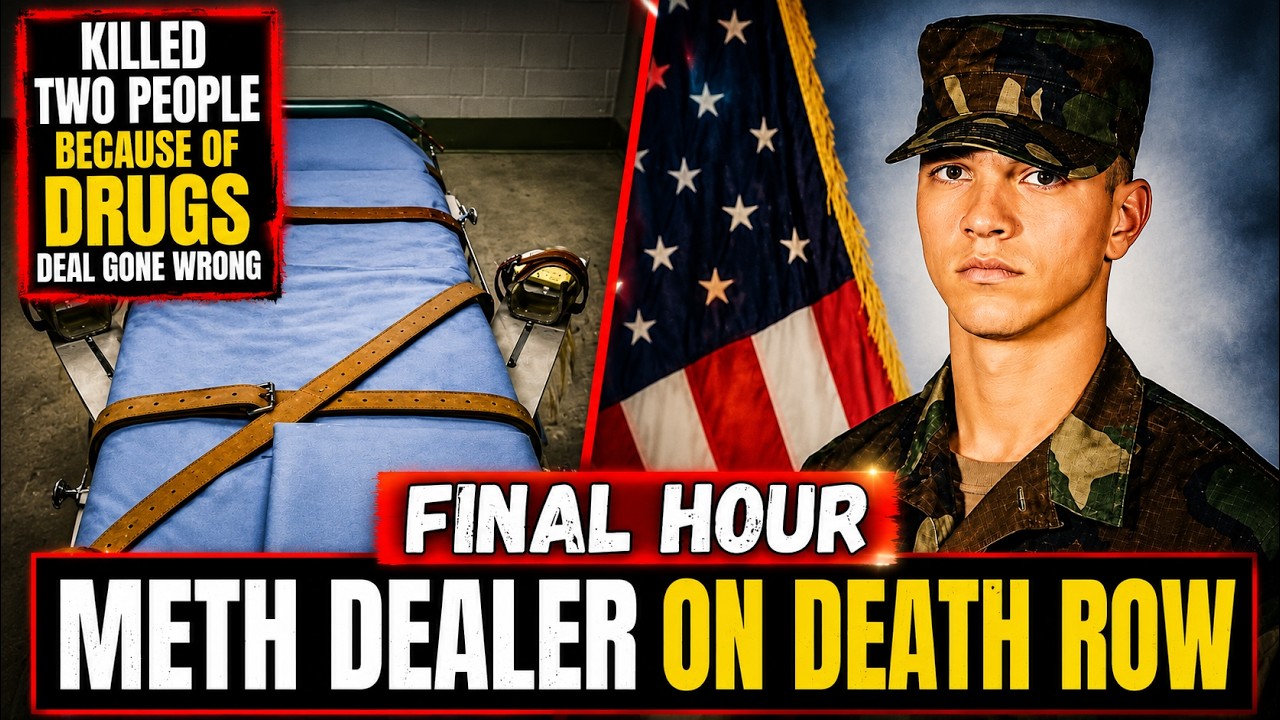 The 48-year-old convicted killer had been awaiting execution for more than a decade, but his sentence was never carried out after pharmaceutical companies intervened to block the use of their drugs in his lethal injection
Dozier was found unresponsive at Ely State Prison on January 5th, 2019.
He was pronounced dead shortly afterward. The county coroner found no evidence of foul play, and prison officials confirmed he was not on active suicide watch at the time.
Dozier had made no secret of his wish to die.
He had repeatedly told courts, reporters, and prison officials that he would rather be executed than spend the rest of his life behind bars. “I don’t want to die,” he once said. “I just don’t want to keep doing this.”
His case had become one of the most unusual in the modern history of American capital punishment: a condemned man demanding the state carry out its sentence, while the state found itself unable to do so.
The first execution date was set for November 14th, 2017. Nevada had built a new execution chamber at Ely State Prison and selected a drug combination never before used in the United States — a sedative, the powerful opioid fentanyl, and a paralytic agent.
Dozier’s own defense attorneys raised concerns that the untested combination could leave him conscious but paralyzed, unable to signal that he was experiencing agony. A judge agreed and removed the paralytic from the protocol. The state appealed, and the execution was stayed.
Dozier was deeply frustrated. He had already said goodbye to his family. He had prepared himself mentally for the end.
And then, through a legal fight he never asked for, that ending was pulled away.
The Nevada Supreme Court eventually sided with the state on procedural grounds, and a second execution date was set for July 11th, 2018, at 8:00 p. m.
Once again, everything was in place. The chamber was ready. Dozier had said his goodbyes — again.
But that morning, drug manufacturer Alvogen filed an emergency lawsuit, arguing that Nevada had obtained its sedative midazolam deceptively, in violation of company policy prohibiting its use in executions.
Las Vegas District Judge Elizabeth Gonzalez issued an emergency order just hours before Dozier was scheduled to die, blocking the state from using the company’s product. Without it, Nevada had no legal way to proceed.
For the second time, Scott Dozier had prepared himself to die. For the second time, he remained alive when the appointed hour came and went. It was the first time in the modern era that a pharmaceutical company had successfully stopped an execution through the courts.
His frustration in the months that followed was not really about the drug companies. It was about being left alive again, with no execution date, no resolution, and no real say in any of it.
 Prison officials placed him under increasingly restrictive conditions.
His family and lawyers said he was deprived of most of his belongings, cut off from the exercise yard, phone calls, and visitors, and placed under close mental health observation.
Prison officials described the measures as precautionary. His lawyers argued that his mental state was deteriorating precisely because of the isolation.
Court filings later revealed that Dozier had made several attempts to end his own life in the months before his death.
None of it was resolved by the time law enforcement found him unresponsive in his cell. The state had spent years building a legal and physical apparatus specifically to grant his request.
In the end, it never carried out his sentence.
Dozier’s story did not begin on death row. Born on November 20th, 1970, in Great Falls, Montana, he was remembered as a precocious child and an early talker — “basically the best older brother anyone could ask for,” in his younger brother David’s words.
The family moved often, following their father’s work on federal water projects. By 8th grade, Dozier had spent time at Spring Mountain Youth Camp, a juvenile detention facility. But he was also a genuinely talented artist, skilled with charcoal and pastel from a young age.
He graduated from high school in Phoenix in 1989. He enlisted in the Army, serving from November 1990 to August 1992, and was honorably discharged. He married Angela Drake on New Year’s Day 1991, and their son Ashton was born in 1993.
By Angela’s account, he was thoughtful in ways that went beyond the ordinary. When she was pregnant, he trained as an EMT — not for a job, but simply so he would be prepared if something went wrong.
After leaving the Army, Dozier worked ordinary jobs — and one unusual one.
He performed at the Luxor Hotel and Casino in Las Vegas in a costume dinner show called Winds of the Gods, complete with gold brocade and a tiger-striped skirt, driving a chariot across the stage.
But behind it all, something had already taken hold. He had been arrested on a drug charge in 1989, and Las Vegas in the mid-to-late 1990s was, in the words of one police detective, “a hotbed for methamphetamine production.”
In 1995, Dozier was arrested in North Las Vegas in possession of Valium, methamphetamine, and Rohypnol. In 1998, a house he was living in on Cinderella Lane exploded, badly injuring a young woman who lost part of her right arm and right leg.
Despite being wanted on warrants at the time, Dozier went to the hospital to see her.
She would later write a letter read at his murder trial saying she didn’t see the monster authorities described. She saw “a boy who had loved her.”
He worked briefly as a stripper and took landscaping jobs, but his real income came from cooking and selling methamphetamine.
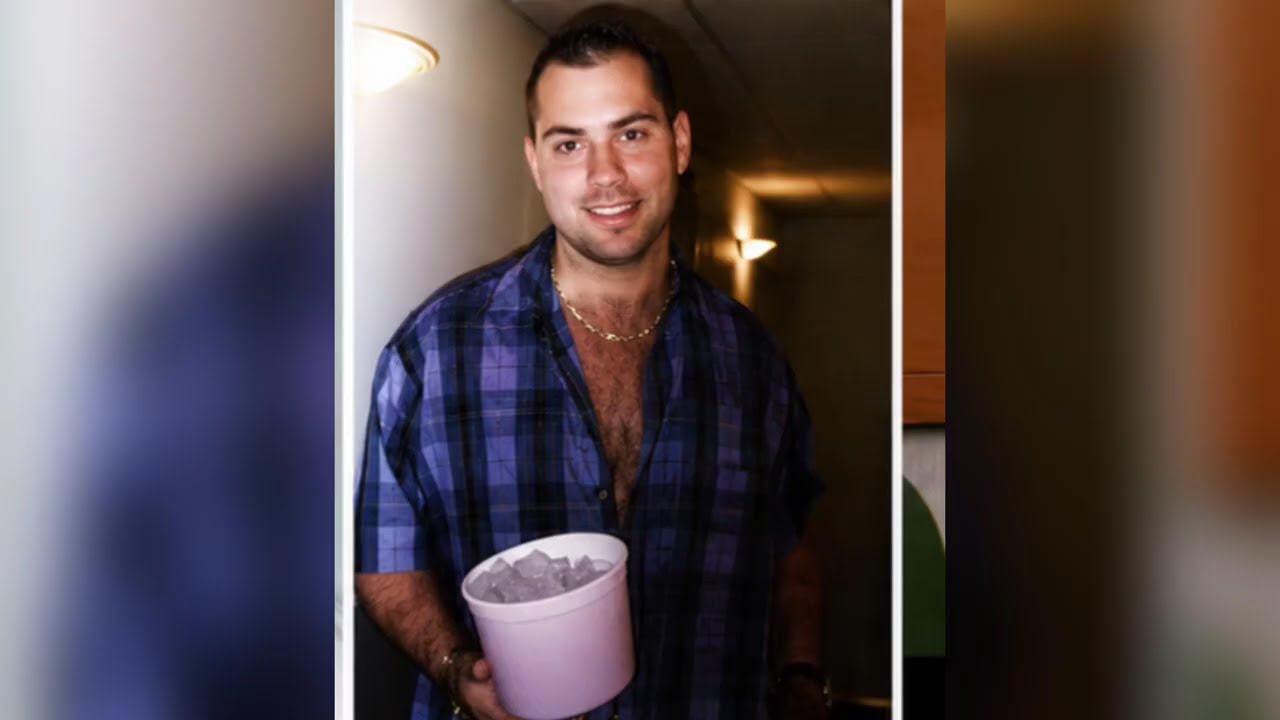 “I liked the idea of living outside the law,” he said later.
According to prosecutors, Dozier shot 26-year-old Jason Green in the back of the head while Green sat reading a magazine sometime between late July 2001 and March 2002. Green’s body was hidden in a closet, wrapped in plastic sheeting, driven around for months, and eventually buried in a shallow grave.
Dozier’s account was different. He said he came home one day and simply found Green already dead, and that rather than call police — which he believed would expose his meth operation — he disposed of the body himself.
An Arizona jury convicted Dozier of second-degree murder in 2005.
He was sentenced to 22 years in prison.
But Arizona authorities were not the only ones interested in Dozier. Nevada investigators were looking into the disappearance of Jeremiah Miller, a 22-year-old who had flown to Las Vegas with $12,000 in cash to buy chemicals used to produce methamphetamine, and never made it home.
Miller was engaged in the same dangerous world. He had started selling drugs, introduced by a friend to a man known in that world as reliable: Scott Dozier.
Miller flew to Las Vegas with Dozier and a woman named Brandy Douglas.
The first deal fell through. Dozier called Miller back a second time. Miller flew out alone.
Douglas spoke to Miller by phone late on the night of April 18th, 2002. He told her the deal had gone through and that he’d be home the next day. She never heard from him again.
Days later, a maintenance worker at the Copper Sands apartment complex noticed something in a dumpster: a large suitcase, and inside it, flesh and hair. Investigators recovered the dismembered torso of Jeremiah Miller.
His limbs had been carefully removed at the joints.
His head was never found. Identification came down to two tattoos on the remains — one of a dragon, the other reading “Always remember.”
The case leaned heavily on witnesses from inside Dozier’s circle.
One associate told police that as soon as news of the suitcase discovery broke, Dozier’s reaction was simple: “I messed up.”
Another witness testified that Dozier called him one night breathless, saying he had “a guy in a suitcase” and was heading to a lake. A third testified that Dozier had once asked him to look into the bathroom of a motel room, where he saw a man’s body in the tub, the head resting on the chest, the shower still running.
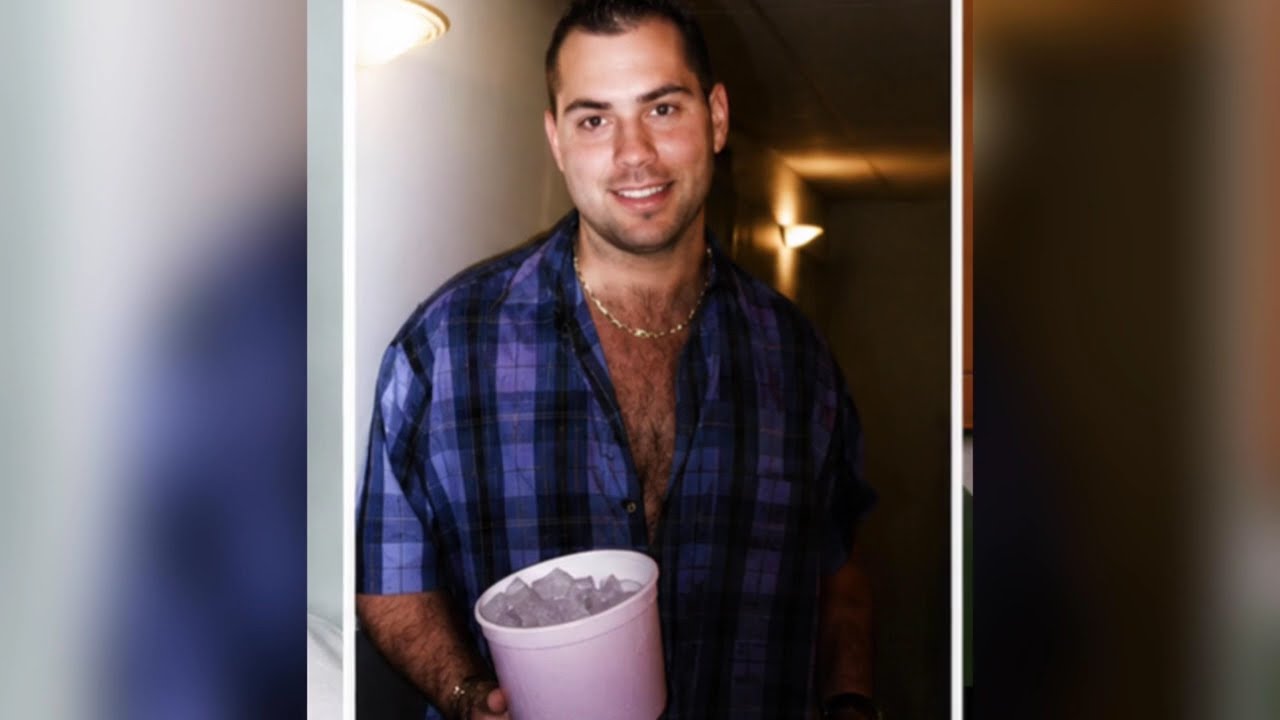 Dozier’s defense argued that investigators found no blood at the motel with chemical testing — a striking gap for a crime scene where a man was allegedly shot, bled out, and dismembered. They noted that virtually every witness was a self-interested criminal testifying under circumstances that benefited their own cases.
It was, in the end, entirely a circumstantial case.
But a Clark County jury in 2007 convicted Dozier of first-degree murder with the use of a deadly weapon, and robbery.
Prosecutors used the Arizona conviction as an aggravating factor. The defense presented mitigating evidence: his military service, his relationship with his son, his artistic ability.
His attorney argued that sentencing him to death would only add to the destruction the drug world had already caused.
The jury sentenced Dozier to death in October 2007. The Nevada Supreme Court affirmed the conviction and sentence in 2012.
But something in Dozier had already shifted. He no longer wanted lawyers fighting to keep him alive. In October 2016, he wrote by hand to Clark County District Judge Jennifer Tagliotti, asking her to have his death sentence carried out.
He had already arranged for a university lab to accept his brain for research. The rest of his remains, he decided, his family would cremate.
Courts confirmed Dozier was legally competent to make that decision.
He was an avowed atheist who didn’t believe in an afterlife. Death represented something closer to relief than punishment.
What Dozier hadn’t accounted for was that Nevada — a state that hadn’t executed anyone in over a decade — wasn’t actually prepared to grant his request.
Pharmaceutical companies had increasingly refused to sell states the drugs needed for lethal injection.
When Nevada’s corrections director reached out to nearly 250 different suppliers asking for execution drugs, not one agreed to help.
For the families of the two men who never got a say in how their own stories ended, Dozier’s death brings a complicated closure.
Jeremiah Miller’s father once asked in court: “Where is the rest of my boy?”
Scott Dozier’s fight to be executed became a national story about lethal injection drugs, pharmaceutical liability, and the mechanics of capital punishment in a country that isn’t always sure it wants to use the punishment it hands down.
Nevada sentenced Scott Dozier to death in 2007.
Twelve years later, he was still waiting — not for mercy, but for an ending he had asked for himself. He never got it from the state. He gave it to himself instead, in a cell in a remote prison town, with the question of his guilt still exactly where it had always been: settled by a jury, denied by him, and unresolved in the deepest sense.