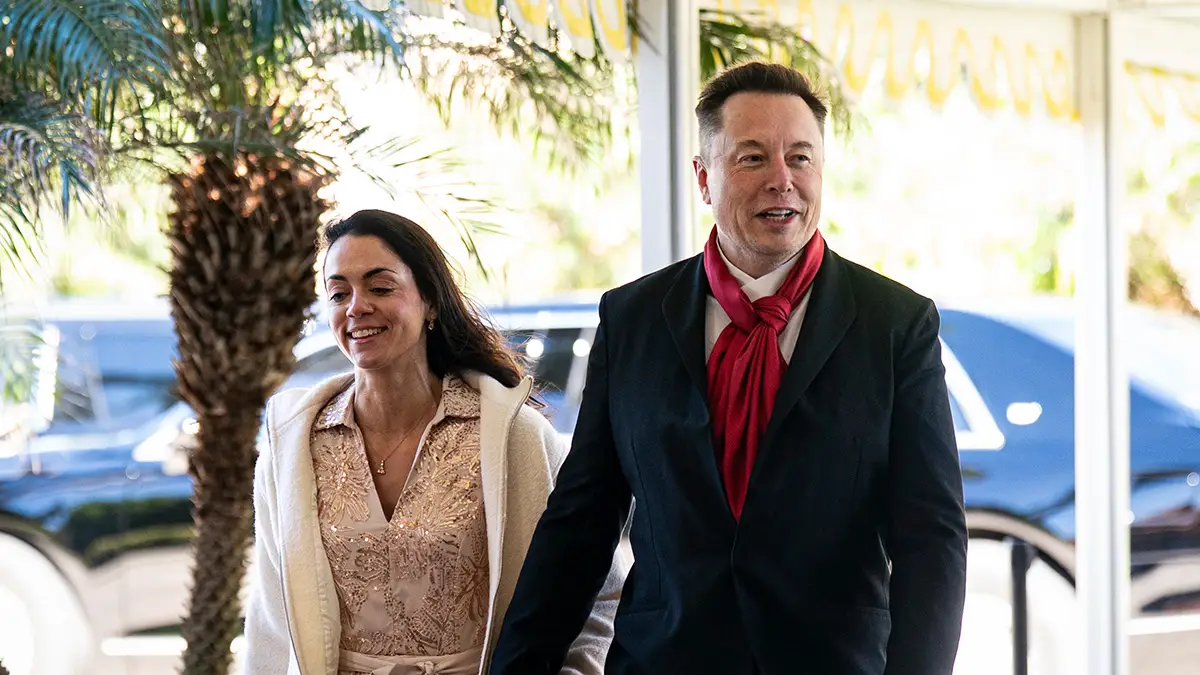
Shivon Zilis entered the legal battle as a witness.
But before her testimony was over, the courtroom had heard something far more personal than anyone expected.
The venture capitalist and technology executive revealed that her relationship with Elon Musk—the billionaire with whom she now shares four children—had not begun as a conventional romance.
It had begun with an offer.
Musk offered to be her sperm donor.
“I really wanted to be a mom,” Zilis explained in court, “and Musk made the offer around that time, and I accepted.”
The sentence was brief.
The implications were not.
Until that moment, much of the public discussion surrounding Musk’s large family had treated the identities of his children’s mothers as another part of the billionaire’s complicated private life.
Zilis’s testimony introduced a very different picture.
According to her account, the arrangement was initially practical, private and carefully defined.
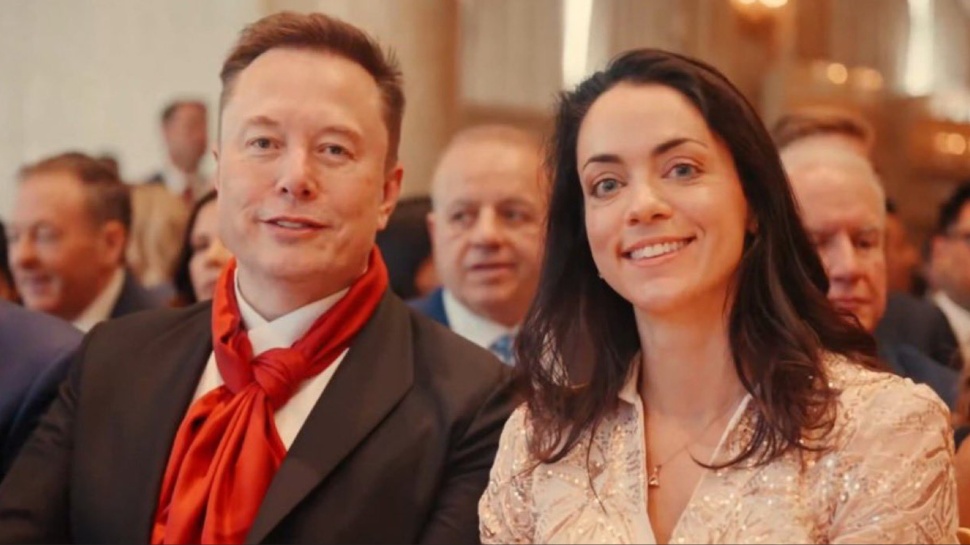)
She wanted children.
Musk was willing to help.
Their friendship, she said, was platonic.
And the agreement they signed reportedly reflected that understanding.
Musk’s paternity was expected to remain confidential. His involvement in the children’s daily lives would be limited. The boundaries appeared clear enough to put on paper.
But life did not follow the document.
And that was the part of the testimony that changed everything.
Zilis was not in court because the legal system had decided to examine how she became a mother.
She was there because of Musk’s much larger fight against OpenAI.
Musk, one of the organization’s early co-founders and financial supporters, has accused OpenAI and several of its leaders—including CEO Sam Altman—of abandoning the principles on which the company was created.
The lawsuit has become one of the most closely watched disputes in the technology industry.
At stake are arguments involving contracts, corporate governance, nonprofit obligations and the future of one of the most powerful artificial intelligence companies in the world.
Musk is seeking damages that have been reported as reaching as high as $150 billion.
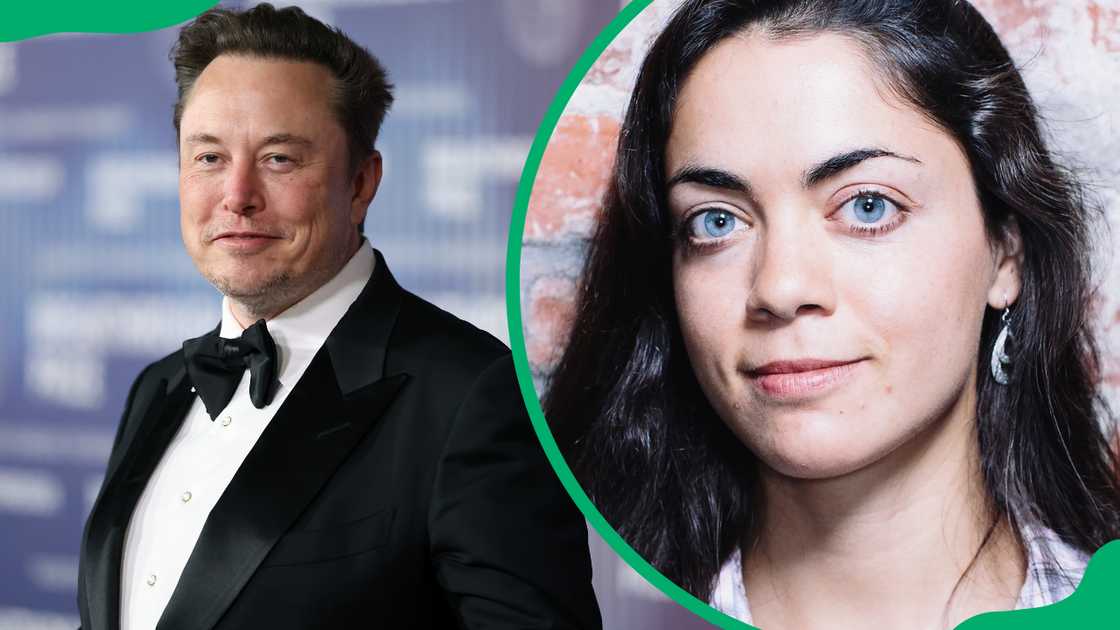
OpenAI has rejected his version of events.
The company has released emails and messages that it says demonstrate Musk once supported a more commercial structure for the organization—the very kind of direction he now criticizes.
The dispute is not simply about money.
It is about who gets to tell the history of OpenAI.
Musk’s position is that the organization betrayed its original mission.
OpenAI’s position is that Musk’s own communications undermine that claim.
Every message matters.
Every relationship matters.
And that is how Shivon Zilis became important to the case.
Before becoming widely known as the mother of four of Musk’s children, Zilis had already built a serious career in artificial intelligence and venture capital.
She worked closely with some of the most influential figures in the technology industry. She also had professional connections to OpenAI.
Lawyers representing the company have argued that she may have been in a position to share confidential information with Musk.
That allegation placed her personal relationship with him under legal scrutiny.
How close were they?
How often did they communicate?
Did their connection create a route through which private company information could have reached Musk?
Those questions turned what might have been described as a friendship into a matter of evidence.
For Zilis, there was no simple answer.
The relationship had changed over time.
What began as an agreement between two friends had developed into something more involved than the original terms suggested.
The written arrangement may have anticipated distance.
Reality produced proximity.
“We do live together when travelling,” Zilis testified, “and we have been spending family time in Austin.”
That statement was significant because it did not describe an anonymous donor who had disappeared after conception.
It described a father who had become present.
Not necessarily in the traditional way the public might expect.
But present enough to travel with the family.
Present enough to share living space.
Present enough to spend time with the children in Austin.
The original agreement had reportedly been designed to keep Musk’s paternity private and his role limited.
The testimony showed that those boundaries had softened.
And suddenly, the issue was no longer simply how the children had been conceived.
It was how a private arrangement had evolved into a family relationship—and what that evolution might mean inside a courtroom.
OpenAI’s lawyers did not need to prove that the relationship had begun romantically.
They needed to establish closeness.
The more involved Musk became in Zilis’s life, the more important their communications could appear.
A distant donor would suggest one kind of connection.
A co-parent who travelled with the family and spent time in the same home could suggest another.
That was the quiet shift at the center of her testimony.
The explanation that initially seemed to create distance between them ended up revealing how much had changed.
At first, the sperm-donor agreement sounded like evidence that their lives had been deliberately separated.
Then came the second admission.
They spent family time together.
They lived together while travelling.
Musk had become more involved with the children than the agreement originally envisioned.
The legal significance of those details remains for the court to decide.
But the human significance was already visible.
People often imagine that powerful individuals can divide their lives into perfectly controlled compartments.
Business in one room.
Family in another.
Friendship in a third.
Confidential information locked safely behind a separate door.
But real relationships do not always respect the boundaries written for them.
A private decision can become a family.
A professional connection can become personal.
An agreement created to prevent complications can later become evidence of how complicated everything became.
For years, Musk has spoken publicly about population decline and the importance of having more children.
Reports have placed the number of his children at 14 with four women, although his family life has often remained partly shielded from public view.
Zilis’s testimony offered a rare explanation of how at least one part of that family began.
There was no dramatic proposal.
No public declaration.
No story of an impulsive romance.
There was a woman who wanted to become a mother.
There was a friend who made an offer.
There was an agreement intended to keep the arrangement private.
And then there were children whose existence changed the relationship between the adults who had created them.
That may have been the most revealing part of the entire exchange.
Documents can describe what people intend to do.
They cannot always predict what people will feel once a child arrives.
The agreement reportedly expected Musk to remain largely uninvolved.
Instead, Zilis said he became more present.
The man who was supposed to remain quietly in the background entered the family picture.
The privacy clause could not prevent attachment.
The original boundaries could not stop the relationship from evolving.
And when the lawyers began examining whether Zilis could have passed information to Musk, the courtroom was forced to look beyond labels.
“Friend.”
“Donor.”
“Colleague.”
“Father.”
Each word suggested a different level of trust.
None of them, by itself, fully explained the connection.
That was the moment the legal questioning exposed something much larger than an unusual path to pregnancy.
The case depended partly on understanding who had access to whom.
Zilis’s testimony showed that the relationship could not be reduced to its origin.
Musk may have begun as a donor.
He did not remain only a donor.
The recognition was not delivered through a dramatic confession.
It appeared in the contrast between two pieces of evidence.
First, the agreement: secrecy, limited involvement and carefully defined distance.
Then, the reality: shared travel, family time and a father who had moved closer to the lives of his children.
The contradiction sat in the open.
No raised voice was necessary.
No theatrical accusation was required.
The original arrangement had already told the court what was supposed to happen.
Zilis’s own words showed what actually happened.
That did not prove that she shared confidential OpenAI information with Musk.
An allegation is not a finding.
Personal closeness does not automatically establish professional misconduct.
But her testimony gave OpenAI’s lawyers something they clearly considered relevant: a more complete picture of the trust and access between the two.
It also placed Zilis in an uncomfortable position.
She was being asked to explain private family decisions because of a corporate conflict involving some of the most powerful people in technology.
Choices that may once have belonged only to her, Musk and their children were now being examined as part of a multibillion-dollar lawsuit.
The secrecy agreement had been intended to keep Musk’s paternity out of public view.
Instead, the arrangement became part of a court record.
That is one of the brutal realities of litigation.
Once a private relationship becomes relevant to a legal argument, the people involved can lose control over how much of that relationship remains private.
Messages can be produced.
Timelines can be questioned.
Agreements can be examined line by line.
Words such as “friendship” and “family” can become disputed evidence rather than personal descriptions.
For Musk, the testimony may complicate the effort to present Zilis as someone who existed at a distance from his daily life.
For OpenAI, it may support further questions about whether information could have moved through personal channels.
For Zilis, it means her route to motherhood is now being discussed around the world—not because she volunteered it as a public story, but because lawyers believed the nature of her relationship with Musk mattered.
And for the public, the revelation cuts through the usual assumptions surrounding billionaires and their families.
People expected a secret romance.
They heard about a donor agreement.
People expected the agreement to explain the relationship.
Instead, it revealed how dramatically the relationship had changed.
That was the twist no headline could fully capture.
The unusual part was not merely that Musk offered to become a sperm donor.
The unusual part was that an arrangement built around limited involvement eventually developed into shared family life.
The document created distance.
The children created connection.
What began as a private solution to one woman’s desire to become a mother became a relationship important enough to enter one of the biggest corporate legal battles of the era.
The court will eventually decide which evidence matters and whose interpretation of OpenAI’s history is more persuasive.
It will determine whether Musk’s claims succeed, whether OpenAI’s defenses hold and whether the private connections surrounding the case have any legal consequence.
But Zilis’s testimony has already delivered a different kind of verdict.
It showed that people can write rules for the beginning of a relationship without knowing what that relationship will become.
They can negotiate privacy.
They can define responsibilities.
They can plan for emotional distance.
Then life arrives and ignores the contract.
Children grow.
Parents change.
Boundaries move.
And years later, in a courtroom built to examine corporate power, the most revealing evidence may not be a financial record or an internal strategy document.
It may be the simple admission that the man who agreed to remain in the background became part of the family after all.
Because power can protect many secrets—but it cannot guarantee that life will unfold according to the agreement.