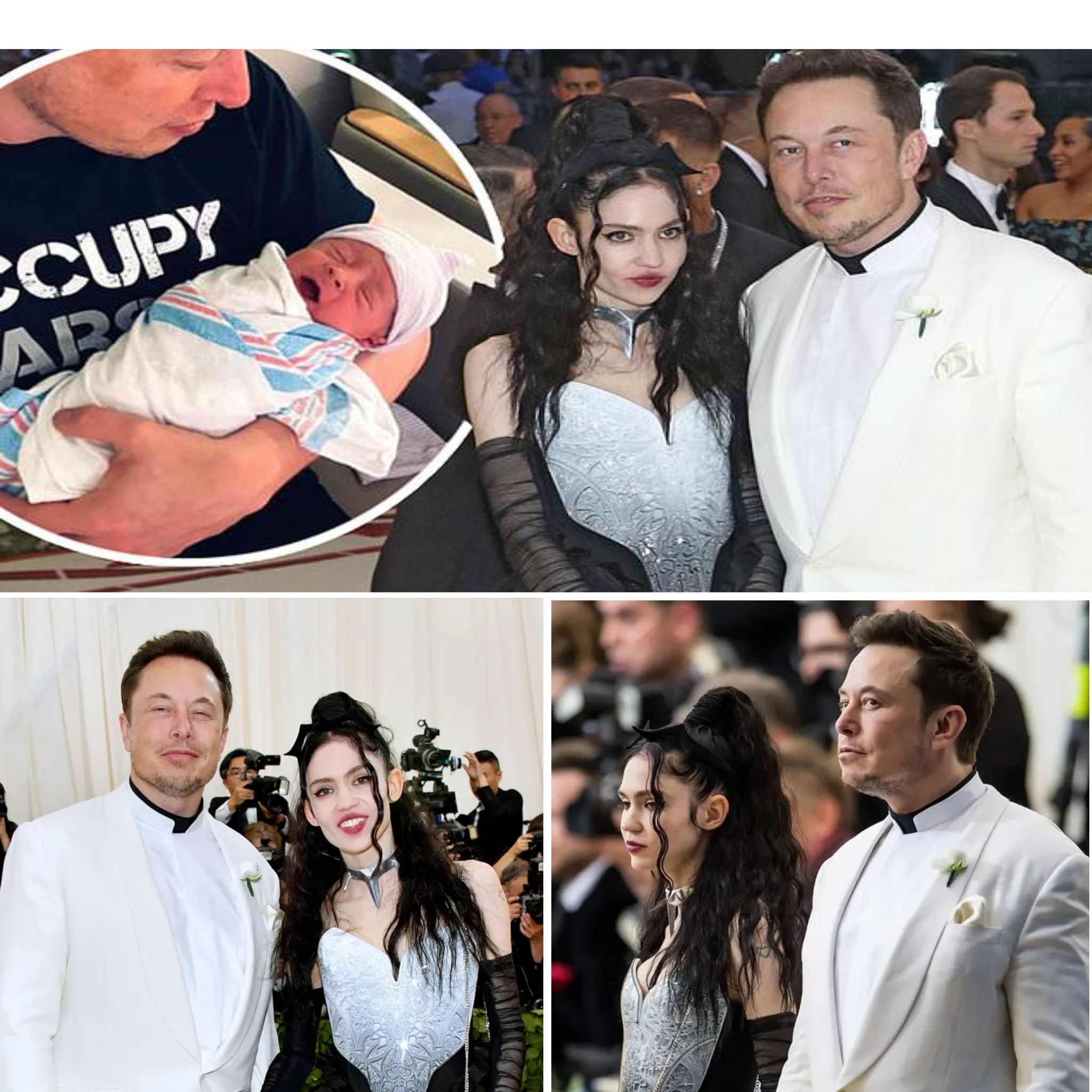
Elon Musk had built companies that launched rockets, reshaped the electric-car industry, and promised to change the future of humanity.
But when he was asked about raising his two-month-old son, the billionaire gave an answer that was surprisingly ordinary.
“Grimes has a much bigger role than me right now,” he admitted.
It was not the kind of statement people expected from a man known for inserting himself into almost every important decision around him.
At Tesla, details mattered.
At SpaceX, timelines mattered.
In public, Musk often appeared restless, intensely involved, and unwilling to stand on the sidelines.
Yet inside his home, with a newborn who needed to be fed, comforted, carried, and watched through the night, Musk acknowledged that someone else was doing far more of the work.
Grimes.
Then he added another sentence.
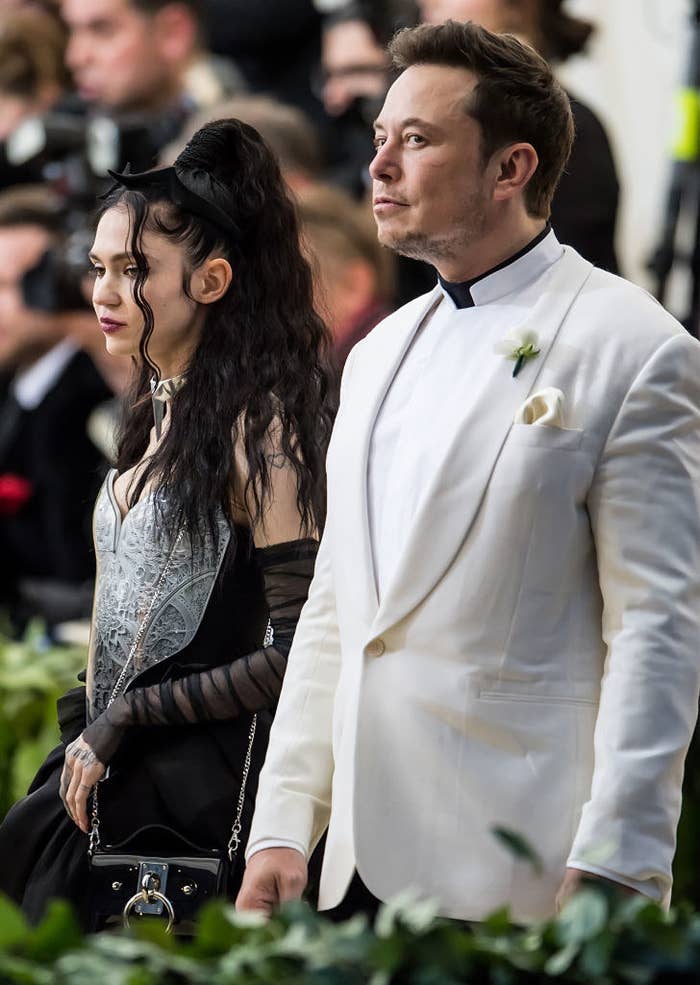
“When the kid gets older, there will be more of a role for me.”
For some people, that sounded honest.
For others, it sounded like an outdated division of parenting: the mother handles the exhausting early months, and the father steps in later, when the child can travel, talk, learn, and participate in the world.
But the full story was more complicated than one quote.
Because Musk was not speaking as a first-time father who had never raised children before.
By then, he already had five older sons with his former wife, author Justine Musk: Griffin, Xavier, Damian, Saxon, and Kai.
He also carried the memory of another son, Nevada, who had died at just 10 weeks old from sudden infant death syndrome.
That loss had happened years earlier, but no parent simply stops carrying a child because time has passed.
So when Musk spoke about his limited role during the newborn stage, he was not describing fatherhood from theory.
He was describing it after experience, divorce, tragedy, global travel, business pressure, and years of trying to balance children with companies that seemed to demand every waking hour.
His youngest child with Grimes had been given one of the most unusual names ever announced by two public figures: X Æ A-Xii.
The name immediately became an international talking point.
People debated how to pronounce it.
They debated whether it could legally appear on a birth certificate.
They debated what each character meant.
The conversation became so focused on the name that it was easy to forget there was a real baby behind it.
A baby who cried.
A baby who woke up hungry.
A baby who needed someone nearby every hour of the day.
And according to Musk, that person was mostly Grimes.
The admission placed her at the center of a story in which she was often treated like a supporting character.
Public attention naturally followed Musk. His companies, wealth, tweets, and unpredictable announcements dominated headlines.
But newborn care does not happen in headlines.
It happens quietly.
It happens at 3 a.m., when no one is watching.
It happens in repeated routines that rarely look important from the outside but determine whether a child feels safe inside the world.
By saying Grimes had “a much bigger role,” Musk briefly moved the spotlight away from himself.
It was a small sentence, but it acknowledged a large imbalance.
He did not claim that parenting was divided equally.
He did not describe himself as a superfather managing rocket launches with one hand and preparing bottles with the other.
He simply said what was happening.
Grimes was carrying more of the responsibility.
Musk then explained how he imagined his role changing as their son grew older.
He pointed to the way he interacted with his five older boys.
When business required him to travel, he sometimes brought them along.
“If I have a trip for Tesla to China, for example, I’ll bring the kids with me,” he explained.
Those trips were not limited to hotel rooms and company meetings.
He took them to see the Great Wall of China.
They rode the bullet train from Beijing to Xi’an.
They visited the Terracotta Warriors.
It revealed the kind of father Musk appeared to understand most naturally.
Not necessarily the father of diapers, feeding schedules, and bedtime routines.
But the father of movement, discovery, machines, history, and large ideas.
His children did not only hear about the world.
They were brought into it.
A Tesla trip could become a history lesson.
A train ride could become an engineering lesson.
A visit to an ancient site could become a conversation about civilization, ambition, and what humans leave behind.
That did not erase Grimes’ larger role with their newborn.
But it complicated the assumption that Musk saw children as separate from his work.
In many cases, he appeared to merge the two.
His business travel became family travel.
His curiosity became part of their education.
His access opened doors most children would never see.
Still, there was an uncomfortable truth beneath the inspiring image of a father taking his sons across China.
Traveling with older children is very different from caring for a newborn.
An older child can walk beside you.
A newborn must be carried.
An older child can look at the Great Wall and ask questions.
A newborn may keep both parents awake all night.
An older child can remember the Terracotta Warriors.
A newborn needs care that is repetitive, physical, private, and often invisible.
Musk’s own words showed that he understood the distinction.
He believed his contribution would grow when his son was old enough to interact with the world in ways that matched Musk’s strengths.
That view of parenting was practical.
But it also raised a difficult question.
Should a parent wait for the stage that suits them best?
Or should parenthood require them to enter the stages that do not?
The answer was not provided in the interview.
Instead, the tension remained inside his statement.
Grimes had the bigger role now.
Musk expected a bigger role later.
Meanwhile, the family was living through an unusual moment.
The coronavirus pandemic had forced children around the world out of classrooms and into improvised learning environments.
Parents suddenly became teachers, technical support workers, schedule managers, and emotional anchors.
Musk responded by creating an online-school arrangement for his older sons.
He said it had “actually worked out pretty well.”
That reaction was consistent with the way he approached nearly every difficult system.
When the existing structure stopped functioning, he built another one.
Schools closed.
He created an alternative.
Travel interrupted ordinary routines.
He turned the travel itself into education.
His children were not raised inside a conventional schedule, because very little about their father’s life was conventional.
Then Musk posted a photograph that softened the entire conversation.
In the image, he held his newborn son.
It was not a rocket announcement.
It was not a Tesla milestone.
It was not a statement about artificial intelligence, Mars, or the future of civilization.
It was simply a father and a baby.
Musk captioned the photograph in German:
“Das baby kann noch keinen löffel benutzen.”
Translated into English, the line meant:
“The baby cannot use a spoon yet.”
It was absurdly simple.
That was what made it memorable.
A man who regularly discussed interplanetary travel was announcing that his son had not yet mastered a spoon.
The photograph revealed the plot twist hidden beneath all the public arguments about Musk’s parenting.
His statement about having a smaller role was not necessarily an attempt to dismiss fatherhood.
It may have been an admission that, in this particular stage, his usual advantages did not matter.
Money could not make a two-month-old independent.
Engineering knowledge could not persuade a newborn to sleep.
A global reputation could not teach a baby to hold a spoon.
The child did not care how many companies his father controlled.
The baby needed care, closeness, patience, and time.
And Grimes, Musk admitted, was providing more of those things.
Suddenly, the most powerful person in the story was not the billionaire.
It was the mother holding together the daily reality of a newborn’s life.
The timing of the interview made the admission even more striking.
Less than 24 hours earlier, Grimes had posted—and then deleted—a message on Twitter that appeared to scold Musk publicly.
The details of their private disagreement were not fully explained in the interview, and a deleted post could not reveal everything happening between two people.
But the timing created an unmistakable contrast.
One day, tension appeared online.
The next, Musk publicly acknowledged that Grimes was playing the larger parenting role.
Whether the two moments were connected was known only to them.
Still, the sequence reminded people that public couples often live two stories at once.
There is the story visible on social media: photographs, captions, jokes, arguments, deleted messages.
And there is the story happening away from the screen: exhaustion, responsibility, disagreement, affection, and the relentless work of raising a child.
The internet often demands a simple verdict.
One person must be right.
The other must be wrong.
One parent must be devoted.
The other must be absent.
But real families rarely fit into such clean categories.
Musk could be deeply involved with his older sons and still leave more newborn responsibility to Grimes.
He could take children around the world and still be less present during the earliest months.
He could love his son and still hold a view of fatherhood that many people questioned.
Those things could all be true at the same time.
The most revealing moment was not the photograph, the unusual name, or even the deleted tweet.
It was Musk’s willingness to say, in public, that he was not the primary parent at that moment.
For someone associated with control, it was a rare surrender of the center.
There was no attempt to claim equal credit.
There was no carefully polished statement about perfect teamwork.
He said Grimes had a much bigger role.
And with that admission, the balance of the story changed.
The person with less fame had more responsibility.
The person receiving fewer headlines was doing more of the immediate work.
The man building the future was depending on someone else to care for the future sleeping inside their home.
One day, Musk’s prediction may have proved true.
As X grew older, his father’s role may have expanded.
There could be laboratories, factories, trains, historic places, long conversations, and experiences few children could imagine.
But no future adventure could replace the work being done in those first months.
Every child reaches the stage of asking questions because someone first answered their cries.
Every child eventually walks into the world because someone once carried them through it.
And every powerful person who becomes a parent eventually meets a truth no title can change:
The most important work in a family is often done by the person the world notices least.