COLUMBIA, S. C. — Marion Bowman Jr.
was pronounced dead at 6:27 p. m. Friday after a lethal injection that ended more than two decades of legal appeals, drawn-out court battles, and a final, steadfast claim of innocence.
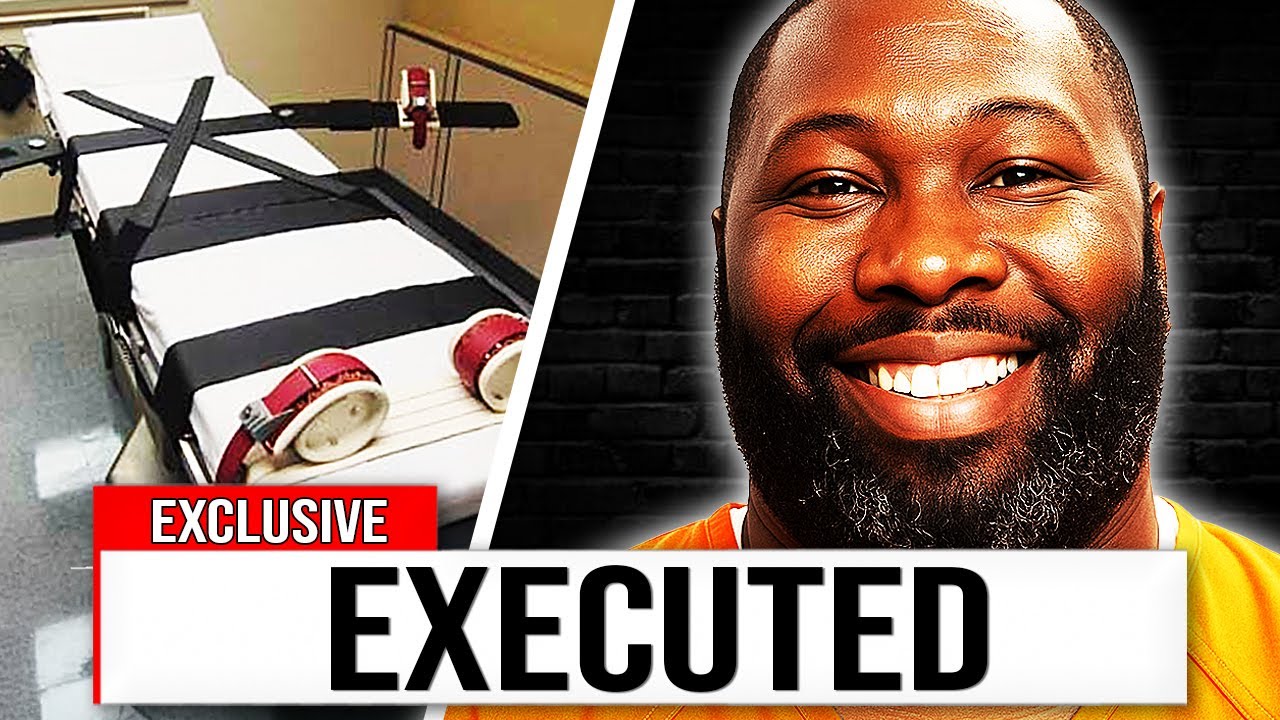 He was 44 years old.
The execution, carried out at a South Carolina correctional facility, came exactly 24 years after the brutal murder of 21-year-old Candy Martin, a young mother whose charred body was discovered in the trunk of her own burning car on a remote stretch of Nursery Road in Dorchester County.
Bowman, who had spent nearly 23 years on death row, did not speak from the gurney. Instead, his attorneys read a final statement in which he looked directly at the family of the woman he was convicted of killing and denied any role in her death.
“I did not kill Candy Martin. I’m innocent of the crimes I’m here to die for,” the statement read. “I know that Candi’s family is in pain.
They are justifiably angry. If my death brings them some relief and ability to focus on the good times and funny stories, then I guess it will have served a purpose.”
He added: “I hope they find peace.”
Witnesses described Bowman’s breathing becoming heavy in his final moments. He puffed his lips as he exhaled, and within less than a minute, his breaths ceased entirely. A doctor with a stethoscope listened to his chest, placed a hand on his neck, and lightly patted him as she completed the examination.
He did not react.
The execution was the culmination of a case that began on a cold February night in 2001, when the quiet darkness of rural Dorchester County was shattered by gunfire that nearly went unnoticed.
A man driving along Nursery Road just after 7:50 p. m. on February 16, 2001, spotted a small four-door blue sedan parked oddly close to the treeline.
The windows were cracked open. The car looked abandoned, but not as if it had broken down — more like it had been left in a hurry. The driver paused, saw no one nearby, and moved on.
Minutes later, a neighbor who had been half asleep in his living room was jolted awake by a loud pop. He muted the television. Then came three quick gunshots, sharp and unmistakable.
He assumed someone was night hunting, a common occurrence in that area, but something tugged at him.
He grabbed his keys and drove the length of Nursery Road, passing the parked sedan without noticing anything amiss. No movement, no lights, just trees and shadows. He turned around, went home, and went back to bed — unaware he had just driven past a murder scene.
At 3:30 a. m. , another loud bang woke him.
This one was different. He returned to the same stretch of road and found the sedan engulfed in flames. Fire shot more than 15 feet into the air, illuminating the trees.
There were no other cars, no signs of movement — just heat, fire, and an eerie silence.
 Fire crews arrived within minutes. After knocking down most of the flames, they opened the trunk. What they found stopped everything: a human body, burned and curled in on itself from the intense heat.
The car’s license plate was melted but still legible enough to trace. It belonged to Candy Martin, a 21-year-old woman who had been reported missing just hours earlier.
An arson investigator determined the fire was no accident. But it was the autopsy that confirmed what police already feared: Candy had not died in the flames. She had been shot twice — once in the torso and once in the head.
Back on Nursery Road, investigators found six . 380 shell casings scattered near a dark pool of blood. In that blood, they recovered strands of hair and the back of an earring.
A trail of blood led into the woods, where they found a single black dress shoe, more blood, and crushed branches. DNA tests confirmed it all came from Candy.
The evidence painted a horrifying picture: whatever happened that night had not ended quickly, and it had not ended there.
The day before her body was found, Bowman — then 20 years old — was riding around town with his sister Yolanda and their cousin Katrina. They drove through downtown Branchville and spotted Candy sitting in her car, talking to a man through her window.
Candy was Bowman’s childhood friend, a casual hookup partner, and someone he occasionally sold crack to. According to him, she owed him money. When he rolled down the window to get her attention, Candy told him to wait — she was in the middle of a conversation.
That was all it took. Bowman snapped.
He cursed at her loud enough for people nearby to hear. In front of three witnesses, he said: “I’m going to get that tonight.”
By 7:30 that evening, Candy drove over to a house where Bowman and his cousin James Gadson had been drinking. She was driving them back to a party in her small blue Ford Escort when Bowman told her to take a detour out to Nursery Road.
It was already dark when they arrived. Bowman told Candy to shut off the headlights. She stayed in the car while he and Gadson stepped out.
As they walked a short distance down the road, Bowman said something that made Gadson’s stomach twist: he thought Candy was wearing a wire, and he planned to kill her.
They walked back toward the car. Candy got out, started walking up the road, perhaps sensing something was off. Bowman followed behind her.
Gadson trailed them both, heart pounding.
Then Bowman pulled a gun and fired three times. Candy screamed, turned, and ran toward Gadson, desperate. But then she stopped, turned back to face Bowman, and begged.
 “Please don’t shoot me no more. I have a baby to take care of,” she pleaded, her voice cracking.
Bowman raised the gun again and fired two more times. Candy dropped to the ground, took one last breath, and was gone.
Gadson jumped back into the car, terrified. Bowman grabbed Candy by the ankles and dragged her into the woods. When he came back out, he climbed into the driver’s seat of her car and laughed.
“I shot that bitch in the head,” he said. “Heard her skull hit the ground.”
On the way back to town, the threat came sharp and clear: if Gadson ever opened his mouth, Bowman would blow his brains out.
What happened next was not panic. It was calculated.
Bowman drove Candy’s car around like it was his own. He tried to sell it outside a local club. No one took it.
So he kept driving, picking people up, acting like it was just another night.
Around 3:00 a. m. , Bowman showed up at Travis Felder’s house.
He asked for a ride, and Felder followed him back out to Nursery Road, watching as Bowman pulled over, stepped into the dark woods, and vanished.
When Bowman came back, he was dragging a body — Candy’s, by the feet. He popped the trunk and threw her in. The light from the trunk was just enough for Felder to see her face.
“You didn’t think I’d do it, did you?” Bowman said. Then he added: “I killed Candy Martin.”
Without hesitation, he lit a fire and threw it into the car. The vehicle went up fast, flames tearing through the night sky.
By morning, it was over. Police arrested Bowman and found Candy’s wristwatch in his pants pocket. Hours later, he was officially charged with killing Candy Martin and setting her car on fire.
Prosecutors offered Bowman a plea deal for a life sentence. He turned it down, insisting he was not guilty. At trial, he argued that Candy had given him her wristwatch in exchange for drugs — the same watch that linked him to the crime.
He also acknowledged that Candy often bought crack from him, sometimes in exchange for sex.
 The case against him was overwhelming. Witnesses took the stand. The physical evidence lined up.
On May 24, 2002, after just three hours of deliberation, the jury found him guilty of murder. He was sentenced to death and received an additional 10 years for arson.
What followed was two decades of legal battles. His attorneys painted a picture of a boy raised in chaos — a broken home, drinking by age 10, dealing drugs by 14. They claimed the trial was unfair, that key evidence had been hidden, and that race played a role.
On death row, Bowman built a different image, one his lawyers called a gentle giant. He stayed in touch with his wife, Dorothy May, spoke often to the daughter born six months after his arrest, and watched his granddaughter grow up through letters, phone calls, and the glass of the visitation room.
But none of it mattered. Every appeal failed at the state level, the federal level, and finally the U. S.
Supreme Court.
James Gadson, who testified against his cousin, took a deal in June 2002, pleading guilty to accessory after the fact and failing to report the crime. He was sentenced to 20 years but walked out on parole in under five. A violation sent him back behind bars for nearly five more years.
Travis Felder struck his own deal and avoided prison entirely, pleading guilty to being an accessory after the arson. He was sentenced to three years of probation and walked out of court with a warning and a record.
On January 3, 2025, Bowman’s execution was officially scheduled. He was given a choice: firing squad, electric chair, or lethal injection. On January 17, he chose lethal injection.
For his last meal, he requested fried shrimp, oysters, fish, chicken wings, chicken tenders, onion rings, banana pudding, German chocolate cake, pineapple juice, and cranberry juice.
Just a day earlier, his legal team released a 58-page collection of poems Bowman had written on death row. He called it “My Thoughts: A Final Attempt to Leave Something Behind.”
In the end, the poetry could not save him. The appeals could not save him. The claims of innocence could not save him.
Marion Bowman Jr. , who spent nearly 23 years on death row for a murder he always denied committing, was pronounced dead at 6:27 p. m.
on January 31, 2025.
Candy Martin’s family, who waited more than two decades for this moment, were present for the execution. Whether Bowman’s final wish — that his death bring them “relief” — was fulfilled is a question only they can answer.
What remains is the record of a case that moved from a dark road in Dorchester County to the highest courts in the nation, and ended with a 44-year-old man strapped to a gurney, his final words read aloud by lawyers who insisted until the very end that the system had gotten it wrong.
The state of South Carolina carried out the execution. The death warrant was fulfilled. And on a cold January evening in 2025, justice — as defined by the courts — was done.