The Waltons built its nine-season legacy on a single promise: that a family holds together through the hardest times. But behind the farmhouse lights that flickered out each episode, the family that America loved was quietly fracturing in ways the cameras never captured. Now, decades after the final goodnight, the full scope of those departures reveals a story far more complicated than the wholesome image the show projected to millions of weekly viewers.
Richard Thomas was just 21 years old when he stepped into the role of John Boy Walton, the eldest son and emotional anchor of the family. The character was the show’s narrator, its dreamer, the aspiring writer whose gentle voice guided audiences through the Depression-era struggles of the Blue Ridge Mountains. Within a year, Thomas had won a Primetime Emmy Award and become one of the most recognizable young actors on American television.
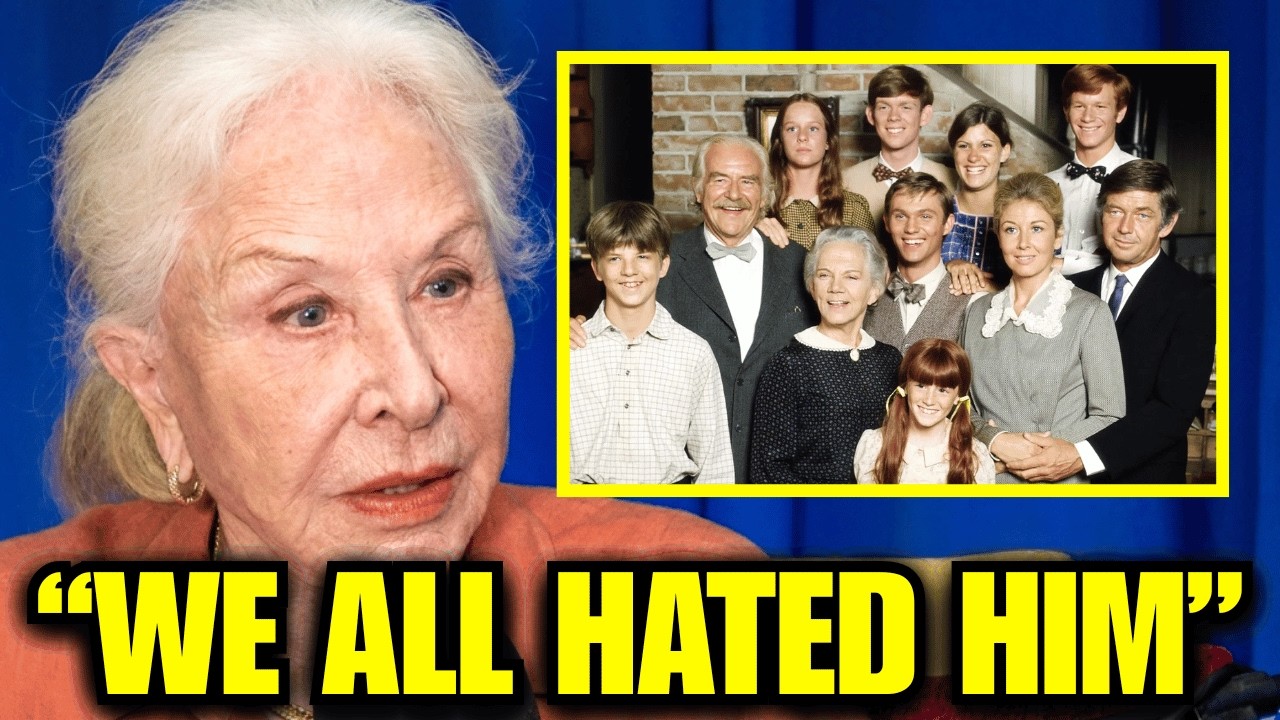 But by 1973, doubt had already begun creeping in. Thomas was a trained stage actor who had studied at Columbia University, and he watched his contemporaries building film careers on an entirely different plane from weekly family television. The warmth that made John Boy beloved was becoming, in Thomas’s mind, a professional ceiling he couldn’t see over.
By the end of season five in 1977, Thomas made his decision. He told producers he would not return for season six, and the writers handled his departure with narrative grace, sending John Boy to New York City to pursue his writing dreams. The door was left deliberately open, but Thomas didn’t walk back through it immediately.
What followed is genuinely instructive. Thomas did solid theatrical work on Broadway, but the film career he had imagined never fully materialized. Nothing he did in the late 1970s and 1980s carried the cultural resonance of John Boy.
The role he had feared would trap him turned out to be the foundation on which everything else in his career would be built.
Will Geer played Grandpa Zebulon Walton from the very first episode, appearing as the warm, weathered patriarch who seemed to have been born old and wise. What audiences didn’t know was that the man in that rocking chair had spent over a decade of his professional life being systematically destroyed by the United States government.
Geer had been a prominent actor and activist since the 1930s, deeply embedded in left-wing political causes during the Depression era. He was a close personal friend of Woody Guthrie and had been involved in labor organizing and civil rights work when such involvement carried serious professional risk. When the House Un-American Activities Committee investigated communist influence in Hollywood, Geer’s name appeared prominently.
In 1951, he was called to testify and refused to cooperate. The consequence was immediate and severe: Geer was blacklisted, effectively banned from mainstream Hollywood at the moment when film and television were the most powerful cultural platforms in the country. For more than a decade, he worked wherever he could find work, in small venues and community theater, while the industry pretended he didn’t exist.
The blacklist began loosening in the 1960s, and Geer slowly found his way back. When The Waltons cast him in 1972, he was in his late sixties and had lived through an experience that would have destroyed many people. The man playing the show’s great patriarch had actually been professionally punished for more than a decade for his commitment to decency and community in real life.
Geer continued playing Grandpa Walton through the end of season five. He died on April 22, 1978, at age 76, during the show’s production period. The writers handled his death between seasons, and castmate Michael Learned described the sense of loss as something the remaining cast felt in every scene they filmed afterward.
Ellen Corby arrived on The Waltons playing Grandma Esther Walton with a sharpness that balanced Grandpa Zeb’s warmth perfectly. She had been a character actress for decades, with an Academy Award nomination for I Remember Mama in 1948. The audience responded immediately, and Corby won three Primetime Emmy Awards for the role in 1973, 1976, and 1977.
Then in November 1976, during production of season five, Corby suffered a severe stroke. She was 66 years old. The stroke significantly affected her speech and mobility, and her ability to return to the demanding schedule of a weekly drama was genuinely uncertain.
 The show’s creators made a choice that was remarkably thoughtful for that era of television. Rather than quietly recasting or writing Grandma off to visit distant relatives indefinitely, they wrote the stroke directly into the show’s storyline. The Walton family’s response, the fear, the adjustment, the slow recovery, became part of the ongoing narrative.
Corby’s real medical situation was acknowledged rather than hidden.
She returned beginning with season seven, though her appearances were reduced. The physical effects of her stroke were visible in her performances, but the production worked around those limitations with genuine care. She continued through the final seasons and returned for the reunion movies in the 1980s.
Michael Learned came to The Waltons in 1972 playing Olivia Walton, the mother, and transformed what could have been a functional supporting role into something considerably more complex. She won the Primetime Emmy Award for Outstanding Lead Actress in a Drama Series four times for the role, in 1973, 1974, 1976, and 1979, a level of sustained recognition that very few performers in the history of American television have matched.
After season seven, she left anyway. The reason she has given across interviews over the years is honest and completely understandable: she was exhausted. Not exhausted by the character specifically, not exhausted by her castmates, but worn down by nine to ten months of demanding production every year for seven consecutive seasons.
Four Emmy statues on a shelf could not compensate for wanting a life that wasn’t entirely consumed by a production schedule.
The show wrote her departure by giving Olivia Walton tuberculosis, requiring the character to leave the mountain for a sanitarium. It was a story solution that preserved the character’s dignity and left the door open for Learned to return. She did eventually return for later episodes and reunion movies, but something particular about the show’s texture had changed.
There’s a lesser-known story behind Learned’s casting that complicates everything. Before she ever set foot on the Walton farmhouse set, another actress had already been cast as Olivia Walton. Patricia Neal was one of the most celebrated dramatic performers in Hollywood in 1972, an Academy Award winner for Hud in 1963.
Creator Earl Hamner Jr. had specifically wanted Neal for the role.
The problem was what Neal had survived in the seven years before the show began casting. In February 1965, while pregnant with her fifth child, she suffered three massive strokes in rapid succession. She was 39 years old.
 The strokes left her partially paralyzed and significantly affected her speech and cognitive function.
Her recovery was remarkable. She returned to acting and received an Academy Award nomination for The Subject Was Roses in 1968. But the specific demands of a weekly television drama series, the pace, the volume, the need to deliver consistent performances across hundreds of pages of dialogue, were beyond what her health could realistically support.
She withdrew before filming began, and Michael Learned was brought in to replace her.
The Waltons that nine seasons of American viewers watched every week was built on a role originally written and cast for someone else. A version of the show built around Patricia Neal remains one of American television’s most significant alternate histories.
Kami Cotler played Elizabeth Walton, the youngest of the seven children, from the very first episode through the entire nine-season run. She was six years old when the show began and fifteen when it ended, meaning she grew up almost entirely on screen in front of a national audience.
After the show ended in 1981, Cotler walked away entirely. She didn’t look for the next role or the next series. She went to college, pursued education with the same deliberateness most of her castmates pursued their next project, and eventually became a teacher.
She has spoken about that choice with striking clarity and no visible ambivalence. The industry she had spent her childhood inside did not represent what she wanted her adult life to look like, so she taught.
Jon Walmsley played Jason Walton across all nine seasons, the musical Walton with the guitar and the piano. Walmsley was a genuinely trained musician before he was an actor, and the show leaned directly into that. What the audience couldn’t know was that his real musical ambitions existed independently of the show, made difficult to pursue by nine months of annual production.
He stayed through the entire run, but after the show ended, his path made clear where his real investment had always been. He moved toward music composition and production work rather than continuing to pursue acting roles. His post-show trajectory reads not as an exit from anything, but as a return to something that had been waiting.
Ralph Waite played John Walton Senior across all nine seasons. He had been managing alcohol dependency during portions of the production, something he became more publicly candid about in later years. The personal discipline required to show up to scenes asking him to embody steadiness and reliability while privately fighting something significant was a different kind of challenge than anything in the scripts.
 He later became an ordained minister, and the religious dimension of the Walton family’s life seemed to deepen in personal meaning for him. He worked consistently in television and film after the series ended and remained connected to the Waltons legacy until his death in 2014 at age 85.
The younger cast members carried their own invisible burdens. Mary McDonough, who played Erin Walton across all nine seasons, has spoken publicly about the body image pressures she experienced as a young actress on the show. She developed serious health issues connected to those pressures that stayed with her for years after production wrapped.
Judy Norton, who played Mary Ellen Walton through the entire run, carried a version of the same experience, the particular difficulty of growing up publicly, being beloved as a specific character while trying to work out who she was as a real person outside the role. She has been candid about the complicated relationship between the character she played weekly and the life she was actually living.
The Waltons premiered in September 1972, reached the top of the Nielsen ratings in its early seasons, won the Emmy Award for Outstanding Drama Series, and ran for nine full seasons before its final episode aired in 1981. Creator Earl Hamner Jr. built it from his own childhood memories of growing up in Schuyler, Virginia, and watched it become something considerably larger than any single creative vision can fully account for.
What all these departures and private struggles reveal, taken together, is something about what sustained creative work actually costs the people doing it. The Waltons built its reputation on depicting the resilience of ordinary people under real pressure. The actors who built that reputation were themselves under real pressure the show never depicted.
The reunion productions that aired through the 1980s and into the 1990s reassembled much of the original cast for stories that followed the Walton family across later decades. Those productions carried the genuine warmth of people who had been through something significant together and found that the connection between them had survived the complicated feelings that follow any long professional relationship.
Richard Thomas came back. Michael Learned came back. They returned not because the production required it, but because something about what they had made together was genuinely worth returning to.
The show spent nine seasons making the case that a family is most itself when it refuses to let go of each other during the hard years. The people who built that family kept leaving, kept struggling with things the show never put on screen, and kept coming back anyway.
The warmth that made The Waltons beloved never came from the scripts or the sets or the network notes. It came from people who showed up week after week, year after year, and poured something real into characters that millions of Americans wanted desperately to believe existed. What it cost them is a quieter and more honest story than the good night scenes ever told.
And the fact that they kept returning to each other anyway might be the truest thing the show ever said about family.


