# Hitler’s Relatives After 1945: What Became of Them?
The man at the door had spent years making ordinary things grow.
Lawns. Shrubs. Trees. The quiet green borders of suburban Long Island homes.
Then, one day in April 2006, another stranger arrived carrying a notebook and asking about a dead man in Germany.
Not his father.
Not even his grandfather.
His great-uncle.
Adolf Hitler.
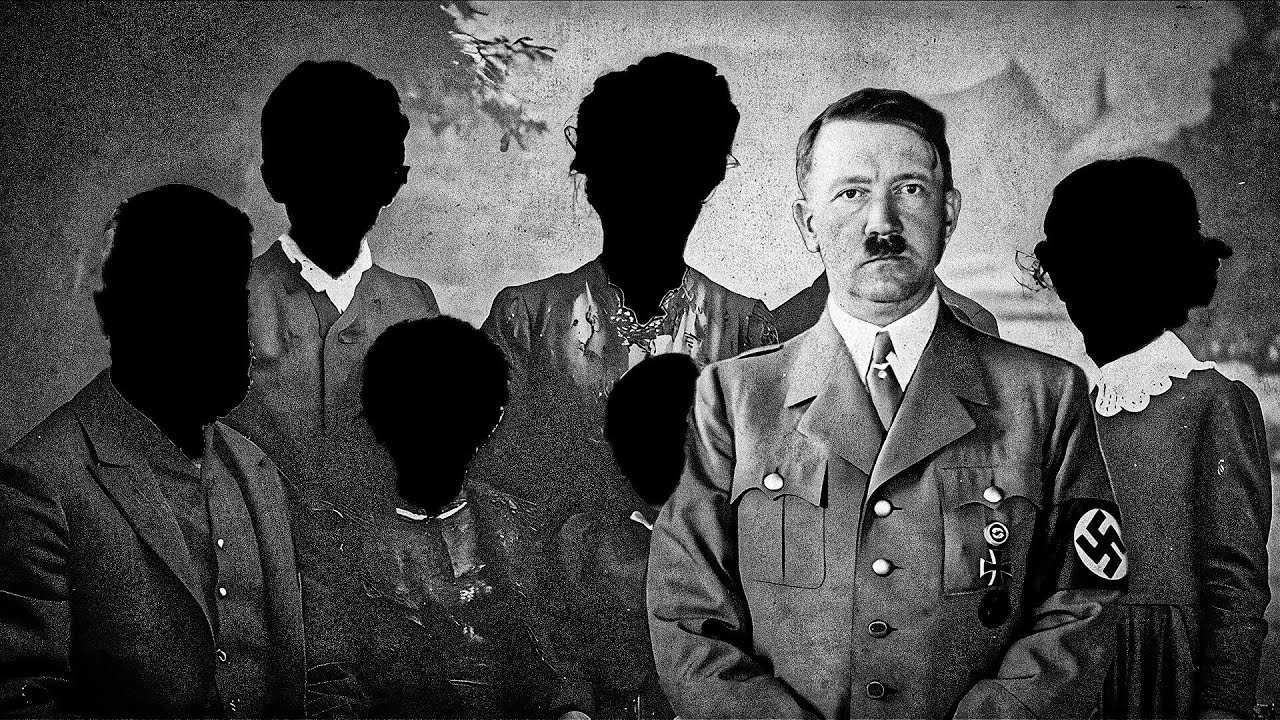
For decades, three American brothers had managed something that should have been almost impossible in the modern age: they had built ordinary lives beneath one of the most infamous branches of any family tree on earth. One became a social worker. Two went into landscaping. Their neighbors knew them as middle-class Long Islanders, men who worked, paid bills, drove ordinary roads, and generally had no interest in explaining their ancestry to strangers.
But history kept finding the door.
The brothers’ father had been born William Patrick Hitler.
After World War II, he buried that surname.
Then he tried to bury the story that came with it.
The story refused to stay buried. ([HNN][1])
There is a temptation, when telling what happened to Hitler’s family after 1945, to turn them into symbols.
The ashamed sister.
The heroic nephew.
The cursed descendants.
The final generation supposedly agreeing to have no children so that the “Hitler bloodline” would die with them.
It is almost too perfect.
And that is the first warning sign.
Because the real story is far stranger—and more human—than the legend.
Some relatives remained emotionally attached to Adolf Hitler long after the ruins of his regime were exposed. One nephew had once tried to benefit from the family name, then fought in an American uniform against the dictatorship that name represented. Another relative survived Soviet captivity. A later member of the family became a federal criminal investigator in the United States and died while carrying out his duties.
And the famous story that Hitler’s last relatives made a solemn pact never to reproduce?
That story begins to crack the moment you examine it closely.
The deeper investigation leads somewhere more disturbing than a family secret.
It leads to a question about guilt itself.
Can a name be inherited?
Obviously.
Can shame?
Certainly.
But can evil?
That is the question the surviving members of this family were forced to answer simply by continuing to exist.
And their answer was not what history expected.
—
## 1. THE WOMAN WHO ANSWERED TO “WOLFF”
Three months after Adolf Hitler killed himself in Berlin, a U.S. Army document reduced one of the strangest family relationships of the twentieth century to a bureaucratic heading.
**Headquarters, 101st Airborne Division.**
**12 July 1945.**
**Subject: Interrogation of Frau Paula Wolff (Frl. Paula Hitler).**
The woman being questioned was forty-nine years old.
She was Adolf Hitler’s younger sister.
And for years, she had lived under another name. ([Wikisource][2])
There was no marble balcony now.
No torchlight.
No cheering crowd.
No Reich Chancellery, no motorcades, no banners hanging from stone buildings.
Germany had collapsed into rubble. The Nazi leadership had scattered into prisons, graves, hiding places and interrogation rooms. American investigators were collecting statements, tracing money, locating officials, identifying bodies, and trying to understand the machinery of a dictatorship that had plunged Europe into catastrophe and carried out the Holocaust.
Somewhere inside that enormous investigation sat Paula.
Not a minister.
Not a general.
Not an architect of genocide.
A sister.
The interrogation record is unsettling precisely because of how ordinary parts of it sound.
Paula described childhood.
She remembered the death of their mother.
She remembered Adolf leaving home.
She said that because he was seven years older, he had never really considered her a playmate. She recalled long stretches in which she did not see him at all. From 1908 until 1921, she said, they had no contact.
At one point, she told her interrogators she had not even known whether her brother was still alive. ([Wikisource][2])
Read eighty years later, the statement creates a bizarre double exposure.
There is Adolf Hitler as history knows him: dictator, demagogue, architect of a racial state under whose leadership six million Jews were murdered and millions of other victims were persecuted, enslaved and killed.
Then there is the figure inside Paula’s memories.
An older brother.
A boy who went away.
A son devastated by his mother’s death.
The two images occupy the same human body, but they do not fit comfortably together.
That discomfort would follow Paula for the rest of her life.
She had used the surname Wolff—derived from a name associated with her brother—before the end of the war. After Germany’s defeat, anonymity became something different. It was no longer simply discretion around a powerful relative.
It became camouflage from the most poisonous surname in Europe.
Paula was questioned more than once by American authorities. She was eventually released rather than prosecuted as a major Nazi offender. In later years she returned to the Berchtesgaden area, the Alpine landscape that had once been inseparable from Hitler’s mountain retreat and inner circle.
The mountains remained.
The Reich did not.
And neither did the protection that had once accompanied being the Führer’s sister.
She lived quietly.
In 1959, shortly before her death, British television producer Peter Morley filmed what became her only television interview. The surviving images are almost aggressively unremarkable: an aging woman seated beneath studio lights, handbag on her lap, speaking about the most notorious man of the century not as a historical abstraction, but as someone who had once existed inside her family.
She did not become a public confessor.
She did not turn her remaining years into a campaign of public explanation.
She died in 1960 at sixty-four.
She had no children. ([Wikipedia][3])
It would be easy to declare that the Hitler family ended there.
It did not.
Because Adolf Hitler’s father, Alois, had children from earlier relationships.
And those branches produced a family drama so improbable that, if it appeared in a screenplay, an editor might send it back with one note:
**Too convenient.**
On one branch, a nephew fought for Nazi Germany.
On another, his half-brother crossed an ocean and eventually put on the uniform of the United States Navy.
The same family.
The same generation.
Opposite sides of the war.
—
## 2. THE NEPHEW WHO FIRST USED THE NAME—THEN FOUGHT IT
William Patrick Hitler was born in Liverpool in 1911.
His father, Alois Hitler Jr., was Adolf Hitler’s older half-brother. His mother, Bridget Dowling, was Irish-born.
William grew up far from the political world his uncle would eventually dominate.
But once Adolf Hitler became important, the surname suddenly became valuable.
And William knew it.
That detail matters.
Because the comfortable version of his life begins with the anti-Nazi nephew who heroically fights his monstrous uncle.
The documented version is more complicated.
In the early 1930s, William went to Germany and attempted to build a life using his family connection. His uncle’s rise had transformed “Hitler” from an obscure Austrian family name into political currency. William found employment in Germany, including work connected to a bank and later Opel.
He wanted something better.
He pushed.
He complained.
He appears, at least for a period, to have believed that being Adolf Hitler’s nephew ought to come with advantages. FBI-era accounts and later investigations painted an unflattering picture of a young man who sometimes tried to leverage his relationship to the dictator for status and employment. Adolf himself eventually referred to William as one of his most repulsive—or “loathsome”—relatives. ([The New Yorker][4])
That is what makes what happened next more interesting.
William was not born into a clean moral role.
He had to choose one.
As tensions with his uncle worsened, the nephew who had once tried to benefit from the Hitler connection began attacking the regime publicly.
By 1939, William was in the United States.
TIME covered the family rupture under a title that would have been impossible to resist:
**Hitler v. Hitler.**
Then LOOK magazine published a six-page article under William’s name with an even more explosive headline:
**Why I Hate My Uncle.**
He toured the United States and Canada, talking about Adolf Hitler and warning audiences about the Nazi dictatorship. His motives have been debated ever since. Self-interest had hardly vanished from his personality. Public speaking also gave him attention and a livelihood.
That does not erase what happened next.
War turned his public feud into a test that could no longer be performed from a lecture stage. ([TIME][5])
After the United States entered World War II, William wanted to enlist.
There was an obvious problem.
His last name was Hitler.
His uncle was the enemy.
And William was still a British citizen.
So on March 3, 1942, he wrote directly to President Franklin D. Roosevelt asking for permission to serve.
The letter was extraordinary for reasons beyond the name at the bottom.
William understood that his surname made people suspicious. He argued that he wanted to fight tyranny and oppression alongside Americans. The request was referred to federal authorities, including the FBI.
It took time.
Then, in March 1944, William Patrick Hitler entered the United States Navy.
Not as a publicity stunt on a stage.
In uniform.
He served in the Pacific theater and received a Purple Heart for a shrapnel wound. Navy records list him as a seaman first class and preserve one of the strangest personnel stories of World War II: while Adolf Hitler commanded Nazi Germany, a close relative carrying the same surname served in the armed forces fighting the Axis. ([Navy Memorial][6])
The symbolism is irresistible.
But symbolism can flatten a human life.
William’s story was not that evil existed on one side of his family tree and goodness magically appeared on the other.
He had been ambitious.
At times opportunistic.
At times self-promoting.
Then history placed him in a position where ancestry and allegiance pointed in opposite directions.
Whatever mixture of motives brought him there, the uniform settled one question.
He did not fight for his uncle.
He fought against the world his uncle had built.
And when the war ended, William made another decision.
The surname that had once opened doors had become something he no longer wanted his children to carry.
—
## 3. THE FAMILY THAT DISAPPEARED INTO AMERICA
The postwar photograph is almost surreal.
William Patrick Hitler stands in a U.S. Navy uniform receiving his discharge papers.
Look at it without knowing his identity and there is nothing extraordinary about the scene.
A sailor.
An officer.
A document changing hands.
Two men smiling at the end of military service.
Then you read the sailor’s name.
History rushes back into the frame.
William had survived the war his uncle did not.
Now came the harder question:
What was he supposed to do with the rest of his life?
He chose obscurity. ([Navy Memorial][6])
After the war, he married Phyllis Jean-Jacques and eventually took the surname Stuart-Houston.
The Hitlers became the Stuart-Houstons.
The family settled on Long Island.
William used his medical training in civilian life and ran a laboratory business analyzing blood samples for hospitals. The man born into the most politically radioactive family in modern history built a career around quiet technical work.
There is an almost unbearable irony in that detail.
Blood.
The Nazi regime had turned ancestry into bureaucracy.
Blood into law.
Blood into permission.
Blood into exclusion.
Blood into a justification for persecution and murder.
And here, in suburban America, Adolf Hitler’s nephew spent his postwar life handling blood not as racial mythology, but as laboratory material.
Evidence.
Cells.
Samples.
Medicine.
Not destiny.
William and Phyllis had four sons.
Alexander.
Louis.
Howard.
Brian.
One of the more startling details preserved by later reporting is that the eldest was originally given the middle name Adolf.
Alexander Adolf.
The choice has generated endless speculation.
It is safer not to pretend we can read the private meaning of a decision made inside a family more than seventy years ago.
What matters is what followed.
The boys did not grow into public custodians of the Hitler story.
They did not write ideological manifestos.
They did not form political organizations.
They did not build careers from their notorious ancestry.
They grew into American adults whose occupations were almost defiantly normal.
Alexander went into social work.
Louis and Brian became landscapers.
Howard entered federal law enforcement. ([HNN][1])
Their father died in 1987.
By then, William Patrick Hitler had spent roughly four decades living under another surname.
But changing a name is not the same thing as erasing a genealogy.
The brothers learned that whenever journalists rediscovered them.
A knock.
A question.
A camera.
A reporter standing outside.
The family secret was not really secret.
It was dormant.
Every few years, someone would wake it.
And every time it returned, the story grew slightly more dramatic.
Eventually the brothers would be described as **the last Hitlers**.
Then came the rumor that transformed a private family decision into international folklore:
The brothers, it was said, had made a pact.
No marriage.
No children.
No next generation.
The bloodline of Adolf Hitler would be deliberately extinguished.
It was an unforgettable story.
There was only one problem.
It may not have been true.
—
## 4. THE FAMILY TREE THE HEADLINES LEFT OUT
Before examining the alleged pact, one piece of language has to be corrected.
Adolf Hitler has no historically established direct descendants.
No acknowledged son.
No acknowledged daughter.
No verified line of grandchildren.
He married Eva Braun in the Berlin bunker at the end of April 1945. They died the following day. Mainstream historical accounts recognize no children from the marriage or from Hitler himself. Claims of secret offspring have circulated for decades, but none has been established as fact. ([Pieces of History][7])
That means the men commonly called “Hitler’s descendants” in popular stories are not descendants of Adolf Hitler.
They are descendants of his relatives.
His grandnephews.
Members of collateral branches of the Hitler family.
It sounds like a technical distinction.
It is not.
The difference exposes how quickly journalism about this family slips from genealogy into mythology.
And the Stuart-Houston brothers were not the only branch.
Adolf Hitler’s older half-sister Angela had children.
Her daughter Geli Raubal died in 1931, before the Nazi seizure of national power, in circumstances that became the subject of decades of speculation.
Her son Leo Raubal Jr. lived an entirely different wartime story.
Leo served in the German armed forces and was wounded during the Battle of Stalingrad. He fell into Soviet captivity in 1943 and remained imprisoned for years, eventually returning to Austria in 1955.
Leo had a son, Peter.
Angela’s other daughter, Elfriede, also had children; her son Heiner Hochegger has likewise been identified in published genealogical accounts as a close surviving relative of Adolf Hitler.
In other words, the American Stuart-Houston line is only one surviving branch of the extended family.
Reporting on the Austrian relatives has historically been sparse—largely because they have sought privacy—but genealogical accounts have repeatedly identified both the Raubal and Hochegger branches alongside the Americans. ([Wikipedia][8])
This matters because phrases like **“the final three descendants of Hitler”** sound authoritative while collapsing several different facts into one dramatic sentence.
Three surviving Stuart-Houston brothers have often been identified as the last members of Hitler’s paternal male family line.
That is narrower.
And more accurate.
But accuracy rarely travels as fast as a curse.
“The last Hitlers” is a headline.
“Three surviving grandsons of Adolf Hitler’s paternal half-brother within one branch of the extended family” is genealogy.
The legend was always going to win the first round.
Then a British journalist began searching for the men behind it.
And the family story became international news again.
—
## 5. THE “PACT”
Journalist David Gardner spent years tracing Hitler’s extended family.
His reporting eventually produced *The Last of the Hitlers*, later revisited in *The Hitler Bloodline*.
The central revelation was irresistible.
According to the story Gardner encountered, the surviving Stuart-Houston brothers had discussed the burden hanging over their family and agreed not to have children.
No signatures.
No formal document.
Nothing stored in a lawyer’s safe.
A private understanding.
A decision to let the line end.
The idea spread because it contained everything a modern audience wanted from the aftermath of Hitler.
Sin.
Inheritance.
Punishment.
Choice.
An ending.
It sounded almost biblical.
The family of the man who preached racial destiny would use reproductive choice to erase his own bloodline.
There was poetic symmetry in it.
Too much symmetry, perhaps. ([Wikipedia][9])
When Alexander Stuart-Houston addressed the story, he complicated it.
He denied that he had entered such a pact.
Accounts of his response make the distinction clear: there had not been, in his telling, a formal family plan involving him to end the lineage.
More damaging to the mythology, another brother had apparently expected to have children.
Howard.
The brother who would not live long enough to do it.
Later reporting described Howard as having married and having contemplated a family before his death.
Another romantic relationship within the family reportedly collapsed under the weight of the Hitler connection.
Those details do not sound like men carrying out a solemn reproductive extinction plan.
They sound like people whose private lives collided with a public past they had not created. ([The Times of Israel][10])
And here the story changes.
Because the famous “pact” reveals more about the public than it does about the brothers.
Why did people want the story to be true?
Why was the idea of the Hitler family choosing extinction so emotionally satisfying?
The answer is uncomfortable.
Because some part of the audience had accepted the premise that there was something morally significant in the blood itself.
That the genes needed to stop.
That a child born into the family would inherit not merely a famous ancestor but some biological fragment of the crime.
That is not historical accountability.
That is hereditary guilt.
And hereditary guilt belongs to the same intellectual universe that made Nazi racial thinking possible in the first place.
There is no Hitler gene for genocide.
There is no chromosome carrying dictatorship.
The Holocaust was not produced by a mystical poison moving secretly through one Austrian family.
It was carried out by human beings acting inside institutions, ideologies, bureaucracies, military structures, police organizations, businesses and political systems.
Reducing Nazism to one family’s blood offers an oddly comforting lie.
It lets everyone else off the hook.
If evil were hereditary, society could simply identify the family and wait for it to disappear.
But history is not that merciful.
Ideas survive people far more easily than DNA does.
And while journalists were debating whether three brothers on Long Island had chosen to end their family line, one of the brothers had already left behind a very different legacy.
His name was Howard.
His job placed him on the opposite side of criminal power.
And he died doing it.
—
## 6. HOWARD STUART-HOUSTON
Howard Ronald Stuart-Houston was born in 1957.
His father had been William Patrick Hitler.
His great-uncle had been Adolf Hitler.
Howard’s adult profession was not politics.
He became a special agent with the Criminal Investigation arm of the Internal Revenue Service.
A federal investigator.
The contrast could hardly be sharper.
His infamous relative had led a dictatorship in which law was bent into an instrument of state terror.
Howard made his living enforcing law in a constitutional democracy.
There is no reason to turn that fact into mystical family redemption.
Howard did not owe the world redemption for crimes he had not committed.
That is precisely the point.
He was entitled to be judged by his own actions.
And his own actions took him into law enforcement. ([Officer Down Memorial Page][11])
On September 14, 1989, Howard was traveling in New York while serving subpoenas connected to a grand-jury money-laundering investigation.
He was killed in an automobile crash.
He was thirty-two.
The Officer Down Memorial Page records the death not as an appendix to Nazi history but as a law-enforcement fatality: Special Agent Howard R. Stuart-Houston, United States Department of the Treasury, Internal Revenue Service, Criminal Investigation.
That is how institutions work when genealogy is irrelevant.
Occupation.
Agency.
Duty.
Death.
Not great-uncle. ([Officer Down Memorial Page][11])
Howard’s death also creates a crack through the center of the “pact” legend.
He had married.
Reporting indicates that he had wanted children.
Then a car crash ended the possibility.
A life that later storytellers could compress into “one of the Hitlers who agreed to end the bloodline” was, in reality, moving in another direction.
That is what historical investigation does to legends.
It ruins their symmetry.
The remaining brothers continued their low-profile lives.
Alexander.
Louis.
Brian.
Journalists kept approaching them.
The men generally avoided publicity, with only occasional comments surfacing over the years. In 2006, a New York Times reporter once again found the family on Long Island and encountered men who appeared less like guardians of a dark dynasty than Americans irritated by the fact that the twentieth century kept showing up outside their homes.
One of the brothers reportedly wondered why they should continue speaking to outsiders when they had considered telling their own story.
The book never became the great public confession journalists imagined.
Silence remained their most consistent response. ([HNN][1])
That silence has sometimes been interpreted as shame.
Maybe some of it was.
It has been interpreted as fear.
Perhaps that too.
But silence can also mean something simpler.
A refusal.
You do not get to turn my life into his sequel.
—
## 7. PAULA’S LAST YEARS
Long before the Stuart-Houston brothers began turning journalists away, Paula Hitler had faced the same impossible demand.
Explain him.
Explain the family.
Explain how the boy you knew became the man history knows.
But what answer could satisfy anyone?
If she spoke warmly about childhood, she risked appearing to minimize the dictator.
If she condemned him in every sentence, listeners could dismiss it as postwar self-preservation.
If she said nothing, silence itself became evidence.
There was no neutral position.
That may be the defining condition of surviving an infamous relative.
Other people believe your memory belongs to them.
By the 1950s, Paula was living in the Berchtesgaden region.
The name Hitler, once printed above government offices and screamed by crowds, had become something that invited staring.
She had outlived the Third Reich by fifteen years.
She had outlived her half-sister Angela, who died in 1949.
She had no children to inherit her own branch.
When Paula died on June 1, 1960, she was the last surviving member of Adolf Hitler’s immediate sibling generation. ([Wikipedia][3])
But even death could not make the family private.
Journalists continued building genealogies.
Researchers continued opening archives.
Rumors of secret Hitler children resurfaced periodically.
A supposed French son.
Whispers about other women.
Conspiracy theories in which Hitler escaped Berlin entirely.
Most collapsed under scrutiny or remained unproven.
The fantasies were understandable in one sense.
People wanted Hitler’s story to contain a final hidden chamber.
One more secret.
One more monster.
One more revelation.
The documented family history offered something less sensational and therefore more troubling.
His relatives did not become a secret Nazi dynasty.
They became secretaries, engineers, social workers, landscapers, laboratory workers and investigators.
They died of illness.
They died in war.
One died in a car crash.
Some married.
Some did not.
Some had children.
Some remained childless.
History did not reproduce Adolf Hitler through them.
It simply refused to stop asking them about him.
—
## 8. THE REAL PLOT TWIST
For generations, the most popular version of this story has been built around biology.
Hitler’s bloodline survived.
Then his relatives vowed to destroy it.
End of story.
But look carefully at the family tree, the military records, the interviews and the later reporting, and the narrative changes shape.
First: Adolf Hitler left no verified direct descendants.
Second: the Stuart-Houston brothers represent only one branch of the extended Hitler family, even though they are frequently described in headlines as “the last descendants.”
Third: the famous pact to end the family line is disputed by one of the very men supposedly involved in it.
Fourth—and most important—the fixation on whether Hitler’s “blood” continues misunderstands where his real legacy survived. ([Wikipedia][9])
It did not require children.
Nazism already had descendants.
They were ideas.
Conspiracies.
Symbols.
Denial.
Racial fantasies.
Political myths.
The seduction of authoritarian power.
Those things do not need a surname.
They do not need DNA.
They can enter any family.
That is why the quiet lives of Hitler’s relatives are more significant than the fantasy of a doomed bloodline.
William Patrick Hitler could be opportunistic as a young man and still choose to fight against the dictatorship his uncle created.
Paula could remain emotionally attached to memories of her brother without being the architect of his crimes.
Howard Stuart-Houston could be born into the family and become a federal investigator.
Alexander, Louis and Brian could decide that the most meaningful use of their famous ancestry was no public use at all.
None of these facts absolves anyone who participated in Nazi crimes.
Nor should family connection create guilt where participation did not.
Responsibility is individual.
That principle sounds obvious.
It was not obvious to the regime Adolf Hitler built.
The Nazis constructed an enormous racial bureaucracy around the idea that ancestry determined human worth.
A grandparent could determine whether the state considered you acceptable.
Marriage could become a question of blood.
Citizenship could become a biological category.
Millions were persecuted not for crimes they had committed, but for identities assigned to them by birth.
And that makes the public obsession with “ending Hitler’s genes” especially grotesque when examined closely.
To believe that a baby born to one of Hitler’s relatives would enter the world morally contaminated is to grant blood exactly the mystical power Nazi ideology claimed it possessed.
It does not.
A child does not inherit an indictment.
A surname is not a criminal record.
DNA is not ideology.
—
## 9. THE NAME ON THE MAILBOX
Imagine the problem stripped of the famous surname.
A man is born into a family with a monstrous relative.
He did not choose the relative.
He did not choose the history.
He grows up.
He takes a job.
He marries—or does not.
He wants children—or does not.
Then strangers appear and insist that his most important characteristic is genetic proximity to a dead criminal.
They ask whether he is ashamed.
They ask whether he will reproduce.
They ask whether the family should disappear.
They turn his private decisions into symbols of historical purification.
At what point does curiosity become another form of punishment?
That question hangs over the Stuart-Houston story.
Their neighbors reportedly saw ordinary men.
Reporters saw a headline.
Genealogists saw branches.
The public saw the last act of Adolf Hitler.
But Adolf Hitler was not entitled to a last act through them.
That may be the final victory these relatives achieved.
Not changing a surname.
Not hiding an address.
Not refusing an interview.
Simply denying him ownership of their identities.
William had once tried to use his uncle’s fame.
Later he spent decades escaping it.
His sons inherited the consequences of both decisions.
By the twenty-first century, the surname Hitler had disappeared from their branch of the family, but the internet made true disappearance impossible.
A searchable name can function like a fingerprint.
A decades-old photograph can return.
A cemetery record can return.
A military document can return.
An old magazine headline can return.
An interview can return.
A stranger can stand at a door.
History no longer needs an invitation.
Yet the brothers did something surprisingly effective.
They lived.
Quietly.
Not as Hitlers.
Not as anti-Hitlers.
Not as hereditary exhibits in a museum of evil.
As themselves.
—
## 10. WHAT BECAME OF THEM?
So what happened to Hitler’s relatives after 1945?
Paula Hitler survived her brother by fifteen years. She lived quietly, spent part of her postwar life under the Wolff name, gave one filmed television interview late in life, had no children and died in 1960. American military records preserve the strange moment when the sister of the fallen dictator sat before interrogators and tried to describe a brother who had long since ceased to belong only to his family. ([Wikisource][2])
Angela Hitler, Adolf’s older half-sister, survived the war but died in 1949. Her descendants formed another branch of the extended family, including descendants through Leo Raubal Jr. and Elfriede. Leo himself returned from Soviet captivity in the 1950s. ([Wikipedia][8])
William Patrick Hitler survived the war wearing an American uniform. After years in which he had alternately benefited from and denounced his connection to Adolf Hitler, he served in the Pacific, was wounded, received the Purple Heart, returned to civilian life, changed his surname to Stuart-Houston and raised four sons on Long Island. He died in 1987. ([Navy Memorial][6])
Howard Stuart-Houston became a federal special agent and died in 1989 at thirty-two while traveling on official business connected to a money-laundering investigation. ([Officer Down Memorial Page][11])
Alexander, Louis and Brian Stuart-Houston became known internationally precisely because they did not seek international lives. Reporting over several decades has consistently described them as private men who avoided turning their ancestry into celebrity. None has been publicly established as having children. The famous claim that they deliberately agreed to terminate the line, however, remains disputed rather than proven. ([HNN][1])
And that distinction matters.
Because “three men fulfill a pact to destroy Hitler’s bloodline” is a satisfying ending.
Reality offers a better one.
They owed history no extinction.
They owed Hitler no continuation.
They owed the public no performance.
Their lives belonged to them.
—
Eighty years after the fall of Nazi Germany, the fascination with Hitler’s family persists because it touches a primitive fear.
We want evil to have a recognizable face.
A recognizable surname.
Maybe even recognizable blood.
That would make the world easier.
We could isolate the danger.
Build a family tree around it.
Wait for the final branch to die.
But the history of the Third Reich teaches exactly the opposite lesson.
The crimes of Nazism were not produced by cursed DNA.
They required choices.
They required followers.
They required institutions.
They required people willing to surrender moral responsibility to ideology, authority, ambition, fear, prejudice and obedience.
And because evil is chosen rather than inherited, its opposite is also possible.
A man can carry the name Hitler and fight Hitler.
His son can carry the family history and spend his career enforcing American law.
Another generation can refuse to make its ancestry the center of its identity.
There is no mystical cleansing in any of that.
There is something more important.
Agency.
Adolf Hitler spent his political life preaching that blood determined destiny.
The lives of his surviving relatives became, unintentionally, a rejection of that idea.
Some changed their names.
Some disappeared from public view.
Some never had children.
One died serving the law.
None became what strangers imagined their blood required them to become.
And perhaps that is the only ending this story ever needed: