More than two decades after its release, shocking behind-the-scenes revelations about the comedy classic Old School have surfaced, threatening to rewrite everything fans thought they knew about the film. Twenty insane facts have emerged from the chaos that unfolded both on and off screen, exposing hidden connections, last-minute casting gambles, and a sequel that never was. This is the story that Hollywood insiders have kept quiet until now.
The origins of Old School trace back to a controversial documentary that was never seen by the public. Director Todd Phillips had already stirred trouble with Frat House in 1998, a raw look at college fraternity hazing that won the Grand Jury Prize at Sundance. But when allegations arose that scenes were staged, HBO shelved the documentary permanently.
 However, the scandal brought Phillips to the attention of Ivan Reitman, the producer behind Animal House, who saw potential in the young filmmaker. Together they would eventually create Road Trip and then Old School, turning a shelved documentary into a launching pad for one of the most beloved comedies of the 2000s.
The idea for Old School itself came from an ordinary conversation. Phillips had a friend in advertising named Courtland Randall who casually suggested a movie about older guys starting their own fraternity. That simple spark became the foundation of the film.
Randall received a story credit, while Phillips and writer Scott Armstrong developed the screenplay during an intensive two-month boot camp at Reitman’s house. Armstrong drew heavily from his own fraternity days in Peoria, Illinois, where brutal cold and boredom drove students to invent wild entertainment. That same spirit of desperate, creative chaos became the heart of Old School.
But the casting process was anything but smooth. Vince Vaughn nearly missed the movie entirely. After his breakout in Swingers, Vaughn had moved into dramatic roles, and DreamWorks executives saw him only as a serious actor.
They doubted he could handle comedy. Phillips fought for Vaughn, arguing that the character of Beanie had been written with him in mind. To prove his point, Phillips told executives to watch Vaughn’s appearances on the Late Show with David Letterman, where his natural comedic timing was on full display.
Vaughn was added so late that the crew could not begin filming the wedding scene until he signed his contract.
Will Ferrell’s career also took a major turn thanks to Old School. It was his first leading role after leaving Saturday Night Live, and critics immediately took notice. Even Roger Ebert, who gave the movie only one star, admitted that Ferrell’s performance stood out.
 Ten months later, Elf cemented Ferrell’s status as a Hollywood star, but Old School was the crucial stepping stone. For many actors, the movie was a breakthrough. Rob Corddry landed his first major film role, signing a nudity clause so broad it covered “any part of the universe, in any form, even that which is not devised.”
His bare backside made the final cut, and the clause remains one of the most unusual contract details in comedy history.
Patrick Cranshaw, who played the elderly fraternity member Blue, had already amassed nearly 100 screen credits dating back to the 1950s. But it was Old School that made him a cultural icon with the unforgettable line, “You’re my boy, Blue.” Fans shouted it at him wherever he went.
He died in 2005, but his legacy endures. Terry O’Quinn, who would soon become famous as John Locke on Lost, appeared in an uncredited role as Mitch’s boss, filmed in just two days. He never told his own sons about the part, so when they watched Old School and saw their father on screen, they called him in shock.
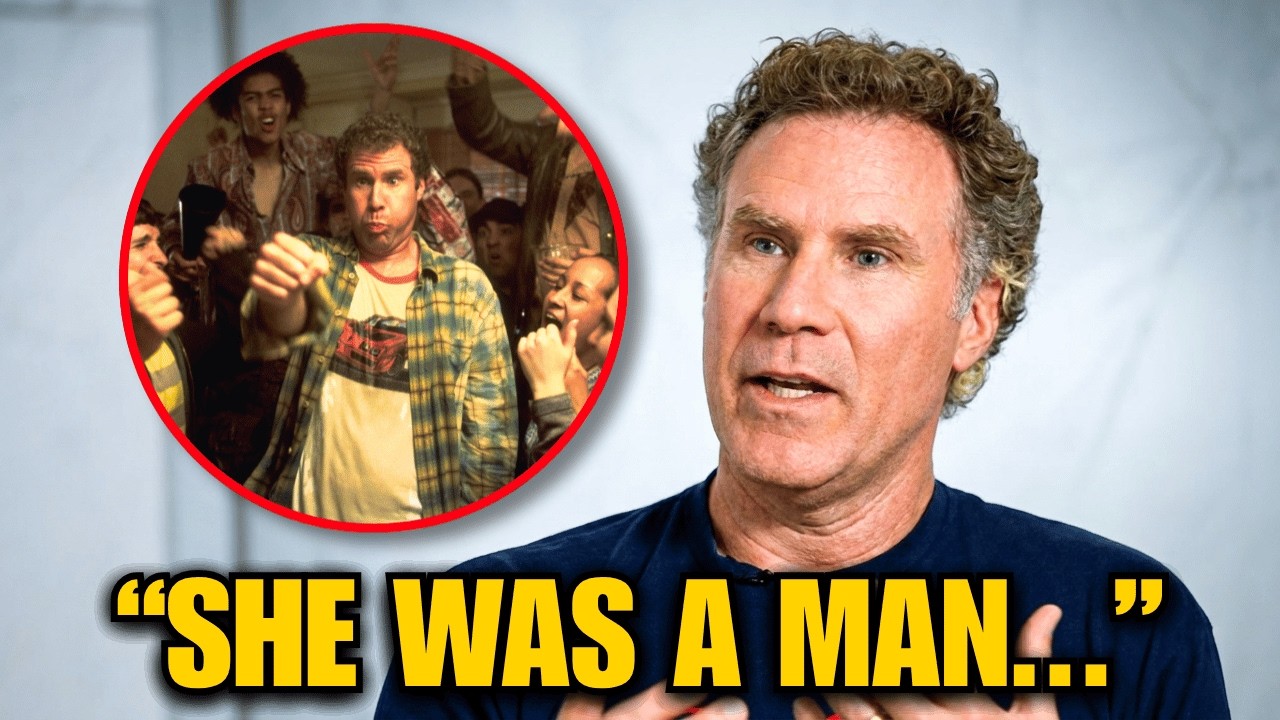
The famous streaking scene was performed entirely by Will Ferrell, with no stunt double. He ran down a public street wearing only sneakers and a small pouch, past a 24-hour gym where people screamed and rushed to the windows. Ferrell admitted he needed some liquid courage before filming, especially knowing Snoop Dogg was on set.
The exact level of his intoxication remains debated, but his fearless commitment turned the scene into one of the most memorable moments in comedy history.
 Snoop Dogg’s cameo came with a clever trade. Phillips wanted the rapper for Old School, but also had a role for him in his upcoming Starsky and Hutch reboot. He told Snoop he wanted him to play Huggy Bear, then casually added, “Oh, yeah, will you do this little thing for me in Old School?”
Snoop, excited about the bigger role, agreed to the cameo. Phillips later joked that the rapper “kind of had to do it.”
On the last day of filming, Vince Vaughn and some friends were invited to hang out in Snoop Dogg’s trailer, playing video games. Luke Wilson was not told about the gathering and sat alone in his own trailer watching the news. The three leads had given themselves the nickname The Wolfpack years before Phillips used it for The Hangover.
Their friendship included constant teasing. Ferrell once called Legally Blonde “Legally Bland” to Wilson’s face, and Wilson fired back, warning Ferrell to keep one foot in TV in case his movie career failed.
The earmuff scene, where Bernard accidentally swears in front of children and tells one to cover his ears, was entirely improvised. Vaughn explained that he and Ferrell spent time building their characters’ backstories, which made spontaneous moments easier. Understanding who Bernard was allowed Vaughn to react naturally rather than forcing jokes.
Most college scenes were filmed at UCLA and USC, but one aerial shot of the campus was recycled from Road Trip, actually showing Harvard University in Cambridge, Massachusetts. The filmmakers reused the footage to make the fictional college look convincing.
 The wedding singer who performs a profane version of Bonnie Tyler’s Total Eclipse of the Heart is Dan Finnerty of the Dan Band, a comedy group that specialized in turning female-led songs into outrageous performances. He later appeared in Starsky and Hutch and The Hangover. The church used for Ferrell’s wedding scene in Old School was the same location used two years later for Wedding Crashers, creating a hidden connection between two major comedies.
Old School was made on a budget of about $24 million and grossed $76 million in North America, with another $11 million internationally. It helped coin the term Frat Pack, referring to a group of comedy actors including Ferrell, Vaughn, Luke Wilson, Owen Wilson, Ben Stiller, and Jack Black.
The film also served as an early showcase for future stars. Simon Helberg, who played Jerry, later became Howard on The Big Bang Theory. Patrick J.
Adams appeared as Patch before finding fame as Mike Ross on Suits. Ellen Pompeo played Mitch’s love interest Nicole, just two years before she became Meredith Grey on Grey’s Anatomy.
Luke Wilson’s grounded performance earned him the nickname “One Take Wilson” from the crew, as many of his scenes were completed in a single take. His natural existential angst, previously noted by Wes Anderson, gave the comedy a believable center that balanced the chaos of Ferrell and Vaughn.
Finally, the biggest revelation: an Old School sequel was written but never made. In 2006, Scott Armstrong completed a script called Old School Dudes, which would have followed the fraternity on a wild spring break trip. Will Ferrell and Vince Vaughn both read it but felt it would be repeating the same beats.
Luke Wilson was enthusiastic and wanted to return, but the project stalled. The sequel never happened, leaving fans to wonder what could have been.
These twenty insane facts shed new light on a movie that has become a cornerstone of modern comedy. From a shelved documentary to a nearly missed casting call, from improvised scenes to hidden stars, Old School’s journey to the screen was as chaotic and hilarious as the film itself. The truth behind the laughter is finally out.