The silence from Melissa Gilbert was deafening, and for months, the world interpreted it as disdain. Now, the actress who defined Laura Ingalls for a generation has broken her silence, not with the hatred the internet promised, but with a scalding indictment of the very culture war that has consumed the legacy of Little House on the Prairie before a single frame of the new Netflix series was even judged on its own merits.
Gilbert did not say she hates the new adaptation. In fact, she has visited the set and met the young actress stepping into her iconic role. But the truth is far more complicated than the screaming headlines.
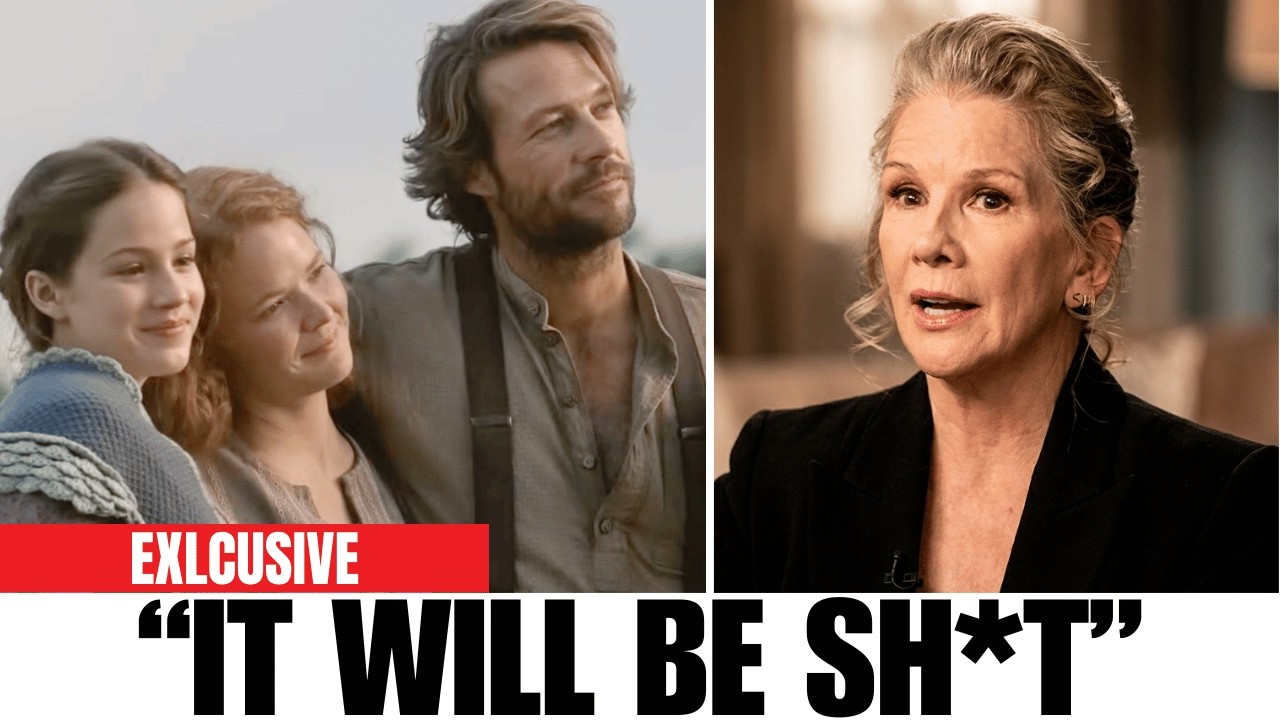 The actress is trapped in a storm of nostalgia, misinformation, and political fury that she never asked to join. The real story is not about a feud between actresses; it is about how we have forgotten what the original show actually was.
The controversy erupted the moment Netflix announced its fresh interpretation of Laura Ingalls Wilder’s novels in early 2025. The streaming giant was not remaking Michael Landon’s beloved 1974 series. It was going back to the source material.
But for millions of Americans, Landon’s Walnut Grove is the only Walnut Grove that exists. The distinction was lost in the noise.
Almost immediately, the project became a political battleground. Commentator Megyn Kelly warned the public that Netflix might make the show “too woke.” The phrase spread like wildfire across social media.
The reboot was condemned for sins it had not yet committed. It was judged for a script that had not been written and a performance that had not been filmed.
Gilbert watched this unfold from a unique position. She was the living embodiment of the original. When she first heard about the Netflix project, she offered a measured, gracious response.
She said there was room for another interpretation. She acknowledged that Michael Landon’s version was just one adaptation of Wilder’s books, not the definitive one.
But the internet wanted a fight. When Gilbert did not immediately endorse the new series, her silence was weaponized. Headlines began to speculate.
Did she hate it? Was she boycotting it? The rumor mill churned, turning her professional restraint into a sign of secret contempt.
The breaking point came when Gilbert finally addressed the political firestorm directly. She was asked about the accusations that Netflix was injecting modern progressive values into a classic story. Her response was not a defense of the new show, but a history lesson about the old one.
She pointed to a specific episode from the third season, “The Wisdom of Solomon.”
In that 1976 episode, a black child is adopted into the community and faces brutal racism from the townspeople. Gilbert reminded everyone that the original series tackled racial prejudice, anti-Semitism, alcoholism, domestic violence, and child abuse decades ago. She looked directly at the camera and said, “I don’t think we get more woke than that.”
 The statement was a bombshell. It shattered the narrative that the original Little House was a sanitized, apolitical piece of Americana. Gilbert was not defending Netflix.
She was exposing the hypocrisy of the critics who claimed the new show was corrupting a pure legacy. She was telling the truth about Michael Landon’s vision.
Landon’s series was never a strict historical document. He invented characters like Albert Ingalls, who never existed in Wilder’s books or in real life. He created storylines about drug addiction, terminal illness, and bank robberies that had no basis in the novels.
He prioritized emotional truth over factual accuracy. This was the sacred show everyone was defending.
Gilbert’s point was devastatingly simple. If you are angry that Netflix is changing the story, you are defending a show that already changed the story completely. The original was a radical reinterpretation of the books in its own time.
It was criticized by purists in the 1970s for the exact same reasons Netflix is being criticized today.
History is repeating itself, but no one seems to remember the first verse. The actress did not stop there. She acknowledged that she was too emotionally connected to the original to judge the new series fairly.
She admitted she needed distance. That honesty was refreshing, but it also left a vacuum that rumors filled instantly.
When she finally visited the Netflix set, she met the new Laura, actress Alice Hally. Gilbert was reportedly generous and supportive. Hally later described the meeting as a vote of confidence.
There were no tears, no warnings, no drama. It was a professional passing of the torch. That story got almost no coverage.
The silence from the media on that visit is telling. A peaceful meeting does not generate clicks. A feud does.
 The narrative of a bitter original star hating the reboot was too juicy to abandon. Gilbert was forced to watch as her nuanced position was flattened into a caricature of resentment.
Meanwhile, the actual content of the new series remained a mystery. The debates raged about historical accuracy, but most of the loudest critics had not read Wilder’s books in decades. They were defending a memory of a television show, not the literature.
They were fighting ghosts.
The irony is that the Netflix series, created by Rebecca Sonnenshine, is actually more faithful to the books in many ways than Landon’s version was. It returns the family to the Kansas prairie, where the original novel is set. It confronts the legal dispute over Osage treaty lands that drives the plot of Wilder’s book but was largely ignored by the television series.
This is not a woke invention. This is the actual story Laura Ingalls Wilder wrote. The family built a cabin on land they did not legally own.
They were forced to leave. That is the climax of the novel. Netflix did not invent the conflict.
It simply chose to include it, a decision that the 1974 series largely avoided.
Gilbert knows this better than anyone. She lived through nine seasons of invented characters and altered timelines. She knows that the show she starred in was a work of fiction inspired by history, not a documentary.
She has the perspective to see that every generation gets the Little House it needs.
But perspective is a luxury the internet cannot afford. The culture war demands absolutes. You must love the new show or hate it.
You must defend the original or betray it. There is no room for the truth, which is that both versions are valid interpretations of a complex literary legacy.
 Gilbert’s final message was a plea for sanity. She told viewers to watch the series if they want to, skip it if they do not. But she begged them to stop pretending that the original television show was a sacred, untouchable text.
It was a product of its time, just as the new one is a product of ours.
The actress has been pulled into a war she never started. She has been forced to defend a show she did not make from accusations that were never true. She has become the unwilling symbol of a nostalgia that refuses to acknowledge its own history of change.
The new Little House on the Prairie premiered in July of 2026. The reviews are mixed. Some say it is too dark.
Others say it is not dark enough. Some say it is too political. Others say it is not political enough.
The one thing everyone agrees on is that it is different.
But different is not a crime. It is the nature of adaptation. Michael Landon understood that.
Laura Ingalls Wilder understood that. Melissa Gilbert understands that. The only people who do not seem to understand it are the ones shouting the loudest.
The actress did not hate the reboot. She hated the conversation surrounding it. She hated watching a beloved story be torn apart by people who had not even seen it.
She hated being used as a weapon in a fight she did not believe in.
In the end, Gilbert’s legacy is not one of bitterness. It is one of clarity. She reminded us that the stories we love are not static monuments.
They are living things that change with the times. The real tragedy is not that Netflix made a new Little House. The real tragedy is that we forgot the old one was never as simple as we remember.


