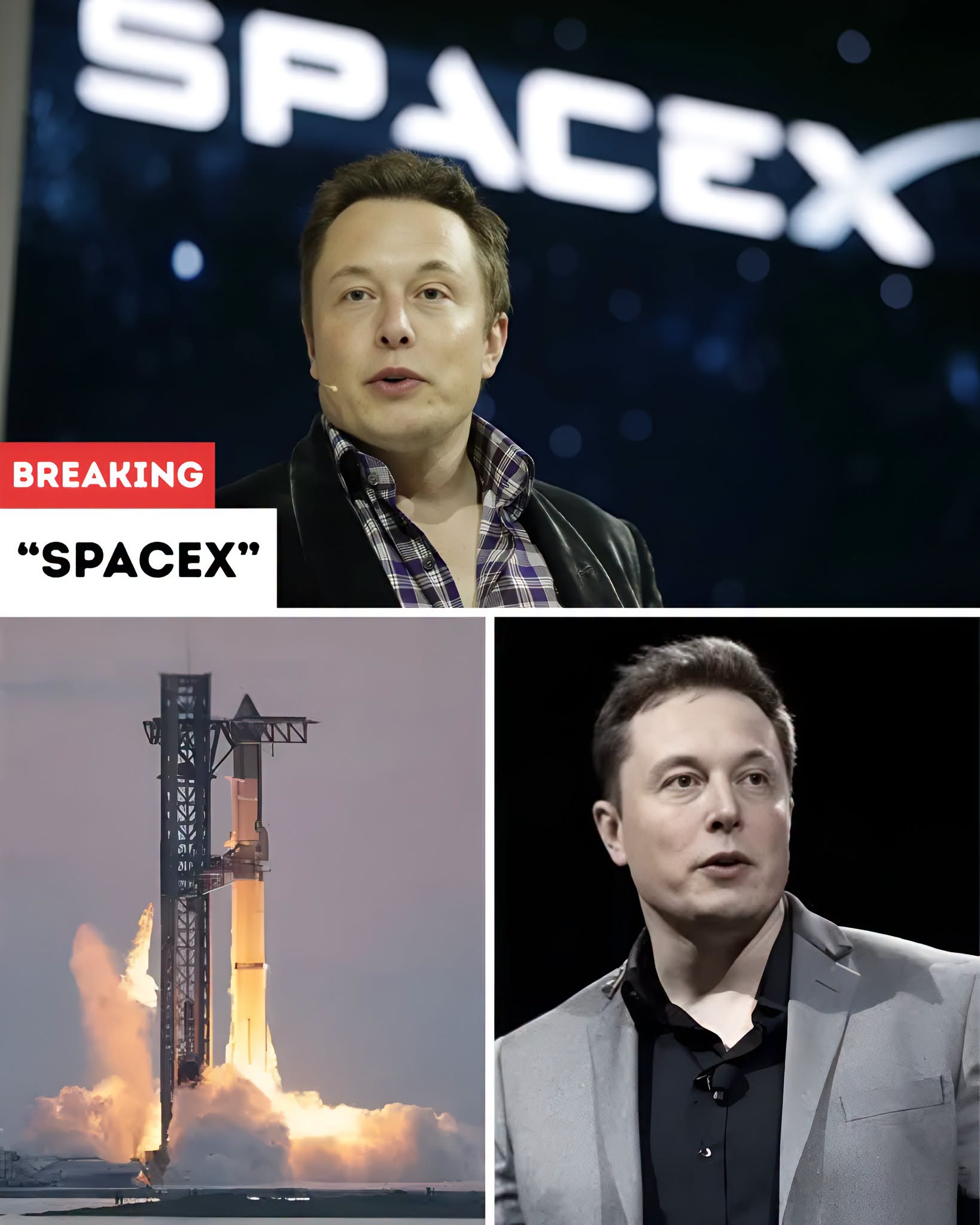
When SpaceX opened its books and disclosed exactly how much of the company Elon Musk still owned, one number immediately swallowed the headlines:
More than $900 billion.
That was the estimated value of Musk’s stake at current market pricing.
It was the kind of figure that almost didn’t look real on a screen. Bigger than the market value of many famous corporations. Bigger than fortunes that took generations to build. And attached to one man’s ownership in a company that had only recently entered the public market.
But buried beside that staggering number was another figure.
82%.
And for investors trying to understand what SpaceX had become after its public debut, that second number may have mattered even more.
According to a regulatory filing, Musk owns approximately 6.42 billion SpaceX shares, representing a 48.4% economic stake in the rockets-to-AI company.
In other words, he owns less than half of SpaceX economically.
But he controls more than 82% of its voting power.
That distinction changes almost everything.
Because SpaceX may now have public shareholders watching its quarterly results, trading its shares and reacting to every disclosure.
But when the biggest decisions reach the voting table, the balance of power remains overwhelmingly concentrated in the hands of the man who founded it.
And the timing of that revelation could hardly have been more dramatic.
SpaceX’s first weeks as a publicly traded company had been anything but smooth.
After its June IPO, the stock entered July with the kind of volatility that tests even confident investors. Instead of continuing upward on the excitement surrounding one of the world’s most closely watched private companies finally becoming publicly tradable, shares fell sharply.
By the end of July, SpaceX stock had dropped roughly 33% for the month.
For investors who had rushed into the IPO expecting immediate momentum, the decline was painful.
The company carried some of the most recognizable technology businesses on Earth under one roof. Its rockets had transformed commercial spaceflight. Starlink had built a satellite internet network on a scale few competitors could match. And the company’s ambitions increasingly stretched beyond launch vehicles and communications.
Expectations were enormous.
The market, however, had just delivered a reminder that an extraordinary company and an extraordinary stock are not always the same thing.
Public markets are less interested in mythology than private investors can afford to be.
Every quarter produces numbers.
Every forecast gets examined.
Every change in ownership becomes visible.
Every executive decision can move billions of dollars in market capitalization before lunch.
For the first time, ordinary SpaceX shareholders were getting a front-row seat to that process.
Then August arrived.
And the mood began to change.
SpaceX released its first quarterly results since becoming a public company, giving investors their first real opportunity to judge the business through the familiar machinery of public-market reporting.
The headline operating number was difficult to ignore.
Sales had grown by more than 90%.
Starlink helped drive that expansion, reinforcing something investors had been watching for years: SpaceX was no longer simply a rocket company whose financial future depended on launches.
Its satellite internet operation was becoming an increasingly important part of the economic story.
Suddenly, the conversation around the stock began shifting.
The July decline had raised questions about whether the IPO excitement had outrun the company’s fundamentals.
The quarterly report offered investors something much more concrete.
Growth.
Not a distant promise.
Not another rendering of a future spacecraft.
Not a presentation about what might happen years from now.
Revenue was already moving.
Shares responded.
After falling roughly a third during July, SpaceX stock rebounded around 30% in August following the quarterly report and the expiration of an initial lockup period.
The market was beginning to reassess the company.
But then came the ownership filing.
And what initially looked like another disclosure about an already famous billionaire revealed something more important about how SpaceX would actually operate as a public corporation.
The filing showed Musk’s 6.42 billion shares.
At prevailing market prices, those shares put the value of his stake above $900 billion.
That figure alone was enough to command attention.
Yet focusing only on the money missed the structure underneath it.
Musk’s economic interest stood at 48.4%.
Normally, seeing a founder’s ownership fall below 50% suggests something important has happened.
The company has grown.
Outside investors have entered.
Ownership has dispersed.
And, at least theoretically, the founder can no longer simply rely on majority ownership to determine the outcome of shareholder votes.
Public markets often accelerate that transition.
Founders sell shares. Employees receive equity. New investors enter. Additional stock gets issued. Over time, the person who once owned nearly everything can become just one shareholder among many.

Sometimes still enormously influential.
But no longer untouchable.
An investor looking only at Musk’s 48.4% economic interest might reasonably assume SpaceX had reached some version of that point.
It hadn’t.
Because the voting structure told a very different story.
Musk controlled more than 82% of the voting power.
That meant the economic ownership and the decision-making authority were dramatically separated.
Thousands of investors could buy and sell SpaceX shares.
Analysts could debate its valuation.
Funds could accumulate positions.
Markets could push the stock down 33% one month and back up 30% the next.
But none of those things automatically translated into equivalent influence over the company itself.
The public could trade SpaceX.
Musk still controlled it.
That was the part of the filing that changed how the numbers had to be read.
The $900 billion stake sounded like the story.
The 82% voting power was the story behind the story.
Imagine the difference from an investor’s perspective.
You buy shares in a public corporation because ownership usually comes with two broad ideas.
The first is economic participation. If the company becomes more valuable, your investment can become more valuable.
The second is governance. Shareholders, collectively, possess mechanisms through which they can influence major corporate matters.
At SpaceX, those two concepts exist.
But they do not exist in equal proportions.
Musk may hold less than half of the company’s economic interest, yet his voting position gives him a level of influence far beyond what that 48.4% figure suggests.
And suddenly the turbulent first months of public trading looked different.
The stock had fallen.
Investors had reacted.
The company had reported.
The stock had recovered.
From the outside, SpaceX was behaving like a newly public corporation adjusting to life under constant market scrutiny.
But inside its governance structure, the center of gravity had barely moved.
That was the twist.
SpaceX had changed markets without truly changing who held the steering wheel.
The IPO created liquidity.
It created a public price.
It created quarterly reporting.
It created a new class of shareholders who could participate financially in the company’s future.
What it did not create was a meaningful transfer of control away from its founder.
For years, that question had been largely theoretical because SpaceX was private.
Private companies can be structured around founders, venture investors and carefully negotiated shareholder rights without millions of public investors thinking about governance every trading day.
An IPO changes the audience.
Now every major decision happens against a visible market price.
A disappointing report can erase billions.
Unexpected growth can restore it.
Regulatory disclosures are read not merely by lawyers and institutional investors but by anyone with a brokerage account.
And suddenly a governance structure that once belonged mostly to boardrooms becomes part of the investment thesis.
That is why the filing mattered.
It forced investors to confront two SpaceXs at the same time.
There was the SpaceX they could see on the market: a newly public company whose shares had experienced a brutal July and a powerful August rebound.
And there was the SpaceX inside the voting documents: a company in which Musk remained overwhelmingly dominant.
For some investors, that concentration could be reassuring.
Founder control can allow a company to pursue long-term projects without being pushed around by every quarter’s market reaction. Space exploration, satellite infrastructure and other capital-intensive technologies rarely fit neatly into three-month expectations.
A leader with secure voting power can theoretically make decisions that would be difficult under a fragmented shareholder base demanding immediate returns.
SpaceX itself was built through enormous technical risks and long timelines.
A conventional management team worried about being removed after a few bad quarters might not make the same bets.
But concentrated control has another side.
If shareholders disagree with the founder’s direction, their ability to force change can be limited.
If the market dislikes a strategic decision, the stock price can protest.
The voting structure may not.
That creates an unusual dynamic.
Public investors can influence the valuation every trading day.
But valuation and control are not the same currency.
July had demonstrated the market’s power over the first.
The filing demonstrated Musk’s grip over the second.
And somewhere inside those two facts was the reality investors now had to price.
SpaceX’s first quarterly report had already given them plenty to think about.
Sales growth above 90% was the kind of performance that could revive confidence after a difficult month.
Starlink’s contribution was especially significant because it highlighted the increasingly diversified economics behind the company.
Rockets capture attention.
Recurring connectivity revenue can change how a business is valued.
That distinction matters when a company moves from private fundraising rounds into public markets.
Private investors can tolerate uncertainty for years if they believe the eventual opportunity is enormous.
Public investors still value ambition, but eventually they ask a simpler question:
What is the business producing now?
SpaceX’s first report offered a powerful answer.
Then its ownership filing offered another.
The company was growing rapidly.
Its stock was volatile.
And its founder remained firmly in control.
Those three facts now had to coexist.
The reaction in the market had already shown how quickly perception could change.
A 33% July decline could make an IPO look troubled.
A 30% August rebound could restore confidence just weeks later.
Yet through both swings, Musk’s voting position remained the structural constant.
The market could change its mind about SpaceX.
SpaceX did not necessarily have to change its mind about Musk.
That is what makes the 82% figure so revealing.
A founder does not need to own every share to control a company.
He does not even necessarily need to own a majority of its economic value.
What matters in crucial governance decisions is who controls the votes.
And in SpaceX’s case, the answer was suddenly impossible to miss.
The company had entered one of the most public arenas in capitalism while preserving an unusually concentrated center of authority.
There was no dramatic confrontation required.
No boardroom coup.
No angry shareholder meeting.
No public argument between Musk and investors.
The recognition came through numbers on a regulatory filing.
48.4% ownership.
Then:
More than 82% of the vote.
Put those two numbers beside each other and the entire power structure becomes visible.
That may be the most important lesson from SpaceX’s transition into the public markets.
Going public does not automatically mean giving up control.
A ticker symbol can change who gets to participate in a company’s financial future without changing who gets the final say over its direction.
For investors, that is neither automatically good nor automatically bad.
But it is something they cannot afford to misunderstand.
Anyone buying SpaceX shares is not merely making a bet on rockets, satellite internet, artificial intelligence, revenue growth or a charismatic founder.
They are also buying into a specific governance arrangement.
One in which the founder’s economic stake is worth more than $900 billion at current market pricing.
One in which his ownership sits below 50%.
And one in which his voting influence still exceeds 82%.
The IPO opened SpaceX to the market.
It did not hand SpaceX over to the market.
That distinction may become increasingly important as the company grows, as new shareholders arrive and as future strategic decisions test the relationship between public ownership and founder control.
For now, the first months have already delivered nearly every ingredient of a dramatic public-market debut.
Euphoria.
A steep selloff.
A sharp recovery.
Explosive sales growth.
And finally, a filing that revealed exactly where the power still sits.
The $900 billion number will probably attract the most attention because fortunes that large are almost impossible to comprehend.
But fortunes rise and fall with share prices.
Control works differently.
A stock can fall 33%.
It can rebound 30%.
Hundreds of billions of dollars can appear or disappear on paper.
Yet the person controlling the votes can remain exactly where he was.
And that is why the most consequential number in SpaceX’s filing may not be $900 billion at all.
It may be 82%.
Because markets can determine what a company is worth every second of the trading day—but when one person still controls more than four out of every five votes, everyone should understand who ultimately has the louder voice.