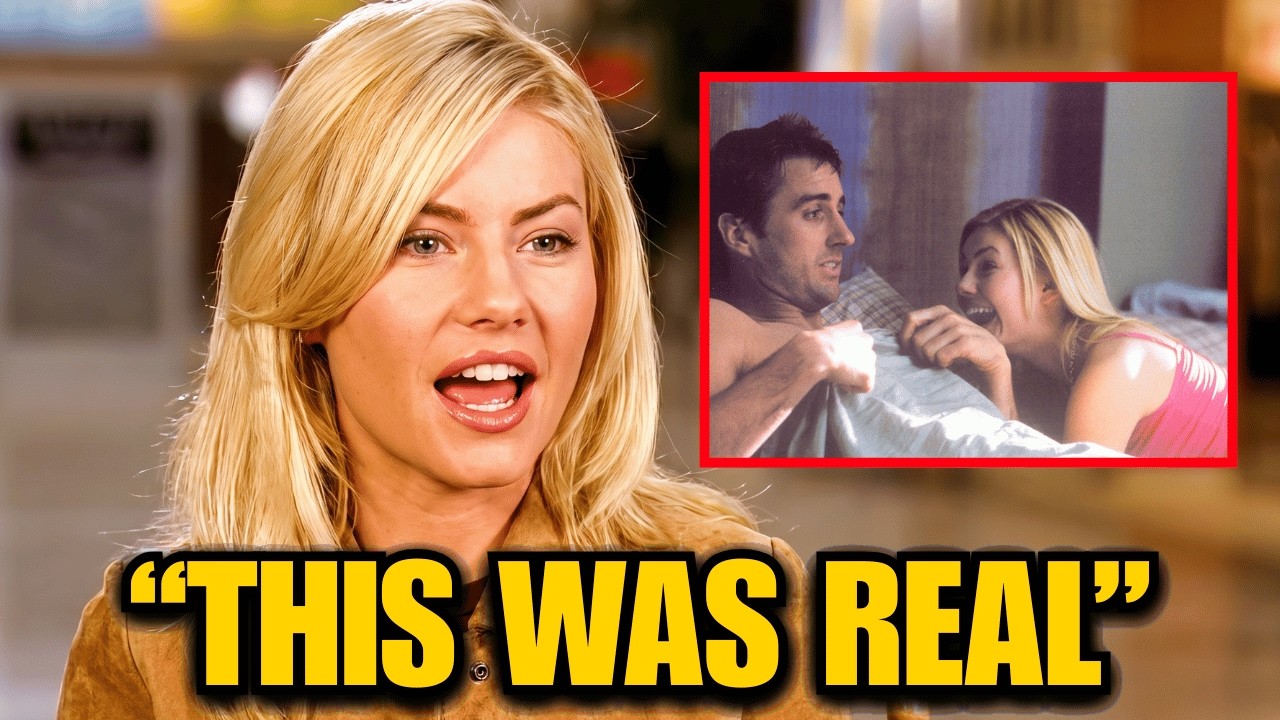
The cast of the 2003 comedy classic “Old School” has finally lifted the lid on two decades of secrets, revealing a staggering list of 20 insane facts that fans never figured out, from a nearly career-ending documentary to a real-life medical emergency on set. The revelations paint a picture of a production that was a complete mess behind the scenes, with studio executives terrified they were throwing millions of dollars down the drain, actors risking their careers, and a director fighting tooth and nail for every single frame. The film, now seen as an absolute classic that brought back wild R-rated comedies, almost never made it to theaters, and the new details expose the chaos that nearly ruined it all.
Before Todd Phillips became the blockbuster director behind “The Hangover” and “Joker,” he was making underground documentaries that got him into serious trouble. In 1998, he co-directed “Frat House,” a film that took viewers inside real college fraternities, exposing hazing rituals behind closed doors. The documentary was so controversial it won the grand jury prize at the Sundance Film Festival, and HBO bought the rights to air it.
 But just before it was supposed to premiere, everything fell apart when fraternity members and officials from Mullenberg College accused Phillips of staging scenes, leading to threats of legal action. Facing a growing scandal, HBO pulled the documentary, and it has never received an official public release. You would think such a scandal could have ended Phillips’s career before it started, but it did the opposite.
Legendary producer Ivan Reitman saw the documentary, believed Phillips had a unique understanding of college culture, and hired him to direct “Road Trip,” setting the stage for “Old School.”
The idea for “Old School” itself was born from a casual chat between two friends, not a team of highly paid writers in a fancy Hollywood studio. After the drama surrounding “Frat House,” Phillips spent time telling his friend Court Crandall some of the crazy college stories he had encountered. During one of their conversations, Crandall casually asked a question that changed everything: what if a bunch of regular guys in their 30s decided to start their own fraternity?
It sounded like a silly idea at first, but Phillips immediately saw the potential. The thought of grown men with jobs, families, and responsibilities trying to relive their college days was too funny to ignore. This simple conversation became the basis for “Old School,” and because Crandall came up with that concept, he received an official story credit on the movie.
Phillips then brought in screenwriter Scott Armstrong, and the two spent nearly two months developing the idea with Reitman, rewriting scenes and sharpening the jokes.
But turning that conversation into an actual movie hit a massive brick wall the moment casting began. The one actor Todd Phillips fought tooth and nail for was the exact person the studio refused to hire. It is hard to imagine “Old School” without Vince Vaughn playing Beanie, with his fast-talking delivery, sarcastic jokes, and confident attitude.
But surprisingly, the studio did not want him in the role at first. When Phillips and Armstrong were writing the character, they had Vaughn in mind from the beginning, believing his personality was perfect for Beanie. However, DreamWorks executives were not convinced.
At the time, Vaughn was being taken seriously as a dramatic actor, having even played the troubled Norman Bates in the remake of “Psycho.” Executives were not sure audiences would buy him as the loud, funny guy at the center of an R-rated comedy. Phillips was not willing to give up on his first choice, so instead of arguing endlessly, he showed them another side of Vaughn by asking them to watch his unscripted late-night interviews, where he was quick, funny, and completely comfortable making people laugh.
This changed their minds, and DreamWorks eventually approved Vaughn for the role, a decision that turned out to be one of the smartest they could have made.
Will Ferrell’s role in “Old School” was a huge gamble for his career. When the movie came out, Ferrell was not the huge movie star we know today. Audiences already loved him from “Saturday Night Live,” but being funny on television was one thing; getting people to pay to see you in a movie was something else.
For Ferrell, this was his chance to prove he could do both, as it was his first leading movie role after leaving “SNL.” A lot was riding on it. If “Old School” flopped, Hollywood could have easily decided that Ferrell was better off doing television.
Instead, audiences loved Frank the Tank, especially the way Ferrell played him as a completely ordinary guy who suddenly goes wild the moment he gets another taste of his college days. Even critics who did not particularly like the movie had good things to say about Ferrell’s performance because he was not afraid to look ridiculous. He fully committed to the character, and “Old School” went on to make more than $87 million worldwide.
When “Elf” arrived less than a year later, it became clear that Ferrell was not just the funny guy from “SNL”; he could actually lead a hit movie.
Ferrell was willing to risk his career for the role, but nobody expected him to risk his dignity on a public street in broad daylight. The movie’s most famous scene, Frank the Tank running naked through the neighborhood after a wild night of partying, was not even shot on a closed set. Todd Phillips did not film the scene on a closed movie set; instead, the crew went to a real street in Pasadena, California, right outside a 24-hour gym that was still open.
While the cameras were rolling, Ferrell was not just running past the crew; he was running past ordinary people who had no idea they were about to see him sprint down the street with nothing on. To make matters worse, it was a cold night. Ferrell later admitted that he was genuinely nervous before filming, so nervous that he took a few real shots of alcohol to build up the courage.
Once he finally dropped the robe, there was no turning back. The night got even stranger when Snoop Dogg, who was visiting the set, watched the whole thing from the sidelines. Ferrell did not use a body double or find a way to avoid the scene; he simply went for it, giving “Old School” one of its most memorable moments.
The street where Frank the Tank went on his unforgettable naked run was not chosen by accident. It was Bushnell Avenue in Pasadena, California, and movie fans had actually seen it years before, long before “Old School” turned the neighborhood into the setting for one of the wildest comedy scenes ever filmed. The very same street appeared in “Back to the Future.”
 In fact, the house across from the fraternity was used as Lorraine Baines’s family home, the same house where Marty McFly famously climbed a tree to look through her bedroom window. It is one of the most recognizable filming locations in movie history. Of course, the people who actually lived there probably were not thinking about Hollywood history while “Old School” was filming.
The production brought loud music, powerful lights, dozens of crew members, and late-night filming that sometimes stretched until 4:00 in the morning. Unsurprisingly, some homeowners were not happy, and location managers spent plenty of time dealing with complaints and trying to keep the peace. After the movie came out, another rumor started making the rounds, with some fans becoming convinced the fraternity house had once belonged to a wealthy college graduate who later donated it to a real fraternity.
It sounds like a great story, but it simply is not true; the house has always been a private residence.
One of the biggest and most unforgettable surprises in “Old School” happens during the Mopalooza party when Snoop Dogg suddenly shows up and performs. You would think the production had to spend a fortune to get a star like Snoop for a quick cameo, but Todd Phillips had a much smarter idea. At the time, Phillips was preparing another movie called “Starsky & Hutch,” and fortunately, Snoop Dogg was a huge fan of the original television show.
He really wanted to play Huggy Bear, the streetwise informant from the series, and Phillips knew exactly how much that role meant to him. So instead of simply asking Snoop to appear in “Old School,” Phillips offered him a deal: if Snoop came to the set for one night and performed at the fraternity party, Phillips would give him the role of Huggy Bear in “Starsky & Hutch.” Snoop agreed, showed up in Pasadena, and brought the kind of energy you would expect from a real concert rather than a movie set.
His appearance helped turn the party into one of the movie’s biggest moments, and Phillips kept his end of the deal. When “Starsky & Hutch” came out in 2004, Snoop Dogg was right there playing Huggy Bear.
Will Ferrell and Vince Vaughn could barely get through a scene without making each other laugh, but Luke Wilson was a completely different story. While those two were busy throwing jokes around, Luke was usually the calm one in the middle of all the madness. He was so good at getting his scenes right that the crew started calling him “One Take Wilson.”
If a scene was ready to shoot, Luke usually did not need five or six attempts to get it right; he would walk in, deliver his lines, nail the reaction, and they could move on. But what is even more interesting is what Luke was doing when the cameras were not rolling. While Ferrell and Vaughn were hanging around, joking and keeping the set lively, Luke usually disappeared back into his trailer to read his script, watch TV, or just enjoy some peace and quiet.
It sounds like a small thing, but it made for a pretty funny contrast. On screen, Mitch is constantly surrounded by two guys who seem determined to drag him back into their crazy college lifestyle, and offscreen, Luke was basically doing the exact opposite, staying away from the chaos whenever he could.
Once the cameras stopped rolling, the cast did not exactly spend their free time together. In fact, the set had two completely different worlds going on, and the biggest difference could be seen in where everyone went between takes. During the big party scenes, Snoop Dogg’s trailer quickly became one of the busiest places on set.
Music was playing, people were coming in and out, and Will Ferrell and Vince Vaughn would often stop by between takes. It was basically an extension of the party they were supposed to be filming. However, Luke Wilson wanted something completely different.
While the others were hanging out, he usually went back to his own trailer where he could relax, look over his lines, watch TV, or simply get some quiet time. This difference even carried over into how Luke felt on set. He later talked about feeling a little separate from the rest of the cast, but there was something almost perfect about it.
In the movie, Mitch is constantly surrounded by people acting completely crazy while he tries to figure out how his life got this far off track, so while the others were creating chaos off camera, Luke was sitting quietly away from it all.
One reason the friendship between the three guys feels so natural in “Old School” is that Will Ferrell, Vince Vaughn, and Luke Wilson were already spending plenty of time making each other laugh when the cameras were not even rolling. During breaks, the three would often sit around and roast each other instead of disappearing into their trailers. Vince Vaughn would tease Luke Wilson about movies like “Legally Blonde,” while Luke and Will would turn around and joke about Vince’s attempt to move into more serious acting.
Will was not getting a free pass either, as his friends reminded him that he had just left “Saturday Night Live” and was now trying to prove he could make it as a movie star. None of them were actually taking these jokes seriously; it was the kind of teasing that happens when people get comfortable with each other, and that chemistry eventually made its way into the movie. Todd Phillips noticed how naturally the three played off one another, so he gave them plenty of room to improvise and throw jokes back and forth during scenes.
Instead of three actors simply pretending to be longtime friends, they were already comfortable enough to challenge each other, make each other laugh, and keep trying to land the better joke.
 If you have seen “Old School,” there is a good chance you remember Vince Vaughn yelling one word at the top of his lungs: “Earmuffs!” Beanie shouts it whenever his kids are around and the adults start cursing, telling them to cover their ears before things get even worse. What makes the moment even better is that the line was not actually in the original script.
During filming, the scene already called for a loud, chaotic argument, but Vince came up with the earmuffs moment on the spot. The kids immediately covered their ears while the adults continued shouting and swearing around them, creating a ridiculous contrast that worked perfectly. Here was Beanie running a wild college fraternity where practically anything could happen while still trying to make sure his children were not hearing the bad language.
This little detail made the character even funnier because it showed that underneath all the chaos, he was still trying to be a dad. Todd Phillips loved what Vaughn had come up with and let the scene continue instead of cutting immediately. Vaughn kept playing with the idea, and the filmmakers eventually kept the moment that worked best.
Putting Vince Vaughn and Will Ferrell together could have easily gone wrong. Both were rising comedy stars with huge personalities, and there was always the possibility that they would end up fighting for attention in the same scenes. But once they started working together, something completely different happened.
Their comedy styles were almost opposite, and that turned out to be exactly what the movie needed. Vince Vaughn could talk his way through a scene at lightning speed, throwing out sarcastic comments before anyone else had time to respond. Will Ferrell, meanwhile, could barely say a word and still make people laugh just by the way he looked at someone or reacted to what was happening.
Todd Phillips quickly realized that he did not need to make the two actors compete; instead, he let them play to their strengths, giving Vaughn room to keep talking while Ferrell reacted in his own ridiculous way. Vaughn would throw out a line, Ferrell would respond with a look or an unexpected move, and suddenly the scene had become funnier than what was originally planned. Instead of trying to outshine each other, they made each other better.
One of the funniest moments in “Old School” comes near the end of the movie when Frank the Tank suddenly finds himself in a serious college debate. Out of nowhere, this wild, party-loving character starts making surprisingly intelligent political arguments. It is already ridiculous enough, but there is another detail most viewers completely miss.
The man standing across from Will Ferrell was not just another actor; it was James Carville, one of the best-known political strategists in America and the man who helped lead Bill Clinton’s successful 1992 presidential campaign. Seeing someone with that kind of real-life political reputation in the middle of a raunchy comedy was not something anyone expected. Todd Phillips wanted the debate to feel believable, so instead of casting another actor, he reached out to Carville himself.
Surprisingly, Carville loved the idea and agreed to appear in the movie. This decision made the scene even funnier; the more serious James Carville looked, the more outrageous Will Ferrell’s performance became. It was the perfect contrast, and it turned what could have been an ordinary comedy scene into one of the movie’s most memorable moments.
When Mitch, Frank, and Beanie sit down at a neighborhood diner to figure out how to save their fraternity, it looks like a completely ordinary place, but if you are a movie fan, you might recognize the location from a very different kind of movie. The scene was filmed inside the Quality Cafe in Los Angeles. Years before “Old School” brought college party chaos into the diner, the same location appeared in David Fincher’s dark thriller “Se7en.”
That is where Brad Pitt and Morgan Freeman sat down to discuss the disturbing serial killer they were trying to catch. And that is what makes the location so funny; the same booths that once held two detectives discussing a terrifying murder case were later occupied by Will Ferrell and Vince Vaughn arguing about college parties and trying to keep their fraternity alive. Todd Phillips liked the diner because it already had the old-fashioned look he wanted, so there was no need to build an expensive set or completely transform the place.
It is a small detail, but it shows just how differently the same location can feel depending on the movie.
One of the craziest moments in “Old School” happens during the fraternity initiation when Seann William Scott’s character accidentally shoots himself in the neck with a tranquilizer dart meant for a horse. It is such an over-the-top scene that you would assume everyone rushing in afterward was just another actor. But here is the thing: they were not.
Allegedly, instead of hiring extras to play the paramedics, Todd Phillips brought in real off-duty Los Angeles emergency medical technicians. He wanted the emergency response to look as believable as possible, even if the situation itself was completely ridiculous. The EMTs did not have to pretend they knew what they were doing; they brought real medical equipment, used the same language they would use on an actual emergency call, and handled the stretcher exactly the way they did on the job.
This decision ended up making the joke even funnier. While everyone else was panicking over a grown man lying on the grass with a tranquilizer dart sticking out of his neck, the paramedics stayed calm and professional, just as they would in real life. Their serious reactions made the chaos around them feel even more absurd.
Even after filming started, Todd Phillips was still fighting with the studio over money. DreamWorks had given “Old School” a $24 million budget, but that did not mean Phillips could spend freely. The studio was watching the costs closely, and whenever a scene started getting expensive, executives wanted to know what could be cut.
 The biggest concern was the fraternity parties. Studio bosses wanted fewer extras, smaller crowds, and cheaper music. But Phillips knew that would make the movie feel fake.
If the fraternity looked like it had only a handful of people standing around, the whole idea of this huge college party would fall apart. So Phillips had to find ways to keep the big scenes without letting the budget get out of control. The crew worked long nights, moved quickly between shots, and planned the filming carefully so they could avoid paying for locations longer than necessary.
It was not about spending money just for the sake of it; Phillips wanted the movie to feel like a real college party that had completely gotten out of hand, and he knew the size of those scenes was a big part of making that work.
Finishing “Old School” was not the end of Todd Phillips’s problems. Before the movie could reach theaters, it had to be reviewed by the people who decide what age rating a movie gets. Phillips was expecting an R rating, which meant younger viewers could still see the movie if they were with an adult.
Instead, the board came back with an NC-17 rating. That was a serious problem. An NC-17 rating meant people under 17 could not see the movie at all, and many major theaters were reluctant to show movies with that rating.
For an R-rated comedy like “Old School,” that could have seriously hurt its chances at the box office. The board had problems with several parts of the movie, including Frank the Tank’s naked run, the wild fraternity parties, and the constant swearing. But cutting out the funniest parts was not an option for Phillips because those scenes were a huge part of what made the movie work.
So instead of removing entire scenes, the team went back and made smaller changes, trimming certain shots and adjusting a few moments. After several rounds of changes, they finally got the R rating they needed.
Becoming a recognizable movie star at 80 sounds almost impossible, but that is pretty much what happened to Patrick Cranshaw after “Old School.” Before playing Blue, the lovable older fraternity pledge, Cranshaw had already spent more than 40 years working as a character actor, appearing in dozens of movies including “Bonnie and Clyde.” But he was never the kind of actor whose name audiences immediately recognized.
Then came “Old School,” and everything changed. At first, Blue could have easily been treated as nothing more than a funny gimmick; an 80-year-old man joining a college fraternity was already ridiculous enough. But Cranshaw gave the character something much more memorable.
He played Blue with such warmth and sincerity that audiences could not help but love him. Soon, people were recognizing him in public and shouting his famous line, “You’re my boy, Blue!” What had started as a small comedy role had suddenly turned Cranshaw into one of the most memorable faces in the movie.
Sadly, that unexpected fame did not last long; Cranshaw died in 2009, just six years after “Old School” was released.
It is easy to look at Todd Phillips today, the director behind huge movies like “The Hangover” and “Joker,” and forget that Hollywood did not always see him that way. Back in 2003, he was still a young director trying to prove that he could handle a major studio comedy. His previous movie, “Road Trip,” had done well, but “Old School” was a much bigger opportunity.
The studio was putting $24 million into the movie, and Phillips was making plenty of choices that made executives nervous. They questioned the casting, watched the budget closely, and were not always comfortable with how much freedom he gave the actors. However, Phillips did not want to make a safe, predictable comedy.
He trusted his cast, allowed them to improvise, and wanted the movie to feel messy and unpredictable, just like the parties it was about. When “Old School” finally reached theaters, that gamble paid off. The movie made more than $87 million worldwide and turned Phillips into a director Hollywood could no longer look down on.
One of “Old School’s” wildest scenes became unexpectedly dangerous when Will Ferrell, playing Frank the Tank, crashed through a glass window during filming. The stunt was designed to be safe, but Ferrell was cut by pieces of glass, forcing production to stop while medical staff checked his injuries. Thankfully, the cuts were not serious, and Ferrell soon returned to work.
The incident showed just how committed he was to the role, physically throwing himself into the comedy. That dedication helped make Frank unforgettable, but what truly made “Old School” work was the perfect storm of Frank’s chaos, Beanie’s jokes, and Mitch’s reactions to the madness. The film went on to make millions of dollars and completely redefine R-rated comedies, but before it ever hit theaters, that single moment on set nearly sent its biggest star to the emergency room.