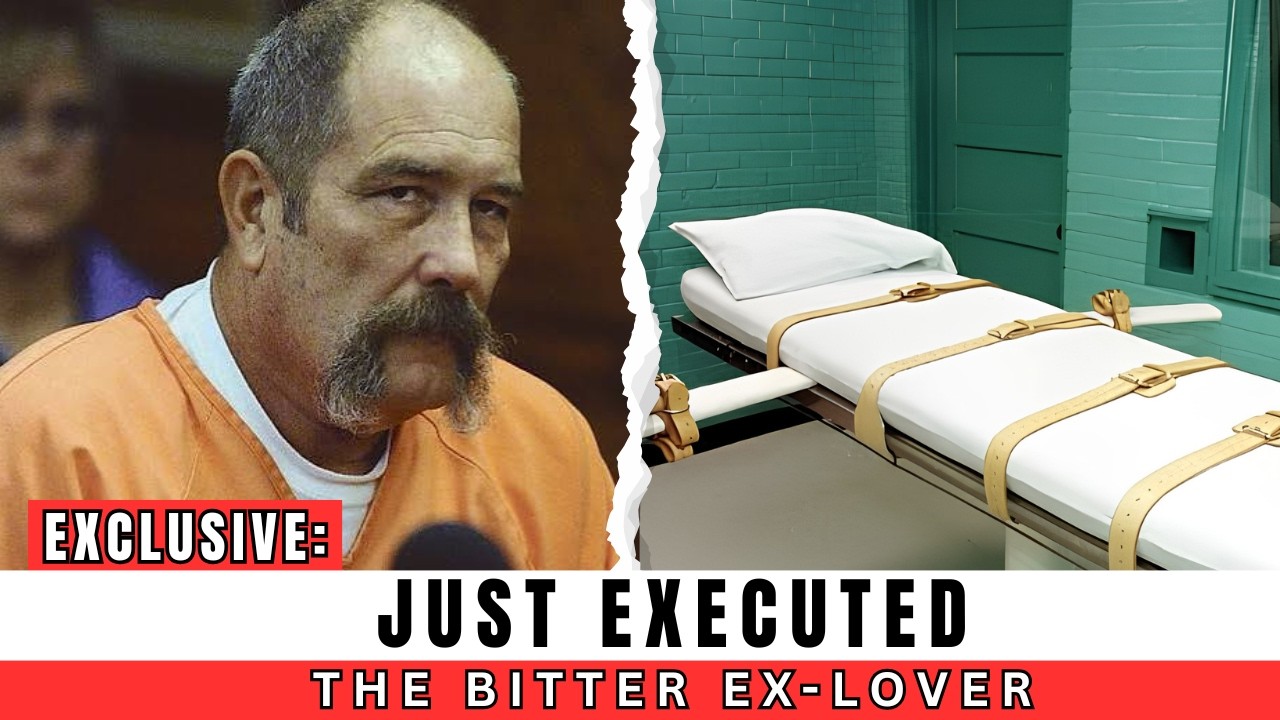
BONNE TERRE, Missouri – David Russell Hosier was pronounced dead at 6:11 p.m. Central Time on Tuesday, ending a 15-year legal odyssey that began with a fusillade of gunfire outside a Jefferson City apartment and ended with the former Navy veteran insisting on his innocence from a gurney.
Hosier, 69, refused to utter an oral final statement, instead issuing a written declaration that did not apologize or confess. “I’ve been able to speak the truth of my innocence,” the document read. “I leave you all with love.
 Now I get to go to heaven.”
Moments later, a single dose of pentobarbital flowed through intravenous lines, quieting the man who had once declared, “Shoot me and get it over with.” The state of Missouri carried out the execution despite a final clemency petition that painted Hosier as a brain-damaged trauma survivor.
The case that sent him to death row was built almost entirely on circumstantial evidence. Prosecutors presented no DNA, no fingerprints, and no definitive ballistic match connecting Hosier to the 9mm shell casings found near the bodies of Angela Gilpin, 45, and Rodney Gilpin, 61.
Angela had been Hosier’s lover during a separation from her husband. When she chose to reconcile with Rodney in August 2009, Hosier refused to accept the rejection. Friends and family said he spiraled into obsessive stalking.
On September 28, 2009, residents of a Jefferson City apartment complex heard rapid gunfire and a door slam. Angela and Rodney Gilpin lay dead in their doorway, shot multiple times at point-blank range.
Inside Angela’s purse, investigators found an unfiled protective order. In it, she wrote that she believed “Hosier is going to hunt down and shoot both me and my husband.” A voicemail left hours before the murders captured Hosier saying, “I’m going to finish it.”
Hosier fled across state lines. Oklahoma state troopers stopped him on an isolated highway, finding an arsenal in his trunk: 15 firearms, 400 rounds of ammunition, body armor, latex gloves, and a disassembled 9mm submachine gun.
 Despite the overwhelming circumstantial case, physical evidence was absent. The submachine gun recovered from Hosier’s trunk could not be definitively linked to the spent casings at the scene. No DNA or fingerprints placed him inside the apartment hallway.
The trial began in October 2013. Defense attorneys failed to introduce critical mitigating evidence: Hosier had suffered a major stroke in 2007 that left permanent brain damage, and he had a 21-year history of severe clinical depression.
Jurors heard about a 1993 felony battery conviction in Indiana, where Hosier handcuffed a former girlfriend and beat her unconscious after she tried to end their relationship. The jury recommended death, and a judge imposed the sentence in November 2013.
Before trial, prosecutors offered a plea deal: life in prison without parole in exchange for a guilty plea. Hosier refused, insisting on his innocence based on the lack of physical evidence. He gambled and lost.
In the final months before execution, Hosier’s legal team filed a clemency petition highlighting his father’s murder in the line of duty in 1971, his Navy service, his career as a firefighter, and the stroke-induced brain damage.
Hosier publicly criticized his own lawyers, telling the Associated Press he despised the “woe is me” narrative. He wanted them to focus solely on his innocence and the missing forensic links.
 Governor Mike Parson denied clemency on June 10, citing Hosier’s “complete lack of remorse.” The governor’s statement stood behind the jury verdict.
Hosier’s health had deteriorated rapidly in recent weeks. He suffered atrial fibrillation and congestive heart failure, requiring an off-site hospital transfer. He was stabilized enough to be returned to the execution facility.
Spiritual adviser Reverend Jeff Hood accompanied Hosier into the chamber. Corrections officials confirmed no last-minute stay would arrive.
The execution lasted minutes. As the pentobarbital took effect, Hosier’s breathing slowed, his eyes closed, and the chamber fell silent.
At the moment of death, the question remained whether a calculating killer erased his physical tracks or a traumatized veteran was condemned on circumstantial evidence alone. Hosier took that answer to the grave.
The families of Angela and Rodney Gilpin have not publicly commented since the execution. Cole County prosecutors who handled the case declined to speak with reporters.
 Death penalty opponents have pointed to the lack of physical evidence as a reason to question the conviction. Supporters of the verdict argue the behavioral evidence—stalking, threats, flight, and the arsenal—was overwhelming.
Missouri executed its seventh inmate of 2024 with Hosier’s death. The state remains one of the most active capital punishment jurisdictions in the United States.
Hosier becomes the 15th person executed in Missouri since the state resumed lethal injections in 1989. His case will likely be cited for years in debates over the sufficiency of circumstantial evidence in capital trials.
The prison warden confirmed that the execution protocol was followed without incident. Hosier was pronounced dead at 6:11 p.m.
Reverend Hood released a brief statement afterward, saying Hosier “maintained his innocence and his dignity to the very end.”
No further legal challenges are expected. The case is closed.