The state of Texas executed James Broadnax at 6:47 p. m. on April 30, 2026, and as the lethal injection took hold, he looked at his wife and whispered, “I didn’t do it.”
For 17 years, from a death row cell, he had said the same thing. Now, with his final breath, he still insisted he was innocent. His wife, Tiana Krasniqi, a British law graduate who fell in love with him through prison letters, stood just feet away, crying out his name.
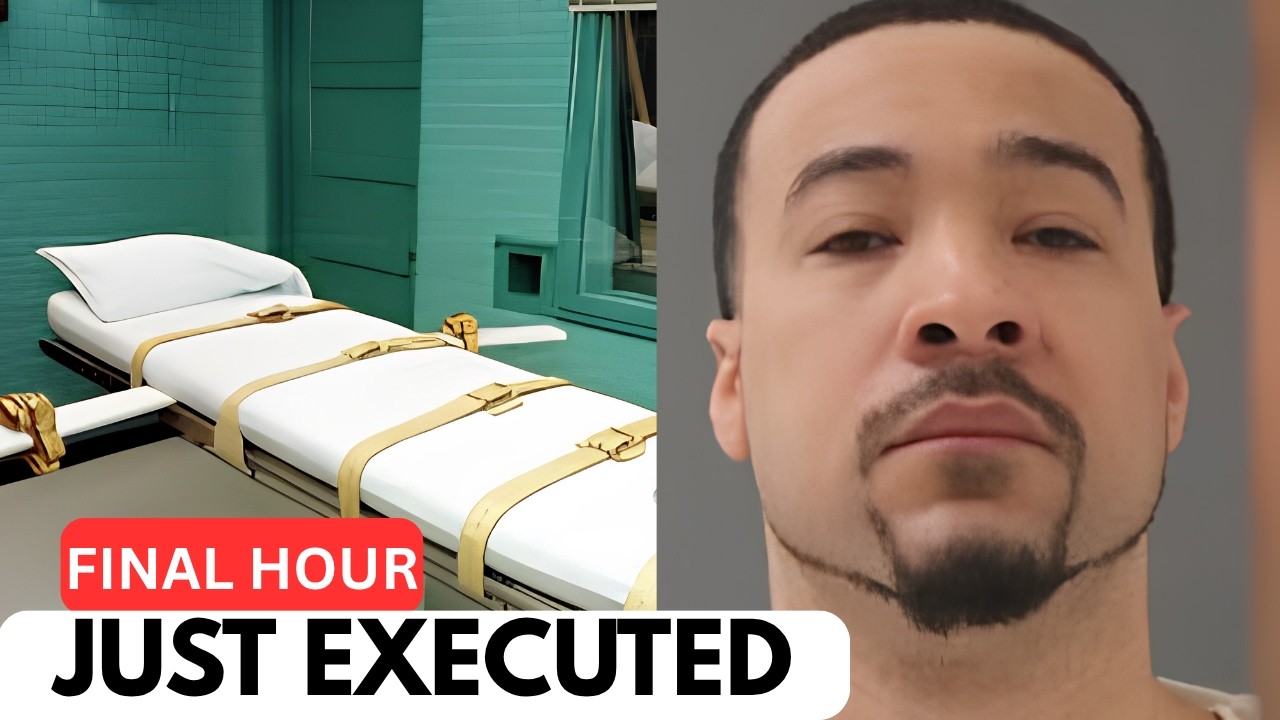 The execution chamber fell silent. The clock kept ticking. But the question that haunted this case from the beginning will never have a definitive answer.
The murders happened on a quiet night in 2008, in a parking lot outside a recording studio in Garland, Texas. Two men, Steven Swan and Matthew Butler, were ambushed and shot dead. They were not killed over drugs, territory, or a long feud.
They were killed for $2. Just two dollars. The victims had families, futures, people who loved them.
And in an instant, everything was gone. Authorities quickly arrested a 19-year-old named James Broadnax, a kid from North Texas who wrote rap lyrics and dreamed of making music. He was charged with capital murder.
From the very beginning, Broadnax admitted he was at the scene. He admitted a robbery took place. But he always said he was not the one who pulled the trigger.
His co-defendant and cousin, Demarius Cummings, received a life sentence. Broadnax got death row. Years later, Cummings made a recorded confession.
He said he, not Broadnax, fired the shots that killed both men. He said Broadnax had accepted the situation as a teenager, believing he would never actually be executed. He was tragically wrong.
The trial was deeply contested. Prosecutors had a confession from Broadnax, but his defense argued it was obtained under duress. He was a teenager, emotionally distressed, possibly under the influence, alone and frightened.
They said he did not fully understand what he was agreeing to. Prosecutors also introduced his rap lyrics as evidence of violent intent. The defense called that racially biased, arguing that using a young Black man’s creative expression against him in a capital murder trial was legally questionable and fundamentally unfair.
 Appeals later raised concerns about racial dynamics in jury selection. The combination of a disputed confession, rap lyrics reframed as a blueprint for violence, and a young Black defendant created what many called an impossible environment for an impartial verdict. The jury disagreed.
They returned a unanimous guilty verdict and sentenced Broadnax to death. The courtroom moved on. The system filed the case as closed.
But the system could not ignore the nagging questions. Over the next 17 years, Broadnax’s legal team fought every appeal. They pointed to Cummings’ recorded confession as new evidence.
They challenged the use of the lyrics, the circumstances of the original confession, and the due process violations they saw in the jury selection. Every court that reviewed the case concluded the conviction was legally sound. Every door closed.
The clock kept moving.
As the execution date approached, public attention grew. Tiana Krasniqi became a vocal advocate. Artists and activists spoke out.
The case drew national headlines. The Texas Board of Pardons and Paroles received a formal clemency request. The United States Supreme Court was asked to intervene.
Everything was denied. The Supreme Court declined. The Board rejected clemency.
 The state of Texas confirmed that the execution would proceed as scheduled.
On the morning of April 30, 2026, James Broadnax woke up knowing it was his last day. He spent his final hours under heavy supervision, meeting with family, legal representatives, and his wife. Those visits were not private.
There were walls and barriers. But the emotion was raw. When the time came, he was moved to the Huntsville Unit execution chamber.
He was given the opportunity to make a final statement.
He did not rage. He did not condemn the system. He maintained his innocence clearly and calmly.
He asked for forgiveness from the families of Steven Swan and Matthew Butler, acknowledging their pain. He said he loved the people who had stood by him. And then the pentobarbital was administered.
At 6:47 p. m. , the state of Texas carried out its judgment.
Tiana Krasniqi cried out. The witnesses watched in silence. It was over.
 The families of the victims waited 18 years for this moment. They wanted closure. Whether they found it is a question only they can answer.
But the case leaves behind an unsettling truth. The death penalty is irreversible. Human beings run the justice system.
Human beings carry bias, make errors, operate within structures that have never been perfectly fair. Irreversible consequences demand an impossible standard of certainty.
Was James Broadnax guilty? The court said yes, consistently, repeatedly. But the rap lyrics say the process was not clean.
The circumstances of the confession say it was not unbiased. The racial dynamics of that courtroom say it was not beyond question. And a co-defendant’s recorded confession, though never enough to reopen the case, says the truth may never have been fully told.
Now, James Broadnax is gone. The case is closed. But the conversation is far from over.
Steven Swan and Matthew Butler deserved justice. Their families deserved closure. What remains in question is whether the man executed for their murders was truly the one who pulled the trigger.
That uncertainty is the most terrifying part of this entire story.