The air in the early morning hours of August 9th was thick with tension inside the Hidden Gem Restaurant in Southfield, Michigan, a venue that had transformed from a local eatery into a private after-hours sanctuary for Detroit’s elite and its street-connected figures. What began as a night of music and celebration quickly devolved into a bloody scene of gunfire, leaving two men dead and a third injured, reigniting the long-simmering tensions of a notorious rap feud that has plagued the city’s East Side for years. The victims, identified as Christopher Griffith, a 24-year-old affiliate of the Rolling 60s Crips and a known associate of rapper 42 Dugg, and Johnny Jackson, a 28-year-old Bloods affiliate and close friend of rapper Sada Baby, were both gunned down in a violent exchange that police say started over a chain.
The shooting erupted around 3:30 a. m. inside the basement-level venue, which witnesses described as a cramped space with only one exit, creating a terrifying trap for the dozens of partygoers inside.
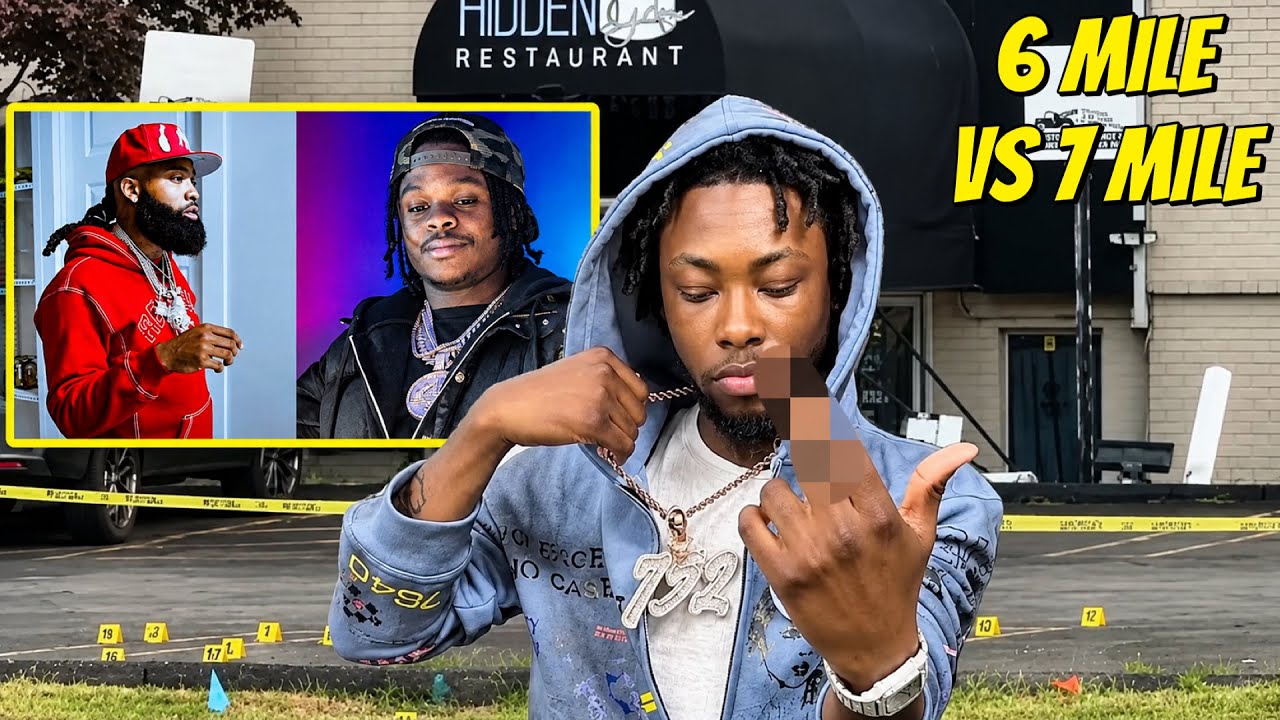 According to preliminary police reports and witness accounts, the altercation began when Griffith allegedly attempted to steal Jackson’s chain, a piece of jewelry that often carries immense symbolic and monetary value in street culture. The confrontation turned deadly when Jackson, known on the streets as Fat Fat, allegedly shot Griffith in response, killing him on the spot. But the violence did not end there; a security guard at the scene then opened fire, striking Jackson multiple times, and he later succumbed to his injuries at a nearby hospital.
Southfield Police responded to the scene at 3:30 a. m. after receiving multiple 911 calls reporting gunfire.
Officers arrived to find Griffith dead on the floor, with Jackson critically wounded and later pronounced dead at the hospital. A third victim, who suffered a graze wound, was treated and released. The building, which houses several shops, salons, and offices alongside the Hidden Gem, was immediately shut down and remains closed as investigators piece together the chaotic sequence of events.
A staff member at the restaurant told reporters that the venue was being used as a private space after hours, a common practice in the area for hosting exclusive gatherings that often attract rappers, athletes, and their entourages.
The incident has sent shockwaves through Detroit’s music community, drawing immediate connections to the long-standing feud between rappers 42 Dugg and Sada Baby, two of the city’s most prominent figures whose rivalry has been fueled by deep-seated neighborhood divisions. Sada Baby, whose real name is Kasada Sorrell, took to Instagram shortly after the news broke, posting a heartfelt tribute to Jackson, writing, “I love you so much, boy. Broke my heart.
I just seen you 2 days ago. Just sat with you 2 days ago. That fat fat and blood.”
The post was a raw expression of grief, highlighting the personal loss he feels for a man who was not just an associate but a close friend. Meanwhile, 42 Dugg, whose real name is Dion Hayes, has remained silent on the matter, with no public statements released as of this report.
The roots of this violence stretch back years, embedded in the geography of Detroit’s East Side, where the 6 Mile and 7 Mile roads represent more than just street addresses—they are battle lines in a territorial war that predates the rappers themselves. 42 Dugg, who grew up in the 6 Mile area near Whittier Avenue, is heavily affiliated with the Rollin 60s Neighborhood Crips and a local set known as the 6 Mile 42 Hustle Boys. His music often references this affiliation, with the number 42 in his name directly honoring his crew.
On the other side, Sada Baby, who reps the 7 Mile area and the Regent Park neighborhood, is a prominent figure in the 7 Mile Bloods, a powerful Blood set that has long been at odds with the Crips-affiliated groups from 6 Mile.
 In a previous interview, Sada Baby himself acknowledged the deep-seated nature of the conflict, explaining that the beef is not just personal but inherited from the neighborhoods they come from. He stated, “My side and his side didn’t fuck with each other before me or him was the main niggas from both our sides. You see what I’m saying?
I went to high school with dude. Me and him went to Demi together for a year.” He emphasized that despite the public perception of a rap beef, the real issue is a street rivalry that predates their fame, one that has claimed lives long before they became household names.
This admission underscores the tragic reality that the violence is not just about music but about loyalty, territory, and a code that often demands retaliation.
The chain that sparked the deadly altercation is more than just a piece of jewelry in this context; it is a symbol of status, wealth, and often, a direct representation of gang affiliation. In Detroit’s street culture, chains are frequently customized with specific colors, symbols, or initials that identify the wearer’s set, making them a target for rivals. The alleged attempt to snatch Jackson’s chain was not just a robbery but a provocation, a move that could be interpreted as a challenge to his entire crew.
This dynamic is a familiar one in the world of hip-hop and street violence, where material items often become flashpoints for deadly confrontations.
Witnesses at the scene described a harrowing experience, with one partygoer recounting the chaos in a social media post that has since gone viral. “Unfortunately, I was at this party. First off, it was a fucking basement with one exit.
So many people were barricaded in corners trying to take cover. I literally saw cuz using tables as shields. And once everything was clear, there was no security instructing us to leave.
I said and ran. I got blood on my boots and everything because baby, I was not about to sit there.” The witness criticized the venue’s lack of safety measures, noting that a single exit and no evacuation instructions created a dangerous situation that could have resulted in even more casualties.
 The Hidden Gem Restaurant, located in the 16,000 block of West 9 Mile Road, has been described by locals as a popular spot for after-hours events, often hosting private parties for rappers and their circles. A staff member told reporters that the restaurant is sometimes used as a private space after hours, but this is the first time violence has occurred there. The building’s owner expressed shock and sadness, stating that the establishment had always been a professional space until recent years when it began hosting more nightlife events.
The shooting has raised questions about the safety of such venues and the responsibility of owners to ensure proper security and emergency protocols.
The broader implications of this tragedy extend beyond the immediate loss of life, as it once again highlights the cyclical nature of violence in Detroit’s street culture. The feud between the 6 Mile and 7 Mile factions has been a persistent source of bloodshed, with numerous deaths over the years, many of which have been covered by local and national media. The involvement of rappers like 42 Dugg and Sada Baby has amplified the conflict, turning neighborhood disputes into a public spectacle that plays out on social media and in lyrics.
But as Sada Baby himself noted, the violence is not always about the rappers themselves; it is about the people around them who are still living in the environment they left behind.
In his interview, Sada Baby reflected on the difficulty of escaping the cycle, saying, “You can change your life. You can move away. You can get money.
You can mature. That don’t mean everybody you grew up with is going to mature with you.” This sentiment is echoed by many in the community who have watched friends and family members rise to fame while others remain trapped in the same streets, carrying the same grudges.
The tragedy at the Hidden Gem is a stark reminder that success does not always insulate a person from the consequences of their past, and that the ties to one’s neighborhood can be both a source of strength and a deadly liability.
As of now, Southfield Police have stated that there appears to be no ongoing threat to the public, but the investigation is ongoing. Authorities are urging anyone with information about the shooting to come forward, as they work to piece together the exact sequence of events and determine if any additional suspects are involved. The victims’ families are left to mourn, with Christopher Griffith’s relatives describing him as a young man with a bright future who was deeply connected to his community, while Johnny Jackson’s family remembers him as a loyal friend and a beloved figure in the 7 Mile area.
 The music industry has reacted with a mix of grief and frustration, with many artists calling for an end to the violence that has claimed so many lives. Social media has been flooded with tributes to both victims, as well as heated debates about the role of rappers in perpetuating or preventing such conflicts. Some argue that artists like 42 Dugg and Sada Baby have a responsibility to use their platforms to promote peace, while others contend that they cannot be held accountable for the actions of individuals they may not even know.
This debate is likely to intensify as more details emerge about the shooting and the connections between those involved.
The chain, which may have been the catalyst for the violence, is now a piece of evidence in a homicide investigation. But its symbolic weight is immense, representing the materialistic values that often drive street conflicts. In a world where a piece of jewelry can be worth thousands of dollars and carry deep personal meaning, the decision to try to take it by force can have fatal consequences.
The question that remains is whether the cycle of retaliation will continue, with each death leading to another act of revenge, or if this tragedy will serve as a wake-up call for a community that has seen too much bloodshed.
The aftermath of the shooting has left the Hidden Gem Restaurant shuttered, with a sign on the door indicating it will remain closed until Monday. The building, which once housed professional offices, has become a symbol of the changing nature of Detroit’s nightlife and the risks that come with hosting events that attract a crowd with deep-seated rivalries. For the residents of Southfield, a suburb that has largely avoided the violent crime seen in Detroit proper, the shooting is a jarring reminder that the city’s problems can spill over into their communities.
As the sun rises over the 9 Mile Road corridor, the reality of the night’s events sets in. Two families are planning funerals, a community is grappling with loss, and the long shadow of a rap feud continues to cast its pall over Detroit. The names Christopher Griffith and Johnny Jackson will be added to a long list of casualties from a conflict that shows no signs of ending.
And while the rappers at the center of the feud may have moved on to fame and fortune, the streets they left behind are still claiming lives, one chain at a time.