The silence inside the execution chamber at Louisiana State Penitentiary was broken only by the mechanical hiss of nitrogen gas and the low, rhythmic murmur of Buddhist chants. Strapped to a gurney, a full-face respirator mask sealed over his features, Jessie Hoffman Jr. chose to meet his end without a final meal, without a final statement, and without a single word of farewell.
At 6:50 p. m. on March 18, 2025, he was pronounced dead, marking the end of a 28-year legal odyssey and the beginning of a new, deeply contentious chapter in American capital punishment.
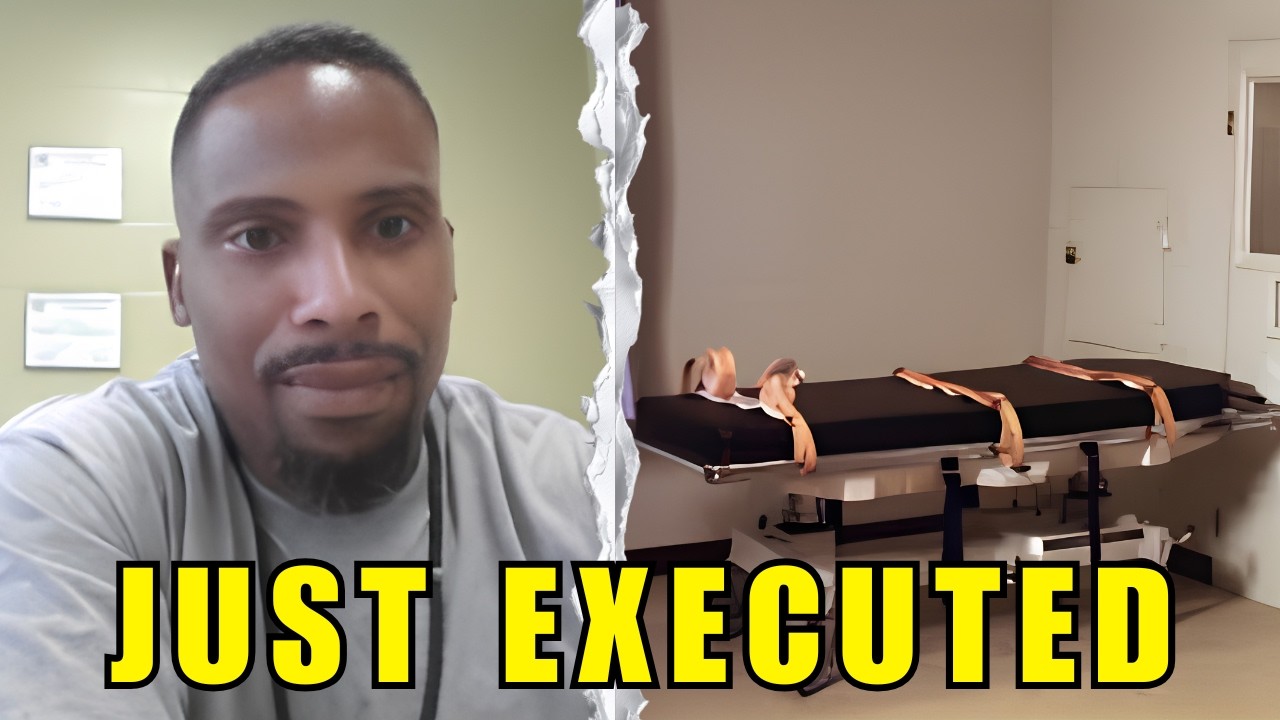 The execution was historic not merely for its finality, but for its method. Louisiana had not carried out an execution in fifteen years, and this was the first time the state had ever employed nitrogen hypoxia, a procedure that replaces breathable air with pure nitrogen, inducing oxygen deprivation. The nation watched, protesters gathered outside the prison walls, and legal scholars engaged in furious debate.
But the central question that hung over the proceedings was not about the legality of the method, but about the nature of justice itself. Was this the culmination of a long-delayed reckoning for a brutal crime, or had the state crossed a line into something far more troubling?
To answer that question, one must travel back to a humid November evening in New Orleans in 1996. The city, a place that has always known both beauty and darkness, was settling into its usual Wednesday rhythm. Workdays were ending, and ordinary people were making ordinary plans.
Among them was Mary “Molly” Elliot, a 28-year-old advertising executive who had built a life for herself in the city. She was sharp, driven, and deeply loved. Her only plan that evening was simple: finish work, walk to her parking garage, and drive to meet her husband for dinner.
She had no reason to believe that this particular walk would be her last.
Molly Elliot never made it to dinner. She was not a headline or a case number; she was a person with a future that was violently stolen from her. The man responsible was an 18-year-old named Jessie Hoffman Jr.
, who had recently worked at the same parking garage where Molly parked her car every day. That detail was crucial. Hoffman knew the garage intimately.
He knew its layout, its rhythms, and the kind of people who used it. On the evening of November 27th, he was waiting for her. When Molly walked in, bag over shoulder and keys in hand, Hoffman confronted her at gunpoint, and her ordinary Wednesday became something incomprehensible.
He forced her to an ATM, where a surveillance camera recorded every second of her terror. The footage showed her trembling hands withdrawing cash under duress, her face a mask of fear, with Hoffman standing close behind her, gun in hand. Neither of them knew it at the time, but that camera would one day play in a Louisiana courtroom, showing the world exactly what Molly endured in the final hours of her life.
The ATM was not the end, however. It was only the beginning. Hoffman forced Molly into her own vehicle and drove her to a remote area in St.
Tammany Parish, far from the lights and noise of the city.
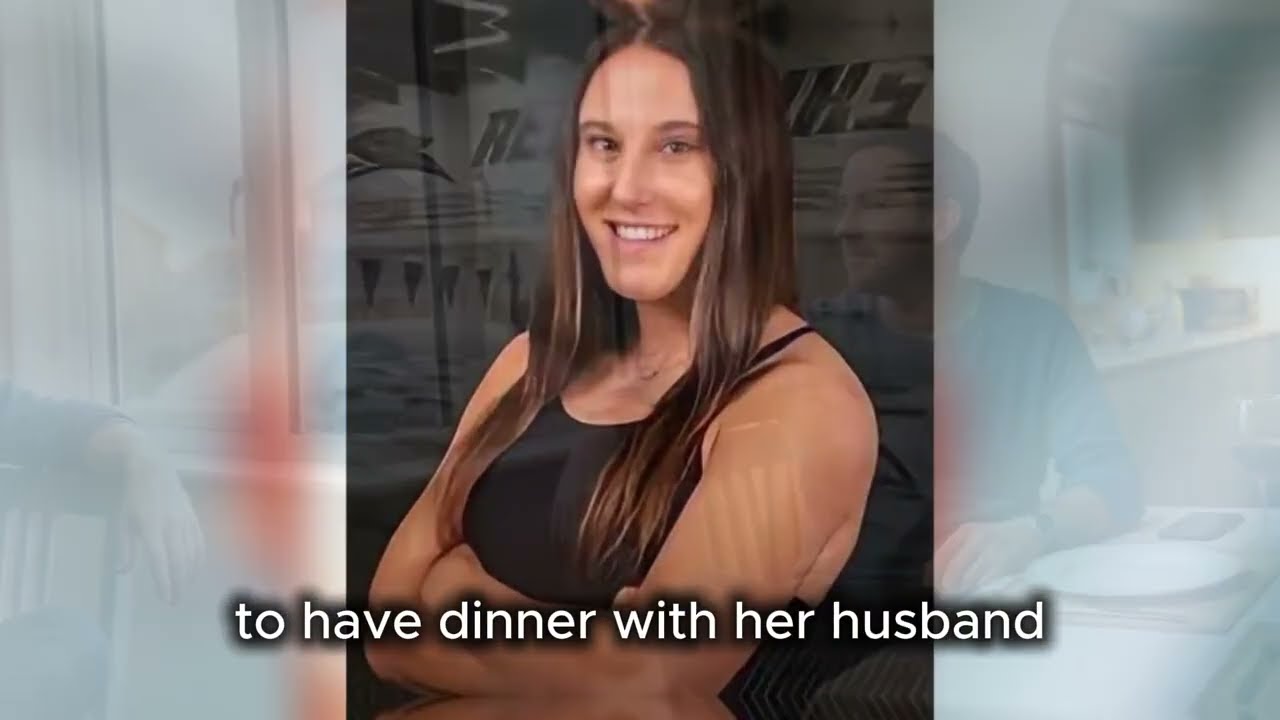 At some point during that drive, Molly must have realized that her hope was running out. In a secluded area near a makeshift dock, Hoffman sexually assaulted her and then shot her dead. Prosecutors would later describe it as an execution-style murder, calculated and deliberate.
Molly Elliot had left work to have dinner with her husband; she never came home. Across the city, a man was waiting at a table, completely unaware that his wife had just taken her last breath in the dark. The investigation moved quickly.
Detectives reviewed the ATM footage, which gave them a face, a timeline, and a direction. Physical evidence from the crime scene was collected, and it did not take long for Hoffman to emerge as the primary suspect.
When law enforcement closed in, Hoffman confessed, providing details that only the person responsible could have known. His confession wrapped around the physical evidence like a vice, leaving no room for doubt. He was charged with first-degree murder, and the trial was not a question of innocence.
With surveillance footage, physical evidence, witness testimony, and his own confession, the prosecution’s case was overwhelming. Prosecutors argued that this was not an impulsive act but a series of deliberate decisions, each one worse than the last, carried out against a woman who had done nothing to deserve it. Defense attorneys acknowledged Hoffman’s responsibility but urged the jury to consider his background of poverty, neglect, and abuse.
The jury deliberated and returned with a verdict of guilty on the charge of first-degree murder. The aggravating circumstances of kidnapping, robbery, and sexual assault were deemed overwhelming. Jessie Hoffman Jr.
was sentenced to death. He was a teenager when he walked into that garage, and he would spend the rest of his life paying for what he did there. He arrived at Angola, one of the most notorious correctional facilities in the United States, and spent the next 28 years inside its walls.
By every account from his legal team, the man who existed on death row bore little resemblance to the 18-year-old who had committed those crimes. He pursued education, participated in prison programs, and developed a deep commitment to Buddhism, spending years studying its teachings and embracing meditation.
His attorneys described a man who had genuinely reckoned with what he had done, a man who had, in their words, transformed. Supporters rallied around that transformation, arguing that the person Louisiana intended to execute was fundamentally different from the person who had taken Molly Elliot’s life. But not everyone was moved.
For every voice that argued Hoffman had changed, there was another that asked a harder question: does it matter? Molly Elliot did not get 28 years to grow, reflect, and become. She did not get the opportunity to evolve beyond the moment Hoffman decided her life was worth less than the cash in her account.
 Her family did not get to watch her build the future she had been working toward. They got a funeral, and then they got 28 years of courtrooms and appeals reopening a wound that never fully closed.
Critics of the rehabilitation narrative were firm. Personal transformation, however genuine, could not be separated from the gravity of what he had done. Redemption, they argued, does not rewrite consequence.
Meanwhile, Hoffman’s legal team launched their final battle, not over his guilt, but over how Louisiana intended to end his life. The state had authorized nitrogen hypoxia as its execution method. His attorneys challenged it immediately, arguing it constituted cruel and unusual punishment and directly interfered with the Buddhist breathing practices he relied upon.
The courts listened, and then they said no. Louisiana had not executed anyone since 2010, but in 2024, state officials authorized a new path forward. Nitrogen hypoxia had been used before, but only in Alabama.
Louisiana would be the second state to deploy it.
Hoffman’s attorneys fought the protocol in federal court with every legal instrument available. A federal judge temporarily blocked the executions while the challenge was reviewed, but higher courts overturned the block. The Louisiana Supreme Court declined to stop it, and the United States Supreme Court declined to stop it.
One by one, every door that could have opened closed. On March 18, 2025, Hoffman spent his final hours at Angola, surrounded by his legal team and his Buddhist spiritual adviser. He requested no last meal and prepared no final statement.
He had made his peace, whatever that looked like for a man in his position. The chamber was ready, and there was nothing left to delay.
The execution chamber is a small, deliberately unremarkable room. Hoffman was secured to a gurney, and a full-face respirator mask was sealed over his face. His spiritual adviser stood nearby.
The procedure began, and then the nitrogen flowed. For 19 minutes, witnesses sat in silence as the protocol ran its course. What they observed during those 19 minutes ignited an immediate and fierce national debate: involuntary movements, convulsive activity, a body responding to the absence of oxygen in ways that raised deeply uncomfortable questions about what the person inside that mask was experiencing.
 State officials maintained that the execution had been carried out precisely according to protocol, but the debate over whether the method was humane exploded across the country overnight.
Legal scholars, medical professionals, death penalty advocates, and abolitionists all weighed in. The execution had been lawful, but whether it had been humane remained a question without a clean answer. Outside Angola, the night was quiet.
Inside a courtroom far away years earlier, a surveillance tape had played, and Molly Elliot’s face had told the world everything it needed to know. Her story teaches us about awareness. Molly did nothing wrong; she was not careless or naive.
She was a woman doing what millions of people do every day, walking to her car after work. But her story forces a necessary conversation about parking structures, isolated spaces, and the moments in our daily routines where we are most exposed without realizing it. The walk to the car, the moment between the building and the vehicle, the seconds where our guard is down because we believe we are almost home.
Those seconds matter.
The second lesson is harder to sit with. Jessie Hoffman did not emerge from nowhere. He came from poverty, neglect, and abuse, a childhood that court records described as deeply unstable.
That does not excuse a single thing he did to Molly Elliot, but it does demand a question. At what point does a society become responsible for the environments it allows children to grow up in? Because broken childhoods do not stay contained.
They move through the world, and sometimes they walk into a parking garage with a gun. Justice for Molly took 28 years to arrive, 28 years of appeals, courtrooms, and a family forced to relive the worst moment of their lives over and over again. Whatever your position on capital punishment, nobody can call that process painless.
True justice should never cost the living this much. Remember Molly Elliot, not just as a victim, but as a woman who deserved a full life.


