The phone rang in Mike Braun’s DEA office, and the voice on the other end belonged to Juan Zarate, President George W. Bush’s counterterrorism advisor. Zarate was on his way across Washington, D. C.
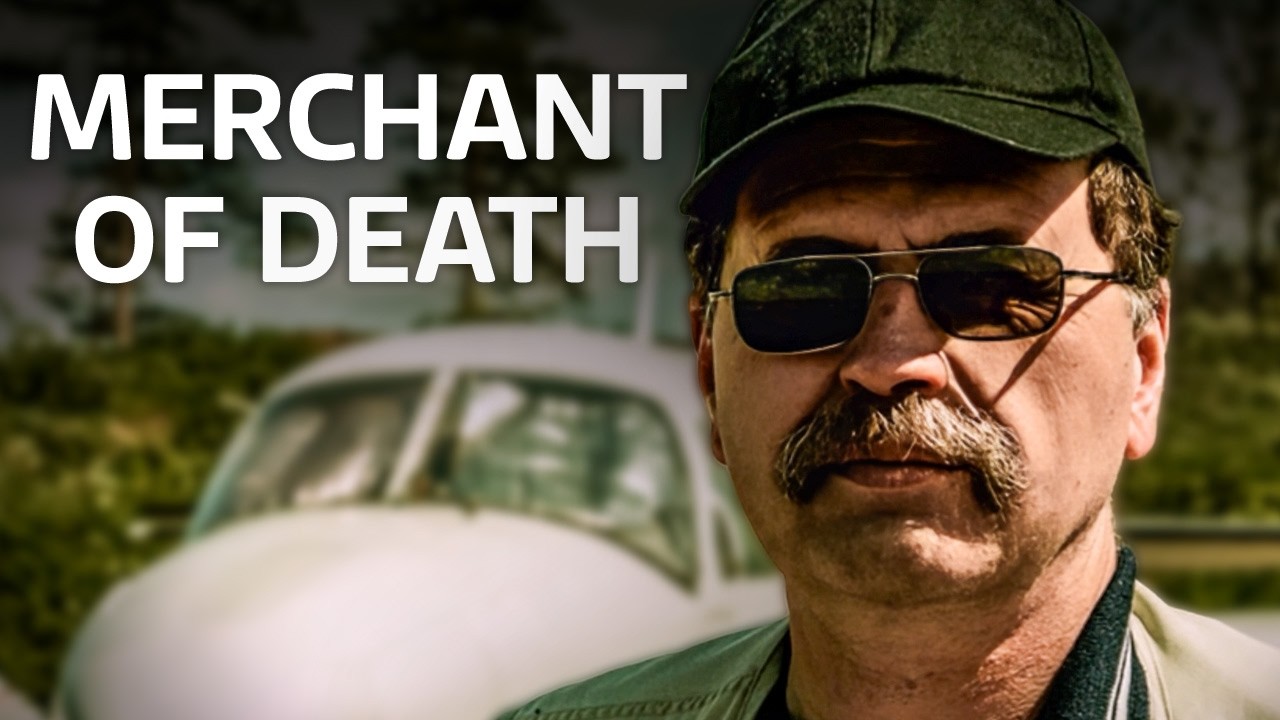
, and he needed an urgent meeting. Braun was the DEA’s director of operations, a former Marine with a shaved head and a rigid sense of right and wrong. He assembled his top agents. When Zarate arrived, he laid it out plainly: there was a man making billions from the deaths of millions, a suspected Russian arms dealer who had slipped through every net for twelve years.
“Would you take a crack at him? ” Zarate asked. “Do you think you could succeed? ”
Braun never forgot the response.
Not a single agent pushed back. They leaned in. This was the kind of work DEA agents lived for. Nine years earlier, a truck tore through the chaotic streets of Nairobi, heading for the U.
S. Embassy. It never made it through the checkpoint. The blast destroyed the embassy and the buildings around it.
A simultaneous attack hit the U. S. Embassy in Tanzania. Two hundred and twenty-four people died, including twelve Americans.
Over four thousand were injured. The perpetrators belonged to a new and terrifying threat: Al-Qaeda. This was their first major strike against American citizens. The Nairobi attack was a wake-up call.
Suddenly, people in Africa with arms could hurt Americans, and Africa became a battleground in a new war against extremism. The ethnic conflicts and civil wars already ravaging the continent were fueled by a flood of illegal weapons. The continent turned into a bloodbath, and the victims were ordinary people trying to live their lives. Children were forced to turn against their own families.
In the Democratic Republic of Congo, a young soldier, drugged and armed, was ordered to shoot his own uncle—the man who had raised him—thirty times. The point was to make sure these boys could never go home again. Human rights investigators watched the carnage and asked one question: who was arming the deadliest combatants in Africa? Pilots and couriers across the continent were interrogated about their lethal cargo.
One name came up again and again. By the mid-to-late 1990s, every report seemed to mention Victor Bout. In 1967, Bout was born in Tajikistan, a mountainous Soviet outpost bordering Afghanistan. He joined the Soviet Air Force in the late 1980s, ready to fight America at the height of the Cold War.
A powerful military career awaited him. Then the Berlin Wall fell. The Soviet Empire collapsed, and soldiers like Bout were told, “You’re demobbed. Go fend for yourselves.
” Some were eating rats and living under plastic sheets in Moscow that winter. The government, worried about angry soldiers revolting, opened the doors to thousands of surplus weapons. It was the biggest fire sale you’ve ever seen, with a stockpile several times larger than the entire Western arsenal. In 1992, at age twenty-five, Bout invested in three cargo planes and started an international freight business.
He shipped flowers, electronics, whatever turned a profit. He was “honest Vic,” the trader who could get you the best price. But his military connections added a deadly new category to his inventory. Soon, he was trafficking weapons to African rebel groups who paid with drug money and blood diamonds.
He was a chancer, enthusiastic about the deal to the point of blindness to its consequences. He was oblivious to the rape and genocide his trade caused. His fleet was everywhere. In Angola, the sky was black with his planes.
By 2000, he reportedly made more money than many Fortune 500 companies. He employed over three hundred staff and commanded nearly thirty aircraft. He was said to be the biggest private arms trafficker in the world, making hundreds of millions, if not billions. UN weapons investigators wanted a champion to drag him out of the shadows.
Peter Hain, a British foreign minister who had grown up in South Africa, took up the cause. He was frustrated that nothing was being done with the intelligence they had. Hain wanted to name Bout publicly, but he could be sued for libel if Bout was never convicted. There was a loophole: he could name Bout in Parliament, where libel laws didn’t apply.
His officials and the secret services were worried about compromising intelligence sources, but Hain won the argument. In Parliament, Hain named Victor Bout as “the chief sanctions buster” and called him a “merchant of death. ”
The impact was immediate. Interpol was put on high alert.
Spies compiled dossiers. On February 18, 2002, Interpol issued an international arrest warrant for Bout on suspicion of illegal arms trafficking. They knew where he was hiding—in his Moscow lair. But the Russians refused to hand him over.
They claimed to have no knowledge of his whereabouts, even as Bout gave an interview on public radio in Moscow at that exact moment. He protested his innocence, claiming he was being hounded for being a successful Russian businessman. The hunt reached a standoff. While Bout was on Russian soil, he was untouchable.
Then came promising intelligence. Bout was leaving Moldova for a country where Interpol could arrest him. British special forces waited at Athens Airport. British agents sent an encrypted message: Bout was definitely on the plane.
But the plane suddenly changed course. It disappeared for ninety minutes. Then it reappeared and landed. He wasn’t on it.
No one could explain how he escaped, but the suspicion was that the merchant of death had friends in high places. In 2004, after the Iraq war, the UK military was desperate for aircraft to ship supplies. Victor Bout’s fleet was conveniently available. His companies, or those associated with him, were hired—even though some had just been sanctioned by the Treasury Department.
At one point, Bout was supplying international forces in Afghanistan with legitimate goods. He was being engaged by the very forces that were supposedly tracking him down. It was unsurprising that a man like that felt untouchable. Nine years after he first appeared on investigators’ radar, rumors swirled that Bout was delivering weapons on the same planes carrying aid.
Fed up with official inertia, some officials decided to stand up to him. UN soldiers were deployed to an airstrip known to be used by Bout’s planes. When Russian pilots arrived, snap inspections were ordered. Over forty-eight hours, Bout’s jets were grounded, even in the face of aggressive Russian pilots.
Investigators uncovered suspected payments for weapons and illegally mined minerals. But it was just a drop in the ocean. They only delayed twenty-six planes. The rest of his fleet kept flying.
Juan Zarate had been watching with increasing frustration. The DEA was the right tool. By then, designated terrorist organizations were funding themselves through the global drug trade, and the DEA had authority to go after anyone supporting the terrorist threat to America. Zarate laid it out to Braun’s team.
Bout had to be stopped. The plan seemed impossible. How do you convince a man who knows he’s being watched, who knows he can’t leave Russia, to walk into a country with an extradition treaty to the US? They gave the mission a code name: Operation Relentless.
Special agent Louis Milione ran the day-to-day operations. The scheme was straightforward: get Bout out of Russia, get him onto the soil of a third country that would extradite him to the United States. To do that, they needed a trap so irresistible that he’d walk right into it. Fortunately for law enforcement, the bad guys are driven by one thing: greed.
The agents calculated it would take a $20 million deal to get his attention. They needed a cover story, a terror group Bout would trust. They settled on FARC, the Colombian guerrilla group that had been fighting American pilots and agents in the war on drugs. Bout hated the United States, and so did FARC.
Pretending to be FARC operatives was perfect. The agency had just the man for the dangerous undercover work: an operative called Carlos. He had been in the Guatemalan military, arrested by the DEA years ago for trafficking cocaine. He’d flipped in prison and had worked on more than 150 undercover cases since.
Now they needed a way to get Carlos to Bout. They found a middleman: a South African businessman named Andrew Smulian. Ten years earlier, he had been Bout’s partner on weapons deals. And Smulian was in serious financial trouble, working in the front office of a hypodermic needle factory in Tanzania.
He was the mark. Bout was the prize. Carlos would pose as a FARC operative and offer Smulian a hefty commission to broker a multi-million dollar weapons deal with Bout. Smulian took the bait.
Carlos met Smulian in Curaçao. Carlos detailed a deadly arsenal: hundreds of sophisticated Igla surface-to-air rockets, thousands of AK-47s, all the ammunition they’d need. Smulian said it was too big for him to fill, but he knew someone who could. Smulian flew to Moscow and met with Bout.
The moment he mentioned the deal, Bout picked up the phone to an arms supplier. Over the line, using code, he said, “We need 100 sewing devices. ”
That was the beginning of the deal. Eight days later, Carlos and Smulian arranged another meeting.
The DEA chose Romania, where their law enforcement counterparts were second to none. Carlos proposed Bucharest. Smulian agreed, and this time, he said, they would have company: Victor Bout himself. The DEA rigged the hotel with surveillance.
They were ready to make the bust. But twenty-four hours later, there was no sign of Bout. His associate, Semion, told Carlos that Victor was having second thoughts. Bout knew he was being watched.
He didn’t want to leave Russia. Carlos demanded that Bout show up. The deal was too big, the risk too great for the client to deal with underlings. Inside the hotel, Milione faced a critical decision.
If these men were real FARC buyers, they’d be busy people. They wouldn’t sit around waiting for Victor Bout to get his act together. After ten days, Milione told Carlos to call Semion and deliver a message: they were going home. It was a huge gamble.
Milione had no idea if he’d lost his prey for good or saved the mission. A week later, back on US soil, Carlos called. Semion had explained why Bout never showed. The last time Bout was in Romania, he had used a fake travel document and been turned away by immigration.
He simply didn’t want to make that mistake again. And there was more good news: Bout still wanted to meet, somewhere he felt safer. Milione knew just the place. Thailand.
The DEA had a strong presence there, working closely with the Thai National Police and the Justice Ministry. The Thais had never let the DEA down. And Bout had spent time in Thailand before. He felt comfortable there.
Fourteen days after the failed Romanian sting, Carlos reached out. Could they meet in a hotel in Bangkok? Bout said, “Sure, I’ll see you there in a few days. ”
The DEA raced to Bangkok.
Surveillance had to be in place before Bout arrived. Thai police provided mobile surveillance on the streets, following targets from the airport. Every bit of it had to be coordinated. You can’t make mistakes, or it’s all over.
In Moscow, undercover agents sent word that Bout was leaving the city. He traveled alone, as always, to avoid drawing attention. A red-eye flight from Moscow to Bangkok. In Washington, Mike Braun waited anxiously.
Would the plane make an unexpected diversion again? After nine hours, Braun got the call. Bout had stepped off the aircraft, cleared customs, and was en route to the hotel. From the airport, Bout’s every move was watched.
Informants were positioned in toll booths along the way, making sure his car was moving. When he arrived at the hotel, Bout was met by Smulian and Carlos, who posed as the FARC operative. Bout walked into a conference room rigged with hidden cameras. There were so many danger signals.
He was in a country with close ties to the US. He hadn’t discovered Carlos was undercover. He hadn’t arranged his own location for the meeting. But Victor Bout was convinced of his own business immortality.
He was the personal brand. They wanted to deal with him, not an underling. Arrogance did for Victor Bout. In a nearby room, DEA agents and Thai police waited for a coded call from Carlos to move in.
But before Carlos made the call, Bout had to admit he was supplying weapons to FARC, knowing they’d be used to kill Americans. That admission was critical. They started making a list of things Carlos needed. Carlos asked for missiles.
Bout asked what else he needed. Carlos picked his moment and reminded Bout the arms would be used to take out helicopters flown by American pilots. Bout understood FARC’s hatred of the US. It was a natural part of the discussion.
With that admission on the record, Carlos made the call. The door was kicked open, and Thai police poured in. Even as he was held at gunpoint, Bout kept his hands in his briefcase. The police ordered him to remove them.
If he didn’t comply, he would be shot on sight. Fortunately for Bout, he slowly removed his hands. Victor Bout and Andrew Smulian were arrested. The merchant of death was in custody.
Braun got the first call. He told the team they had done a great job. Then he called Juan Zarate, who was amazed it had taken only six or seven months to do what other agencies hadn’t been able to do in years. But the extradition was delayed.
The Russian government objected and applied tremendous pressure on Thailand to hand Bout over to them. A tug-of-war began between the US and Russia. The Thai authorities kept changing their minds, knowing they’d alienate one of two great powers either way. The Americans repeatedly thought they had him, with planes idling on runways, but the courts kept delaying.
After two years, the US finally won. Bout was flown to New York to face trial. On November 2, 2011, Viktor Bout was found guilty of all four charges, including conspiring to kill US citizens and providing material support to a terrorist organization. He denied everything, claiming he had never been an arms dealer.
He was sentenced to twenty-five years in federal prison with no possibility of parole. He is currently incarcerated at the US Penitentiary in Marion, Illinois. It was a great success, but just one of many. There is always more hard work to be done.
There are always more targets out there. You can either accept organized crime and deal with the consequences, or you can fight it. You cannot throw in the towel. You cannot climb into bed with the devil.
The devil will bite you in the ass every time.