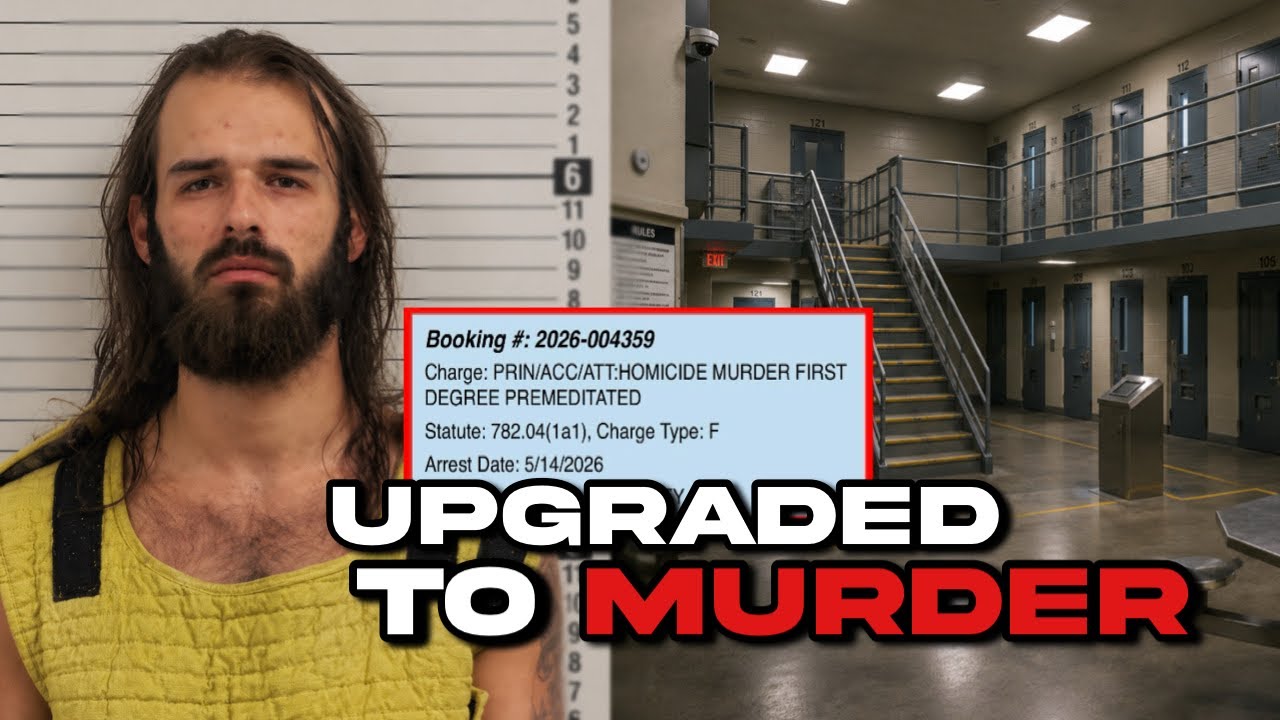
HUNTSVILLE, Texas — The state of Texas executed Blaine Keith Milam by lethal injection Thursday evening, ending the life of a man convicted of one of the most horrific child murder cases in the state’s history. Milam, 35, was pronounced dead at 6:40 p. m.
Central Daylight Time at the Walls Unit in Huntsville, the 596th person executed by Texas since 1982.
 He died without ever speaking the name of his victim, 13-month-old Amora Bain Carson, the baby girl he was convicted of torturing for 30 hours in December 2008. In his final statement from the gurney, Milam thanked supporters, praised Jesus Christ, and urged witnesses to accept salvation. He did not express remorse.
He did not say he was sorry.
The execution concluded a 17-year legal odyssey that began when a Rusk County medical examiner uttered five words that stopped a courtroom cold: “It is the worst thing I have ever seen.” Dr. Keith Pinkard, a forensic pathologist with decades of experience autopsying victims of gang violence, serial killers, and mass casualty events, had never encountered a body like Amora’s.
The infant’s injuries included 24 human bite marks, 18 fractured ribs, a fractured skull, internal bleeding in her brain, eyes, and neck, a torn liver, and extensive genital trauma. The medical examiner testified that he could not pinpoint a single cause of death because there were simply too many fatal injuries. Any one of them could have killed her on its own.
Milam was 18 years old when he called 911 on December 2, 2008, at 10:37 a. m. , reporting that he had found his fiancée’s daughter dead.
He initially claimed he and Jessica Carson, Amora’s mother, had left the baby alone for an hour while meeting a man about clearing land. That alibi collapsed immediately when the man denied meeting them.
Surveillance footage placed Milam and Carson at a pawn shop that same morning, pawning a chainsaw and an air hammer. They reportedly needed money to pay a priest for an exorcism. The stories shifted rapidly.
First, they said Amora had been eating insulation. Then they told investigators the baby was possessed by a demon and that they had performed an exorcism on her.
Carson told investigators that Milam had said Amora was possessed because God was tired of her lying to him. A 13-month-old child, who had only just learned her first word, the word “Daddy,” was being accused of lying to a man who believed she was demonically possessed. The delusion, or the excuse, became the central narrative of the case.
Evidence showed that Milam called his sister, Teresa Shea, before 9:30 a. m. that morning, crying and saying he had found Amora dead.
Shea urged him to call 911. He waited more than an hour before making the call. When investigators searched the trailer, they found blood spatter on diapers, wipes, and a tube of sex lubricant.
DNA testing confirmed the blood was Amora’s.
The case broke open when Shea’s aunt called investigators and told them to search under the trailer. A pipe wrench was discovered inside a clear plastic bag, shoved through a hole in the floor of the master bathroom. Forensic analysis found components of the diaper Amora had been wearing, sex lubricant, and blood-stained diapers.
Milam had tried to hide the evidence.
Weeks later, a jail nurse testified that Milam called her to his cell, crying, and handed her a written request to speak to investigators. “I’m going to confess,” he told her. “I did it, but Miss Shirley, the blame you know, did not do this.
My dad told me to be a man, and I’ve been reading my Bible. Please tell Jessica I love her. I did it.”
A toxicologist testified that Milam had 0.17 milligrams of methamphetamine in his system on the day of the killing, 10 times the therapeutic dose. He was high on methamphetamine, convinced a baby was possessed, and the combination of those factors produced a result that forensic experts called unprecedented in their careers.
Milam’s trial was moved 140 miles to Montgomery County due to overwhelming media coverage. Prosecutors built their case methodically, including testimony from a forensic odontologist who matched eight of the 24 bite marks to Milam’s dental impressions. The defense argued that Jessica Carson was the dominant force and that Milam suffered from intellectual disability.
Under the 2002 U. S. Supreme Court ruling in Atkins v.
Virginia, executing a person with a confirmed intellectual disability is unconstitutional. Multiple experts concluded Milam met the clinical criteria. The state retained a new expert who disagreed, and that opinion was adopted by the trial court.
The jury sentenced Milam to death in 2010 after eight hours of deliberation.
He was 20 years old when the judge handed down the sentence. Jessica Carson was tried separately and received life in prison without parole, convicted under Texas’s law of parties, which holds all participants equally responsible for a crime. She did not testify at Milam’s trial.
The full picture of what happened inside that trailer over 30 hours has never been told in complete, credible terms.
Over the next 15 years, Milam reversed course completely. He maintained his innocence, claiming Carson was responsible and that the evidence had been misread, mishandled, and misrepresented. His legal team mounted a sophisticated fight on two tracks.
The first challenged the forensic bite mark analysis, which has since been broadly discredited by the scientific community.
In 2023, a consensus emerged that bite mark testimony, however framed, is junk science. Milam’s attorneys argued that the odontology used to match eight bite marks to him was unreliable and should never have been admitted at trial. The second argument was constitutional, centered on intellectual disability.
Disability rights organizations filed friend of the court briefs urging protection from unconstitutional execution.
These efforts resulted in two execution stays, one in January 2019 and another in January 2021. The Texas Court of Criminal Appeals ultimately denied his motion for a stay of execution on September 22, 2025, dismissing his subsequent habeas petition on procedural grounds without reviewing the merits. The Texas Board of Pardons and Paroles denied his request for commutation on September 23.
His attorneys made one final push to the United States Supreme Court, arguing actual innocence based on the discredited bite mark evidence and unreliable DNA evidence. The Supreme Court denied his petition and application for a stay of execution earlier on September 25. Every door had closed.
On the morning of his execution, Milam was transferred from the Polunsky Unit to the Walls Unit in Huntsville.
He opted out of having a spiritual advisor present during his final hours. His last meal was served: a cheeseburger, oven-fried potatoes, green beans, pinto beans, sliced bread, scramled eggs, country gravy, a sausage patty, pears, biscuits, tea, and water. A full, heavy, Southern meal.
He ate as the clock moved forward. Witnesses gathered in the observation room, separated by glass and by everything that had happened over 17 years.
He was strapped down, four lines placed into his right hand and left arm. Asked if he wished to make a final statement, he said yes. From the gurney, he spoke for several minutes, thanking supporters for showing him kindness, compassion, empathy, love, and support.
He thanked the chaplaincy program for allowing him to find Jesus Christ. He urged witnesses to accept salvation. He did not mention Amora.
At 6:19 p. m. , as the lethal dose of pentobarbital began flowing, Milam grunted and gasped once, then began snoring quietly.
After about two minutes, all sounds and movement stopped. He was pronounced dead at 6:40 p. m.
He died less than two weeks before what would have been his 36th birthday. Outside the Walls Unit, Rusk County District Attorney Michael Jimerson stepped to the microphone.
“17 years ago, a convicted sex offender who was on paper incarcerated excluded himself from humanity by obtaining gratification from hours of torturing a baby,” Jimerson said. “An army of lawyers trumpeting his calls has come full circle asserting the strategies originally rejected at trial a decade and a half ago. Meanwhile, Amora’s unspoken plea for justice has reached a crescendo that endless appeals no longer silence.”
Jimerson acknowledged the serious questions that have surrounded the case from the beginning. The bite mark evidence used at trial has since been broadly discredited by the scientific community. The intellectual disability argument was real, not manufactured.
Three of four experts who evaluated Milam concluded he met the clinical criteria. Had the courts ruled differently on that single question, he could not have been legally executed.
The role of Jessica Carson, who by multiple witness accounts may have been the driving force behind the delusion that Amora was possessed, remains murky. She is serving life in prison. She did not testify at Milam’s trial.
The full picture of what happened inside that trailer over 30 hours has never been told by either of them in complete, credible terms. What remains is the forensic evidence.
A baby girl named Amora Bain Carson, 13 months old, with 24 bite marks on her body, 18 fractured ribs, skull fractures, and injuries so extensive that a forensic pathologist could not identify a single cause of death because there were simply too many. Whatever the full truth of who did what in that trailer, she was there. She suffered.
She died. And the Texas justice system, 17 years later, answered with finality.
Amora Bain Carson was 13 months old. She had just learned her first word. She had never taken a step on her own.
She never got the chance. Her name was spoken aloud Thursday evening, not by the man who killed her, but by the district attorney who carried her case for nearly two decades. “Amora’s brief life touched so many officers, lab technicians, court personnel, and jurors,” Jimerson said.
“The people of Rusk County showed the greatest commitment with their steadfast support to never let evil go unanswered.”