I’ve spent years watching politicians gut the Royal Navy, and I finally decided to speak up about it. I’m not some armchair critic—my family has served. My brother is an officer in the Royal Marines Reserve. A relative of mine spent 48 years in the Navy, eventually commanding a naval training school.
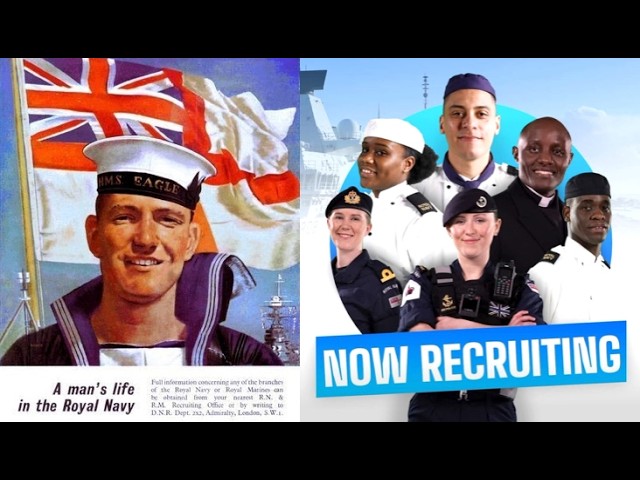
This is personal. The Navy is now the smallest it has ever been, yet Britain still has global defense commitments that haven’t changed in 30 years. Experts call it a death spiral: poor recruiting numbers force the government to scrap warships, which makes recruiting even harder, which leads to more ships being scrapped. It’s a loop that keeps tightening.
One of the proudest moments of my life happened in 2013. I was asked by the Royal Navy to deliver an address about a forgotten naval battle in Shanghai in 1941. I stood aboard HMS Daring, moored at the exact spot where British sailors had perished 70 years earlier. A Royal Marines bugler played the Last Post across the Bund for the first time since 1945.
I can’t describe what that felt like—it was overwhelming. I’d been pushing for an official memorial for those sailors. My project got personal support from Prince Philip himself, a World War II naval veteran, along with the British Consulate in Shanghai and the embassy in Beijing. After I started making videos about the Navy’s decline, my inbox filled with messages from serving and retired personnel.
They told me their own stories, shared their frustration, and voiced their anger at what politicians have done to the service. We should all be concerned—sailor and civilian alike—because the Navy is supposed to be our first line of defense for this island nation. So I decided to look at how Royal Navy recruiting ads have changed since the end of the Cold War. As the fleet shrank, how did they try to tempt young people to join?
Let’s start near the end of the Cold War. Back then, kids said they wanted to be racing drivers or astronauts. The Navy’s ad took a different angle. It said: “When you join the Navy, we know exactly how you’ll feel.
Green. ”
Not seasick, but out of your depth. Then it promised you’d settle in, learn new skills, discover hidden talents, see new places, make new mates, earn new qualifications. In no time, you’d feel different—more decisive, more confident, less green.
You might not notice the change, but when you go home, everyone else would. Another ad showcased the team effort. It surprised people that in the last three years, the Royal Navy had seized illegal drugs with a street value of over 120 million pounds. “The team works,” it said.
Then there was the engineer ad. It was clever. It said: if you can fix a board, you can fix a bike. If you can fix a bike, you can fix a car.
And if you can fix a car, you can learn to fix a 24-foot boat, a 4. 5-inch naval gun, a Sampson radar system, or a Type 45 destroyer. And when you can fix all that, you’ll be a Royal Navy engineer. One engineer’s story really stood out.
He wasn’t bothered at school, left at 16, and worked as an estate agent. But he loved working with his hands and always wanted more. He joined as a weapon engineer. He stopped staring out the window and started getting stuck in.
He swapped the streets of Enfield for seeing the world. The best part? The kit he got to work on. He had always wanted to work with big guns, and now he did it for a living.
He made close mates who always had a story to tell. He earned engineering qualifications he could take with him if he ever left. When something difficult used to come up, he’d think, “I can’t be bothered. ” But not anymore.
He just knew he could do it. He was born in London, but he was made in the Royal Navy. Another ad took a deeper, more personal angle. When you’re a kid and people ask what you want to be, they usually mean when you grow up.
But one young man didn’t know what he wanted from the start. At a family dinner, he dropped the news: “I’ve actually applied to join the Royal Navy. ” His mother was visibly upset. She said, “Raj, this is not what we do.
”
He was navigating the tension between family expectations and his own path. In the end, finding out where he belonged helped him discover where he came from. He was born in West London, but he was made in the Royal Navy. A submariner talked about the close-knit family on board.
Your crew relies on you heavily, and you rely on them. At sea, the camaraderie is brilliant. When you’re alongside, there’s always plenty to do—everyone gets together and you just enjoy your life. One woman said her life was all over the place growing up.
It turned out she craved order. When she joined the Navy, that’s exactly what she got. Her life was still all over the place, but now in a really good way. She was born in Southend, but she was made in the Royal Navy.
Another sailor said the Navy introduced him to lots of things, but the best thing was his crew. He felt at home with them, even out at sea. They weren’t just mates—they were shipmates. He was born in Basildon, but he was made in the Royal Navy.
One woman used to hate going to work. Now she loves it. She said goodbye to the 224 bus and hello to a 224 patrol vessel. She swapped four buses a day for four countries a month.
Best commute ever. She was born in Liverpool, but she was made in the Royal Navy. These ads are brilliant. They’re clever, emotional, and effective.
So why isn’t the Navy recruiting enough sailors? Why is the fleet still shrinking? I looked deeper, and what I found made me question everything about how we fund and treat our armed forces. The answer to the Navy’s death spiral isn’t better ads—it’s political will.
And right now, that seems to be the one thing the Navy can’t recruit.


