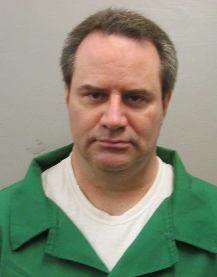
The silence that followed the final gunshot was more deafening than the chaos that preceded it, a hollow quiet that settled over the San Ysidro McDonald’s as law enforcement officers breached the shattered glass doors to find a scene of unimaginable carnage. For 77 minutes, the nation had watched in horror as a lone gunman held a suburban restaurant hostage, and when the smoke cleared, 21 lives had been extinguished in what was then the deadliest mass shooting in American history. The date was July 18, 1984, and the idyllic veneer of American suburban life had been violently stripped away, replaced by a nightmare that would force a complete overhaul of how law enforcement responds to active threats.
The day had begun with the kind of mundane normalcy that made the subsequent tragedy so profoundly jarring. The temperature hovered at a pleasant 75 degrees, and the San Ysidro neighborhood was buzzing with the ordinary rhythms of a Wednesday afternoon. Inside the McDonald’s on San Ysidro Boulevard, the air conditioning provided a welcome respite from the summer heat, and the restaurant was filled with the cheerful noise of children trading Happy Meal toys and parents seeking a quick lunch.
 It was a sanctuary of American consumerism, a place where the biggest concern was the length of the drive-thru line, a bubble of safety that was about to be violently and irrevocably shattered.
Just across the street from this picture of suburban peace, a man named James Huberty looked at his wife and uttered a chilling declaration that would haunt the community for decades. He told her he was going hunting, a statement that seemed innocuous until he clarified his target was not the mountains but the Golden Arches across the way. Huberty, a 41-year-old former welder who had been fired from his security guard job just a week prior, had spent years stockpiling weapons and ammunition, preparing for a war against a society he felt had rejected him.
Now, he loaded his car with a 9mm Uzi, a Winchester shotgun, and a Browning pistol, along with over a thousand rounds of ammunition, and drove toward the restaurant with a singular, murderous purpose.
Huberty’s descent into madness was a slow burn of isolation and resentment that began in his childhood in Canton, Ohio. At just six years old, his mother abandoned the family to become a street preacher, an act of primary abandonment that left him emotionally cold and detached. He gravitated toward professions that kept him on the fringes of human connection, working as a licensed embalmer where his daily companions were the dead, and later as a welder, hiding behind the mask of his helmet.
He was a survivalist in every sense, hoarding non-perishable food and thousands of rounds of ammunition, preparing for an apocalypse that he would eventually decide to trigger himself.
The final snap came from a missed lifeline, a tragic failure of the mental health system that would become a central theme of the aftermath. On July 17, feeling his sanity slipping away, Huberty actually called a mental health clinic seeking help. Because he sounded calm on the phone, the receptionist did not mark the call as an emergency, and he sat by the phone for hours waiting for a callback that never came.
When he woke up on the morning of July 18, he told his wife, “Society had its chance,” a chilling pronouncement that signaled the beginning of his war. He had spent his life preparing for this moment, and he had decided that today was the day he would unleash his fury.
 At approximately 3:59 p. m. , Huberty walked through the glass doors of the McDonald’s, his appearance unremarkable in a black t-shirt and camouflage pants, but his intent was clear from the moment he raised his weapon.
There was no grand announcement, no warning, just the sudden, explosive sound of gunfire that ripped through the air, shattering the cheerful din of the restaurant. In those first few seconds, confusion reigned supreme; most patrons didn’t run because their brains couldn’t process the reality of what was happening. The Happy Meal illusion shattered instantly, replaced by a 77-minute reign of terror that would expose the profound vulnerabilities in American law enforcement tactics.
What made this massacre uniquely horrifying was the calculated, almost leisurely pace of the violence. Huberty didn’t just attack and flee; he settled in, treating the restaurant like his own private fortress. Survivors would later describe an eerie atmosphere where the shooter would intermittently stop firing to pace the floor, occasionally listening to a portable radio he had brought with him.
He walked calmly between tables, shouting incoherent commands at people paralyzed with fear, existing in the chaos he had created without any apparent concern for time or consequence. The tinted windows of the restaurant made those trapped inside feel invisible to the outside world, while Huberty loomed over them like a specter of death.
While the nightmare unfolded inside, the scene outside was one of pure, agonizing confusion and frustration. Police arrived within minutes of the first shots, but they were immediately met with a wall of tactical uncertainty. The high-powered 9mm Uzi created an echoing effect that bounced off nearby buildings, leading officers to believe there were multiple shooters, a critical misjudgment that paralyzed the initial response.
Standard police gear at the time was woefully inadequate; officers were armed primarily with . 38 caliber revolvers, leaving them feeling outgunned and exposed against military-grade weaponry. The perimeter was established, but it became a line of hesitation, and without a clear view through the tinted glass, the command was to wait for SWAT.
 This delay remains the most controversial and painful aspect of the entire tragedy, a period of over an hour where the people inside were essentially left to fend for themselves. The failure sparked a national conversation about law enforcement tactics that would ultimately lead to the active shooter protocols used today. The old model of waiting for a perfect perimeter and negotiating was built for hostage situations, not for a spree killer whose sole intent was to maximize casualties.
The San Ysidro massacre served as a brutal, bloody blueprint, teaching officers that the risk of moving in immediately was often less dangerous than the certainty of waiting while innocent people were being murdered.
Amidst the terror and the tactical failures, the true nature of the human spirit was revealed through staggering acts of bravery that emerged from the chaos. Inside that McDonald’s, everyday people became legends of resilience, their stories a testament to the instinct to protect life at all costs. There were mothers who used their own bodies as human shields, absorbing bullets to ensure their children remained hidden beneath the plastic booths.
Young friends held onto each other in the dark, staying absolutely silent for over an hour, refusing to give up hope even as the shooter paced just inches away. These weren’t soldiers or trained professionals; they were students, grandparents, and neighbors whose heroism was defined by quiet, iron-willed determination.
The 77-minute nightmare did not end with a surrender or a negotiation, but with a single, clinical act of precision that came at 5:17 p. m. A SWAT sniper named Charles Foster had taken a position on the roof of the post office across the street, waiting for over an hour for a clear shot that the tinted windows and chaotic movement inside had made impossible.
Then, for a split second, Huberty walked into a clear line of sight near the service counter, and Foster pulled the trigger of his Remington 700 without hesitation. The threat was neutralized instantly, and the silence that followed was reportedly more haunting than the gunfire that had preceded it, a heavy quiet that signaled the end of the violence but the beginning of a massive investigation.
 When officers finally breached the building, they found a scene that resembled a war zone, with 21 lives lost and 19 others wounded, a staggering toll that included children as young as eight years old. The hunting trip Huberty had promised his wife was over, but the cost was catastrophic. The aftermath of the massacre left the community of San Ysidro in a state of profound shock, grappling with the reality that such violence could occur in their own backyard.
The physical reminder of the horror was a bullet-riddled McDonald’s that sat behind a chain-link fence for months, a grim monument that many residents couldn’t bear to walk past.
The McDonald’s Corporation initially considered remodeling and reopening the site, but the public outcry was swift and fierce. It was more than just a crime scene; it was hallowed ground, a place where the innocence of a community had been violently stolen. The company eventually agreed to raze the building to the ground, stripping the lot down to the dirt in an attempt to scrub the trauma from the neighborhood’s landscape.
For years, the site sat vacant, a ghost in the middle of a bustling town, a constant reminder of the day the music stopped. Today, the land is occupied by a satellite campus for Southwestern College, with a quiet memorial of 21 white marble pillars standing in place of the golden arches.
The legacy of the San Ysidro massacre is not found in the violence itself, but in the radical changes it forced upon society, changes that have saved countless lives in the decades since. Before 1984, the term “active shooter” didn’t exist in the common lexicon, and police tactics were built for static hostage negotiations, not mobile threats. This tragedy served as the painful blueprint for modern law enforcement, leading to the creation of immediate entry protocols and the transition to more effective tactical equipment.
It was a brutal lesson that waiting for a perfect perimeter can sometimes be more dangerous than taking the risk to move in, a principle that now guides every active shooter response in the nation.
Beyond the sirens and the tactical evolution, the massacre also changed the legal landscape in profound ways. Survivors and families filed massive lawsuits against McDonald’s, arguing that corporations have a duty of care to provide security in high crime areas, a legal precedent that fundamentally changed how businesses operate today. We now see security guards and surveillance as standard practice, but that norm was born from the rubble of San Ysidro.
The tragedy forced a national reckoning with mental health care failures, as Huberty’s desperate call for help that went unanswered became a symbol of a system that was failing the most vulnerable. The 77 minutes of 1984 taught us that while we can’t always predict a snap, we can build systems that are faster, smarter, and more compassionate.