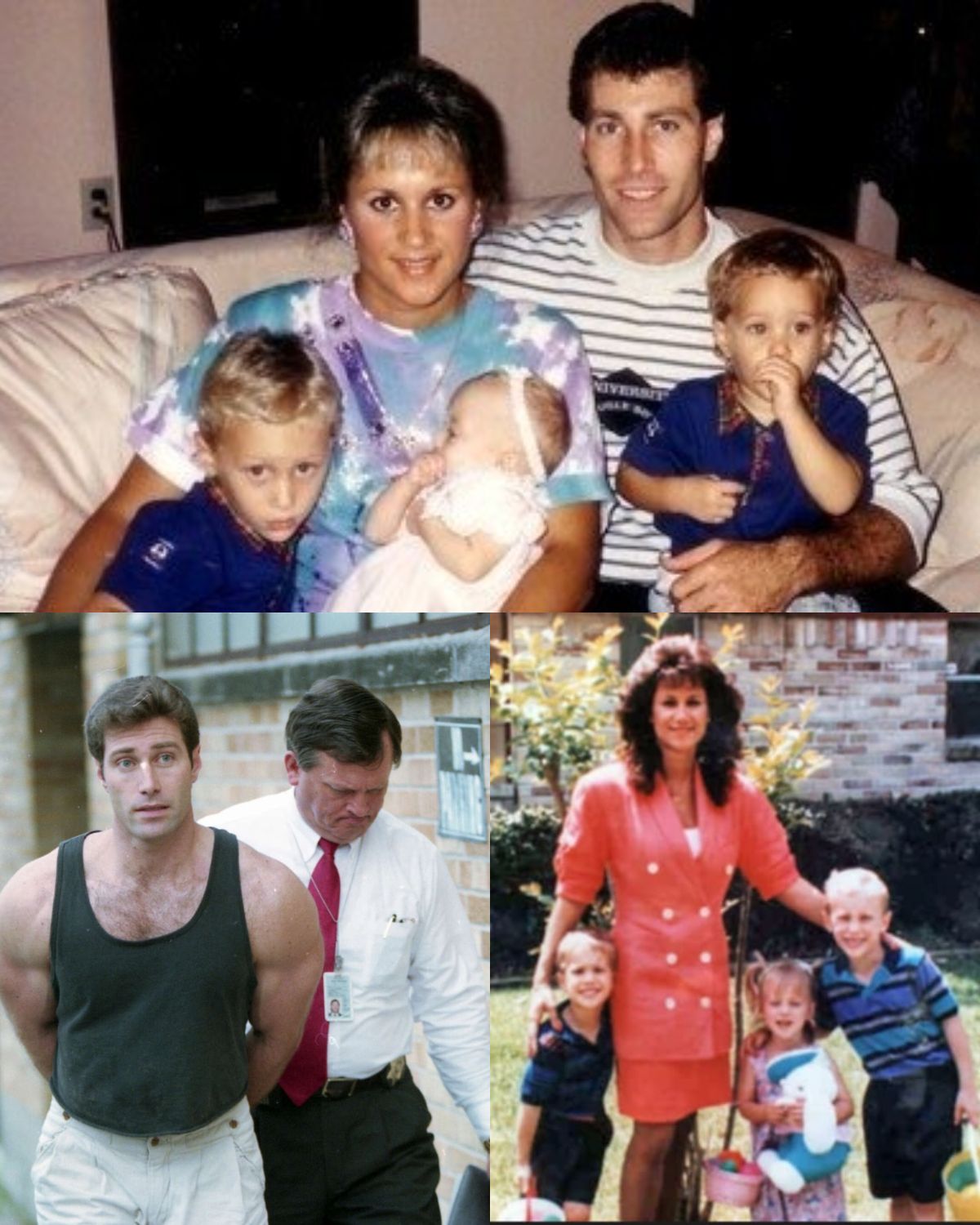
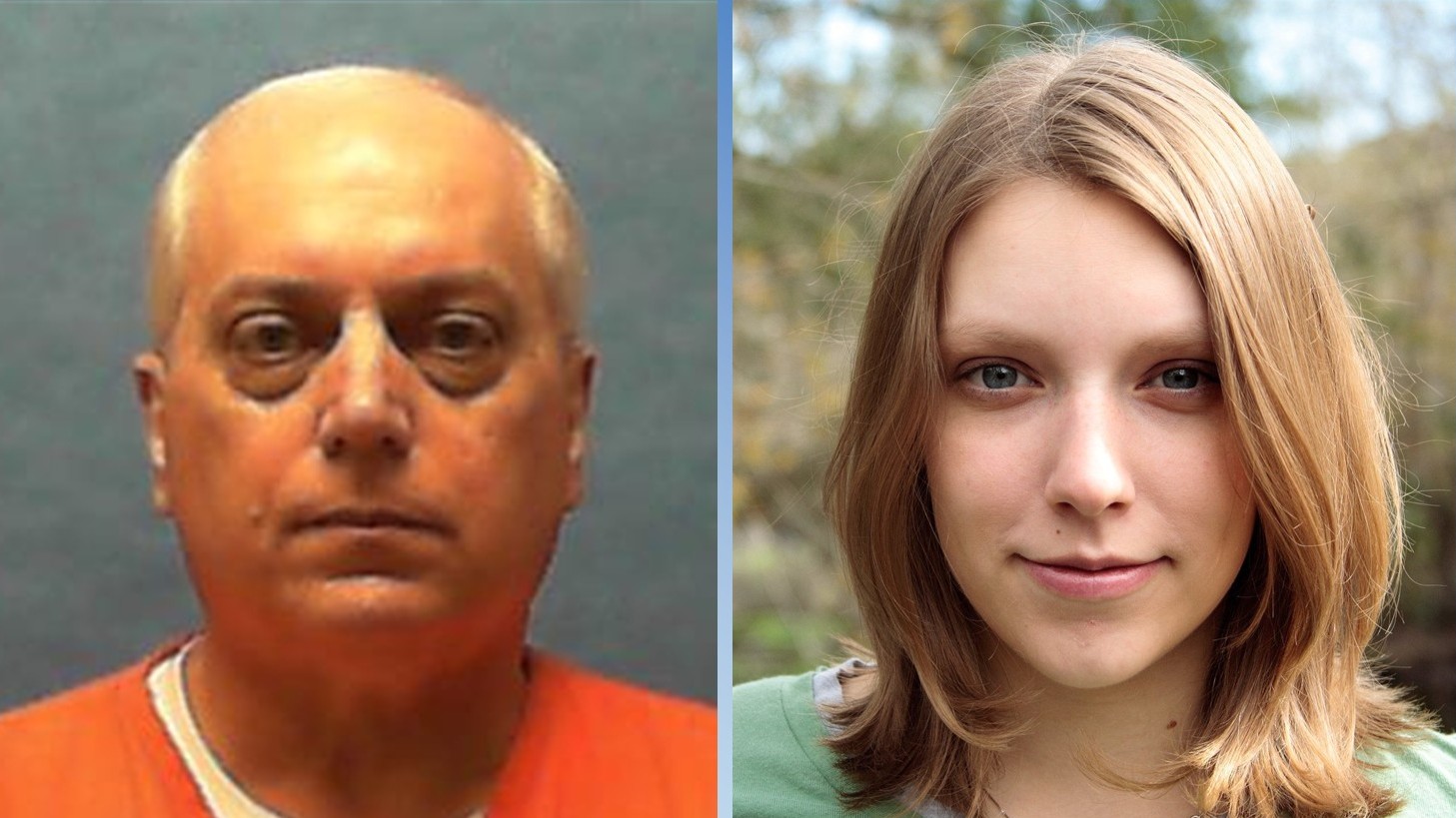
The final gurney straps were pulled taut across Chadwick Willacy’s chest at precisely 6:00 p. m. on Tuesday, as the fluorescent lights of Florida State Prison’s death chamber hummed over a scene thirty-six years in the making.
The man who had methodically bound, doused, and incinerated his neighbor Marla Sather in 1990 turned his head toward the observation glass, his eyes scanning the faces of the witnesses who had waited decades for this moment. “I never killed my friend,” he declared, his voice carrying no tremor. “This is not justice.”
 The defiant final statement hung in the air as the lethal chemicals began their flow, leaving the room in stunned silence before the medical examiner pronounced death at 6:12 p. m.
The execution, carried out under the watchful protocol of the Florida Department of Corrections, brought a definitive close to a legal odyssey that had consumed three decades and tested the very limits of the American appellate system. Willacy, 58, had spent more than half his life on death row, his case weaving through ten different governors’ administrations and producing a thicket of legal precedents regarding what constitutes “heinous, atrocious, or cruel” punishment. But for the family of Marla Sather, the woman who was still breathing when he ignited the gasoline that turned her home into a 2,000-degree furnace, the execution was not a conclusion—it was the final chapter of a horror story that began on a quiet lunch break in Palm Bay.
To understand the weight of Willacy’s last words, one must travel back to March 30, 1990, when a routine midday meal became the setting for one of Brevard County’s most meticulously reconstructed murders. Marla Sather, a working professional, left her office at exactly noon, driving the short distance to her home on Juanita Circle with no inkling that her neighbor had already breached her sanctuary. Willacy, then a 22-year-old with a history of petty crime, had entered through a rear window earlier that morning, spending hours methodically gathering VCRs, jewelry, and cash in the belief that the house would remain empty until evening.
When Sather turned her key in the front door at 12:15 p. m. , the burglary transformed instantaneously into a homicide.
Rather than fleeing, Willacy froze in the living room, waiting for the moment of entry. As Sather stepped across the threshold, he struck her with a heavy fan motor, fracturing her skull and sending her crashing to the floor. She was incapacitated but alive, her body twitching as he reached for a roll of silver duct tape and a telephone cord.
The robbery was over; the disposal of a witness had begun. Willacy dragged the bound, bleeding woman into the master bedroom, where forensic evidence later confirmed she was still breathing with a regular pulse despite the severity of her head trauma. He then made his way to the garage, retrieving a red plastic container filled with gasoline—not merely splashing the fuel, but systematically spraying the carpets, bedding, and Sather’s clothing in a calculated effort to obliterate all physical evidence and the sole person who could identify him.
The strike of a single match ignited the vapors, transforming the bedroom into an inferno within minutes. As black smoke began to curl into the Florida sky and neighbors gathered on the street, Willacy slipped back to his adjacent home to clean himself, scrubbing soot from his skin and changing his clothes. He then returned to the sidewalk, positioning himself among the crowd of onlookers watching the fire crews arrive, playing the role of a concerned neighbor with Oscar-worthy conviction.
He even offered detailed descriptions of a suspicious truck he claimed to have seen in the area, weaving a narrative of misdirection that would later be dissected by prosecutors as a hallmark of psychopathic behavior.
But the gasoline was already beginning to talk, and the digital footprint of a dead woman’s ATM card would soon shatter his alibi. At 1:30 p. m.
 , less than an hour after the fire was reported, Sather’s bank card was inserted into a machine at a local financial institution. Surveillance cameras captured a young man in a distinctive cap and dark jacket withdrawing several hundred dollars. Forensic accountants tracked the card to a nearby shopping center, where the same individual purchased new clothing and sneakers, discarding his soot-stained garments in a dumpster.
By 4:00 p. m. , Willacy had returned to the crime scene, mingling with the victim’s grieving family and offering his assistance to police investigators—a gesture that would later be described by the prosecution as the height of cold-blooded audacity.
The ATM footage provided a crucial lead, but the most damning evidence was microscopic. During a search of Willacy’s home, investigators confiscated a pair of Nike sneakers hidden in a closet. To the naked eye, they appeared clean, but forensic experts discovered minute glass shards embedded in the rubber soles.
The chemical composition of those fragments matched perfectly with the broken glass from the window Willacy had used to enter Sather’s home. Furthermore, trace amounts of soot were found in the shoe’s stitching, matching the carbon signature of the Sather house fire. The medical examiner’s report delivered the final blow: soot was present in Marla Sather’s lungs and trachea, proving she was alive and breathing when the fire was ignited.
This single fact elevated the crime from a botched burglary to an act of prolonged torture, a distinction that would become the cornerstone of the state’s case for the death penalty.
Willacy’s defense team argued that the glass fragments came from a broken bottle, but the scientific evidence was irrefutable. The case became a landmark in forensic science, demonstrating how trace element analysis could bridge the gap between circumstantial evidence and a conviction. In the hours following the discovery of Sather’s body, Willacy had maintained his facade of a grief-stricken neighbor, engaging in conversations with the victim’s family and expressing shock at the tragedy.
But investigators had already noted inconsistencies in his story. While others appeared genuinely distraught, Willacy’s description of the suspicious truck was overly detailed—a common trait in deceptive statements. He even attempted to console Marla’s husband, a move the prosecution later cited as the ultimate example of sociopathic behavior.
The mask began to crack when Willacy was asked to provide a voluntary statement at the police station. His confidence wavered as he was confronted with the timeline of his movements, unable to explain his whereabouts during the period when the ATM card was used. In the eyes of the law, the friendly neighbor was transforming into a calculating killer.
 He was first sentenced to death in 1991, but the Florida courtroom became his second home for the next three decades. The American legal system was pushed to its limits with a barrage of appeals targeting everything from jury instructions to the reliability of arson forensics. In 1994, the Florida Supreme Court overturned his death sentence, citing errors in the penalty phase.
A second jury re-imposed the death penalty in 1995, but the litigation did not end there.
For years, his defense team argued that the aggravating circumstance of “heinous, atrocious, or cruel” was misapplied, claiming that Marla was unconscious before the fire began. However, the presence of soot in her trachea remained an immutable forensic fact. As the Sather family waited through the administrations of ten different governors and dozens of scheduled execution dates that were stayed, Willacy’s case became a symbol of the death row phenomenon—the psychological and legal strain of indefinite incarceration.
The legal battles focused on whether the perception of imminent death, specifically the terror of being bound while accelerant was poured, constituted a level of cruelty warranting the ultimate punishment.
On the morning of April 21, 2026, the decades of legal maneuvering reached their decisive end. Willacy was transferred to the death watch cell, a small, heavily secured room located just a few meters from the execution chamber. According to Florida Department of Corrections protocol, he was allowed a final visit with his legal team and spiritual advisor.
At 10:00 a. m. , he requested his last meal: a steak, french fries, and a fresh salad.
He ate in silence, a stark contrast to the media frenzy gathering outside the prison gates. As his defense filed one final desperate petition to the U. S.
Supreme Court for a stay of execution, the prison staff began their medical preparations, checking IV lines and verifying the chemicals. The 30-year wait had shrunk to mere minutes.
 At 6:00 p. m. , the curtain was raised on the witness room, revealing the fluorescent-lit chamber.
Willacy was strapped to the execution gurney, his arms extended. When the prison warden asked if he had any final words, Willacy turned his head toward the glass. His voice did not waver.
He looked at the witnesses and made his defiant final statement. Following the statement, the execution team began the three-drug protocol. The first sedative took effect, followed by a muscle relaxant, and finally the drug that stopped his heart.
At 6:12 p. m. , the doctor pronounced him dead.
For the Sather family, this was the end of a 36-year wait for justice. For Willacy, it was the end of a life marked by one violent hour in 1990 and three decades of denial.
In the days following the execution, the case resurfaced in legal circles as a prime example of aggravating circumstances in capital punishment law. The state used the Willacy case to establish a precedent that the awareness of one’s impending death, specifically the horror of being restrained while an accelerant is poured, constitutes a level of cruelty that demands the maximum penalty. For the forensic community, the Nike shoe evidence became a textbook example of how microscopic trace analysis can bridge the gap between circumstantial evidence and conviction.
The execution of Chadwick Willacy did not merely conclude a sentence; it closed a chapter in the history of forensic science in Brevard County, leaving behind a legacy of scientific rigor and a family finally able to mourn without the shadow of an unresolved appeal hanging over their heads. The state of Florida, having exhausted every legal avenue, had delivered its final verdict: the neighbor who burned his neighbor alive had met the same finality he had so cruelly imposed.