The Clover Boys Tried To Kill Each Other For Content

A violent feud within the influential streaming collective known as the Clover Boys has escalated to the brink of physical harm, with members allegedly turning on each other in a disturbing pursuit of viral content, exposing a toxic culture where boundaries are repeatedly shattered under the guise of entertainment. The turmoil erupted after Khalil, a member of the group, poured spoiled milk onto the bed of his housemate Dez while Dez was away from their shared residence. The act, which Khalil later defended as “just content” and a joke encouraged by a chat message from fellow streamer Kai Cenat, triggered a chain reaction of aggression, property destruction, and a physical confrontation that has left the online community questioning the limits of so-called war content. Dez returned home to find his bed saturated with sour milk, a violation that he described not merely as a prank but as a deep invasion of his personal safe space. In a heated exchange captured on stream, Dez confronted Khalil, who repeatedly dismissed the complaint by saying “it’s just a joke.” The situation quickly spiraled when other members attempted to discipline Khalil by tying him up and pouring water on him, a move intended to demonstrate the hypocrisy of his actions. Khalil, refusing to accept responsibility, retaliated by smashing the computer of Rakei, the youngest member of the group, who had participated in the water-pouring. The destruction of the PC, which Khalil relies on for his streaming career, marked a dangerous escalation from prank to outright vandalism. Witnesses reported that Khalil then physically fought Rakei, a minor, rather than confronting the adults who had orchestrated the lesson. The incident has ignited a broader debate about what commentators are calling “content brain” – a state where streamers and influencers believe that labeling any behavior as “content” grants them immunity from social norms and personal accountability. Critics argue that the Clover Boys, like many similar groups, are feeding a dangerous culture that glamorizes aggression and disregards the well-being of participants, especially young audiences who emulate these stunts. Dez, in a separate emotional outburst captured on stream, revealed deeper underlying tensions, claiming he had been unable to return to the house for two months due to previous conflicts and that his personal property, including cameras and microphones, had been stolen during his absence. He described the environment as a “simulation hell,” where reality and performance blur to the point of psychological distress. The group’s dynamic has been described as a “free-for-all prank war” where each member feels compelled to one-up the last spectacle to satisfy a faceless chat audience. This relentless pursuit of engagement has led to boundary-crossing behaviors that experts say normalize violence and disrespect. The Clover Boys’ content, which often involves ski masks and simulated break-ins, has been criticized for influencing children to mimic dangerous acts without understanding the consequences. Khalil later posted a screenshot of a FaceTime call with Rakei, claiming they had made up, but many observers see this as a hollow gesture. He also offered to buy new sheets for Dez, but refused to acknowledge the core issue: the violation of personal space and the weaponization of “content” to justify disrespect. In a statement, Khalil said, “I feel like a fool for someone to get that mad over sheets is not a never on content,” minimizing Dez’s anger and further demonstrating a lack of empathy. This is not an isolated incident. The rise of war content among streamers has created a toxic ecosystem where property damage, physical fights, and emotional manipulation are monetized for views. The Clover Boys drama highlights a systemic problem: without clear boundaries and open communication, content houses become pressure cookers of resentment and retaliation. As law enforcement has not been involved, the matter remains an internal dispute, but the psychological toll on participants is evident. Dez expressed feeling trapped in a “fake world,” questioning his own reality after months of mistreatment. His breakdown reflects a growing concern among mental health professionals about the impact of living under constant surveillance and performance pressure. The streaming community now watches to see whether the Clover Boys can reconcile or if this marks the beginning of the group’s collapse. For now, the message from critics is clear: just because you say it’s content does not make it acceptable. The line between prank and harm has been crossed, and the consequences are unfolding in real time.

28 July 2026

Tylil Glazed Lebron James So Hard That He Passed Out

The Philadelphia 76ers have officially secured the services of LeBron James on a veteran minimum deal, and the internet has erupted in a frenzy of fandom, memes, and accusations of the highest order of “glazing.” In a live stream that has already gone viral, content creator Tylil, known for his unpredictable team allegiances, experienced what many are calling a full-blown meltdown of adoration, leading to a chaotic outpouring of declarations, jersey reveals, and a baffling display of preparedness that has left viewers stunned. The scene unfolded moments after the news broke that James would be taking his talents to the City of Brotherly Love. Within seconds, Tylil, who previously claimed to be a die-hard Knicks fan after their playoff run, was seen on camera wearing a brand new Philadelphia 76ers jersey with James’ number 23 on the back. “WHEREVER LEBRON GO, I GO,” he screamed, pacing erratically. “LEBRON GO TO PHILLY, I GO TO PHILLY. LEBRON GO TO MARS, I GO TO MARS.” The stream quickly descended into a cacophony of affirmations, with Tylil insisting he has been a Sixers fan since childhood, despite just weeks ago representing the New York Knicks. The most shocking revelation came when Tylil admitted to having a collection of pre-made jerseys for LeBron on every conceivable team. “I got a Philadelphia 76ers 23 James jersey,” he declared, pulling it from a pile. “I have a Minnesota Timberwolves 23 James jersey. I have a Golden State Warriors 23 James jersey. I have a Toronto Raptors 23 James jersey.” This admission has sparked a wave of disbelief across social media, with fans questioning how he could possibly have anticipated such a move. Critics are calling it the ultimate act of “Bron-sexuality,” a term coined to describe excessive devotion to LeBron James. The hysteria did not stop with Tylil. Fellow content creator Cash Nasty, a self-proclaimed OG LeBron glazer, also took to streaming to celebrate the signing. Dressed in a full 76ers uniform, Cash screamed, “PHILLY! WHAT’S GOOD? LADIES AND GENTLEMEN, LEBRON IS NOW A PART OF THE PHILADELPHIA 76ERS.” He boasted that LeBron took a massive pay cut, signing for the veteran minimum, and claimed the move was a pure championship pursuit. Cash has a well-documented history of worshipping James, once vowing never to wash his hand after meeting him. But the online community is sharply divided. While some applaud LeBron’s decision to leave the Lakers and join a contender, others mock the bandwagon nature of his new fans. Former Sixers star Andre Iguodala even weighed in, defending Tylil by stating, “Wherever his father go, he’s a fan of him, and that’s okay.” This comment has added a surreal, almost humorous layer to the drama, as Iguodala played along with the father-son dynamic between himself, LeBron, and the obsessive fan. Amidst the celebration, there is growing skepticism about the 76ers’ chances. Critics point to potential chemistry issues with Joel Embiid, Tyrese Maxey, and Jaylen Brown. One observer noted, “I think it’s too many egos involved. Tyrese Maxey doesn’t want to take a backseat. Joel Embiid doesn’t want to take a backseat. LeBron doesn’t want to take a backseat.” The Eastern Conference is stacked, with the defending champion Celtics, the reloaded Knicks, and rising teams like the Pistons and Magic. Many believe James, at 42, cannot carry the load he once did. Tylil’s transformation has also drawn scrutiny. Just months ago, he was seen celebrating the Knicks’ playoff run, claiming lifelong loyalty. Now, he has pivoted to Philadelphia, his third team allegiance in a single year. One Twitter user sarcastically noted, “This is exactly why I call him a LARPer. He had the Celtics gear during a stream with Jaylen Brown, and now Sixers gear. It’s just content.” Tylil himself admitted on stream, “It’s just content. Content boys. The y’all content for our content.” This meta acknowledgment has only fueled the fire. The city of Philadelphia is fully embracing the moment. The governor has officially declared July 24th, 2026 as LeBron James Day, rolling out the red carpet for the four-time champion. The 76ers’ front office is expected to hold a press conference later today, where James will likely address his decision. For now, the basketball world is watching the bizarre spectacle of grown men sobbing over a jersey, with one fan running down the street holding a piece of fried chicken. As one commenter put it, “I’ve been meat riding LeBron since 2003. Y’all new need to find another meat to ride.”

28 July 2026

Chrisean Rock Killed Her Baby Daddy For Trolling Her?

Homicide detectives are now actively investigating controversial social media personality Chrisean Rock in connection with the murder of Ronnie, the man who claimed to be the father of her child, according to multiple sources and a newly released video that has sent shockwaves through the online community. The development comes just days after Rock announced she was leaving the country, and as a man claiming to be a friend of the victim said police have approached him with questions about Rock’s potential involvement. The murder of Ronnie, whose last name has not been publicly confirmed, occurred under what law enforcement sources describe as highly suspicious circumstances. He was shot multiple times, reportedly ten times, in a car outside his home in Baltimore. The attack took place just one week before a scheduled court hearing that would have mandated a paternity test to determine whether Ronnie was indeed the father of Chrisean Rock’s child, a baby she has claimed is fathered by rapper Blueface. Video footage obtained by this outlet shows a chaotic scene at a mall where Ronnie confronted Chrisean Rock, demanding a paternity test. In the clip, Rock can be heard shouting at mall security and police, saying, “Call police ass because of her. Excuse me. I need you out the mall.” The confrontation escalated as Ronnie insisted the child was his, while Rock repeatedly called for authorities. “You weird as [expletive],” Ronnie is heard saying. “What you want to do? I’m calling the cop.” The encounter ended with Rock being escorted out. That court-ordered paternity test never happened. Ronnie was gunned down days before the hearing. Now, a wave of speculation and leaked information has turned the spotlight squarely on Chrisean Rock In a video that has gone viral, a man who identified himself as a close associate of Ronnie claimed that Baltimore homicide detectives have already contacted him. “Homicide detectives came knocking on my door yesterday. And I’m scheduled to talk to them Monday,” he said. “Your girl might be in trouble, man. I ain’t going to say too much.” The same man, whose identity is being withheld pending an official statement, told the camera that police are asking repeatedly about Rock. “They want to talk to me. They see through what I’m doing on the internet. They still want to talk to me,” he said. The implication is clear: law enforcement is building a case that Rock may have orchestrated, or at least had knowledge of, the murder. This comes after Rock’s own biological sister appeared on a podcast hosted by Jason Lee and strongly hinted at Rock’s involvement. When asked about Ronnie’s murder, the sister said, “It don’t look too good for certain people that we know. I’ll just leave it at that.” She added, “He ran up on Croan when she was out in public. He did. And then he had a paternity test coming up or something. And then it was all online. Now that’s suspicious though. You ran up on her. She called the police and then you get killed. You get killed shortly before the paternity test. That’s suspicious.” Blueface, who has repeatedly denied being the father of Rock’s child, also weighed in during his own interview with the same podcast. He revealed that Rock and Ronnie were on the phone the night he died. Blueface described Rock as a “setup artist” who has a history of dropping addresses and creating dangerous situations. “Somebody comes out and says, ‘Hey, before this person died, they called me and this and that.’ And that’s just kind of a red flag,” Blueface said. “She’s known to give addresses and do things in the spur of the moment. Be very impulsive.” When confronted directly about the allegations, Chrisean Rock has offered contradictory statements. In one clip, she said, “When I cut off Ronnie, I just start seeing this side of him. He wanted clout chase for him. So, you know, he did paid interviews. He tried to push his music, all type of stuff. He seen how Blueface ran a circus, so he tried to run his own and then ran himself into a grave.” She quickly added, “That had nothing to do with me. He was already beefing with people in the streets because of what he did.” But the timing and circumstances have fueled a firestorm of suspicion. Sources close to the investigation confirm that a hit was allegedly placed on Ronnie days before his death. “Someone put some money on his head,” a neighbor reportedly said. “Somebody wanted him dead.” The murder itself was starkly efficient. The assailant pulled up behind Ronnie’s car, approached quickly, and fired ten shots before fleeing. No one checked on the victim for at least ten minutes, a delay that likely cost any chance of survival. The online commentary has been merciless. One viral reaction video described Chrisean Rock’s behavior as “crackhead” energy, noting that she continued to smoke weed and drink alcohol during her pregnancy. “We literally watched her in 4K do drugs while she was pregnant and ruin a child’s developmental years,” the commentator said. “She’s an evil human being. If she doesn’t give a [expletive] enough for her own child, why would I think she cares enough to not get somebody smoked?” Legal experts say that while there is no direct evidence yet tying Rock to the murder, the circumstantial case is growing. “You have a motive—avoiding a paternity test that would publicly confirm a father who was a source of public embarrassment,” said a former prosecutor not involved in the case. “You have a timeline—the murder happening days before the hearing. … Read more

28 July 2026

D4vd Had Sex Videos In His Phone That Are Very Disturbing

A preliminary hearing for musician David “D4vd” Burke has taken a deeply disturbing turn, with testimony revealing that investigators recovered sexually explicit videos and images of the minor victim directly from his phone. The graphic details, disclosed in open court on Friday, have painted a harrowing picture of abuse, manipulation, and extreme violence leading up to the death of 13-year-old Celeste. Burke, 21, stands accused of the murder and dismemberment of Celeste, whose remains were discovered last year following an extensive search. The preliminary hearing is designed to determine if enough evidence exists to proceed to trial, and the testimony provided so far has laid bare a case filled with overwhelming digital and forensic evidence. LAPD Detective Corey Farrell took the stand and delivered some of the most shocking testimony of the day. He confirmed that an examination of Burke’s phone and iCloud accounts unearthed a massive trove of disturbing material, including explicit photographs and videos showing Burke engaging in sexual acts with the minor. Farrell testified that the lock screen on Burke’s phone was an image of the two embracing while topless. This revelation caused the victim’s parents to quietly leave the courtroom in visible distress, with her mother audibly sobbing as they exited. The prosecutor was heard apologizing to the family as they walked past. The detective detailed that the earliest communication between Burke and Celeste was recovered from August 2022, when the victim was just 11 years old. The messages echoed the photographs and documented discussions about their relationship, plans to meet, travel, and their future together. The court heard that the messages included conversations about pregnancy concerns, emergency contraception, and abortion. Farrell testified that investigators confirmed that Celeste had undergone at least one abortion in January of 2024, a procedure the prosecution argues was a direct result of Burke’s predatory sexual abuse. Prosecutors detailed a plan referred to as “Operation Awesome” in the text messages, which involved Celeste running away from her family to live with Burke. The messages showed Burke promising to take her out of the country and get married in Italy, and investigators confirmed he had booked a hotel room for them in Las Vegas. The text exchanges read aloud in court revealed a profoundly manipulative dynamic. In one message, Celeste expressed confusion about her pregnancy, asking, “What if the first abortion didn’t work?” highlighting her extreme youth and vulnerability. Burke allegedly dismissed her concerns in crude terms. In another exchange, Celeste expressed deep regret, telling Burke, “I killed my kid for you. I do anything to have it back.” Burke’s cold response framed her feelings as selfish, demonstrating a complete disregard for her emotional and physical well-being. The messages showed a pattern of control and coercion. When Celeste expressed pain after sexual encounters, Burke was dismissive. The texts revealed a relationship where the power imbalance was extreme. Burke was an adult man while Celeste was a child, and the evidence suggests he exploited this imbalance ruthlessly until the very end. Earlier in the day, the court heard harrowing testimony from Medical Examiner Dr. Grant Ho regarding the condition of Celeste’s remains. Ho stated that the body was so badly decomposed that the odor could be detected from the hallway outside the autopsy room, making it impossible to determine the exact time of death. Dr. Ho detailed extensive injuries consistent with a violent assault and subsequent dismemberment. He testified that the remains showed multiple cut sites on the arms and legs, with cuts extending entirely through the bone. The smooth cut surfaces were consistent with the use of a power cutting tool, such as a saw or chainsaw. The medical examiner noted the presence of tiny blue fragments embedded in the cut surfaces of the bones. These fragments were collected for analysis. The prosecution tied this evidence to a blue inflatable pool and chainsaws that Burke allegedly purchased under a fake name to use during the dismemberment process. Dr. Ho ultimately ruled Celeste’s death a homicide, citing multiple penetrating injuries to the torso. He described life-threatening stab wounds to the chest and liver that would have caused catastrophic internal bleeding. He stated that the manner of death reflected a public health classification for a death caused by another person. Ho specified that the liver wound was consistent with a sharp force injury, traveling front to back, and measured approximately 1. 5 inches deep. He cautioned that due to decomposition, the wound may have been even deeper originally. He testified that both the chest wound and liver injury were independently life-threatening. The medical examiner explained that decomposition caused organs to soften, lose weight, and change color over time, which explained Celeste’s weight of 71 pounds at the time of autopsy. He also noted that routine toxicology testing was performed on liver tissue, as advanced decomposition had left no blood to analyze. During cross-examination, the defense attorney attempted to suggest that the medical evidence alone could not rule out alternative scenarios, including whether Celeste may have inflicted the fatal wounds herself. This line of questioning appeared aimed at shifting blame away from Burke and introducing doubt about the circumstances. Dr. Ho pushed back against the suggestion, stating that there was no evidence of hesitation marks typically found in self-inflicted wounds. He also noted the physical implausibility of someone dismembering themselves with a power saw, rendering the suicide theory speculative at best. Throughout the graphic testimony, which included autopsy photographs displayed on courtroom monitors, Burke remained largely expressionless. Observers noted he appeared more conversational with his attorneys than on previous days, at one point greeting the judge with a brief “Morning, Your Honor” before proceedings began. The prosecution also presented evidence that Burke’s phone contained numerous personal items tying him to the device, including photographs of his driver’s license, passport, selfies, a fake ID, and banking information. The digital footprint painted a clear picture of ownership and usage. Specific autopsy diagrams were shown to the court, detailing the dismemberment sites on each leg. Dr. Ho testified that the cuts occurred at different heights on each leg, a pattern consistent with someone dismembering one leg at a time rather than making one straight cut across both. The court was shown a series of photographs recovered from the crime scene, including images of Celeste’s right index finger bearing a “shush” tattoo, and the amputated fingers from her left hand. Audible gasps could be heard from the gallery as these graphic images appeared on courtroom monitors. Dr. Ho described extensive decomposition, skin discoloration, multiple dismembered sites, and significant skin slippage. He noted that portions of the face had unwritten and partial skeletonization, an eye was absent, soft tissue had liquefied, and insect activity, including small larva, was present. The medical examiner clarified that he observed wire bonding to Celeste’s upper and lower teeth, which he referred to as braces, but stated he could not detail anything further as he is not a dentist. This detail added to the humanizing portrait of the victim as a young teenager. Toxicology testing detected only a trace amount of ethanol in the liver tissue, which Dr. Ho said could be attributed to postmortem decomposition rather than alcohol consumption. Benzodiazepine was also detected, while testing for methamphetamine was inconclusive. Ho testified that none of the toxicology findings contributed to her death. The defense questioned Ho extensively about the limitations created by the condition of the remains. He agreed that decomposition prevented him from determining evidence of a struggle before Celeste’s death, and that the condition of the remains made it impossible to determine whether a major artery had been severed. Despite these limitations, the prosecution maintains that the totality of the evidence, including the digital trail, the DNA, the forensic pathology, and the physical evidence at the scene, provides an overwhelming case against Burke. The links between the blue fragments found on the bones and the pool purchased by Burke are considered a key forensic connection. Legal analysts note that the evidence regarding the phone content alone is profoundly damaging to the defense. Even without the murder charges, the existence of explicit content involving a minor is a severe felony. The combination of digital evidence and forensic pathology presents a formidable case for the prosecution. The court heard that the final message between Burke and Celeste was dated April 23rd, the day before prosecutors say he killed her. The prosecution alleges that Burke lured her to his home on April 24th, the very day his album was released, in a calculated act of violence. Evidence was presented that after Celeste’s death, Burke canceled his tour but showed no visible signs of distress. He was seen playing video games, including Fortnite, and allegedly tweeted the word “decay” five days after the murder, a detail that the prosecution highlighted as demonstrating a callous and remorseless state of mind. The defense lawyer’s questioning also aimed at the possibility that Celeste may have taken her own life, despite the overwhelming evidence of dismemberment. Dr. Ho reiterated that the injuries to the chest and liver were life-threatening and could not have been inflicted in the manner suggested by the defense given the state of the evidence. The preliminary hearing is expected to continue, with more witnesses likely to be called. The judge will ultimately decide if the case proceeds to trial. Given the gravity and volume of evidence presented, legal experts anticipate that Burke will be ordered to stand trial for the murder of Celeste. The victim’s family has been present throughout the proceedings, visibly struggling to hear the graphic details of their daughter’s final moments. Their attorney has stated that they are seeking justice and hoping that the legal process will hold Burke fully accountable for his actions. The case has drawn widespread attention due to Burke’s public profile as a musician and the extreme nature of the allegations. The proceedings serve as a stark reminder of the dangers of online predators and the tragic consequences of child exploitation. As the court adjourned for the day, there was a sense of heavy gravity in the room. The testimony provided a window into a world of manipulation and violence that ultimately cost a young girl her life. The pursuit of justice for Celeste continues. Burke remains held without bail. The specific charges against him include murder with special circumstances, which in California can carry the possibility of life in prison without parole or the death penalty. The prosecution has not yet announced whether they will seek the death penalty in this case.
28 July 2026

Nolan Wells Murder Was Recorded & The Killers Are Panicking

The 911 call that investigators hoped would clarify the death of 18-year-old Nolan Wells has instead become the linchpin of a deepening criminal probe, with audio evidence capturing what appears to be panicked voices discussing a dead body and efforts to conceal evidence—sparking accusations that the killers are now in a desperate scramble. The recording, released by the Mississippi Department of Marine Resources, captures the moments before the official emergency dispatcher answers. In those unguarded seconds, voices are heard saying, “He’s dead,” “Is he dead?” and “Check his chest.” These utterances, according to legal experts, are far from the natural reactions of a boating accident. They suggest that those on board knew Wells had already died before help was even called. The transcript of the call, which has been dissected across social media and news outlets, reveals a chilling sequence. After a young male reports a sinking boat, the dispatcher asks for the number of adults on board. The response is evasive: “Zero adults,” then “Nobody here is over the age of 21.” But the most damning moment comes when a male voice is heard saying, “Come on, let’s move the body,” followed by what sounds like a heavy object being dragged. The release of this audio has sent shockwaves through the case, which has already drawn national attention. Stephen A. Smith, the ESPN commentator not known for criticizing white America, broke his usual silence to declare that Wells’ death was “very, very suspicious” and that “something bad happened to Nolan Wells.” His comments, made on his own platform, have been seized upon by the Wells family and their attorney, Benjamin Crump, as a validation of their long-held fears. “When Stephen A. Smith is telling the truth about white folks, you know you’re on the wrong side of history,” said one commentator in the video transcript that has gone viral. The sentiment echoes a growing public outrage that the narrative surrounding Wells’ death has been manipulated by a group of friends and a grandfather who allegedly tried to cover up the crime. The panic among the alleged killers is palpable. In the 911 call, after the boat was reported sinking, a grandfather—identified as Jerry Anderson—contacted the Coast Guard captain directly to say “they don’t need any help.” This intervention came while the teens were still pleading for rescue. The boat, which was supposedly taking on water, managed to make it back to shore without assistance, a fact that investigators find deeply implausible. Nolan Wells’ body was later found in the same location from which the distress call was made. The family’s attorney, Benjamin Crump, has pointed out that the three white teenagers who were with Wells have given contradictory statements. They initially claimed Wells never boarded the boat, yet the 911 call clearly features his name being discussed. “Why are they saying ‘Is he dead?’ if Nolan was never with them?” Crump asked in a press conference. The response from some law enforcement figures, notably Officer Tatum, has been to accuse the family of “race hustling.” Tatum has publicly challenged Crump, yet in private conversations—according to sources cited in the video transcript—Tatum has admitted that “something bad could have happened.” This duplicity has only fueled the belief that a cover-up is underway. The panic is not just among the friends. The grandfather’s actions—calling the captain to cancel help, then claiming the boat was fine—suggest a coordinated effort to mislead authorities. As one social media commentator noted, “How does a boat go from sinking to perfectly fine in five minutes?” The answer, many fear, is that the emergency call was a ruse to disguise a murder. Nolan Wells’ family has maintained that they do not know who killed their son, but they insist it was not an accident. “All they ever said was my son ended up dead and it looks suspicious, and they want to figure out what the hell is going on,” a supporter said in the video. “I don’t see the problem with that.” The national attention from figures like Stephen A. Smith, Tyler Perry (who paid for the funeral), Spike Lee, and Terrell Owens has placed immense pressure on Mississippi authorities to conduct a transparent investigation. The case has now been officially classified as a “suspicious death,” though no arrests have been made. The killers, if the audio evidence is to be believed, are now trapped. The recording that they thought would not be captured—because they did not realize the phone was already recording before the operator answered—has become their undoing. As one pundit put it, “You know something is bad when you have Stephen A. Smith telling the truth about white folks.” In the coming days, more evidence is expected to emerge. The family is calling for the friends to be re-interviewed under oath and for the grandfather to be questioned about his role. The panic is real, and the public is watching. This is not just a drowning in Mississippi—it is a test of whether justice can prevail when power, race, and a single incriminating audio file collide.

28 July 2026

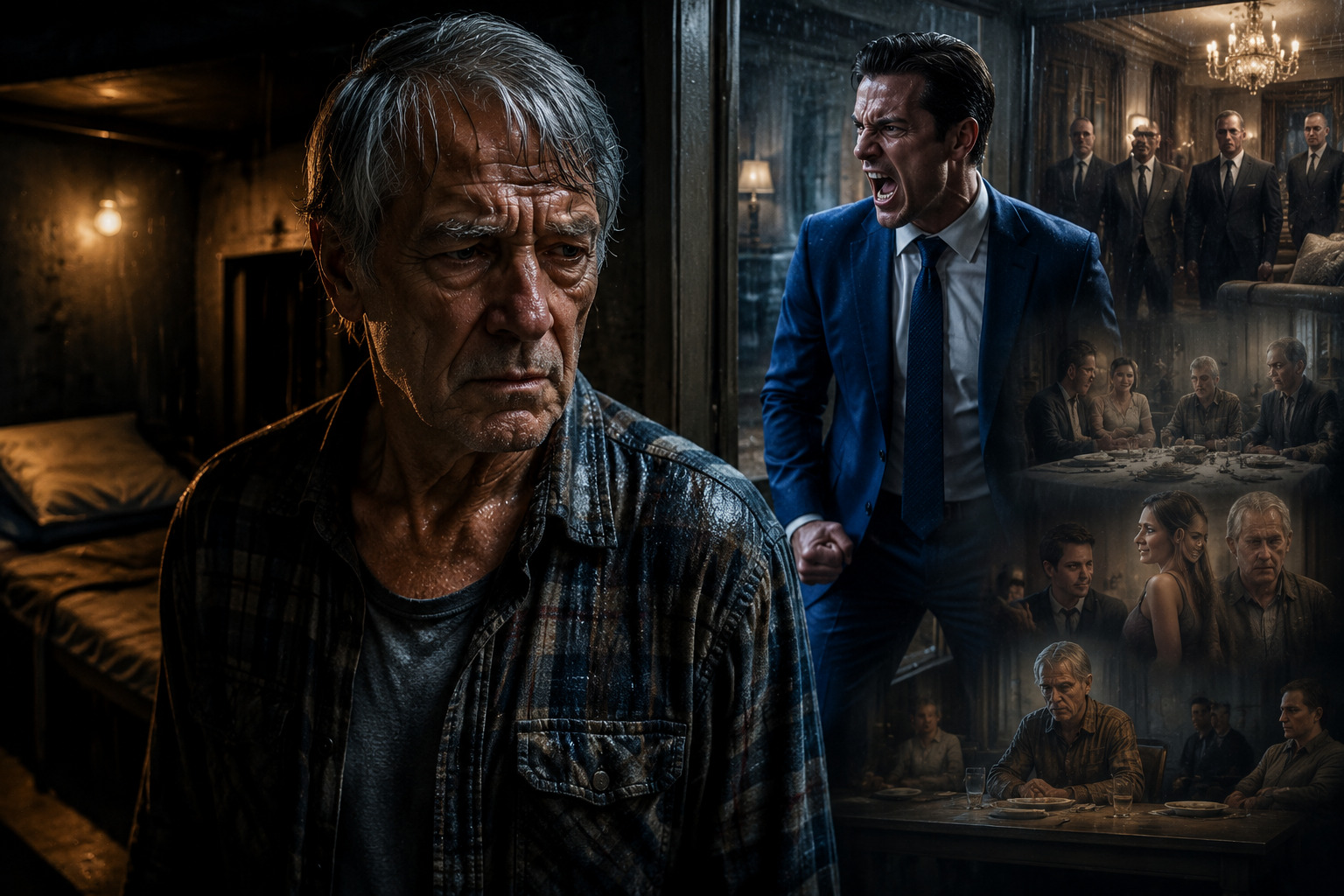
Mein Sohn schüttete mir Wasser ins Gesicht, weil ich mehr verlangte… daraufhin leerte ich sein Konto und verließ das Land

Der alte Mann, den sein eigener Sohn vor allen Gästen erniedrigte – doch niemand wusste, dass er 4,5 Millionen Dollar kontrollierte Teil 1 – Der Moment, in dem William Carter aufhörte, ein Vater zu sein Der Regen kam an diesem Dienstagabend im November plötzlich über Seattle. Vom Lake Michigan her zogen dunkle Wolken auf, der … Read more

28 July 2026

Detroit Rapper Was the Target… But His Cameraman Paid the Price!

A 27-year-old cameraman is dead and a Detroit rapper is at the center of a widening investigation after a brazen shooting outside a music studio early Friday morning, a tragedy that authorities say was fueled by a reckless social media post that broadcast the victim’s location in real time. The shooting occurred around 2 a. m. July 17, 2026, outside Sanctuary Studios LLC on Myers Road near Eight Mile Road in Oak Park, Michigan. Police say two vehicles were struck by gunfire and one man, the 27-year-old cameraman, was killed. He has not been publicly identified, but sources confirm he was working with well-known independent Detroit rapper Demarius “GMO Stacks” Langston, 22. The incident unfolded after Langston reposted a video taken by the cameraman while the two were inside the victim’s car filming a music video. The post, which showed Langston in the driver’s seat and included a geotag, effectively broadcast their location to anyone watching. Investigators believe the perpetrators assumed Langston was still in the vehicle and opened fire, striking the cameraman instead. Langston, who has not released a public statement in the 17 hours since the shooting, was not injured. Police confirmed the deceased victim is five years older than the rapper. Family members of the cameraman are devastated, and the Oak Park community is in shock over a homicide in an area where violent crime is rare. “It’s traumatizing to be a business owner and have to put my life in danger, but also my customers,” said Amber George, owner of House of Bloom, a nearby business that relocated from Detroit after another shooting. “There’s never a reason to go get to that point. There are always other ways to resolve conflict.” Langston, who has been shot before and has been involved in multiple highly publicized feuds within Detroit’s rap scene, including a 2025 drive-by shooting that wounded fellow rapper Skilla Baby (Trevor Gardner), has a history that makes the attack unsurprising to those who follow the street-centered friction in the local hip-hop landscape. According to police, the rapper had reposted a video on his social media account showing himself inside the cameraman’s vehicle. Within hours, the vehicle was shot up. Langston was not present at the time of the shooting, but the victim, who owned the car and was helping with the music video, was killed execution-style. “It is a sad reality that the line between promoting your career and putting yourself or the people around you in danger has become thinner than ever,” said a source close to the investigation who asked not to be named because they are not authorized to speak publicly. “In today’s world, a simple photo, story or live can tell people exactly where you are. And for somebody looking for retaliation, that’s all they may need.” Langston, who raps under the name GMO Stacks (Get Money Official), rose to prominence in Detroit’s west side. He has been open about his troubled upbringing, saying in a 2022 interview that he was kicked out of school and began hustling at age eight. His music has been promoted by major artists such as Pooh Shiesty, Big 30 and Nardo Wick. But his career has been shadowed by violence. In 2025, Skilla Baby was the target of a drive-by shooting on Eight Mile Road in Redford. Langston was arrested in connection with that attack but later denied involvement, saying on TikTok that the beef was “internet stuff” and that he and Skilla Baby had shaken hands. Now, the violence has claimed an innocent bystander. The victim, a videographer who was simply trying to help an artist build his career, paid the ultimate price for being in the wrong place at the wrong time. Langston had reposted the video from inside the car, and the assailants allegedly assumed the rapper was still there. Oak Park police are actively investigating and have not identified any suspects. They are asking anyone with information to call the Oak Park Police Department. This killing underscores a dangerous trend: crew members, producers, photographers, videographers, managers and friends who are simply trying to help build an artist’s career are increasingly getting caught in violent situations they have nothing to do with. Sometimes all they are doing is filming a music video or documenting a moment. “If you are involved in real street beef, think twice before posting anything, let alone your location, especially in real time,” said a community activist who works with at-risk youth in Detroit. “A simple photo can tell people exactly where you are. For somebody looking for retaliation, that’s all they need.” Langston has not released a statement as of Friday evening. His social media accounts have been silent since the reposted video was taken down. Friends and associates have described him as “in shock” and “trying to process.” The victim’s identity remains withheld pending family notification. Police say they are offering support to his family and are committed to bringing the shooter to justice. Sanctuary Studios, a recording and video production facility that markets itself as a safe space for artists, has been left reeling. The staff released a brief statement saying they are cooperating with the investigation and that they have “always promoted peace and the end of gun violence.” “To see this happening so close to our front doors is devastating,” said Antonio “Big Tone” Hood, a producer and engineer at the studio. “It’s unfortunate that anyone died. I was really scared that one of my friends or co-workers was involved.” The shooting has reignited debates about the risks associated with the glamorization of street life in rap music. While many artists successfully separate their on-stage persona from their personal lives, others blur the lines, leading to real-world consequences. “Making it as a rapper is already one of the hardest things to do,” said the activist. “Millions chase that dream every day, but only a small percentage ever make a living from it. Then, after beating those odds, some artists find themselves dealing with another battle entirely. Now it’s not just rappers being affected. Photographers, videographers, managers, producers and even friends are getting caught.” The incident also serves as a reminder of the ethical responsibility that comes with a large online following. When a rapper with known beef reposts a location-tagged video, they are unwittingly putting everyone in that space at risk. “It’s a part of your job description to move smart if you’re in the streets,” said the source. “But for the people who are not in the streets but have jobs that put them around people who are, you have to be careful. It’s a very unfortunate situation.” No arrests have been made. Oak Park police are reviewing surveillance footage and social media posts to track the movements of the suspect vehicle. They are also looking into whether the shooting is connected to ongoing feuds involving Langston, Skilla Baby, and the Cash Gang crew. Langston has previously addressed rivalries with the Cash Gang in interviews and lyrics. He also had a falling out with former close friend YBN Lil Bro over a chain and pistol incident, though they later squashed the beef. Skilla Baby had mocked that incident in a diss track. But Friday morning’s violence shows that, for some, the beef is far from over. The community is grieving. A candlelight vigil is being planned for Sunday evening at the site of the shooting. Friends of the victim say he was a talented videographer who had dreams of making it in the music industry. “He was just helping someone out,” said one friend, who declined to give his name. “He didn’t deserve this. None of this is worth a life.” As police continue their investigation, the hip-hop community in Detroit is left to grapple with yet another senseless loss—this time not of a rapper, but of the person holding the camera. The question now: will anyone in the industry rethink how they post, or will it take another life before the message hits home?

28 July 2026

ATL Rapper Told The World He Had Accepted Death… 3 Weeks Before It Happened!

ATLANTA, GA – An Atlanta rapper who co-founded one of the city’s most influential independent labels has died, three weeks after he told the world he had made peace with his own mortality. Kurt Freeman, known professionally as Ali Boy, passed away on July 19, 2026, according to multiple reports. The cause of death has been linked to complications from kidney failure, a condition he had battled publicly after years of drinking lean laced with opioids to which he was unknowingly allergic. In an interview recorded just three weeks before his death, Freeman sat down with Big Bank, his longtime friend and the co-founder of Duct Tape Records. During that emotional conversation, Freeman spoke with startling clarity about his health struggles and his acceptance of whatever came next. “I be telling my mom, I say, ‘Mama, if I die now, I lived three lives. I don’t care. I’mma die still happy,’” Freeman said. The interview now reads as a prophetic farewell. Freeman had been open about his kidney failure for months. He revealed last year that he needed a transplant after years of consuming promethazine-codeine mixtures, commonly known as lean. “The whole time I was drinking the lean – I used to sell it, so I already had it – and the whole time I was allergic to opiates and didn’t know,” Freeman explained in a previous interview. “It damaged my kidney. It fucked my kidney up.” He underwent dialysis three times a week, but the damage was irreversible. The rapper’s life was marked by both street credibility and artistic ambition. Growing up in Edgewood Courts in Zone 6, Atlanta, Freeman started rapping at age nine and recording by ten. His early years were shaped by parents struggling with addiction, so he was raised by his grandmother. He hustled on the streets, caught charges, and spent time in prison. Yet he never lost sight of music as a way out. “Rapping was my strongest point,” he once said. “I kept it in my heart.” His partnership with Big Bank began in 2003 when the two were arrested together in a trap house. Freeman and another associate took the charges so Big Bank could stay free. While Freeman served 24 months, Big Bank started the label they had dreamed of. “By the time he come home, label popping,” Big Bank recalled in the same recent interview. “He come out – he a real rapper – he come out, started going crazy.” That label, Duct Tape, would go on to launch the careers of artists like Trouble and become a cornerstone of Atlanta hip-hop. Freeman’s own rap career never reached the mainstream heights of some of his peers, but he remained deeply respected in the streets and in the studio. He counted Gucci Mane as a close friend, having met him in 2002. “Bro, however I can help you, you know I’mma help,” Gucci told him, and that loyalty ran both ways. Freeman also defended Gucci in recent months against criticism over the Poo Shiesty situation, saying he wouldn’t call anyone a rat because he didn’t feel it was true. The final interview with Big Bank was more than just a check-in between old partners. It was a moment of reflection, of a man who had seen the full arc of his life and found contentment. Freeman spoke about the things he had done: driven every car he wanted, walked through neighborhoods some feared to enter, earned more money in the streets than from music, and still commanded respect. “I want to live a long time. Who don’t?” he said. “But bro, if I died today, bro, how my life turned out. I always say that shit.” That sense of peace was hard-won. Freeman had survived a murder charge at age 18 when a robbery victim died 20 days later; the charges were reduced to battery and armed robbery. He served time, came home, went back to the streets, and eventually built a label that gave opportunity to others. He leaves behind three daughters, a son, and his mother, who he had been caring for. “That’s the thing that keeps me most happy – providing for them,” he said. News of his death has sent shockwaves through Atlanta’s rap community. Tributes have poured in from artists, producers, and local figures who credit Freeman with opening doors and staying true to his roots. “He was a real G,” Big Bank said in a brief statement. “He took a charge for me. He was my brother. I’m broken.” Freeman’s health battle was no secret. He often used his platform to warn others about the dangers of lean, especially for those who might be allergic to opioids. “You don’t know if that shit will fuck you up like that,” he said. “It was life-changing, bro.” He remained on dialysis, still grinding, still recording, still smiling. “I can fall ten times, I’m going get up eleven,” he said. “That’s how I look at it.” In the final three weeks of his life, Freeman’s words took on a new weight. He told Big Bank that he had done everything he dreamed of: money, cars, travel, respect. He said he had lived three lives. And he said he didn’t care if he died that day – he would die still happy. That interview, now widely circulated, serves as a stark reminder of the fragility of life and the power of acceptance. Big Bank ended the interview by saying, “This was the story of an Atlanta rapper who lost his life to kidney failure. But that was after he came at peace with the life he lived and accepted his fate.” Three weeks later, that acceptance became reality. Freeman’s family has asked for privacy during this time. Funeral arrangements have not yet been announced. The label Duct Tape has not released an official statement, but sources say a tribute project may be in the works. Ali Boy was 42 years old. He is survived by his mother, three daughters, one son, and a community that will remember him as a man who faced every challenge head-on – and met his end without regret. As he said in that final interview: “I’mma die still happy.”

28 July 2026

LA Rapper’s Bodyguard Identifies YG As One Of The Men Who K*lled Him!

A former security guard for slain Los Angeles rapper Drakeo the Ruler has testified under oath that he saw rap star YG brandishing a knife and slashing at him during the 2021 backstage brawl that left Drakeo fatally stabbed, according to newly released deposition excerpts obtained by local outlets. The explosive testimony from Alrick Cooper III, who served as part of Drakeo’s security detail at the Once Upon a Time in LA festival on December 18, 2021, directly implicates YG in the deadly confrontation. Cooper stated YG was “front and center” during the brawl and was one of three men he observed carrying short, improvised knives. Cooper said YG wore a black ski mask but recognized the rapper by his “hazy eyes,” body type, height, walk and overall demeanor. “He was directly involved in the fight,” Cooper testified. “Front and center.” The deposition, taken March 19, 2025, was filed last month in a civil lawsuit brought by Drakeo’s family against festival organizers and security contractors. The security guard described the weapon YG allegedly held as a silver blade 3 to 4 inches long with no visible handle, resembling a prison shank. Cooper said YG produced the knife from his left sleeve and slashed at him, forcing Cooper to back away. “He was slashing me with it. Like getting me backed up,” Cooper said, though he was not stabbed. Cooper testified that the attack group included 20 to 25 people who surrounded Drakeo’s party near the artist entrance. Some wore red clothing, ski masks or hoodies. Festival security, according to Cooper, closed two gates that could have served as escape routes, trapping Drakeo’s group. “They actually closed the gates and trapped us in where we couldn’t leave,” he said. The confrontation escalated, and Cooper said he initially struck one of the approaching men before finding himself fighting YG and a man described as YG’s bodyguard. Drakeo was positioned a foot or two behind Cooper. After YG produced the knife, Cooper backed up, and the attackers swarmed Drakeo. Police arrived almost simultaneously and broke up the fight. Cooper also identified two other men near YG with similar weapons: one described as a bald black man about 5’9 or 5’10 with light brown or hazel eyes wearing a blue patterned crewneck shirt, and a third man similar in size with dreadlocks. Cooper estimated YG’s height at 6’1 or 6’2. During the fracas, Cooper heard taunts directed at Drakeo, including “Is this Draco? Is that who I think it is? What you want to do? Now we finally got him.” He also reported hearing Blood gang expressions such as “Suwoop. What’s up, Blood?” and seeing individuals beating their chests. Cooper acknowledged the person he identified as YG wore a black ski mask that exposed only the area around his eyes. Asked how he could be certain of the identification, Cooper said he had met YG “a lot” and recognized his eyes, walk, and demeanor. He also recalled an earlier encounter outside a recording studio where YG approached Drakeo and asked, “What’s up with all that internet stuff?” The deposition excerpts surfaced as part of a February 2022 lawsuit filed by Drakeo’s son and other relatives against Live Nation, C3 Presents, Bobby Dee Presents, and several security contractors. The suit alleges that the companies failed to protect Drakeo from a foreseeable attack. YG is not named as a defendant in the lawsuit, but the allegations have intensified scrutiny of the rapper. This testimony comes just days after California Highway Patrol officers, assisted by the Burbank Police Department SWAT team, executed a search warrant at a Burbank property and briefly detained YG, whose real name is Keenon Jackson. YG was released after the search and was not arrested. A CHP spokesperson said the agency cannot comment on the ongoing investigation, and no one has been arrested in Drakeo’s murder. YG has denied involvement in Drakeo’s death, reportedly addressing the allegations in his June 2026 song “We Know The Truth.” In the track, he claimed he only learned upon arriving to perform at the festival that someone had been stabbed. Representatives for YG did not immediately respond to requests for comment. The civil lawsuit against festival organizers is moving forward. All parties are set to appear in court on August 13, 2026, for hearings covering motions to dismiss brought by Bobby Dee Presents and Live Nation. The deposition of Alrick Cooper adds a dramatic and potentially pivotal layer to both the civil case and the ongoing criminal investigation. Drakeo, born Darrell Caldwell Jr. , was a rising star in the Los Angeles rap scene known for his distinctive flow and raw lyrics. His death at age 28 sent shockwaves through the music community. The Once Upon a Time in LA festival was intended as a celebration of local hip-hop, but instead became the scene of a tragedy that remains unsolved five years later. Cooper testified that the attack was not spontaneous. He cited Drakeo’s 2021 song “Inglewood Swat,” interviews, and music released by artists associated with both camps as evidence of an escalating dispute. Cooper recalled a summer 2021 interview featuring YG and two other artists in which, according to Cooper, someone said, “We don’t do that internet stuff. The homies going to get you.” Cooper said that history led him to warn Drakeo before the festival that more security was needed. He believed there was a substantial chance the two artists or their entourages would encounter each other as Drakeo left the stage or festival grounds. Despite the warning, the attack still occurred. The deposition has reignited public debate about the fine line between rap beef and real-world violence. Cooper’s testimony suggests the conflict between YG and Drakeo went beyond lyrics and social media posts. “We not rap beefing, we really beefing,” the transcript quotes YG as saying in the same interview Cooper referenced. Law enforcement sources say the search warrant served at YG’s property was directly tied to the Drakeo homicide investigation. The CHP has not confirmed whether YG is a suspect or a person of interest, but the detention and search indicate authorities are treating the deposition as significant evidence. While Cooper’s account is powerful, it is not without challenges. The identification of YG through a ski mask, even with detailed physical descriptions, could be contested in court. Defense attorneys might question how Cooper could be certain of YG’s identity when only his eyes were visible. Still, Cooper’s acknowledgment that he had met YG multiple times provides a basis for his identification. The civil lawsuit does not require proof beyond a reasonable doubt, only a preponderance of the evidence. However, the deposition could influence the criminal investigation and potentially lead to charges. No arrests have been made, and the LAPD and CHP continue to investigate. Family members of Drakeo have remained vocal in seeking justice. The civil suit seeks damages for wrongful death and negligence, but for Drakeo’s loved ones, the primary goal remains finding who was responsible for the fatal stabbing. The deposition gives them a named face. As the case progresses, all eyes are on the upcoming court hearings in August 2026. The judge will decide whether the lawsuit against the festival organizers can proceed. Meanwhile, the criminal investigation into Drakeo’s murder continues, with Alrick Cooper’s testimony now a central piece of evidence. YG’s career has continued despite the cloud of suspicion. He performed at major events and released new music, including the track that denied involvement in Drakeo’s death. But the deposition and search warrant have placed him back in the spotlight for reasons he likely hoped were behind him. The Los Angeles hip-hop community remains divided. Some artists have publicly supported YG, while others have called for transparency and justice. The tension reflects broader issues of violence and loyalty in the industry. Cooper concluded his deposition by stating that the three men he saw with knives—including YG—were the ones who posed the greatest threat. “Once I saw the stabbing, jabbing motion, I tried to move away from those individuals,” he said. His testimony paints a chilling picture of the final moments before Drakeo was killed. Authorities urge anyone with information about the stabbing to come forward. The case number remains active, and detectives continue to follow leads. With the new deposition, the investigation has gained momentum. The world now waits to see whether the testimony of a security guard will lead to an arrest in one of Los Angeles’ most notorious unsolved rap murders. For Drakeo’s family, it is a step toward accountability. For YG, it is a legal and reputational crisis that shows no signs of abating.

28 July 2026