The white building across the way—that was the headquarters of the Reichskommissariat Ostland, the Nazi civilian administration that ruled over occupied Estonia, Latvia, Lithuania, and a chunk of Belarus. Hitler’s plans for this region were never about liberation, no matter what propaganda said. His vision was a racially reorganized Europe, with Germans on top and the land of the East providing living space, food, and resources. The local populations—especially Slavs and Jews—were to be destroyed, enslaved, or deported.
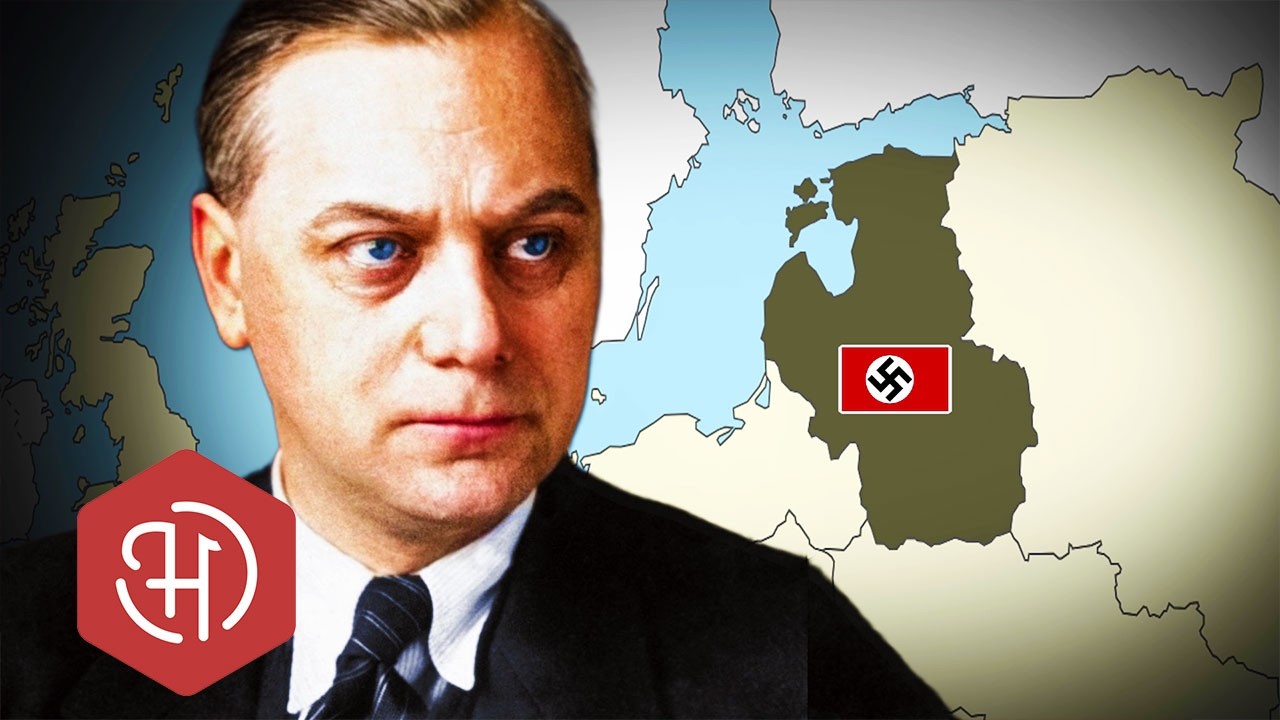
The invasion of the Soviet Union was sold as a fight against Bolshevism, but the real goal was a war of annihilation. Within the Nazi leadership, there was no single master plan. Alfred Rosenberg wanted to use some non-Russian groups as collaborators, while Heinrich Himmler and the SS pushed for mass deportation, extermination, and German colonization under the General Plan Ost. Hitler favored Himmler’s harsher model for the Baltic states.
The goal was annexation and Germanization—never Baltic independence. Racial theorists debated how many Estonians, Latvians, and Lithuanians could be assimilated versus deported, and those judgments shifted as Germany’s military fortunes changed. After 1942-43, ideological colonization plans gave way to military necessity, but the core goal—the extermination of the Jews—never changed. At dawn on June 22, 1941, Operation Barbarossa began.
For the Baltic states, it meant one brutal occupation was replaced by another. German Army Group North smashed into Lithuania, Latvia, and Estonia with speed and shock. Soviets airfields, ports, and railway stations were bombed in the opening hours. The Red Army was caught completely off guard, its command structures collapsed, and entire formations fled east in chaos.
In Lithuania, local resistance fighters rose up against the retreating Soviets, seizing control in Kaunas and Vilnius before the Wehrmacht arrived. Elsewhere, German forces advanced swiftly. Vilnius fell within days, Riga was entered on July 1st, and Tallinn was isolated. To many locals, the Germans initially appeared as liberators—just weeks earlier, the Soviets had deported tens of thousands of people.
The Reichskommissariat Ostland was established by decree on July 17, 1941, as a colony of the Third Reich. It was divided into four general districts: Estonia, Latvia, Lithuania, and White Ruthenia (part of Belarus), with Riga as its capital. The highest authority was Reichskommissar Heinrich Lohse. Each district had its own General Commissioner, and below them were smaller districts.
The SS controlled the military and security apparatus, while the Labor Ministry oversaw workers and labor camps. Göring and others managed economic affairs. A power vacuum existed in the summer of 1941, before the civil administration was fully in place, and the SS filled it—gaining absolute power that they relinquished with great reluctance in September. Himmler tried unsuccessfully until the end of 1943 to regain that authority, which explains the difficult relationship between the SS and the administrative apparatus.
One SS commander, Friedrich Jeckeln, was fiercely criticized for his corruption, brutality, and reckless behavior. He led the Einsatzgruppen death squads and was personally responsible for ordering the deaths of over 100,000 Jews, Romani, and other “undesirables. ” He was hanged after the war. Immediately after his appointment, Lohse announced the confiscation of all Soviet state property in the region, transferring it to German administration.
Land confiscated by the Soviets was returned to former owners, and shops, businesses, and industries were handed back—but only under heavy taxation. Jewish property was permanently confiscated. Belarus was an exception, where a state-owned company managed all former Soviet property. Major German corporations like Hermann Göring Werke, IG Farben, and Siemens took over former state-owned companies in Ostland and Ukraine.
In Belarus, German authorities regretted that the Soviet government had destroyed the concept of private property, whereas in the Baltic states, they reported that the population genuinely wanted to cooperate and might obtain autonomous government. That, of course, never happened. Until February 1944, the German government received more than 753. 6 million Reichsmarks in occupation costs and taxes.
Lohse and the Commissioner for Ukraine, Erich Koch, were asked to supply workers for Germany—360,000 agricultural workers and 247,000 industrial workers. The Germans regarded Russians, Belarusians, and Ukrainians as slave laborers who could be worked to death. Rosenberg’s political goals were to expel Eastern European peoples and eliminate the “great Russian threat. ” The long-term plans for Ostland differed from those for Ukraine and the Caucasus.
The Baltic countries were to be transformed into a Germanized protectorate after an alliance with Germany. Rosenberg argued that these countries had a European character, the result of 700 years of history, and would provide living space through the racial assimilation of Baltic and some Belarusian peoples into a uniform Germanic population. After the war, Germans were to settle in Ostland, seen as traditionally Germanic territory. In the province of Zhytomyr, ethnic Germans from Romania and Dutch colonists were resettled, the latter managed by the Dutch East Company.
At the time of the invasion, there were nearly 480,000 Jews in Ostland, a number increased by deportations from Germany, Austria, and occupied territories. They were confined to ghettos in Riga, Kaunas, Liepaja, and Minsk, which soon became overcrowded. From there, they were taken to execution sites. The Red Army later discovered extermination centers near Königsberg and Vilnius.
The murder of Jews began almost immediately after the invasion and was later expanded. By the fall of 1943, the ghettos had been liquidated, and the remaining inhabitants were moved to camps. Those not fit for work, or who survived the journey, were killed immediately. German and local police were constantly fighting partisans in Belarus.
The “infected zones” where partisans were active covered 500 to 600 square kilometers around Minsk, Pinsk, Gomel, Smolensk, and Vitebsk, including important railroads. Ostland ended because Nazi Germany began losing the war. From 1943 onward, the Red Army pushed west after victories like Stalingrad and Kursk, especially during Operation Bagration. German forces in the Baltic region were forced to retreat.
Soviet troops retook Belarus in 1944 and most of the Baltic region the same year. As the front collapsed, the civilian administration of Ostland stopped functioning. Nazi officials fled, evacuated, or came under military control. By late 1944, almost all of Ostland had been reconquered.
The last German holdout was the Courland Pocket in western Latvia, where a large German force remained surrounded until May 1945, when Germany surrendered. With the German defeat, the Reichskommissariat Ostland was dissolved. The Baltic states were reoccupied by the Soviet Union. Ostland had existed as a colonial Nazi regime, built on exploitation and terror.
It disappeared the moment German military power collapsed. Despite its brutal rule, many Eastern Europeans collaborated with the Nazis for various reasons: ideology, hatred of Soviet rule, pragmatism, or coercion.