In April 1941, Nazi Germany shattered Yugoslavia in a matter of days. Out of its ruins emerged the Independent State of Croatia, ruled by one of the most radical fascist movements in Europe—the Ustaše. Led by Ante Pavelić, the regime promised a pure Croatian nation. What followed was a campaign of terror and mass violence that shocked even its Axis allies.
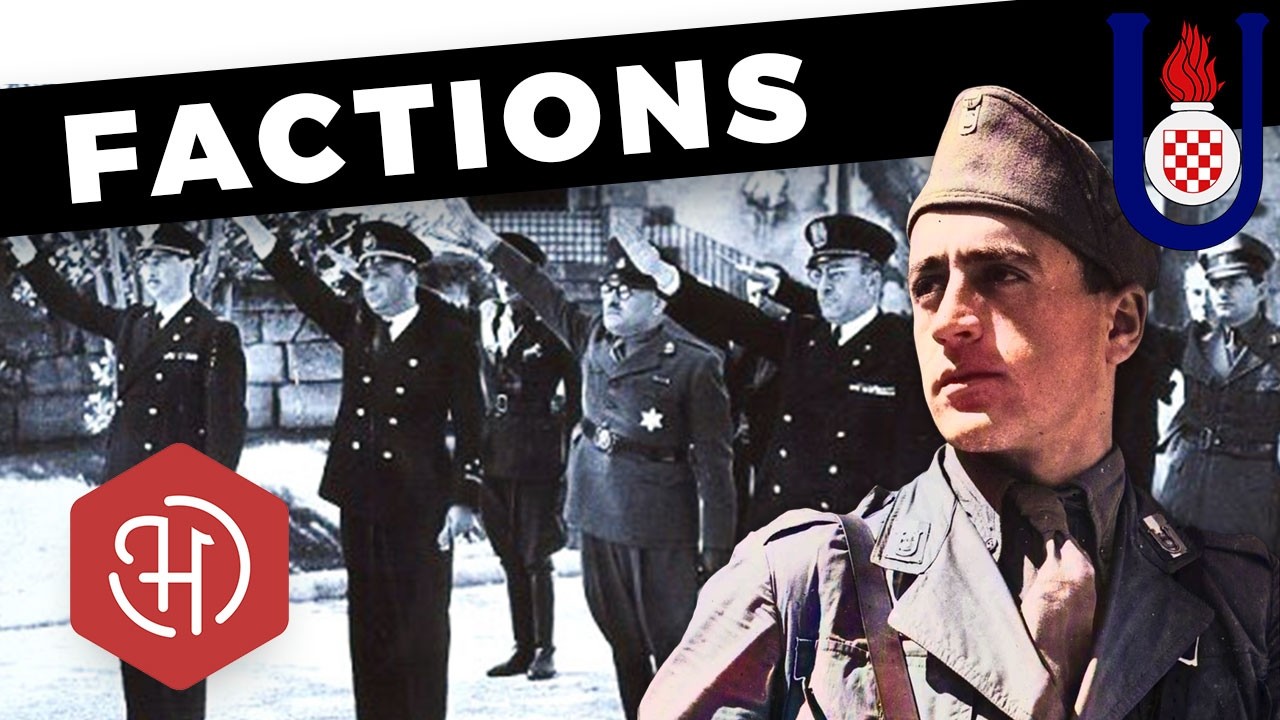
Before World War II, Croatia was not a sovereign nation but part of the Kingdom of Yugoslavia. Discontent with political developments during the interwar years gave rise to extreme movements, including the ultra-nationalist Ustaše—the Croatian Revolutionary Movement. Founded by Ante Pavelić, who called himself the Poglavnik, meaning “leader” or “first and foremost,” the movement portrayed itself as a secret revolutionary army fighting to liberate Croatia from what it claimed was Serbian oppression since 1918. The movement began to take shape around 1930, growing out of radical student circles and militant youth activists connected to the Croatian Party of Right.
Key figures included nationalist journalist Gustav Perčec and lawyer-turned-politician Ante Pavelić. Ironically, Pavelić had once sought compromise within Yugoslavia. In 1925, he negotiated with Serbian Prime Minister Nikola Pašić about granting Croatia autonomy while remaining in the kingdom, but those talks collapsed. Events soon pushed nationalists toward radicalism.
In 1928, the assassination of Croatian political leader Stjepan Radić inside the Yugoslav Parliament shocked the country. Shortly after, King Alexander I abolished parliamentary democracy and imposed a royal dictatorship. For many separatists, this convinced them that peaceful solutions were no longer possible. From the beginning, the Ustaše aimed to create a greater Croatia that included both Croatia and Bosnia—an ethnically homogeneous state.
Groups considered foreign, especially the large Serb population, would have to be removed by force if necessary. Initially, anti-Semitism was not central to the movement; some early supporters even included Croatian Jews in radical nationalist circles. But during the 1930s, under the influence of European fascism and Nazism, the movement increasingly adopted anti-Semitic ideas. In 1933, the Ustaše formally outlined their ideology in the Ustaše Principles—17 points calling for an independent Croatian state based on traditional Catholic rural values, strong patriarchal families, and strict social hierarchy.
They embraced ideas about racial purity and eugenics, reflecting broader extremist trends in Europe. While drawing inspiration from Hitler and Mussolini, their ideology was heavily shaped by Croatian nationalist thinkers like anthropologist Ivo Pilar and archaeologist Ćiro Truhelka, who developed theories about the supposed foreign origins of Serbs. Historian Milan Šufflay described Croatia as a western frontier defending Europe from the eastern Balkan world represented by Serbia. These interpretations became key propaganda tools.
The movement also claimed earlier nationalist figures like 19th-century politician Ante Starčević and revolutionary Eugen Kvaternik as ideological predecessors, though historians debate how closely their ideas truly aligned. Soon after forming, Pavelić and many followers fled Yugoslavia to avoid arrest. They found refuge in Italy and Hungary, where they established training camps for militant revolutionaries. Pavelić organized a propaganda center in Berlin, but the movement’s heart lay in paramilitary camps, including one on the Italian island of Lipari.
Life there was strictly controlled—recruits lived under military discipline and swore oaths of loyalty to Pavelić, with death as punishment for breaking them. A divide emerged between exiled militants, often from working-class backgrounds and more radical, and supporters inside Croatia, called the “home Ustaše,” who included more students and intellectuals from the University of Zagreb. Their methods differed: activists at home organized protests and political agitation, while the exiles embraced terrorism as their primary strategy. Throughout the early 1930s, they carried out bombings and assassinations targeting government officials and security forces, though civilians were sometimes caught in the violence.
During a failed uprising in 1932 in the Lika region, one fighter detonated a grenade to kill himself rather than be captured. So how did a marginal party with exiled leaders and hunted members come to power? The Germans made it happen. Initially, Hitler had no appetite to attack Yugoslavia—he wanted to use its rail network to move on Greece and offer terms.
Yugoslavia was to become a German ally without committing forces to the war effort. Under pressure, Yugoslavia signed the Tripartite Pact on March 25, 1941. But on March 27, Serbian military leaders seized power in a coup in Belgrade. Hitler was outraged and vowed to destroy the country.
On April 6, Orthodox Easter Sunday, Operation 25—known as Operation Punishment—was launched. The invasion was swift, as the Yugoslav army suffered from low morale and desertion. Slovene and Croat soldiers were especially unwilling to fight and die for a state they detested. On April 10, the Germans entered Zagreb, and Croatia seceded from Yugoslavia.
The independence proclamation had been stage-managed by the Germans. The new Croatian state covered over 40% of the former Yugoslav kingdom—most of modern-day Croatia, Bosnia and Herzegovina, and parts of Serbia and Slovenia. It was called the Independent State of Croatia, or NDH. But was it truly independent?
Germany and Italy had divided the area into their own spheres of influence. The Germans wanted economic advantages and privileged status for ethnic Germans living there, and from day one, German soldiers were on the streets of Zagreb. The NDH could hardly be called independent. The state officially became a kingdom with Italian royal prince Aimone, Duke of Aosta, on the throne, renamed Tomislav II—though he never resided there.
Ante Pavelić, still in Italy at the time, became the leader of the NDH. On April 13, he returned to Croatia after 12 years of exile. To Italian journalists, he declared: “Today’s restoration of Croatian independence has its foundation in historical and ethnic factors. The Pan-Slavist movement spread throughout the entire world the belief that we are one people with the Serbs.
This is not true, as the Croats are not Slavs according to race, but rather are Croats by their origin and nothing else. ”
How did the average Croatian view the rise of the NDH? A significant part of the population, especially in towns like Zagreb, viewed it favorably. The Ustaše had some popular support in western Herzegovina and Lika, but virtually nowhere else.
Most people accepted the resurrection of the Croatian state with relief, feeling the war had ended quickly and the worst had been avoided. But in reality, the worst was about to come. Serbs, Jews, and Roma, as well as Croatian political opponents, were arrested, and the first killings occurred in May. Confinement in camps started in July.
Eventually, it got so bad that even the Germans and Italians present were repulsed by the Ustaše’s mass violence. Even the Germans were outraged by what they witnessed.