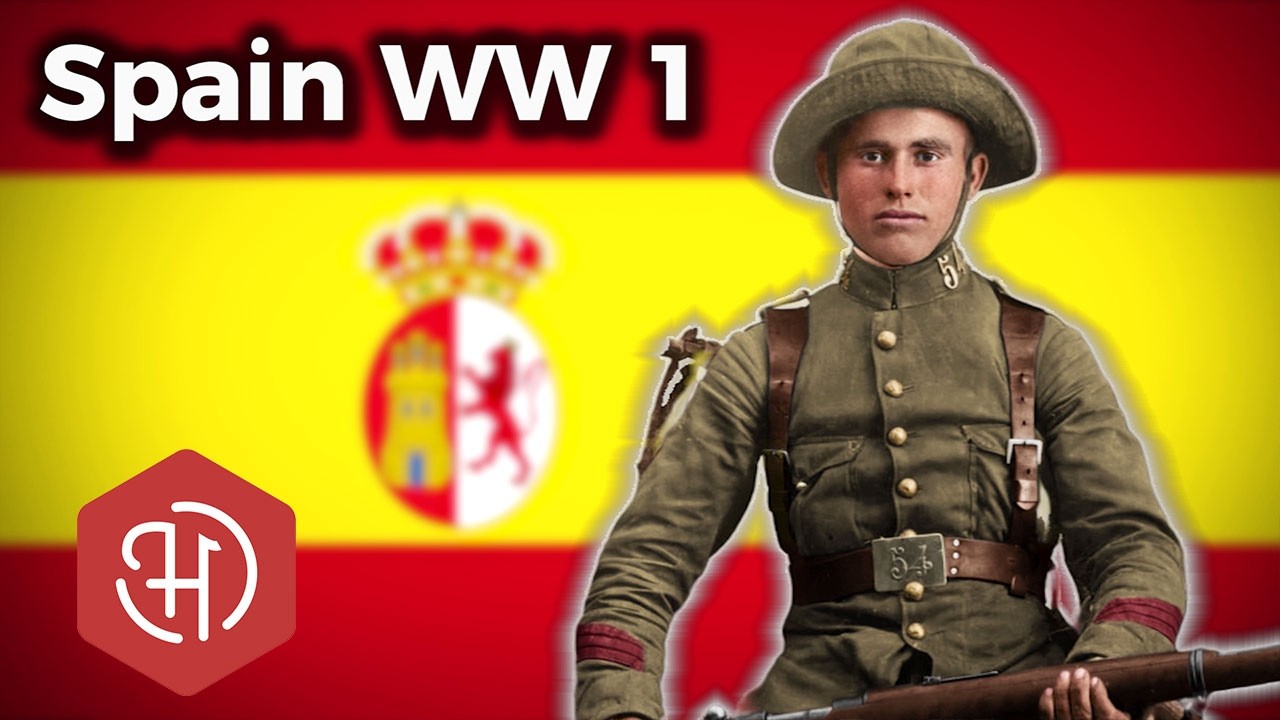
When Archduke Franz Ferdinand was shot in June 1914, Europe braced for a war that would tear the continent apart. Spain watched from the sidelines, but the sidelines were far more dangerous than anyone expected. The official declaration on August 4, 1914, proclaimed Spain neutral, but behind closed doors, Prime Minister Eduardo Dato signaled to Britain that Spain would practice what was called benevolent neutrality toward the Allies. They would not fight, but they would quietly favor one side.
That favoritism shaped everything. While the great industrial powers threw their factories into war production, Spain stepped in to supply food, minerals, and raw materials. Iron ore, lead, and other essential resources flowed out of the country, fueling the war machines of France and Britain. On paper, Spain was profiting from a war it had no part in.
Export numbers surged, and certain sectors of the economy boomed. But this wealth was a poison. Industrialists grew rich, while ordinary working-class families watched the price of bread climb beyond reach. Inflation spiraled, wages stagnated, and social tensions began to crack the surface of Spanish life.
The war divided Spanish society just as violently as it divided Europe. Germanophiles backed the Central Powers, seeing Germany as a defender of traditional order, and they found support among conservative elites, monarchists, and the Catholic Church. On the other side, the Aliadófilos sympathized with the Allies, championing France and Britain as defenders of democracy and progress. This divide was not a quiet political debate.
It was an ideological war fought in newspapers, in cafés, and on the streets. King Alfonso XIII played a strange double game, presenting a neutral face to the world while quietly engaging in humanitarian efforts, helping prisoners of war and facilitating communication between families torn apart by the conflict. His gestures earned international praise, but they also exposed how entangled Spain really was. Neutrality did not keep the war out.
It dragged the war deeper in. Both Allied and Central Powers saw Spain as strategically vital, controlling the gateway between the Atlantic and the Mediterranean. German agents operated openly in Spanish cities, plotting industrial sabotage and trying to disrupt Allied supply lines. British and French intelligence retaliated in kind.
Propaganda flooded every newspaper, every workplace, every home. Spanish cities became silent battlefields where the weapons were lies, secrets, and money. The war also changed where Spain’s loyalties lay. Trade agreements were signed almost exclusively with Allied countries, cutting Germany off from access to Spanish resources.
Count Romanones, who became Prime Minister in 1915, openly pushed for closer ties with Britain and France, publishing an article titled Neutrality That Kills, which argued that staying out of the war could destroy Spain’s national interests. Under his government, deals like the Cortina Agreement exchanged Spanish iron ore for British coal, binding Spain more tightly to the Allied war effort. Even the British outpost of Gibraltar benefited, receiving supplies across the border despite Spain’s official neutrality, especially during major Allied campaigns in the Mediterranean. Germany pushed back hard.
Unrestricted submarine warfare turned the seas into killing zones, and Spanish ships were not immune. More than 80 Spanish vessels were sunk by German U-boats over the course of the war. Public outrage flared with every attack. When the German submarine sank the Spanish ship Ramón Larringa in 1918, anger reached a boiling point.
King Alfonso himself, once seen as sympathetic to Germany, grew frustrated with the attacks. Yet despite the bloodshed at sea and the pressure at home, Spain never declared war. There were many reasons for this restraint. Spain’s military was weak, underfunded, and still recovering from the disaster of 1898 when it lost its last major colonies.
The political system was fragile, with governments changing rapidly and unrest spreading through the army and the working class. In 1917, Spain faced its own internal crisis, with military juntas demanding reforms and revolutionary strikes threatening to bring the country to a halt. And crucially, the Allies did not want Spain as a combatant. They were already getting everything they needed through trade and logistical support.
Bringing Spain into the war would only complicate things. Still, Spain found itself dragged into the conflict in unexpected places. Spanish Guinea, now Equatorial Guinea, became a refuge for thousands of German troops fleeing Cameroon after 1916. They crossed into Spanish territory and were interned, but the presence of armed soldiers on Spanish soil illustrated how fragile neutrality really was.
When the war finally ended in 1918, Spain gained almost nothing for its years of cooperation. Some Spanish leaders had hoped that supporting the Allies would earn them territorial rewards, especially in Morocco, but those hopes were crushed. Spain had no seat at the peace table. It was not a victor, and it was not even a participant.
It was a supplier, a spectator, and a silent battleground for other nations’ ambitions. Spain had avoided the trenches and the artillery, but it did not escape the consequences. The war deepened the divides that were already tearing the country apart. Inflation, food shortages, and class resentment created a bitter atmosphere that would poison Spanish politics for years to come.
The war may not have been fought on Spanish soil, but it was fought within Spain’s schools, its factories, its newspapers, and its own people. Neutrality kept Spain out of the trenches, but it could not keep the war out of Spain.