The telegram arrived in Bangkok on the afternoon of July 22, 1917, and within hours the streets were alive with rumor. King Vajiravudh had signed the declaration of war against Germany and Austria-Hungary, and Siam, a kingdom that had spent three years carefully balancing between empires, had finally chosen a side. For most Siamese, the war in Europe had felt distant, almost abstract. But now it was real.
The king’s decision was not born of military ambition. Siam’s army was small, its treasury modest, and its borders had long been squeezed between British Burma and French Indochina. For decades, the kingdom had survived by yielding territory and signing unequal treaties that stripped away control over its own trade and legal affairs. Europeans living in Bangkok enjoyed special protections that Siamese citizens did not, a constant reminder of the nation’s weakened sovereignty.
Joining the Allies was a gamble, but one that Siam’s leaders believed could finally erase the stain of those old concessions. Not everyone agreed. Within the royal court, opinion was sharply divided. Some officials, educated in Germany and impressed by Prussian discipline, argued that Siam should remain neutral or even side with the Central Powers.
German engineers had built Siam’s railways, German doctors had earned respect in its hospitals, and German shipping lines dominated its trade routes. The idea of turning against such a valuable partner struck many as reckless. Yet when American entry into the war tipped the scales, the king saw an opportunity too valuable to ignore. If Siam fought alongside the Allies, it could claim a seat at the peace table and demand the return of its sovereign rights.
The first act of war came swiftly. German and Austrian citizens living in Siam were arrested and interned. German-owned businesses were confiscated, and German ships sheltering in Siamese ports were seized before their crews could sabotage them. Overnight, British merchants watched their competitors vanish, while British diplomats quietly celebrated the removal of German influence from Southeast Asia.
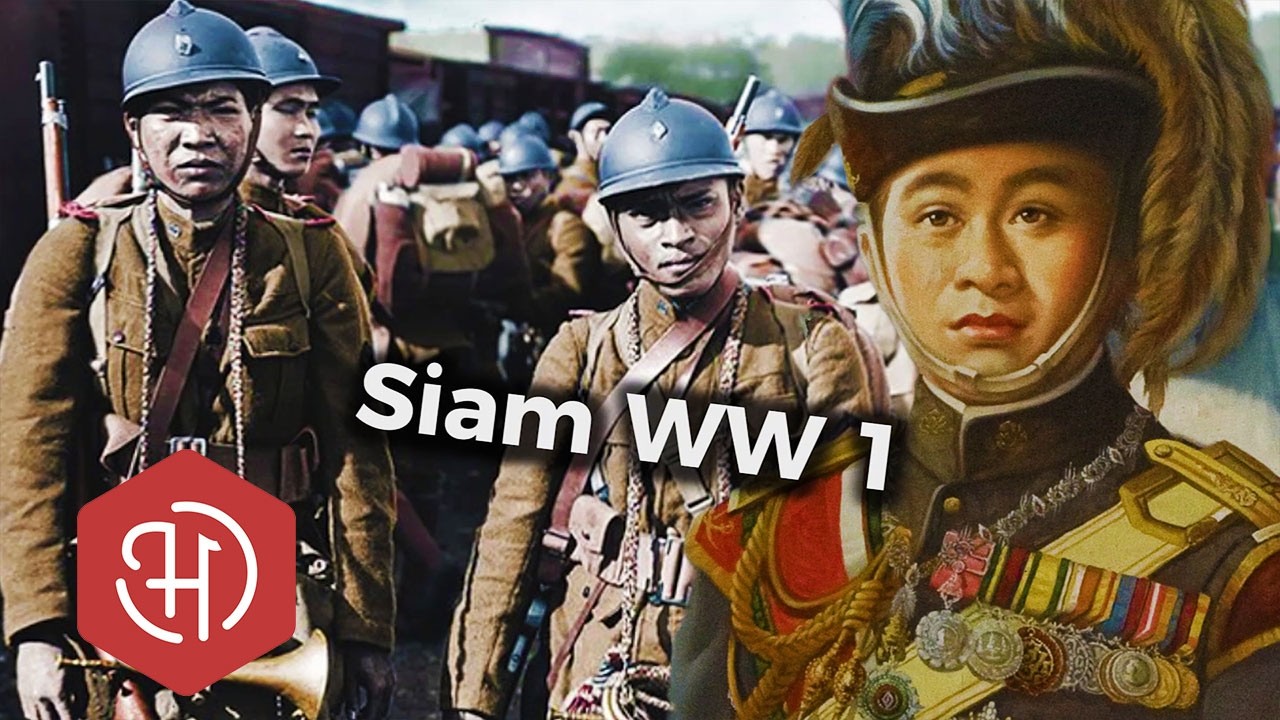
But the question remained: what would Siam actually send to the war? The kingdom had no battleships and no heavy artillery, but it did possess a small aviation corps and officers trained in European methods. King Vajiravudh decided to dispatch a volunteer expeditionary force: just over a thousand men, roughly four hundred of them pilots and mechanics, the rest drivers, medics, and support staff. They would not fight in the trenches.
Instead, they would drive trucks, maintain aircraft, and keep the Allied supply lines moving. The departure was a spectacle. In June 1918, crowds lined the Chao Phraya River as the troops boarded ships, the king himself presiding over the farewell ceremony. Thailand’s first soldiers to leave for Europe sailed amid cheers and waving flags, a moment of national pride that felt almost unbelievable.
They traveled through Singapore, Colombo, and Port Said, arriving in Marseille on July 30, 1918. The welcome, however, was colder than expected. French officers assigned the Siamese troops to training grounds near Lyon, and while the men trained diligently, tension simmered beneath the surface. The Siamese officers felt treated as inferiors, given the same dismissive attitude reserved for colonial troops from Africa or Indochina.
They had come as allies, not subjects, and they demanded the respect owed to representatives of an independent kingdom. Frustration grew so intense that at one point, Siamese commanders seriously discussed withdrawing the entire expedition and going home. Then, in November 1918, the war ended. The guns fell silent across Europe, and the Siamese troops suddenly found themselves part of an occupying force marching into defeated Germany.
The Motor Transport Corps was stationed in the Palatinate region around Neustadt, and the man who later chronicled the journey described the moment Siamese soldiers crossed the Rhine as one of the proudest of his life. It was a strange, almost surreal achievement: a nation that had never fielded a modern army had sent its sons to march through the streets of a conquered European power. The symbolic weight of that moment was immense. At the victory parades in Paris, Siamese soldiers marched alongside the armies of Britain, France, and the United States, their distinctive uniforms drawing the eyes of crowds who had never imagined soldiers from an Asian kingdom on European soil.
The photographs from those parades circulated around the world, an independent Asian nation standing among the victors. By May 1919, the aviation corps was home, followed later that year by the motor transport units. Their return was marked by grand public ceremonies, with the king greeting the troops as heroes. But the real victory came at the negotiating table.
Siam had earned its place among the Allied powers, and in 1920, the United States agreed to revise its unequal treaty, followed gradually by other nations. The legal privileges enjoyed by foreigners were dismantled, and Siam regained full control over its own courts and tariffs. The war had cost little in blood, but it had purchased something far more valuable: the restoration of the kingdom’s sovereignty. When the Great War ended, few remembered the small Siamese expedition that had driven trucks along the Western Front.
But the men who served in that force carried something home that no treaty could grant. They had walked through the ruins of Germany, stood in the shadow of the Arc de Triomphe, and watched their flag fly among the banners of the world’s great powers. Siam, once caught between empires, had finally stepped onto the world stage as a nation in its own right.